Downloaded 55 times


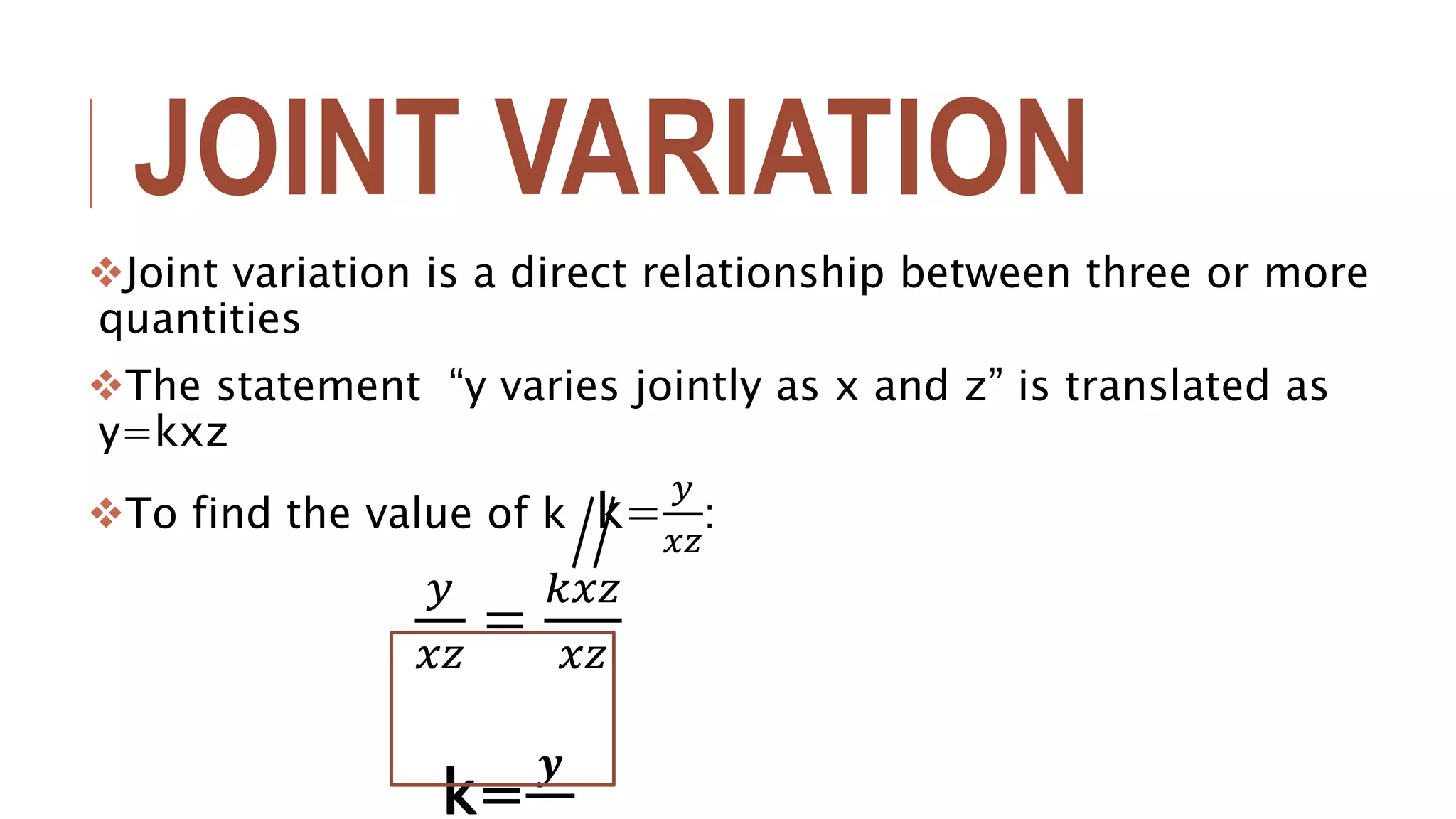


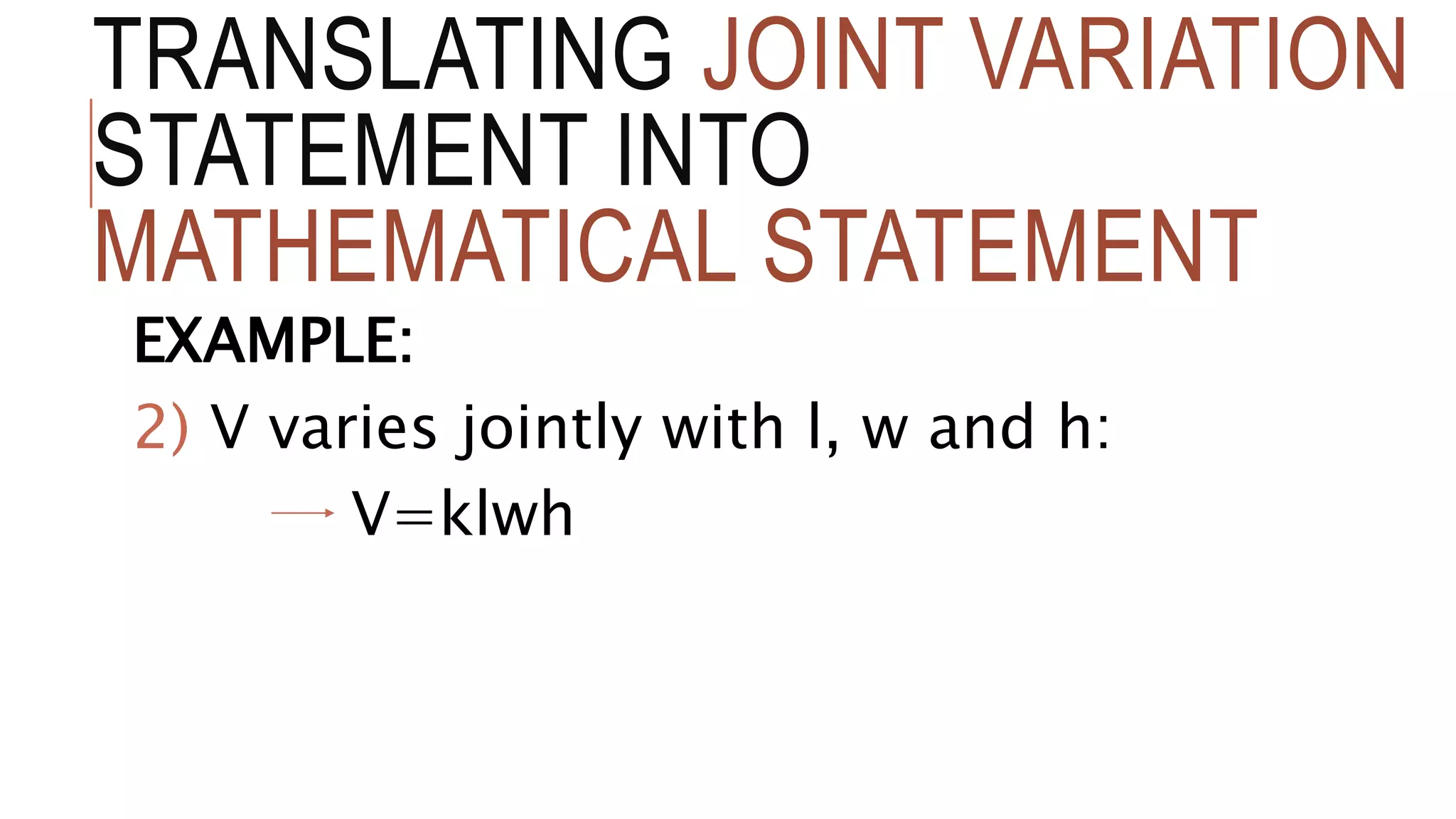




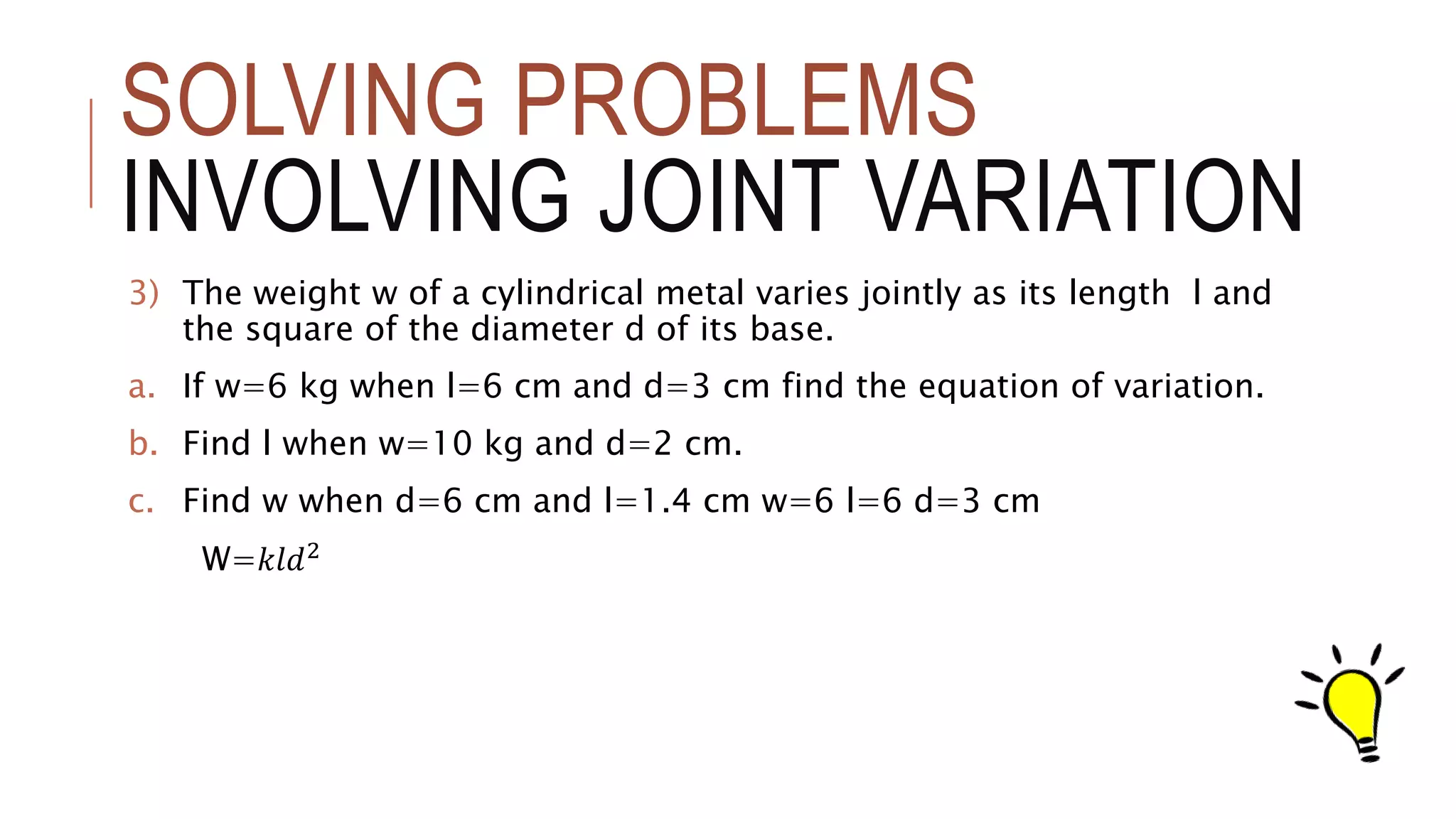

1) Joint variation is a direct relationship between three or more quantities that can be expressed as an equation in the form y=kxz, where y varies jointly with x and z. 2) To find the constant k, set up the equation y/xz = k. Then substitute known values for x, y, and z to solve for k. 3) Examples of joint variation problems include finding the equation when area A varies jointly with base b and height h (A=kbh) or volume V varies jointly with length l, width w, and height h (V=klwh). The constant k can be used to solve other problems involving the same quantities.


