Fluid/s
Prof. Mridul M. Panditrao
Professor, Head & In-Charge of ICU
Dean of Academic Affairs
Department of Anaesthesiology & Intensive Care
Adesh Institute of Medical Sciences & Research
(AIMSR)
Adesh University
Bathinda, Punjab, India
Introduction
 Water is life!
 Journey of life starts in Water!
 Water is also a dramatic Paradox
 Too less or too much = Incompatible with life
 So the life is geared up around maintaining the
equilibrium !!
 In Fact entire life of the living thing is spent in maintaining
 The fluid balance
 pH balance
Introduction
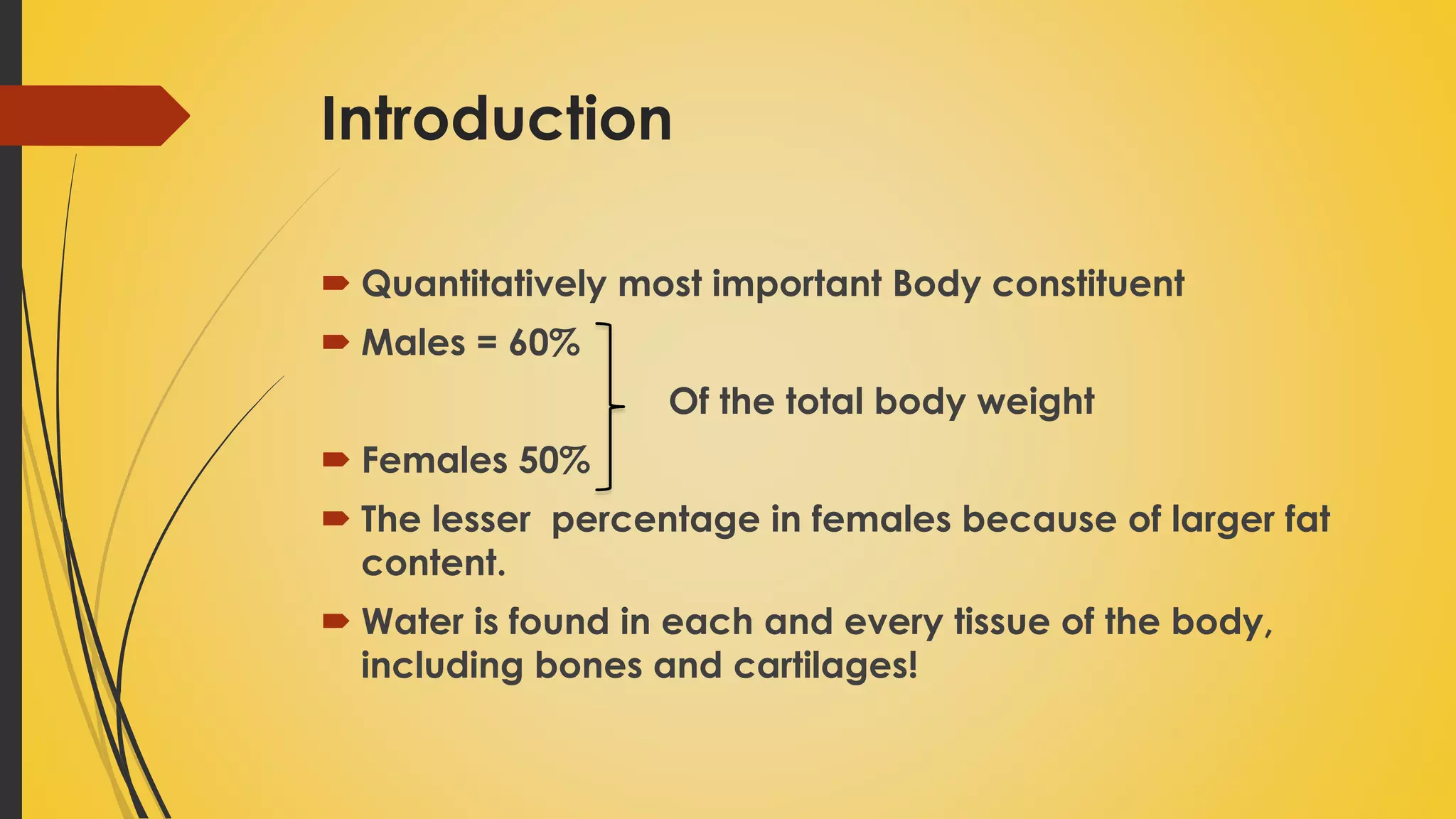
 Quantitatively most important Body constituent
 Males = 60%
Of the total body weight
 Females 50%
 The lesser percentage in females because of larger fat
content.
 Water is found in each and every tissue of the body,
including bones and cartilages!
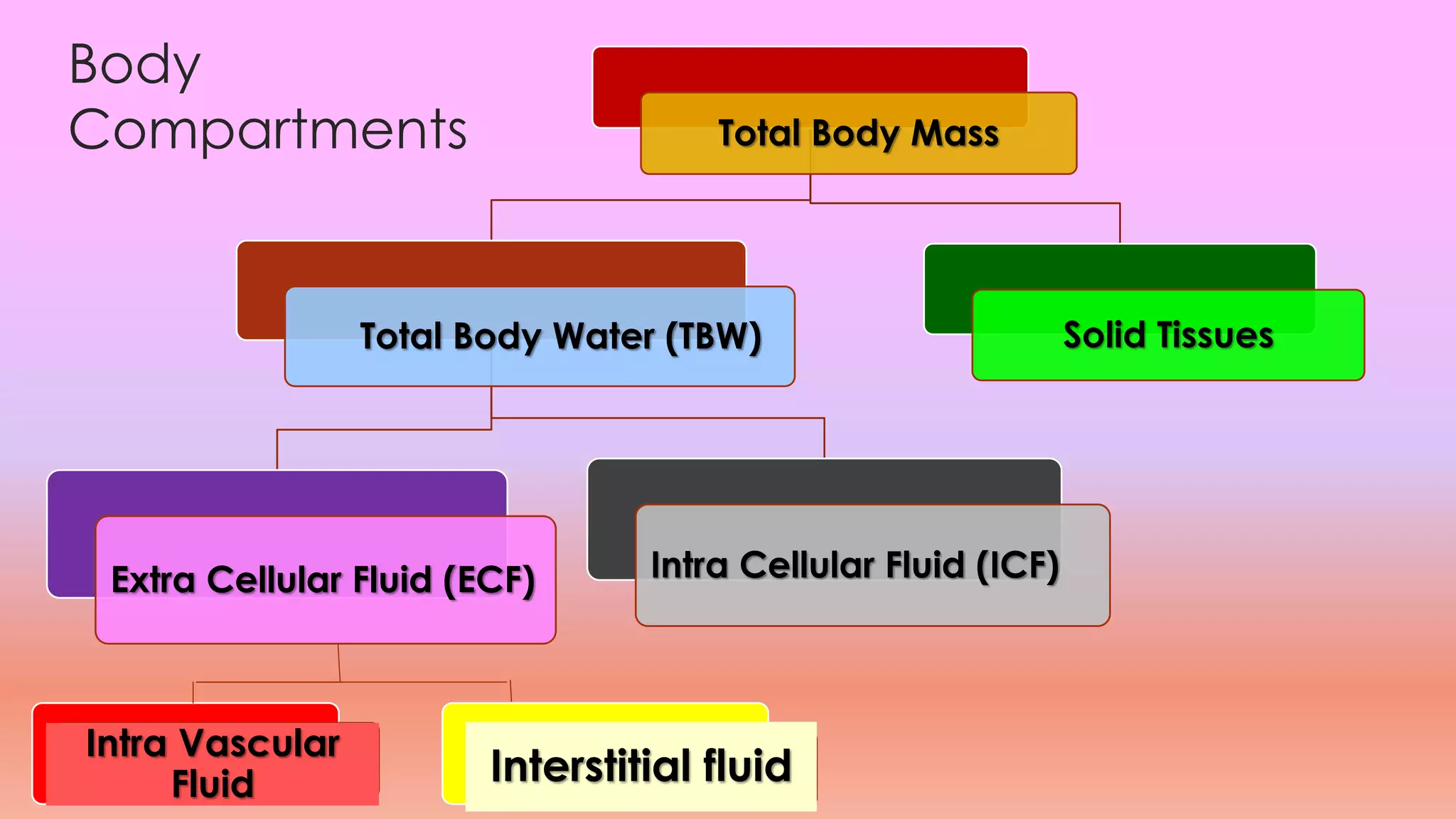
Body
Compartments Total Body Mass
Total Body Water (TBW)
Extra Cellular Fluid (ECF) Intra Cellular Fluid (ICF)
Solid Tissues
Intra Vascular
Fluid Interstitial fluid
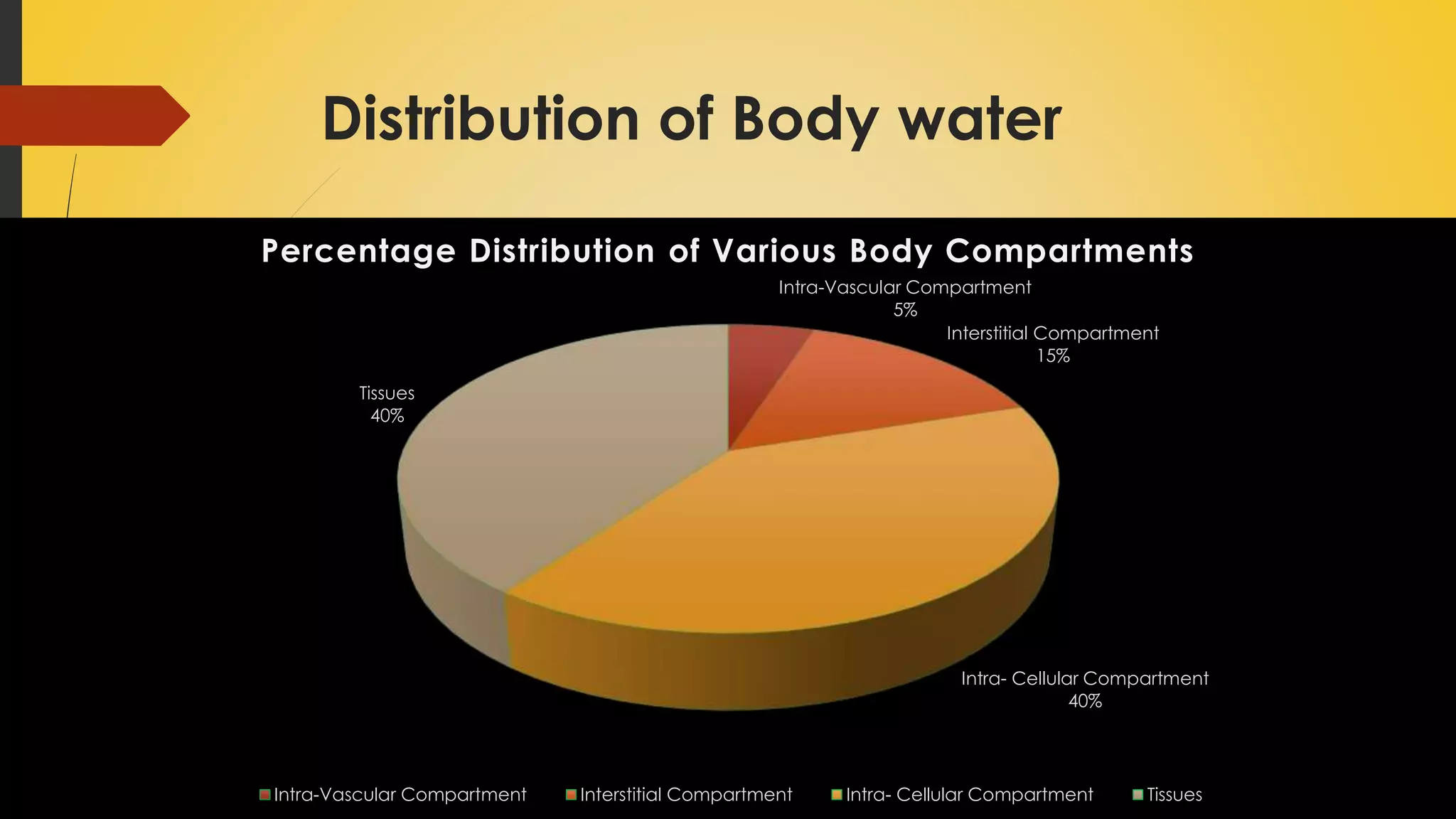
Distribution of Body water
Intra-Vascular Compartment
5%
Interstitial Compartment
15%
Intra- Cellular Compartment
40%
Tissues
40%
Percentage Distribution of Various Body Compartments
Intra-Vascular Compartment Interstitial Compartment Intra- Cellular Compartment Tissues
Definitions
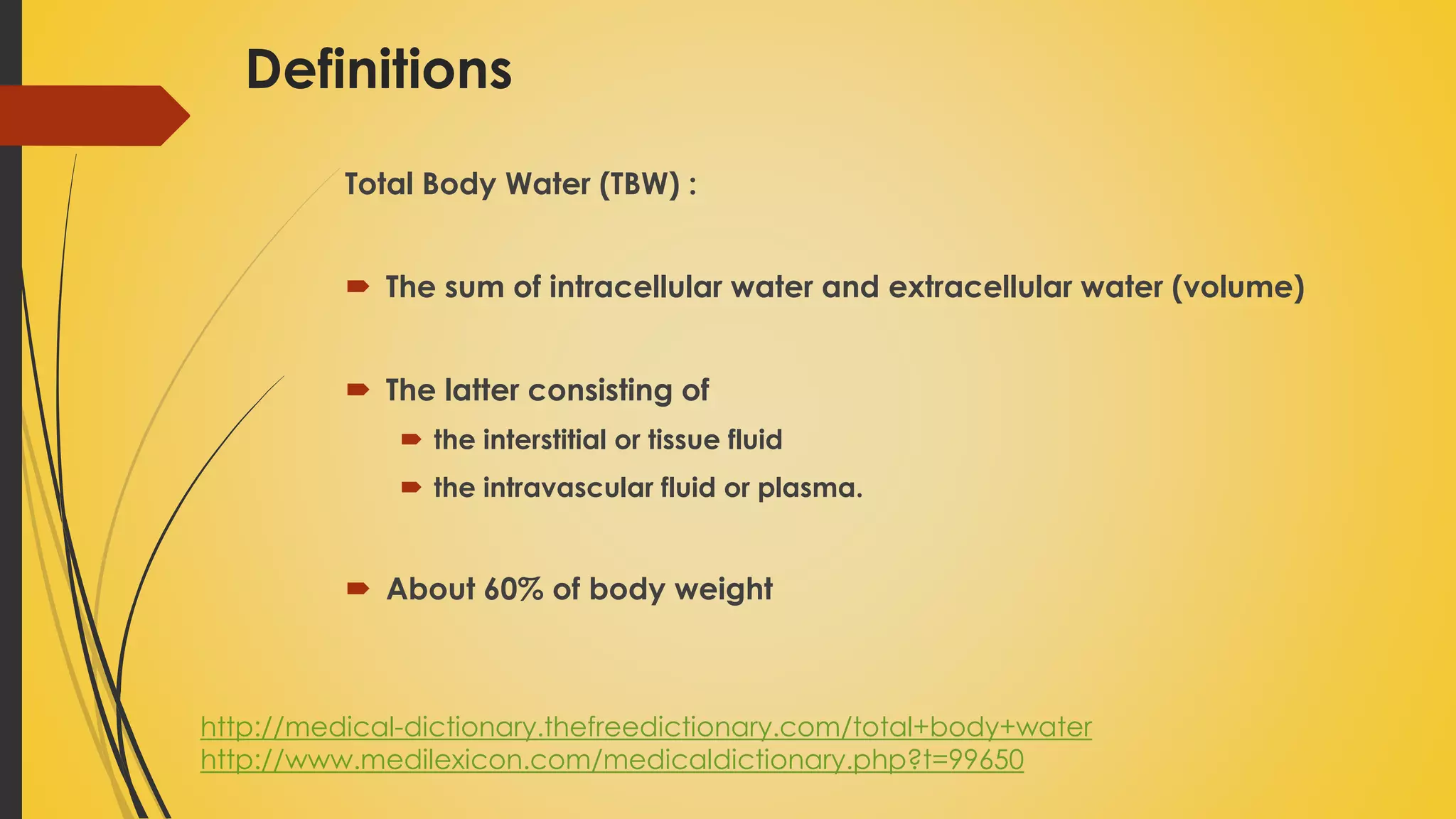
Total Body Water (TBW) :
 The sum of intracellular water and extracellular water (volume)
 The latter consisting of
 the interstitial or tissue fluid
 the intravascular fluid or plasma.
 About 60% of body weight
http://medical-dictionary.thefreedictionary.com/total+body+water
http://www.medilexicon.com/medicaldictionary.php?t=99650
Definitions
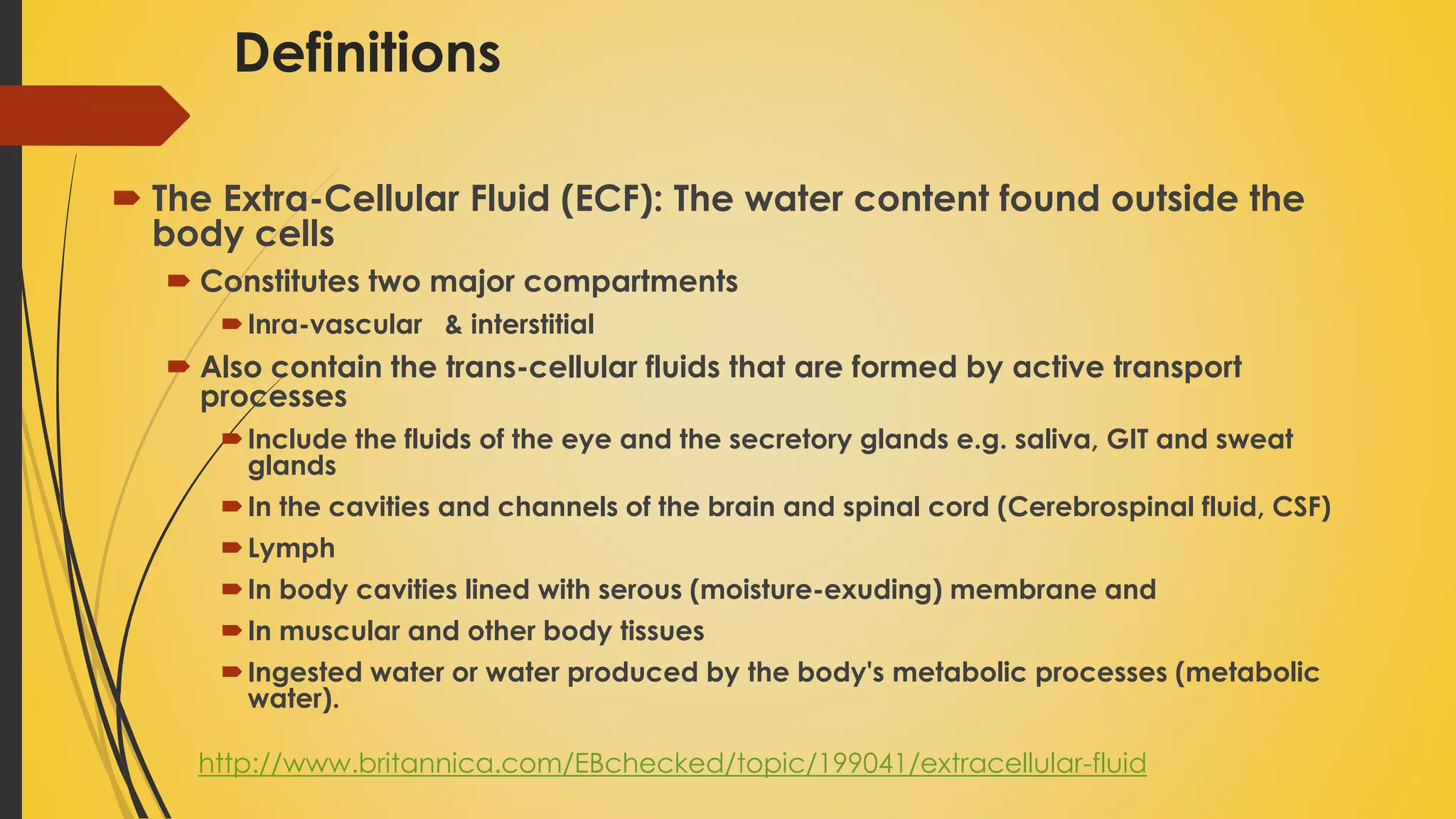
 The Extra-Cellular Fluid (ECF): The water content found outside the
body cells
 Constitutes two major compartments
Inra-vascular & interstitial
 Also contain the trans-cellular fluids that are formed by active transport
processes
Include the fluids of the eye and the secretory glands e.g. saliva, GIT and sweat
glands
In the cavities and channels of the brain and spinal cord (Cerebrospinal fluid, CSF)
Lymph
In body cavities lined with serous (moisture-exuding) membrane and
In muscular and other body tissues
Ingested water or water produced by the body's metabolic processes (metabolic
water).
http://www.britannica.com/EBchecked/topic/199041/extracellular-fluid
Definitions
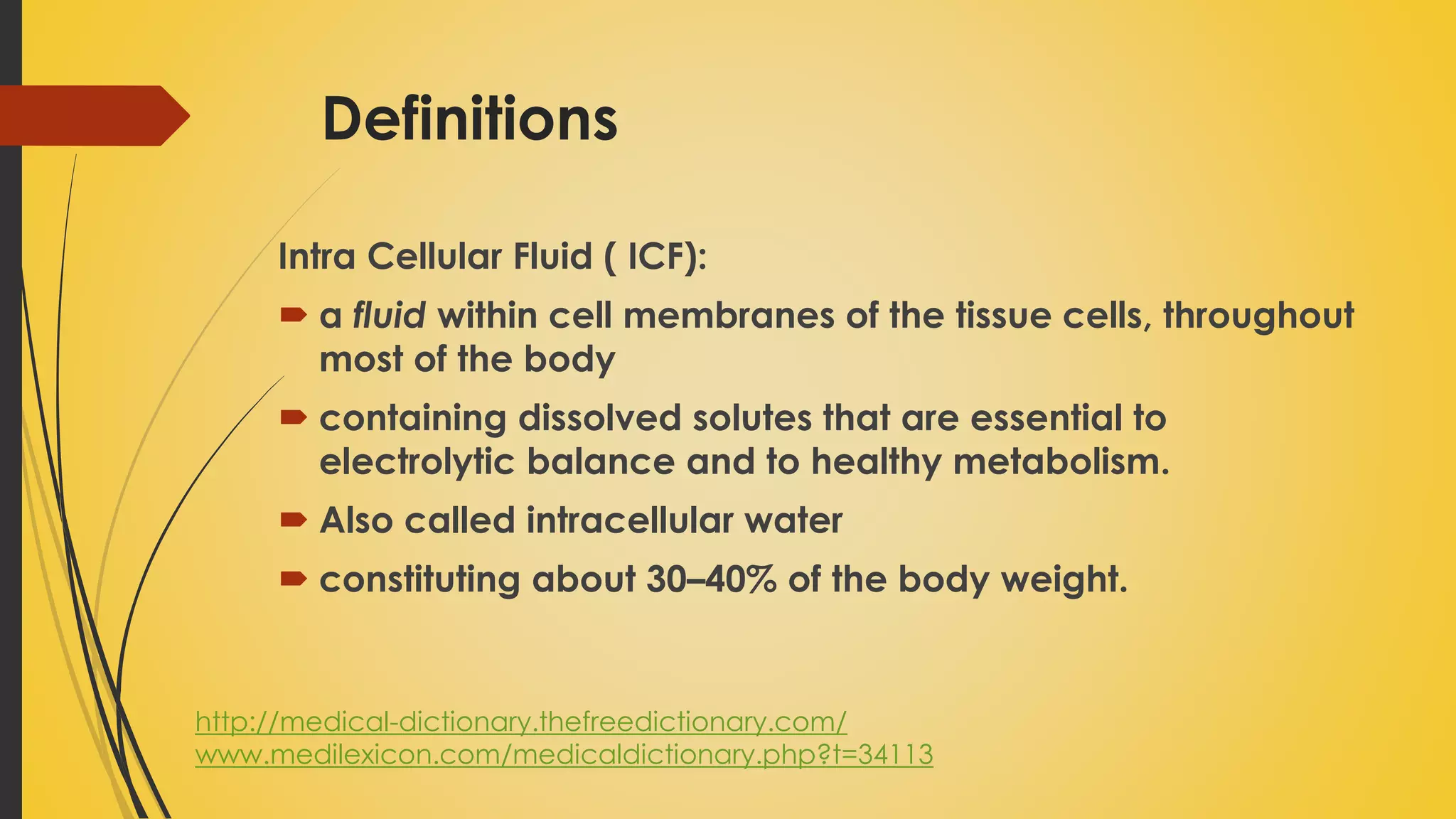
Intra Cellular Fluid ( ICF):
 a fluid within cell membranes of the tissue cells, throughout
most of the body
 containing dissolved solutes that are essential to
electrolytic balance and to healthy metabolism.
 Also called intracellular water
 constituting about 30–40% of the body weight.
http://medical-dictionary.thefreedictionary.com/
www.medilexicon.com/medicaldictionary.php?t=34113
Rule of 1/3
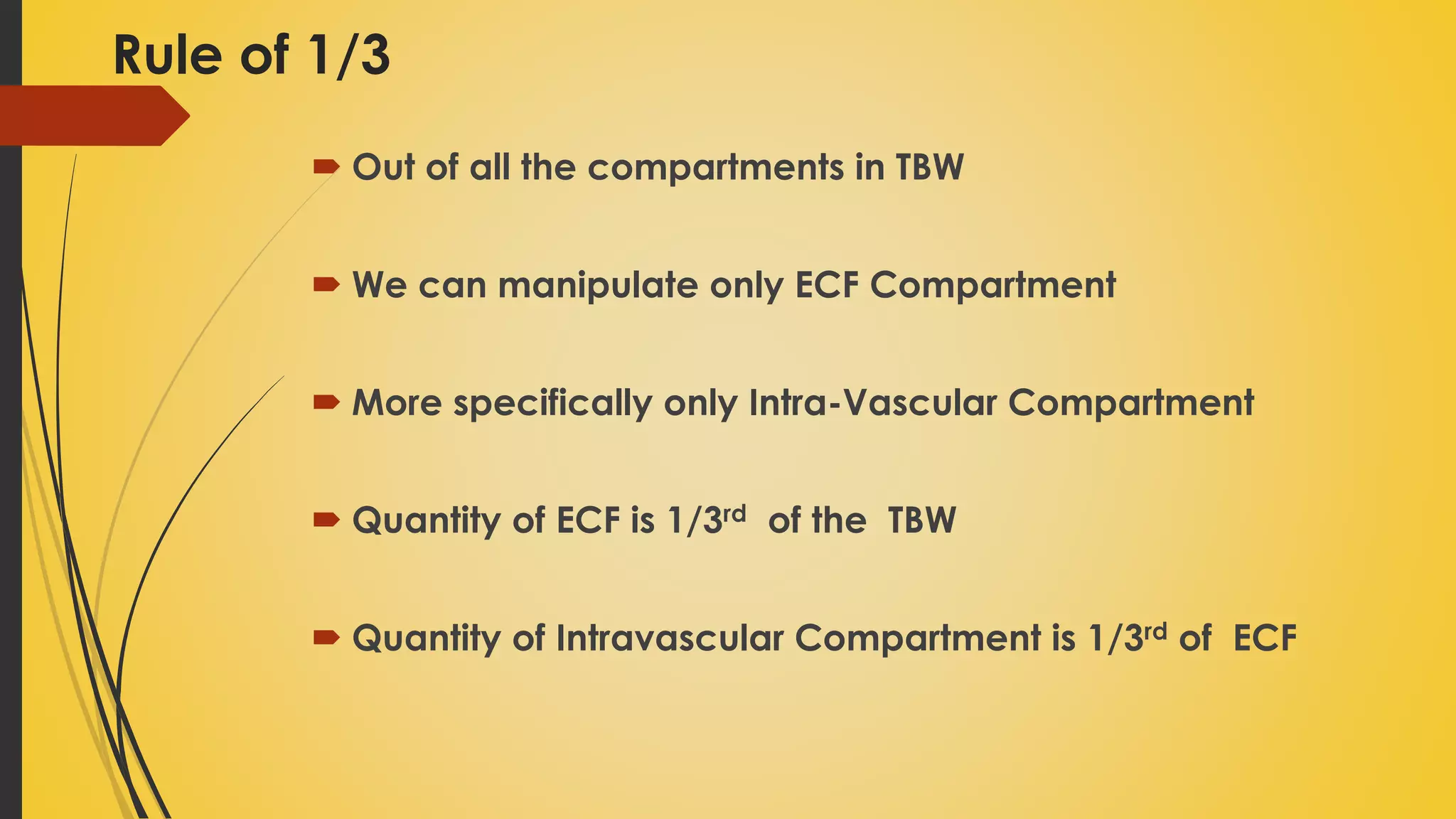
 Out of all the compartments in TBW
 We can manipulate only ECF Compartment
 More specifically only Intra-Vascular Compartment
 Quantity of ECF is 1/3rd of the TBW
 Quantity of Intravascular Compartment is 1/3rd of ECF
Intra Vascular Volume: Blood
 Blood Volume: is the volume of blood (both red blood
cells and plasma) in the circulatory system of any
individual.
 Effective Circulating Volume: that proportion of
Intra- vascular volume ( thus of ECF) that is effectively
perfusing the tissue cells
 It is in direct proportion to the
 ECF
 Solute Content dissolved in it ( esp. Na+ salts)
 Solutes hold the water in ECF
Solutes:
Solute: A substance dissolved in another
substance or water
both of in-organic as well as organic origin
Solutes in ECF: by and large of in-organic type
E.g. Na+
, Cl
-
, HCO3
-
,
Solutes in ICF: Mixture of Both
E.g. K+, Organic Phosphate esters( ATP, Creatine
Phosphate… etc.)
•Mole - A mole is the amount of a substance that contains the number
of molecules equal to Avogadro's number.
•The mass in grams of one mole of a substance is the same as the number of atomic mass units in one
molecule of that substance.
•i.e. the molecular weight of the substance expressed as grams)
•The mole (symbol: mol) is the base unit in the SI system for the amount of a substance
•Molality of a solution is the number of moles of solute per kilogram of
solvent
•Molarity of a solution is the number of moles of solute per liter of
solution
 Avogadro's number - this is the number of molecules in
one mole of a substance (ie 6.022 x 10²³)
Osmole
The amount of a substance
that yields, in ideal solution
that number of particles = (Avogadro’s number)
that would depress the freezing point of the solvent by 1.86K
Osmolality & Osmolarity
 Osmolality: Osmolality is a measure of the number of
solute particles present in solution
 Is independent of the size or weight of the particles
 Expressed as : milliosmoles per kilogram of water ( m
Osmol/Kg)
 Osmolality of a solution is the number of osmoles of solute
per kilogram of solvent ( m Osmol/Kg)
 Osmolarity of a solution is the number of osmoles of solute
per liter of solution ( m Osmol/L)
http://www.anaesthesiamcq.com/FluidBook/fl2_3.php
Osmolality & Osmolarity
 The value measured in the laboratory is usually referred
to as the ‘osmolality’
 The value calculated from the solute concentrations is
reported by the laboratory as the ‘osmolarity’
 The Osmolar gap is the difference between these two
values
Tonicity
 Tonicity is the effective osmolality
 Is equal to the sum of the concentrations of the solutes
which have the capacity to exert an osmotic force
across the membrane
 Osmolality is a property of a particular solution and is
independent of any membrane
 Tonicity is a property of a particular solution in reference
to a particular membrane
Tonicity
 It is strictly wrong to say this or that fluid is isotonic with
plasma
 what should be said is that the particular fluid is isotonic
with plasma in reference to the cell membrane
 By convention, this specification is not needed in
practice as it is understood that the cell membrane is the
reference membrane involved.
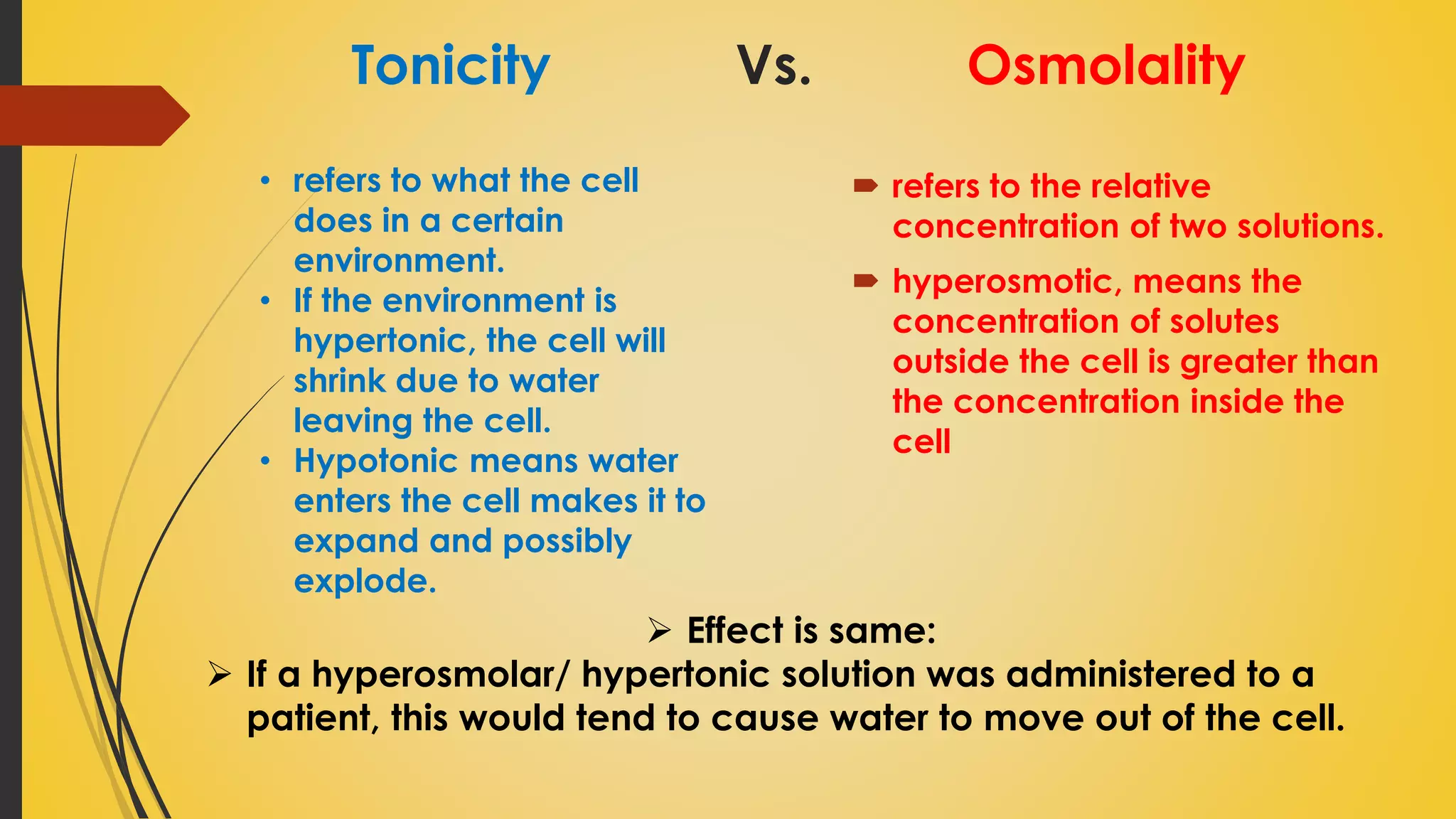
Tonicity Vs. Osmolality
 refers to the relative
concentration of two solutions.
 hyperosmotic, means the
concentration of solutes
outside the cell is greater than
the concentration inside the
cell
• refers to what the cell
does in a certain
environment.
• If the environment is
hypertonic, the cell will
shrink due to water
leaving the cell.
• Hypotonic means water
enters the cell makes it to
expand and possibly
explode.
 Effect is same:
 If a hyperosmolar/ hypertonic solution was administered to a
patient, this would tend to cause water to move out of the cell.
Electrolytes: definition
An electrolyte
is a substance that ionizes when dissolved in suitable
ionizing solvents such as water
 This includes most soluble salts, acids, and bases
 Some gases, such as hydrogen chloride, under
conditions of high temperature or low pressure can also
function as electrolytes
 Cations: Positively charged e.g. Na+, K+, Ca++, Mg++
 Anions: Negatively Charged e.g. Cl-, HCO-, OH-, HPO4--
,SO4--
http://en.wikipedia.org/wiki/Electrolyte
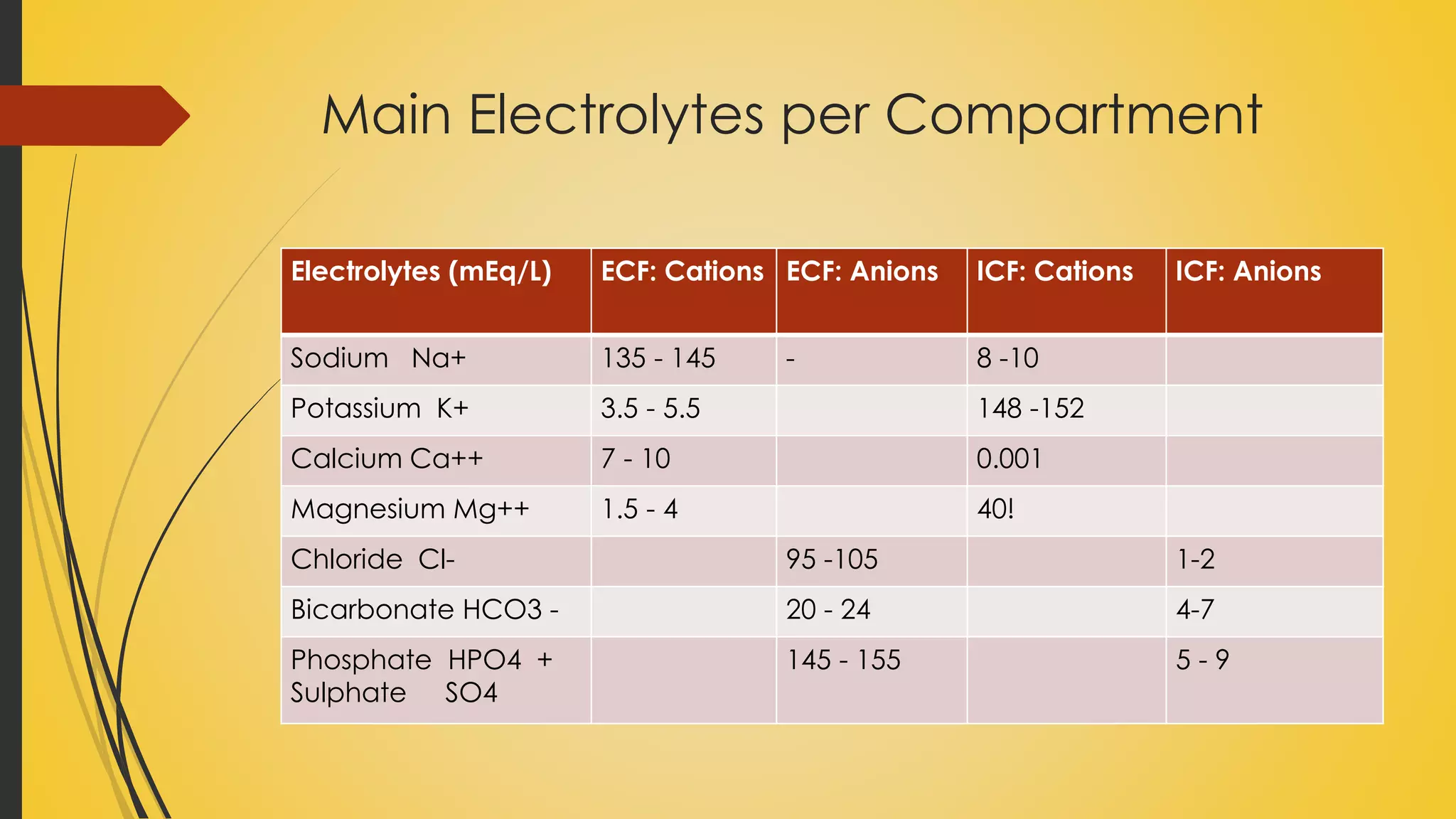
Main Electrolytes per Compartment
Electrolytes (mEq/L) ECF: Cations ECF: Anions ICF: Cations ICF: Anions
Sodium Na+ 135 - 145 - 8 -10
Potassium K+ 3.5 - 5.5 148 -152
Calcium Ca++ 7 - 10 0.001
Magnesium Mg++ 1.5 - 4 40!
Chloride Cl- 95 -105 1-2
Bicarbonate HCO3 - 20 - 24 4-7
Phosphate HPO4 +
Sulphate SO4
145 - 155 5 - 9
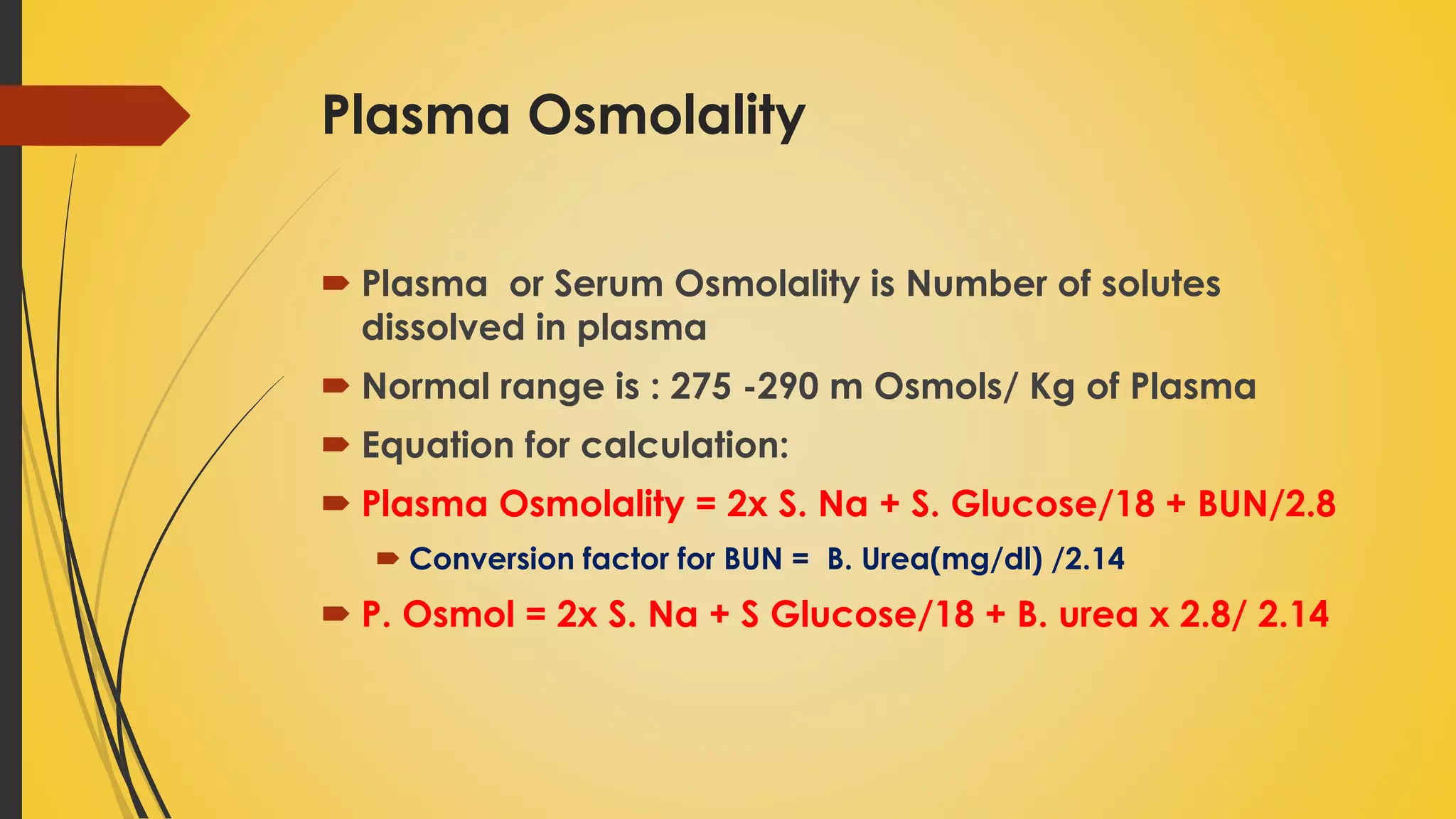
Plasma Osmolality
 Plasma or Serum Osmolality is Number of solutes
dissolved in plasma
 Normal range is : 275 -290 m Osmols/ Kg of Plasma
 Equation for calculation:
 Plasma Osmolality = 2x S. Na + S. Glucose/18 + BUN/2.8
 Conversion factor for BUN = B. Urea(mg/dl) /2.14
 P. Osmol = 2x S. Na + S Glucose/18 + B. urea x 2.8/ 2.14
Body Water Regulation
Increase in osmolality stimulates osmo-receptors
in antero-lateral hypothalamic nuclei
Thirst
Neuro-hypophysis
ADH & AVP
Decreased excretion by increasing
re-absorption.
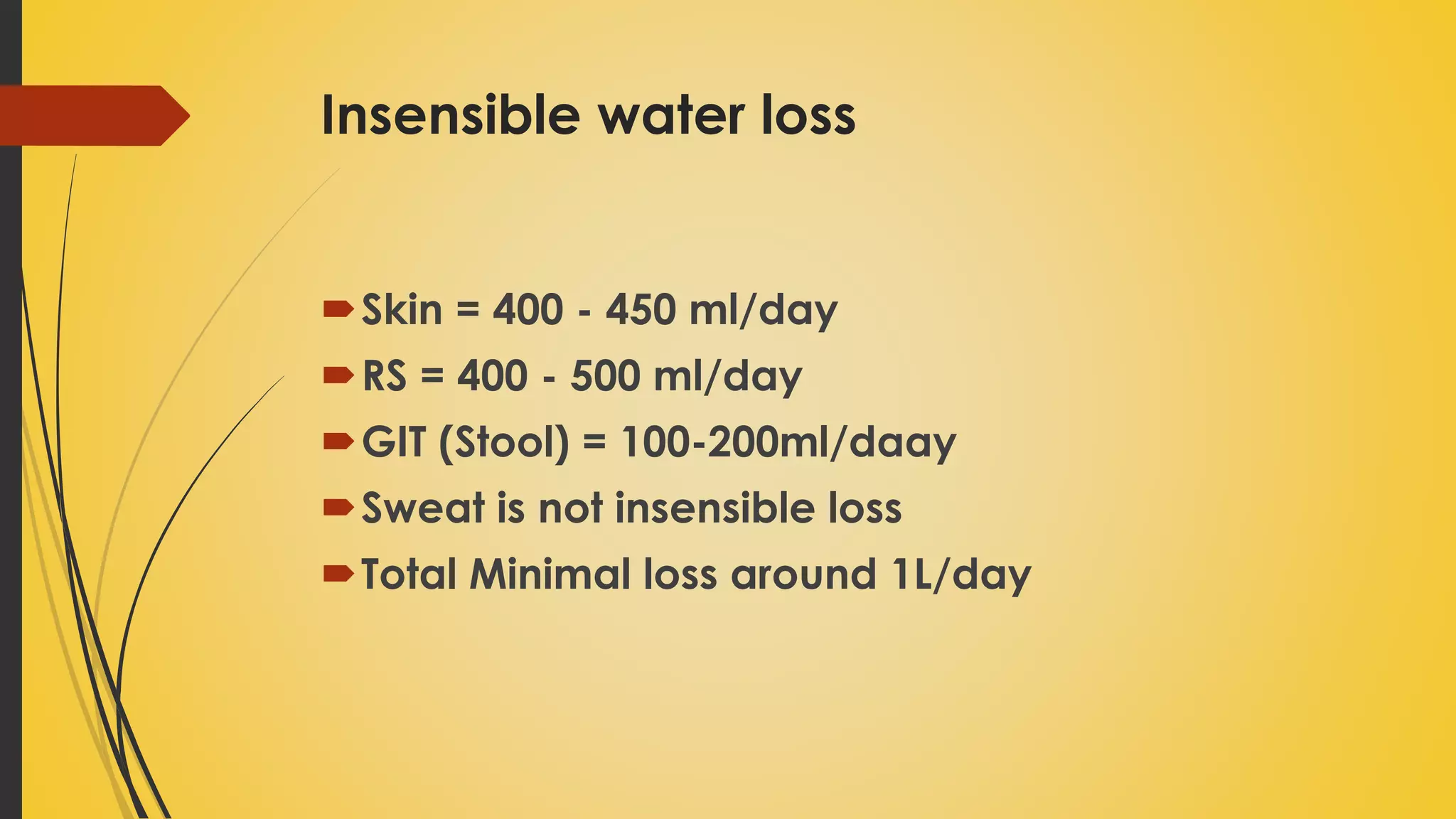
Insensible water loss
Skin = 400 - 450 ml/day
RS = 400 - 500 ml/day
GIT (Stool) = 100-200ml/daay
Sweat is not insensible loss
Total Minimal loss around 1L/day
Calculation
 Daily Total imperative requirement in a surgical patient/
person is
= absolutely required minimal Urine output + 800-1000 ml
 In a 60 kg male
 i.e. 0.6-0.7ml/kg/hr + 800-1000 ml
 40ml/hr = 1000ml + 1000 ml
 2000ml/24 hrs = 80 – 100ml/hr
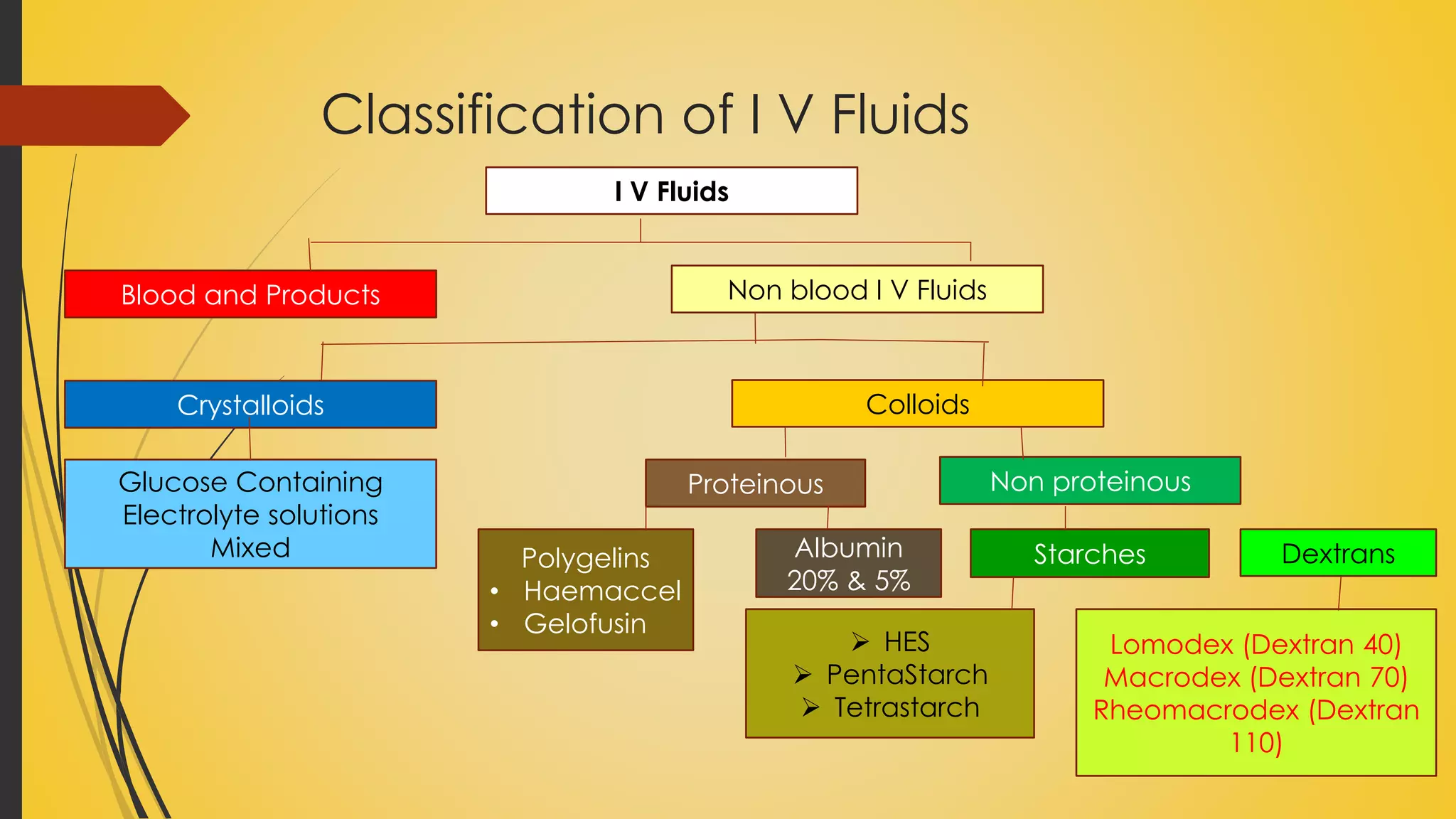
Classification of I V Fluids
Blood and Products
I V Fluids
Non blood I V Fluids
Crystalloids Colloids
Glucose Containing
Electrolyte solutions
Mixed
Proteinous Non proteinous
Polygelins
• Haemaccel
• Gelofusin
Albumin
20% & 5%
Starches Dextrans
 HES
 PentaStarch
 Tetrastarch
Lomodex (Dextran 40)
Macrodex (Dextran 70)
Rheomacrodex (Dextran
110)
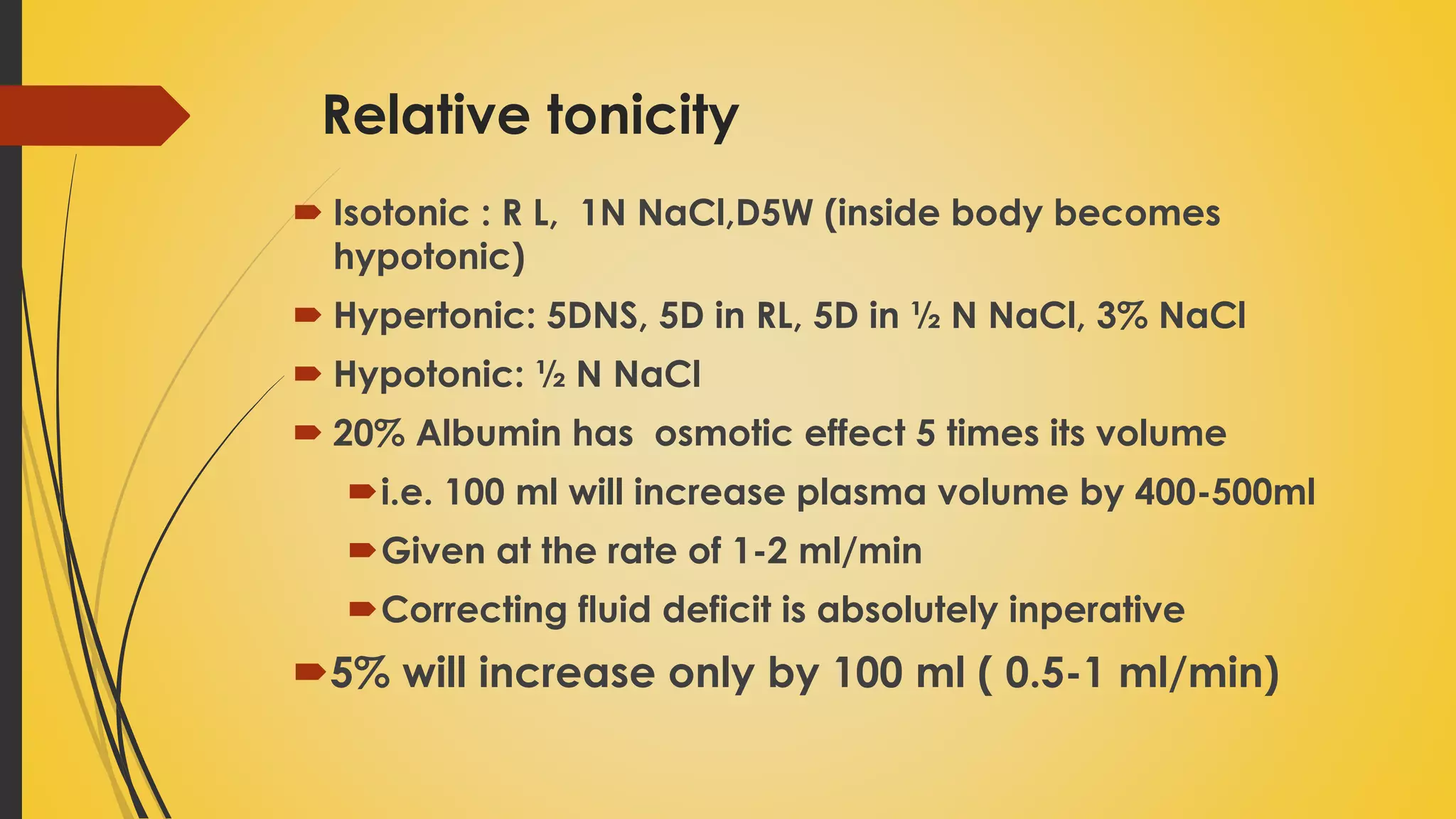
Relative tonicity
 Isotonic : R L, 1N NaCl,D5W (inside body becomes
hypotonic)
 Hypertonic: 5DNS, 5D in RL, 5D in ½ N NaCl, 3% NaCl
 Hypotonic: ½ N NaCl
 20% Albumin has osmotic effect 5 times its volume
i.e. 100 ml will increase plasma volume by 400-500ml
Given at the rate of 1-2 ml/min
Correcting fluid deficit is absolutely inperative
5% will increase only by 100 ml ( 0.5-1 ml/min)
Colloids: Dextrans
 Dextrans are branched polymers of Glucose
molecule
 40, 70 and 110 are, mol. Wts : 40000, 70000 and
110000 Daltons
 40 is 10% while 70 is 6%
 Act as Antithrombotic, by decreasing RBC
aggregation
 Total dose not more than 20ml/kg in 24 hrs
 Hyperglycemic effect
 Not commonly used nowadays
Colloids : starches
 Excellent Volume expanders
 All of the volume remains inside Intra vascular compartment
 Effect lasts for 4-6 hours
 Interference with platelet aggregation: HES> Penta> tetra,
Least
 Increase the volume by nearly 100 to 150 % depending upon
% conc.
 Tetrastarch: Voluven Better of all
 Made from corn starch: least antigenic
 Up to 35ml – 50 ml/ kg/ 24 hours can be given
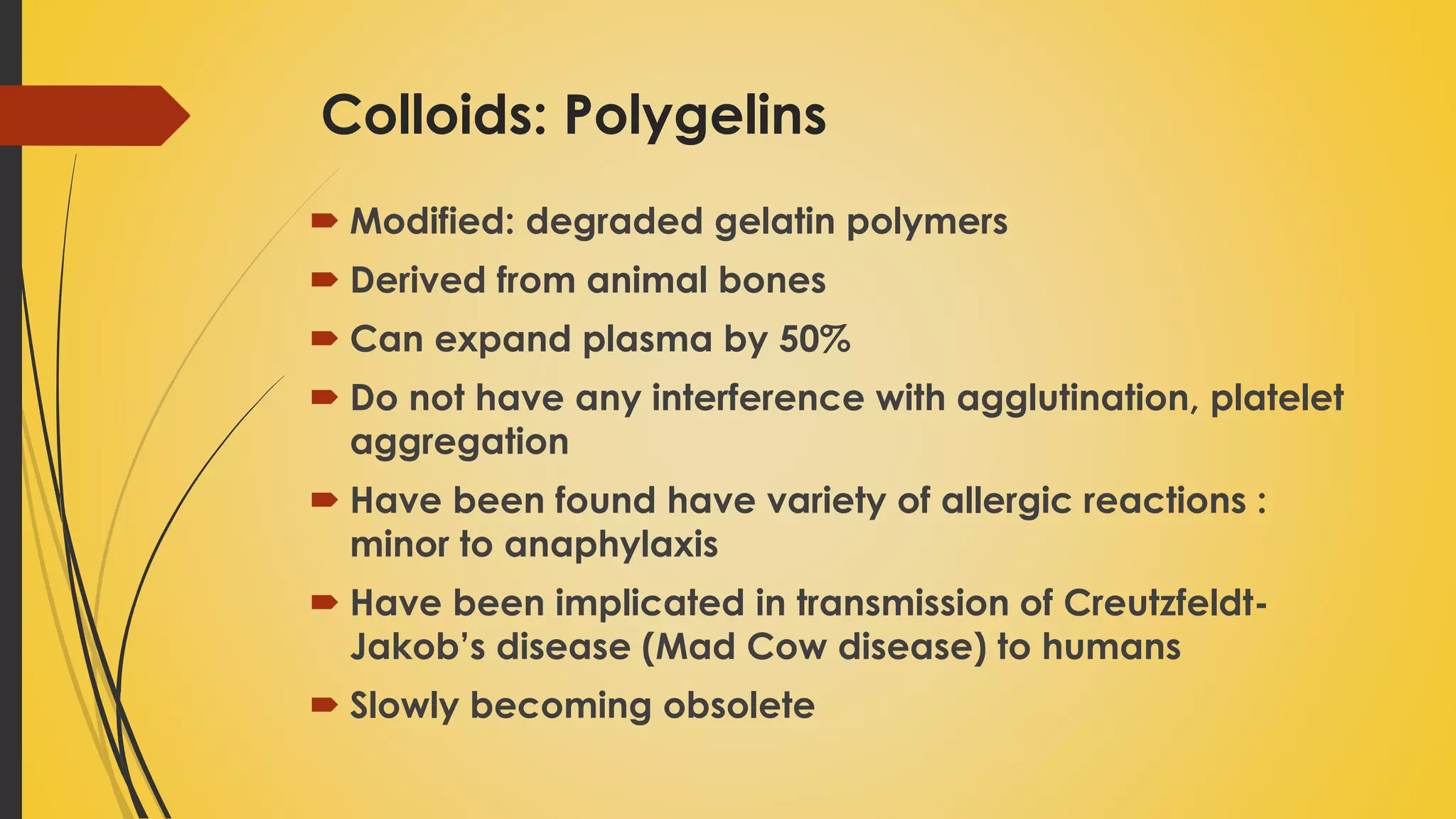
Colloids: Polygelins
 Modified: degraded gelatin polymers
 Derived from animal bones
 Can expand plasma by 50%
 Do not have any interference with agglutination, platelet
aggregation
 Have been found have variety of allergic reactions :
minor to anaphylaxis
 Have been implicated in transmission of Creutzfeldt-
Jakob’s disease (Mad Cow disease) to humans
 Slowly becoming obsolete
Hypovolemia
 ECF Volume Reduced
 Extra renal
Hemorrhage
Gastro-intestinal
Skin
 Renal
Diabetes insipidus
Diabetes mellitus
Drugs: Diuretics
Hypoaldosteronism
Salt wasting nephropathies
Hypovolemia
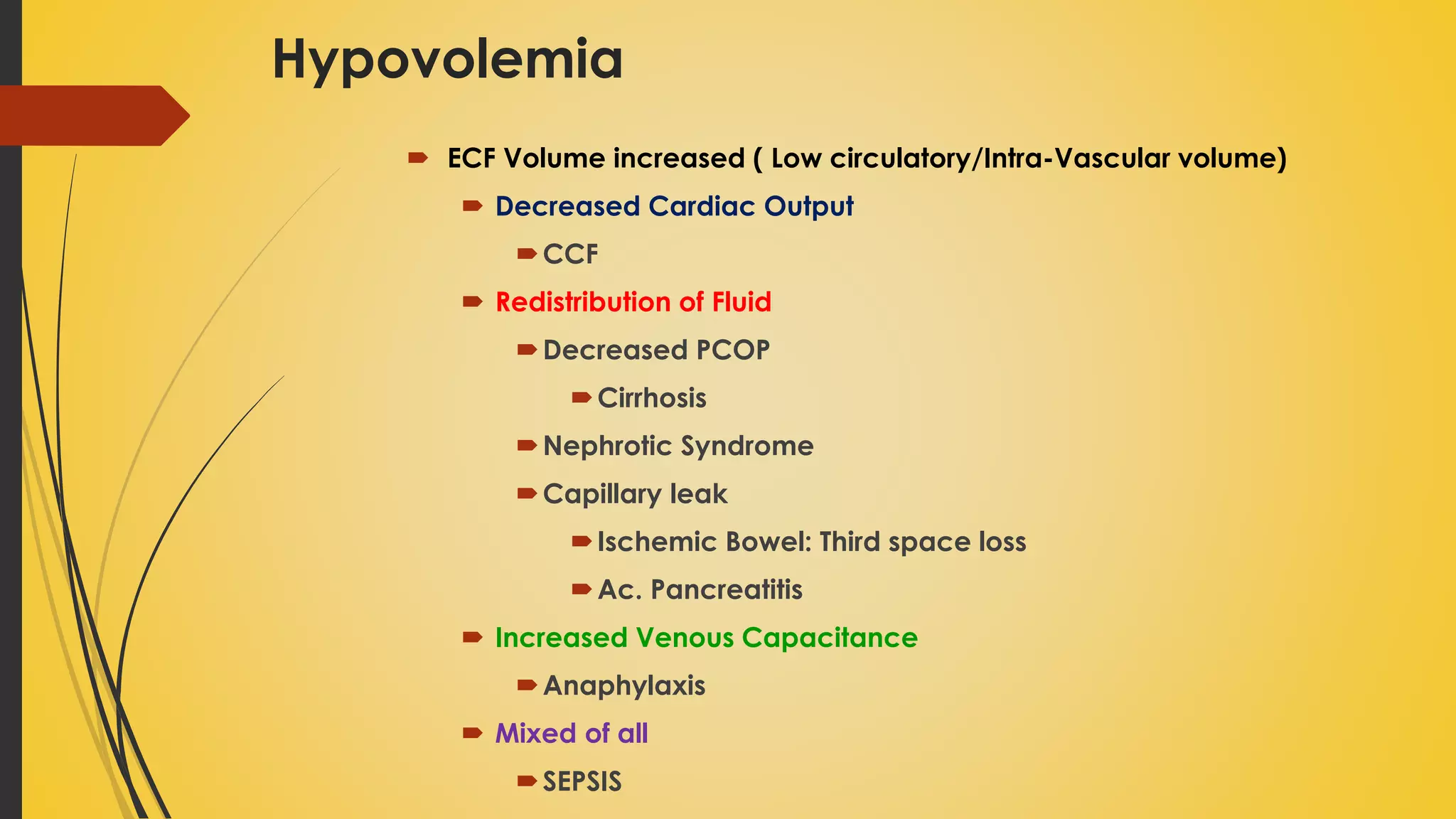
 ECF Volume increased ( Low circulatory/Intra-Vascular volume)
 Decreased Cardiac Output
CCF
 Redistribution of Fluid
Decreased PCOP
Cirrhosis
Nephrotic Syndrome
Capillary leak
Ischemic Bowel: Third space loss
Ac. Pancreatitis
 Increased Venous Capacitance
Anaphylaxis
 Mixed of all
SEPSIS
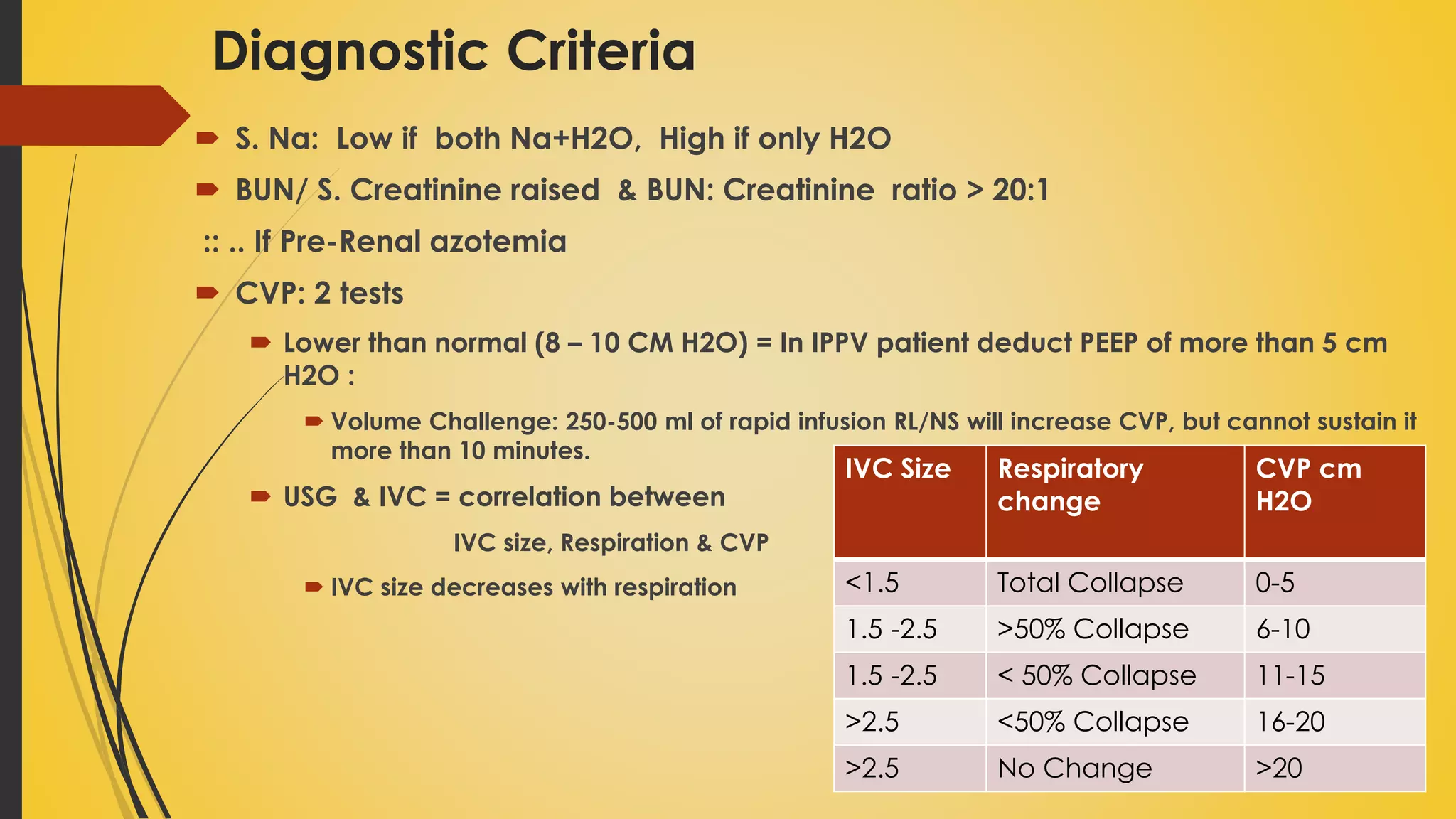
Diagnostic Criteria
 S. Na: Low if both Na+H2O, High if only H2O
 BUN/ S. Creatinine raised & BUN: Creatinine ratio > 20:1
:: .. If Pre-Renal azotemia
 CVP: 2 tests
 Lower than normal (8 – 10 CM H2O) = In IPPV patient deduct PEEP of more than 5 cm
H2O :
 Volume Challenge: 250-500 ml of rapid infusion RL/NS will increase CVP, but cannot sustain it
more than 10 minutes.
 USG & IVC = correlation between
IVC size, Respiration & CVP
 IVC size decreases with respiration
IVC Size Respiratory
change
CVP cm
H2O
<1.5 Total Collapse 0-5
1.5 -2.5 >50% Collapse 6-10
1.5 -2.5 < 50% Collapse 11-15
>2.5 <50% Collapse 16-20
>2.5 No Change >20
Hemorrhagic Hypovolemia: Surgical
 Calculate Estimated Blood Volume (EBV): approx. 75-80 ml/ Kg
 Categorize the blood loss: Fromme - Boezaart Surgical Field Grading
Boezaart AP, van der Merwe J, Coetzee A. Comparison of sodium nitroprusside- and esmolol-induced controlled hypotension for functional
endoscopic sinus surgery. Canadian Journal of Anaesthesia 1995; 42: 373-6
F-B
Grade
% age of
EBV
Fluid to be
transfused
1 - 2 Less than
10
Maintenance with
NaCl/ RL=
1ml/kg/hr
3 10 - 20 Increase the rate
of Crystalloid =
2ml/kg/hr
4 20 – 25% Colloid
5 25% or
more
Stat Blood
transfusion
Management : Non Hemorrhagic Hypovolemia
 Intra-Venous Fluids : Irrespective of Na level.. Initial fluid is NS
 If Na low– 0.9% N NaCl
 If Hypernatremia : ½ N NaCl
 Strict I/O chart with Hourly urine record
 Choice of I V fluid as per I-V Compartment stay : 1 Liter
Type of fluid Intra vascular in
ml
Interstitium in ml Intra cellular in
ml
5% D/W 75-100 (10%) 230 - 260 ( 20-
23%)
670 (67%)
1 N NaCl 300 (30%) 700 (70%) 0 (0%)
1/2N NaCl 170 (17%) 500 (50%) 330 (33%)
Colloids 1000 (100%) 0 (0%) 0(0%)
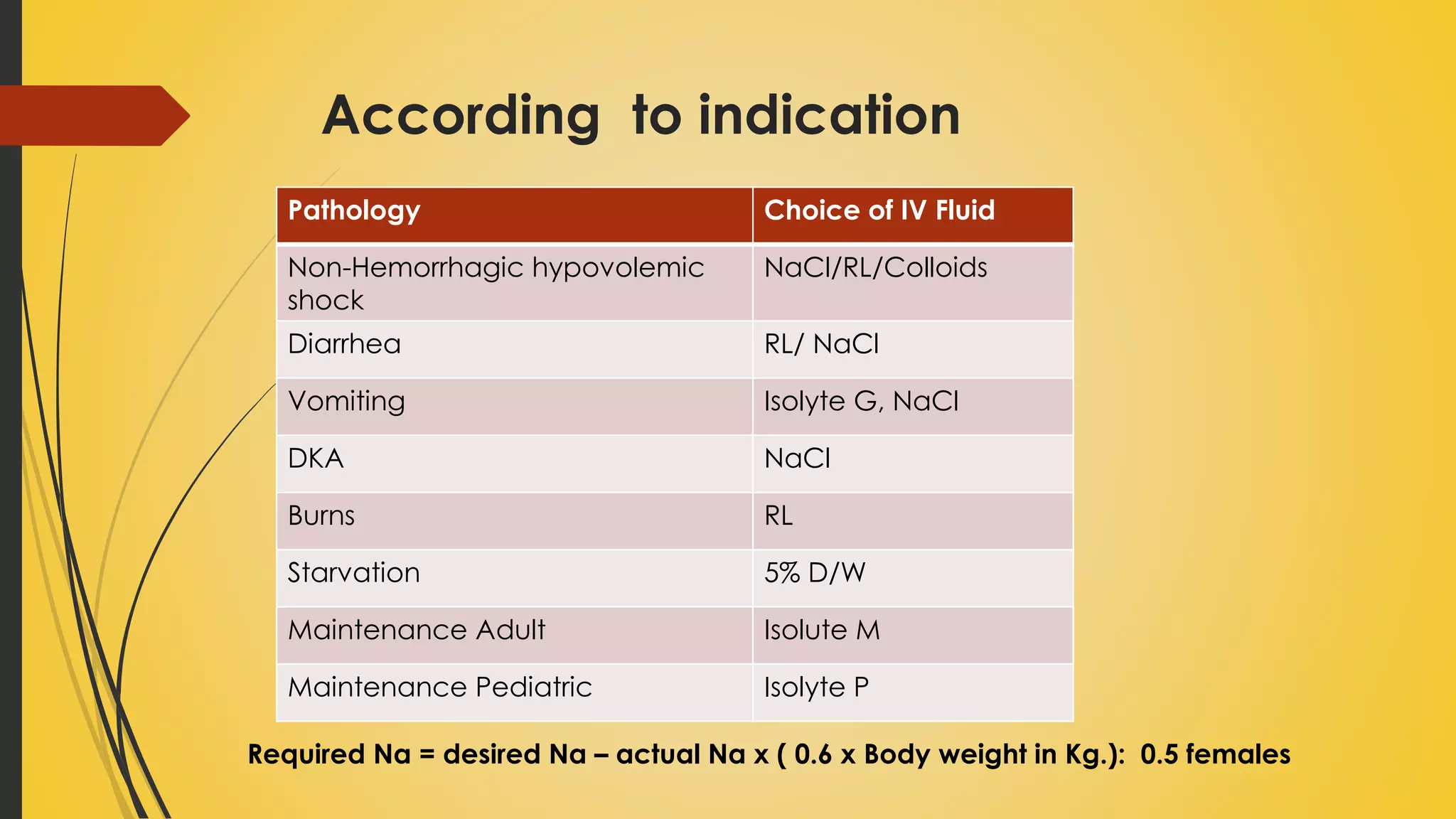
According to indication
Pathology Choice of IV Fluid
Non-Hemorrhagic hypovolemic
shock
NaCl/RL/Colloids
Diarrhea RL/ NaCl
Vomiting Isolyte G, NaCl
DKA NaCl
Burns RL
Starvation 5% D/W
Maintenance Adult Isolute M
Maintenance Pediatric Isolyte P
Required Na = desired Na – actual Na x ( 0.6 x Body weight in Kg.): 0.5 females
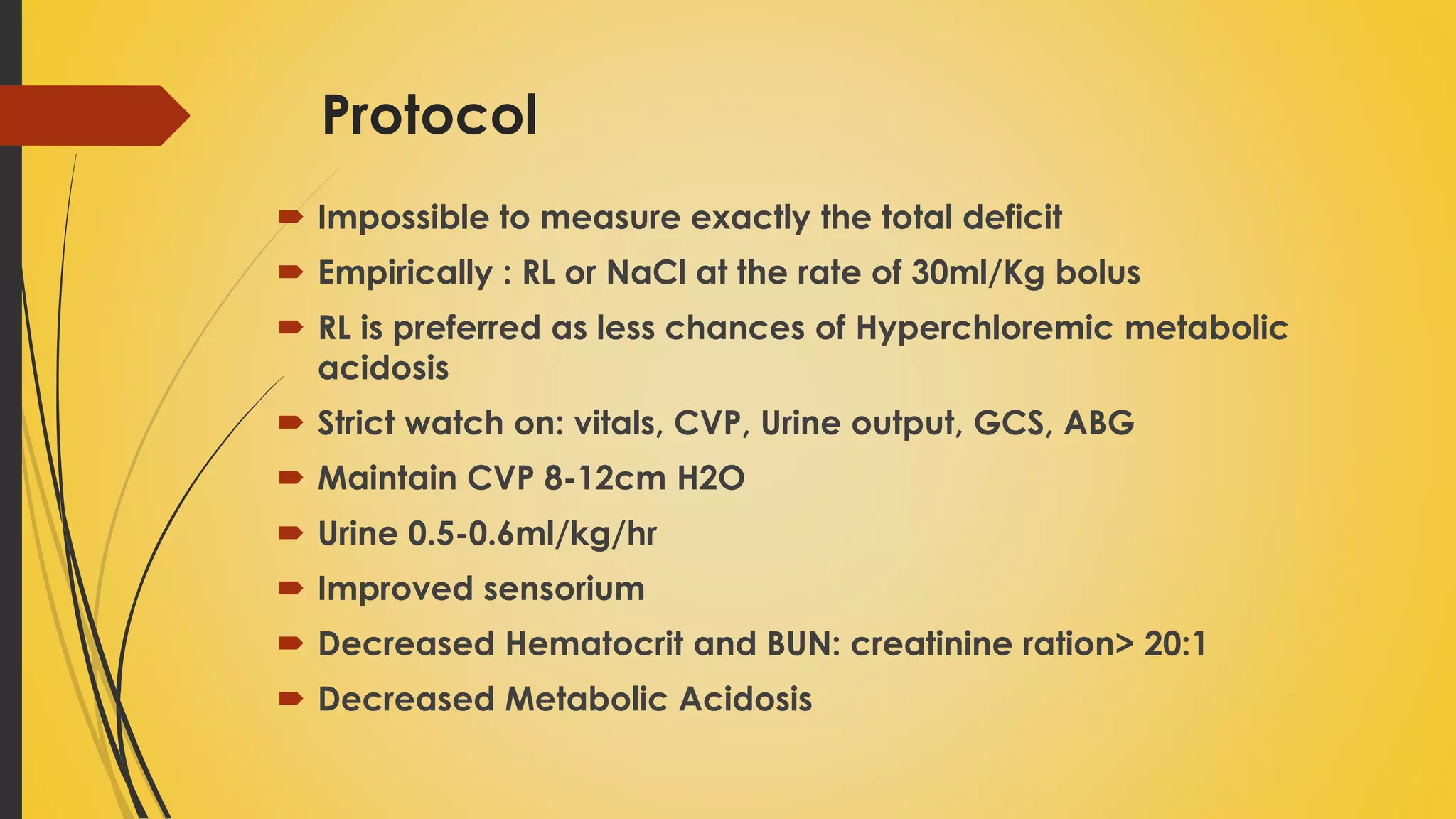
Protocol
 Impossible to measure exactly the total deficit
 Empirically : RL or NaCl at the rate of 30ml/Kg bolus
 RL is preferred as less chances of Hyperchloremic metabolic
acidosis
 Strict watch on: vitals, CVP, Urine output, GCS, ABG
 Maintain CVP 8-12cm H2O
 Urine 0.5-0.6ml/kg/hr
 Improved sensorium
 Decreased Hematocrit and BUN: creatinine ration> 20:1
 Decreased Metabolic Acidosis
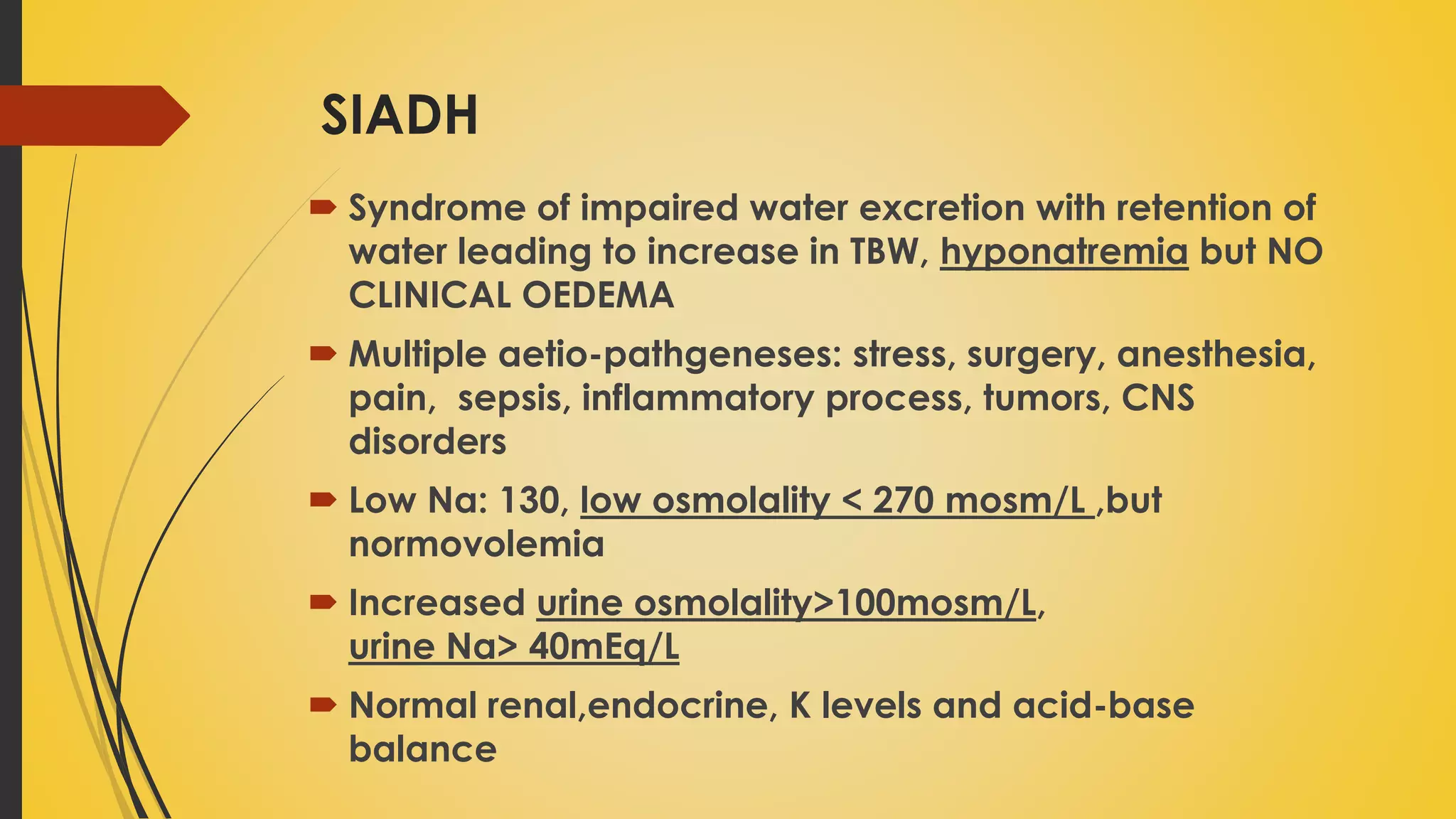
SIADH
 Syndrome of impaired water excretion with retention of
water leading to increase in TBW, hyponatremia but NO
CLINICAL OEDEMA
 Multiple aetio-pathgeneses: stress, surgery, anesthesia,
pain, sepsis, inflammatory process, tumors, CNS
disorders
 Low Na: 130, low osmolality < 270 mosm/L ,but
normovolemia
 Increased urine osmolality>100mosm/L,
urine Na> 40mEq/L
 Normal renal,endocrine, K levels and acid-base
balance
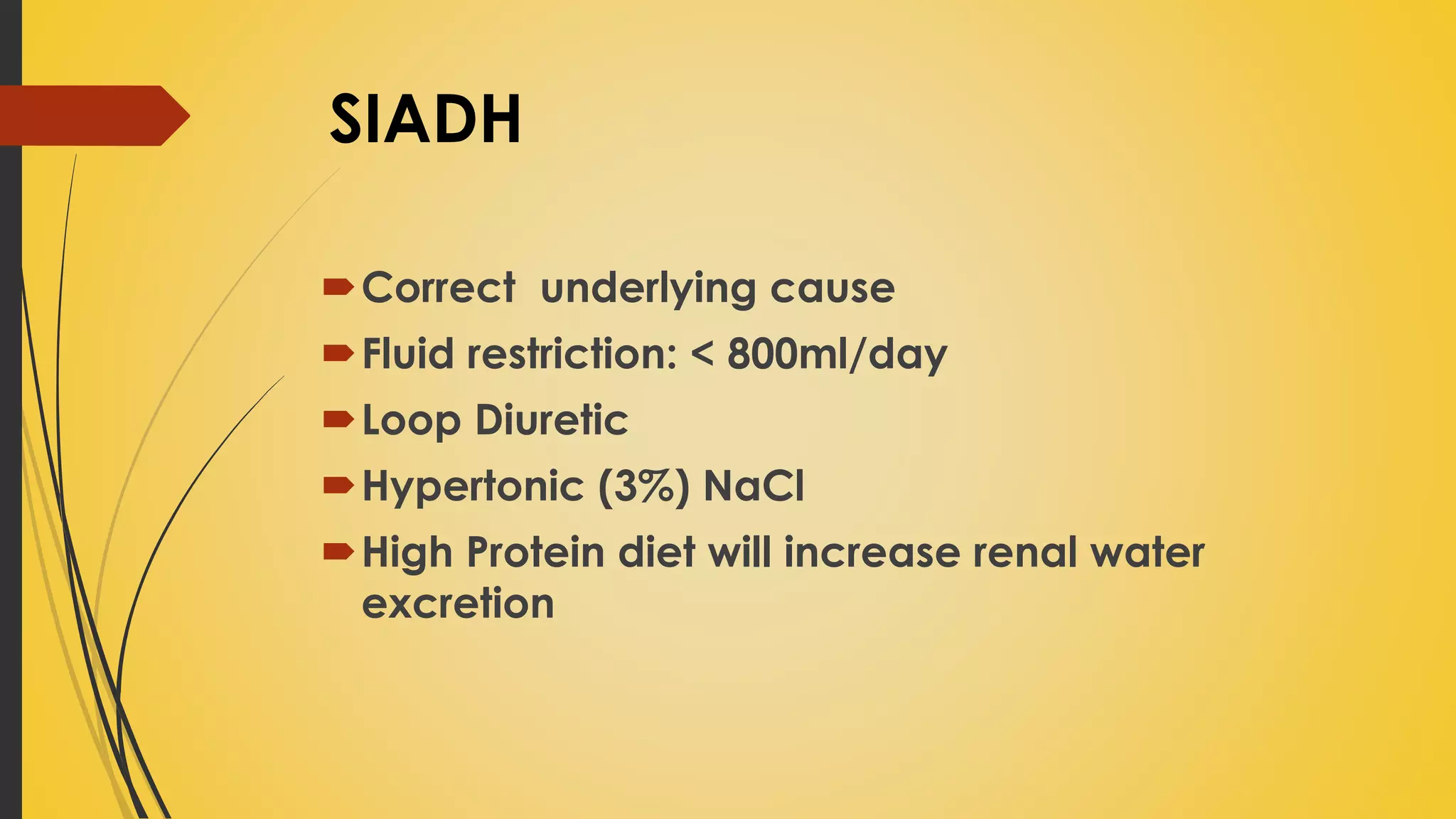
Correct underlying cause
Fluid restriction: < 800ml/day
Loop Diuretic
Hypertonic (3%) NaCl
High Protein diet will increase renal water
excretion
SIADH
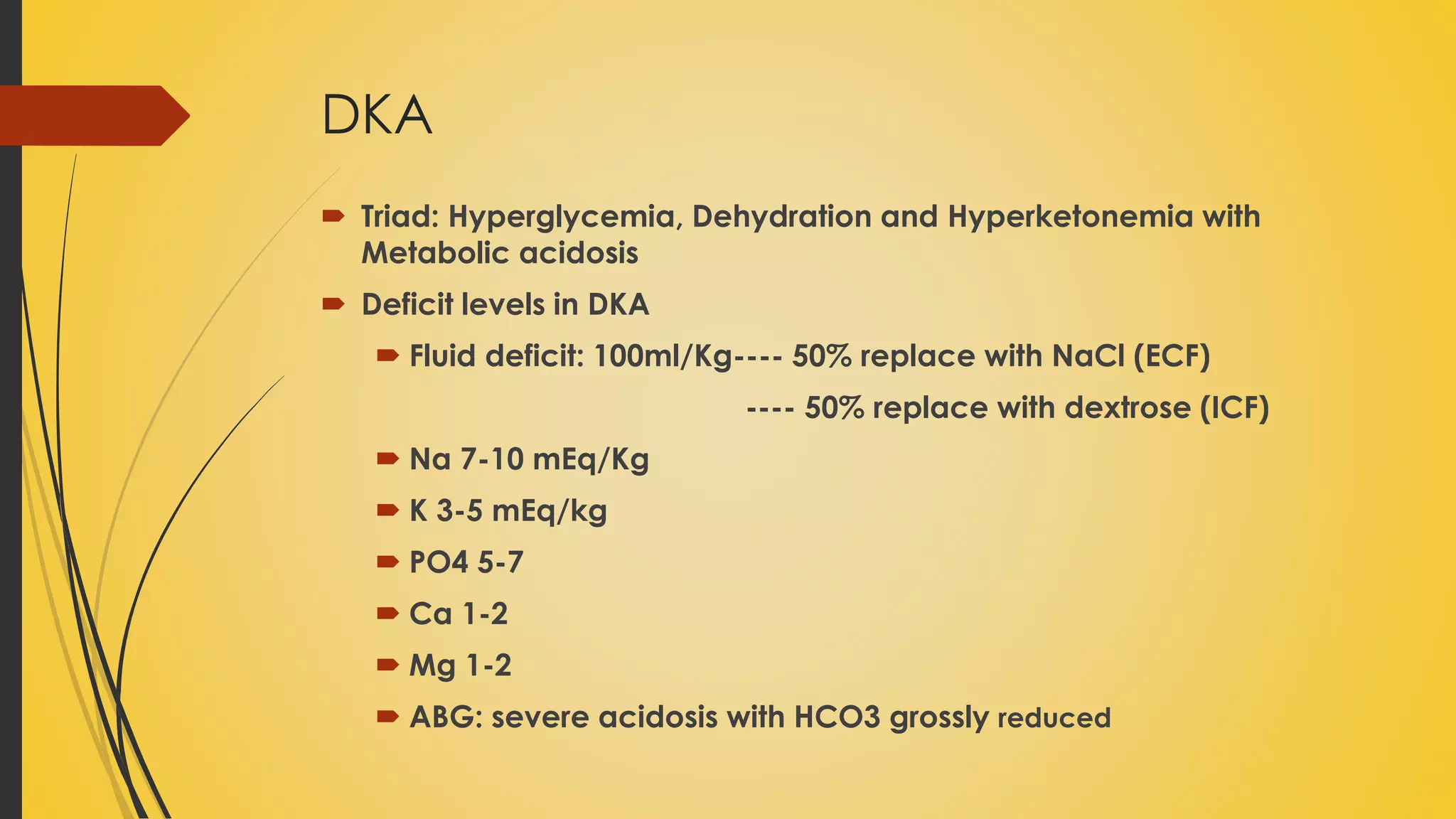
DKA
 Triad: Hyperglycemia, Dehydration and Hyperketonemia with
Metabolic acidosis
 Deficit levels in DKA
 Fluid deficit: 100ml/Kg---- 50% replace with NaCl (ECF)
---- 50% replace with dextrose (ICF)
 Na 7-10 mEq/Kg
 K 3-5 mEq/kg
 PO4 5-7
 Ca 1-2
 Mg 1-2
 ABG: severe acidosis with HCO3 grossly reduced
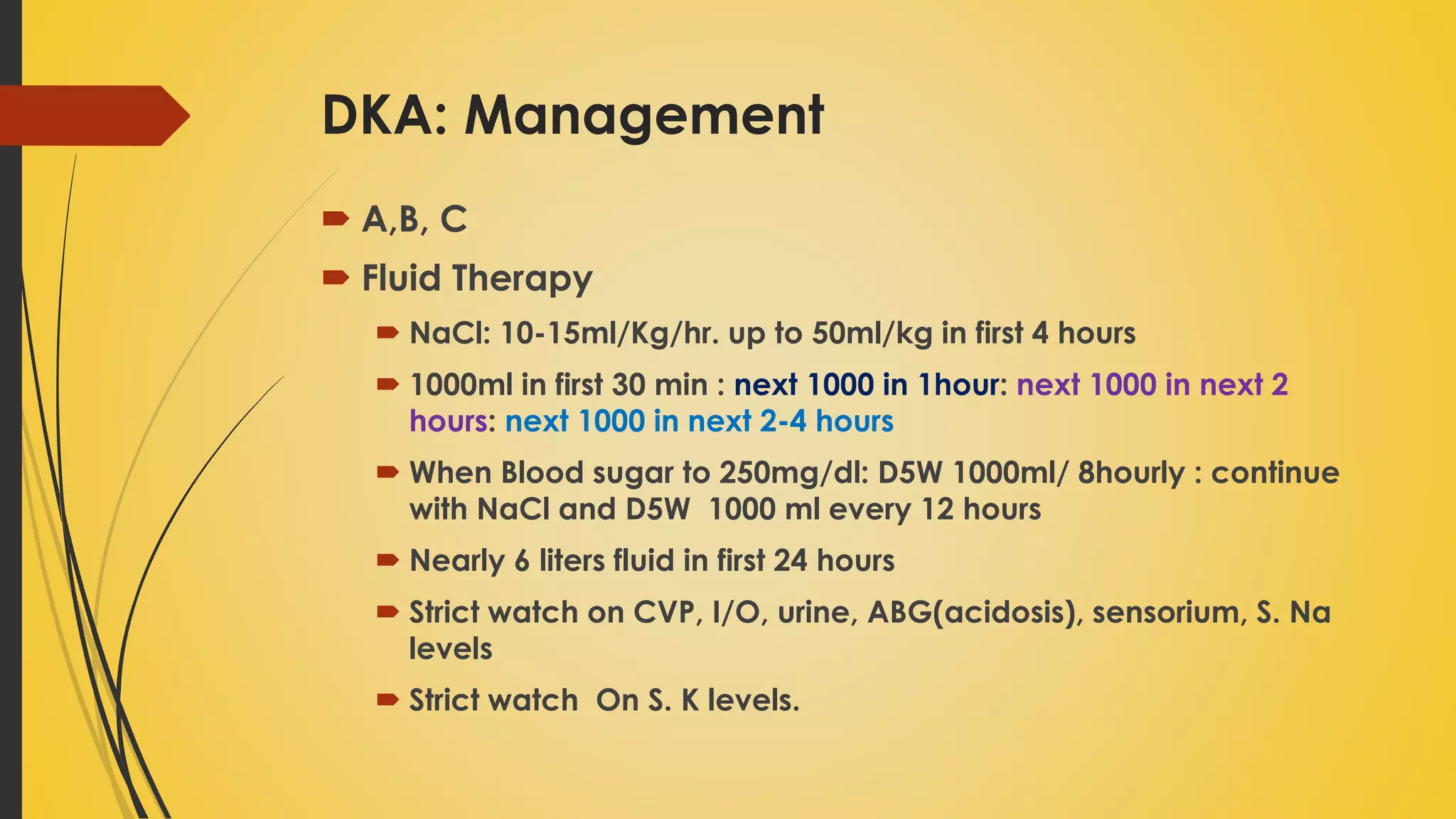
DKA: Management
 A,B, C
 Fluid Therapy
 NaCl: 10-15ml/Kg/hr. up to 50ml/kg in first 4 hours
 1000ml in first 30 min : next 1000 in 1hour: next 1000 in next 2
hours: next 1000 in next 2-4 hours
 When Blood sugar to 250mg/dl: D5W 1000ml/ 8hourly : continue
with NaCl and D5W 1000 ml every 12 hours
 Nearly 6 liters fluid in first 24 hours
 Strict watch on CVP, I/O, urine, ABG(acidosis), sensorium, S. Na
levels
 Strict watch On S. K levels.
DKA : Insulin
Role of Insulin: if K > 3.3 mEq/Lit
 After intial NaCl infusion has started
 Initial Infusion of 0.15 Unit/Kg regular = 10 units/ hr
 Or Add 50 units in 50 ml NaCl
 6units/hr infusion initially
 Reduce to 5 units/hr when glucose < 500mg/dl
 Reduce to 4 units/hr when glucose < 400 mg/dl
 Reduce to 3 units/hr when glucose < 300 mg/dl
 Reduce to 2 units/hr when glucose < 200 mg/dl
 Maintain on 0.05-0.1unit/kg/ hr infusion
 Switch over to sub cutaneous once sugar <200, HCO3 >18
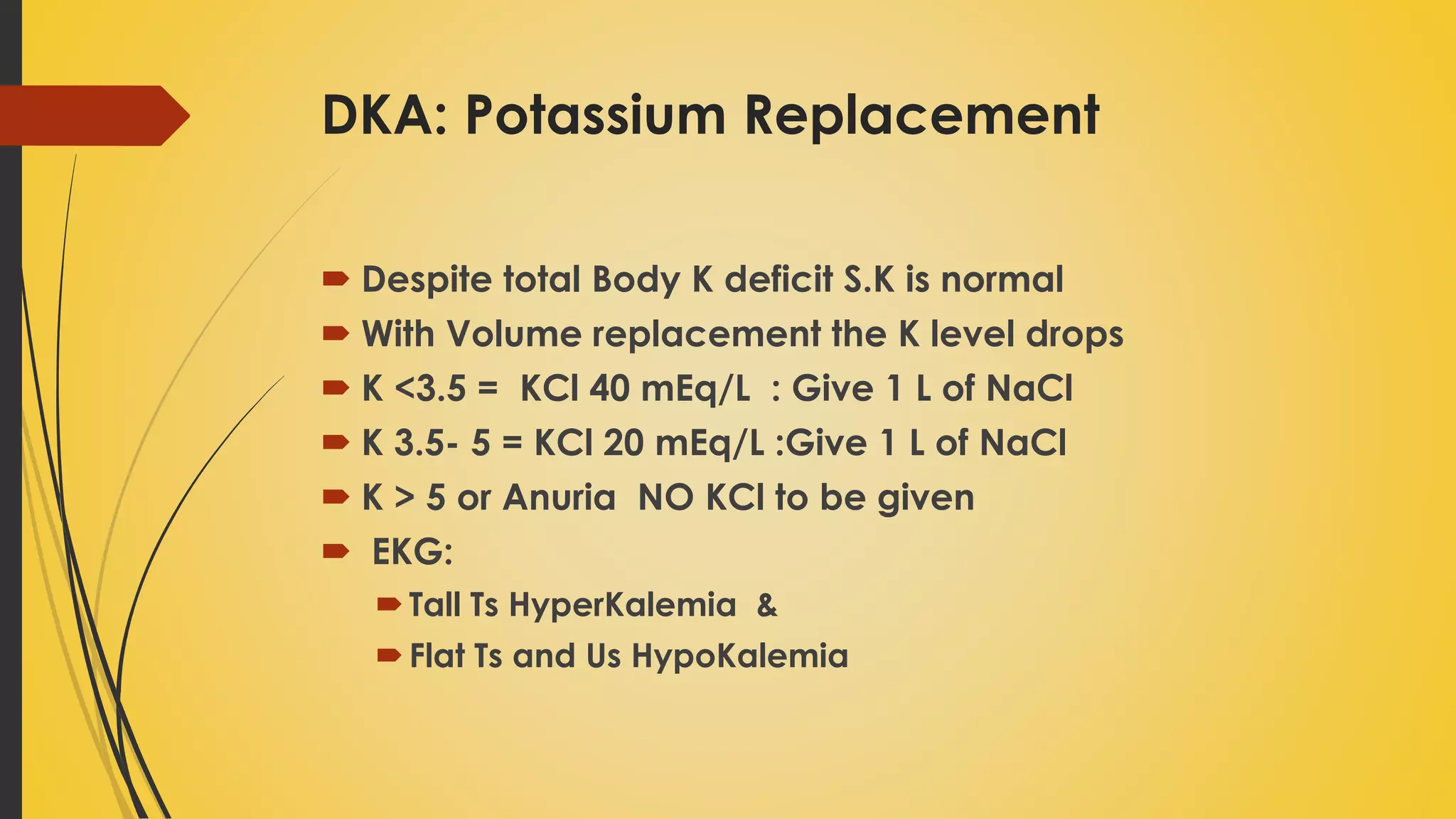
DKA: Potassium Replacement
 Despite total Body K deficit S.K is normal
 With Volume replacement the K level drops
 K <3.5 = KCl 40 mEq/L : Give 1 L of NaCl
 K 3.5- 5 = KCl 20 mEq/L :Give 1 L of NaCl
 K > 5 or Anuria NO KCl to be given
 EKG:
Tall Ts HyperKalemia &
Flat Ts and Us HypoKalemia
DKA: HCO3
 Not Recommended routinely
 Only if
pH <7, Shock/ Coma, CVS/RS , Hyper Kalemia
 If ABG not available:
 (24 - pt’s HCO3) x (0.5 x Wt. in Kgs.)
 If ABG available:
HCO3 required = BE x 1/3 of Body Wt. in Kg. & ½ correction
DKA : Supportive T/t
 O2 By mask/ Venti-Mask / ETT & IPPV
 CVP
 N G / Urinary Catheter = I/O Balance
 Colloid If MAP< 60 mmHg/ Syst BP< 90mm Hg
 Antibiotics/Gastric Prophylaxis/
 Mg and PO4 correction if required
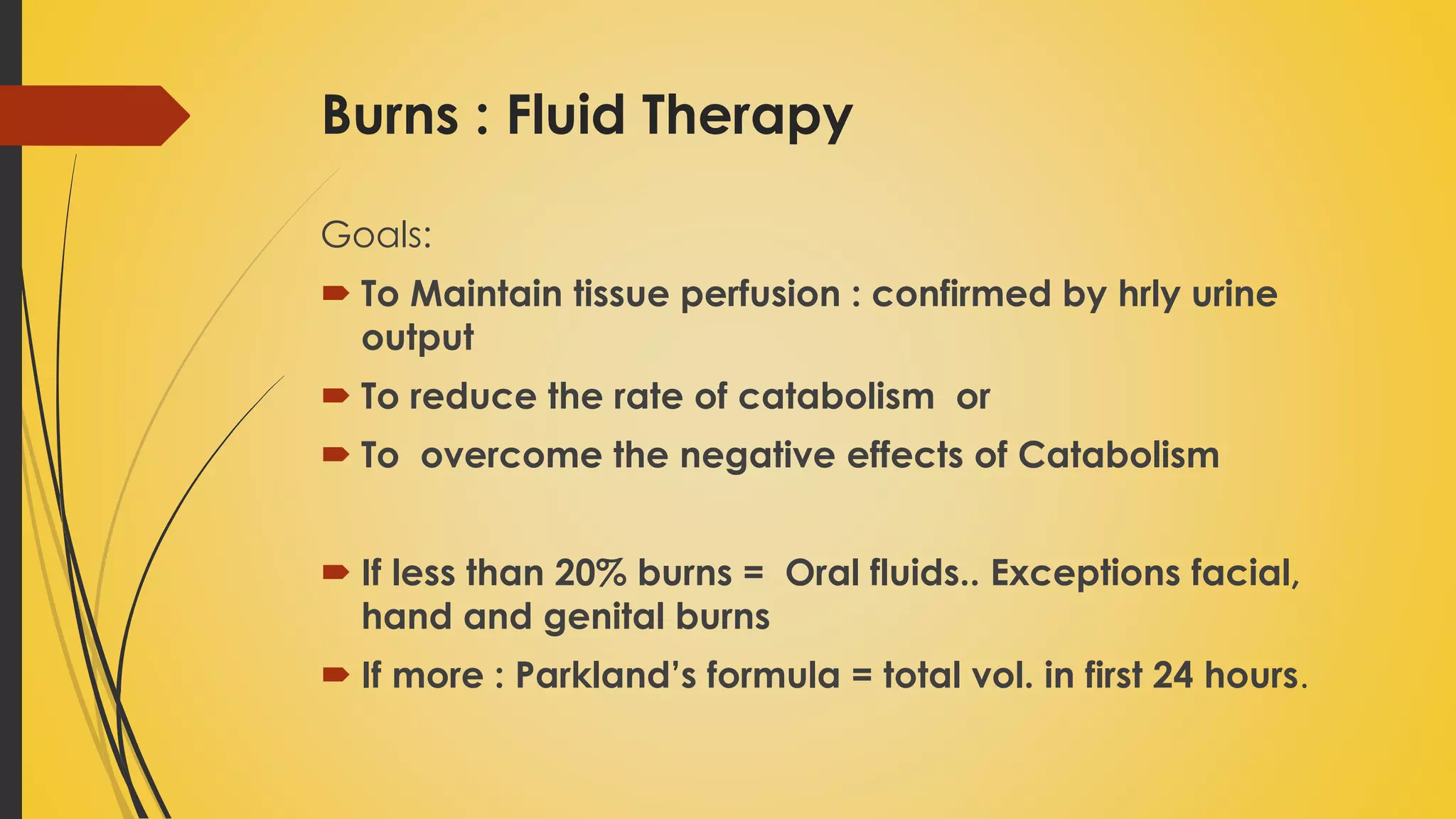
Burns : Fluid Therapy
Goals:
 To Maintain tissue perfusion : confirmed by hrly urine
output
 To reduce the rate of catabolism or
 To overcome the negative effects of Catabolism
 If less than 20% burns = Oral fluids.. Exceptions facial,
hand and genital burns
 If more : Parkland’s formula = total vol. in first 24 hours.
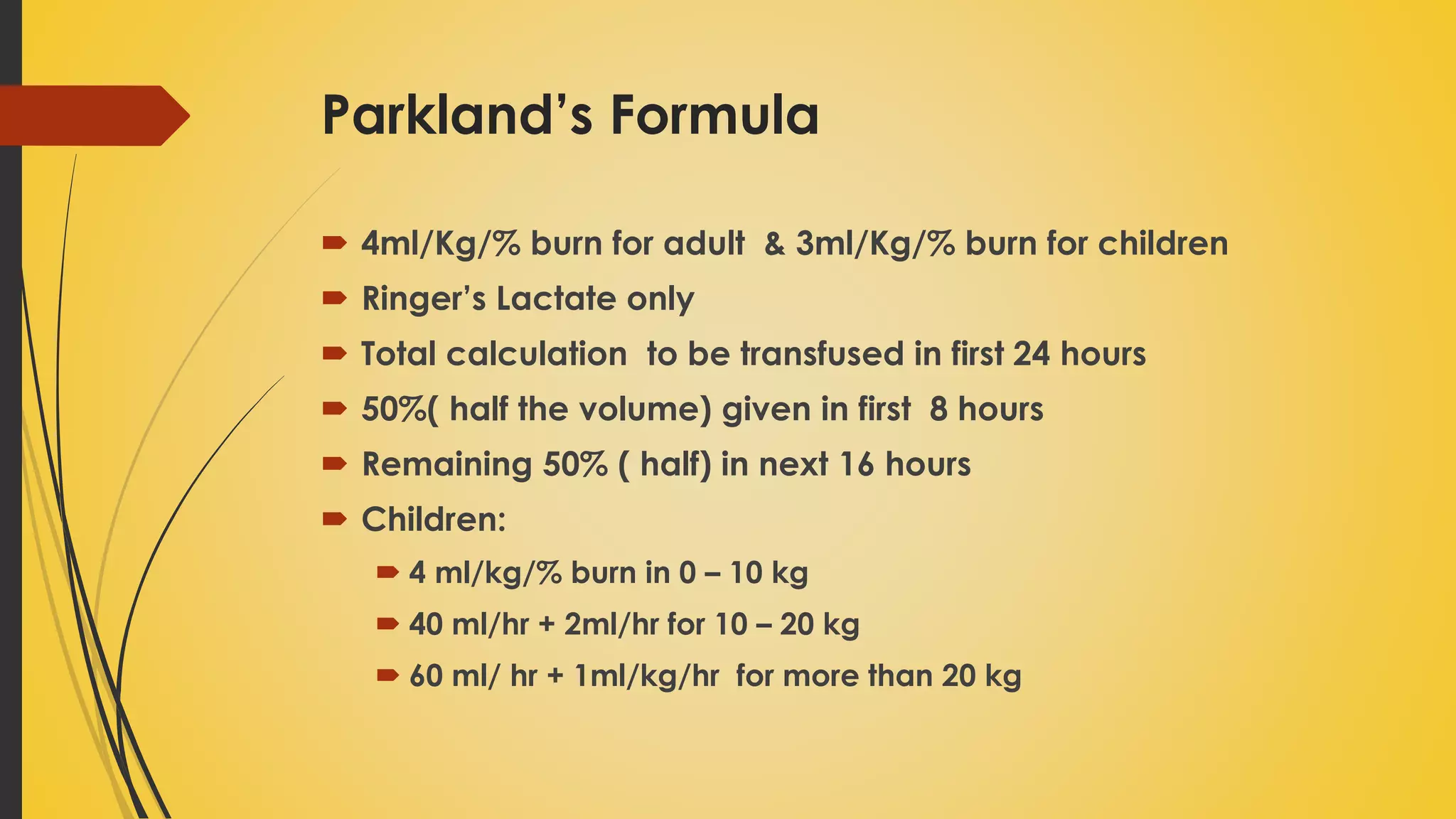
Parkland’s Formula
 4ml/Kg/% burn for adult & 3ml/Kg/% burn for children
 Ringer’s Lactate only
 Total calculation to be transfused in first 24 hours
 50%( half the volume) given in first 8 hours
 Remaining 50% ( half) in next 16 hours
 Children:
 4 ml/kg/% burn in 0 – 10 kg
 40 ml/hr + 2ml/hr for 10 – 20 kg
 60 ml/ hr + 1ml/kg/hr for more than 20 kg
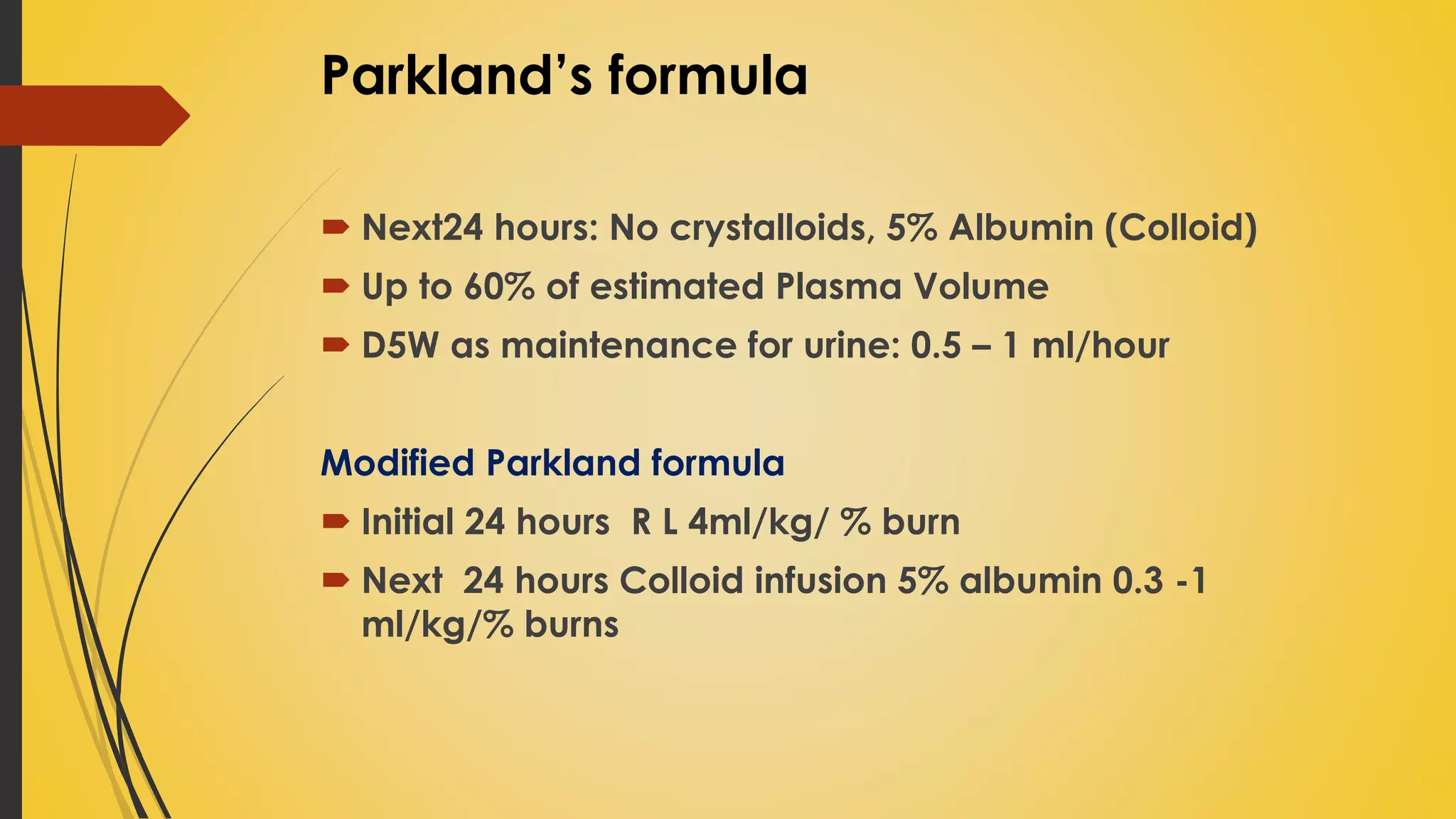
 Next24 hours: No crystalloids, 5% Albumin (Colloid)
 Up to 60% of estimated Plasma Volume
 D5W as maintenance for urine: 0.5 – 1 ml/hour
Modified Parkland formula
 Initial 24 hours R L 4ml/kg/ % burn
 Next 24 hours Colloid infusion 5% albumin 0.3 -1
ml/kg/% burns
Parkland’s formula
Conclusion
Fluid Therapy is the ‘ Make’ or ‘Break’ for many
patients.
Especially in evolving/ imminent or existing Crisis
Understanding and executing appropriate fluid
therapy is the most essential duty of a clinician
A small oversight or miscalculation can cause a
major disaster for the patient
Continuous updating of our knowledge is most
essential
Thank You!

Prof. Mridul M. Panditrao's Fluid/s

  • 1.
  • 2.
    Prof. Mridul M.Panditrao Professor, Head & In-Charge of ICU Dean of Academic Affairs Department of Anaesthesiology & Intensive Care Adesh Institute of Medical Sciences & Research (AIMSR) Adesh University Bathinda, Punjab, India
  • 3.
    Introduction  Water islife!  Journey of life starts in Water!  Water is also a dramatic Paradox  Too less or too much = Incompatible with life  So the life is geared up around maintaining the equilibrium !!  In Fact entire life of the living thing is spent in maintaining  The fluid balance  pH balance
  • 4.
    Introduction  Quantitatively mostimportant Body constituent  Males = 60% Of the total body weight  Females 50%  The lesser percentage in females because of larger fat content.  Water is found in each and every tissue of the body, including bones and cartilages!
  • 5.
    Body Compartments Total BodyMass Total Body Water (TBW) Extra Cellular Fluid (ECF) Intra Cellular Fluid (ICF) Solid Tissues Intra Vascular Fluid Interstitial fluid
  • 6.
    Distribution of Bodywater Intra-Vascular Compartment 5% Interstitial Compartment 15% Intra- Cellular Compartment 40% Tissues 40% Percentage Distribution of Various Body Compartments Intra-Vascular Compartment Interstitial Compartment Intra- Cellular Compartment Tissues
  • 7.
    Definitions Total Body Water(TBW) :  The sum of intracellular water and extracellular water (volume)  The latter consisting of  the interstitial or tissue fluid  the intravascular fluid or plasma.  About 60% of body weight http://medical-dictionary.thefreedictionary.com/total+body+water http://www.medilexicon.com/medicaldictionary.php?t=99650
  • 8.
    Definitions  The Extra-CellularFluid (ECF): The water content found outside the body cells  Constitutes two major compartments Inra-vascular & interstitial  Also contain the trans-cellular fluids that are formed by active transport processes Include the fluids of the eye and the secretory glands e.g. saliva, GIT and sweat glands In the cavities and channels of the brain and spinal cord (Cerebrospinal fluid, CSF) Lymph In body cavities lined with serous (moisture-exuding) membrane and In muscular and other body tissues Ingested water or water produced by the body's metabolic processes (metabolic water). http://www.britannica.com/EBchecked/topic/199041/extracellular-fluid
  • 9.
    Definitions Intra Cellular Fluid( ICF):  a fluid within cell membranes of the tissue cells, throughout most of the body  containing dissolved solutes that are essential to electrolytic balance and to healthy metabolism.  Also called intracellular water  constituting about 30–40% of the body weight. http://medical-dictionary.thefreedictionary.com/ www.medilexicon.com/medicaldictionary.php?t=34113
  • 10.
    Rule of 1/3 Out of all the compartments in TBW  We can manipulate only ECF Compartment  More specifically only Intra-Vascular Compartment  Quantity of ECF is 1/3rd of the TBW  Quantity of Intravascular Compartment is 1/3rd of ECF
  • 11.
    Intra Vascular Volume:Blood  Blood Volume: is the volume of blood (both red blood cells and plasma) in the circulatory system of any individual.  Effective Circulating Volume: that proportion of Intra- vascular volume ( thus of ECF) that is effectively perfusing the tissue cells  It is in direct proportion to the  ECF  Solute Content dissolved in it ( esp. Na+ salts)  Solutes hold the water in ECF
  • 12.
    Solutes: Solute: A substancedissolved in another substance or water both of in-organic as well as organic origin Solutes in ECF: by and large of in-organic type E.g. Na+ , Cl - , HCO3 - , Solutes in ICF: Mixture of Both E.g. K+, Organic Phosphate esters( ATP, Creatine Phosphate… etc.)
  • 13.
    •Mole - Amole is the amount of a substance that contains the number of molecules equal to Avogadro's number. •The mass in grams of one mole of a substance is the same as the number of atomic mass units in one molecule of that substance. •i.e. the molecular weight of the substance expressed as grams) •The mole (symbol: mol) is the base unit in the SI system for the amount of a substance •Molality of a solution is the number of moles of solute per kilogram of solvent •Molarity of a solution is the number of moles of solute per liter of solution  Avogadro's number - this is the number of molecules in one mole of a substance (ie 6.022 x 10²³)
  • 14.
    Osmole The amount ofa substance that yields, in ideal solution that number of particles = (Avogadro’s number) that would depress the freezing point of the solvent by 1.86K
  • 15.
    Osmolality & Osmolarity Osmolality: Osmolality is a measure of the number of solute particles present in solution  Is independent of the size or weight of the particles  Expressed as : milliosmoles per kilogram of water ( m Osmol/Kg)  Osmolality of a solution is the number of osmoles of solute per kilogram of solvent ( m Osmol/Kg)  Osmolarity of a solution is the number of osmoles of solute per liter of solution ( m Osmol/L) http://www.anaesthesiamcq.com/FluidBook/fl2_3.php
  • 16.
    Osmolality & Osmolarity The value measured in the laboratory is usually referred to as the ‘osmolality’  The value calculated from the solute concentrations is reported by the laboratory as the ‘osmolarity’  The Osmolar gap is the difference between these two values
  • 17.
    Tonicity  Tonicity isthe effective osmolality  Is equal to the sum of the concentrations of the solutes which have the capacity to exert an osmotic force across the membrane  Osmolality is a property of a particular solution and is independent of any membrane  Tonicity is a property of a particular solution in reference to a particular membrane
  • 18.
    Tonicity  It isstrictly wrong to say this or that fluid is isotonic with plasma  what should be said is that the particular fluid is isotonic with plasma in reference to the cell membrane  By convention, this specification is not needed in practice as it is understood that the cell membrane is the reference membrane involved.
  • 19.
    Tonicity Vs. Osmolality refers to the relative concentration of two solutions.  hyperosmotic, means the concentration of solutes outside the cell is greater than the concentration inside the cell • refers to what the cell does in a certain environment. • If the environment is hypertonic, the cell will shrink due to water leaving the cell. • Hypotonic means water enters the cell makes it to expand and possibly explode.  Effect is same:  If a hyperosmolar/ hypertonic solution was administered to a patient, this would tend to cause water to move out of the cell.
  • 20.
    Electrolytes: definition An electrolyte isa substance that ionizes when dissolved in suitable ionizing solvents such as water  This includes most soluble salts, acids, and bases  Some gases, such as hydrogen chloride, under conditions of high temperature or low pressure can also function as electrolytes  Cations: Positively charged e.g. Na+, K+, Ca++, Mg++  Anions: Negatively Charged e.g. Cl-, HCO-, OH-, HPO4-- ,SO4-- http://en.wikipedia.org/wiki/Electrolyte
  • 21.
    Main Electrolytes perCompartment Electrolytes (mEq/L) ECF: Cations ECF: Anions ICF: Cations ICF: Anions Sodium Na+ 135 - 145 - 8 -10 Potassium K+ 3.5 - 5.5 148 -152 Calcium Ca++ 7 - 10 0.001 Magnesium Mg++ 1.5 - 4 40! Chloride Cl- 95 -105 1-2 Bicarbonate HCO3 - 20 - 24 4-7 Phosphate HPO4 + Sulphate SO4 145 - 155 5 - 9
  • 22.
    Plasma Osmolality  Plasmaor Serum Osmolality is Number of solutes dissolved in plasma  Normal range is : 275 -290 m Osmols/ Kg of Plasma  Equation for calculation:  Plasma Osmolality = 2x S. Na + S. Glucose/18 + BUN/2.8  Conversion factor for BUN = B. Urea(mg/dl) /2.14  P. Osmol = 2x S. Na + S Glucose/18 + B. urea x 2.8/ 2.14
  • 23.
    Body Water Regulation Increasein osmolality stimulates osmo-receptors in antero-lateral hypothalamic nuclei Thirst Neuro-hypophysis ADH & AVP Decreased excretion by increasing re-absorption.
  • 24.
    Insensible water loss Skin= 400 - 450 ml/day RS = 400 - 500 ml/day GIT (Stool) = 100-200ml/daay Sweat is not insensible loss Total Minimal loss around 1L/day
  • 25.
    Calculation  Daily Totalimperative requirement in a surgical patient/ person is = absolutely required minimal Urine output + 800-1000 ml  In a 60 kg male  i.e. 0.6-0.7ml/kg/hr + 800-1000 ml  40ml/hr = 1000ml + 1000 ml  2000ml/24 hrs = 80 – 100ml/hr
  • 26.
    Classification of IV Fluids Blood and Products I V Fluids Non blood I V Fluids Crystalloids Colloids Glucose Containing Electrolyte solutions Mixed Proteinous Non proteinous Polygelins • Haemaccel • Gelofusin Albumin 20% & 5% Starches Dextrans  HES  PentaStarch  Tetrastarch Lomodex (Dextran 40) Macrodex (Dextran 70) Rheomacrodex (Dextran 110)
  • 27.
    Relative tonicity  Isotonic: R L, 1N NaCl,D5W (inside body becomes hypotonic)  Hypertonic: 5DNS, 5D in RL, 5D in ½ N NaCl, 3% NaCl  Hypotonic: ½ N NaCl  20% Albumin has osmotic effect 5 times its volume i.e. 100 ml will increase plasma volume by 400-500ml Given at the rate of 1-2 ml/min Correcting fluid deficit is absolutely inperative 5% will increase only by 100 ml ( 0.5-1 ml/min)
  • 28.
    Colloids: Dextrans  Dextransare branched polymers of Glucose molecule  40, 70 and 110 are, mol. Wts : 40000, 70000 and 110000 Daltons  40 is 10% while 70 is 6%  Act as Antithrombotic, by decreasing RBC aggregation  Total dose not more than 20ml/kg in 24 hrs  Hyperglycemic effect  Not commonly used nowadays
  • 29.
    Colloids : starches Excellent Volume expanders  All of the volume remains inside Intra vascular compartment  Effect lasts for 4-6 hours  Interference with platelet aggregation: HES> Penta> tetra, Least  Increase the volume by nearly 100 to 150 % depending upon % conc.  Tetrastarch: Voluven Better of all  Made from corn starch: least antigenic  Up to 35ml – 50 ml/ kg/ 24 hours can be given
  • 30.
    Colloids: Polygelins  Modified:degraded gelatin polymers  Derived from animal bones  Can expand plasma by 50%  Do not have any interference with agglutination, platelet aggregation  Have been found have variety of allergic reactions : minor to anaphylaxis  Have been implicated in transmission of Creutzfeldt- Jakob’s disease (Mad Cow disease) to humans  Slowly becoming obsolete
  • 31.
    Hypovolemia  ECF VolumeReduced  Extra renal Hemorrhage Gastro-intestinal Skin  Renal Diabetes insipidus Diabetes mellitus Drugs: Diuretics Hypoaldosteronism Salt wasting nephropathies
  • 32.
    Hypovolemia  ECF Volumeincreased ( Low circulatory/Intra-Vascular volume)  Decreased Cardiac Output CCF  Redistribution of Fluid Decreased PCOP Cirrhosis Nephrotic Syndrome Capillary leak Ischemic Bowel: Third space loss Ac. Pancreatitis  Increased Venous Capacitance Anaphylaxis  Mixed of all SEPSIS
  • 33.
    Diagnostic Criteria  S.Na: Low if both Na+H2O, High if only H2O  BUN/ S. Creatinine raised & BUN: Creatinine ratio > 20:1 :: .. If Pre-Renal azotemia  CVP: 2 tests  Lower than normal (8 – 10 CM H2O) = In IPPV patient deduct PEEP of more than 5 cm H2O :  Volume Challenge: 250-500 ml of rapid infusion RL/NS will increase CVP, but cannot sustain it more than 10 minutes.  USG & IVC = correlation between IVC size, Respiration & CVP  IVC size decreases with respiration IVC Size Respiratory change CVP cm H2O <1.5 Total Collapse 0-5 1.5 -2.5 >50% Collapse 6-10 1.5 -2.5 < 50% Collapse 11-15 >2.5 <50% Collapse 16-20 >2.5 No Change >20
  • 34.
    Hemorrhagic Hypovolemia: Surgical Calculate Estimated Blood Volume (EBV): approx. 75-80 ml/ Kg  Categorize the blood loss: Fromme - Boezaart Surgical Field Grading Boezaart AP, van der Merwe J, Coetzee A. Comparison of sodium nitroprusside- and esmolol-induced controlled hypotension for functional endoscopic sinus surgery. Canadian Journal of Anaesthesia 1995; 42: 373-6 F-B Grade % age of EBV Fluid to be transfused 1 - 2 Less than 10 Maintenance with NaCl/ RL= 1ml/kg/hr 3 10 - 20 Increase the rate of Crystalloid = 2ml/kg/hr 4 20 – 25% Colloid 5 25% or more Stat Blood transfusion
  • 35.
    Management : NonHemorrhagic Hypovolemia  Intra-Venous Fluids : Irrespective of Na level.. Initial fluid is NS  If Na low– 0.9% N NaCl  If Hypernatremia : ½ N NaCl  Strict I/O chart with Hourly urine record  Choice of I V fluid as per I-V Compartment stay : 1 Liter Type of fluid Intra vascular in ml Interstitium in ml Intra cellular in ml 5% D/W 75-100 (10%) 230 - 260 ( 20- 23%) 670 (67%) 1 N NaCl 300 (30%) 700 (70%) 0 (0%) 1/2N NaCl 170 (17%) 500 (50%) 330 (33%) Colloids 1000 (100%) 0 (0%) 0(0%)
  • 36.
    According to indication PathologyChoice of IV Fluid Non-Hemorrhagic hypovolemic shock NaCl/RL/Colloids Diarrhea RL/ NaCl Vomiting Isolyte G, NaCl DKA NaCl Burns RL Starvation 5% D/W Maintenance Adult Isolute M Maintenance Pediatric Isolyte P Required Na = desired Na – actual Na x ( 0.6 x Body weight in Kg.): 0.5 females
  • 37.
    Protocol  Impossible tomeasure exactly the total deficit  Empirically : RL or NaCl at the rate of 30ml/Kg bolus  RL is preferred as less chances of Hyperchloremic metabolic acidosis  Strict watch on: vitals, CVP, Urine output, GCS, ABG  Maintain CVP 8-12cm H2O  Urine 0.5-0.6ml/kg/hr  Improved sensorium  Decreased Hematocrit and BUN: creatinine ration> 20:1  Decreased Metabolic Acidosis
  • 38.
    SIADH  Syndrome ofimpaired water excretion with retention of water leading to increase in TBW, hyponatremia but NO CLINICAL OEDEMA  Multiple aetio-pathgeneses: stress, surgery, anesthesia, pain, sepsis, inflammatory process, tumors, CNS disorders  Low Na: 130, low osmolality < 270 mosm/L ,but normovolemia  Increased urine osmolality>100mosm/L, urine Na> 40mEq/L  Normal renal,endocrine, K levels and acid-base balance
  • 39.
    Correct underlying cause Fluidrestriction: < 800ml/day Loop Diuretic Hypertonic (3%) NaCl High Protein diet will increase renal water excretion SIADH
  • 40.
    DKA  Triad: Hyperglycemia,Dehydration and Hyperketonemia with Metabolic acidosis  Deficit levels in DKA  Fluid deficit: 100ml/Kg---- 50% replace with NaCl (ECF) ---- 50% replace with dextrose (ICF)  Na 7-10 mEq/Kg  K 3-5 mEq/kg  PO4 5-7  Ca 1-2  Mg 1-2  ABG: severe acidosis with HCO3 grossly reduced
  • 41.
    DKA: Management  A,B,C  Fluid Therapy  NaCl: 10-15ml/Kg/hr. up to 50ml/kg in first 4 hours  1000ml in first 30 min : next 1000 in 1hour: next 1000 in next 2 hours: next 1000 in next 2-4 hours  When Blood sugar to 250mg/dl: D5W 1000ml/ 8hourly : continue with NaCl and D5W 1000 ml every 12 hours  Nearly 6 liters fluid in first 24 hours  Strict watch on CVP, I/O, urine, ABG(acidosis), sensorium, S. Na levels  Strict watch On S. K levels.
  • 42.
    DKA : Insulin Roleof Insulin: if K > 3.3 mEq/Lit  After intial NaCl infusion has started  Initial Infusion of 0.15 Unit/Kg regular = 10 units/ hr  Or Add 50 units in 50 ml NaCl  6units/hr infusion initially  Reduce to 5 units/hr when glucose < 500mg/dl  Reduce to 4 units/hr when glucose < 400 mg/dl  Reduce to 3 units/hr when glucose < 300 mg/dl  Reduce to 2 units/hr when glucose < 200 mg/dl  Maintain on 0.05-0.1unit/kg/ hr infusion  Switch over to sub cutaneous once sugar <200, HCO3 >18
  • 43.
    DKA: Potassium Replacement Despite total Body K deficit S.K is normal  With Volume replacement the K level drops  K <3.5 = KCl 40 mEq/L : Give 1 L of NaCl  K 3.5- 5 = KCl 20 mEq/L :Give 1 L of NaCl  K > 5 or Anuria NO KCl to be given  EKG: Tall Ts HyperKalemia & Flat Ts and Us HypoKalemia
  • 44.
    DKA: HCO3  NotRecommended routinely  Only if pH <7, Shock/ Coma, CVS/RS , Hyper Kalemia  If ABG not available:  (24 - pt’s HCO3) x (0.5 x Wt. in Kgs.)  If ABG available: HCO3 required = BE x 1/3 of Body Wt. in Kg. & ½ correction
  • 45.
    DKA : SupportiveT/t  O2 By mask/ Venti-Mask / ETT & IPPV  CVP  N G / Urinary Catheter = I/O Balance  Colloid If MAP< 60 mmHg/ Syst BP< 90mm Hg  Antibiotics/Gastric Prophylaxis/  Mg and PO4 correction if required
  • 46.
    Burns : FluidTherapy Goals:  To Maintain tissue perfusion : confirmed by hrly urine output  To reduce the rate of catabolism or  To overcome the negative effects of Catabolism  If less than 20% burns = Oral fluids.. Exceptions facial, hand and genital burns  If more : Parkland’s formula = total vol. in first 24 hours.
  • 47.
    Parkland’s Formula  4ml/Kg/%burn for adult & 3ml/Kg/% burn for children  Ringer’s Lactate only  Total calculation to be transfused in first 24 hours  50%( half the volume) given in first 8 hours  Remaining 50% ( half) in next 16 hours  Children:  4 ml/kg/% burn in 0 – 10 kg  40 ml/hr + 2ml/hr for 10 – 20 kg  60 ml/ hr + 1ml/kg/hr for more than 20 kg
  • 48.
     Next24 hours:No crystalloids, 5% Albumin (Colloid)  Up to 60% of estimated Plasma Volume  D5W as maintenance for urine: 0.5 – 1 ml/hour Modified Parkland formula  Initial 24 hours R L 4ml/kg/ % burn  Next 24 hours Colloid infusion 5% albumin 0.3 -1 ml/kg/% burns Parkland’s formula
  • 49.
    Conclusion Fluid Therapy isthe ‘ Make’ or ‘Break’ for many patients. Especially in evolving/ imminent or existing Crisis Understanding and executing appropriate fluid therapy is the most essential duty of a clinician A small oversight or miscalculation can cause a major disaster for the patient Continuous updating of our knowledge is most essential
  • 50.