SYNOPSIS

WRITING
Dr. MRIDUL M. PANDITRAO


         CONSULTANT

DEPARTMENT OF ANESTHESIOLOGY

   RAND MEMORIAL HOSPITAL

      FREEPORT, BAHAMAS
Formerly,
    PROFESSOR, HEAD & I/C SICU
    Department Of Anaesthesiology
                   &
             Critical Care
Padmashree Dr. D Y Patil Medical College
      Dean of Faculty of Medicine
       Dr. D Y Patil University
INTRODUCTION


This is the first Step!
INTRODUCTION

 There is no specific format for this but by following
 this guide you should ensure that the main aspects of
 a research proposal are covered.

 In preparing your synopsis, you should restrict the
 size of your research area in line with the length of
 dissertation required by the university.

 Brief, Precise but adequate!
Choice of Research Topic (The "What").

 Approach
   Choosing a research topic or title (i.e., getting
  started) is perhaps the most difficult part of
  writing a synopsis.
 Framing the Title
     Your title should summarise your topic and
    should not be a ramble over what you think,
    illuminated by snippets of what you have read.
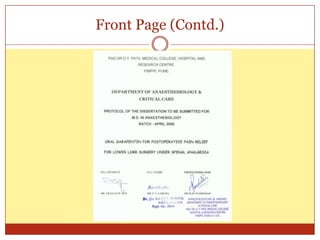
Front Page
Front Page (Contd.)
Reason(s) for Carrying Out Research (The "Why“)
                  Introduction

 150-175  words
 Background Information

 What work (if any) already exists in this area? What are
  its strengths and deficiencies?
 How would further work advance our knowledge of the
  wider area of study?
 Is an entirely new area of study being opened up? -
  Why is this important?
 Numbering    of References, if any should start from
 here.
Reason(s) for Carrying Out Research (The "Why") *.
                    Aims & Objectives

 Your synopsis should explain why the selected
  topic is worthy of further exploration.
 It should also demonstrate that you appreciate
  the main areas of debate around the topic and
  show how your proposed research would
  contribute to/further that debate.
 The Aims are supposed to convey exactly : The
  “Why” * in precise fashion
 To be written in order of importance!
MATERIALS & METHODS

 Declaration : IEC Approval will be taken

 Type of Consent: informed, routine, and such….

 Inclusion Criteria

 Exclusion criteria

 If a RCT : Method of Randomization

 Materials Required
MATERIALS & METHODS (contd.)

  Method of Randomization:
The mode which is going to be used for this!
    How the groups are going to be formed

    If any Blinding is involved.

    What variable is going to be
    differentiating the groups
Methodology (The "How").

 State the main "planks" of your thinking or proposed
  arguments and outline how you intend to put them
  together.
 In writing this part of the synopsis, it is helpful to
  start by setting out their thoughts as an informal
  point brief
 However, if you decide to adopt this approach, you
  should bear in mind that a thesis is not the same as a
  research paper; i.e. it is seldom possible to reach firm
  conclusions and you are not required to recommend
  a course of action.
Methodology (contd).

 Actual Procedure of conducting the study
 In each individual patient, as such
                         &/or
 In All the proposed number of patients in the study

 Various modalities, utilised for assessment

 Specific parameters viz; VAS, VRS, Anxiety Scale
      Akinesia score, sedation score, APACHE.....
Proforma

 Demographic Profile
 History
 General Physical
 Systemic examination
 Assessment:     Vitals,
                  Specific parameters
                  etc……..
 Any additional information to be obtained
References

 Consideration of where you will find information to
  support your arguments should go hand in hand
  with thinking about methodology.
 You are not expected to have an in-depth knowledge
  of all existing sources but you will find it difficult to
  outline your arguments without reference to at least
  some.
 Where sources are used, they should be listed at the
  end of the synopsis and you should be prepared to
  discuss them when asked.
References (contd.)

 How many ?....... 5-15
 Vancouver style
 If from Text Book: Author/s of the Chapter, Name of
  the chapter , eds: editor’s names, in the Name of the
  Text Book, by Publisher’s Names, at Place of
  Publication, No. of the edition, year of publication,
  Page no.     ………. e.g.
Katz M. , Ferrante FM; Nociception: in Ferrante FM, Vade Boncouer TR
  (eds) : Postoperative Management of Pain: Churchill Livingstone ,New
  York, 2nd edition, 1993: 17-20.
 References from Journal: Author/s of the article,
  Title of the article , Name of the Journal, year of
  Publication, Volume, Issue/Number, Page Number
  e.g.
Rosner H, Rubin L, Kestenbaum A. Gabapentin adjunctive therapy in
  neuropathic pain states. Clin J Pain, 1996;78, 12: 56-8.
 All the references to be compiled in this manner
 The title can be Bibliography/ or References.
Take Home Message!

 Synopsis is the beginning!

 It is an absolute requirement for official purposes :

 IEC, University, Hospital/ College Authorities, HOD,

 Guide, and PG resident

 Must be short, succinct but informative

 It is your representative , which is going to defend

 you!
SYNOPSIS WRITING

SYNOPSIS WRITING

  • 1.
  • 2.
    Dr. MRIDUL M.PANDITRAO CONSULTANT DEPARTMENT OF ANESTHESIOLOGY RAND MEMORIAL HOSPITAL FREEPORT, BAHAMAS
  • 3.
    Formerly, PROFESSOR, HEAD & I/C SICU Department Of Anaesthesiology & Critical Care Padmashree Dr. D Y Patil Medical College Dean of Faculty of Medicine Dr. D Y Patil University
  • 4.
  • 5.
    INTRODUCTION  There isno specific format for this but by following this guide you should ensure that the main aspects of a research proposal are covered.  In preparing your synopsis, you should restrict the size of your research area in line with the length of dissertation required by the university.  Brief, Precise but adequate!
  • 6.
    Choice of ResearchTopic (The "What").  Approach Choosing a research topic or title (i.e., getting started) is perhaps the most difficult part of writing a synopsis.  Framing the Title Your title should summarise your topic and should not be a ramble over what you think, illuminated by snippets of what you have read.
  • 7.
  • 8.
  • 9.
    Reason(s) for CarryingOut Research (The "Why“) Introduction  150-175 words  Background Information  What work (if any) already exists in this area? What are its strengths and deficiencies?  How would further work advance our knowledge of the wider area of study?  Is an entirely new area of study being opened up? - Why is this important?  Numbering of References, if any should start from here.
  • 10.
    Reason(s) for CarryingOut Research (The "Why") *. Aims & Objectives  Your synopsis should explain why the selected topic is worthy of further exploration.  It should also demonstrate that you appreciate the main areas of debate around the topic and show how your proposed research would contribute to/further that debate.  The Aims are supposed to convey exactly : The “Why” * in precise fashion  To be written in order of importance!
  • 11.
    MATERIALS & METHODS Declaration : IEC Approval will be taken  Type of Consent: informed, routine, and such….  Inclusion Criteria  Exclusion criteria  If a RCT : Method of Randomization  Materials Required
  • 12.
    MATERIALS & METHODS(contd.)  Method of Randomization: The mode which is going to be used for this!  How the groups are going to be formed  If any Blinding is involved.  What variable is going to be differentiating the groups
  • 13.
    Methodology (The "How"). State the main "planks" of your thinking or proposed arguments and outline how you intend to put them together.  In writing this part of the synopsis, it is helpful to start by setting out their thoughts as an informal point brief  However, if you decide to adopt this approach, you should bear in mind that a thesis is not the same as a research paper; i.e. it is seldom possible to reach firm conclusions and you are not required to recommend a course of action.
  • 14.
    Methodology (contd).  ActualProcedure of conducting the study  In each individual patient, as such &/or  In All the proposed number of patients in the study  Various modalities, utilised for assessment  Specific parameters viz; VAS, VRS, Anxiety Scale Akinesia score, sedation score, APACHE.....
  • 15.
    Proforma  Demographic Profile History  General Physical  Systemic examination  Assessment: Vitals, Specific parameters etc……..  Any additional information to be obtained
  • 16.
    References  Consideration ofwhere you will find information to support your arguments should go hand in hand with thinking about methodology.  You are not expected to have an in-depth knowledge of all existing sources but you will find it difficult to outline your arguments without reference to at least some.  Where sources are used, they should be listed at the end of the synopsis and you should be prepared to discuss them when asked.
  • 17.
    References (contd.)  Howmany ?....... 5-15  Vancouver style  If from Text Book: Author/s of the Chapter, Name of the chapter , eds: editor’s names, in the Name of the Text Book, by Publisher’s Names, at Place of Publication, No. of the edition, year of publication, Page no. ………. e.g. Katz M. , Ferrante FM; Nociception: in Ferrante FM, Vade Boncouer TR (eds) : Postoperative Management of Pain: Churchill Livingstone ,New York, 2nd edition, 1993: 17-20.
  • 18.
     References fromJournal: Author/s of the article, Title of the article , Name of the Journal, year of Publication, Volume, Issue/Number, Page Number e.g. Rosner H, Rubin L, Kestenbaum A. Gabapentin adjunctive therapy in neuropathic pain states. Clin J Pain, 1996;78, 12: 56-8.  All the references to be compiled in this manner  The title can be Bibliography/ or References.
  • 19.
    Take Home Message! Synopsis is the beginning!  It is an absolute requirement for official purposes :  IEC, University, Hospital/ College Authorities, HOD, Guide, and PG resident  Must be short, succinct but informative  It is your representative , which is going to defend you!