Unit  1: LimitsHelga Hufflepuff
A limit is
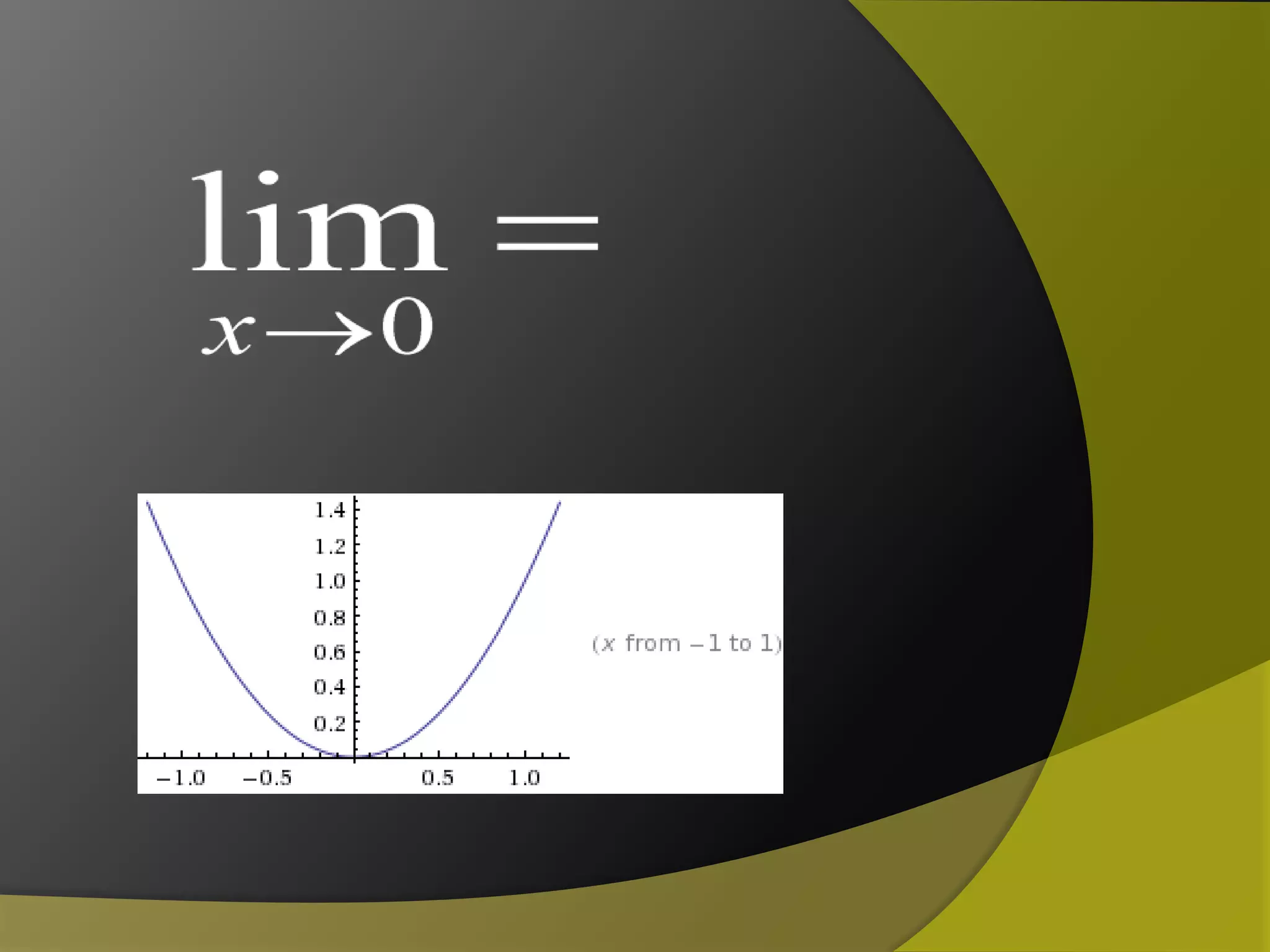
A limit is the y-value of a graph as x approaches from both sides
A limit does not exist when the y-value is different as you approach the same x value from different sides
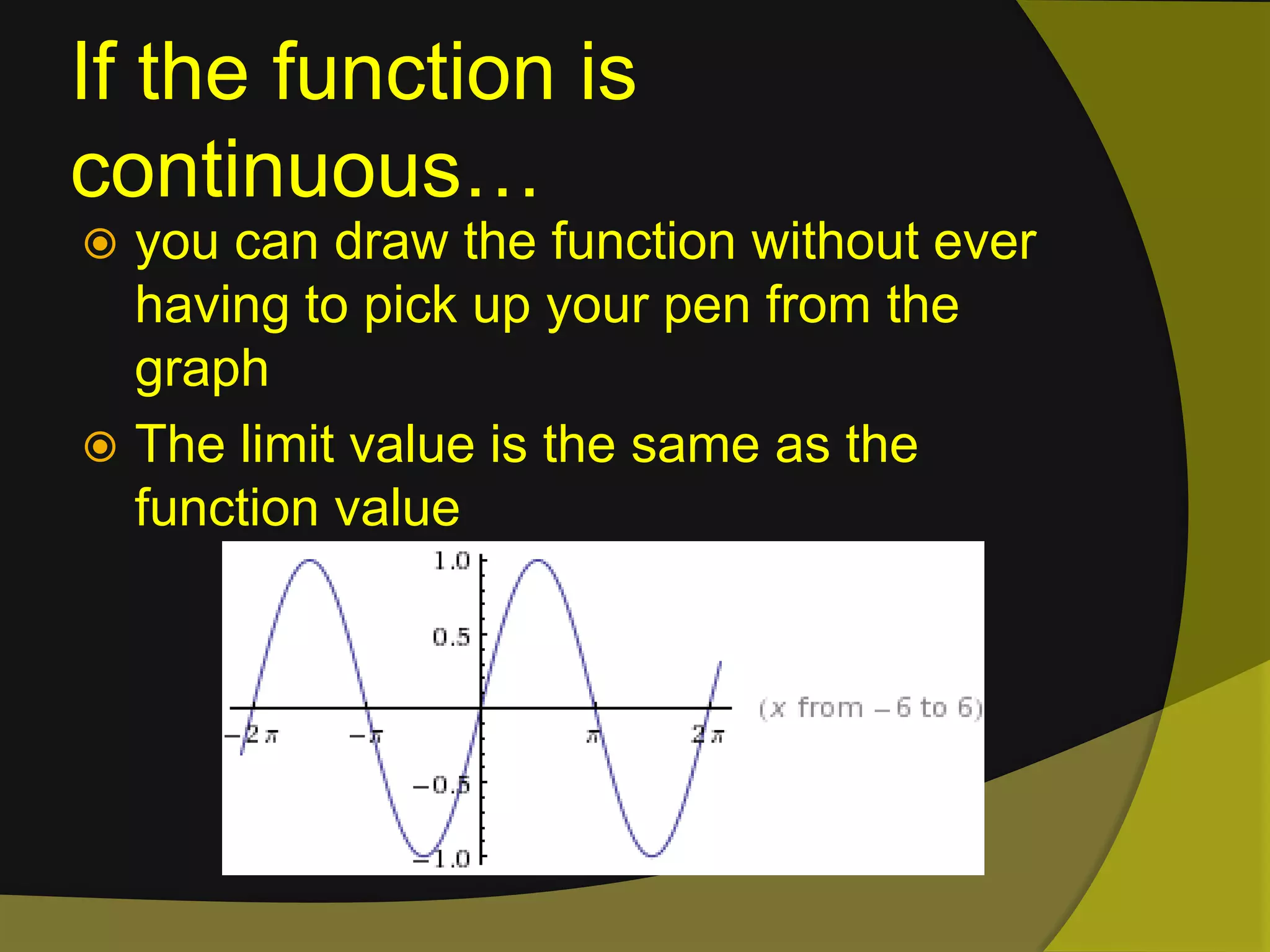
If the function is continuous…you can draw the function without ever having to pick up your pen from the graphThe limit value is the same as the function value
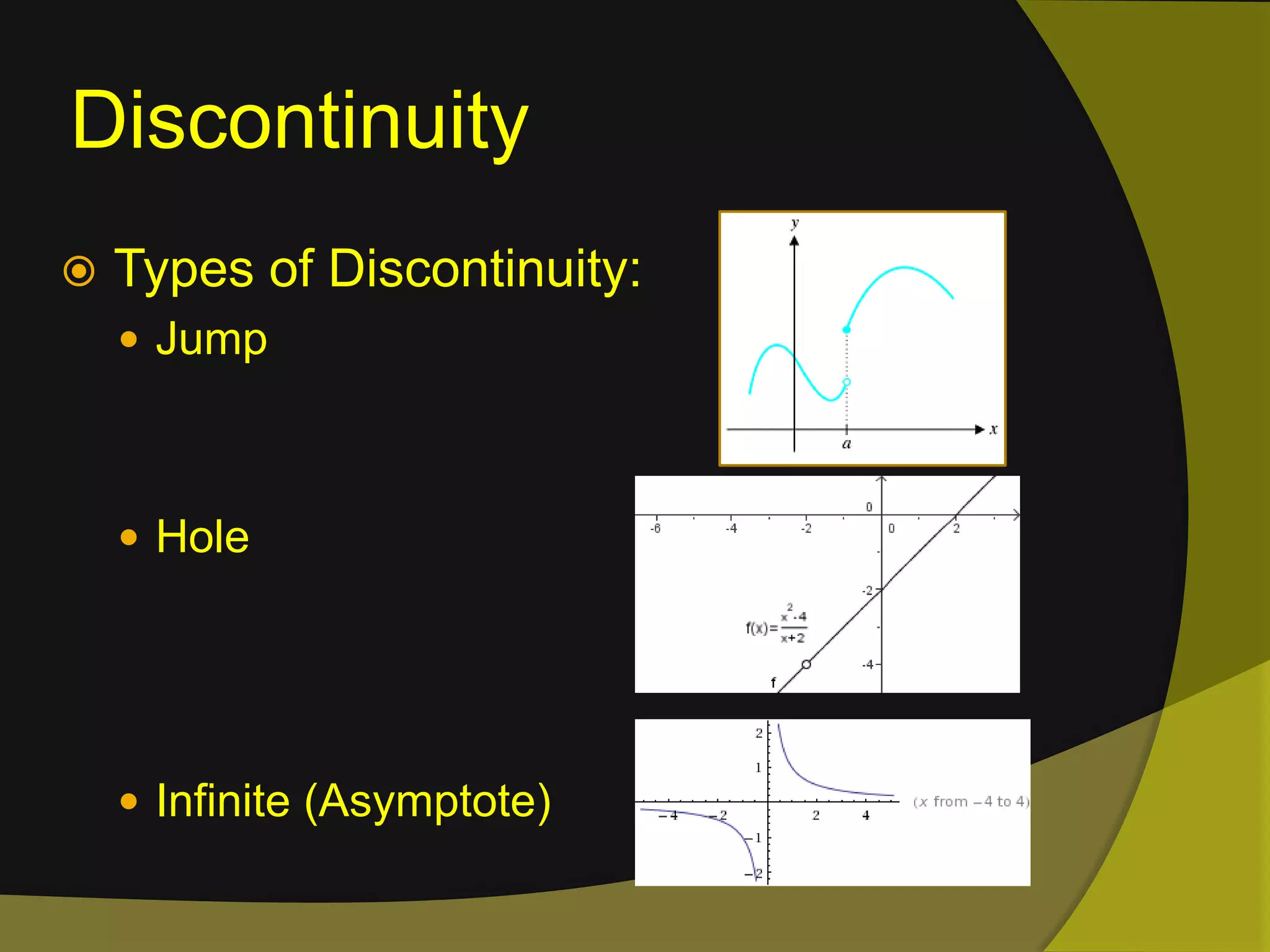
DiscontinuityTypes of Discontinuity:Jump HoleInfinite (Asymptote)
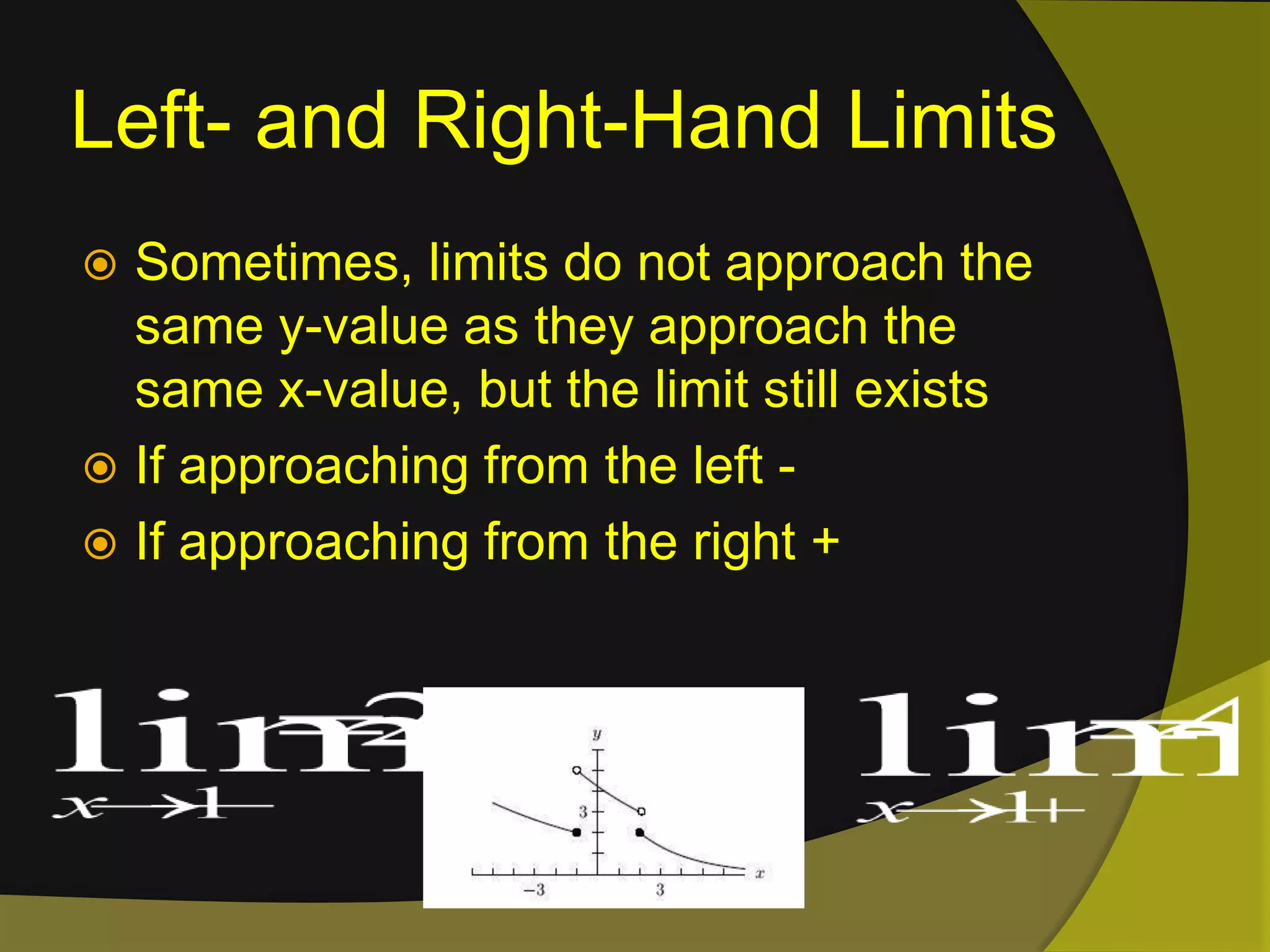
Left- and Right-Hand LimitsSometimes, limits do not approach the same y-value as they approach the same x-value, but the limit still existsIf approaching from the left -If approaching from the right +
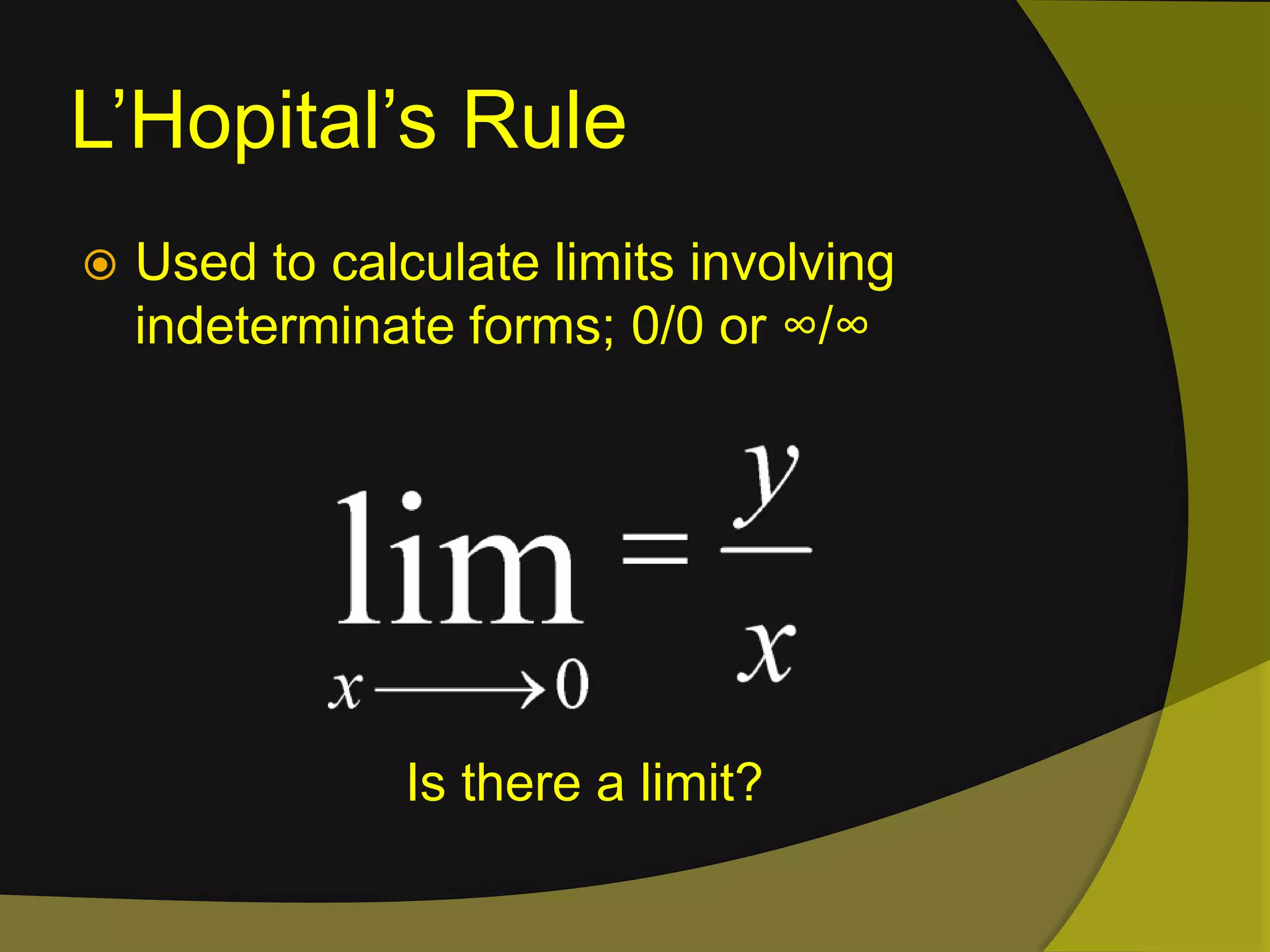
L’Hopital’s RuleUsed to calculate limits involving indeterminate forms; 0/0 or ∞/∞Is there a limit?
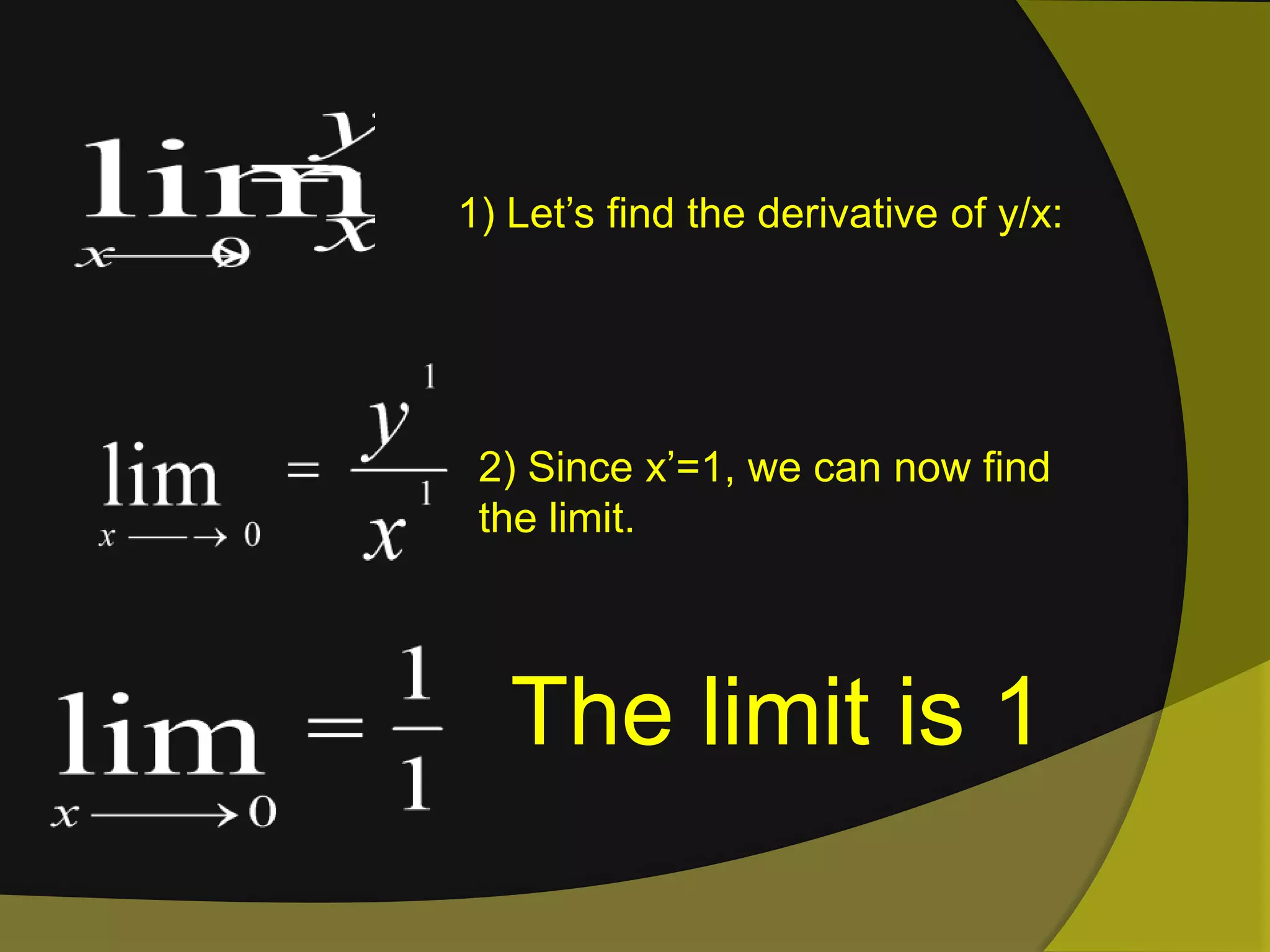
1) Let’s find the derivative of y/x:2) Since x’=1, we can now find the limit.	The limit is 1
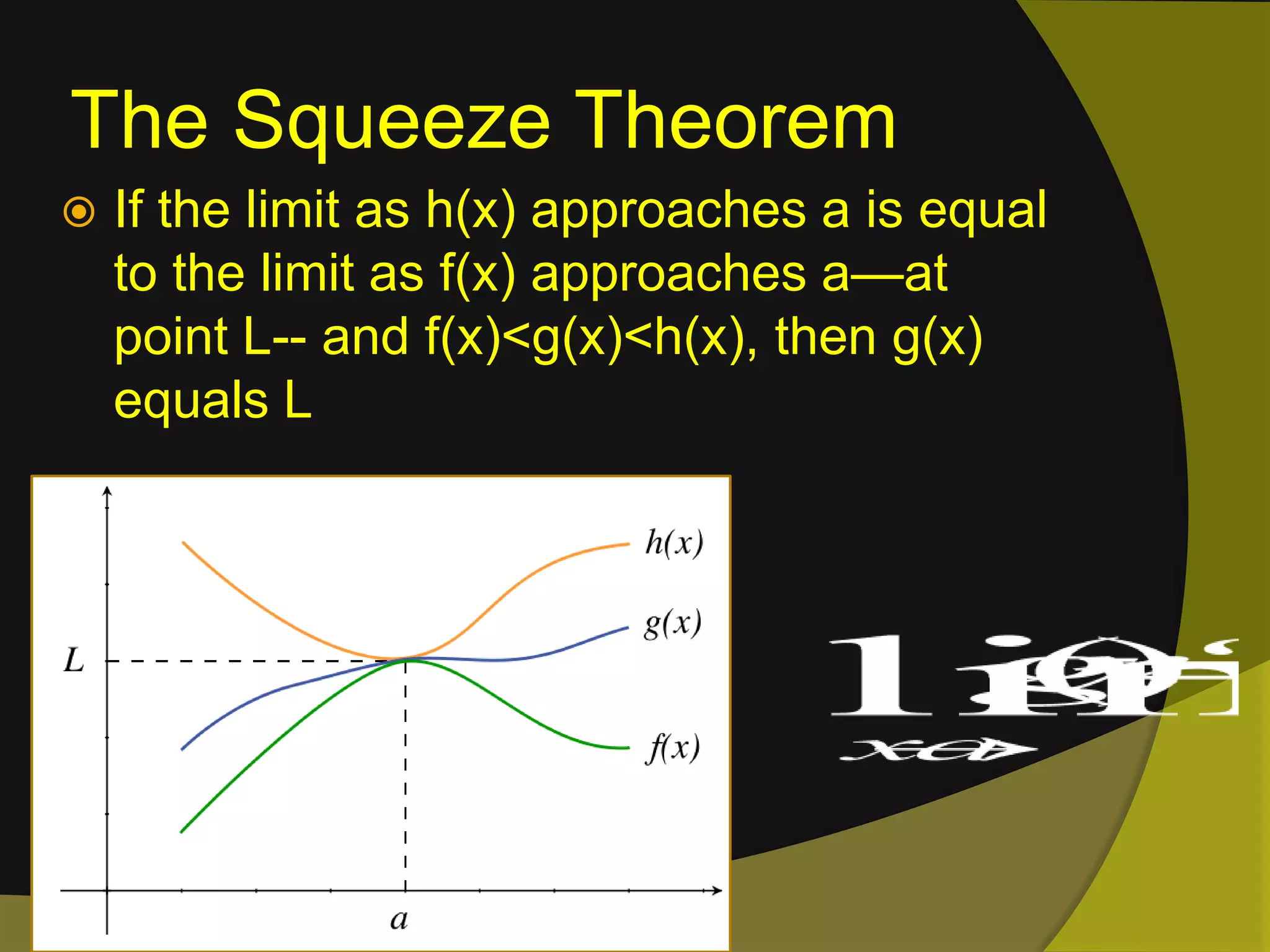
The Squeeze TheoremIf the limit as h(x) approaches a is equal to the limit as f(x) approaches a—at point L-- and f(x)<g(x)<h(x), then g(x) equals L
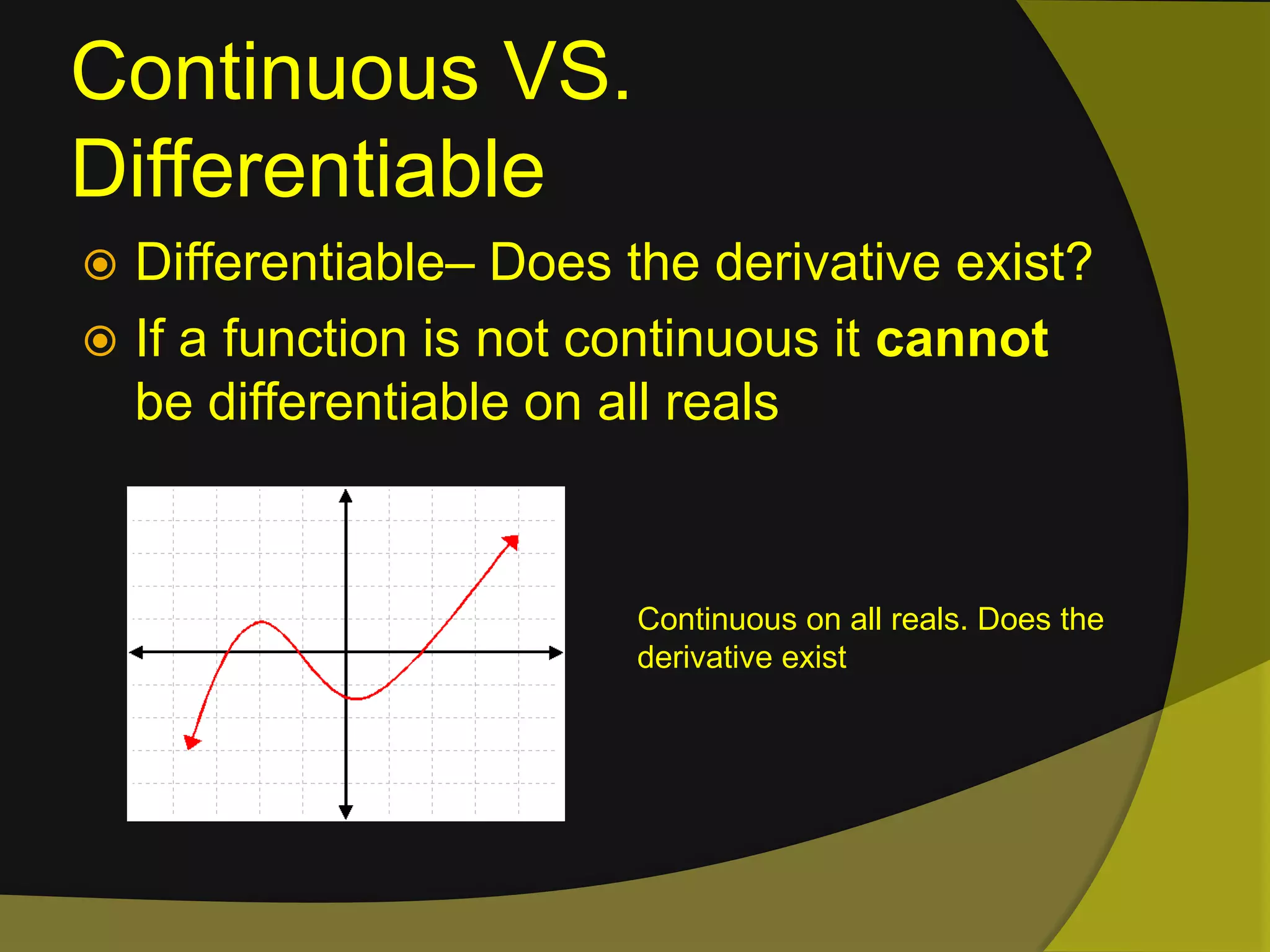
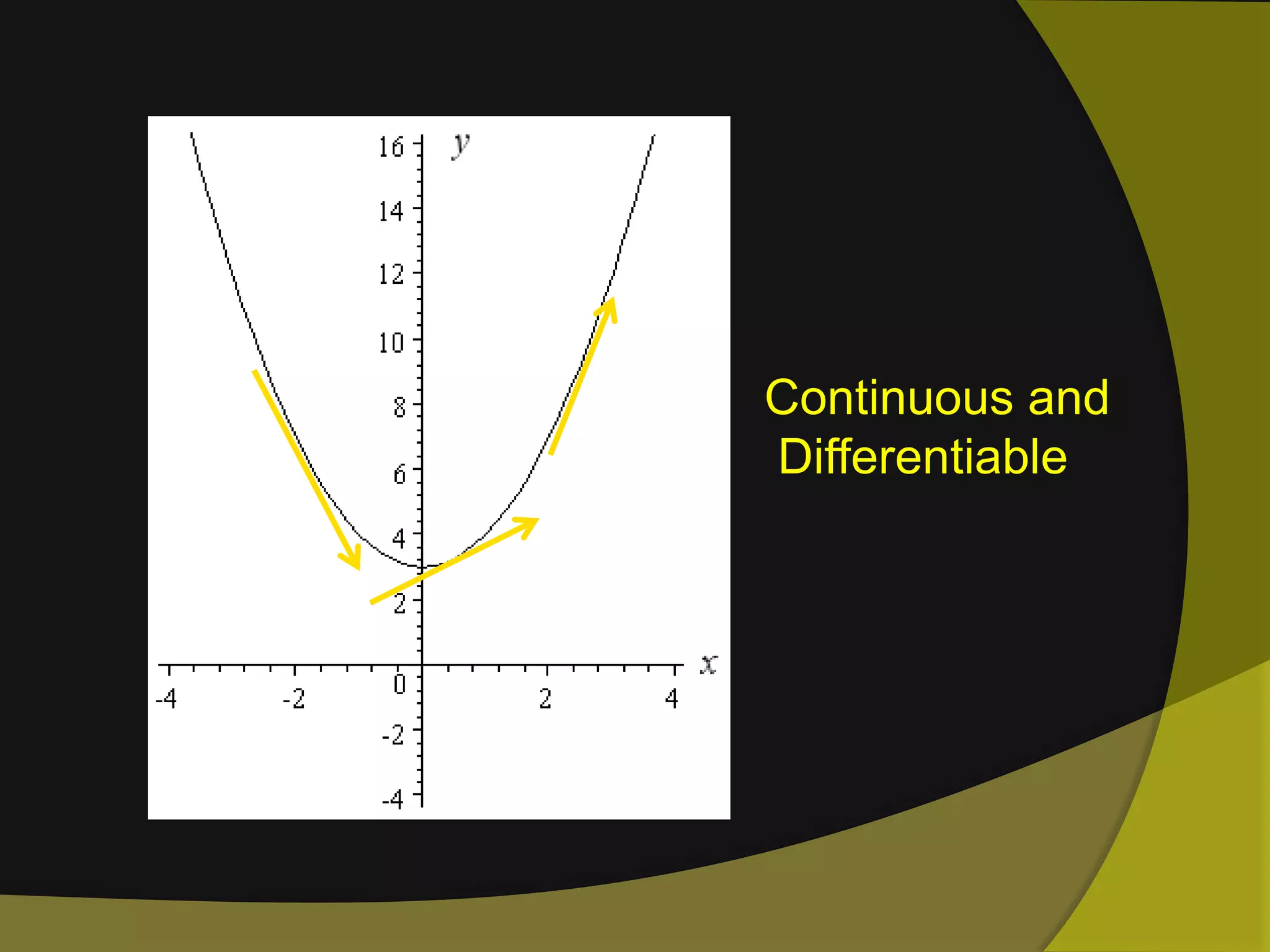
Continuous VS. DifferentiableDifferentiable– Does the derivative exist?If a function is not continuous it cannot be differentiable on all realsContinuous on all reals. Does the derivative exist
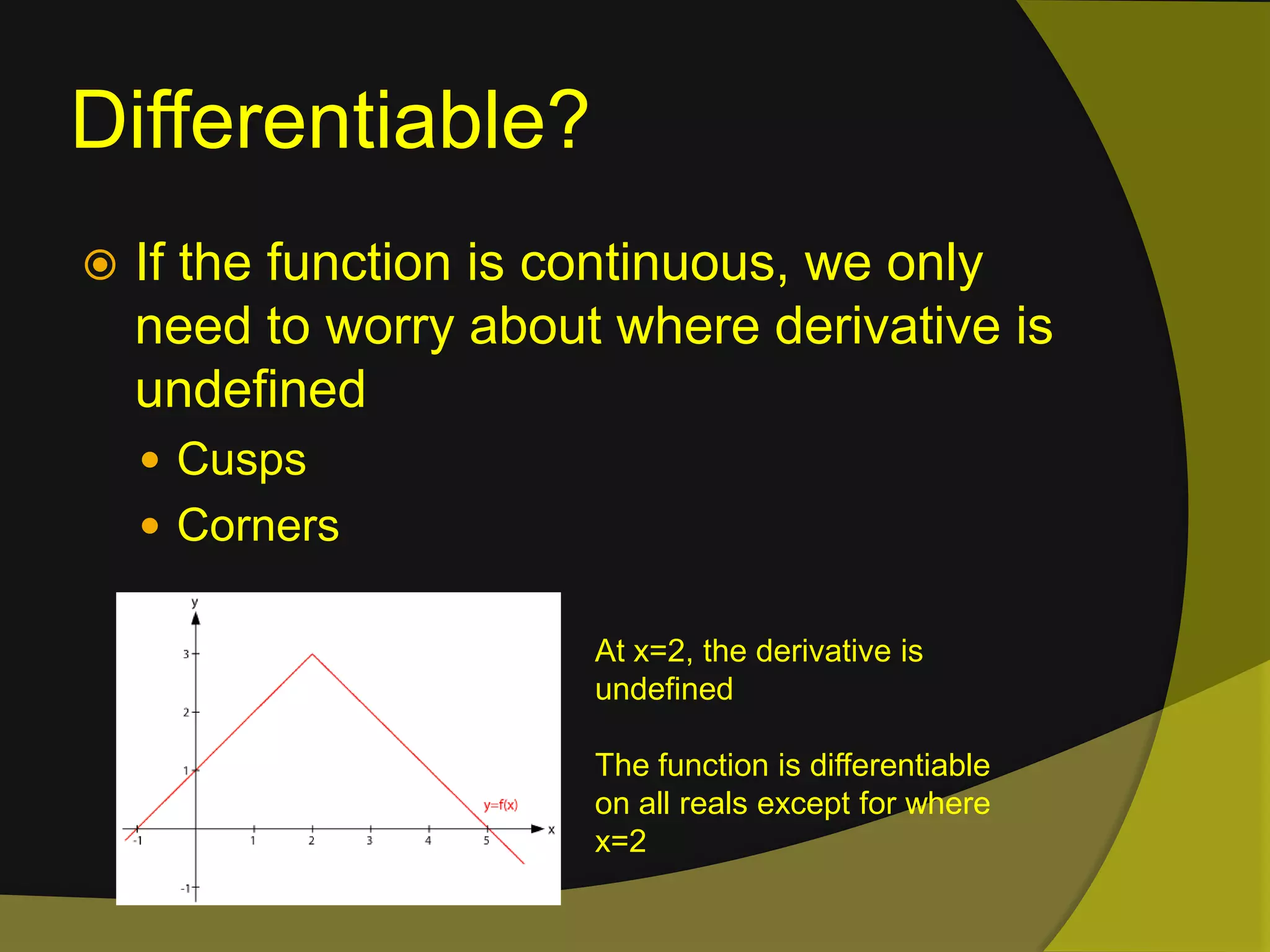
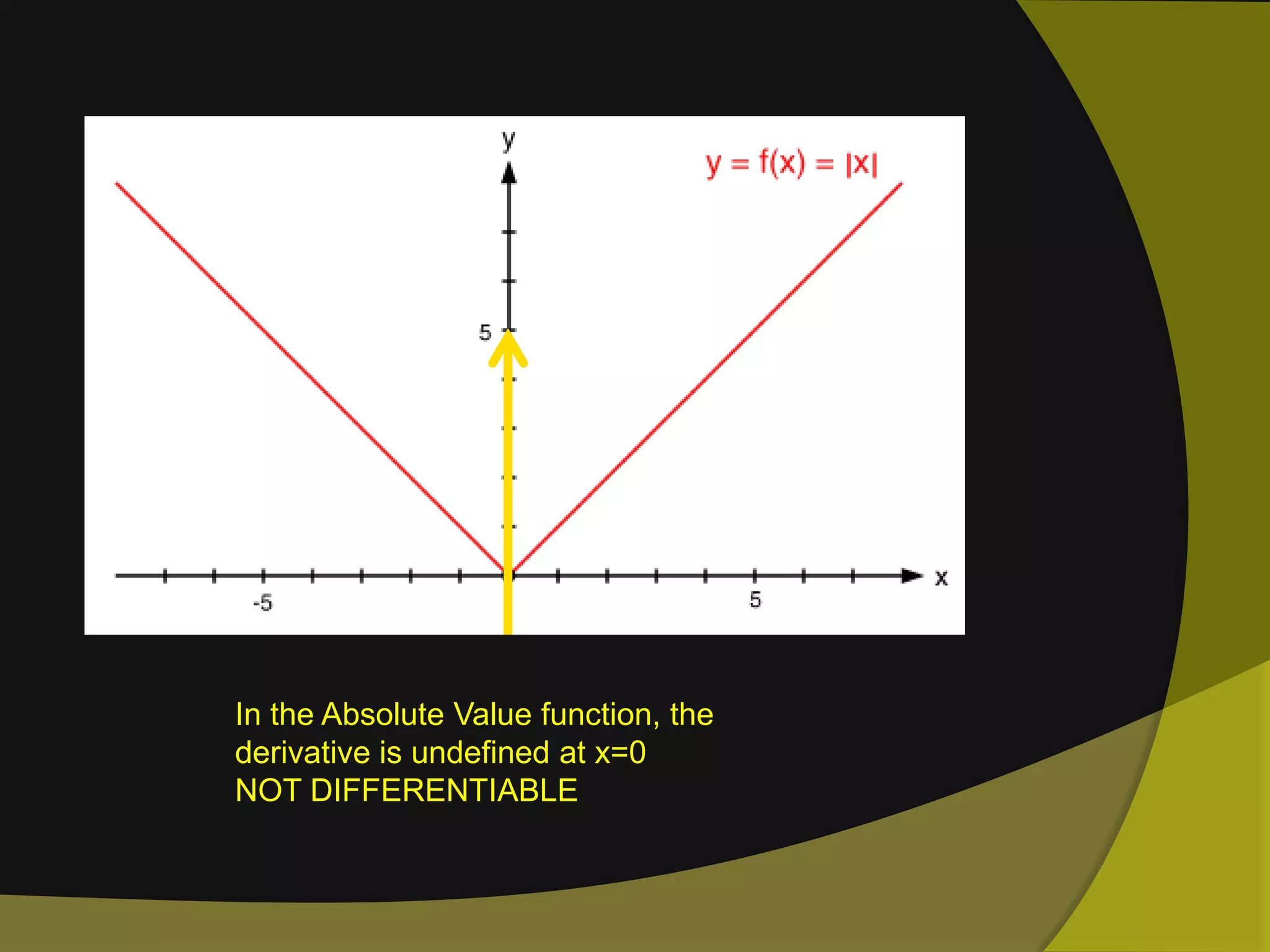
Differentiable?If the function is continuous, we only need to worry about where derivative is undefinedCusps CornersAt x=2, the derivative is undefinedThe function is differentiable on all reals except for where x=2
Continuous and Differentiable
In the Absolute Value function, the derivative is undefined at x=0NOT DIFFERENTIABLE
Intermediate Value TheoremIf the function is continuous from [a,b], then there must be a point c in the interval [a,b] and it must have a y-value that is between f(a) and f(b)

Limits

  • 1.
    Unit 1:LimitsHelga Hufflepuff
  • 2.
  • 3.
    A limit isthe y-value of a graph as x approaches from both sides
  • 6.
    A limit doesnot exist when the y-value is different as you approach the same x value from different sides
  • 7.
    If the functionis continuous…you can draw the function without ever having to pick up your pen from the graphThe limit value is the same as the function value
  • 8.
  • 9.
    Left- and Right-HandLimitsSometimes, limits do not approach the same y-value as they approach the same x-value, but the limit still existsIf approaching from the left -If approaching from the right +
  • 10.
    L’Hopital’s RuleUsed tocalculate limits involving indeterminate forms; 0/0 or ∞/∞Is there a limit?
  • 11.
    1) Let’s findthe derivative of y/x:2) Since x’=1, we can now find the limit. The limit is 1
  • 12.
    The Squeeze TheoremIfthe limit as h(x) approaches a is equal to the limit as f(x) approaches a—at point L-- and f(x)<g(x)<h(x), then g(x) equals L
  • 13.
    Continuous VS. DifferentiableDifferentiable–Does the derivative exist?If a function is not continuous it cannot be differentiable on all realsContinuous on all reals. Does the derivative exist
  • 14.
    Differentiable?If the functionis continuous, we only need to worry about where derivative is undefinedCusps CornersAt x=2, the derivative is undefinedThe function is differentiable on all reals except for where x=2
  • 15.
  • 16.
    In the AbsoluteValue function, the derivative is undefined at x=0NOT DIFFERENTIABLE
  • 17.
    Intermediate Value TheoremIfthe function is continuous from [a,b], then there must be a point c in the interval [a,b] and it must have a y-value that is between f(a) and f(b)