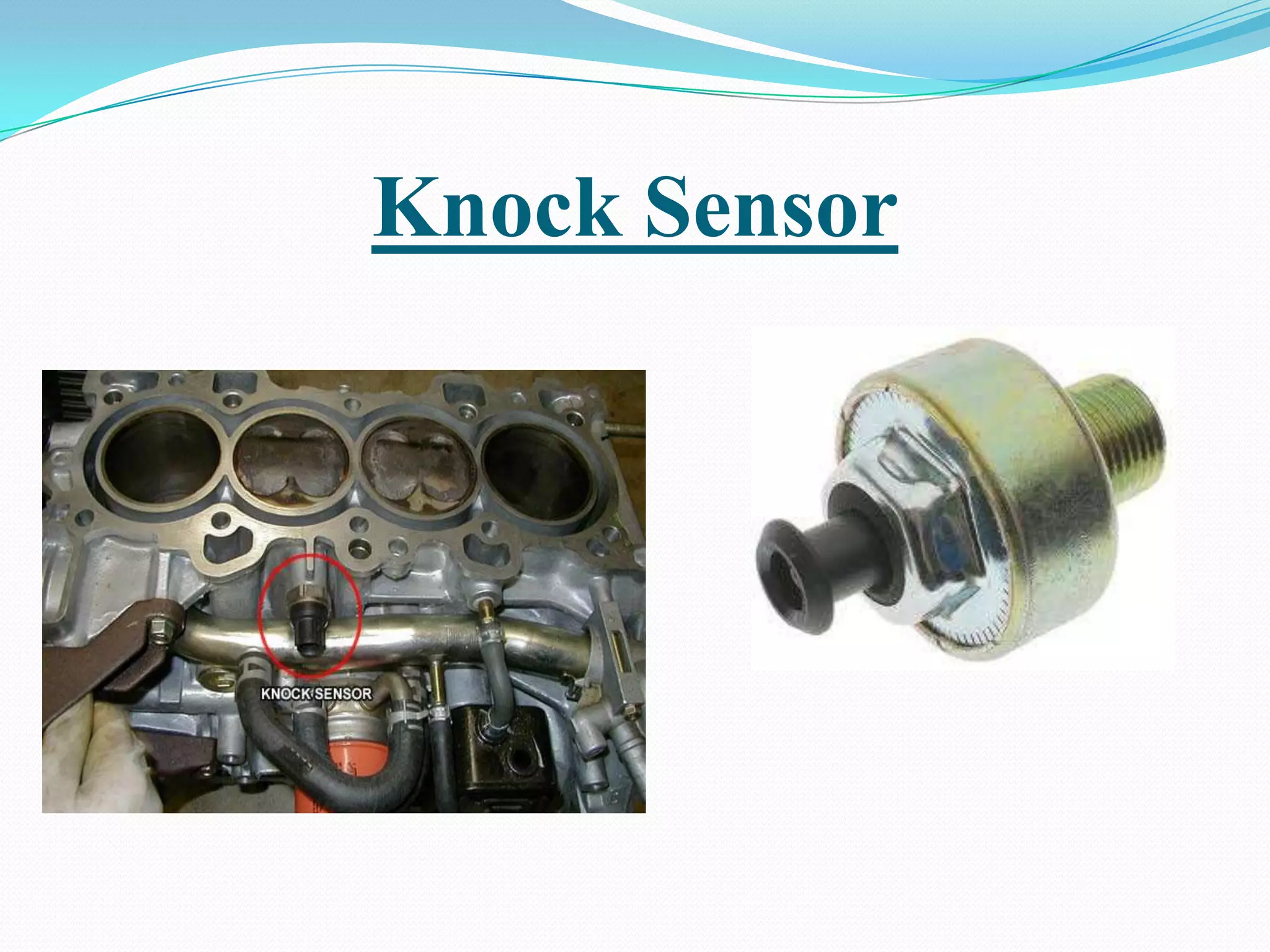
Knock Sensor
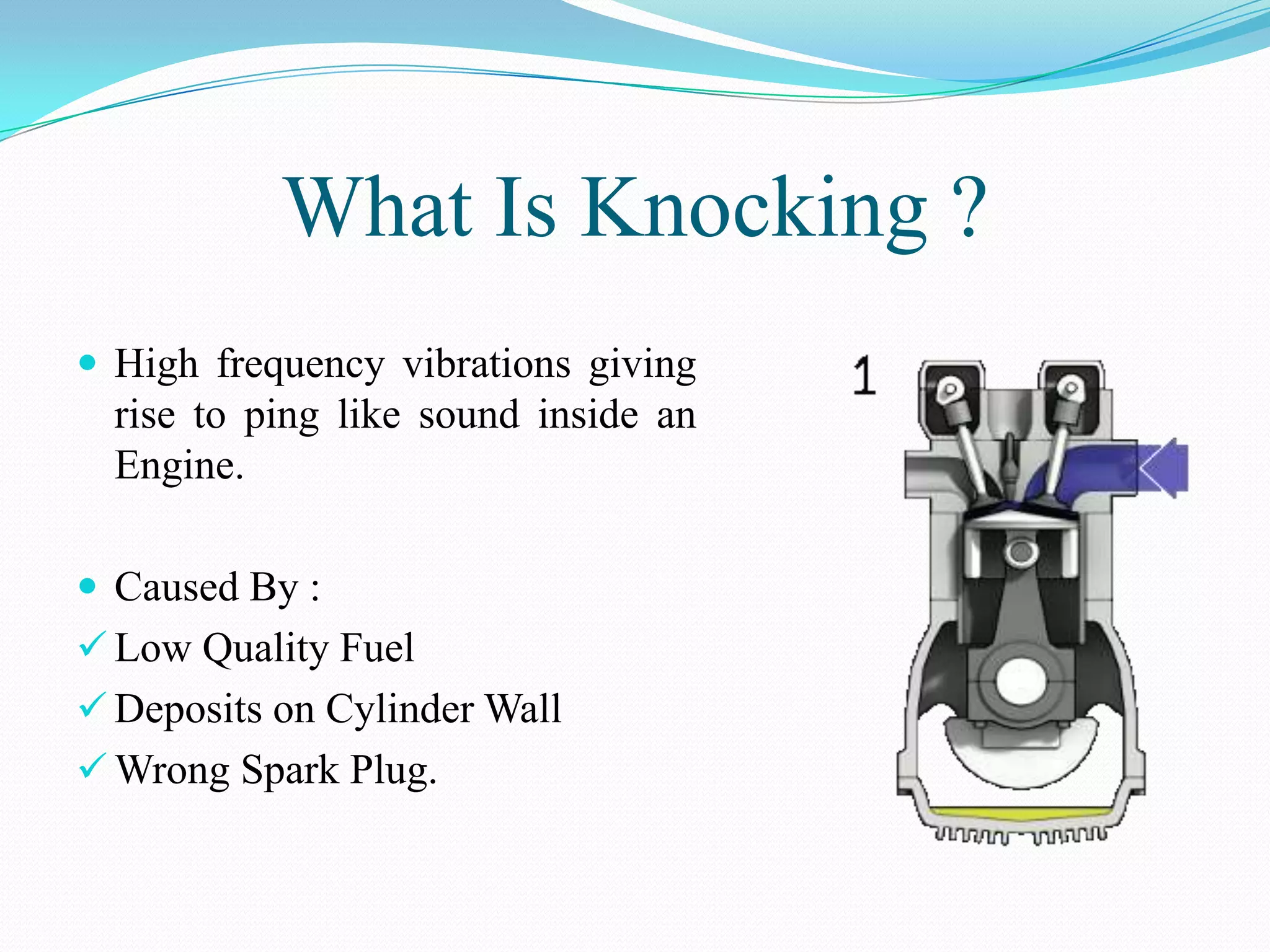
What Is Knocking ?
 High frequency vibrations giving
  rise to ping like sound inside an
  Engine.

 Caused By :
 Low Quality Fuel
 Deposits on Cylinder Wall
 Wrong Spark Plug.
How Can It Be Prevented?
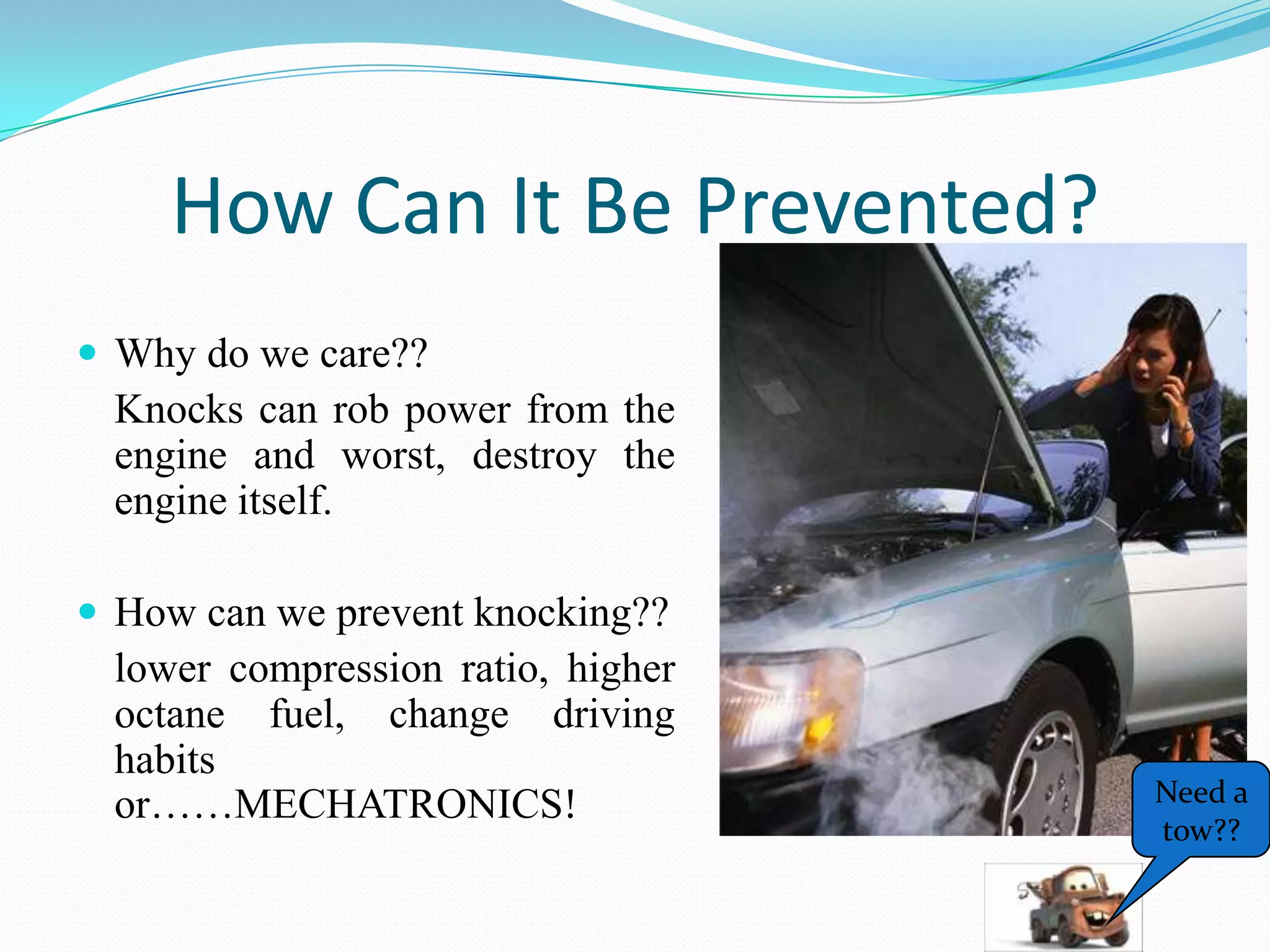
 Why do we care??
 Knocks can rob power from the
 engine and worst, destroy the
 engine itself.

 How can we prevent knocking??
 lower compression ratio, higher
 octane fuel, change driving
 habits
 or……MECHATRONICS!                 Need a
                                   tow??
The Sensor : Principle
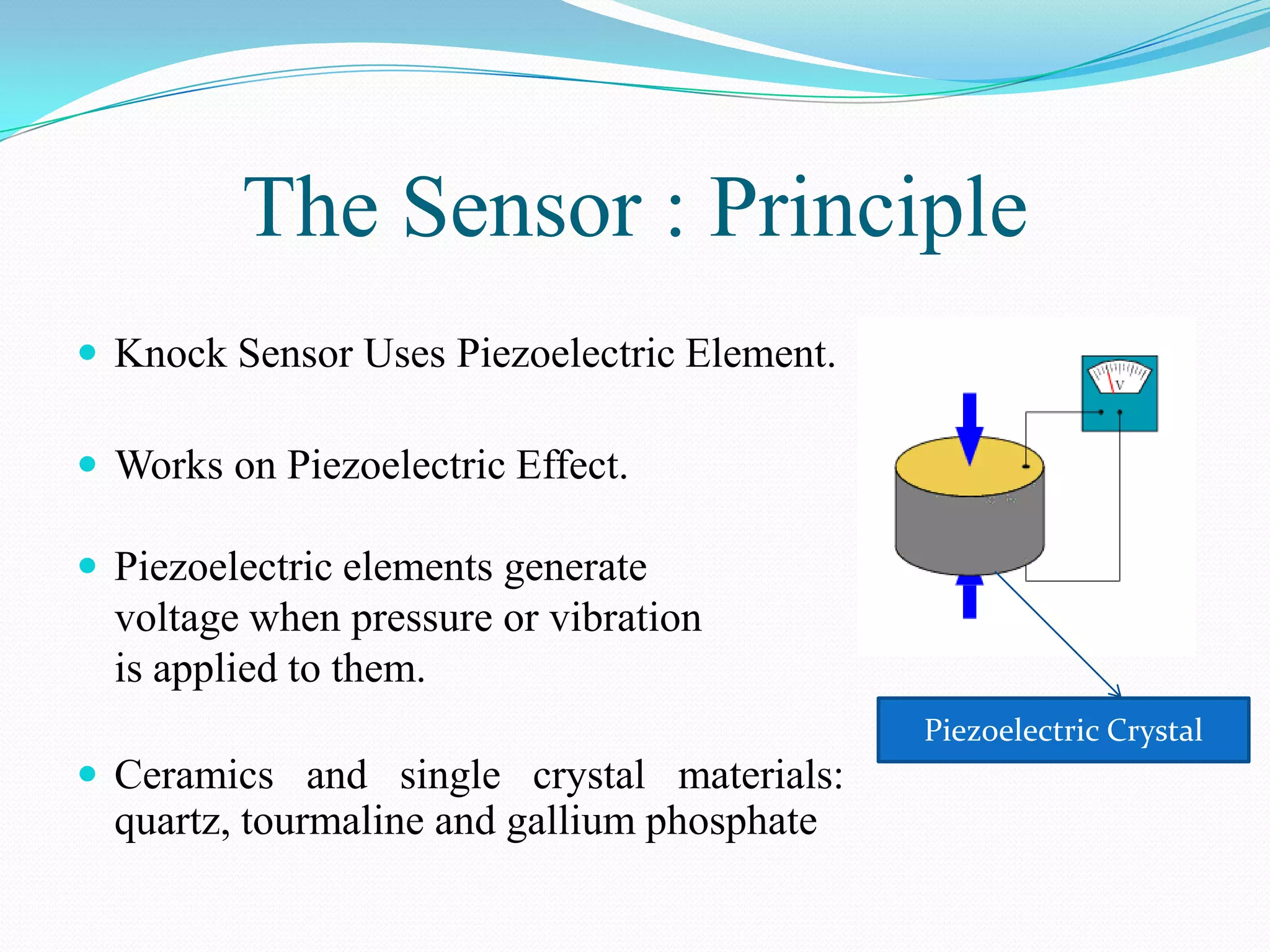
 Knock Sensor Uses Piezoelectric Element.

 Works on Piezoelectric Effect.

 Piezoelectric elements generate
  voltage when pressure or vibration
  is applied to them.
                                             Piezoelectric Crystal
 Ceramics and single crystal materials:
  quartz, tourmaline and gallium phosphate
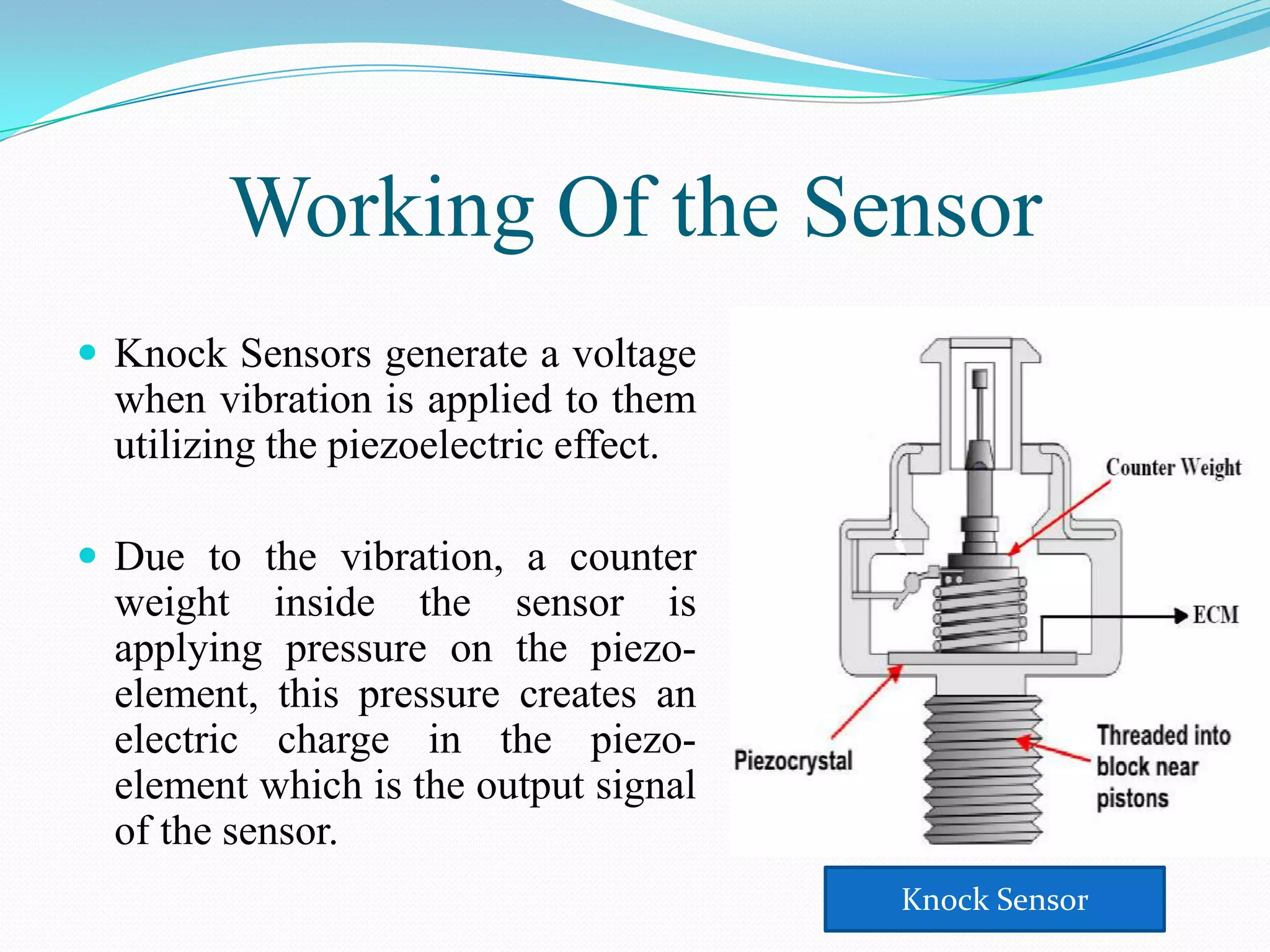
Working Of the Sensor
 Knock Sensors generate a voltage
  when vibration is applied to them
  utilizing the piezoelectric effect.

 Due to the vibration, a counter
  weight inside the sensor is
  applying pressure on the piezo-
  element, this pressure creates an
  electric charge in the piezo-
  element which is the output signal
  of the sensor.
                                        Knock Sensor
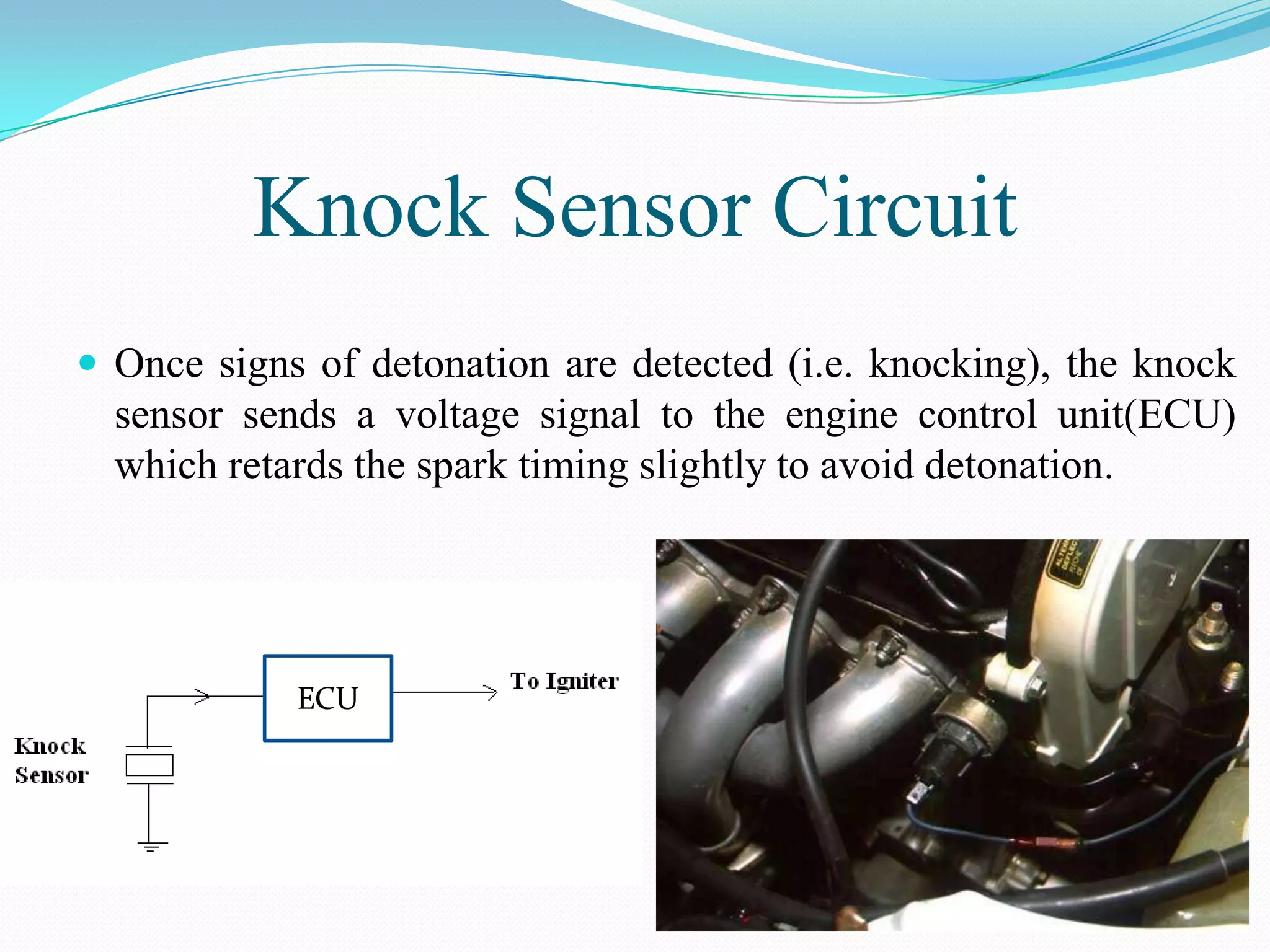
Knock Sensor Circuit
 Once signs of detonation are detected (i.e. knocking), the knock
  sensor sends a voltage signal to the engine control unit(ECU)
  which retards the spark timing slightly to avoid detonation.


            ECU
Benefits
 Vehicle engines work more efficiently and produce more power
  when operating near the detonation limit.

 Although simple, knock sensors allow optimum engine
  performance and protect the engine from potential damage
  caused by detonation.
Application
 Piezoelectric effect is found in many applications but
    knock sensors seem associated with the automotive
    industry.
   Knock control for internal combustion engines.
   Machine tool protection.
   Cavitations detection.
   Monitoring of pivot bearings.
   Anti theft systems.
Challenges (knocks)
 Piezoelectric elements can be sensitive to more than one
  physical dimension.

 Operate in harsh environment (dirt, grease, moisture, road
  salt, etc.) for automotive applications.

 Ceramic materials lack long term stability.

 Sensor can be fooled by things like bad water pump or
  alternator bearing, or a loose rod bearing.
References
 “Automotive approach” by system approach by Jack Erjavec.


 “ Design of Knock sensor” by Alexander A.Bazhenoy.


 “Total Automotive Technology” by Anthony E. Schaller.
THANK YOU


  Any Questions..?

knock sensor

  • 1.
  • 2.
    What Is Knocking?  High frequency vibrations giving rise to ping like sound inside an Engine.  Caused By :  Low Quality Fuel  Deposits on Cylinder Wall  Wrong Spark Plug.
  • 3.
    How Can ItBe Prevented?  Why do we care?? Knocks can rob power from the engine and worst, destroy the engine itself.  How can we prevent knocking?? lower compression ratio, higher octane fuel, change driving habits or……MECHATRONICS! Need a tow??
  • 4.
    The Sensor :Principle  Knock Sensor Uses Piezoelectric Element.  Works on Piezoelectric Effect.  Piezoelectric elements generate voltage when pressure or vibration is applied to them. Piezoelectric Crystal  Ceramics and single crystal materials: quartz, tourmaline and gallium phosphate
  • 5.
    Working Of theSensor  Knock Sensors generate a voltage when vibration is applied to them utilizing the piezoelectric effect.  Due to the vibration, a counter weight inside the sensor is applying pressure on the piezo- element, this pressure creates an electric charge in the piezo- element which is the output signal of the sensor. Knock Sensor
  • 6.
    Knock Sensor Circuit Once signs of detonation are detected (i.e. knocking), the knock sensor sends a voltage signal to the engine control unit(ECU) which retards the spark timing slightly to avoid detonation. ECU
  • 7.
    Benefits  Vehicle engineswork more efficiently and produce more power when operating near the detonation limit.  Although simple, knock sensors allow optimum engine performance and protect the engine from potential damage caused by detonation.
  • 8.
    Application  Piezoelectric effectis found in many applications but knock sensors seem associated with the automotive industry.  Knock control for internal combustion engines.  Machine tool protection.  Cavitations detection.  Monitoring of pivot bearings.  Anti theft systems.
  • 9.
    Challenges (knocks)  Piezoelectricelements can be sensitive to more than one physical dimension.  Operate in harsh environment (dirt, grease, moisture, road salt, etc.) for automotive applications.  Ceramic materials lack long term stability.  Sensor can be fooled by things like bad water pump or alternator bearing, or a loose rod bearing.
  • 10.
    References  “Automotive approach”by system approach by Jack Erjavec.  “ Design of Knock sensor” by Alexander A.Bazhenoy.  “Total Automotive Technology” by Anthony E. Schaller.
  • 11.
    THANK YOU Any Questions..?