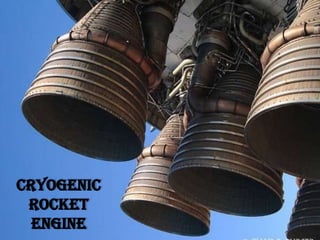
CRYOGENIC
 ROCKET
  ENGINE
INTRODUCTION
 What is Cryogenics?


 Cryogenic fuels can be used as rocket engine fuel.


 Cryogenic Engines are rocket motors.
HISTORY
 Space travel was mainly developed by the Russians and
  the Americans. Russian’s were the first to reach into the
  space.

 Solid-fuel rocket engines were the first engines created by
  man.

 All the current Rockets run on Liquid-propellant rockets.

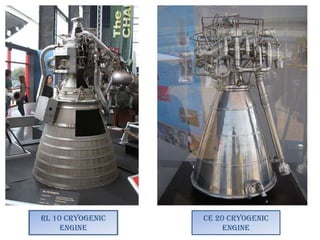
 The first operational cryogenic rocket engine RL10 rocket
  engine.
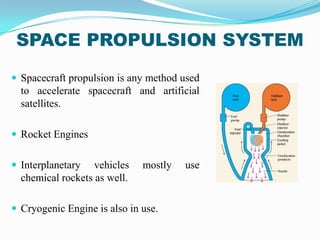
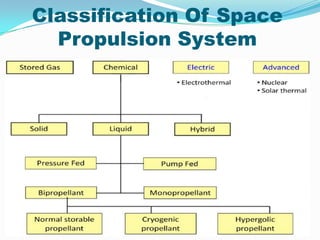
SPACE PROPULSION SYSTEM
 Spacecraft propulsion is any method used
  to accelerate spacecraft and artificial
  satellites.

 Rocket Engines


 Interplanetary   vehicles   mostly   use
  chemical rockets as well.

 Cryogenic Engine is also in use.
Classification Of Space
  Propulsion System
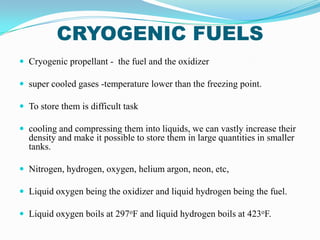
CRYOGENIC FUELS
 Cryogenic propellant - the fuel and the oxidizer

 super cooled gases -temperature lower than the freezing point.

 To store them is difficult task

 cooling and compressing them into liquids, we can vastly increase their
  density and make it possible to store them in large quantities in smaller
  tanks.

 Nitrogen, hydrogen, oxygen, helium argon, neon, etc,

 Liquid oxygen being the oxidizer and liquid hydrogen being the fuel.

 Liquid oxygen boils at 297oF and liquid hydrogen boils at 423oF.
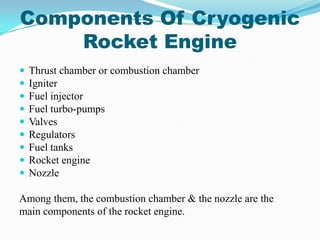
Components Of Cryogenic
    Rocket Engine
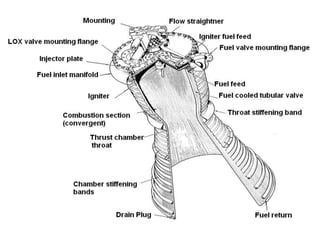
   Thrust chamber or combustion chamber
   Igniter
   Fuel injector
   Fuel turbo-pumps
   Valves
   Regulators
   Fuel tanks
   Rocket engine
   Nozzle

Among them, the combustion chamber & the nozzle are the
main components of the rocket engine.
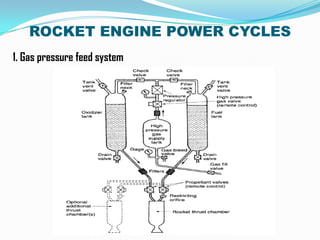
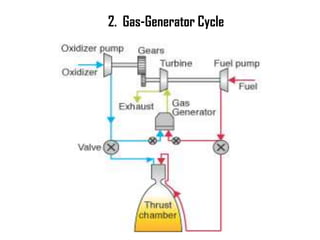
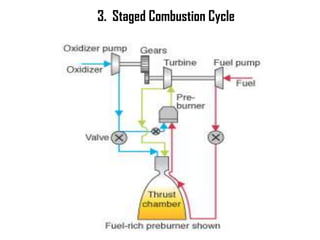
ROCKET ENGINE POWER CYCLES
1. Gas pressure feed system
2. Gas-Generator Cycle
3. Staged Combustion Cycle
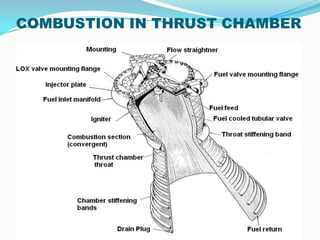
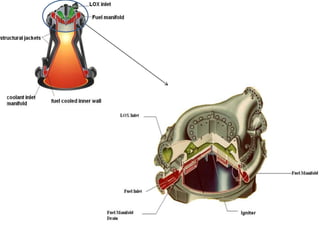
COMBUSTION IN THRUST CHAMBER
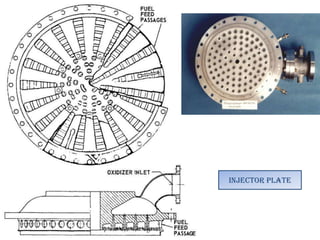
Injector Plate
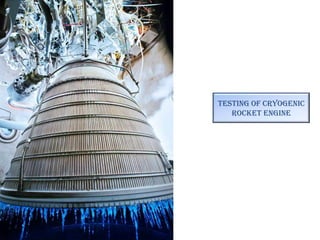
Testing Of Cryogenic
   Rocket Engine
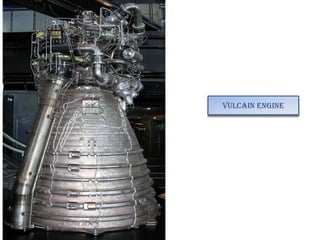
VULCAIN ENGINE
RL 10 Cryogenic   CE 20 Cryogenic
     Engine            Engine
Advantages
 High Energy per unit mass


 Clean Fuels


 Economical
Disadvantages
 Highly reactive gases


 Leakage


 Hydrogen Embrittlement


 Zero Gravity Condition
CONCLUSION
• The area of Cryogenics in Cryogenic Rocket Engines is a
  vast one.

• Developments in the field of Rocket Engineering.

• Cryo propelled rocket engines are having a great demand
  in the field of space exploration.

• Due to the high specific impulse obtained during the
  ignition of fuels they are of much demand.
THANK YOU

  Any Questions..?

cryogenic rocket engine

  • 1.
  • 2.
    INTRODUCTION  What isCryogenics?  Cryogenic fuels can be used as rocket engine fuel.  Cryogenic Engines are rocket motors.
  • 3.
    HISTORY  Space travelwas mainly developed by the Russians and the Americans. Russian’s were the first to reach into the space.  Solid-fuel rocket engines were the first engines created by man.  All the current Rockets run on Liquid-propellant rockets.  The first operational cryogenic rocket engine RL10 rocket engine.
  • 4.
    SPACE PROPULSION SYSTEM Spacecraft propulsion is any method used to accelerate spacecraft and artificial satellites.  Rocket Engines  Interplanetary vehicles mostly use chemical rockets as well.  Cryogenic Engine is also in use.
  • 5.
    Classification Of Space Propulsion System
  • 6.
    CRYOGENIC FUELS  Cryogenicpropellant - the fuel and the oxidizer  super cooled gases -temperature lower than the freezing point.  To store them is difficult task  cooling and compressing them into liquids, we can vastly increase their density and make it possible to store them in large quantities in smaller tanks.  Nitrogen, hydrogen, oxygen, helium argon, neon, etc,  Liquid oxygen being the oxidizer and liquid hydrogen being the fuel.  Liquid oxygen boils at 297oF and liquid hydrogen boils at 423oF.
  • 7.
    Components Of Cryogenic Rocket Engine  Thrust chamber or combustion chamber  Igniter  Fuel injector  Fuel turbo-pumps  Valves  Regulators  Fuel tanks  Rocket engine  Nozzle Among them, the combustion chamber & the nozzle are the main components of the rocket engine.
  • 8.
    ROCKET ENGINE POWERCYCLES 1. Gas pressure feed system
  • 9.
  • 10.
  • 11.
  • 13.
  • 15.
    Testing Of Cryogenic Rocket Engine
  • 16.
  • 17.
    RL 10 Cryogenic CE 20 Cryogenic Engine Engine
  • 18.
    Advantages  High Energyper unit mass  Clean Fuels  Economical
  • 19.
    Disadvantages  Highly reactivegases  Leakage  Hydrogen Embrittlement  Zero Gravity Condition
  • 20.
    CONCLUSION • The areaof Cryogenics in Cryogenic Rocket Engines is a vast one. • Developments in the field of Rocket Engineering. • Cryo propelled rocket engines are having a great demand in the field of space exploration. • Due to the high specific impulse obtained during the ignition of fuels they are of much demand.
  • 21.
    THANK YOU Any Questions..?

Editor's Notes

  • #18 An RL-10 rocket engine on display at the U.S. Space & Rocket Center, with cutaway showing the tubing through the bell.