AN
ORAL PRESENTATION
ON
STUDENTS’ INDUSTRIAL WORK EXPERIENCE
SCHEME
UNDERTAKEN AT
HEPHZIBAH AUTOCARE LIMITED.
AT AKAD FILLING STATION,ALONG FUTA NORTH
GATE AKURE,ONDO STATE.
COMPILED BY : ADEDIRE JOSHUA ADENIPEKUN
MATRIC NUMBER : MEE/17/3306.
OUTLINE
 BACKGROUND OFTHE ORGANIZATION
 ACTIVITIES UNDERTAKEN
 WHAT IS VEHICLE DIAGNOSTICS?
 VEHICLE DIAGNOSTICS USING OBD-II SCANNER
 DIAGNOSTIC TROUBLE CODES (DTC CODES)
 INTERPRETATION OF DTC CODES
 PRACTICAL EXPLANATION OF A DIAGNOSTIC CODE
 COMMON DIAGNOSTICS TROUBLE CODES(DTC)
 CONCLUSION AND REOMMENDATION
BACKGROUND OF THE ORGANISATION
HEPHZIBAH AUTOCARE LIMITED
 Located at Akad filling station, along FUTA North Gate, Akure, Ondo State,
Hephzibah Autocare specializes in providing specialized services for
various brands and models of passenger and light goods vehicles. Their
expertise extends to SUVs, sedans, trucks, and more. Established in 2018
by Engr. Opeyemi, Hephzibah Autocare boasts a dedicated team of
approximately 5 skilled staff members.
 Areas of operation includes diagnostics, tuning and programming Engine
Control Units (ECUs) and Powertrain Control Modules (PCMs). Additionally,
they offer a range of services including key programming, alarm installation,
and expertise in Transmission Control Module (TCM) matters.
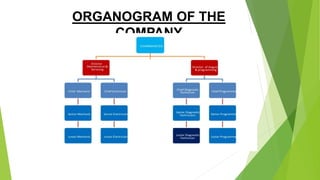
ORGANOGRAM OF THE
COMPANY
ACTIVITIES UNDERTAKEN
I. VEHICLE DIAGNOSTICS.
II. VEHICLE MAINTENANCE.
III. VEHICLE ELECTRICAL
REPAIRS.
WHAT IS VEHICLE
DIAGNOSTICS?
i. Vehicle diagnostics refers to the process of using
advanced tools and technology to identify and
troubleshoot issues in vehicles.
ii. It involves connecting an OBD-II scanner or similar
diagnostic tool to the vehicle's onboard computer system
to retrieve diagnostic trouble codes (DTC codes).
iii. Vehicle diagnostics are essential for early detection of
problems, optimizing vehicle performance, ensuring
safety, and providing valuable information for repairs and
maintenance.
VEHICLE DIAGNOSTICS USING OBD-II
SCANNER
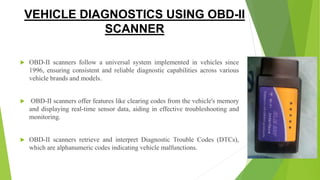
 OBD-II scanners follow a universal system implemented in vehicles since
1996, ensuring consistent and reliable diagnostic capabilities across various
vehicle brands and models.
 OBD-II scanners offer features like clearing codes from the vehicle's memory
and displaying real-time sensor data, aiding in effective troubleshooting and
monitoring.
 OBD-II scanners retrieve and interpret Diagnostic Trouble Codes (DTCs),
which are alphanumeric codes indicating vehicle malfunctions.
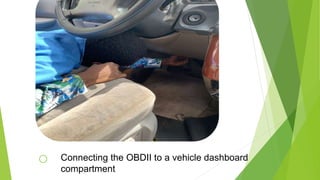
Connecting the OBDII to a vehicle dashboard
compartment
DIAGNOSTIC TROUBLE CODES
(DTC CODES)
 DTC codes are alphanumeric codes generated by a vehicle's onboard
computer systems to indicate malfunctions or issues within specific systems
or components.
 A typical DTC has five characters in total, and each one of those characters
gives a specific description.
 DTC codes help streamline the troubleshooting process by providing a
starting point for technicians to investigate and resolve the underlying issues
affecting the vehicle's performance.
INTERPRETATION OF DTC CODES
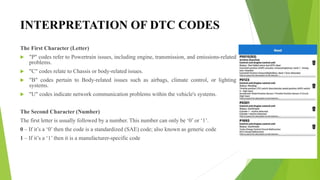
The First Character (Letter)
 "P" codes refer to Powertrain issues, including engine, transmission, and emissions-related
problems.
 "C" codes relate to Chassis or body-related issues.
 "B" codes pertain to Body-related issues such as airbags, climate control, or lighting
systems.
 "U" codes indicate network communication problems within the vehicle's systems.
The Second Character (Number)
The first letter is usually followed by a number. This number can only be ‘0’ or ‘1’.
0 – If it’s a ‘0’ then the code is a standardized (SAE) code; also known as generic code
1 – If it’s a ‘1’ then it is a manufacturer-specific code
INTERPRETATION OF DTC CODES
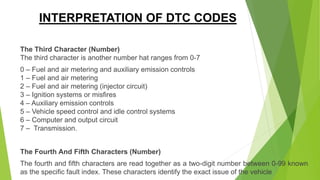
The Third Character (Number)
The third character is another number hat ranges from 0-7
0 – Fuel and air metering and auxiliary emission controls
1 – Fuel and air metering
2 – Fuel and air metering (injector circuit)
3 – Ignition systems or misfires
4 – Auxiliary emission controls
5 – Vehicle speed control and idle control systems
6 – Computer and output circuit
7 – Transmission.
The Fourth And Fifth Characters (Number)
The fourth and fifth characters are read together as a two-digit number between 0-99 known
as the specific fault index. These characters identify the exact issue of the vehicle
PRACTICAL EXPLANATION OF A
DIAGNOSTIC CODE
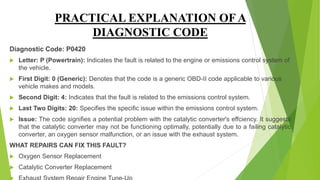
Diagnostic Code: P0420
 Letter: P (Powertrain): Indicates the fault is related to the engine or emissions control system of
the vehicle.
 First Digit: 0 (Generic): Denotes that the code is a generic OBD-II code applicable to various
vehicle makes and models.
 Second Digit: 4: Indicates that the fault is related to the emissions control system.
 Last Two Digits: 20: Specifies the specific issue within the emissions control system.
 Issue: The code signifies a potential problem with the catalytic converter's effciency. It suggests
that the catalytic converter may not be functioning optimally, potentially due to a failing catalytic
converter, an oxygen sensor malfunction, or an issue with the exhaust system.
WHAT REPAIRS CAN FIX THIS FAULT?
 Oxygen Sensor Replacement
 Catalytic Converter Replacement
COMMON DIAGNOSTICS TROUBLE CODES
P0442: A small system leak in a vehicle’s evaporative emission
control system.
P0606: A malfunction in the power train control module (PCM), also
known as the engine control module (ECM).
P0110: A malfunction in the intake air temperature sensor circuit.
P0500: A vehicle speed sensor malfunction.
P0706: Fault in the transmission range sensor circuit range.
CONCLUSION AND REOMMENDATION
CONCLUSION
My attachment at Hephzibah Autocare has been an invaluable experience, providing
extensive knowledge and practical exposure in automobile diagnostics and repairs. Working
alongside skilled experts, I conducted experiments, gained fresh perspectives, and enhanced
my practical skills.
RECOMMENDATION
I recommend stricter supervision of trainees, partnerships between ITF and companies,
government encouragement of the training scheme, assistance from educational institutions in
securing placements, and advocating for remuneration for students to cover transportation
expenses
THANK YOU FOR LISTENING!!

Vehicle Diagnostics

  • 1.
    AN ORAL PRESENTATION ON STUDENTS’ INDUSTRIALWORK EXPERIENCE SCHEME UNDERTAKEN AT HEPHZIBAH AUTOCARE LIMITED. AT AKAD FILLING STATION,ALONG FUTA NORTH GATE AKURE,ONDO STATE. COMPILED BY : ADEDIRE JOSHUA ADENIPEKUN MATRIC NUMBER : MEE/17/3306.
  • 2.
    OUTLINE  BACKGROUND OFTHEORGANIZATION  ACTIVITIES UNDERTAKEN  WHAT IS VEHICLE DIAGNOSTICS?  VEHICLE DIAGNOSTICS USING OBD-II SCANNER  DIAGNOSTIC TROUBLE CODES (DTC CODES)  INTERPRETATION OF DTC CODES  PRACTICAL EXPLANATION OF A DIAGNOSTIC CODE  COMMON DIAGNOSTICS TROUBLE CODES(DTC)  CONCLUSION AND REOMMENDATION
  • 3.
    BACKGROUND OF THEORGANISATION HEPHZIBAH AUTOCARE LIMITED  Located at Akad filling station, along FUTA North Gate, Akure, Ondo State, Hephzibah Autocare specializes in providing specialized services for various brands and models of passenger and light goods vehicles. Their expertise extends to SUVs, sedans, trucks, and more. Established in 2018 by Engr. Opeyemi, Hephzibah Autocare boasts a dedicated team of approximately 5 skilled staff members.  Areas of operation includes diagnostics, tuning and programming Engine Control Units (ECUs) and Powertrain Control Modules (PCMs). Additionally, they offer a range of services including key programming, alarm installation, and expertise in Transmission Control Module (TCM) matters.
  • 4.
  • 5.
    ACTIVITIES UNDERTAKEN I. VEHICLEDIAGNOSTICS. II. VEHICLE MAINTENANCE. III. VEHICLE ELECTRICAL REPAIRS.
  • 6.
    WHAT IS VEHICLE DIAGNOSTICS? i.Vehicle diagnostics refers to the process of using advanced tools and technology to identify and troubleshoot issues in vehicles. ii. It involves connecting an OBD-II scanner or similar diagnostic tool to the vehicle's onboard computer system to retrieve diagnostic trouble codes (DTC codes). iii. Vehicle diagnostics are essential for early detection of problems, optimizing vehicle performance, ensuring safety, and providing valuable information for repairs and maintenance.
  • 7.
    VEHICLE DIAGNOSTICS USINGOBD-II SCANNER  OBD-II scanners follow a universal system implemented in vehicles since 1996, ensuring consistent and reliable diagnostic capabilities across various vehicle brands and models.  OBD-II scanners offer features like clearing codes from the vehicle's memory and displaying real-time sensor data, aiding in effective troubleshooting and monitoring.  OBD-II scanners retrieve and interpret Diagnostic Trouble Codes (DTCs), which are alphanumeric codes indicating vehicle malfunctions.
  • 8.
    Connecting the OBDIIto a vehicle dashboard compartment
  • 9.
    DIAGNOSTIC TROUBLE CODES (DTCCODES)  DTC codes are alphanumeric codes generated by a vehicle's onboard computer systems to indicate malfunctions or issues within specific systems or components.  A typical DTC has five characters in total, and each one of those characters gives a specific description.  DTC codes help streamline the troubleshooting process by providing a starting point for technicians to investigate and resolve the underlying issues affecting the vehicle's performance.
  • 10.
    INTERPRETATION OF DTCCODES The First Character (Letter)  "P" codes refer to Powertrain issues, including engine, transmission, and emissions-related problems.  "C" codes relate to Chassis or body-related issues.  "B" codes pertain to Body-related issues such as airbags, climate control, or lighting systems.  "U" codes indicate network communication problems within the vehicle's systems. The Second Character (Number) The first letter is usually followed by a number. This number can only be ‘0’ or ‘1’. 0 – If it’s a ‘0’ then the code is a standardized (SAE) code; also known as generic code 1 – If it’s a ‘1’ then it is a manufacturer-specific code
  • 11.
    INTERPRETATION OF DTCCODES The Third Character (Number) The third character is another number hat ranges from 0-7 0 – Fuel and air metering and auxiliary emission controls 1 – Fuel and air metering 2 – Fuel and air metering (injector circuit) 3 – Ignition systems or misfires 4 – Auxiliary emission controls 5 – Vehicle speed control and idle control systems 6 – Computer and output circuit 7 – Transmission. The Fourth And Fifth Characters (Number) The fourth and fifth characters are read together as a two-digit number between 0-99 known as the specific fault index. These characters identify the exact issue of the vehicle
  • 12.
    PRACTICAL EXPLANATION OFA DIAGNOSTIC CODE Diagnostic Code: P0420  Letter: P (Powertrain): Indicates the fault is related to the engine or emissions control system of the vehicle.  First Digit: 0 (Generic): Denotes that the code is a generic OBD-II code applicable to various vehicle makes and models.  Second Digit: 4: Indicates that the fault is related to the emissions control system.  Last Two Digits: 20: Specifies the specific issue within the emissions control system.  Issue: The code signifies a potential problem with the catalytic converter's effciency. It suggests that the catalytic converter may not be functioning optimally, potentially due to a failing catalytic converter, an oxygen sensor malfunction, or an issue with the exhaust system. WHAT REPAIRS CAN FIX THIS FAULT?  Oxygen Sensor Replacement  Catalytic Converter Replacement
  • 13.
    COMMON DIAGNOSTICS TROUBLECODES P0442: A small system leak in a vehicle’s evaporative emission control system. P0606: A malfunction in the power train control module (PCM), also known as the engine control module (ECM). P0110: A malfunction in the intake air temperature sensor circuit. P0500: A vehicle speed sensor malfunction. P0706: Fault in the transmission range sensor circuit range.
  • 14.
    CONCLUSION AND REOMMENDATION CONCLUSION Myattachment at Hephzibah Autocare has been an invaluable experience, providing extensive knowledge and practical exposure in automobile diagnostics and repairs. Working alongside skilled experts, I conducted experiments, gained fresh perspectives, and enhanced my practical skills. RECOMMENDATION I recommend stricter supervision of trainees, partnerships between ITF and companies, government encouragement of the training scheme, assistance from educational institutions in securing placements, and advocating for remuneration for students to cover transportation expenses
  • 15.
    THANK YOU FORLISTENING!!