Antimicrobial use in developing
countries
WVA/WMA GLOBAL CONFERENCE ON ONE HEALTH
21st Thursday – 22nd Friday May 2015
Madrid, Spain
Delia Grace, Johanna Lindahl, Hung Nguyen, Manish Kakkar
Demand for
antibiotic use
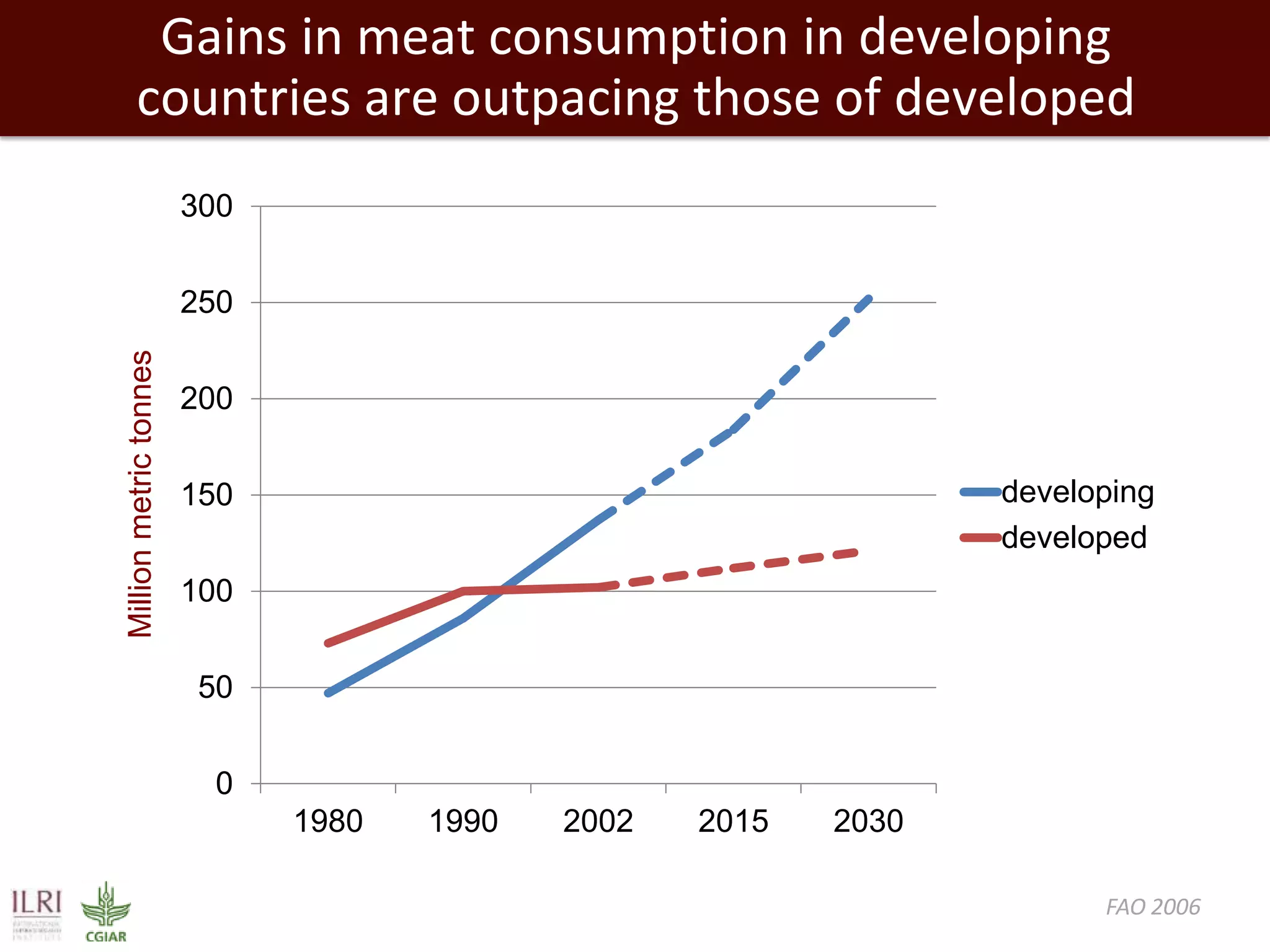
Gains in meat consumption in developing
countries are outpacing those of developed
0
50
100
150
200
250
300
1980 1990 2002 2015 2030
Millionmetrictonnes
developing
developed
FAO 2006
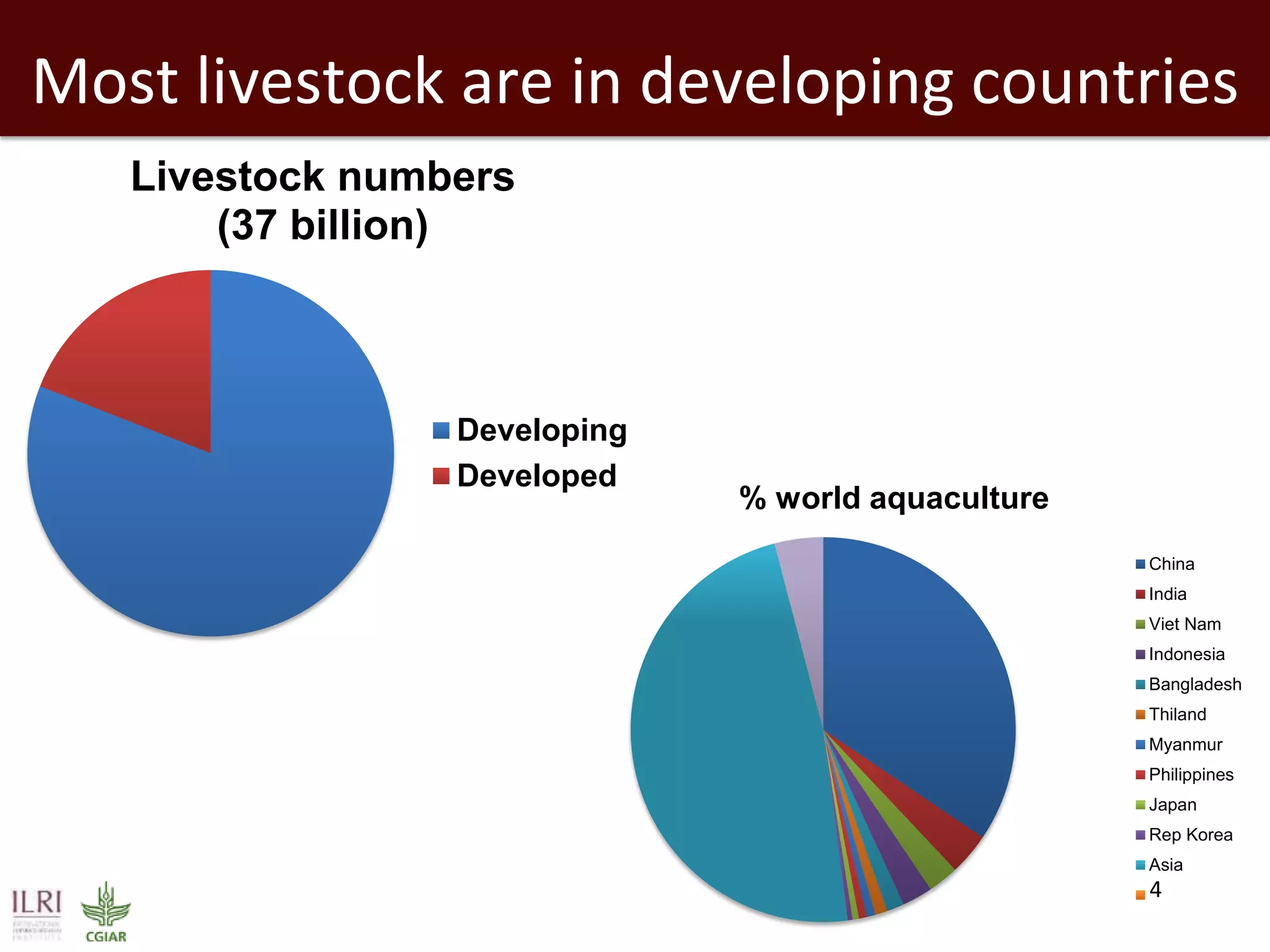
Most livestock are in developing countries
4
Livestock numbers
(37 billion)
Developing
Developed
% world aquaculture
China
India
Viet Nam
Indonesia
Bangladesh
Thiland
Myanmur
Philippines
Japan
Rep Korea
Asia
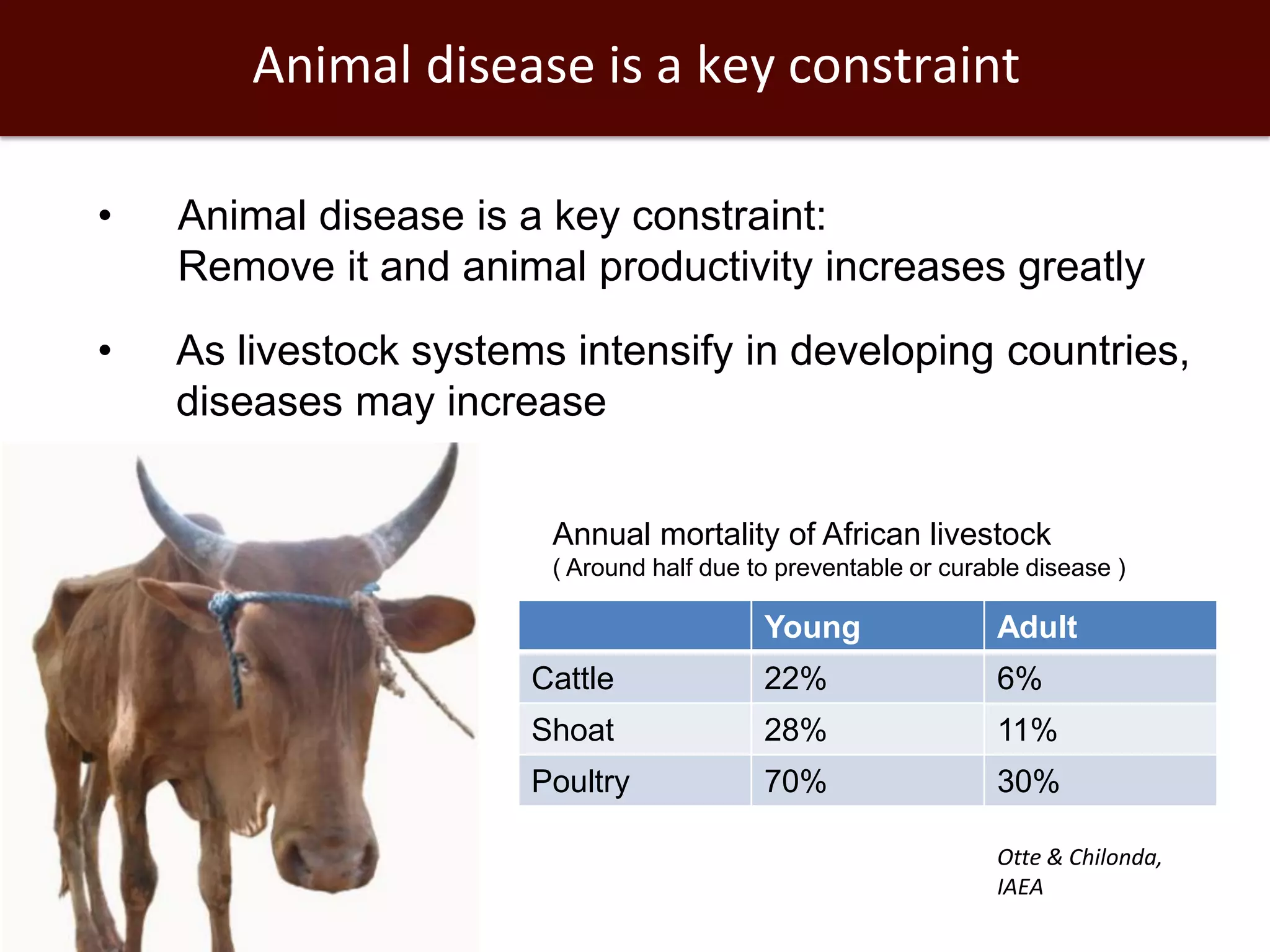
• Animal disease is a key constraint:
Remove it and animal productivity increases greatly
• As livestock systems intensify in developing countries,
diseases may increase
Young Adult
Cattle 22% 6%
Shoat 28% 11%
Poultry 70% 30%
Otte & Chilonda,
IAEA
Annual mortality of African livestock
( Around half due to preventable or curable disease )
Animal disease is a key constraint
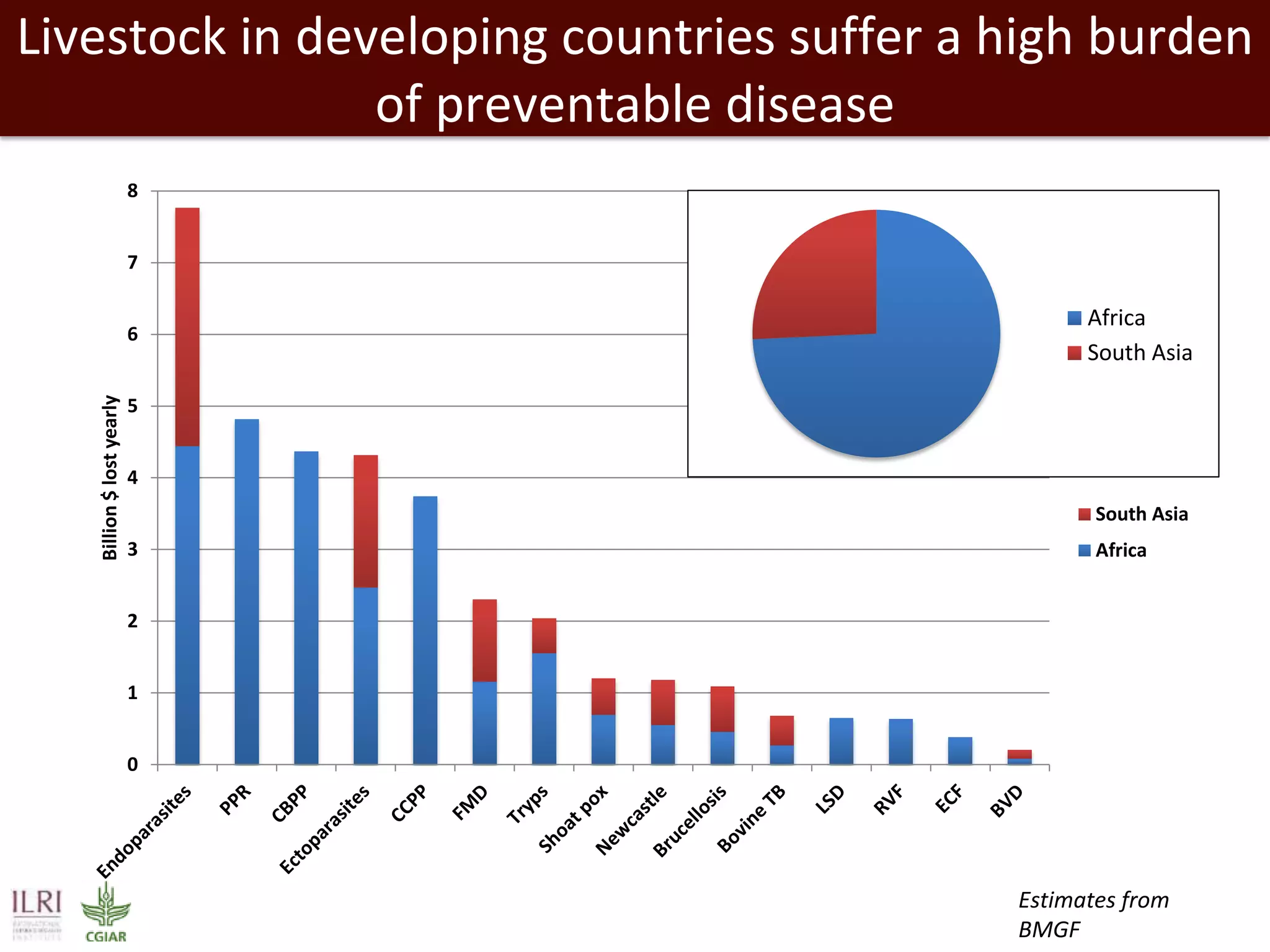
Livestock in developing countries suffer a high burden
of preventable disease
Estimates from
BMGF
0
1
2
3
4
5
6
7
8
Billion$lostyearly
South Asia
Africa
Africa
South Asia
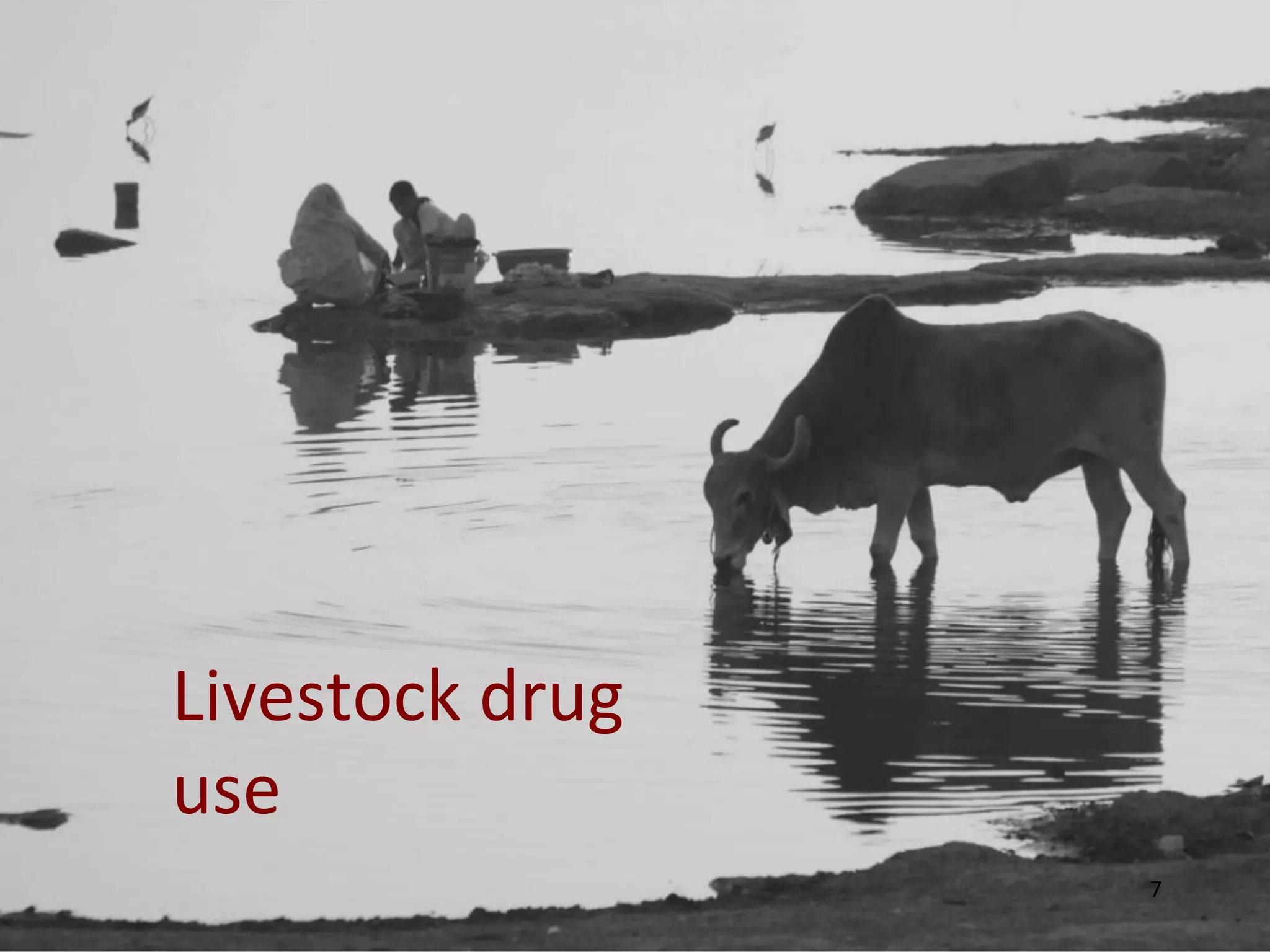
Livestock drug
use
7
8
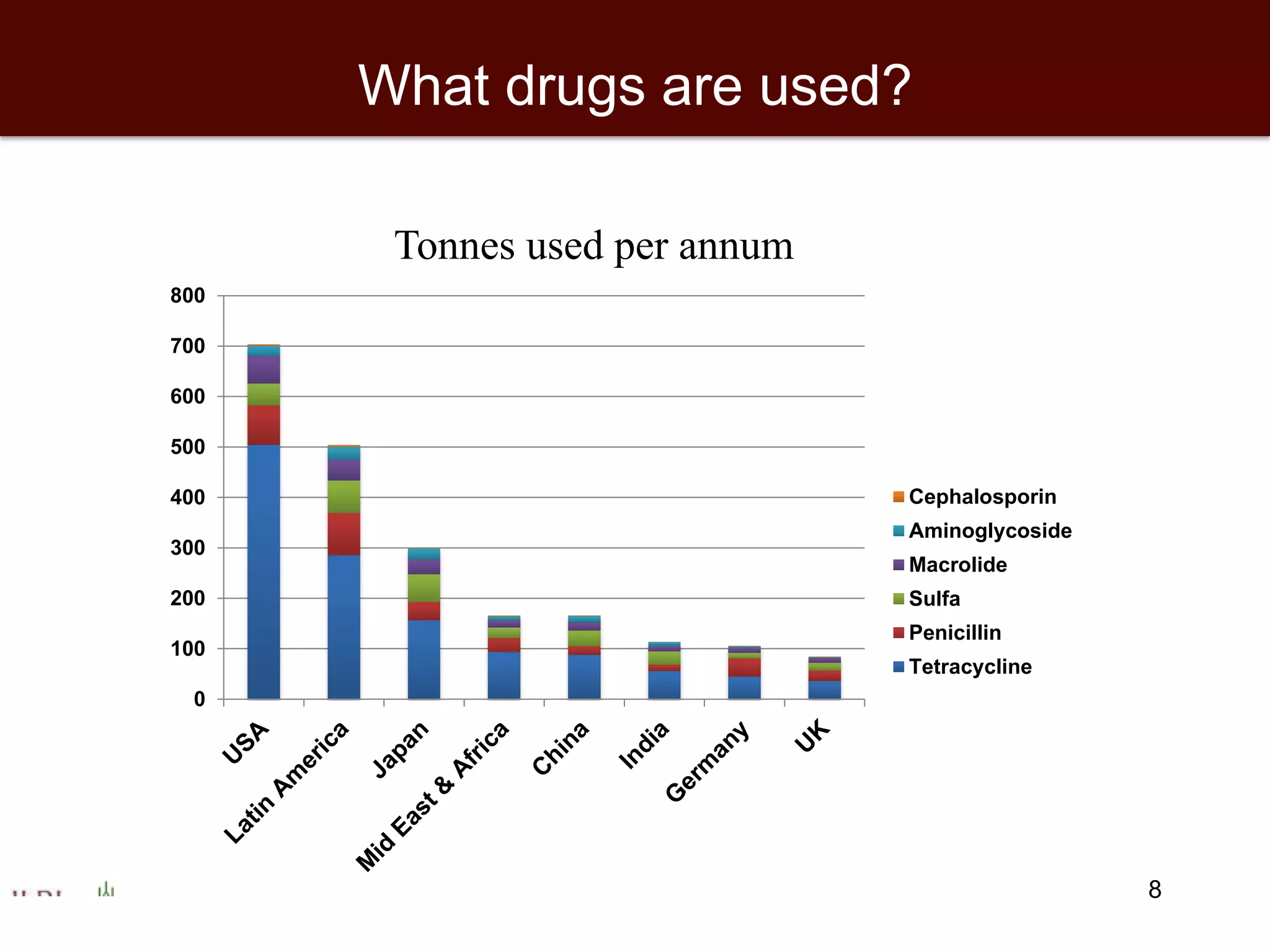
What drugs are used?
0
100
200
300
400
500
600
700
800
Cephalosporin
Aminoglycoside
Macrolide
Sulfa
Penicillin
Tetracycline
Tonnes used per annum
9
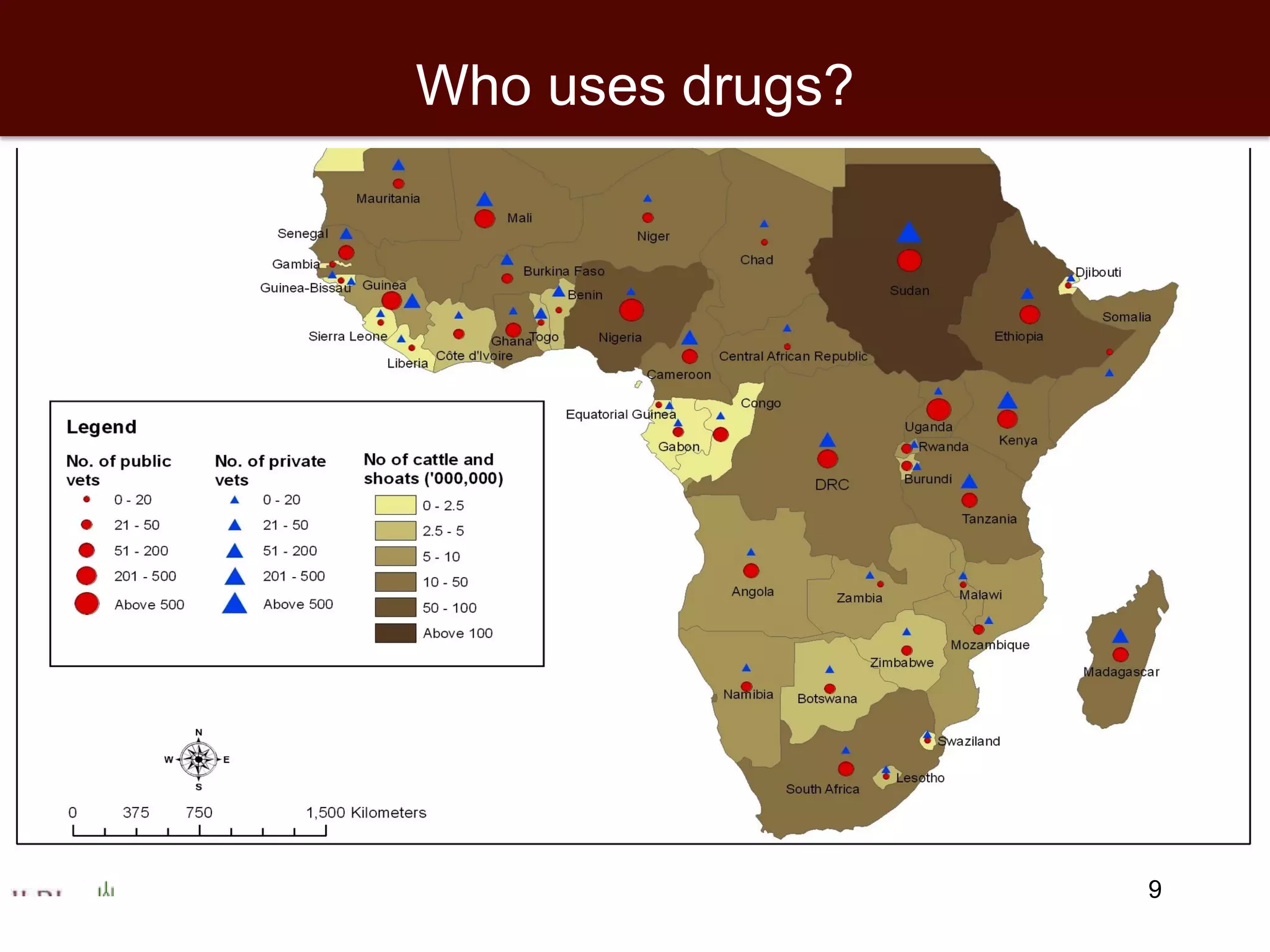
Who uses drugs?
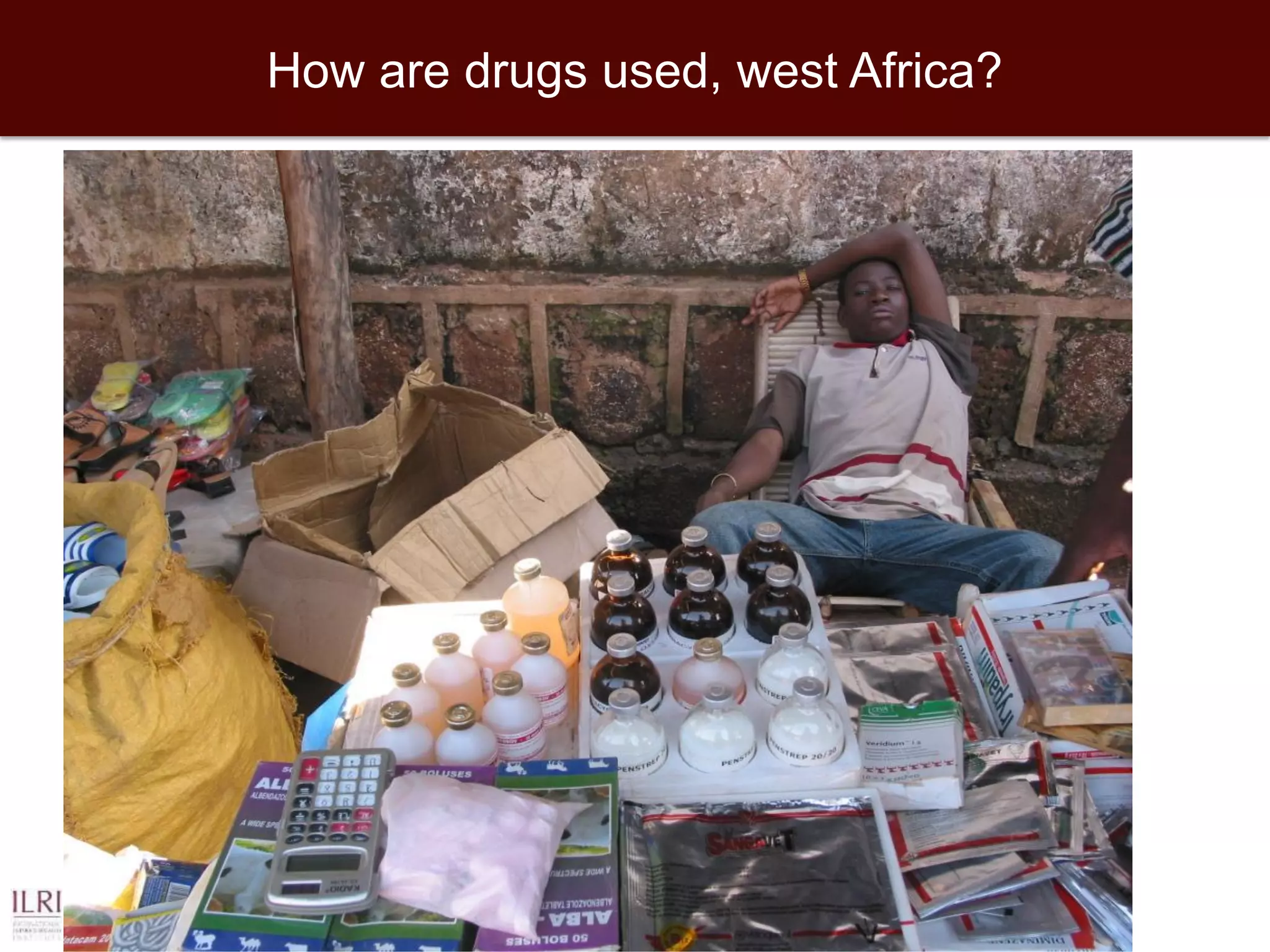
How are drugs used, west Africa?
11
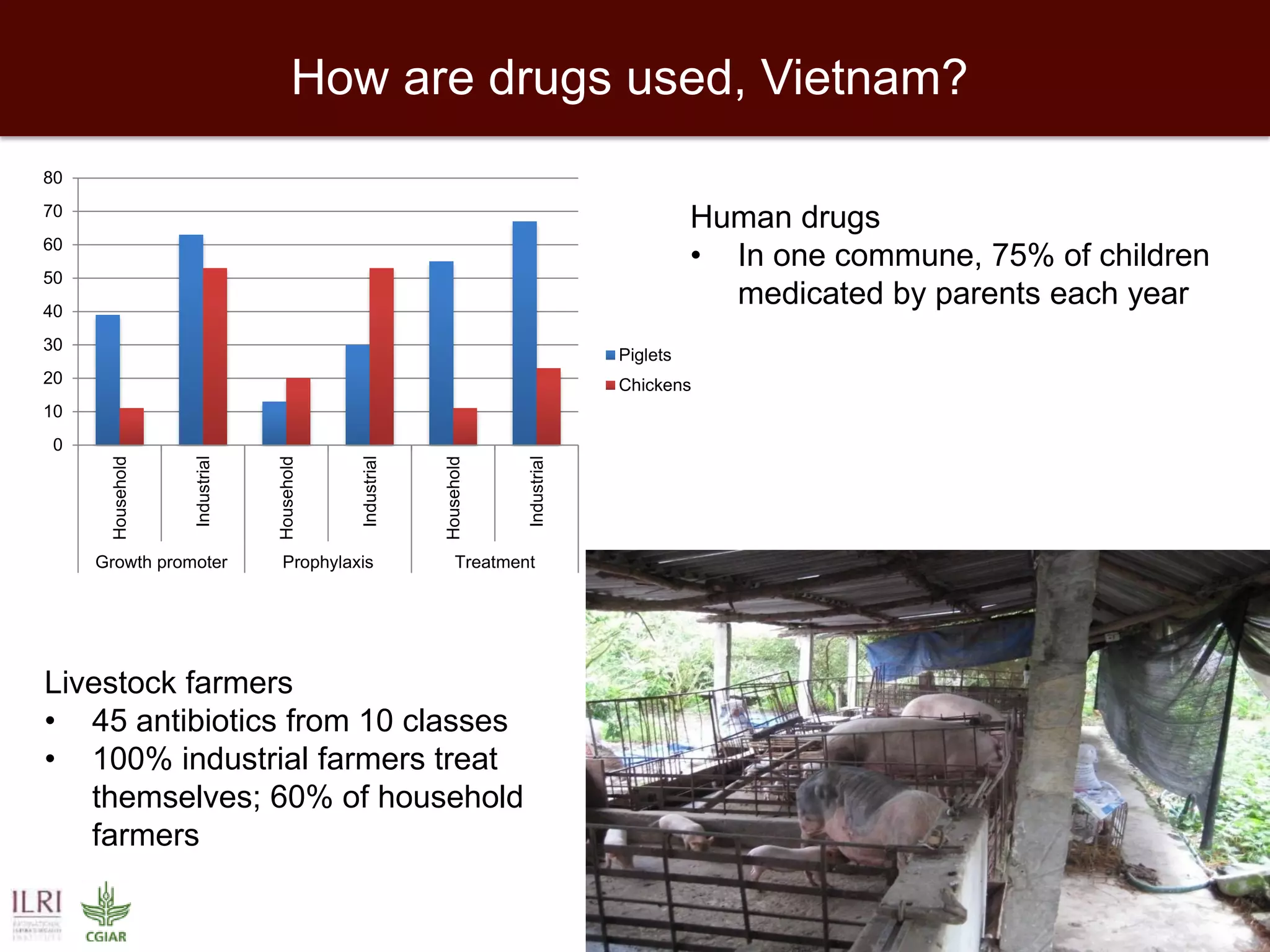
How are drugs used, Vietnam?
0
10
20
30
40
50
60
70
80
Household
Industrial
Household
Industrial
Household
Industrial
Growth promoter Prophylaxis Treatment
Piglets
Chickens
Livestock farmers
• 45 antibiotics from 10 classes
• 100% industrial farmers treat
themselves; 60% of household
farmers
Human drugs
• In one commune, 75% of children
medicated by parents each year
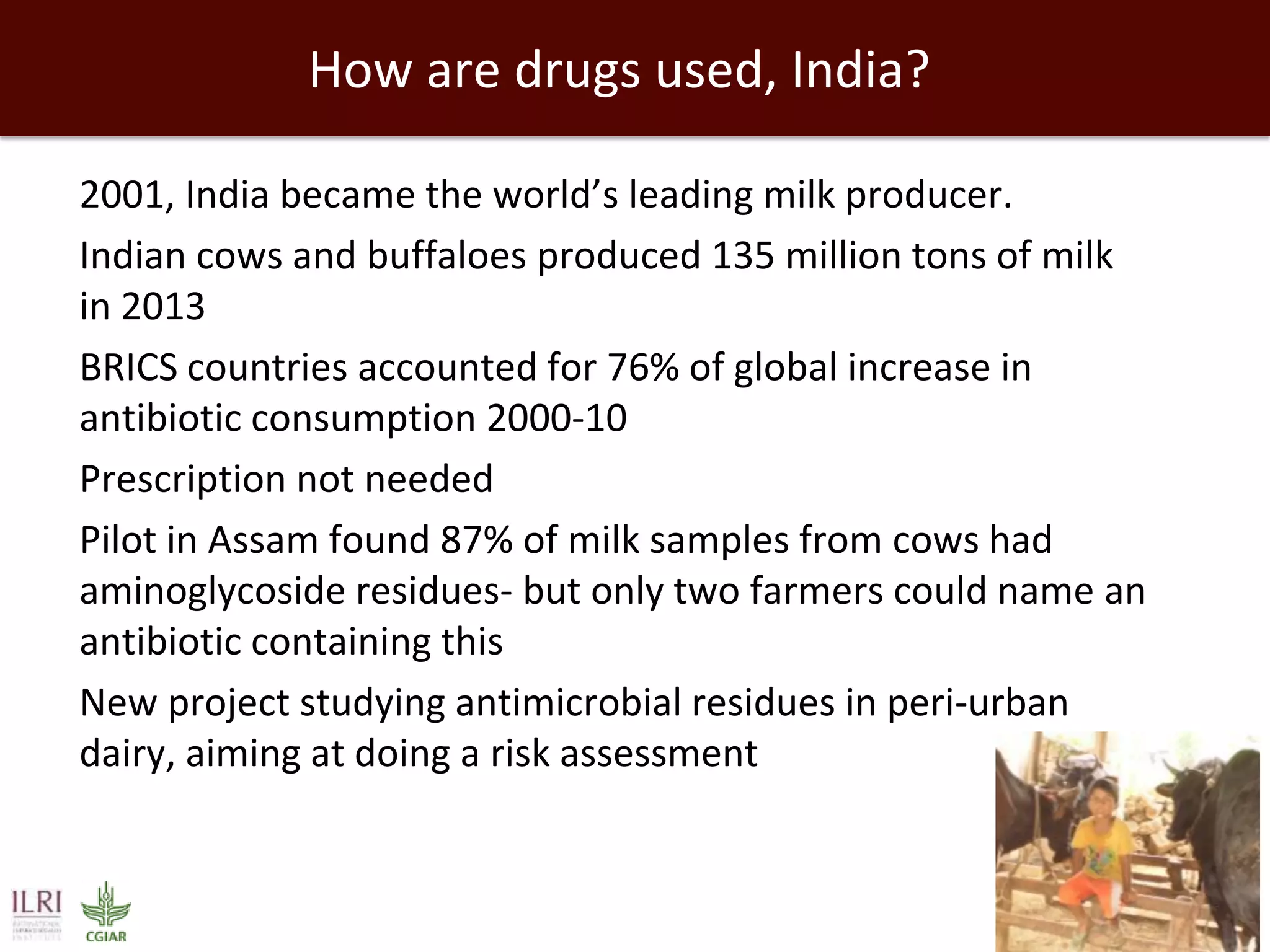
How are drugs used, India?
 2001, India became the world’s leading milk producer.
 Indian cows and buffaloes produced 135 million tons of milk
in 2013
 BRICS countries accounted for 76% of global increase in
antibiotic consumption 2000-10
 Prescription not needed
 Pilot in Assam found 87% of milk samples from cows had
aminoglycoside residues- but only two farmers could name an
antibiotic containing this
 New project studying antimicrobial residues in peri-urban
dairy, aiming at doing a risk assessment
13
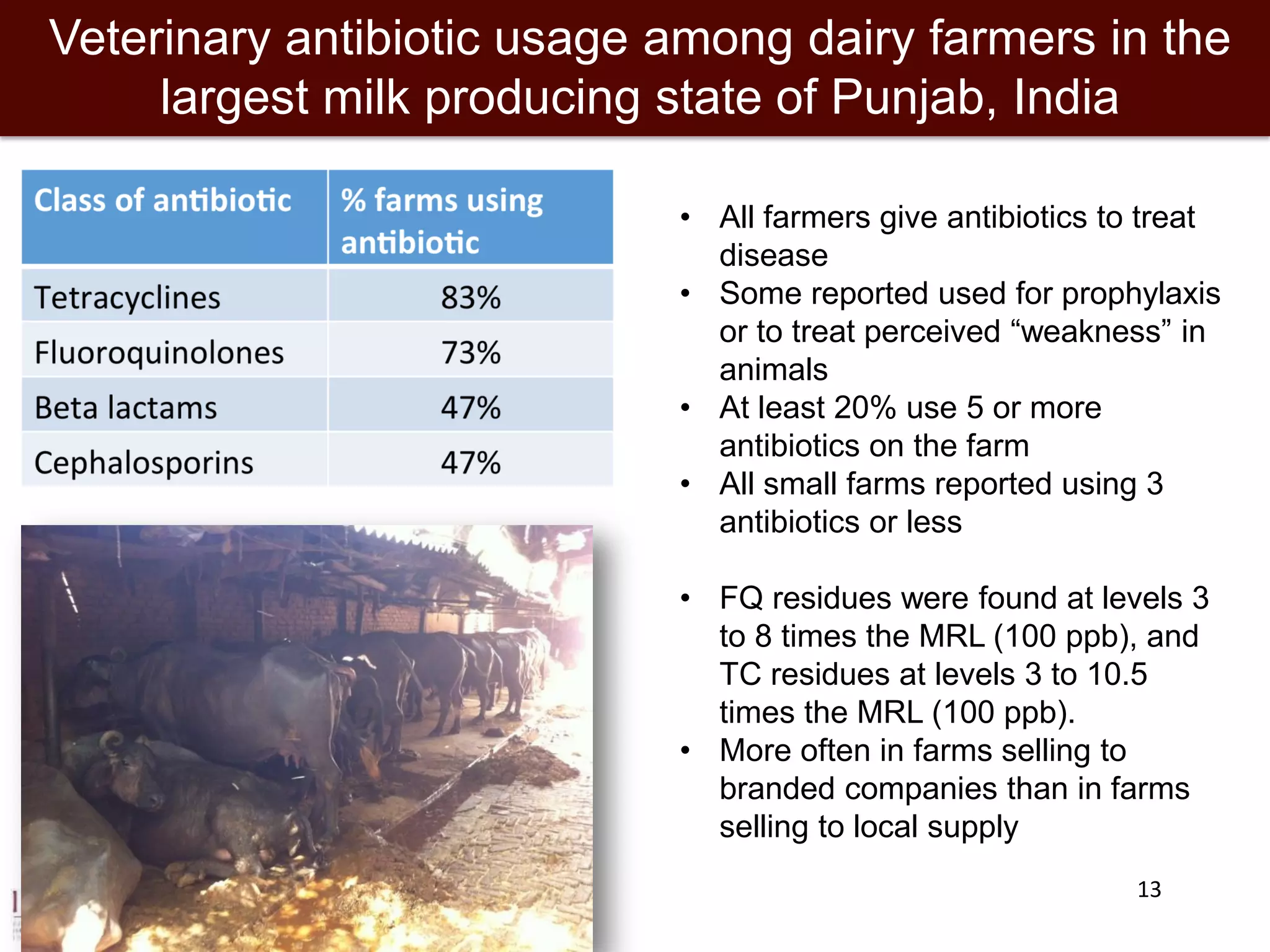
Veterinary antibiotic usage among dairy farmers in the
largest milk producing state of Punjab, India
• All farmers give antibiotics to treat
disease
• Some reported used for prophylaxis
or to treat perceived “weakness” in
animals
• At least 20% use 5 or more
antibiotics on the farm
• All small farms reported using 3
antibiotics or less
• FQ residues were found at levels 3
to 8 times the MRL (100 ppb), and
TC residues at levels 3 to 10.5
times the MRL (100 ppb).
• More often in farms selling to
branded companies than in farms
selling to local supply
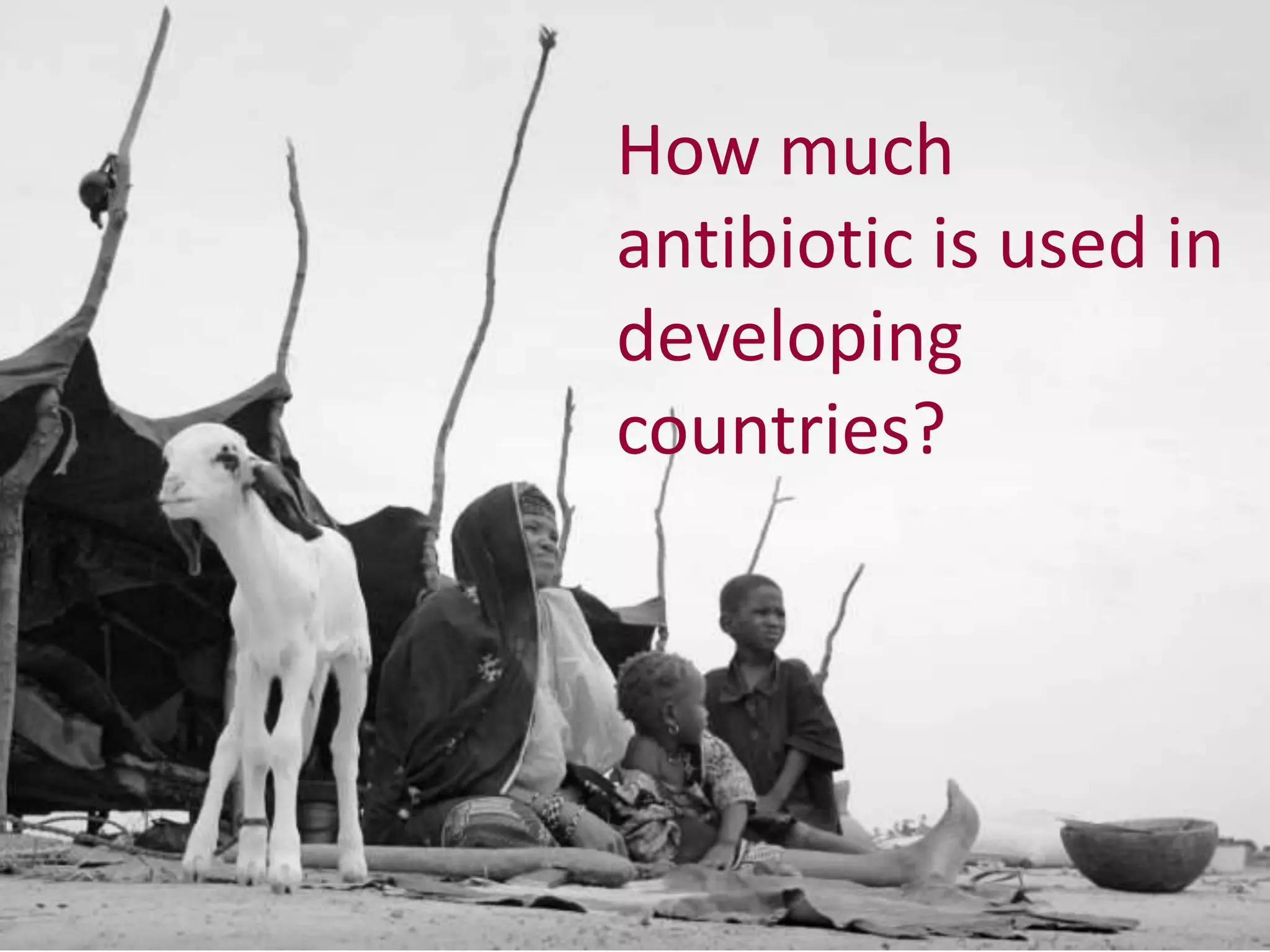
How much
antibiotic is used in
developing
countries?
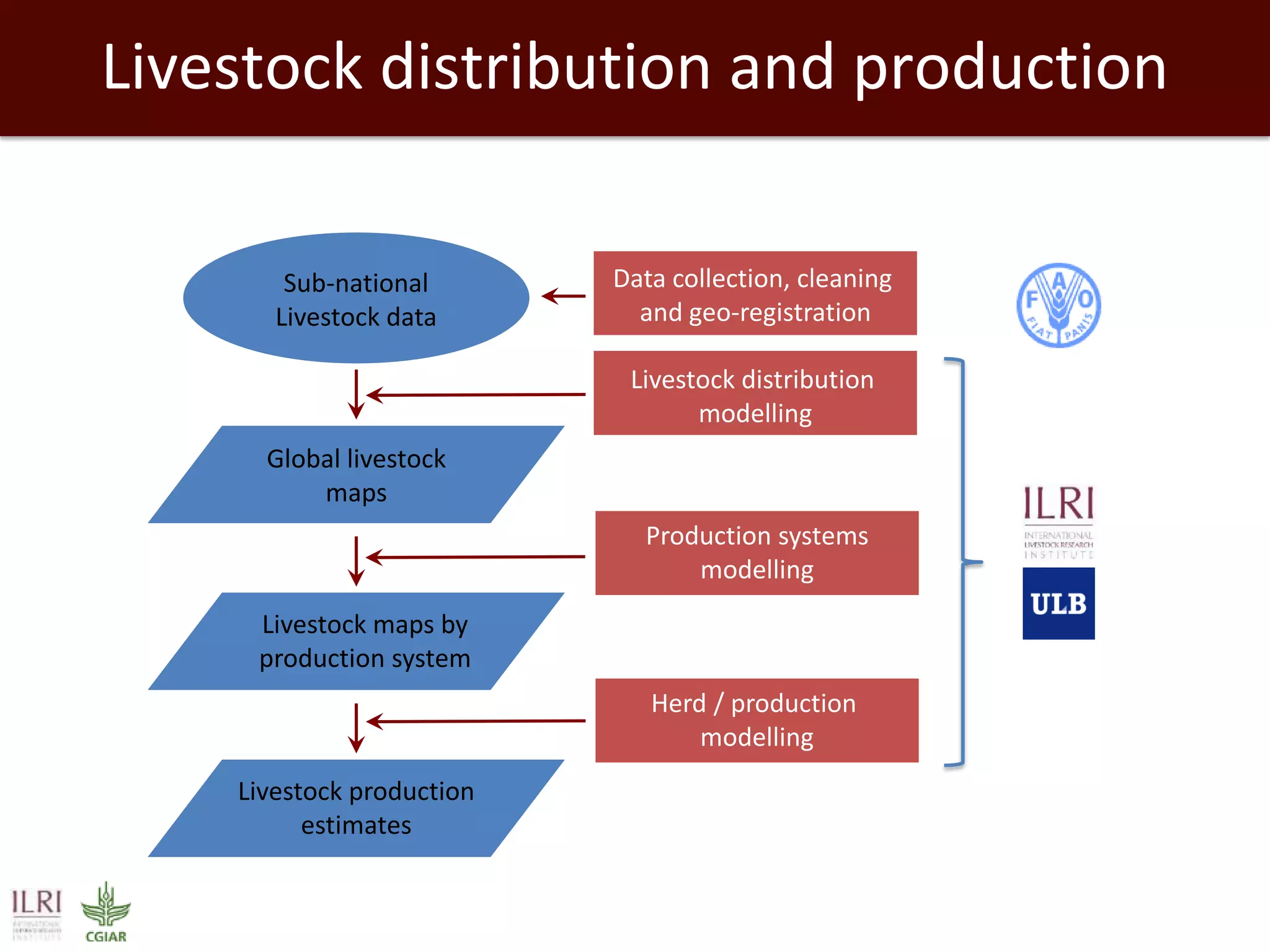
Livestock distribution and production
Livestock distribution
modelling
Livestock maps by
production system
Livestock production
estimates
Global livestock
maps
Production systems
modelling
Sub-national
Livestock data
Herd / production
modelling
Data collection, cleaning
and geo-registration
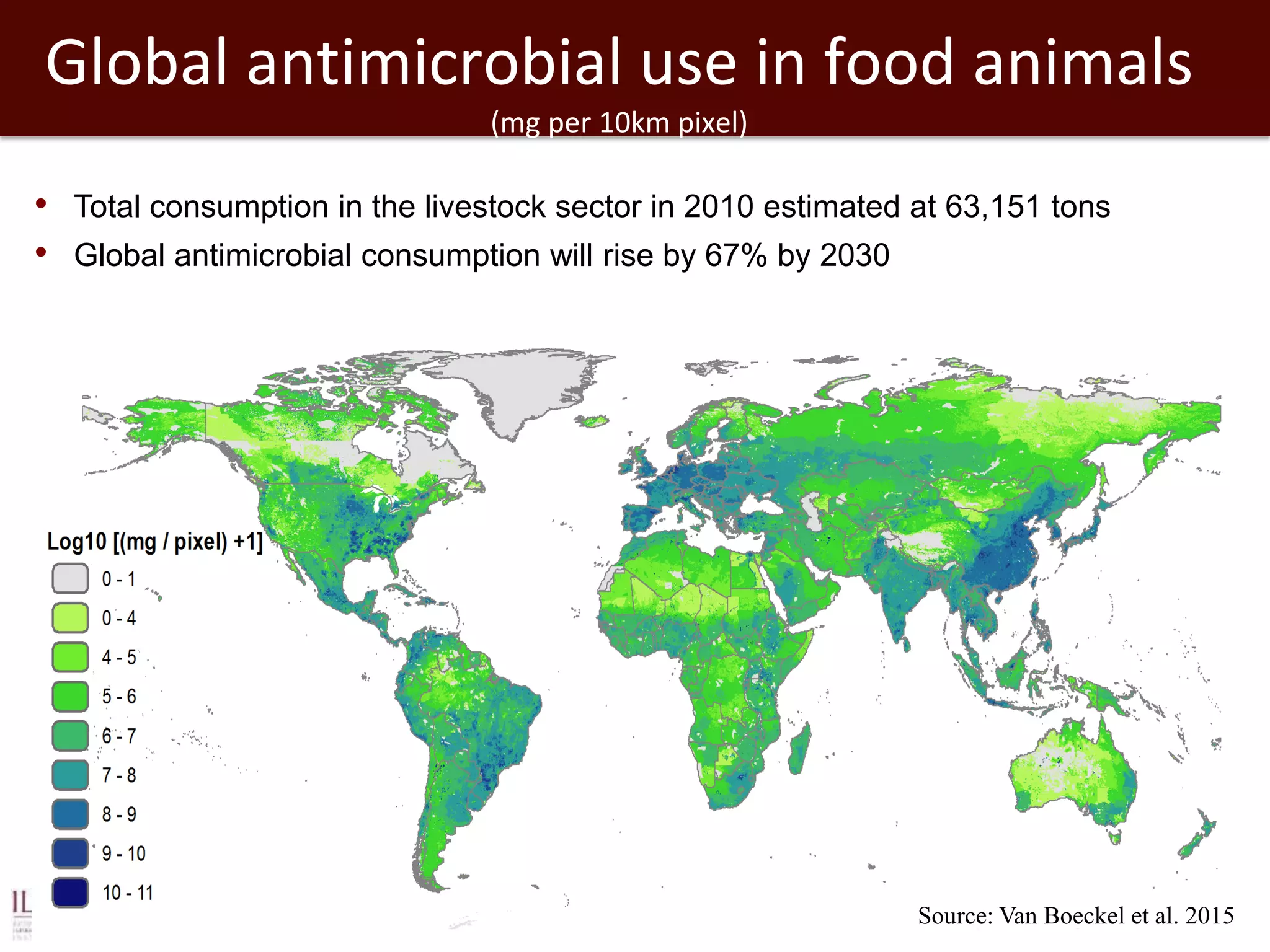
Global antimicrobial use in food animals
(mg per 10km pixel)
Source: Van Boeckel et al. 2015
• Total consumption in the livestock sector in 2010 estimated at 63,151 tons
• Global antimicrobial consumption will rise by 67% by 2030
Global antimicrobial use in food animals
(mg per 10km pixel)
Source: Grace,. 2015
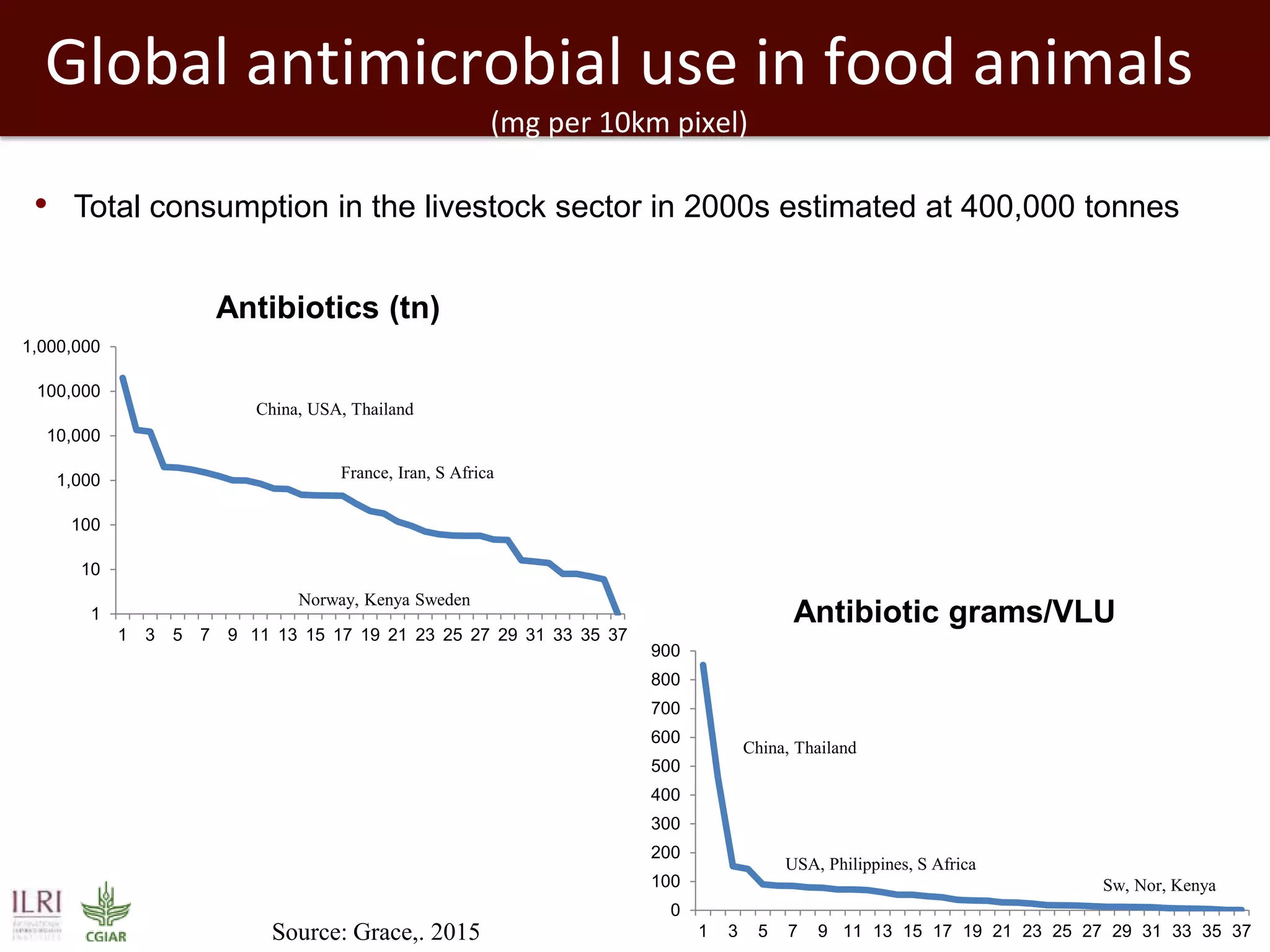
• Total consumption in the livestock sector in 2000s estimated at 400,000 tonnes
China, USA, Thailand
France, Iran, S Africa
Norway, Kenya Sweden
1
10
100
1,000
10,000
100,000
1,000,000
1 3 5 7 9 11 13 15 17 19 21 23 25 27 29 31 33 35 37
Antibiotics (tn)
0
100
200
300
400
500
600
700
800
900
1 3 5 7 9 11 13 15 17 19 21 23 25 27 29 31 33 35 37
Antibiotic grams/VLU
China, Thailand
USA, Philippines, S Africa
Sw, Nor, Kenya
Antibiotic residues and
Antimicrobial resistance
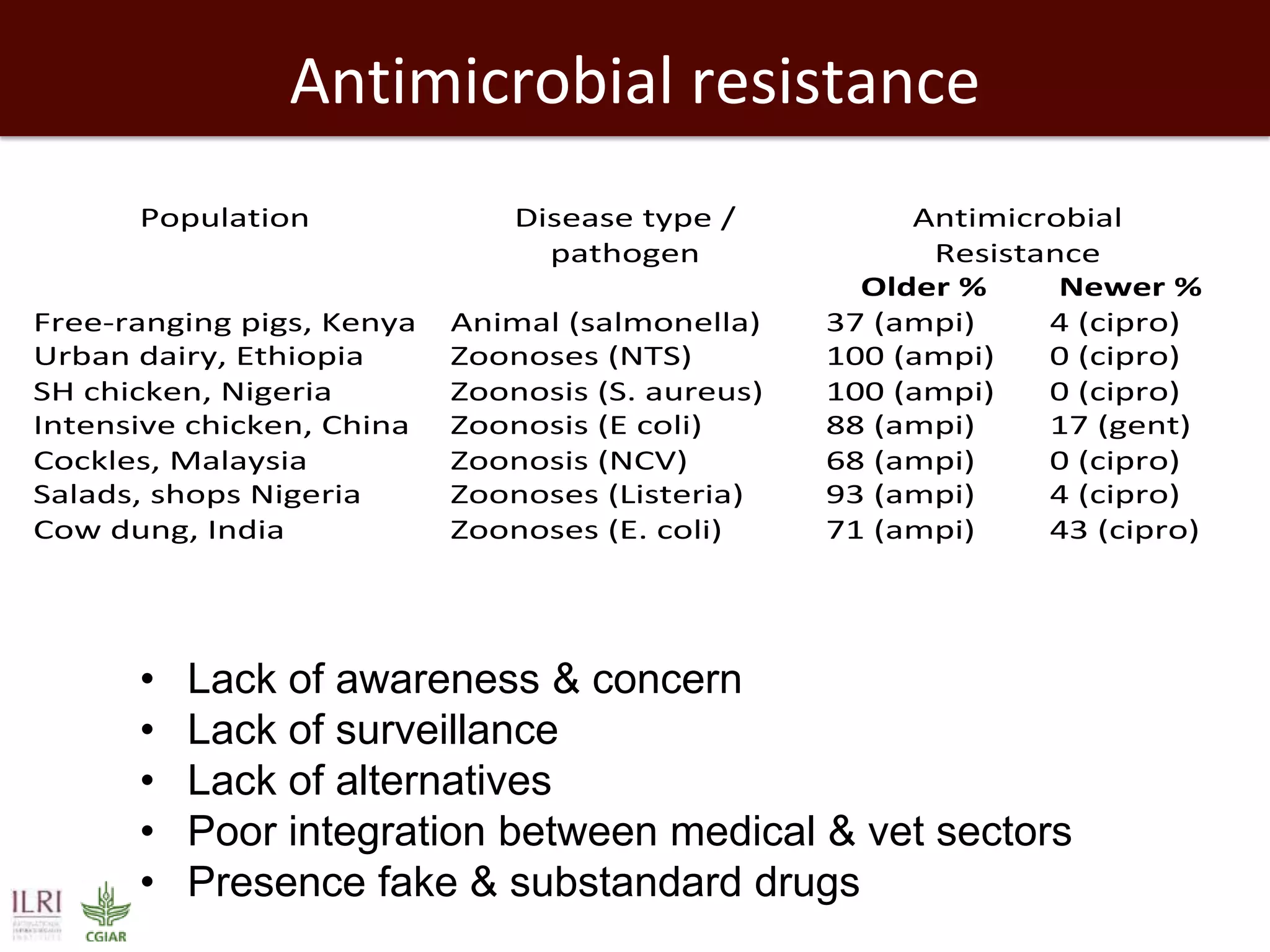
Population Disease type /
pathogen
Antimicrobial
Resistance
Older % Newer %
Free-ranging pigs, Kenya Animal (salmonella) 37 (ampi) 4 (cipro)
Urban dairy, Ethiopia Zoonoses (NTS) 100 (ampi) 0 (cipro)
SH chicken, Nigeria Zoonosis (S. aureus) 100 (ampi) 0 (cipro)
Intensive chicken, China Zoonosis (E coli) 88 (ampi) 17 (gent)
Cockles, Malaysia Zoonosis (NCV) 68 (ampi) 0 (cipro)
Salads, shops Nigeria Zoonoses (Listeria) 93 (ampi) 4 (cipro)
Cow dung, India Zoonoses (E. coli) 71 (ampi) 43 (cipro)
• Lack of awareness & concern
• Lack of surveillance
• Lack of alternatives
• Poor integration between medical & vet sectors
• Presence fake & substandard drugs
20
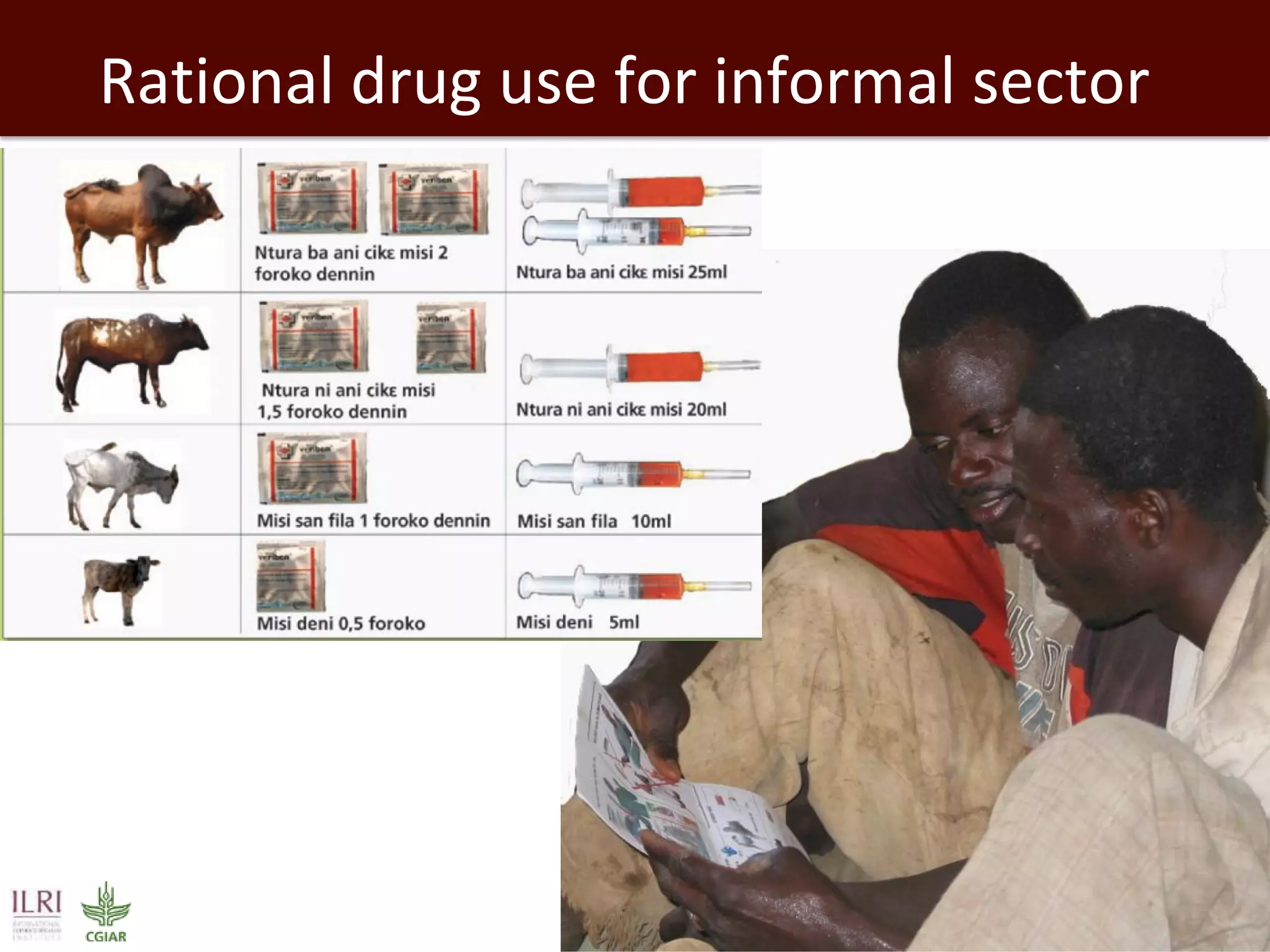
Rational drug use for informal sector
21
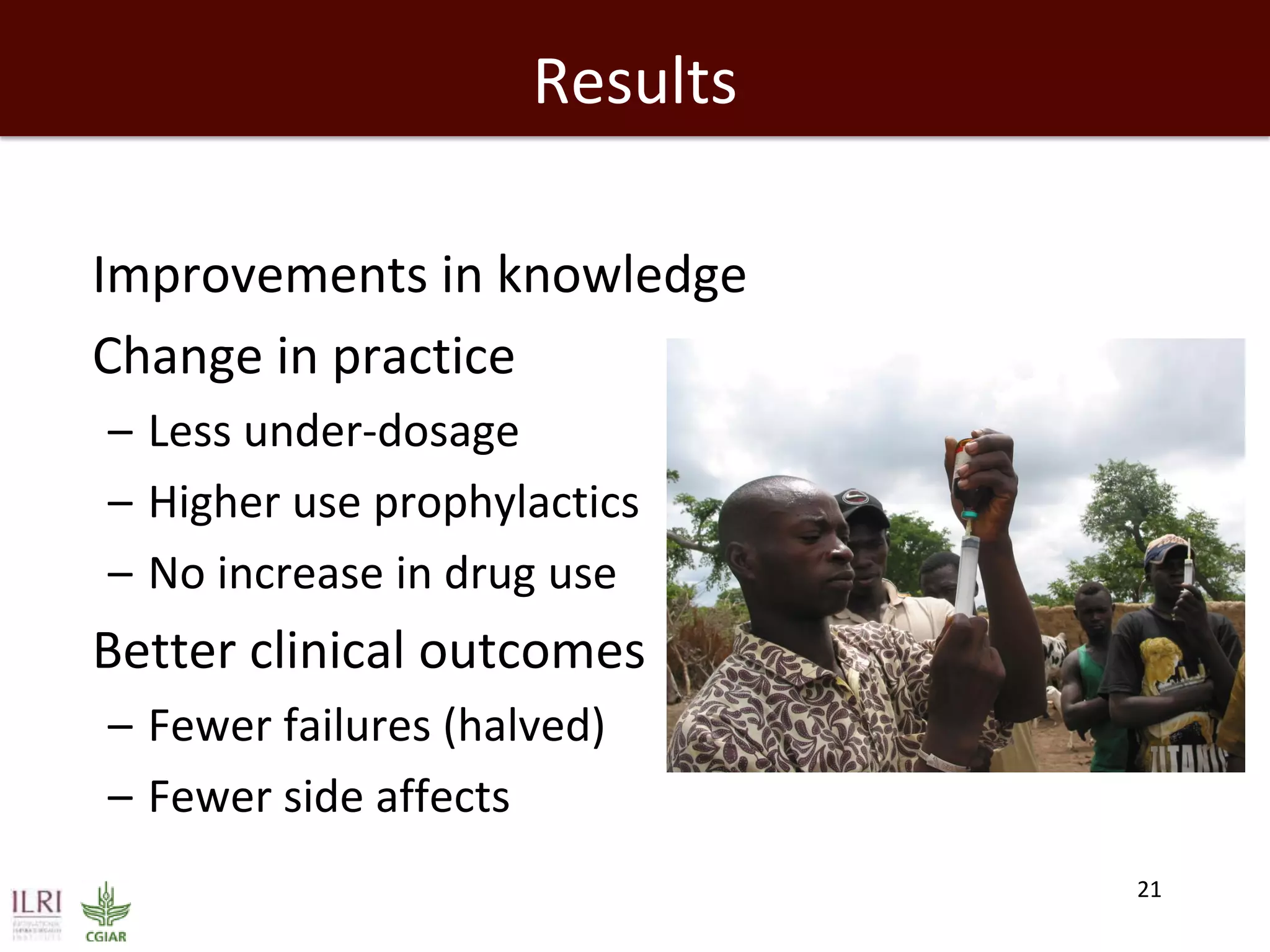
Results
Improvements in knowledge
Change in practice
– Less under-dosage
– Higher use prophylactics
– No increase in drug use
Better clinical outcomes
– Fewer failures (halved)
– Fewer side affects
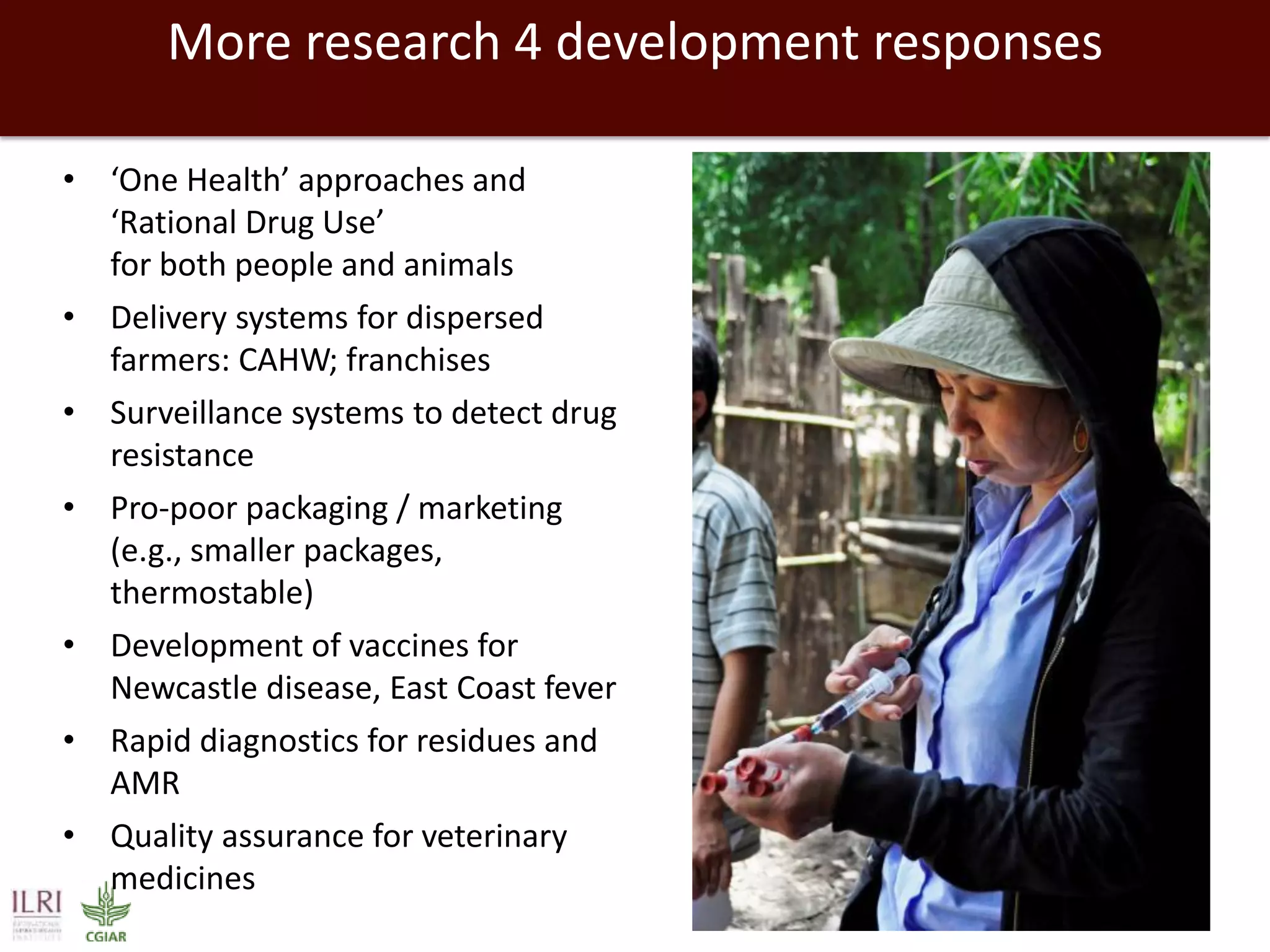
More research 4 development responses
• ‘One Health’ approaches and
‘Rational Drug Use’
for both people and animals
• Delivery systems for dispersed
farmers: CAHW; franchises
• Surveillance systems to detect drug
resistance
• Pro-poor packaging / marketing
(e.g., smaller packages,
thermostable)
• Development of vaccines for
Newcastle disease, East Coast fever
• Rapid diagnostics for residues and
AMR
• Quality assurance for veterinary
medicines
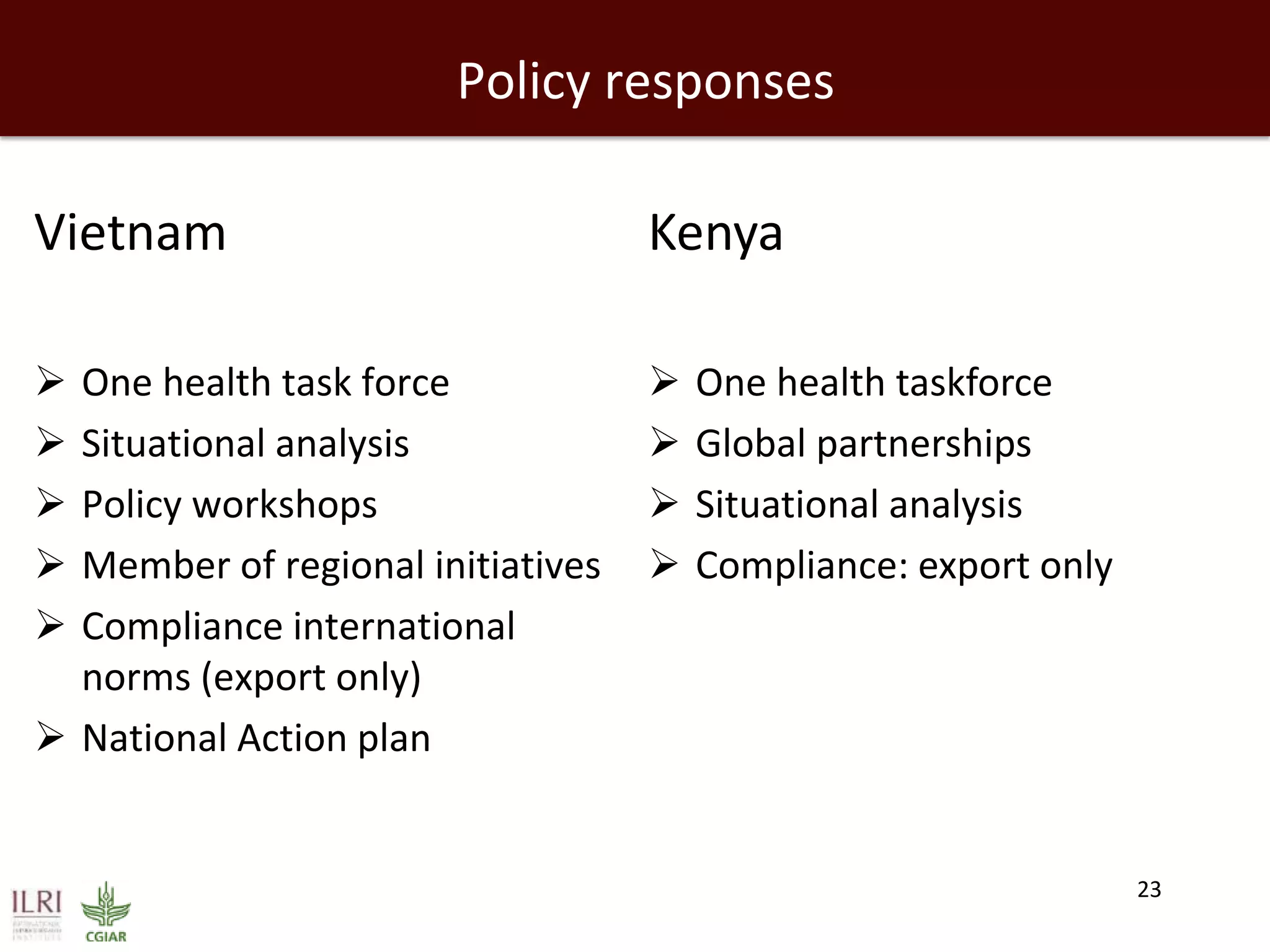
Policy responses
Vietnam
 One health task force
 Situational analysis
 Policy workshops
 Member of regional initiatives
 Compliance international
norms (export only)
 National Action plan
23
Kenya
 One health taskforce
 Global partnerships
 Situational analysis
 Compliance: export only
Acknowledgements
This work was partially supported by IDRC,
Canada through the PROMOTING HEALTH,
LIVELIHOOD, AND SUSTAINABLE LIVESTOCK
SYSTEMS project, by DFID, by OECD and by
CRP Agriculture for Nutrition and Health led by
IFPRI, USA
24
The presentation has a Creative Commons licence. You are free to re-use or distribute this work, provided credit is
given to ILRI.
Better lives through livestock
ilri.org

Antimicrobial use in developing countries

  • 1.
    Antimicrobial use indeveloping countries WVA/WMA GLOBAL CONFERENCE ON ONE HEALTH 21st Thursday – 22nd Friday May 2015 Madrid, Spain Delia Grace, Johanna Lindahl, Hung Nguyen, Manish Kakkar
  • 2.
  • 3.
    Gains in meatconsumption in developing countries are outpacing those of developed 0 50 100 150 200 250 300 1980 1990 2002 2015 2030 Millionmetrictonnes developing developed FAO 2006
  • 4.
    Most livestock arein developing countries 4 Livestock numbers (37 billion) Developing Developed % world aquaculture China India Viet Nam Indonesia Bangladesh Thiland Myanmur Philippines Japan Rep Korea Asia
  • 5.
    • Animal diseaseis a key constraint: Remove it and animal productivity increases greatly • As livestock systems intensify in developing countries, diseases may increase Young Adult Cattle 22% 6% Shoat 28% 11% Poultry 70% 30% Otte & Chilonda, IAEA Annual mortality of African livestock ( Around half due to preventable or curable disease ) Animal disease is a key constraint
  • 6.
    Livestock in developingcountries suffer a high burden of preventable disease Estimates from BMGF 0 1 2 3 4 5 6 7 8 Billion$lostyearly South Asia Africa Africa South Asia
  • 7.
  • 8.
    8 What drugs areused? 0 100 200 300 400 500 600 700 800 Cephalosporin Aminoglycoside Macrolide Sulfa Penicillin Tetracycline Tonnes used per annum
  • 9.
  • 10.
    How are drugsused, west Africa?
  • 11.
    11 How are drugsused, Vietnam? 0 10 20 30 40 50 60 70 80 Household Industrial Household Industrial Household Industrial Growth promoter Prophylaxis Treatment Piglets Chickens Livestock farmers • 45 antibiotics from 10 classes • 100% industrial farmers treat themselves; 60% of household farmers Human drugs • In one commune, 75% of children medicated by parents each year
  • 12.
    How are drugsused, India?  2001, India became the world’s leading milk producer.  Indian cows and buffaloes produced 135 million tons of milk in 2013  BRICS countries accounted for 76% of global increase in antibiotic consumption 2000-10  Prescription not needed  Pilot in Assam found 87% of milk samples from cows had aminoglycoside residues- but only two farmers could name an antibiotic containing this  New project studying antimicrobial residues in peri-urban dairy, aiming at doing a risk assessment
  • 13.
    13 Veterinary antibiotic usageamong dairy farmers in the largest milk producing state of Punjab, India • All farmers give antibiotics to treat disease • Some reported used for prophylaxis or to treat perceived “weakness” in animals • At least 20% use 5 or more antibiotics on the farm • All small farms reported using 3 antibiotics or less • FQ residues were found at levels 3 to 8 times the MRL (100 ppb), and TC residues at levels 3 to 10.5 times the MRL (100 ppb). • More often in farms selling to branded companies than in farms selling to local supply
  • 14.
    How much antibiotic isused in developing countries?
  • 15.
    Livestock distribution andproduction Livestock distribution modelling Livestock maps by production system Livestock production estimates Global livestock maps Production systems modelling Sub-national Livestock data Herd / production modelling Data collection, cleaning and geo-registration
  • 16.
    Global antimicrobial usein food animals (mg per 10km pixel) Source: Van Boeckel et al. 2015 • Total consumption in the livestock sector in 2010 estimated at 63,151 tons • Global antimicrobial consumption will rise by 67% by 2030
  • 17.
    Global antimicrobial usein food animals (mg per 10km pixel) Source: Grace,. 2015 • Total consumption in the livestock sector in 2000s estimated at 400,000 tonnes China, USA, Thailand France, Iran, S Africa Norway, Kenya Sweden 1 10 100 1,000 10,000 100,000 1,000,000 1 3 5 7 9 11 13 15 17 19 21 23 25 27 29 31 33 35 37 Antibiotics (tn) 0 100 200 300 400 500 600 700 800 900 1 3 5 7 9 11 13 15 17 19 21 23 25 27 29 31 33 35 37 Antibiotic grams/VLU China, Thailand USA, Philippines, S Africa Sw, Nor, Kenya
  • 18.
  • 19.
    Antimicrobial resistance Population Diseasetype / pathogen Antimicrobial Resistance Older % Newer % Free-ranging pigs, Kenya Animal (salmonella) 37 (ampi) 4 (cipro) Urban dairy, Ethiopia Zoonoses (NTS) 100 (ampi) 0 (cipro) SH chicken, Nigeria Zoonosis (S. aureus) 100 (ampi) 0 (cipro) Intensive chicken, China Zoonosis (E coli) 88 (ampi) 17 (gent) Cockles, Malaysia Zoonosis (NCV) 68 (ampi) 0 (cipro) Salads, shops Nigeria Zoonoses (Listeria) 93 (ampi) 4 (cipro) Cow dung, India Zoonoses (E. coli) 71 (ampi) 43 (cipro) • Lack of awareness & concern • Lack of surveillance • Lack of alternatives • Poor integration between medical & vet sectors • Presence fake & substandard drugs
  • 20.
    20 Rational drug usefor informal sector
  • 21.
    21 Results Improvements in knowledge Changein practice – Less under-dosage – Higher use prophylactics – No increase in drug use Better clinical outcomes – Fewer failures (halved) – Fewer side affects
  • 22.
    More research 4development responses • ‘One Health’ approaches and ‘Rational Drug Use’ for both people and animals • Delivery systems for dispersed farmers: CAHW; franchises • Surveillance systems to detect drug resistance • Pro-poor packaging / marketing (e.g., smaller packages, thermostable) • Development of vaccines for Newcastle disease, East Coast fever • Rapid diagnostics for residues and AMR • Quality assurance for veterinary medicines
  • 23.
    Policy responses Vietnam  Onehealth task force  Situational analysis  Policy workshops  Member of regional initiatives  Compliance international norms (export only)  National Action plan 23 Kenya  One health taskforce  Global partnerships  Situational analysis  Compliance: export only
  • 24.
    Acknowledgements This work waspartially supported by IDRC, Canada through the PROMOTING HEALTH, LIVELIHOOD, AND SUSTAINABLE LIVESTOCK SYSTEMS project, by DFID, by OECD and by CRP Agriculture for Nutrition and Health led by IFPRI, USA 24
  • 25.
    The presentation hasa Creative Commons licence. You are free to re-use or distribute this work, provided credit is given to ILRI. Better lives through livestock ilri.org