www.PetsGroomingTips.com
Skin Problems In Dogs
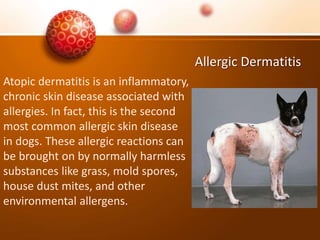
Allergic Dermatitis
Atopic dermatitis is an inflammatory,
chronic skin disease associated with
allergies. In fact, this is the second
most common allergic skin disease
in dogs. These allergic reactions can
be brought on by normally harmless
substances like grass, mold spores,
house dust mites, and other
environmental allergens.
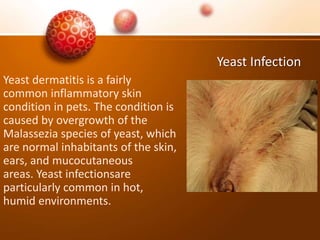
Yeast Infection
Yeast dermatitis is a fairly
common inflammatory skin
condition in pets. The condition is
caused by overgrowth of the
Malassezia species of yeast, which
are normal inhabitants of the skin,
ears, and mucocutaneous
areas. Yeast infectionsare
particularly common in hot,
humid environments.
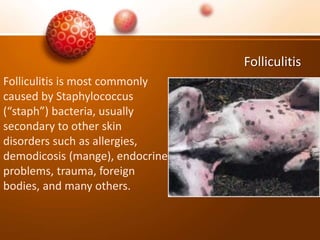
Folliculitis
Folliculitis is most commonly
caused by Staphylococcus
(“staph”) bacteria, usually
secondary to other skin
disorders such as allergies,
demodicosis (mange), endocrine
problems, trauma, foreign
bodies, and many others.
Impetigo
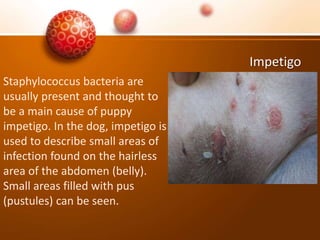
Staphylococcus bacteria are
usually present and thought to
be a main cause of puppy
impetigo. In the dog, impetigo is
used to describe small areas of
infection found on the hairless
area of the abdomen (belly).
Small areas filled with pus
(pustules) can be seen.
Seborrhea
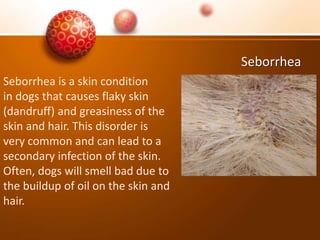
Seborrhea is a skin condition
in dogs that causes flaky skin
(dandruff) and greasiness of the
skin and hair. This disorder is
very common and can lead to a
secondary infection of the skin.
Often, dogs will smell bad due to
the buildup of oil on the skin and
hair.
Ringworm
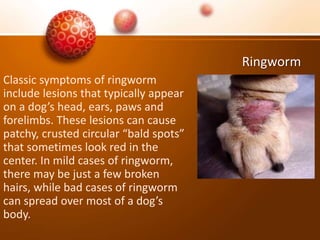
Classic symptoms of ringworm
include lesions that typically appear
on a dog’s head, ears, paws and
forelimbs. These lesions can cause
patchy, crusted circular “bald spots”
that sometimes look red in the
center. In mild cases of ringworm,
there may be just a few broken
hairs, while bad cases of ringworm
can spread over most of a dog’s
body.
Mange (Mites)
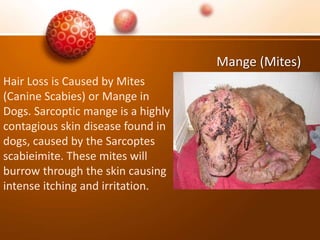
Hair Loss is Caused by Mites
(Canine Scabies) or Mange in
Dogs. Sarcoptic mange is a highly
contagious skin disease found in
dogs, caused by the Sarcoptes
scabieimite. These mites will
burrow through the skin causing
intense itching and irritation.
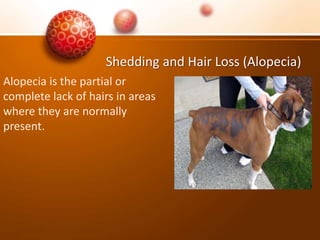
Shedding and Hair Loss (Alopecia)
Alopecia is the partial or
complete lack of hairs in areas
where they are normally
present.
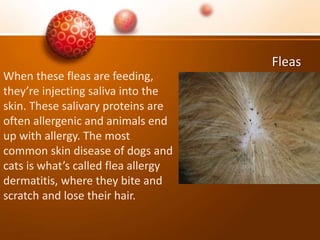
Fleas
When these fleas are feeding,
they’re injecting saliva into the
skin. These salivary proteins are
often allergenic and animals end
up with allergy. The most
common skin disease of dogs and
cats is what’s called flea allergy
dermatitis, where they bite and
scratch and lose their hair.
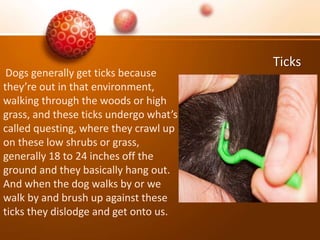
Ticks
Dogs generally get ticks because
they’re out in that environment,
walking through the woods or high
grass, and these ticks undergo what’s
called questing, where they crawl up
on these low shrubs or grass,
generally 18 to 24 inches off the
ground and they basically hang out.
And when the dog walks by or we
walk by and brush up against these
ticks they dislodge and get onto us.
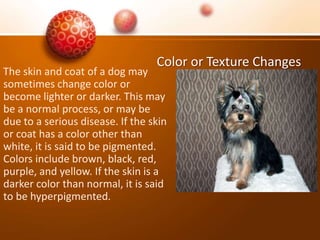
Color or Texture Changes
The skin and coat of a dog may
sometimes change color or
become lighter or darker. This may
be a normal process, or may be
due to a serious disease. If the skin
or coat has a color other than
white, it is said to be pigmented.
Colors include brown, black, red,
purple, and yellow. If the skin is a
darker color than normal, it is said
to be hyperpigmented.
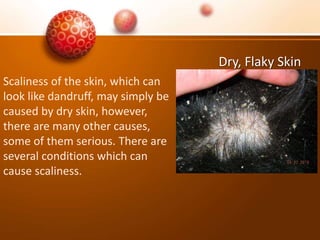
Dry, Flaky Skin
Scaliness of the skin, which can
look like dandruff, may simply be
caused by dry skin, however,
there are many other causes,
some of them serious. There are
several conditions which can
cause scaliness.
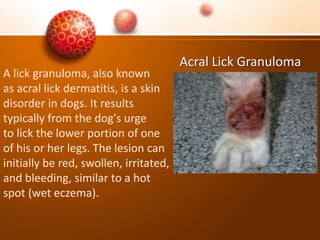
Acral Lick Granuloma
A lick granuloma, also known
as acral lick dermatitis, is a skin
disorder in dogs. It results
typically from the dog's urge
to lick the lower portion of one
of his or her legs. The lesion can
initially be red, swollen, irritated,
and bleeding, similar to a hot
spot (wet eczema).
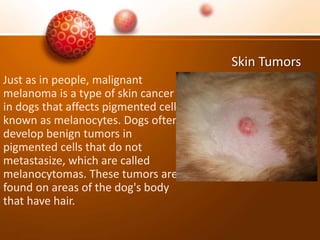
Skin Tumors
Just as in people, malignant
melanoma is a type of skin cancer
in dogs that affects pigmented cells
known as melanocytes. Dogs often
develop benign tumors in
pigmented cells that do not
metastasize, which are called
melanocytomas. These tumors are
found on areas of the dog's body
that have hair.
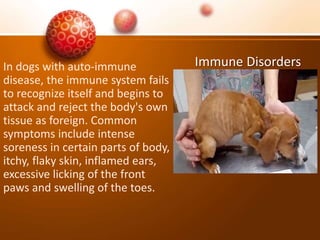
Immune DisordersIn dogs with auto-immune
disease, the immune system fails
to recognize itself and begins to
attack and reject the body's own
tissue as foreign. Common
symptoms include intense
soreness in certain parts of body,
itchy, flaky skin, inflamed ears,
excessive licking of the front
paws and swelling of the toes.
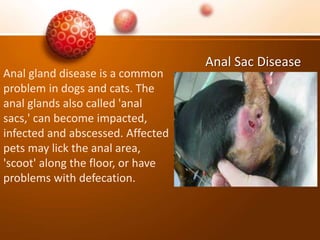
Anal Sac Disease
Anal gland disease is a common
problem in dogs and cats. The
anal glands also called 'anal
sacs,' can become impacted,
infected and abscessed. Affected
pets may lick the anal area,
'scoot' along the floor, or have
problems with defecation.
Skin disease in dogs

Skin disease in dogs

  • 1.
  • 2.
    Allergic Dermatitis Atopic dermatitisis an inflammatory, chronic skin disease associated with allergies. In fact, this is the second most common allergic skin disease in dogs. These allergic reactions can be brought on by normally harmless substances like grass, mold spores, house dust mites, and other environmental allergens.
  • 3.
    Yeast Infection Yeast dermatitisis a fairly common inflammatory skin condition in pets. The condition is caused by overgrowth of the Malassezia species of yeast, which are normal inhabitants of the skin, ears, and mucocutaneous areas. Yeast infectionsare particularly common in hot, humid environments.
  • 4.
    Folliculitis Folliculitis is mostcommonly caused by Staphylococcus (“staph”) bacteria, usually secondary to other skin disorders such as allergies, demodicosis (mange), endocrine problems, trauma, foreign bodies, and many others.
  • 5.
    Impetigo Staphylococcus bacteria are usuallypresent and thought to be a main cause of puppy impetigo. In the dog, impetigo is used to describe small areas of infection found on the hairless area of the abdomen (belly). Small areas filled with pus (pustules) can be seen.
  • 6.
    Seborrhea Seborrhea is askin condition in dogs that causes flaky skin (dandruff) and greasiness of the skin and hair. This disorder is very common and can lead to a secondary infection of the skin. Often, dogs will smell bad due to the buildup of oil on the skin and hair.
  • 7.
    Ringworm Classic symptoms ofringworm include lesions that typically appear on a dog’s head, ears, paws and forelimbs. These lesions can cause patchy, crusted circular “bald spots” that sometimes look red in the center. In mild cases of ringworm, there may be just a few broken hairs, while bad cases of ringworm can spread over most of a dog’s body.
  • 8.
    Mange (Mites) Hair Lossis Caused by Mites (Canine Scabies) or Mange in Dogs. Sarcoptic mange is a highly contagious skin disease found in dogs, caused by the Sarcoptes scabieimite. These mites will burrow through the skin causing intense itching and irritation.
  • 9.
    Shedding and HairLoss (Alopecia) Alopecia is the partial or complete lack of hairs in areas where they are normally present.
  • 10.
    Fleas When these fleasare feeding, they’re injecting saliva into the skin. These salivary proteins are often allergenic and animals end up with allergy. The most common skin disease of dogs and cats is what’s called flea allergy dermatitis, where they bite and scratch and lose their hair.
  • 11.
    Ticks Dogs generally getticks because they’re out in that environment, walking through the woods or high grass, and these ticks undergo what’s called questing, where they crawl up on these low shrubs or grass, generally 18 to 24 inches off the ground and they basically hang out. And when the dog walks by or we walk by and brush up against these ticks they dislodge and get onto us.
  • 12.
    Color or TextureChanges The skin and coat of a dog may sometimes change color or become lighter or darker. This may be a normal process, or may be due to a serious disease. If the skin or coat has a color other than white, it is said to be pigmented. Colors include brown, black, red, purple, and yellow. If the skin is a darker color than normal, it is said to be hyperpigmented.
  • 13.
    Dry, Flaky Skin Scalinessof the skin, which can look like dandruff, may simply be caused by dry skin, however, there are many other causes, some of them serious. There are several conditions which can cause scaliness.
  • 14.
    Acral Lick Granuloma Alick granuloma, also known as acral lick dermatitis, is a skin disorder in dogs. It results typically from the dog's urge to lick the lower portion of one of his or her legs. The lesion can initially be red, swollen, irritated, and bleeding, similar to a hot spot (wet eczema).
  • 15.
    Skin Tumors Just asin people, malignant melanoma is a type of skin cancer in dogs that affects pigmented cells known as melanocytes. Dogs often develop benign tumors in pigmented cells that do not metastasize, which are called melanocytomas. These tumors are found on areas of the dog's body that have hair.
  • 16.
    Immune DisordersIn dogswith auto-immune disease, the immune system fails to recognize itself and begins to attack and reject the body's own tissue as foreign. Common symptoms include intense soreness in certain parts of body, itchy, flaky skin, inflamed ears, excessive licking of the front paws and swelling of the toes.
  • 17.
    Anal Sac Disease Analgland disease is a common problem in dogs and cats. The anal glands also called 'anal sacs,' can become impacted, infected and abscessed. Affected pets may lick the anal area, 'scoot' along the floor, or have problems with defecation.