Metabolic
diseases
Karima Al Salihi
Introduction
• Among domestic farm animals, the
metabolic diseases achieve their greatest
importance in dairy cows and pregnant
ewes.
• In the other species, these diseases occur
only sporadically.
• The high-producing dairy cow always
verges on abnormal homeostasis and the
breeding and feeding of dairy cattle for
high milk yields is etiologically related to
metabolic disease so common in these
animals.
Definition of metabolic diseases
• They are diseases closely related to pregnancy, birthing, milk
yield and nutrition.
• These diseases are attributed to imbalance between input of
dietary nutrients and output of production.
• When the imbalance occurs, it may lead to a change of body
metabolites which may be accompanied by occurrence of
production disease.
These diseases include:
Hypocalcemia (Milk fever),
Hypophosphatemia (Post parturient hemoglobinuria),
 Hypomagnesmia (Grass tetany),
Hypoglycemia (Ketosis),
Fat cow syndrome,
Downer syndrome
Myoglobinuria in equines.
Causes
(1) Cows which produce so much products that natural diet
cannot replace the nutritional imbalance.
(2) The diet may be insufficient in nutrient density or even
imbalanced e.g. a ration may contain sufficient protein for
high milk production but contains insufficient precursors of
glucose to replace the energy excreted involved in the milk.
(3) Dropped of certain blood components below normal limit
which is needed to increase or to replace negative nutritive
balance created by high production.
Susceptibility
(1)Dairy animals are more susceptible due to the extremely
turnover of body fluids, salts and soluble organic materials
during the early part of lactation.
(2) Essential metabolites are drop below critical level.
(3) During succeeding period of lactation especially in cows
producing large quantities of milk with a variable amount of
food intake especially with environmental changes.
(4) Animals susceptible to metabolic diseases due to either
genetic or management factors.
(5) Seasonal changes e.g. hypophosphatemia mostly occur in
berseem season in some countries due to low ph and high Ca
content in berseem.
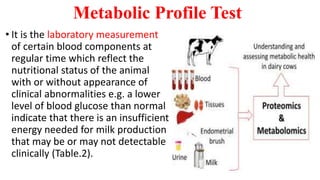
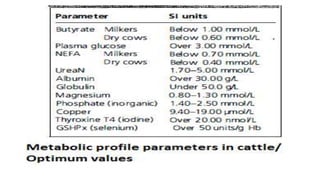
Metabolic Profile Test
• It is the laboratory measurement
of certain blood components at
regular time which reflect the
nutritional status of the animal
with or without appearance of
clinical abnormalities e.g. a lower
level of blood glucose than normal
indicate that there is an insufficient
energy needed for milk production
that may be or may not detectable
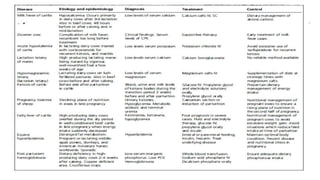
clinically (Table.2).
Aim of the test
1.Detection of quantitative and qualitative
adequacy of the diet content of cows in
relation to milk yield, estrus cycle and
parturition.
2.Early diagnosis of nutritional deficiency
and or metabolic diseases.
3.To evaluate the input-output (nutrient
milk yield calving) relationships to know
the health status of title herd.
Test procedures
(1)Blood samples are collected from three groups, each of
seven cows including: dry cow, medium or high-yield
lactating cows.
(2) The samples are collected at least three times yearly during
summer, autumn and winter or when nutritional imbalance is
suspected.
(3) The samples must be collected at the same time of day at
each collection and should be done with a minimum of
excitement of the cows.
(4) About 5 ml of collected blood is placed in vials containing oxalate-fluoride
for glucose and serum inorganic phosphorus, and 20-30 ml in heparinized vials
for the determination of other components.
(5) The samples must be send to the laboratory within a few hours and must not
be subjected to delays in delivery or to heat or cold.
(6) In some cases, milk and or urine samples are collected from each test
lactating cow and tested for the presence of ketones, and the results correlated
with the blood glucose levels of each cow.
Laboratory analysis including
(1) Whole blood levels of packed cell volume (PCV),
hemoglobin (HB), urea nitrogen (BUN) and glucose.
(2) Serum levels of inorganic phosphorus, magnesium,
calcium, potassium and sodium, total protein, albumin
and globulin, copper, iron, plasma and non-stratified free
fatty acids.
(3) Milk contents (Physical and chemical).
(4) Urine analysis (Physical, chemical and microscopic).
(5) Diet analysis (Quantity and quality).
Interpretation of results
(1) Low BUN indicate that protein intake is minimal and an early warning
that “low protein status” may develop in lactating cows later if protein
intake isn’t increased.
(2) Low level of albumin and HB occur in long standing low protein status.
(3) Mean values of PCV, HB, serum iron is consistently higher in non-
lactating cows than in lactating cows.
(4) Globulin and total protein concentrations increase with increased age
and concentration of inorganic phosphate meanwhile albumin, magnesium,
sodium, urea nitrogen decrease with increasing age.
(5) Serum inorganic phosphorus tends to fall following long term insufficient
dietary intake and hyperphosphatemia may occur in cattle grazing on highly
fertilized pasture.
(6) Serum calcium levels vary only within narrow limits and aren’t sensitive
indicator of input output balance.
(7) Serum magnesium levels are usually low during winter months and
subclinical hypomagnesemia exist in many herds especially pregnant cattle.
(8) Low level of serum sodium occurs in early lactation in cows grazing on
summer pasture without supplement with salt.
(9) A serum potassium level is difficult to interpret because the levels of
the electrolyte in serum aren’t necessarily indicative of potassium
deficiency.
(10) There is sufficient fluctuation in blood components of dairy cows
associated with interaction between effects of season-milk yield stage of
lactation.
(11) BUN, HB and PCV are increased during summer months in both lactating
and non-lactating cow.
(12) Hb and PCV have been found to be inversely related to current of milk yield
in both summer and winter.
(13) Magnesium concentration show a reverse tends being lowered in non-
lactating than lactating particularly in winter.
(14) There is a relationship between the actual energy intake and plasma non
stratified fatty acids.
(15) Free fatty acids are more sensitive than blood glucose as indicator for
energy status. Free fatty acids being to be increase several weeks pre-partum
and reach to its peak at parturition and decrease gradually to reach its normal
level after several weeks of lactation.
(16) Blood glucose concentration is usually lowered in early lactation
and during the winter months because there is a heavy demand for
glucose during winter months than summer for energy. The blood
glucose level follow a similar pattern but there may be period of early
lactation a serious drop of blood glucose because a large portion of
blood glucose being converted to lactose in the mammary gland.

Introduction to metabolic diseases

  • 1.
  • 2.
    Introduction • Among domesticfarm animals, the metabolic diseases achieve their greatest importance in dairy cows and pregnant ewes. • In the other species, these diseases occur only sporadically. • The high-producing dairy cow always verges on abnormal homeostasis and the breeding and feeding of dairy cattle for high milk yields is etiologically related to metabolic disease so common in these animals.
  • 5.
    Definition of metabolicdiseases • They are diseases closely related to pregnancy, birthing, milk yield and nutrition. • These diseases are attributed to imbalance between input of dietary nutrients and output of production. • When the imbalance occurs, it may lead to a change of body metabolites which may be accompanied by occurrence of production disease.
  • 6.
    These diseases include: Hypocalcemia(Milk fever), Hypophosphatemia (Post parturient hemoglobinuria),  Hypomagnesmia (Grass tetany), Hypoglycemia (Ketosis), Fat cow syndrome, Downer syndrome Myoglobinuria in equines.
  • 7.
    Causes (1) Cows whichproduce so much products that natural diet cannot replace the nutritional imbalance. (2) The diet may be insufficient in nutrient density or even imbalanced e.g. a ration may contain sufficient protein for high milk production but contains insufficient precursors of glucose to replace the energy excreted involved in the milk. (3) Dropped of certain blood components below normal limit which is needed to increase or to replace negative nutritive balance created by high production.
  • 8.
    Susceptibility (1)Dairy animals aremore susceptible due to the extremely turnover of body fluids, salts and soluble organic materials during the early part of lactation. (2) Essential metabolites are drop below critical level. (3) During succeeding period of lactation especially in cows producing large quantities of milk with a variable amount of food intake especially with environmental changes. (4) Animals susceptible to metabolic diseases due to either genetic or management factors. (5) Seasonal changes e.g. hypophosphatemia mostly occur in berseem season in some countries due to low ph and high Ca content in berseem.
  • 9.
    Metabolic Profile Test •It is the laboratory measurement of certain blood components at regular time which reflect the nutritional status of the animal with or without appearance of clinical abnormalities e.g. a lower level of blood glucose than normal indicate that there is an insufficient energy needed for milk production that may be or may not detectable clinically (Table.2).
  • 11.
    Aim of thetest 1.Detection of quantitative and qualitative adequacy of the diet content of cows in relation to milk yield, estrus cycle and parturition. 2.Early diagnosis of nutritional deficiency and or metabolic diseases. 3.To evaluate the input-output (nutrient milk yield calving) relationships to know the health status of title herd.
  • 12.
    Test procedures (1)Blood samplesare collected from three groups, each of seven cows including: dry cow, medium or high-yield lactating cows. (2) The samples are collected at least three times yearly during summer, autumn and winter or when nutritional imbalance is suspected. (3) The samples must be collected at the same time of day at each collection and should be done with a minimum of excitement of the cows.
  • 13.
    (4) About 5ml of collected blood is placed in vials containing oxalate-fluoride for glucose and serum inorganic phosphorus, and 20-30 ml in heparinized vials for the determination of other components. (5) The samples must be send to the laboratory within a few hours and must not be subjected to delays in delivery or to heat or cold. (6) In some cases, milk and or urine samples are collected from each test lactating cow and tested for the presence of ketones, and the results correlated with the blood glucose levels of each cow.
  • 14.
    Laboratory analysis including (1)Whole blood levels of packed cell volume (PCV), hemoglobin (HB), urea nitrogen (BUN) and glucose. (2) Serum levels of inorganic phosphorus, magnesium, calcium, potassium and sodium, total protein, albumin and globulin, copper, iron, plasma and non-stratified free fatty acids. (3) Milk contents (Physical and chemical). (4) Urine analysis (Physical, chemical and microscopic). (5) Diet analysis (Quantity and quality).
  • 15.
    Interpretation of results (1)Low BUN indicate that protein intake is minimal and an early warning that “low protein status” may develop in lactating cows later if protein intake isn’t increased. (2) Low level of albumin and HB occur in long standing low protein status. (3) Mean values of PCV, HB, serum iron is consistently higher in non- lactating cows than in lactating cows. (4) Globulin and total protein concentrations increase with increased age and concentration of inorganic phosphate meanwhile albumin, magnesium, sodium, urea nitrogen decrease with increasing age. (5) Serum inorganic phosphorus tends to fall following long term insufficient dietary intake and hyperphosphatemia may occur in cattle grazing on highly fertilized pasture.
  • 16.
    (6) Serum calciumlevels vary only within narrow limits and aren’t sensitive indicator of input output balance. (7) Serum magnesium levels are usually low during winter months and subclinical hypomagnesemia exist in many herds especially pregnant cattle. (8) Low level of serum sodium occurs in early lactation in cows grazing on summer pasture without supplement with salt. (9) A serum potassium level is difficult to interpret because the levels of the electrolyte in serum aren’t necessarily indicative of potassium deficiency. (10) There is sufficient fluctuation in blood components of dairy cows associated with interaction between effects of season-milk yield stage of lactation.
  • 17.
    (11) BUN, HBand PCV are increased during summer months in both lactating and non-lactating cow. (12) Hb and PCV have been found to be inversely related to current of milk yield in both summer and winter. (13) Magnesium concentration show a reverse tends being lowered in non- lactating than lactating particularly in winter. (14) There is a relationship between the actual energy intake and plasma non stratified fatty acids. (15) Free fatty acids are more sensitive than blood glucose as indicator for energy status. Free fatty acids being to be increase several weeks pre-partum and reach to its peak at parturition and decrease gradually to reach its normal level after several weeks of lactation.
  • 18.
    (16) Blood glucoseconcentration is usually lowered in early lactation and during the winter months because there is a heavy demand for glucose during winter months than summer for energy. The blood glucose level follow a similar pattern but there may be period of early lactation a serious drop of blood glucose because a large portion of blood glucose being converted to lactose in the mammary gland.