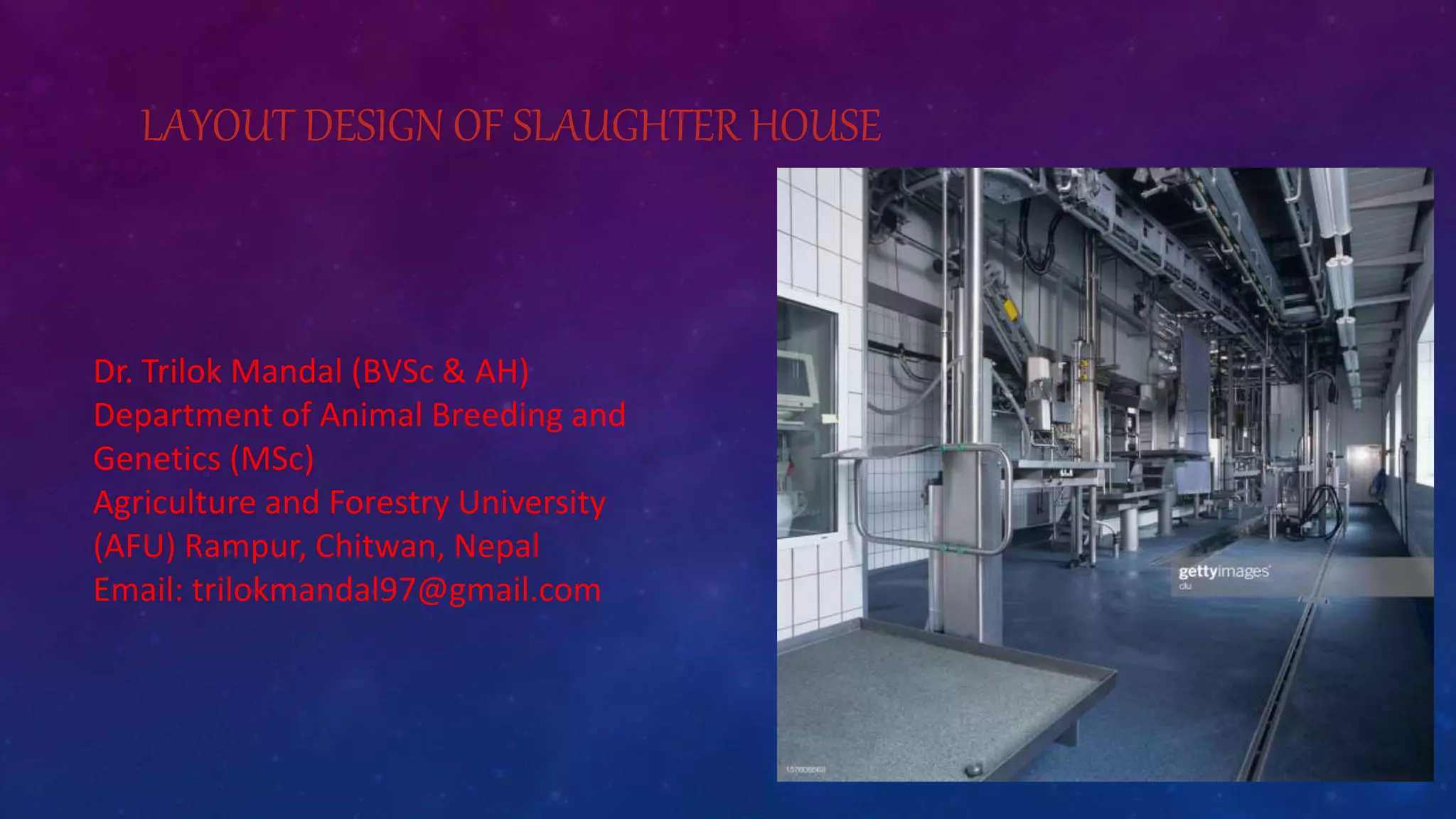
LAYOUT DESIGN OF SLAUGHTER HOUSE
Dr. Trilok Mandal (BVSc & AH)
Department of Animal Breeding and
Genetics (MSc)
Agriculture and Forestry University
(AFU) Rampur, Chitwan, Nepal
Email: trilokmandal97@gmail.com
ABATTOIR
Slaughter house – technically referred as Abattoir.
Traditionally called- butcheries, giving negative feeling
due to foul smell, unhygienically disposal of wastes.
meant for human
SH- place where animals consumptions are sacrificed.
Public acceptance - concern
TYPES OF ABATTOIR
Modern abattoir
Semi-modern-Facilities for slaughter and bleeding on the floor but subsequently entire
dressing, washing, halving and quartering takes place on the rails in hoist position
Traditional abattoir
CONSIDERATIONS
Policy decisions-
Site, size, trade practices and range of byproducts
Engineering aspects- layout plan
Cost consideration
Infrastructure depends upon the-
• Maximum daily kill
• A regular full time operation
• Disposal & treatment of waste
• Byproducts utilization
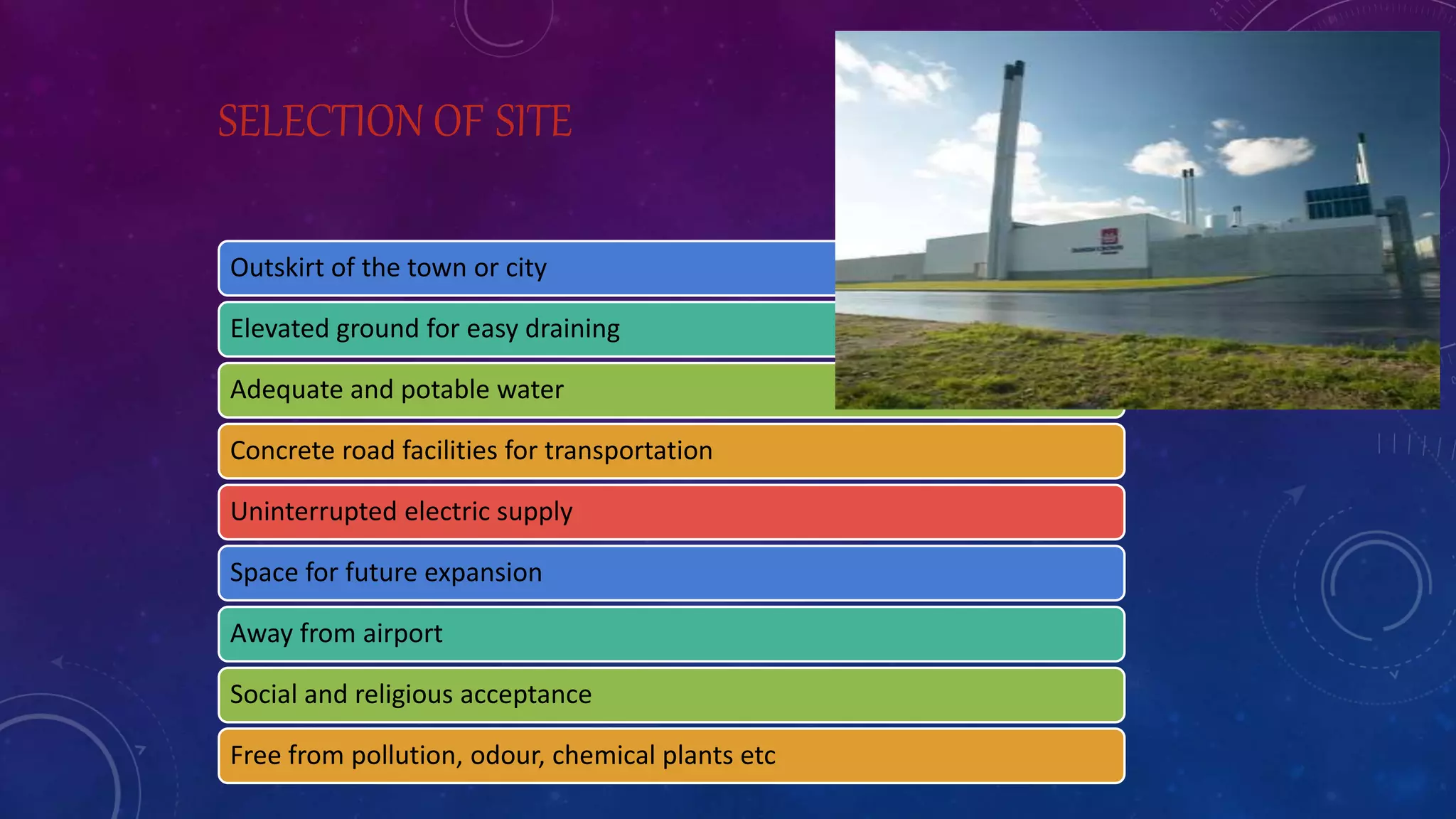
SELECTION OF SITE
Outskirt of the town or city
Elevated ground for easy draining
Adequate and potable water
Concrete road facilities for transportation
Uninterrupted electric supply
Space for future expansion
Away from airport
Social and religious acceptance
Free from pollution, odour, chemical plants etc
CONTD--
Availability of skilled manpower
Availability of meat animals
Soil quality- to support good foundations and pillars of the buildings
Separate entity i.e. reasonable distance from other buildings
Separation of clean and dirty area
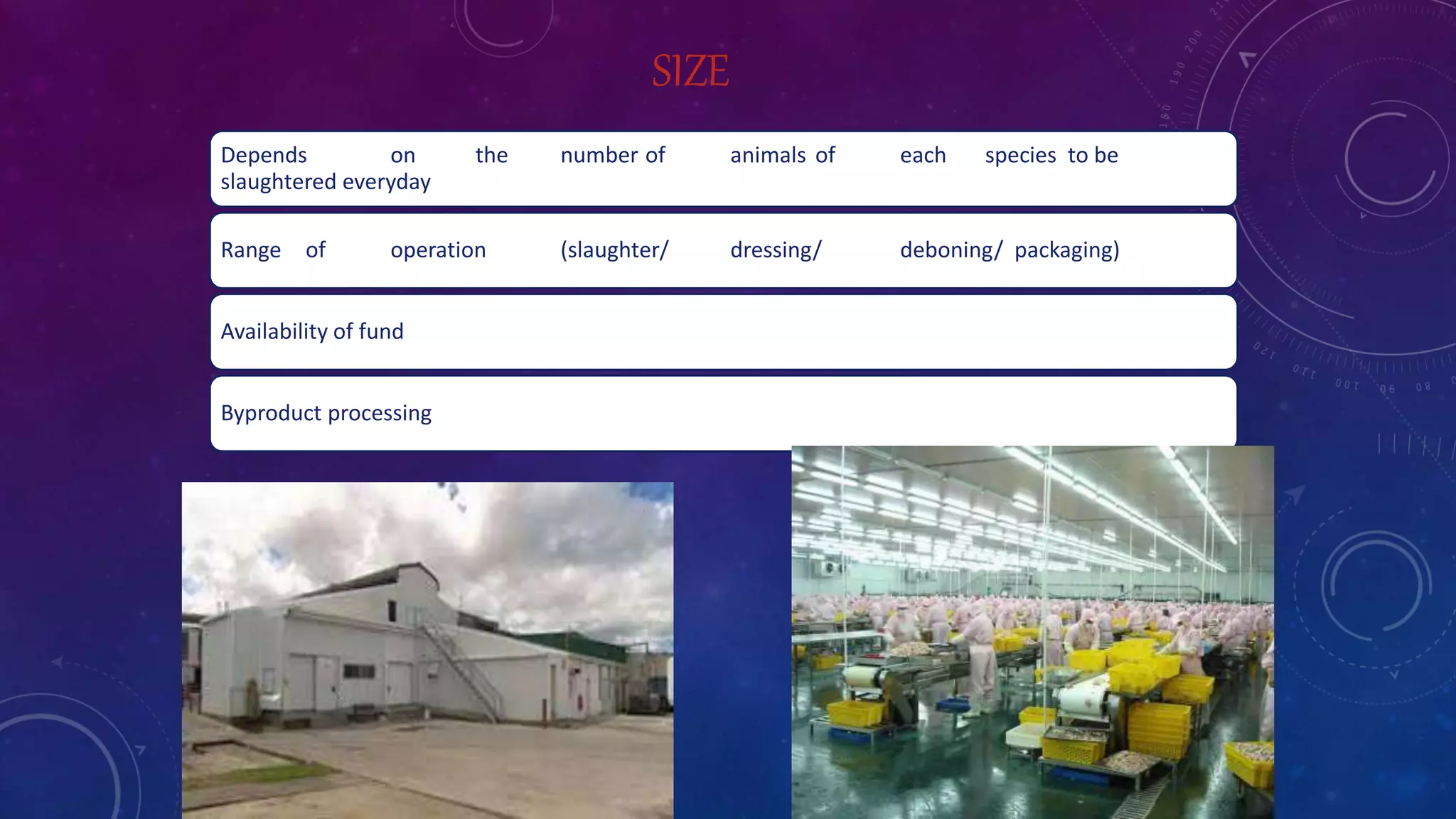
SIZE
Depends on the number of animals of each species to be
slaughtered everyday
Range of operation (slaughter/ dressing/ deboning/ packaging)
Availability of fund
Byproduct processing
Civil Infrastructure
Lairage
AM examination
Humane slaughter
Flaying, dressing and washing of the carcasses
Hanging carcasses and edible offals
Byproducts handling
Inspection of meat and disposal of condemned carcasses or part there of
Staff welfare
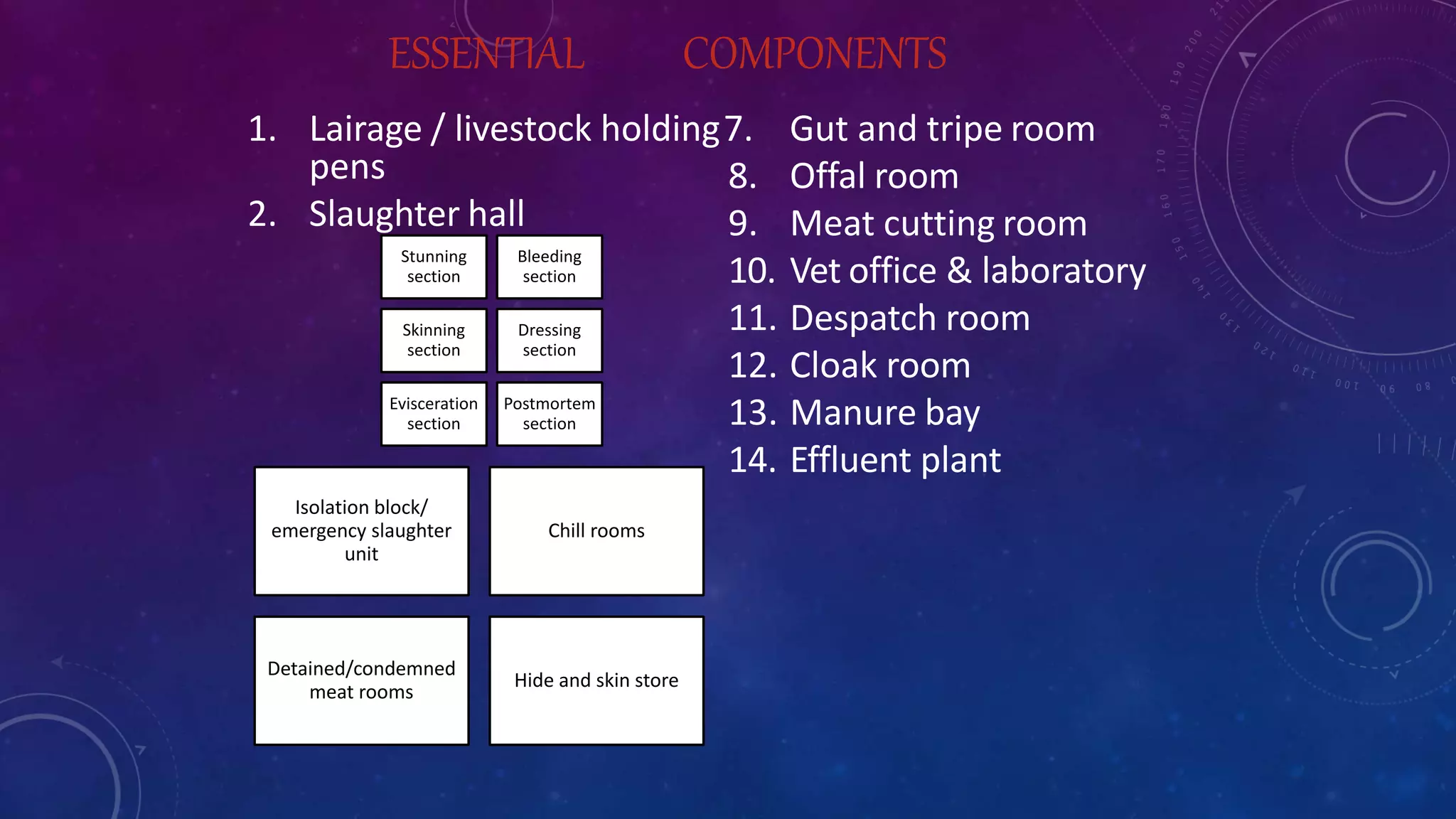
ESSENTIAL COMPONENTS
pens
2. Slaughter hall
Stunning
section
Bleeding
section
Skinning
section
Dressing
section
Evisceration
section
Postmortem
section
Isolation block/
emergency slaughter
unit
Chill rooms
Detained/condemned
meat rooms
Hide and skin store
1. Lairage / livestock holding7. Gut and tripe room
8. Offal room
9. Meat cutting room
10. Vet office & laboratory
11. Despatch room
12. Cloak room
13. Manure bay
14. Effluent plant
DESIGNINGSTANDARDSANDGUIDELINES
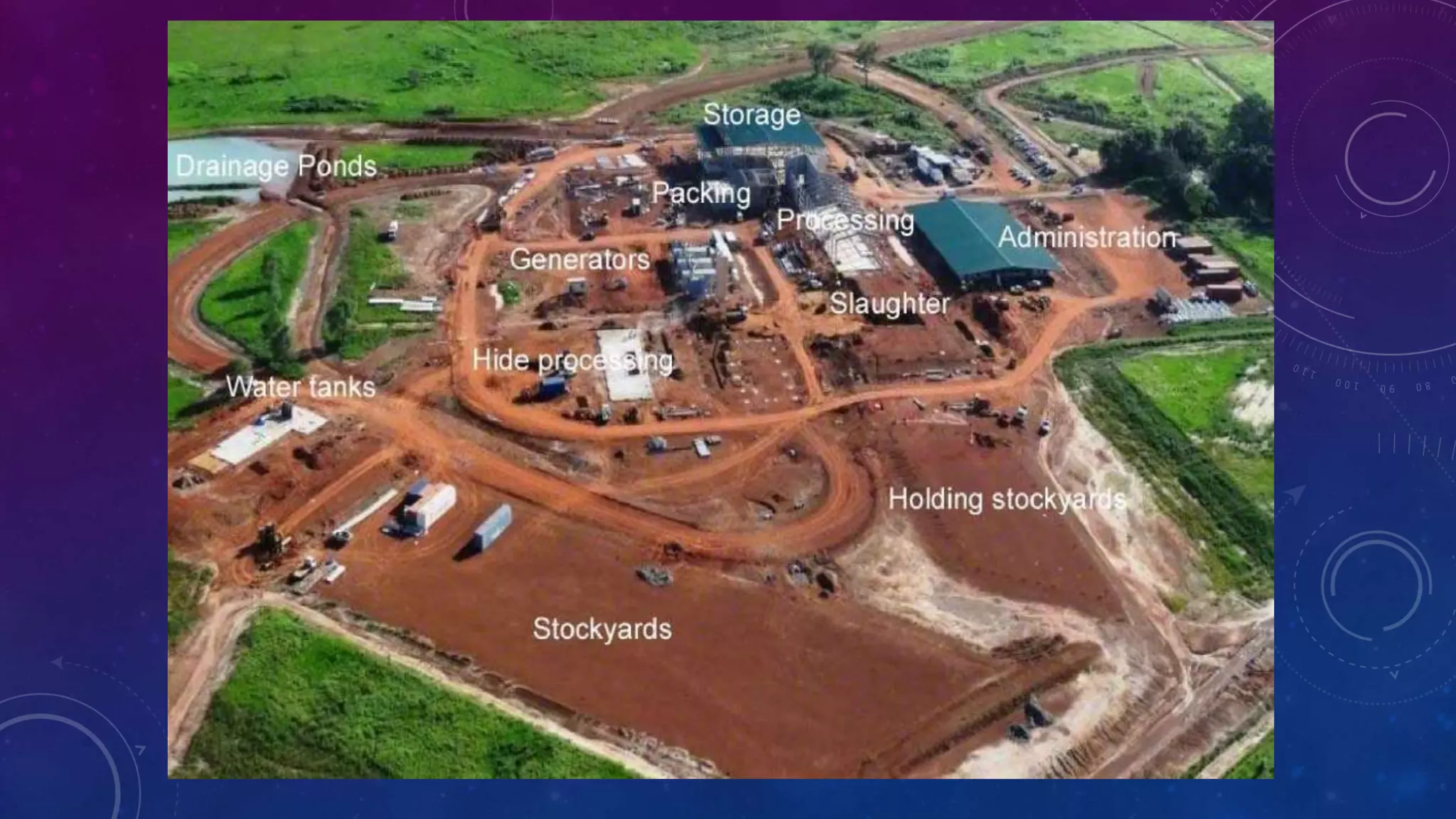
A minimum site area of 1800 square meters will be required to accommodate all modules.
The abattoir layout presented is based on a rectangular site 30 meters by 60 meters.
The required minimum height for processing is 3m.
The slaughter area for large animals, which include wench, should be 4.5m.
The windows should be high enough to prevent children from looking in and walls should be tiled
to height > 2m.
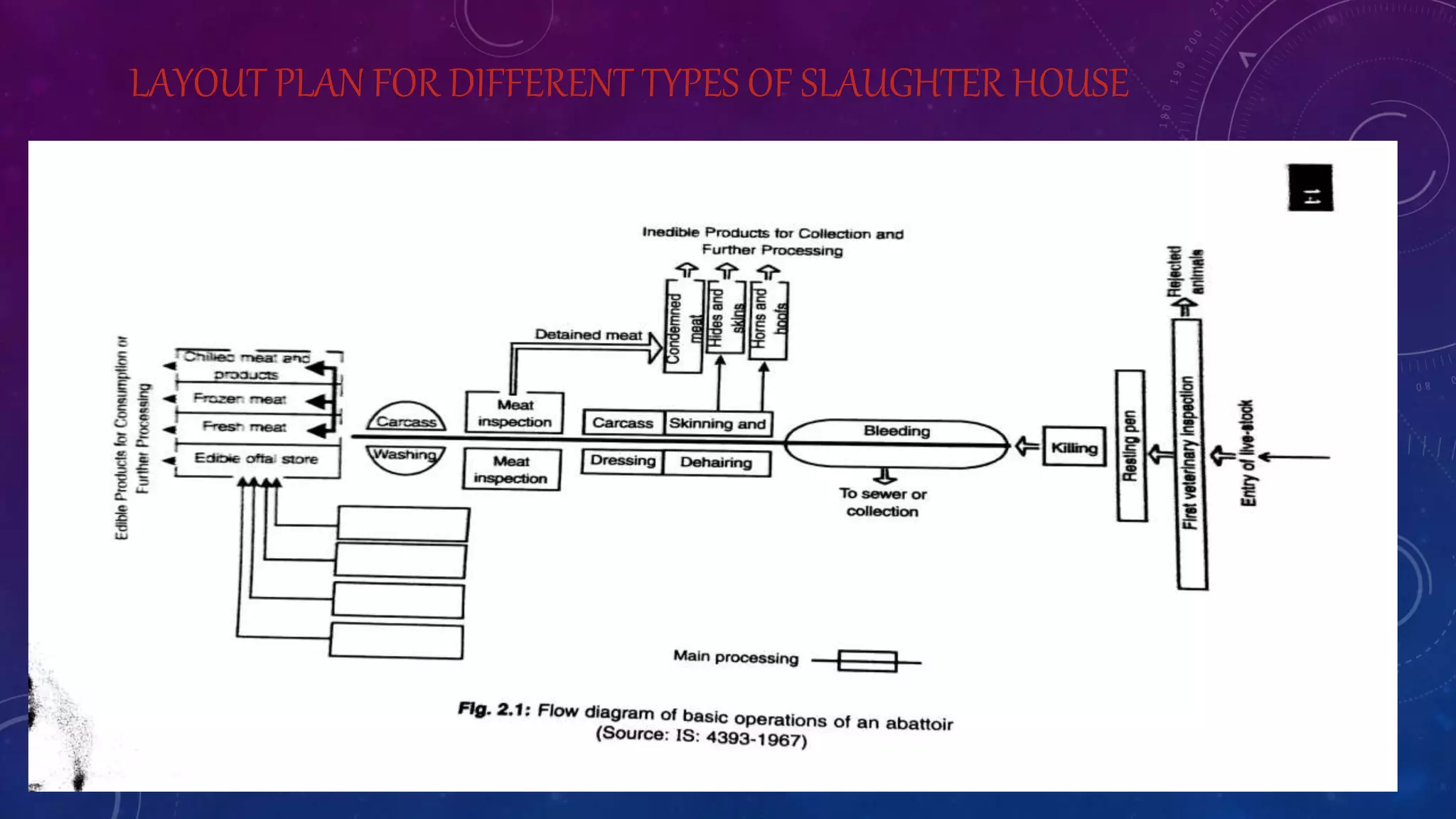
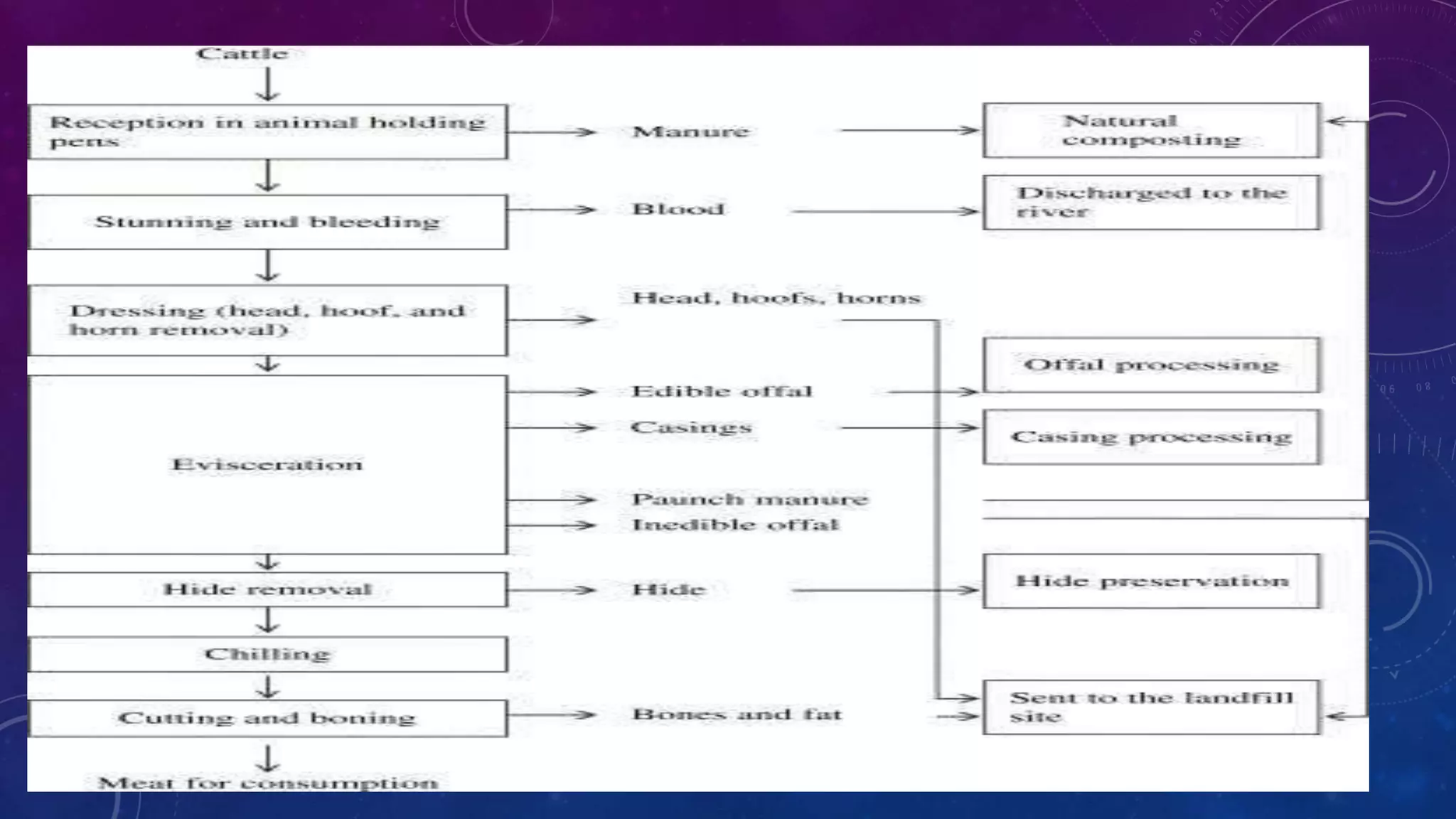
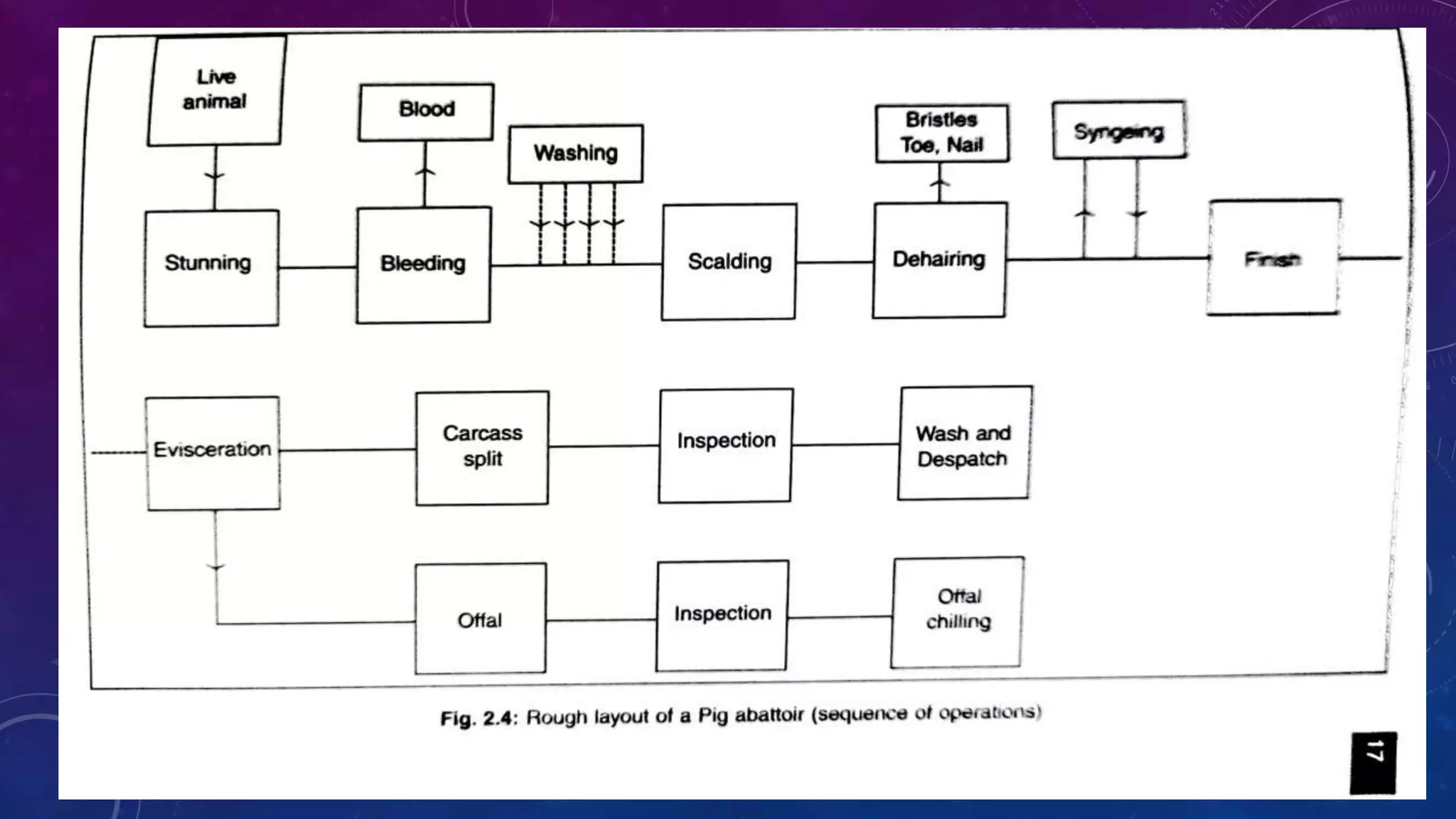
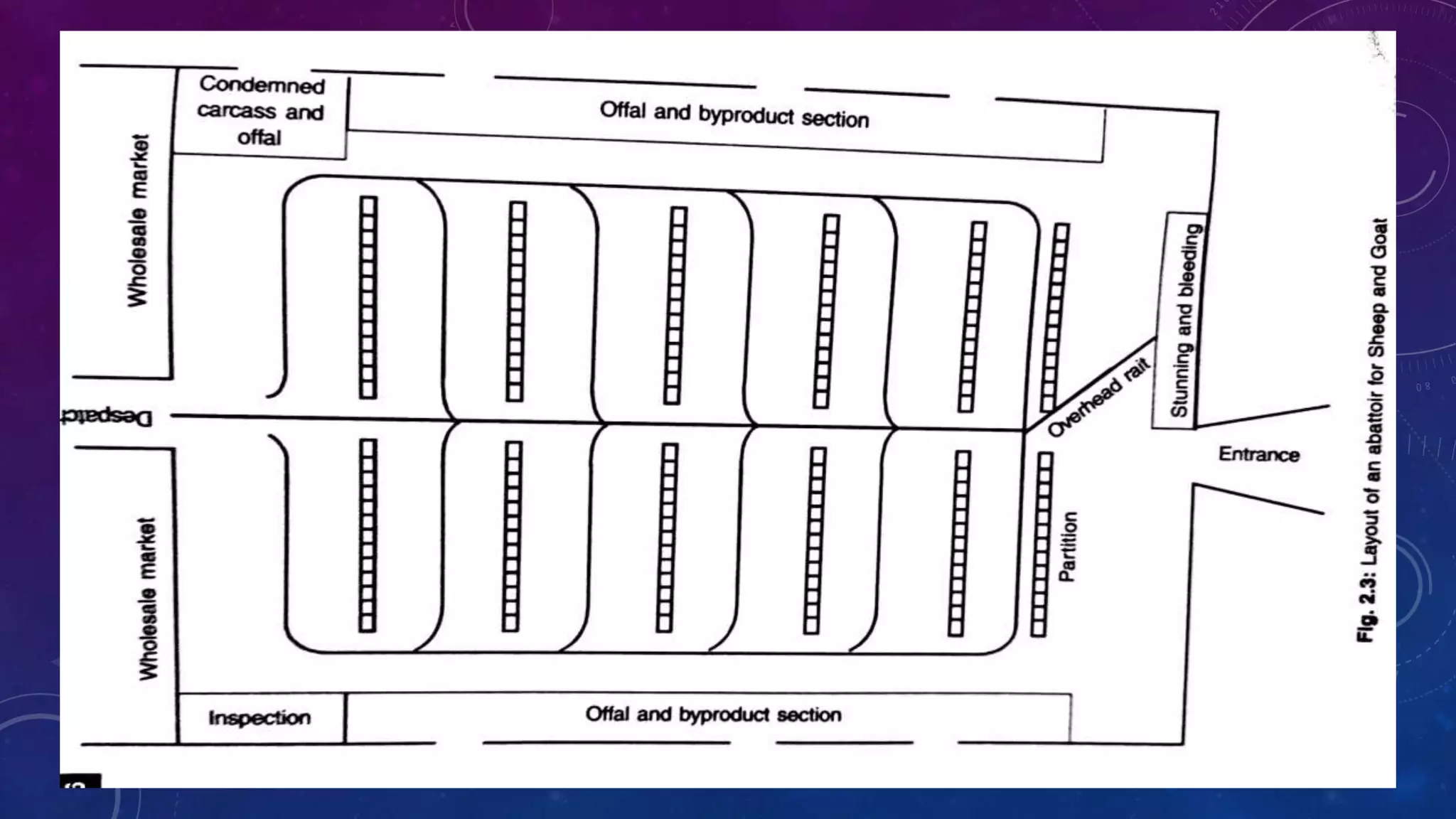
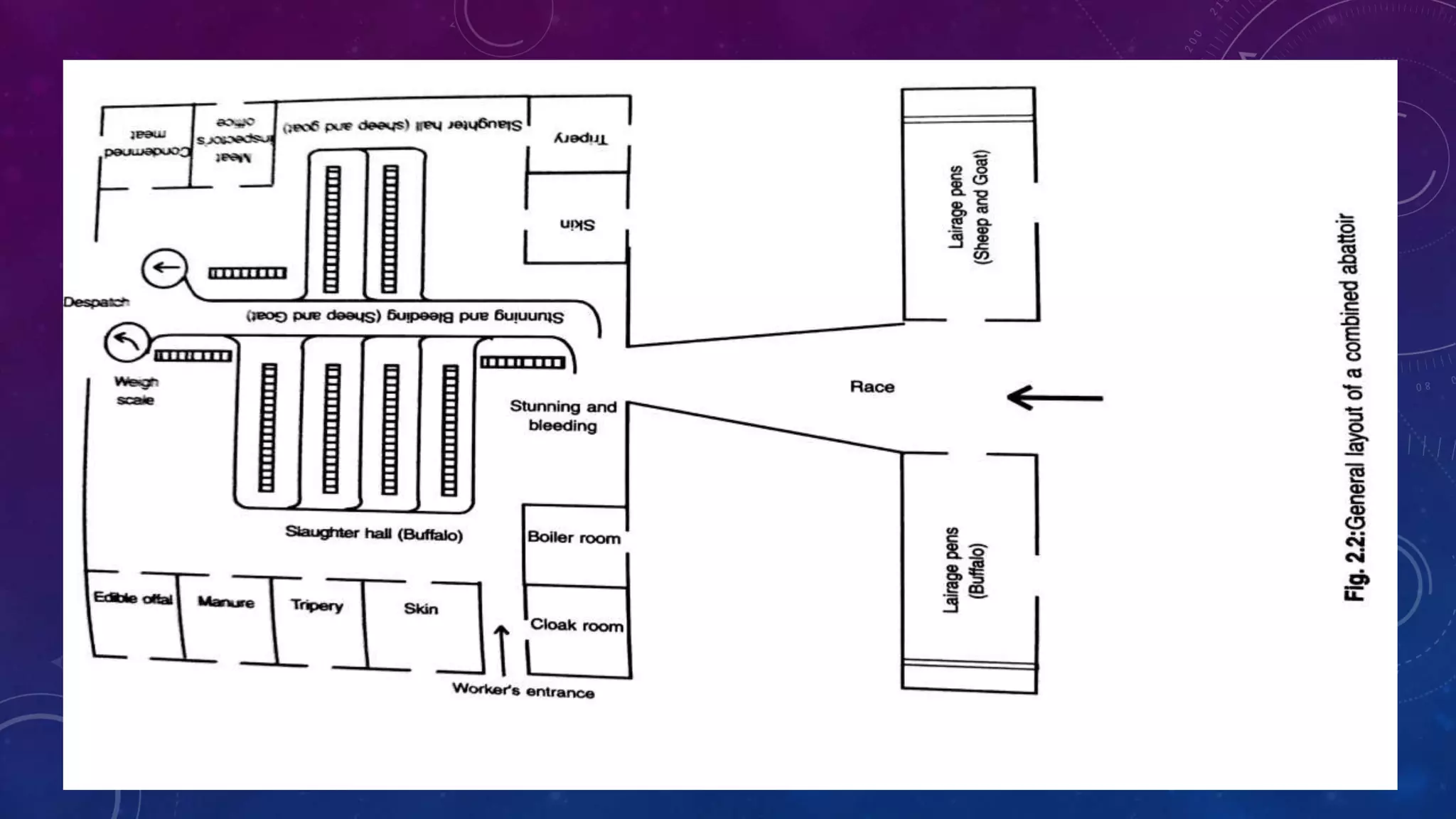
LAYOUT PLAN FOR DIFFERENT TYPES OF SLAUGHTER HOUSE
THANK YOU

LAYOUT DESIGN OF SLAUGHTER HOUSE.pptx

  • 1.
    LAYOUT DESIGN OFSLAUGHTER HOUSE Dr. Trilok Mandal (BVSc & AH) Department of Animal Breeding and Genetics (MSc) Agriculture and Forestry University (AFU) Rampur, Chitwan, Nepal Email: trilokmandal97@gmail.com
  • 2.
    ABATTOIR Slaughter house –technically referred as Abattoir. Traditionally called- butcheries, giving negative feeling due to foul smell, unhygienically disposal of wastes. meant for human SH- place where animals consumptions are sacrificed. Public acceptance - concern
  • 3.
    TYPES OF ABATTOIR Modernabattoir Semi-modern-Facilities for slaughter and bleeding on the floor but subsequently entire dressing, washing, halving and quartering takes place on the rails in hoist position Traditional abattoir
  • 4.
    CONSIDERATIONS Policy decisions- Site, size,trade practices and range of byproducts Engineering aspects- layout plan Cost consideration Infrastructure depends upon the- • Maximum daily kill • A regular full time operation • Disposal & treatment of waste • Byproducts utilization
  • 5.
    SELECTION OF SITE Outskirtof the town or city Elevated ground for easy draining Adequate and potable water Concrete road facilities for transportation Uninterrupted electric supply Space for future expansion Away from airport Social and religious acceptance Free from pollution, odour, chemical plants etc
  • 6.
    CONTD-- Availability of skilledmanpower Availability of meat animals Soil quality- to support good foundations and pillars of the buildings Separate entity i.e. reasonable distance from other buildings Separation of clean and dirty area
  • 7.
    SIZE Depends on thenumber of animals of each species to be slaughtered everyday Range of operation (slaughter/ dressing/ deboning/ packaging) Availability of fund Byproduct processing
  • 8.
    Civil Infrastructure Lairage AM examination Humaneslaughter Flaying, dressing and washing of the carcasses Hanging carcasses and edible offals Byproducts handling Inspection of meat and disposal of condemned carcasses or part there of Staff welfare
  • 9.
    ESSENTIAL COMPONENTS pens 2. Slaughterhall Stunning section Bleeding section Skinning section Dressing section Evisceration section Postmortem section Isolation block/ emergency slaughter unit Chill rooms Detained/condemned meat rooms Hide and skin store 1. Lairage / livestock holding7. Gut and tripe room 8. Offal room 9. Meat cutting room 10. Vet office & laboratory 11. Despatch room 12. Cloak room 13. Manure bay 14. Effluent plant
  • 10.
    DESIGNINGSTANDARDSANDGUIDELINES A minimum sitearea of 1800 square meters will be required to accommodate all modules. The abattoir layout presented is based on a rectangular site 30 meters by 60 meters. The required minimum height for processing is 3m. The slaughter area for large animals, which include wench, should be 4.5m. The windows should be high enough to prevent children from looking in and walls should be tiled to height > 2m.
  • 12.
    LAYOUT PLAN FORDIFFERENT TYPES OF SLAUGHTER HOUSE
  • 17.