Antimicrobial use in smallholder livestock
systems in Ethiopia
Biruk Alemu, Kebede Amenu, Gezahagn Alemayehu, Hiwot Desta,
Michel Dione, Ulf Magnusson and Barbara Wieland
15th International Symposium of Veterinary Epidemiology and
Economics Chiang Mai, Thailand, 12-16 November 2018
Introduction
• Globally continued increase in AMU in food-animal
production expected, especially in LMICs
• Irresponsible AMU and the resultant selective pressure
is a major driver for AMR
• Major food safety and public health concerns linked to
AM residues and AMR
Introduction
HICs
• Policies to restrict the
use of AM agents in
animals in place and
enforced
• Monitor trends in AMU
and AMR in livestock
LMICs
• Only limited, or unreliable,
data regarding AMU
(counterfeit and illegal
imports)
• Policies are not enforced
• Access to antimicrobials is
improving
•AMR has no boundaries, it is a global issue
•It does not matter where a resistant bacterium originates
Ethiopia
• The largest livestock population in Africa
• Different production systems and agro-ecology
• Very scarce information on antimicrobial usage in
animals
• Factors and incentives influencing AMU are poorly
understood
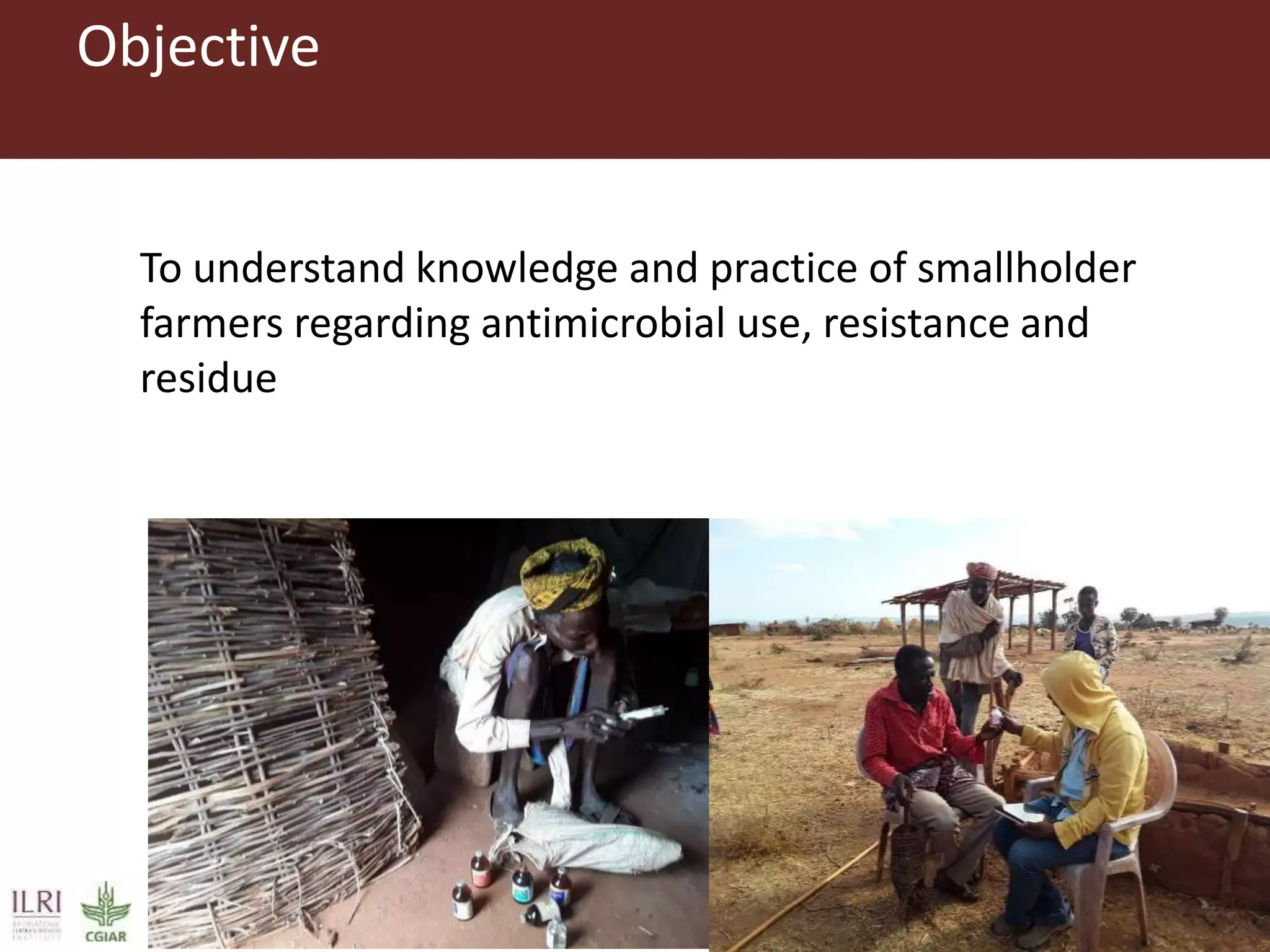
Objective
To understand knowledge and practice of smallholder
farmers regarding antimicrobial use, resistance and
residue
Materials and methods
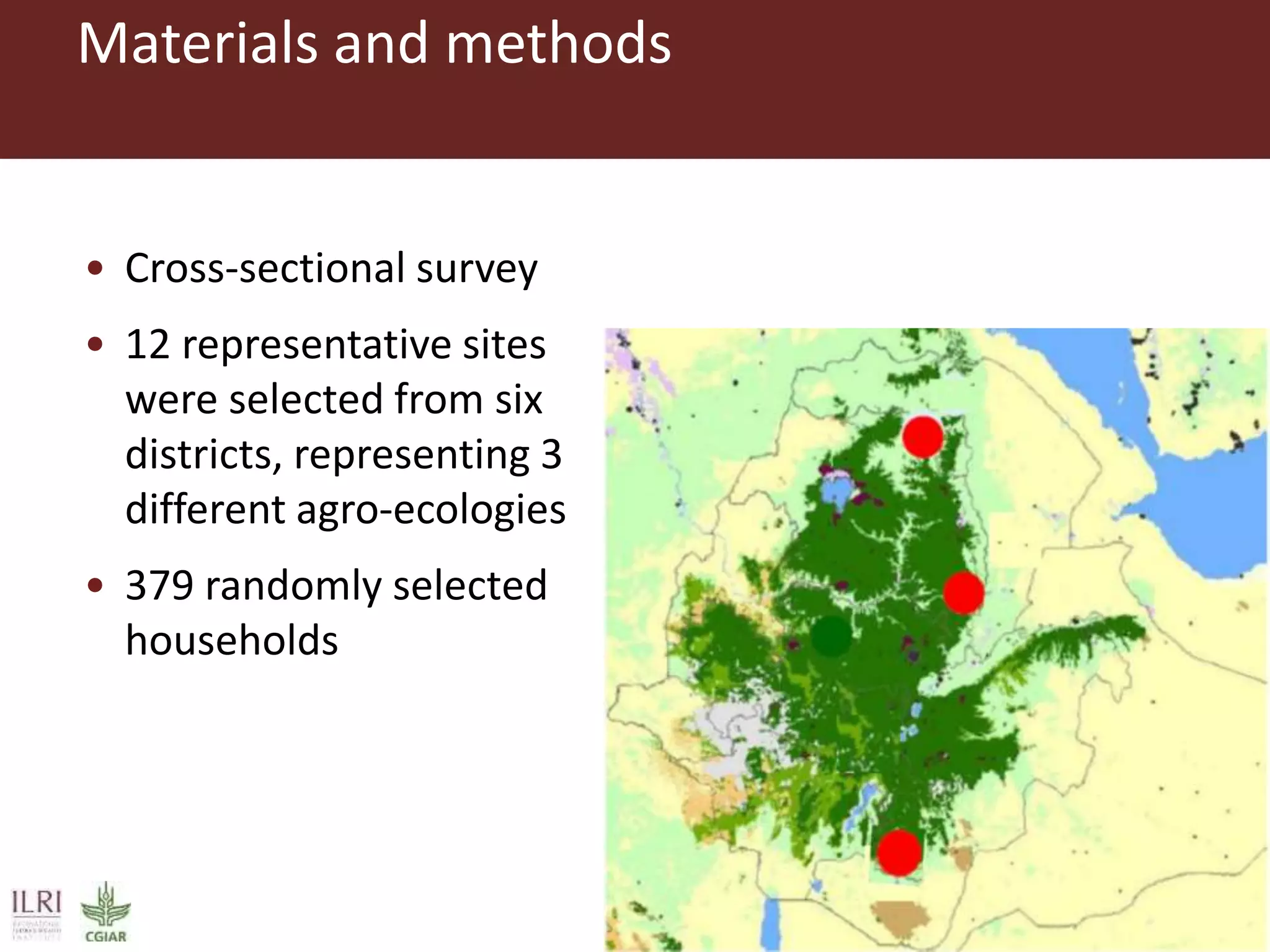
• Cross-sectional survey
• 12 representative sites
were selected from six
districts, representing 3
different agro-ecologies
• 379 randomly selected
households
Survey tool
• Questions on: HH demographics, farm characteristics,
management of manure, feed types, animal health constraints,
disease prevention, animal health services, antimicrobial use,
farm product consumption and cost of animal health
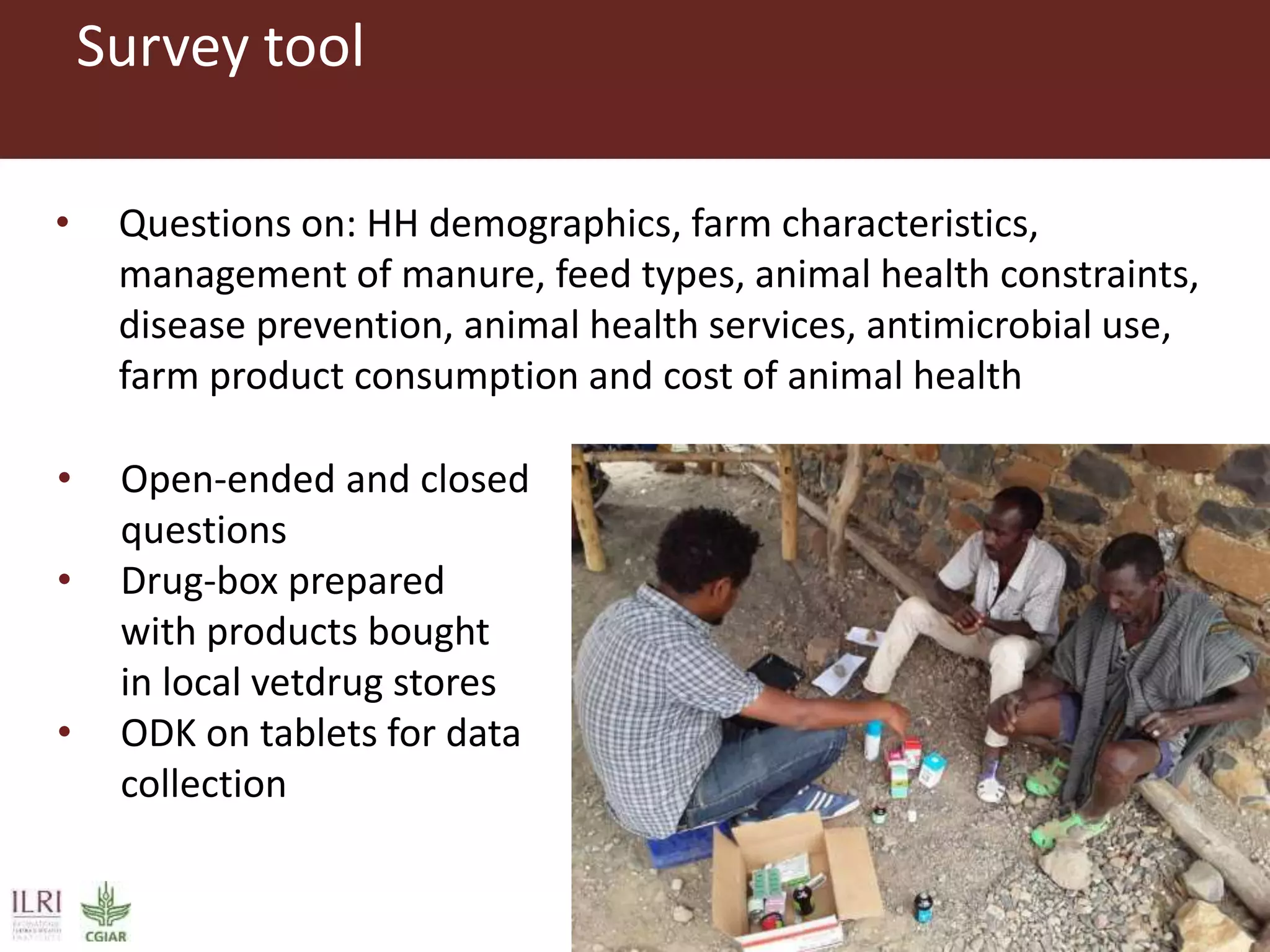
• Open-ended and closed
questions
• Drug-box prepared
with products bought
in local vetdrug stores
• ODK on tablets for data
collection
Drug-box
Results
Knowledge
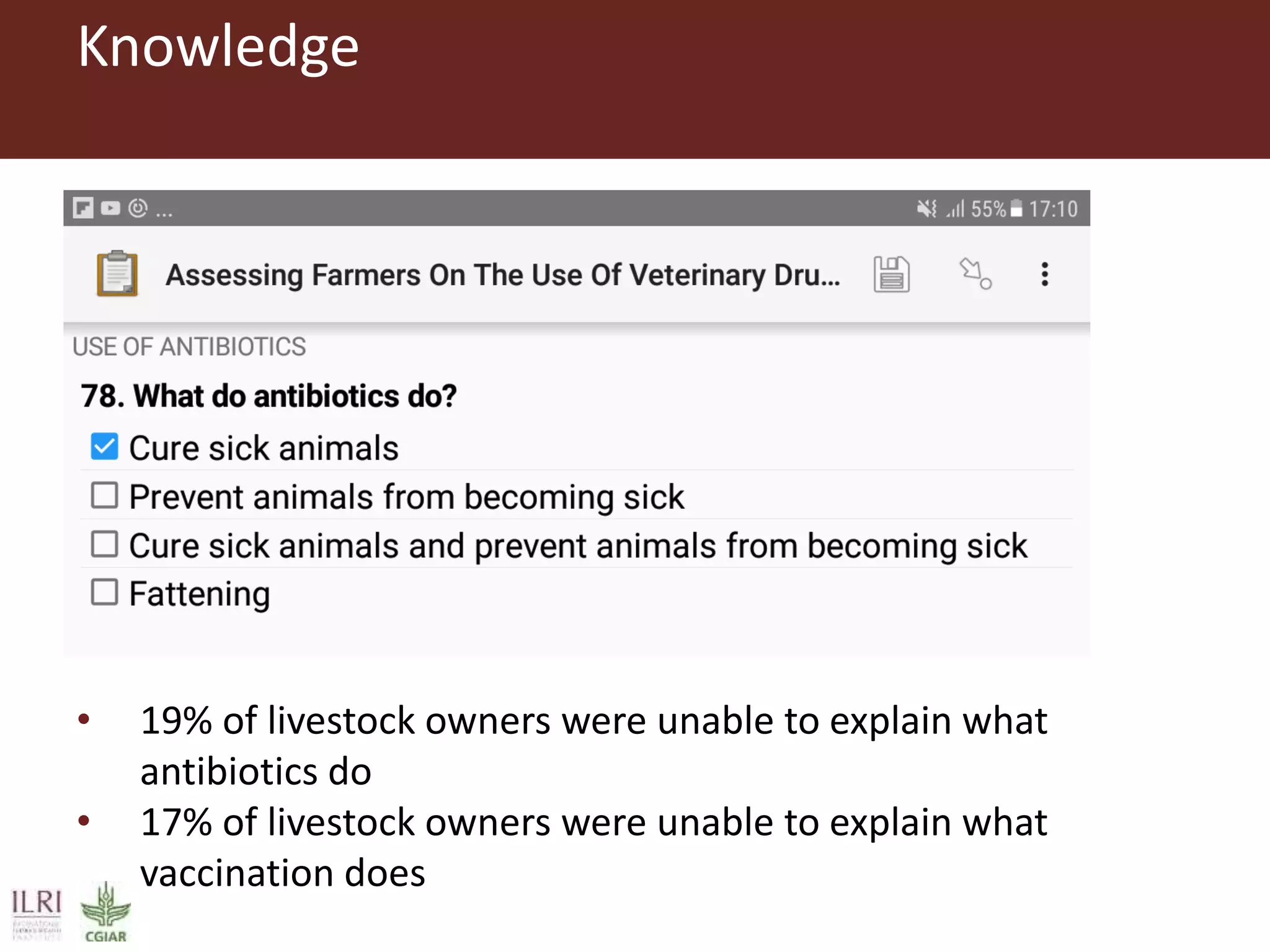
• 19% of livestock owners were unable to explain what
antibiotics do
• 17% of livestock owners were unable to explain what
vaccination does
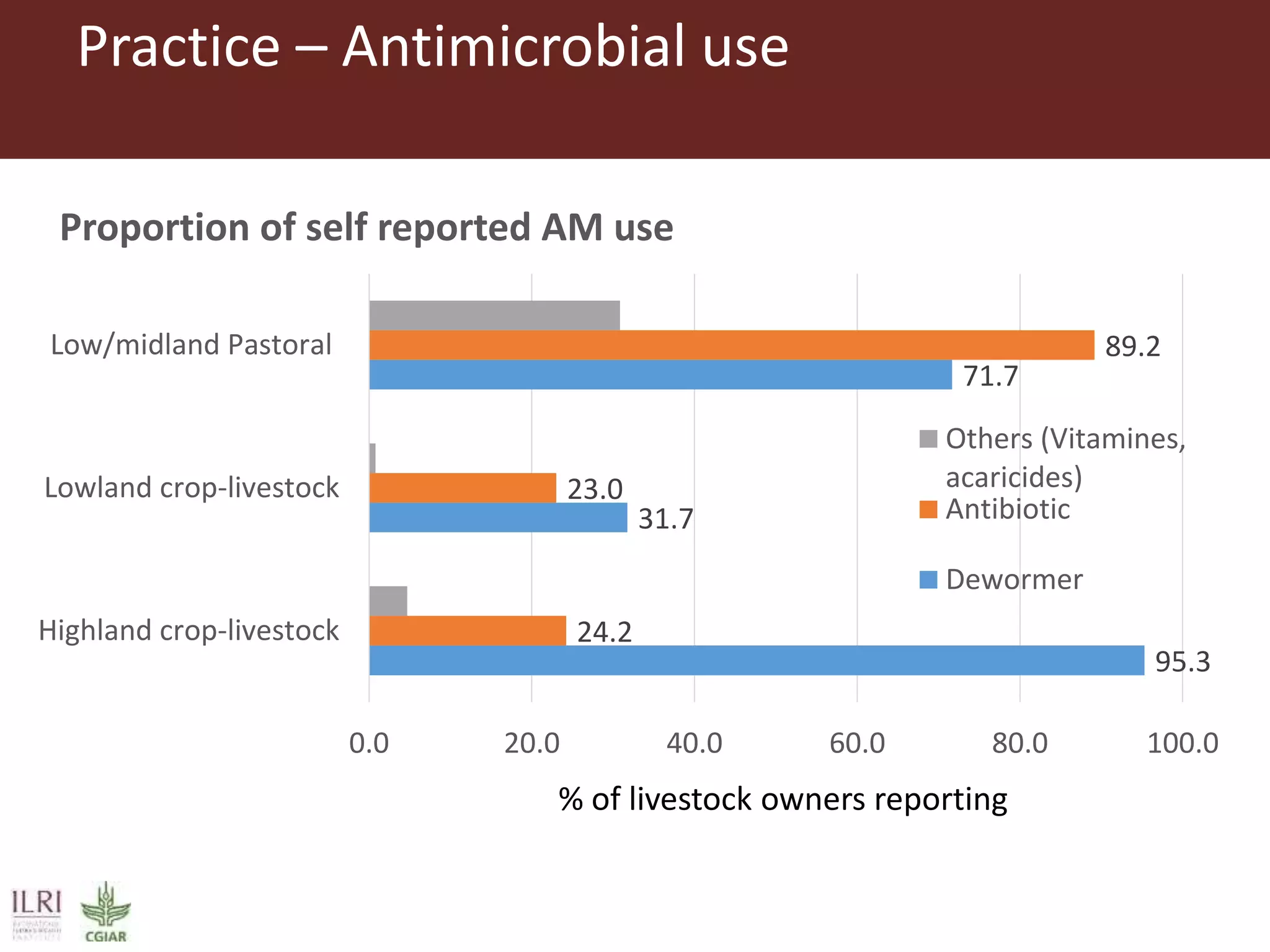
Practice – Antimicrobial use
95.3
31.7
71.7
24.2
23.0
89.2
0.0 20.0 40.0 60.0 80.0 100.0
Highland crop-livestock
Lowland crop-livestock
Low/midland Pastoral
Proportion of self reported AM use
Others (Vitamines,
acaricides)
Antibiotic
Dewormer
%% of livestock owners reporting
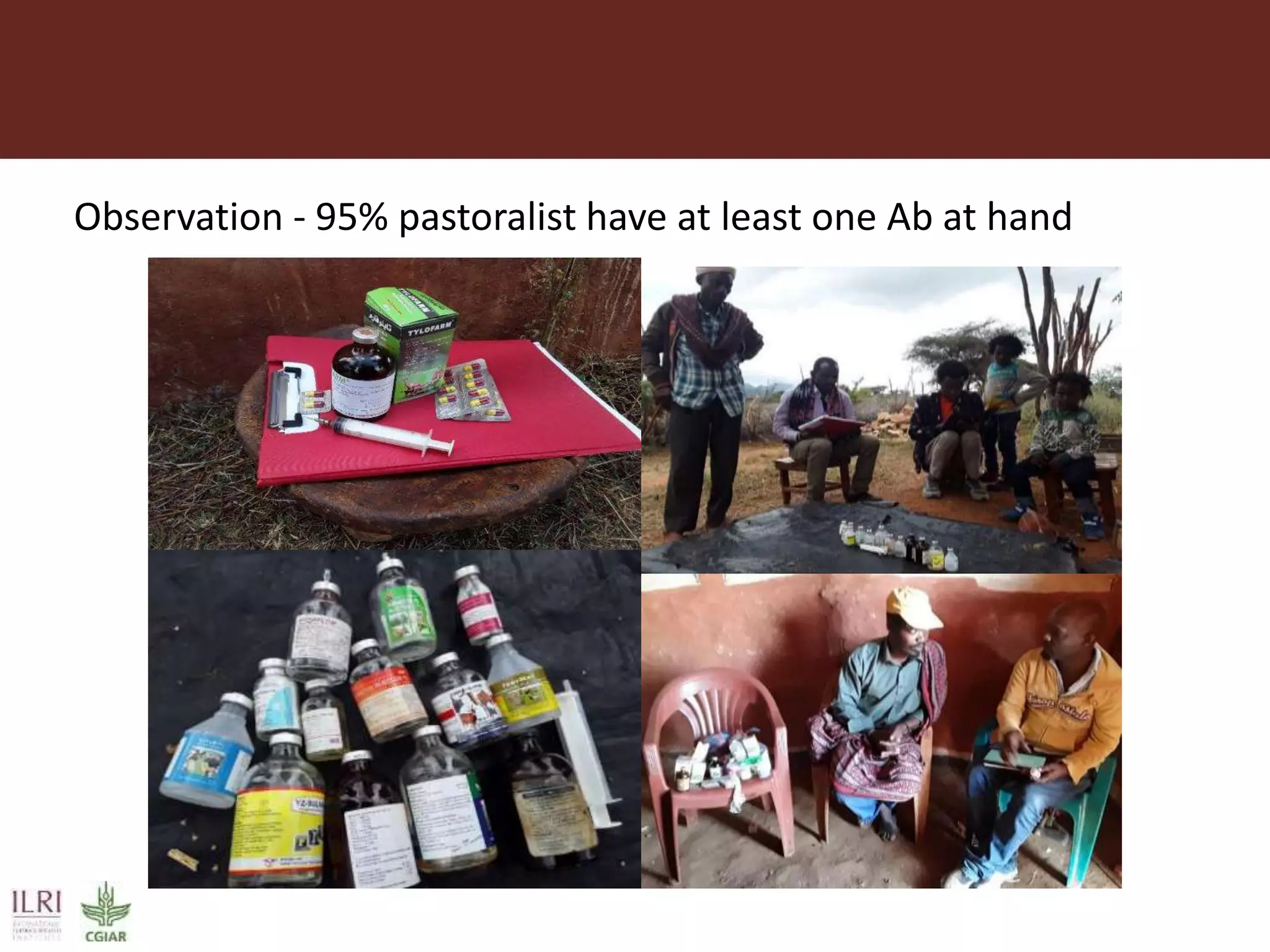
Observation - 95% pastoralist have at least one Ab at hand
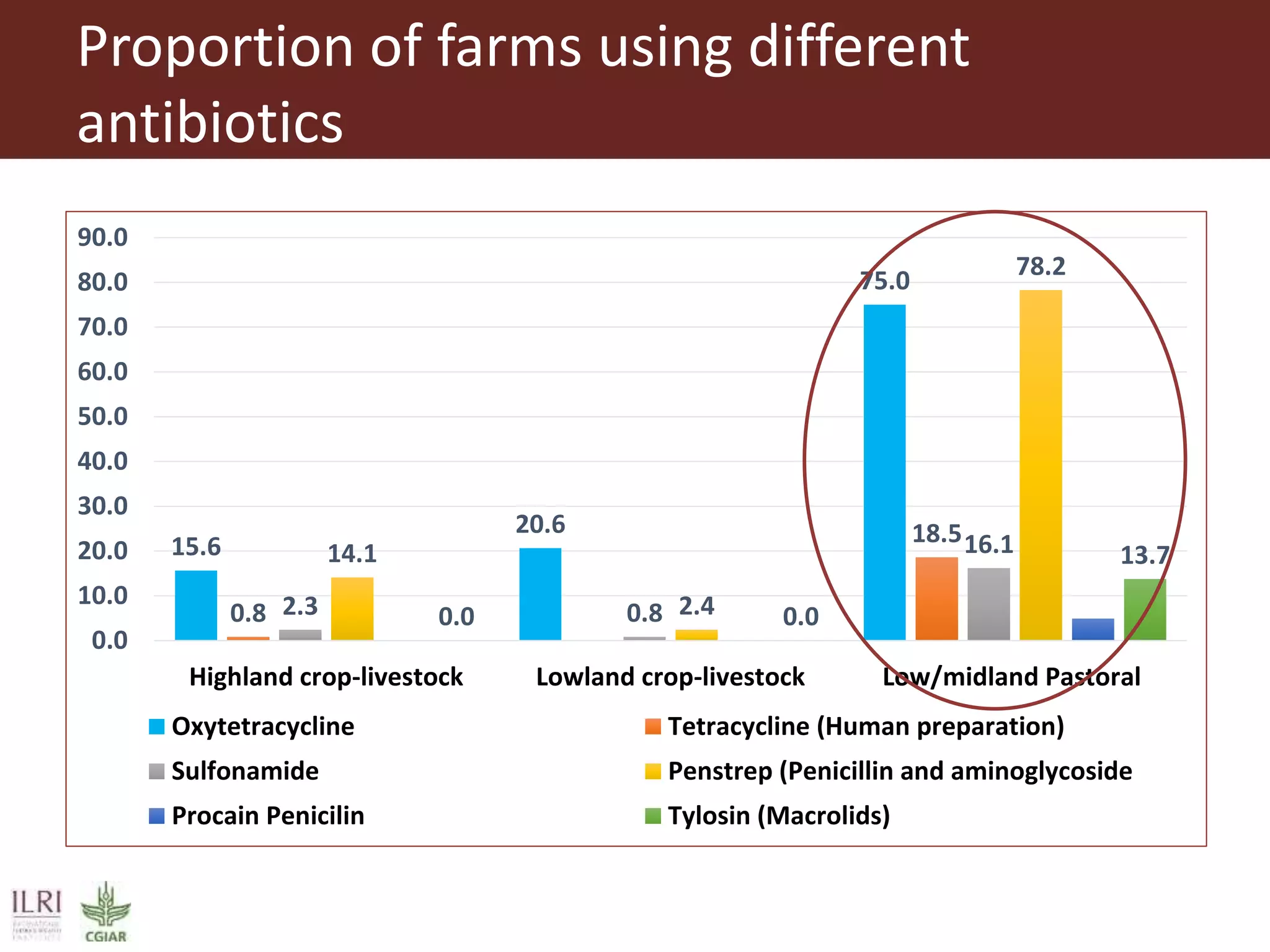
Proportion of farms using different
antibiotics
15.6
20.6
75.0
0.8
18.5
2.3 0.8
16.114.1
2.4
78.2
0.0 0.0
13.7
0.0
10.0
20.0
30.0
40.0
50.0
60.0
70.0
80.0
90.0
Highland crop-livestock Lowland crop-livestock Low/midland Pastoral
Oxytetracycline Tetracycline (Human preparation)
Sulfonamide Penstrep (Penicillin and aminoglycoside
Procain Penicilin Tylosin (Macrolids)
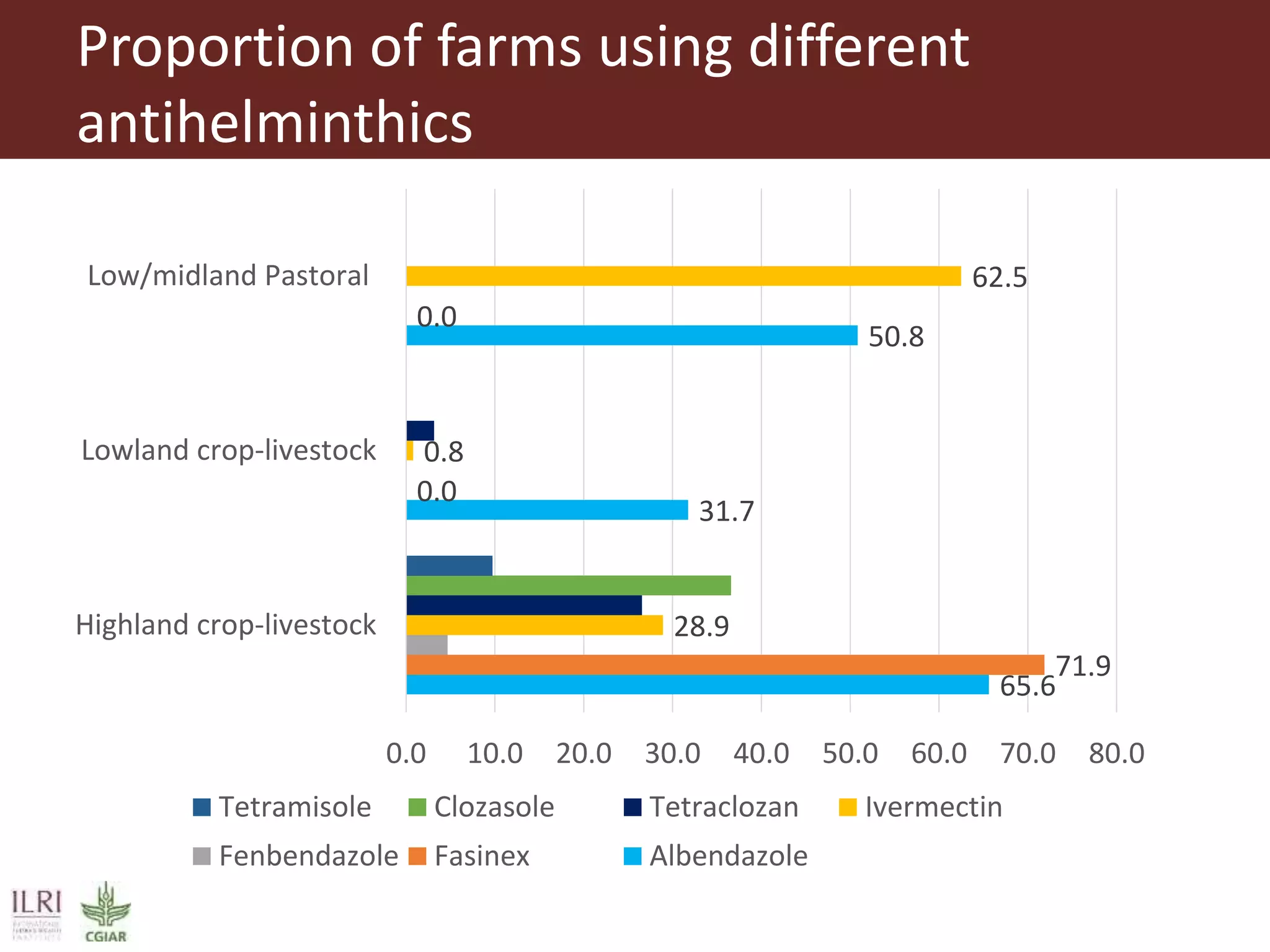
Human antibiotics are being used for veterinary purpose
(18.5% of pastoralist households)
Proportion of farms using different
antihelminthics
65.6
31.7
50.8
71.9
0.0
0.0
28.9
0.8
62.5
0.0 10.0 20.0 30.0 40.0 50.0 60.0 70.0 80.0
Highland crop-livestock
Lowland crop-livestock
Low/midland Pastoral
Tetramisole Clozasole Tetraclozan Ivermectin
Fenbendazole Fasinex Albendazole
Reasons for use
Reason for use
84.5
90.7 87.8
11.3 8.2 10.2
3.1 1.0 3.1
0.0
20.0
40.0
60.0
80.0
100.0
AntihelminthicAntibiotics
6.2 6.0 8.7
64.8 65.7 65.8
50.0
28.4
42.9
0.0
20.0
40.0
60.0
80.0
Cattle Goat Sheep
Treatment Disease prevention Fattening
Reason for use
• The most frequent reason for antimicrobial use were:
respiratory problems and digestive/internal parasite
infections
Treatment failure
3
12.7
84.2
Antibiotics
4.9
16.5
78.64
Antiheliminthics
Yes, frequently
Yes, sometimes
No, never
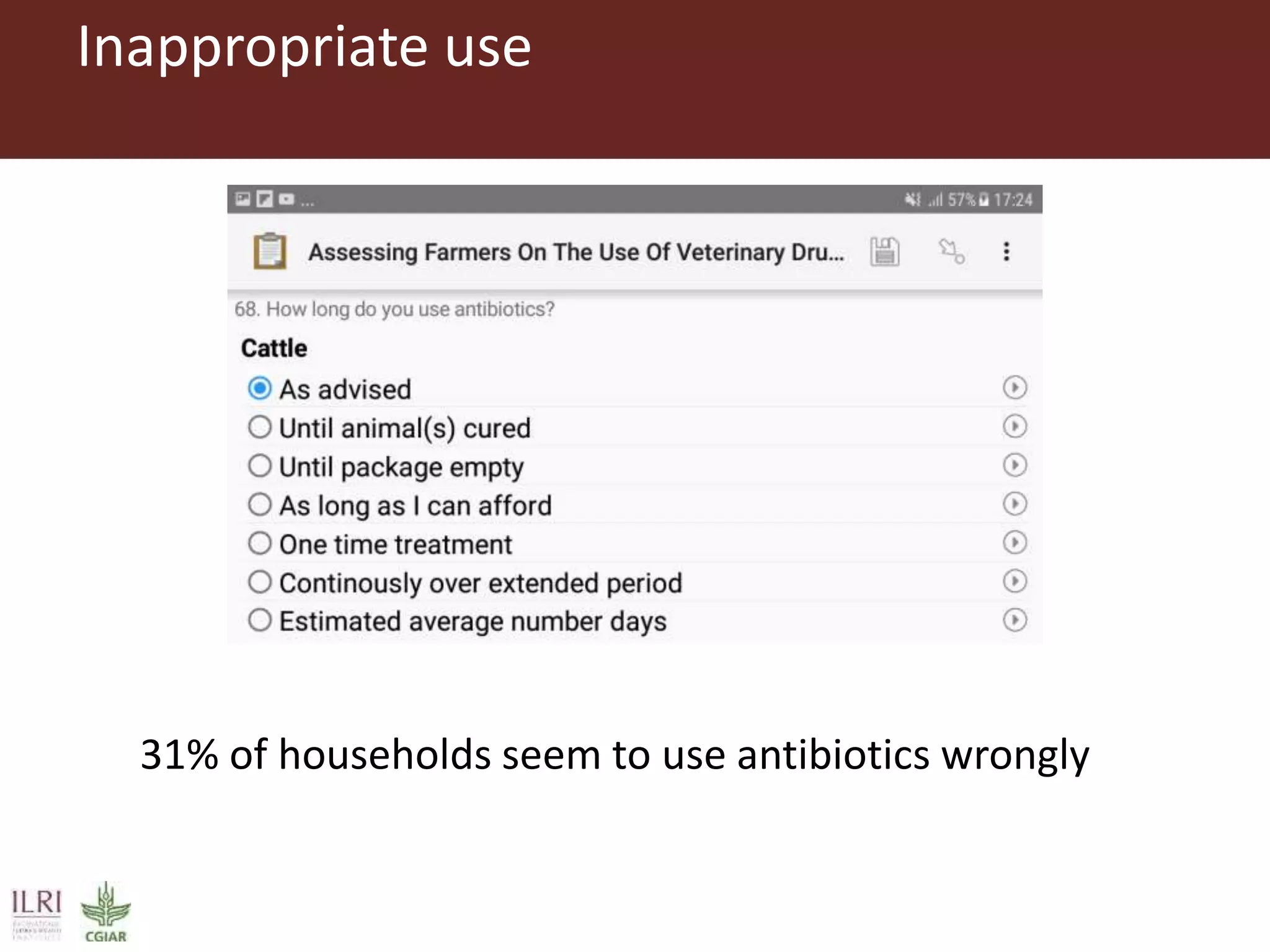
Inappropriate use
31% of households seem to use antibiotics wrongly
Sources of veterinary drugs
 influences how drugs are administered
2.3
14.3
83.1
75.8
36.5 33.132.0
0.0
4.0
0.0
10.0
20.0
30.0
40.0
50.0
60.0
70.0
80.0
90.0
Highland crop-livestock Lowland crop-livestock Lowland
Agropastoral/Pastoral
Private drug supplier Government/official vet Veterinary drug store Market
Expiry date of antimicrobials
Pastoral areas - 97% not expired
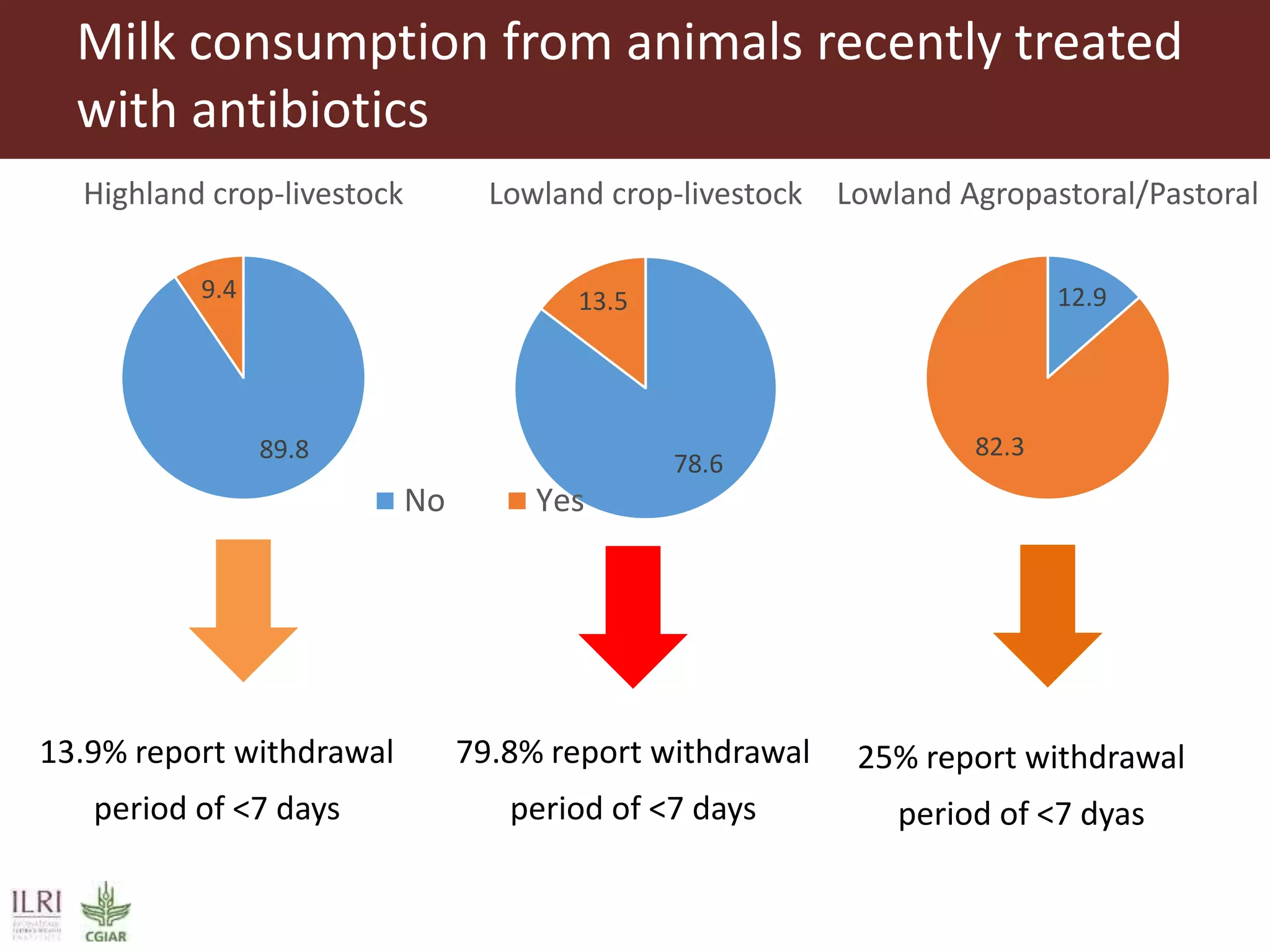
Milk consumption from animals recently treated
with antibiotics
78.6
13.5
Lowland crop-livestock
No Yes
12.9
82.3
Lowland Agropastoral/Pastoral
89.8
9.4
Highland crop-livestock
13.9% report withdrawal
period of <7 days
79.8% report withdrawal
period of <7 days
25% report withdrawal
period of <7 dyas
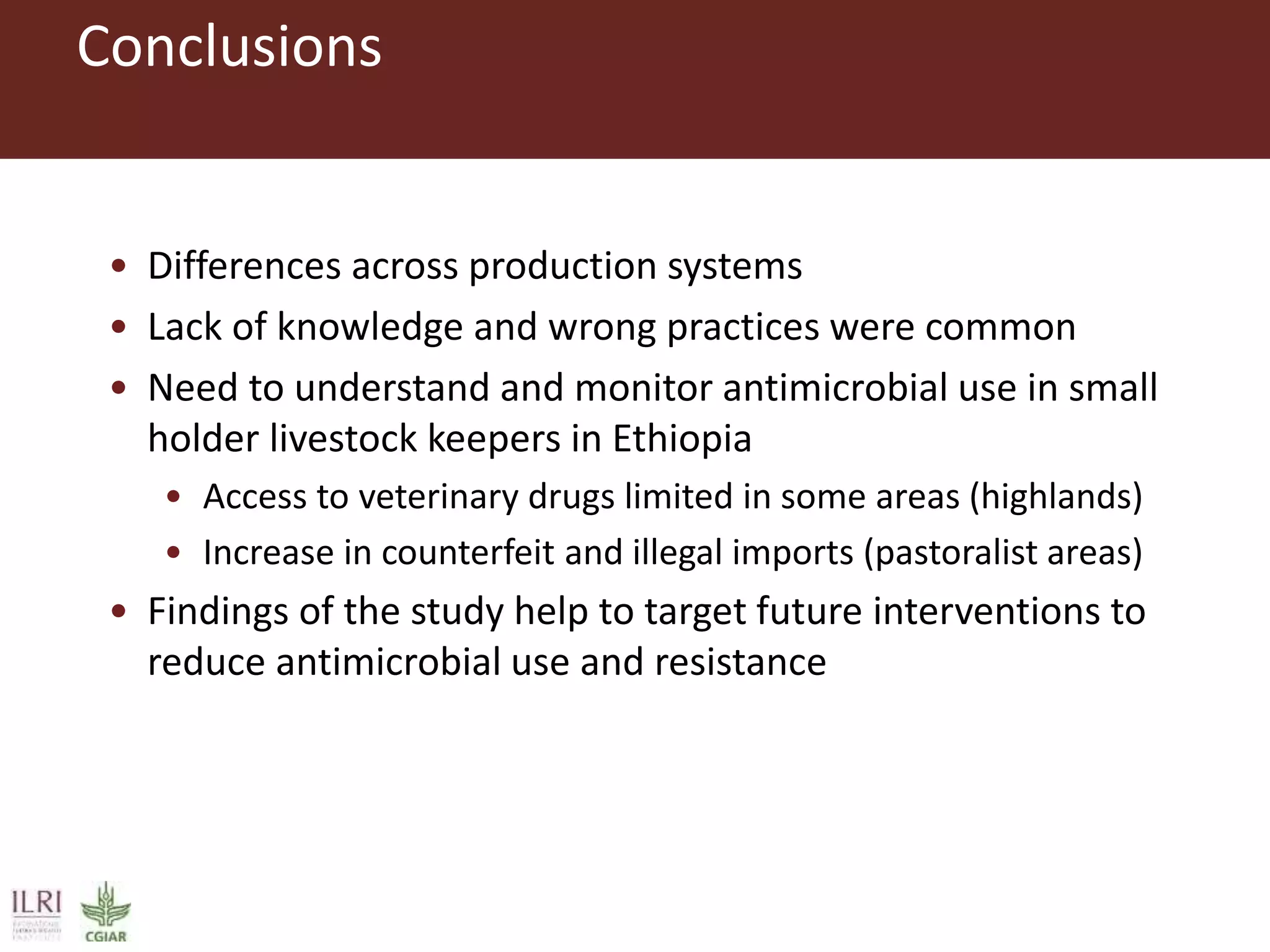
Conclusions
• Differences across production systems
• Lack of knowledge and wrong practices were common
• Need to understand and monitor antimicrobial use in small
holder livestock keepers in Ethiopia
• Access to veterinary drugs limited in some areas (highlands)
• Increase in counterfeit and illegal imports (pastoralist areas)
• Findings of the study help to target future interventions to
reduce antimicrobial use and resistance
Outlook
• Further analysis planned: study behavior in more detail
to understand drivers of use
• Identify and target interventions (incentives, address
drivers of use, etc.)
• Check quality of drugs
• Link drug use with residues and AMR in meat and dairy
samples
This work is financed by
CRP Livestock, CRP Agriculture for Nutrition and
Health (A4NH), DAAD
Acknowledgements
This presentation is licensed for use under the Creative Commons Attribution 4.0 International Licence.
better lives through livestock
ilri.org
better lives through livestock
ilri.org

Antimicrobial use in smallholder livestock systems in Ethiopia

  • 1.
    Antimicrobial use insmallholder livestock systems in Ethiopia Biruk Alemu, Kebede Amenu, Gezahagn Alemayehu, Hiwot Desta, Michel Dione, Ulf Magnusson and Barbara Wieland 15th International Symposium of Veterinary Epidemiology and Economics Chiang Mai, Thailand, 12-16 November 2018
  • 2.
    Introduction • Globally continuedincrease in AMU in food-animal production expected, especially in LMICs • Irresponsible AMU and the resultant selective pressure is a major driver for AMR • Major food safety and public health concerns linked to AM residues and AMR
  • 3.
    Introduction HICs • Policies torestrict the use of AM agents in animals in place and enforced • Monitor trends in AMU and AMR in livestock LMICs • Only limited, or unreliable, data regarding AMU (counterfeit and illegal imports) • Policies are not enforced • Access to antimicrobials is improving •AMR has no boundaries, it is a global issue •It does not matter where a resistant bacterium originates
  • 4.
    Ethiopia • The largestlivestock population in Africa • Different production systems and agro-ecology • Very scarce information on antimicrobial usage in animals • Factors and incentives influencing AMU are poorly understood
  • 5.
    Objective To understand knowledgeand practice of smallholder farmers regarding antimicrobial use, resistance and residue
  • 6.
    Materials and methods •Cross-sectional survey • 12 representative sites were selected from six districts, representing 3 different agro-ecologies • 379 randomly selected households
  • 7.
    Survey tool • Questionson: HH demographics, farm characteristics, management of manure, feed types, animal health constraints, disease prevention, animal health services, antimicrobial use, farm product consumption and cost of animal health • Open-ended and closed questions • Drug-box prepared with products bought in local vetdrug stores • ODK on tablets for data collection
  • 8.
  • 9.
  • 10.
    Knowledge • 19% oflivestock owners were unable to explain what antibiotics do • 17% of livestock owners were unable to explain what vaccination does
  • 11.
    Practice – Antimicrobialuse 95.3 31.7 71.7 24.2 23.0 89.2 0.0 20.0 40.0 60.0 80.0 100.0 Highland crop-livestock Lowland crop-livestock Low/midland Pastoral Proportion of self reported AM use Others (Vitamines, acaricides) Antibiotic Dewormer %% of livestock owners reporting
  • 12.
    Observation - 95%pastoralist have at least one Ab at hand
  • 13.
    Proportion of farmsusing different antibiotics 15.6 20.6 75.0 0.8 18.5 2.3 0.8 16.114.1 2.4 78.2 0.0 0.0 13.7 0.0 10.0 20.0 30.0 40.0 50.0 60.0 70.0 80.0 90.0 Highland crop-livestock Lowland crop-livestock Low/midland Pastoral Oxytetracycline Tetracycline (Human preparation) Sulfonamide Penstrep (Penicillin and aminoglycoside Procain Penicilin Tylosin (Macrolids)
  • 14.
    Human antibiotics arebeing used for veterinary purpose (18.5% of pastoralist households)
  • 15.
    Proportion of farmsusing different antihelminthics 65.6 31.7 50.8 71.9 0.0 0.0 28.9 0.8 62.5 0.0 10.0 20.0 30.0 40.0 50.0 60.0 70.0 80.0 Highland crop-livestock Lowland crop-livestock Low/midland Pastoral Tetramisole Clozasole Tetraclozan Ivermectin Fenbendazole Fasinex Albendazole
  • 16.
  • 17.
    Reason for use 84.5 90.787.8 11.3 8.2 10.2 3.1 1.0 3.1 0.0 20.0 40.0 60.0 80.0 100.0 AntihelminthicAntibiotics 6.2 6.0 8.7 64.8 65.7 65.8 50.0 28.4 42.9 0.0 20.0 40.0 60.0 80.0 Cattle Goat Sheep Treatment Disease prevention Fattening
  • 18.
    Reason for use •The most frequent reason for antimicrobial use were: respiratory problems and digestive/internal parasite infections
  • 19.
  • 20.
    Inappropriate use 31% ofhouseholds seem to use antibiotics wrongly
  • 21.
    Sources of veterinarydrugs  influences how drugs are administered 2.3 14.3 83.1 75.8 36.5 33.132.0 0.0 4.0 0.0 10.0 20.0 30.0 40.0 50.0 60.0 70.0 80.0 90.0 Highland crop-livestock Lowland crop-livestock Lowland Agropastoral/Pastoral Private drug supplier Government/official vet Veterinary drug store Market
  • 22.
    Expiry date ofantimicrobials Pastoral areas - 97% not expired
  • 23.
    Milk consumption fromanimals recently treated with antibiotics 78.6 13.5 Lowland crop-livestock No Yes 12.9 82.3 Lowland Agropastoral/Pastoral 89.8 9.4 Highland crop-livestock 13.9% report withdrawal period of <7 days 79.8% report withdrawal period of <7 days 25% report withdrawal period of <7 dyas
  • 24.
    Conclusions • Differences acrossproduction systems • Lack of knowledge and wrong practices were common • Need to understand and monitor antimicrobial use in small holder livestock keepers in Ethiopia • Access to veterinary drugs limited in some areas (highlands) • Increase in counterfeit and illegal imports (pastoralist areas) • Findings of the study help to target future interventions to reduce antimicrobial use and resistance
  • 25.
    Outlook • Further analysisplanned: study behavior in more detail to understand drivers of use • Identify and target interventions (incentives, address drivers of use, etc.) • Check quality of drugs • Link drug use with residues and AMR in meat and dairy samples
  • 26.
    This work isfinanced by CRP Livestock, CRP Agriculture for Nutrition and Health (A4NH), DAAD Acknowledgements
  • 27.
    This presentation islicensed for use under the Creative Commons Attribution 4.0 International Licence. better lives through livestock ilri.org better lives through livestock ilri.org

Editor's Notes

  • #2 There MUST be a CGIAR logo or a CRP logo. You can copy and paste the logo you need from the final slide of this presentation. Then you can delete that final slide   To replace a photo above, copy and paste this link in your browser: http://www.flickr.com/photos/ilri/sets/72157632057087650/detail/   Find a photo you like and the right size, copy and paste it in the block above.