ATTITUDE &
VALUE
Anubha Maurya
Trainer and Consultant
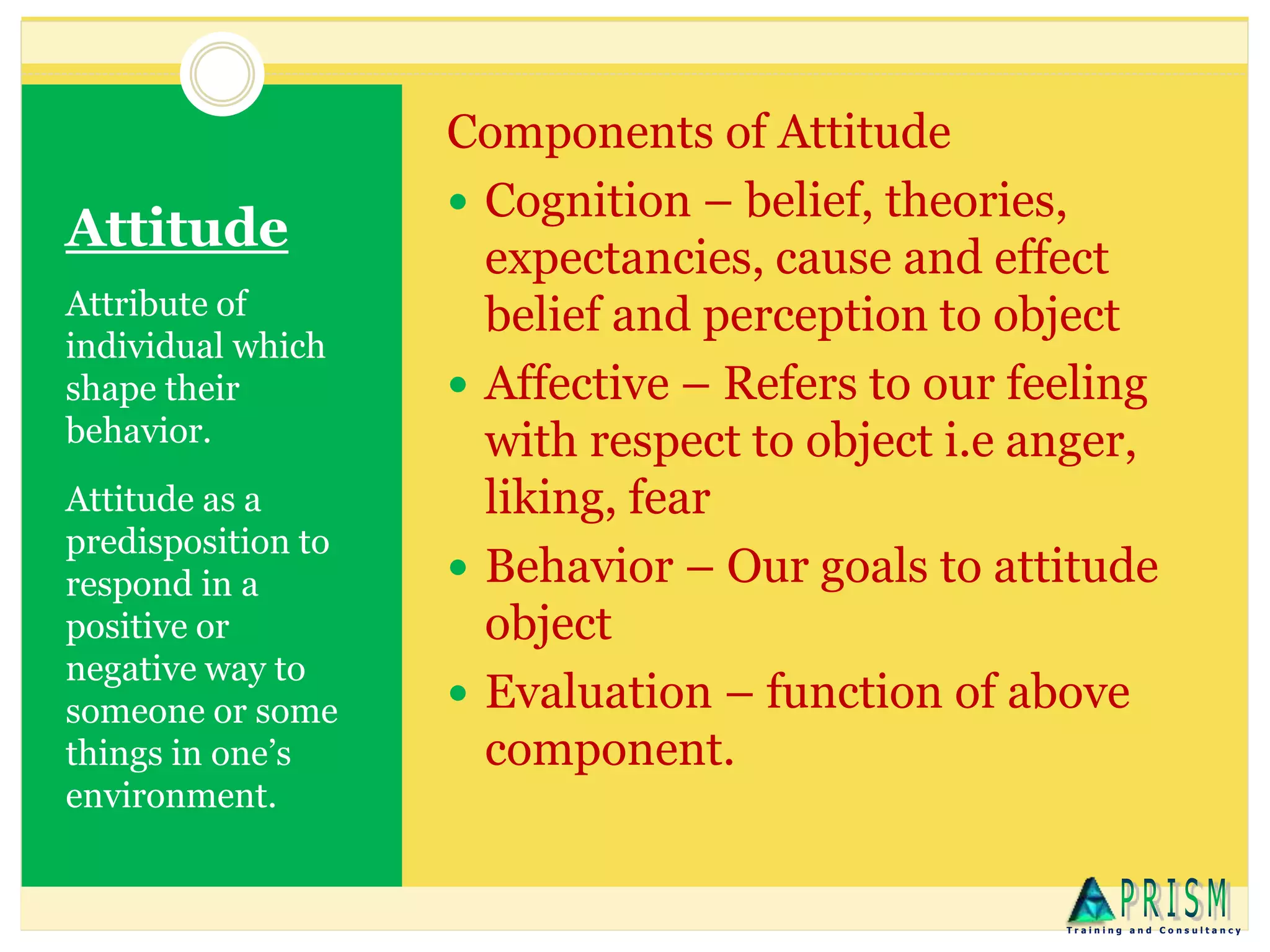
Attitude
Attribute of
individual which
shape their
behavior.
Attitude as a
predisposition to
respond in a
positive or
negative way to
someone or some
things in one’s
environment.
Components of Attitude
 Cognition – belief, theories,
expectancies, cause and effect
belief and perception to object
 Affective – Refers to our feeling
with respect to object i.e anger,
liking, fear
 Behavior – Our goals to attitude
object
 Evaluation – function of above
component.
T r a i n i n g a n d C o n s u l t a n c y
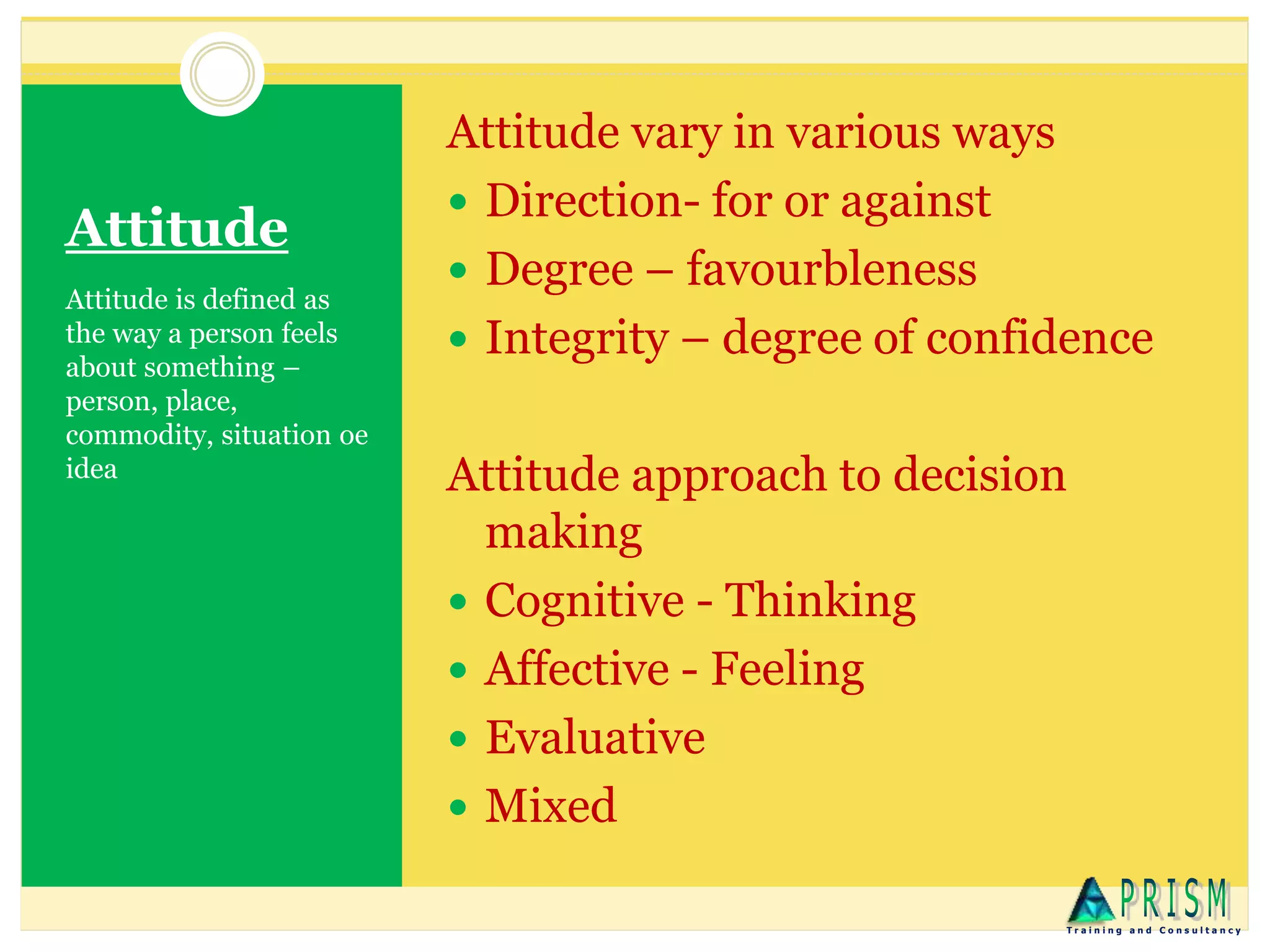
Attitude
Attitude is defined as
the way a person feels
about something –
person, place,
commodity, situation oe
idea
Attitude vary in various ways
ď‚— Direction- for or against
 Degree – favourbleness
 Integrity – degree of confidence
Attitude approach to decision
making
ď‚— Cognitive - Thinking
ď‚— Affective - Feeling
ď‚— Evaluative
ď‚— Mixed
T r a i n i n g a n d C o n s u l t a n c y
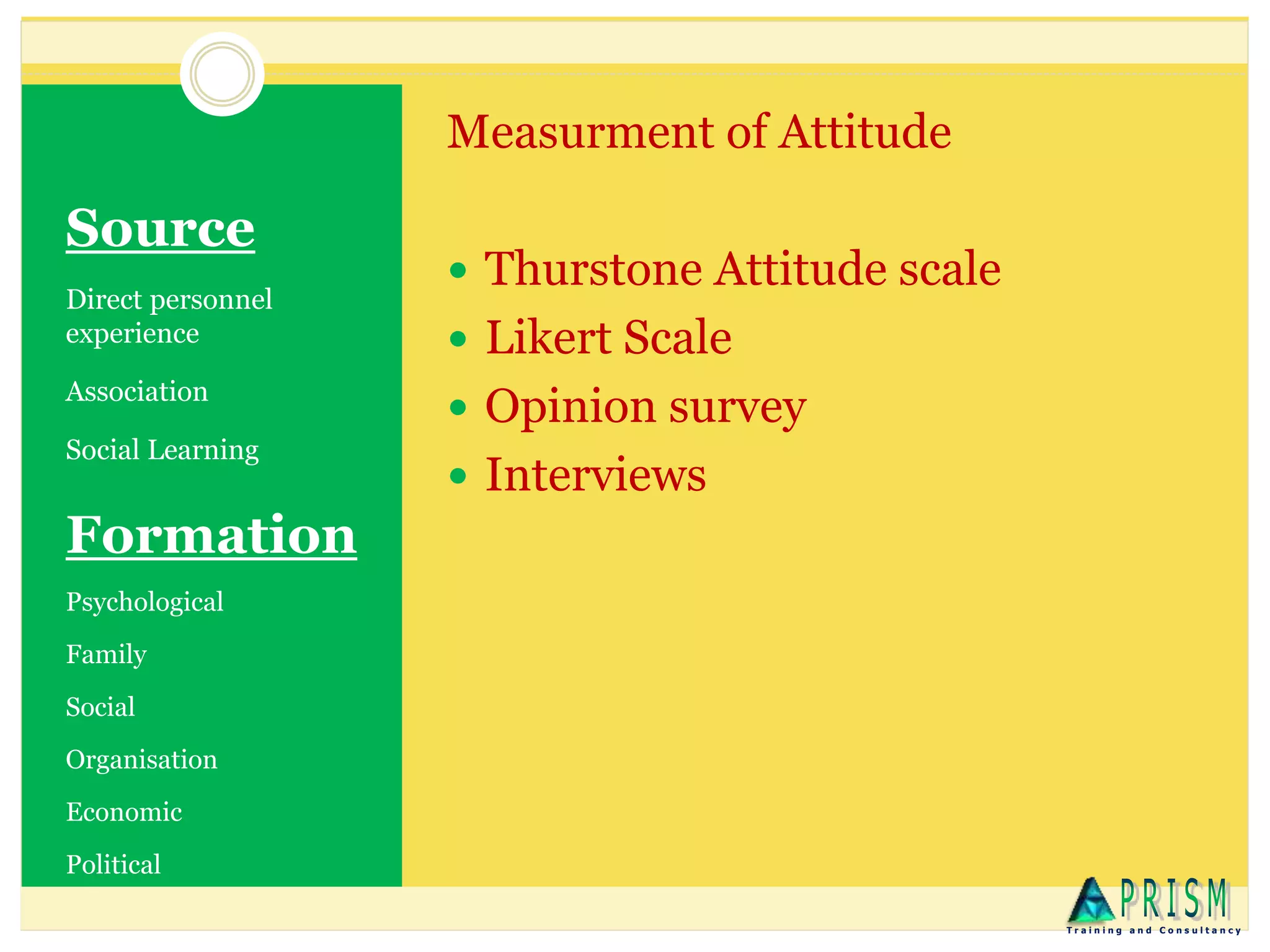
Source
Direct personnel
experience
Association
Social Learning
Measurment of Attitude
ď‚— Thurstone Attitude scale
ď‚— Likert Scale
ď‚— Opinion survey
ď‚— Interviews
T r a i n i n g a n d C o n s u l t a n c y
Formation
Psychological
Family
Social
Organisation
Economic
Political
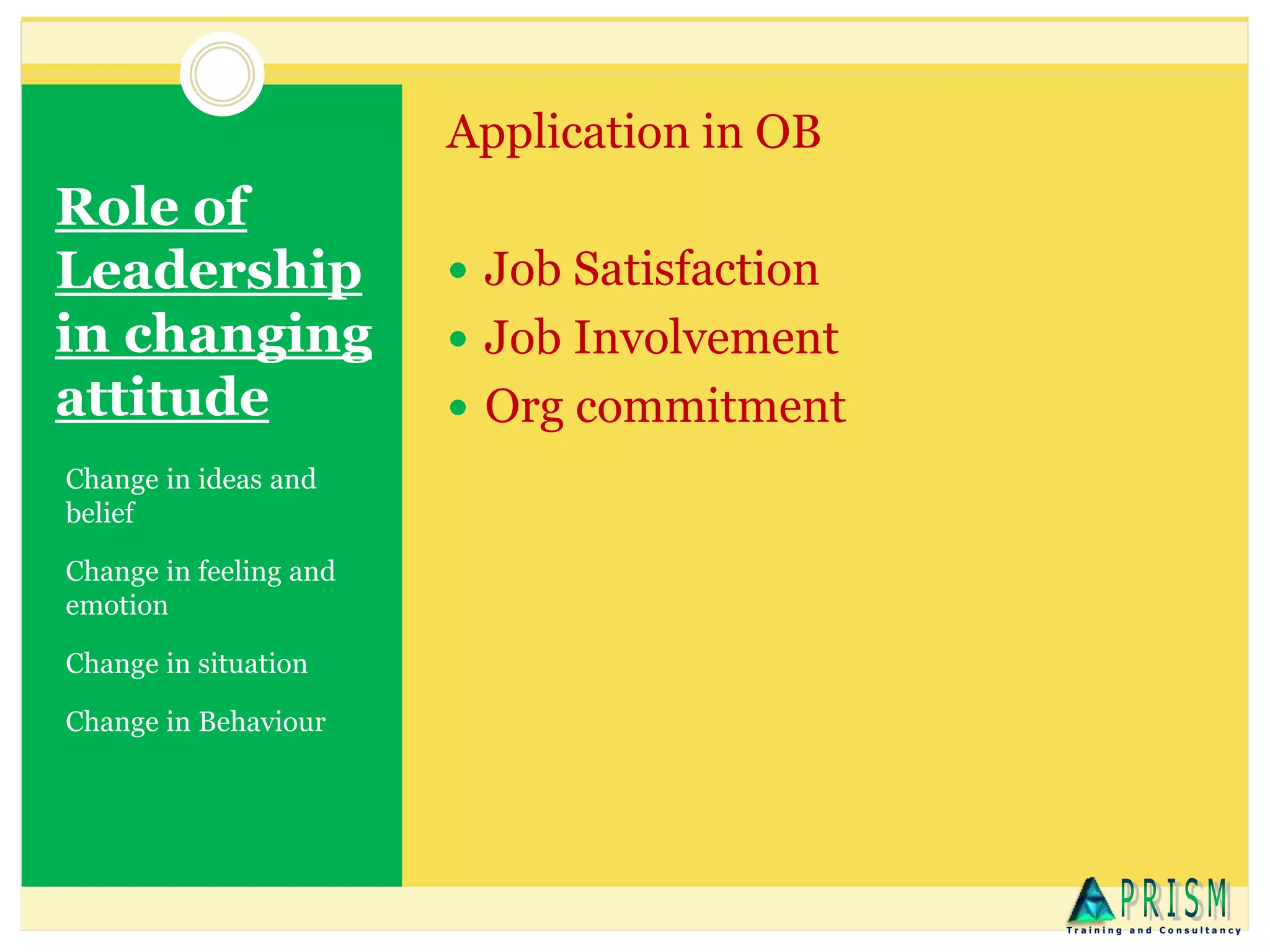
Role of
Leadership
in changing
attitude
Change in ideas and
belief
Change in feeling and
emotion
Change in situation
Change in Behaviour
Application in OB
ď‚— Job Satisfaction
ď‚— Job Involvement
ď‚— Org commitment
T r a i n i n g a n d C o n s u l t a n c y
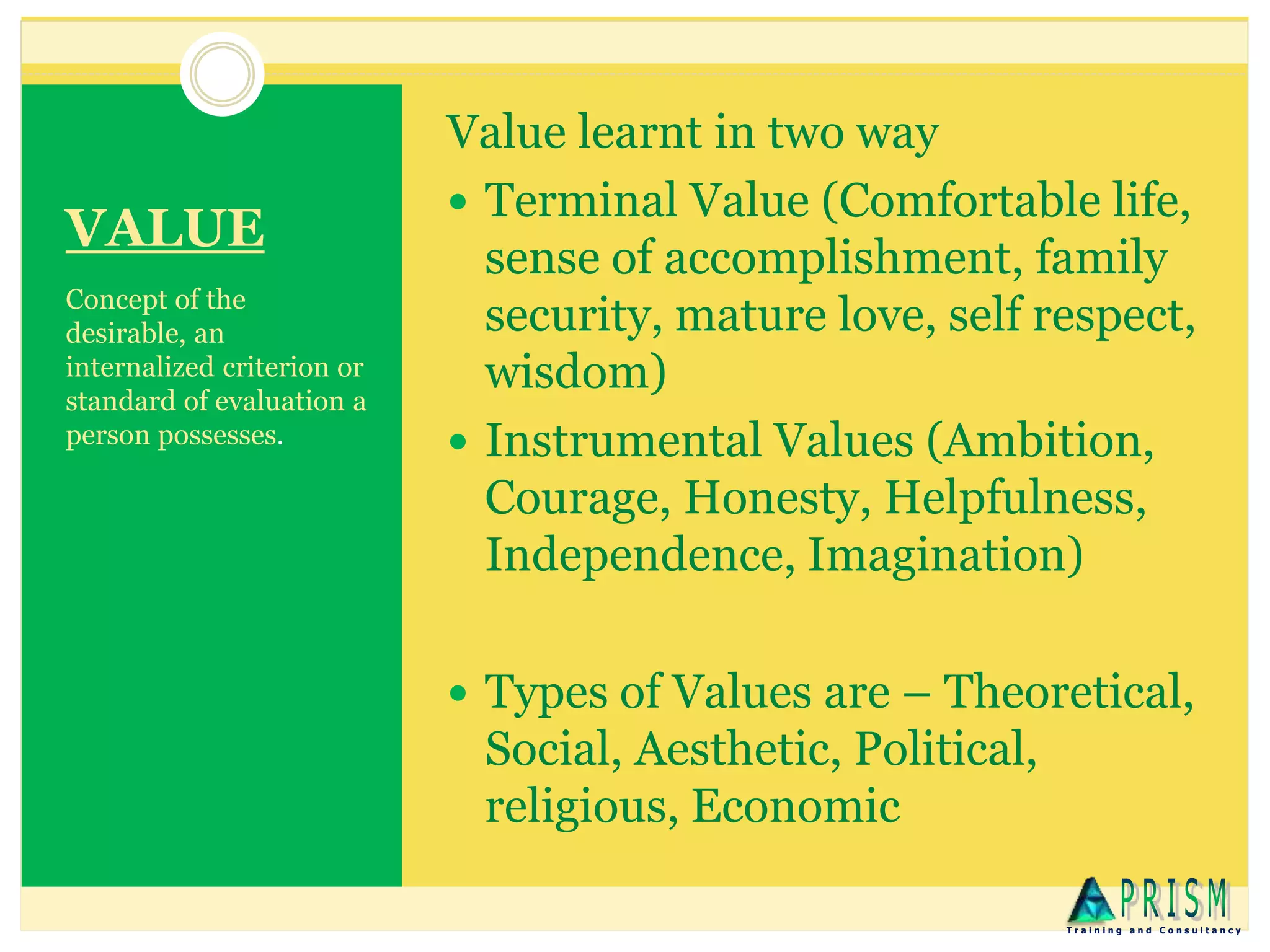
VALUE
Concept of the
desirable, an
internalized criterion or
standard of evaluation a
person possesses.
Value learnt in two way
ď‚— Terminal Value (Comfortable life,
sense of accomplishment, family
security, mature love, self respect,
wisdom)
ď‚— Instrumental Values (Ambition,
Courage, Honesty, Helpfulness,
Independence, Imagination)
 Types of Values are – Theoretical,
Social, Aesthetic, Political,
religious, Economic
T r a i n i n g a n d C o n s u l t a n c y
H T T P : / / A N U B H A M A U R Y A . B L O G S P O T . C O M /
Thank You

Attitude and Value

  • 1.
  • 2.
    Attitude Attribute of individual which shapetheir behavior. Attitude as a predisposition to respond in a positive or negative way to someone or some things in one’s environment. Components of Attitude  Cognition – belief, theories, expectancies, cause and effect belief and perception to object  Affective – Refers to our feeling with respect to object i.e anger, liking, fear  Behavior – Our goals to attitude object  Evaluation – function of above component. T r a i n i n g a n d C o n s u l t a n c y
  • 3.
    Attitude Attitude is definedas the way a person feels about something – person, place, commodity, situation oe idea Attitude vary in various ways  Direction- for or against  Degree – favourbleness  Integrity – degree of confidence Attitude approach to decision making  Cognitive - Thinking  Affective - Feeling  Evaluative  Mixed T r a i n i n g a n d C o n s u l t a n c y
  • 4.
    Source Direct personnel experience Association Social Learning Measurmentof Attitude ď‚— Thurstone Attitude scale ď‚— Likert Scale ď‚— Opinion survey ď‚— Interviews T r a i n i n g a n d C o n s u l t a n c y Formation Psychological Family Social Organisation Economic Political
  • 5.
    Role of Leadership in changing attitude Changein ideas and belief Change in feeling and emotion Change in situation Change in Behaviour Application in OB ď‚— Job Satisfaction ď‚— Job Involvement ď‚— Org commitment T r a i n i n g a n d C o n s u l t a n c y
  • 6.
    VALUE Concept of the desirable,an internalized criterion or standard of evaluation a person possesses. Value learnt in two way  Terminal Value (Comfortable life, sense of accomplishment, family security, mature love, self respect, wisdom)  Instrumental Values (Ambition, Courage, Honesty, Helpfulness, Independence, Imagination)  Types of Values are – Theoretical, Social, Aesthetic, Political, religious, Economic T r a i n i n g a n d C o n s u l t a n c y
  • 7.
    H T TP : / / A N U B H A M A U R Y A . B L O G S P O T . C O M / Thank You