Downloaded 235 times



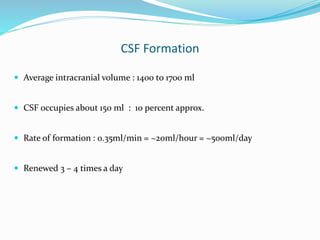
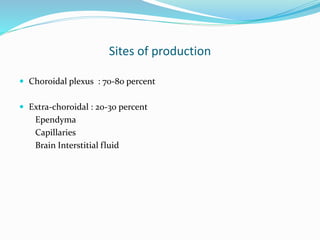
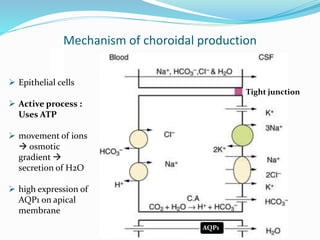

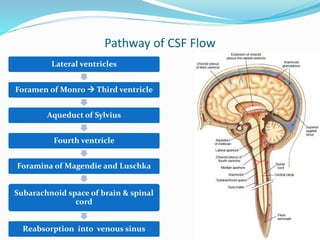
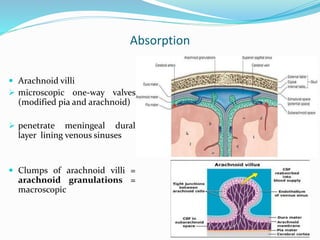
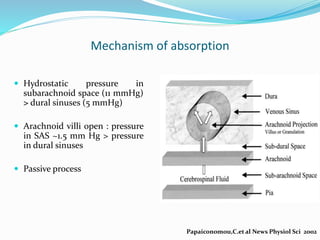
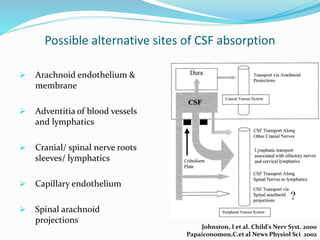
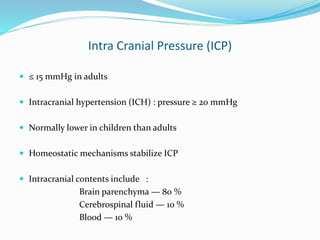
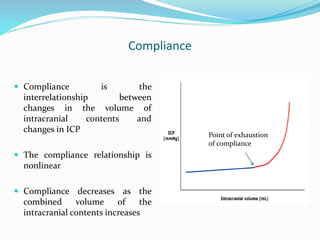
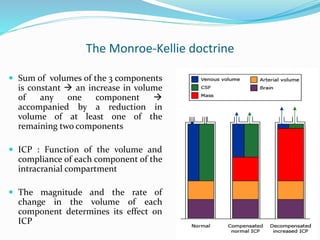
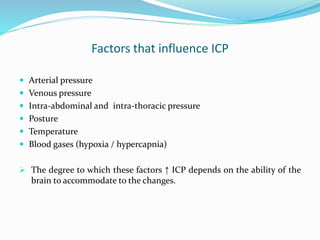
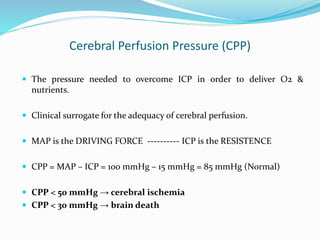


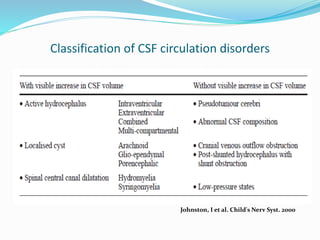

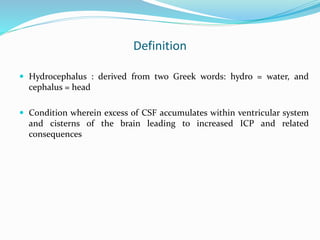

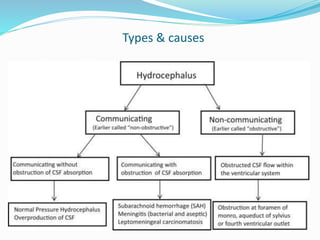
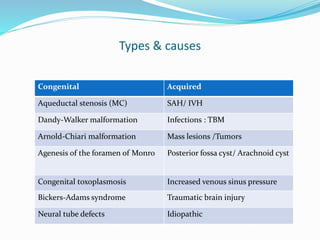



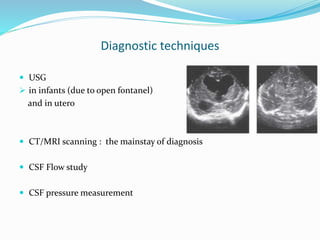
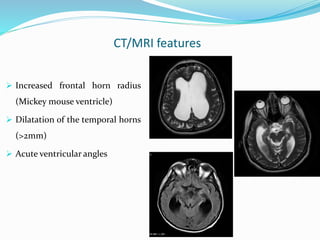
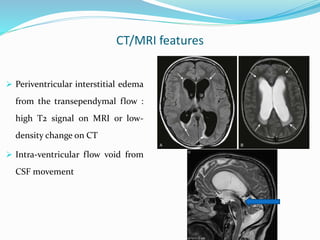
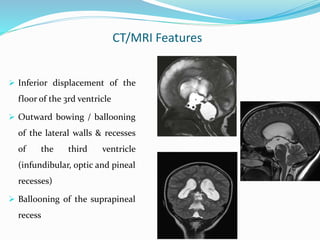
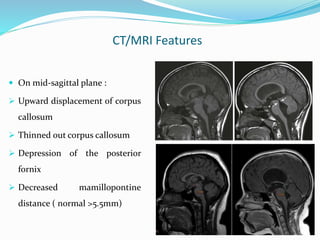
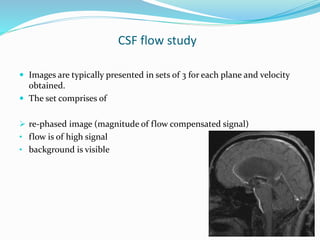
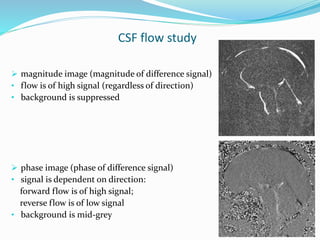
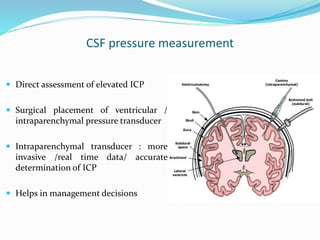

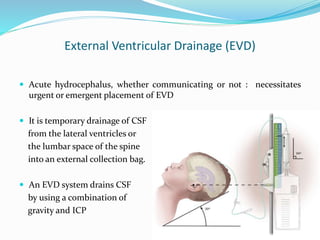
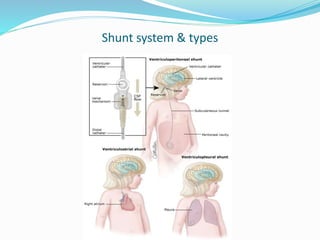






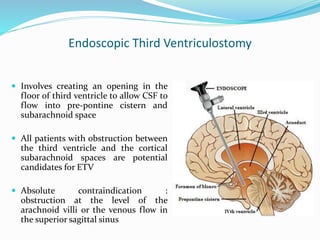
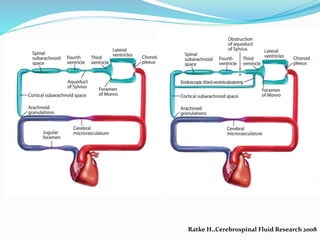
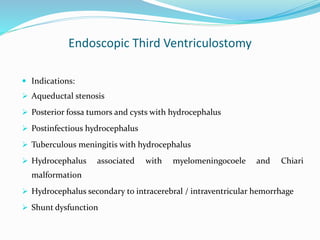
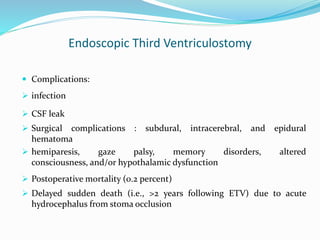
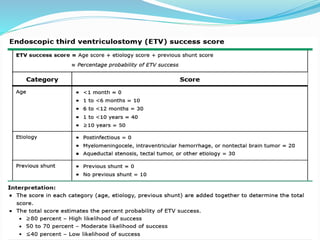


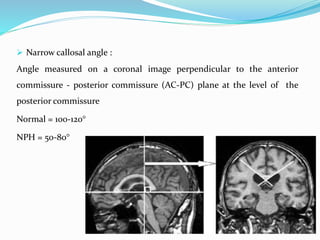
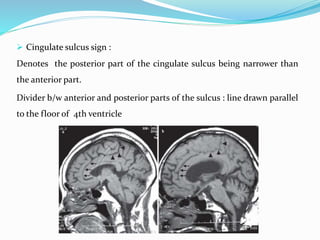
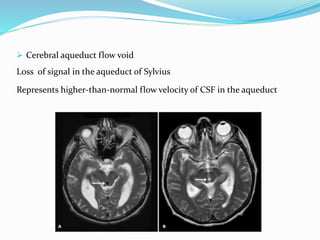
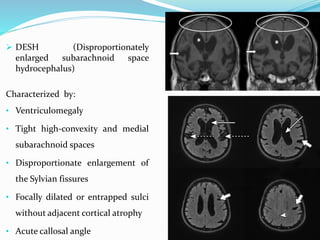

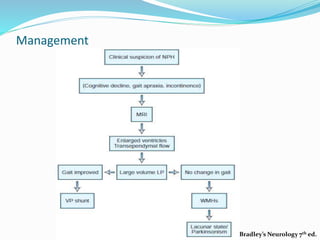
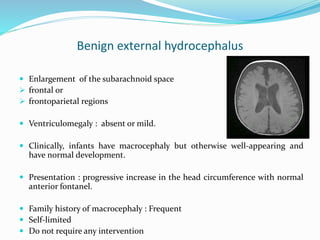
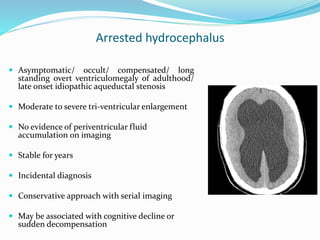



This document provides an overview of cerebrospinal fluid (CSF) anatomy and physiology, as well as disorders of CSF circulation. Key points include: CSF is formed in the choroid plexus and circulates through the ventricles before being absorbed into venous sinuses; intracranial pressure is regulated by CSF production, circulation and absorption; hydrocephalus is an excess accumulation of CSF within the brain that can be communicating or non-communicating; management involves medical treatment, temporary procedures like external ventricular drainage, and surgical options like shunts or endoscopic third ventriculostomy.


