POLARIZATION
Prepared by:
 NUR AZRINA BT ZAINI
 NUR HAZIRAH BT AZHARI
Introduction of polarisation
• Understanding polarization and how to measure a
change in its state is important in many applications.
• Polarizers can be used to measure changes in
magnetic fields, temperature, molecular structure,
chemical interactions, and acoustic vibrations.
• Polarizers can be utilized in imaging applications to
reduce glare and hot spots, enhance contrast, and
perform stress evaluation.
What is polarization?
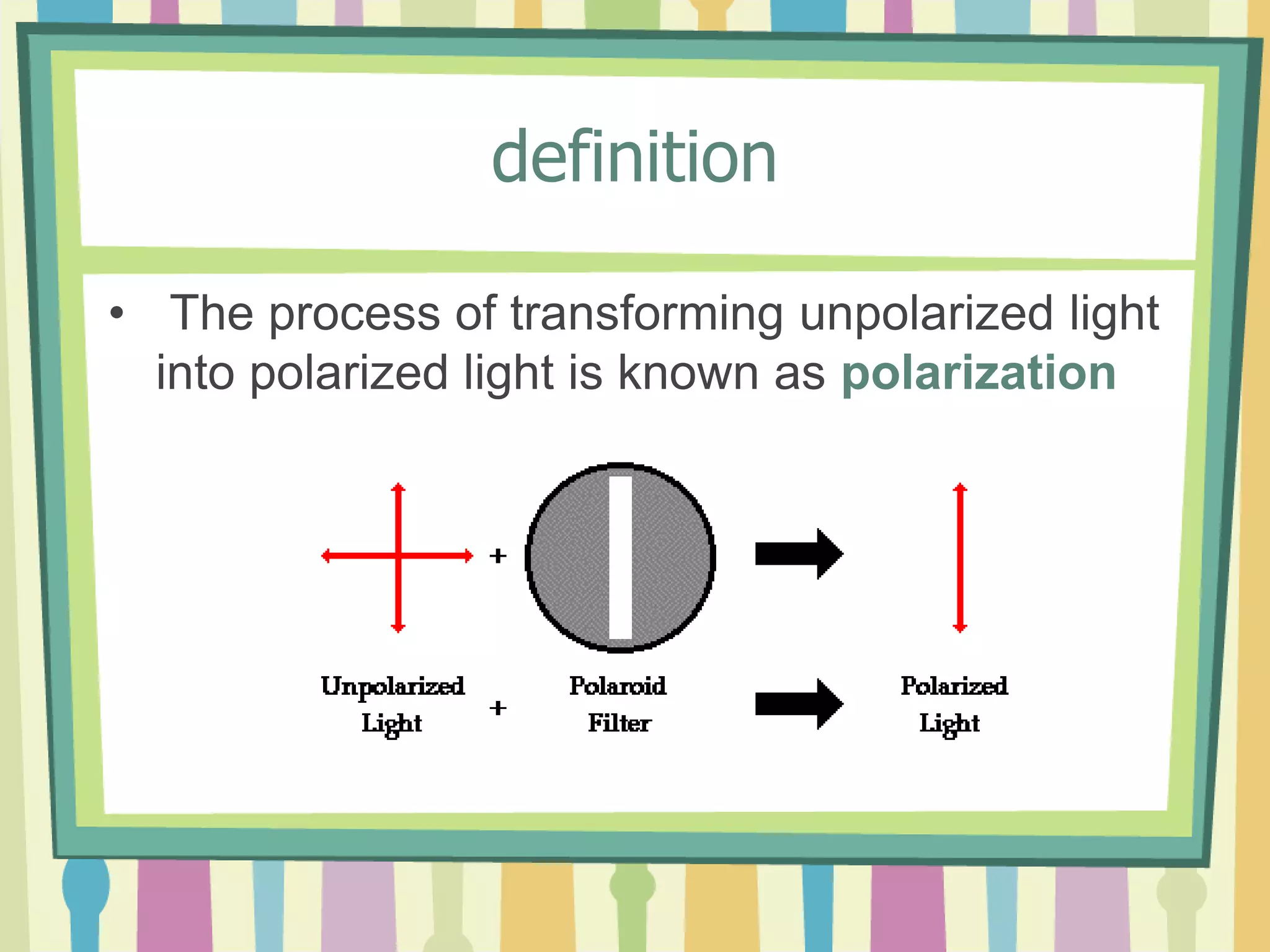
definition
• The process of transforming unpolarized light
into polarized light is known as polarization
Methods of polarizing light
• Polarization by Transmission
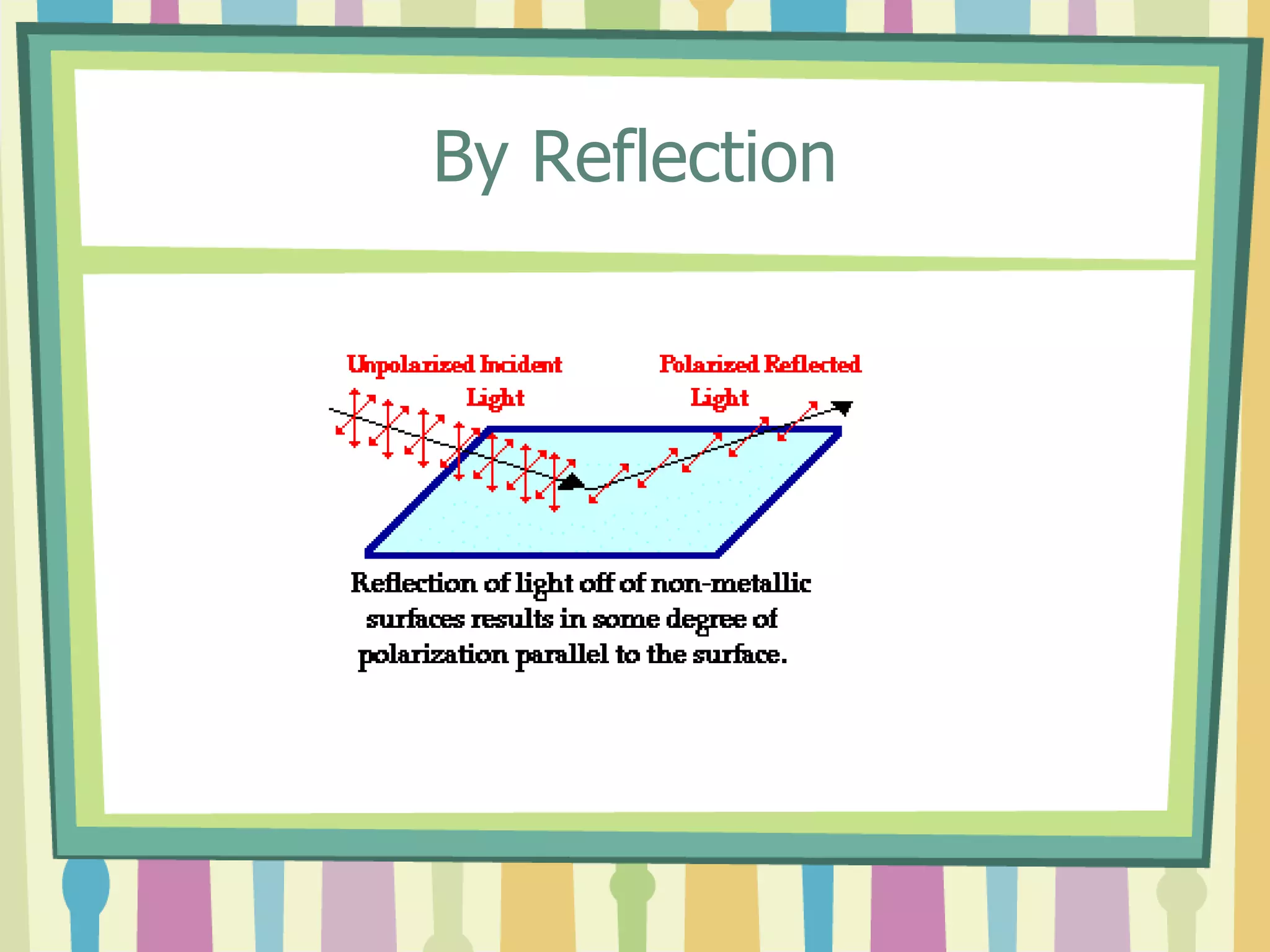
• Polarization by Reflection
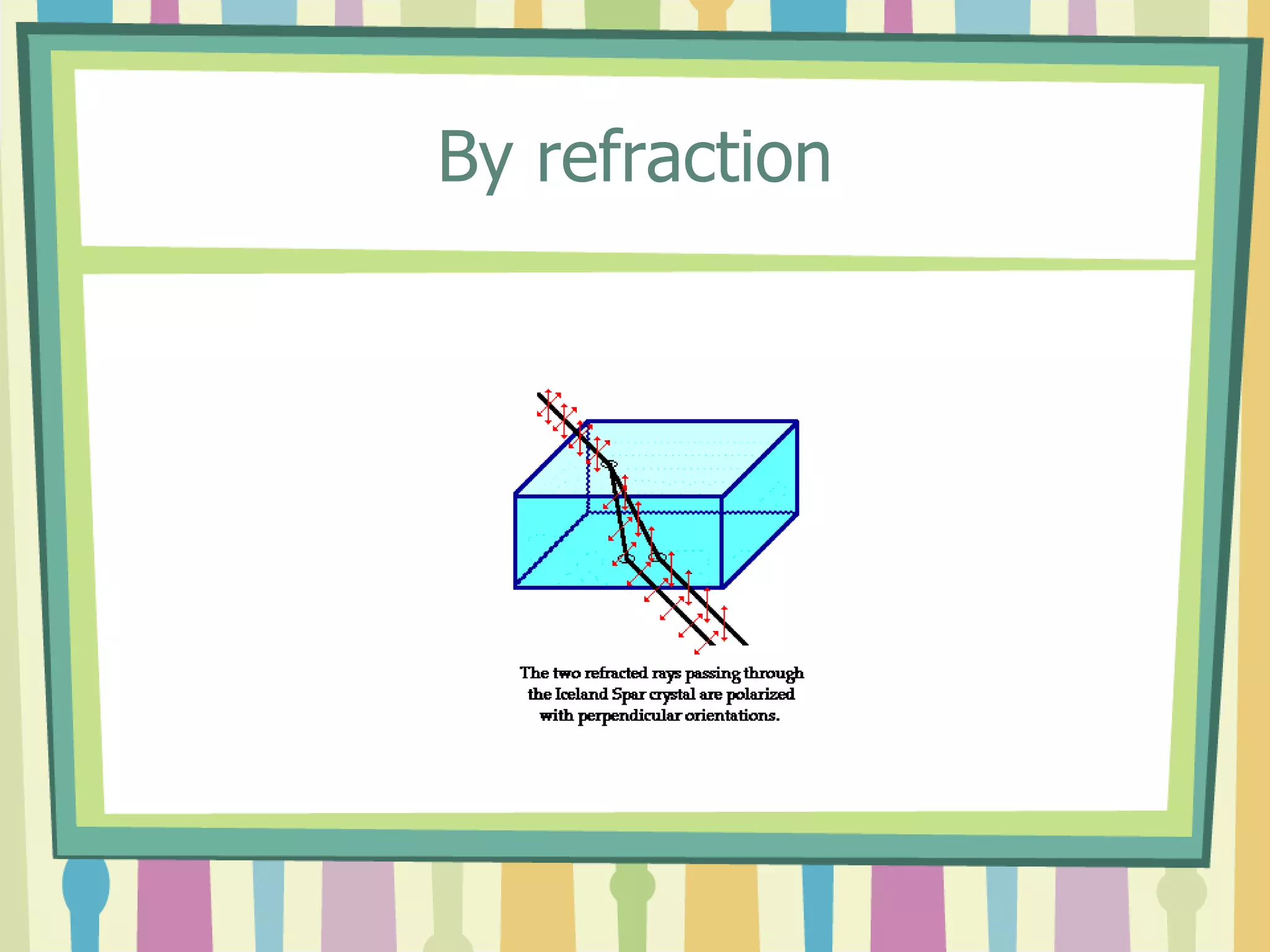
• Polarization by Refraction
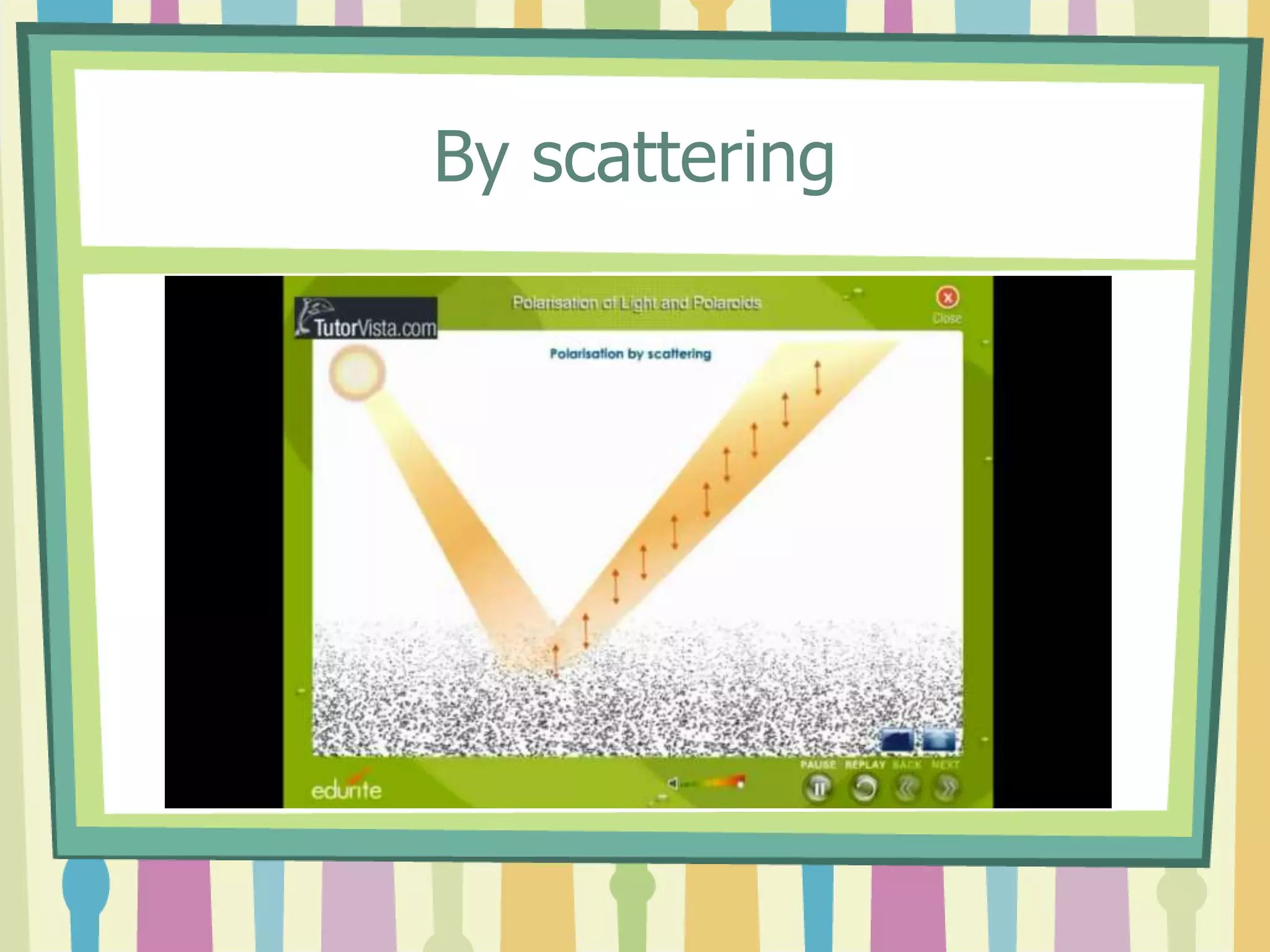
• Polarization by Scattering
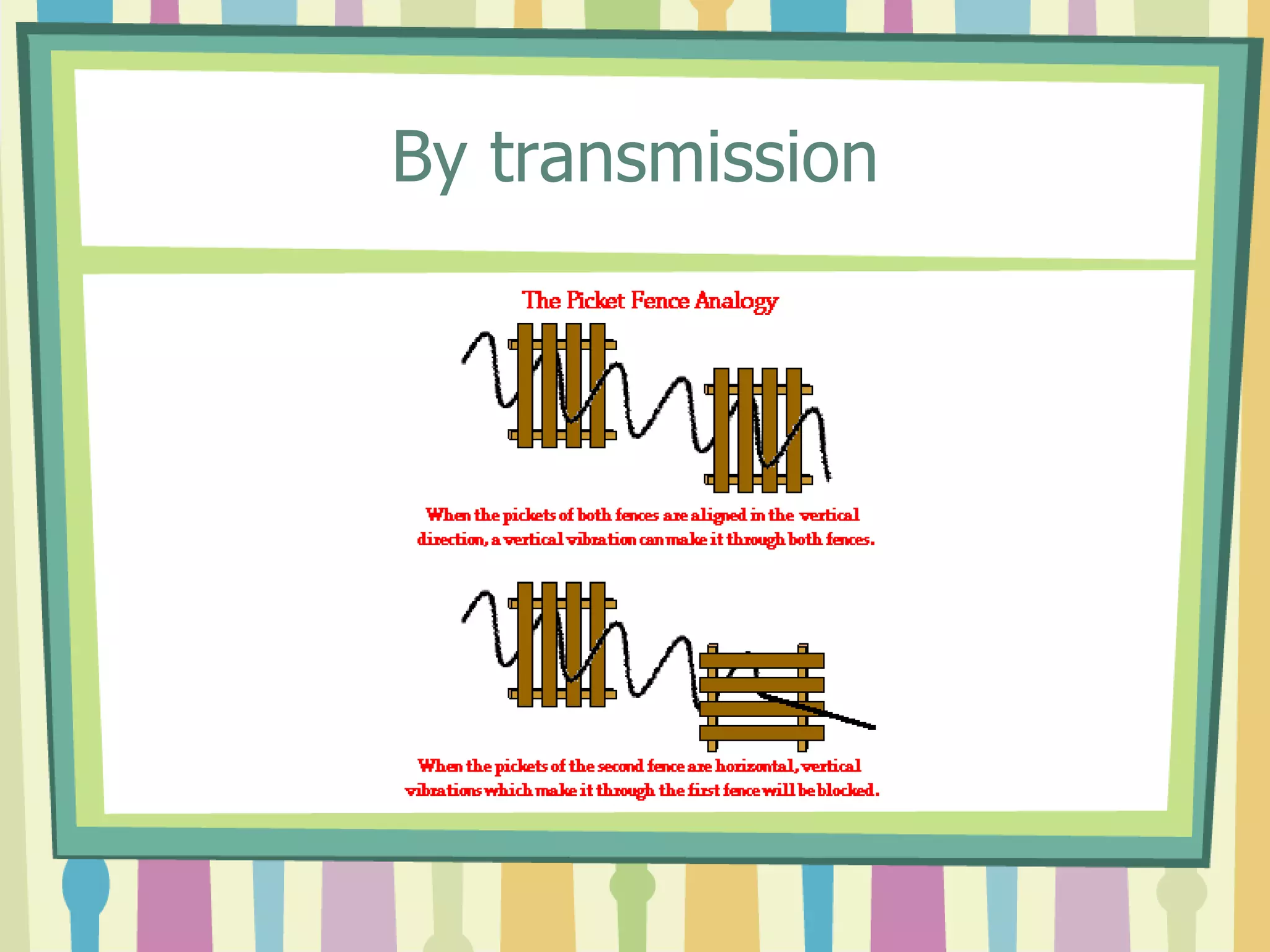
By transmission
By Reflection
By refraction
By scattering
Applications of polarized light
• Polaroids are used in sun glasses. They reduce the intensity and the
glare by cutting down the horizontally polarized light.
• Polarized light is used in photo elastic stress analysis.
• For 3-D view, special type of glasses, which have polaroids with
perpendicular axes, are used.
• Polarized light is useful to determine size and shape of viruses.
• This polarized light finds many practical applications in industry and
engineering science.
Application of polarisation
Uses of polaroids
• These reduce excess glare and hence sun glasses are fitted with
Polaroid sheets.
• These are also used to reduce headlight glare of cars.
• They are used to improve color contrast in old oil paintings.
• These are useful in 3-D motion pictures i.e., holography.
• Wind shields of automobiles are also made of Polaroid sheets.

Polarization

  • 1.
    POLARIZATION Prepared by:  NURAZRINA BT ZAINI  NUR HAZIRAH BT AZHARI
  • 2.
    Introduction of polarisation •Understanding polarization and how to measure a change in its state is important in many applications. • Polarizers can be used to measure changes in magnetic fields, temperature, molecular structure, chemical interactions, and acoustic vibrations. • Polarizers can be utilized in imaging applications to reduce glare and hot spots, enhance contrast, and perform stress evaluation.
  • 3.
  • 4.
    definition • The processof transforming unpolarized light into polarized light is known as polarization
  • 5.
    Methods of polarizinglight • Polarization by Transmission • Polarization by Reflection • Polarization by Refraction • Polarization by Scattering
  • 6.
  • 7.
  • 8.
  • 9.
  • 10.
    Applications of polarizedlight • Polaroids are used in sun glasses. They reduce the intensity and the glare by cutting down the horizontally polarized light. • Polarized light is used in photo elastic stress analysis. • For 3-D view, special type of glasses, which have polaroids with perpendicular axes, are used. • Polarized light is useful to determine size and shape of viruses. • This polarized light finds many practical applications in industry and engineering science.
  • 11.
  • 12.
    Uses of polaroids •These reduce excess glare and hence sun glasses are fitted with Polaroid sheets. • These are also used to reduce headlight glare of cars. • They are used to improve color contrast in old oil paintings. • These are useful in 3-D motion pictures i.e., holography. • Wind shields of automobiles are also made of Polaroid sheets.