Polarization Photography
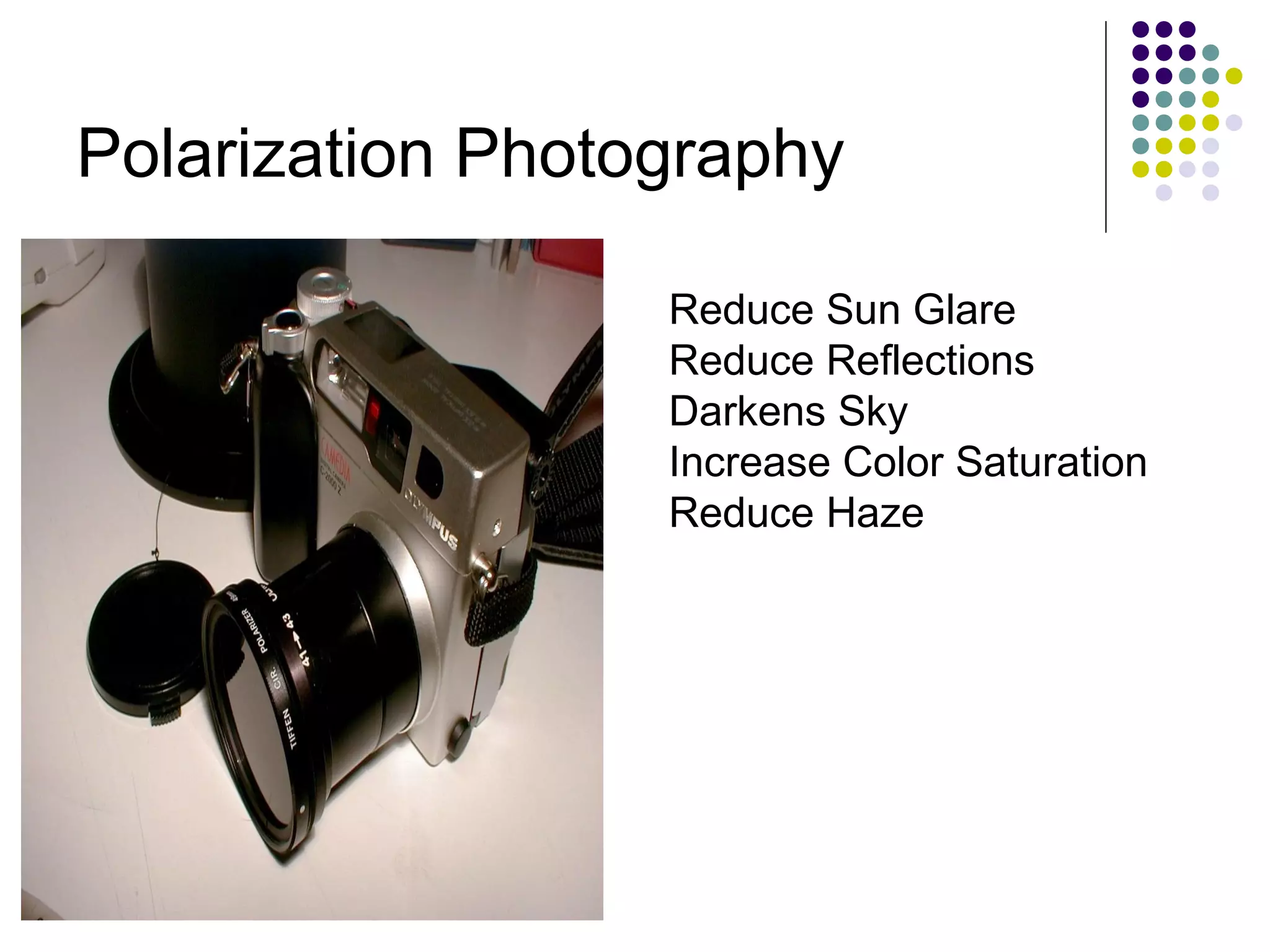
Reduce Sun Glare
Reduce Reflections
Darkens Sky
Increase Color Saturation
Reduce Haze
Polarization Photography


Polarizing filters are used in photography and in
certain kinds of sunglasses. But polarization is also
used in digital watches and laptop screens. In this
unit we will learn what polarization is and how
polarizing filters can do amazing things with light.



Polarization is everywhere in daily life. It is an
important principle enabling many familiar things to
work the way they do, from sunglasses to digital
watches and laptop screens.
Polarization Photography

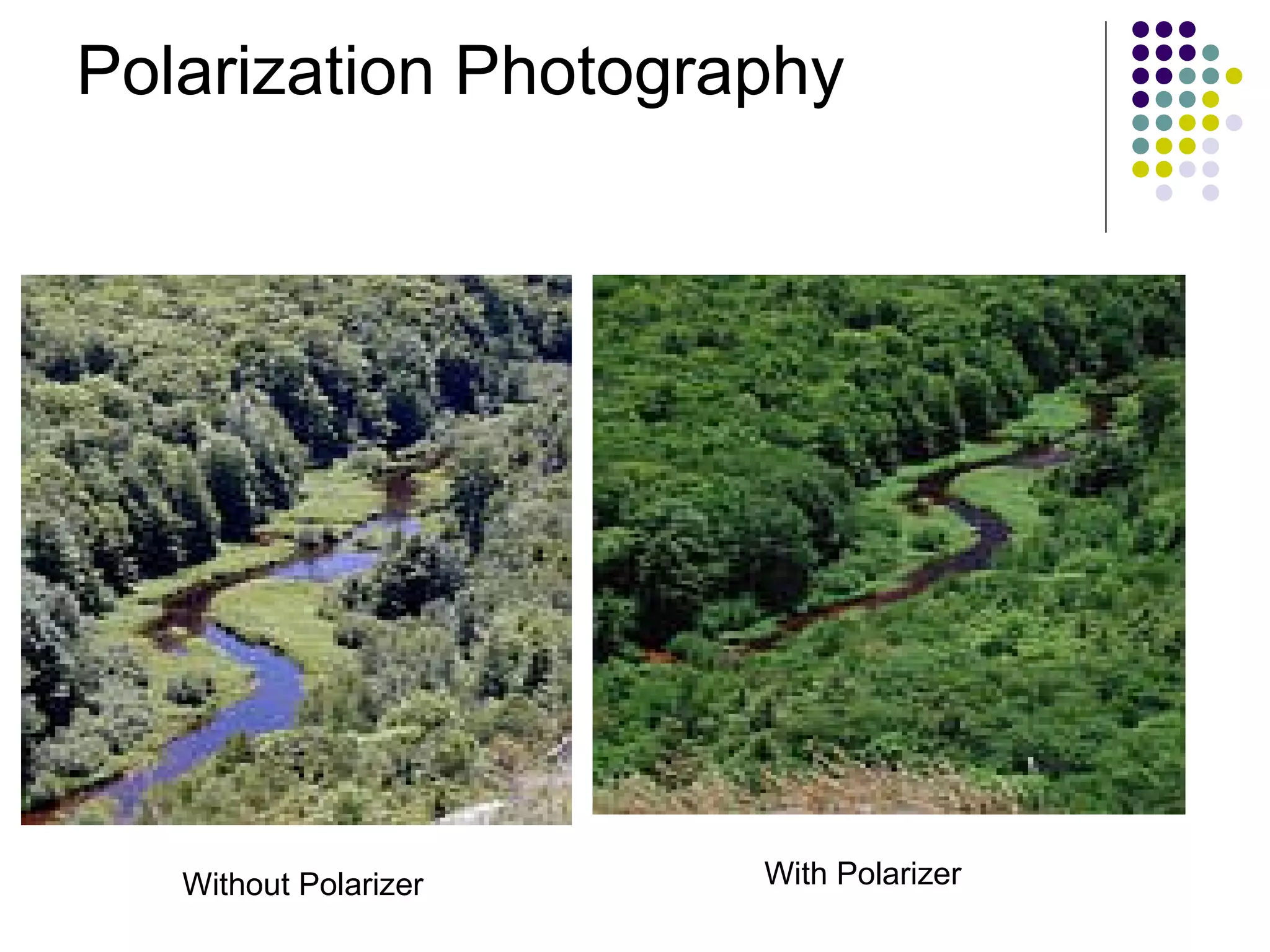
Without Polarizer
Provides better Color Saturation


Darkens the sky

With Polarizer
Polarization Photography

Without Polarizer

With Polarizer
Polarization Photography : Scattering

Haze

De-hazed
Polarization Photography :
Reflections

Reduce Reflections
Polarization Photography :
Underwater
Underwater pipelines and
communication
Offshore structures
Recreational photography

Underwater ROV/AOV
Light as Plane Waves
Sinusoidal plane waves very
good approximation.



Very useful for characterizing
polarization.



I max

I min
θmax

180 o



Polarized Wave: Has only one preferred orientation.



Un-polarized Wave: Has no preferred orientation
or has all orientations.
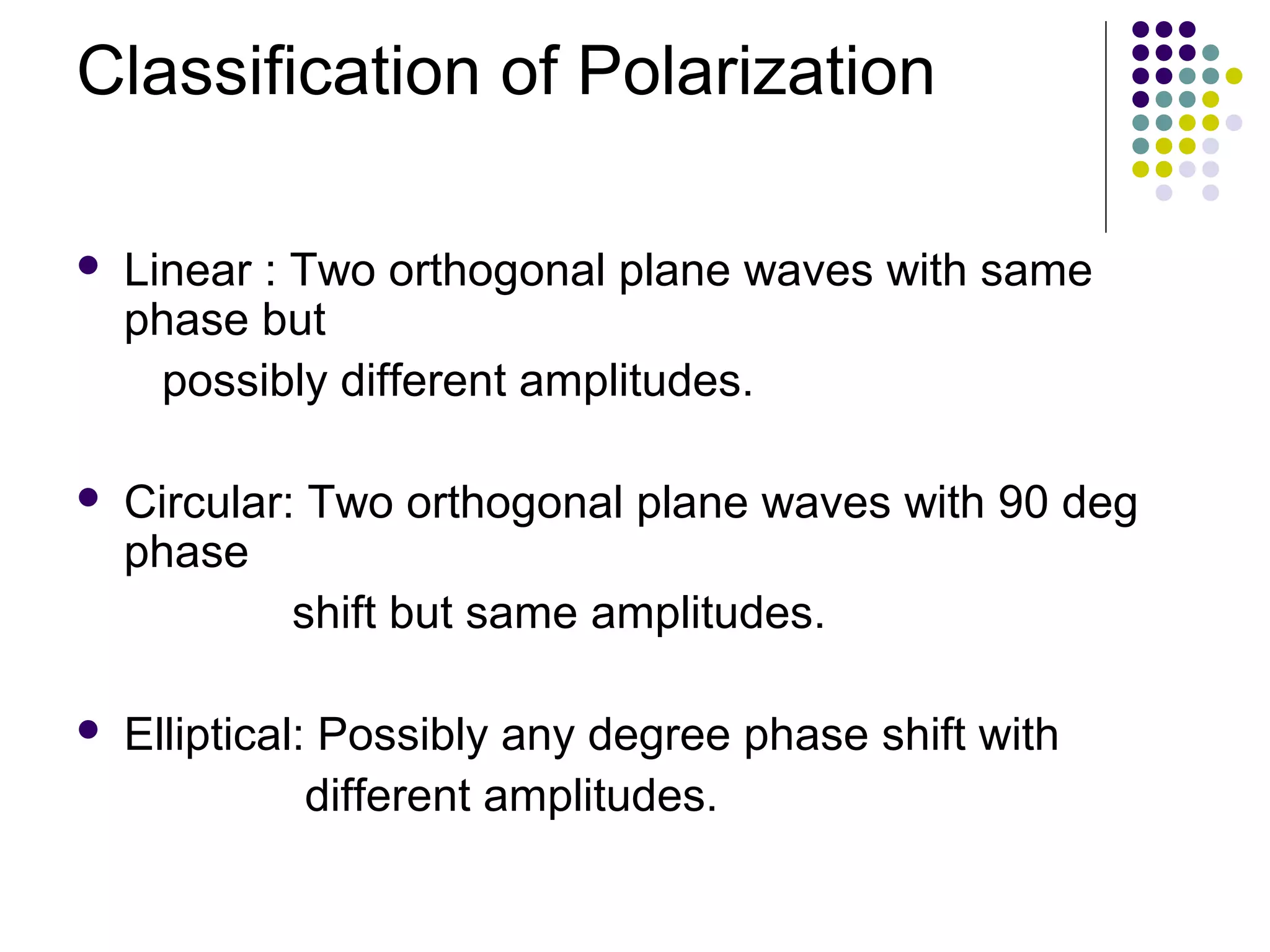
Classification of Polarization


Linear : Two orthogonal plane waves with same
phase but
possibly different amplitudes.



Circular: Two orthogonal plane waves with 90 deg
phase
shift but same amplitudes.



Elliptical: Possibly any degree phase shift with
different amplitudes.
Linear Polarization
Circular Polarization
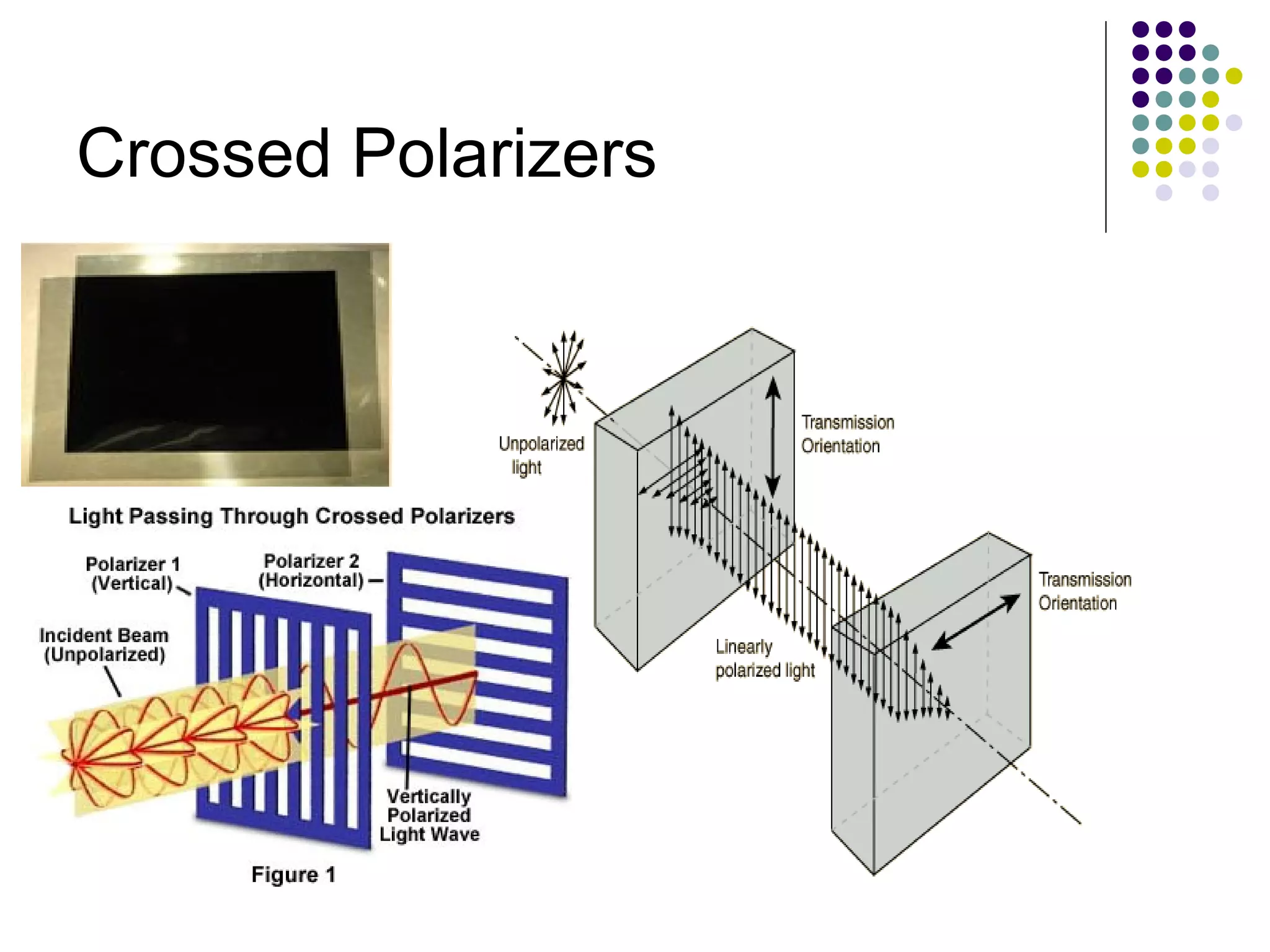
Crossed Polarizers
Elliptical Polarization
Polarized Sunglasses

Reduce glare off the roads while driving
Thank

you

Polarization photography