322
Infection imaging has long been an important area for
nuclear scintigraphy. Gallium-67 citrate was the first
clinical infection-seeking radiopharmaceutical and is
still used today, although in a more limited role. Radiola-
beled leukocytes (white blood cells [WBCs]) are usually
the preferred radiopharmaceutical. Fluorine-18 fluorode-
oxyglucose (FDG) is increasingly used (Box 14-1). New
radiopharmaceuticals with various mechanisms of uptake
are under active investigation.
PATHOPHYSIOLOGY OF INFLAMMATION
AND INFECTION
Inflammation is a tissue response to injury that attracts cells
of the immune system, specialized serum proteins, and
chemical mediators to the site of damage. Infection implies
the presence of microorganisms. Although infection is usu-
ally associated with inflammation, the reverse is not always
true. The inflammatory reaction is triggered by the prod-
ucts of tissue injury. which may result from trauma, foreign
particles, ischemia, and neoplasm. Infection without inflam-
mation occurs in severely immunosuppressed patients.
The inflammatory response is associated with increased
blood flow, increased vascular permeability, and emigra-
tion of leukocytes out of blood vessels into the tissues
(chemotaxis). Plasma carries proteins, antibodies, and
chemical mediators that modulate the inflammatory
response to the site of infection (Fig. 14-1).
RADIOPHARMACEUTICALS
Gallium-67 Citrate
The radiopharmaceutical Ga-67 citrate was originally
developed as a bone-seeking radiopharmaceutical, used
initially as a tumor-imaging agent and subsequently for its
infection-seeking properties.
Gallium is a group III element in the Periodic Table of the
Elements (Fig. 1-1) with atomic structure and biological
behavior similar to those of iron. The radionuclide Ga-67 is
produced by cyclotron. It decays by electron capture, emits
a spectrum of gamma rays (93, 185, 288, 394 keV), and has a
physical half-life of 78 hours (Table 14-1). With each decay,
it emits four photopeaks ranging from 93 to 394 keV, all
with low abundance (% likelihood of emission with each
decay) (Table 14-1). The lower-energy photons cause
considerable scatter; the higher-energy photons are difficult
to collimate and not efficiently detected by the thin crystal
(three-eighth inch) of present-day gamma cameras.
Mechanism of Uptake, Pharmacokinetics,
and Distribution
After intravenous injection, Ga-67 citrate circulates in
plasma bound to transferrin. The complex is transported
to the inflammatory site by locally increased blood flow
and vascular permeability (Table 14-2). Its ferric ion–like
properties allow it to bind to lactoferrin released from
dying leukocytes (higher binding affinity than to transfer-
rin) and bacterial siderophores.
Ga-67 clears slowly from the blood pool. By 48 hours after
injection, 10% is still bound to plasma proteins and total
body clearance is slow (biological half-life of 25 days). Bind-
ing at the site of infection occurs by 12 to 24 hours. Excretion
is primarily via the kidneys the first 24 hours. Subsequently,
the colon becomes the major route of excretion.
Ga-67 has widespread organ uptake and soft tissue dis-
tribution (Table 14-3). Greatest uptake is seen in the liver,
followed by bone and bone marrow and spleen (Fig. 14-2).
Renal clearance is seen during the initial 24 hours. By 48
hours, the kidneys are only faintly seen.
Sites of variable uptake include the nasopharynx, lacri-
mal and salivary glands, and breast (Fig. 14-2); all elabo-
rate lactoferrin. Inflammatory or stimulatory processes
increase lactoferrin production and uptake, thus increased
uptake occurs in the salivary glands in Sjögren’s syndrome,
in lacrimal glands in sarcoidosis, and breast during lacta-
tion. Breast uptake varies according to the menstrual cycle
phase and is seen prominently postpartum. Thymic
uptake is normal in children.
Postoperative sites may have increased Ga-67 uptake for
2 to 3 weeks. Uptake occurs at healing fractures (Fig. 14-3)
and in sterile abscesses associated with frequent intramus-
cular injections (e.g., insulin or iron-depot injections). Sali-
vary gland uptake is increased after local external beam
irradiation or chemotherapy. Normal distribution is altered
by whole-body irradiation, multiple blood transfusions
(excess ferric ions), or recent gadolinium MRI (Fig. 14-4).
Methodology
An imaging protocol for Ga-67 is described in Box 14-2.
Bowel preparation with laxatives and enemas to facilitate
more rapid clearance is no longer recommended because it
is not usually effective and may cause mucosal irritation
and inflammation, producing increased Ga-67 uptake.
Chapter 14
Infection and Inflammation 
	Box 14-1.  Radiopharmaceuticals for Infection
Imaging Approved for Clinical Use
Ga-67 citrate
In-111 oxine–labeled leukocytes
Tc-99m HMPAO–labeled leukocytes
F-18 FDG
Tc-99m fanolesomab (NeutroSpec) (FDA approved,
then withdrawn from U.S. market)
Tc-99m sulesomab (LeuTech) (approved and used in
Europe)
FDA, U.S. Food and Drug Administration; FDG, fluorodeoxyglucose; HMPAO,
hexamethylpropyleneamine oxime.
Infection and Inflammation  323
Figure 14-1.  Pathophysiology of inflammation. This diagram illustrates the body’s response to tissue injury and infection. Permeability of the vascular
endothelium plays a central role in allowing blood cells and serum components access to the tissues. Antibodies and lymphocytes amplify or focus these
primary mechanisms. If inflammation persists beyond a few days, macrophages and lymphocytes play an increasing role. CRP, chronic reactive protein;
IFNγ, interferon gamma; IL, interleukin; LT, leukotriene; MONO, monocyte; PG, prostaglandin; PMN, polymorphonuclear neutrophil; T, t-lymphocyte;
TNF, tumor necrosis factor. (Modified from Playfair JHL and Chaim BM. Immunology at a Glance. 7th ed. Malden, MA: Blackwell Publishing; 2001.)
Table 14-1  Physical Characteristics of Gallium-67,
Indium-111, and Technetium-99m
Radionuclide
Half-life
(hr)
Photopeak
(keV)
Relative
abundance of
photons (%)
Ga-67 78 93 41
185 23
288 18
394 4
In-111 67 173 89
247 94
Tc-99m 6 140 89
Table 14-2  Mechanisms of Localization of Infection-Seeking
Radiopharmaceuticals
Radiopharmaceutical Mechanism
Ga-67 citrate
Radiolabeled leukocytes
Binds to lactoferrin and bacterial
siderophores
Diapedesis and chemotaxis
Antigranulocyte monoclonal
antibodies
Antibody-antigen binding to
activated leukocytes
Chemotactic peptides Binding to activated leukocytes
Tc-99m ciprofloxacin Binds to living bacteria
Table 14-3  Normal Distribution of Radiopharmaceuticals Used for Infection Imaging
Radiopharmaceutical Liver Spleen Marrow Bone Gastrointestinal Genitourinary Lung
Ga-67 citrate *** * * * *** *
In-111 oxine–labeled leukocytes ** *** ** *
Tc-99m HMPAO–labeled leukocytes ** *** ** ** ** *
HMPAO, Hexamethylpropyleneamine oxime.
324  Nuclear Medicine: The Requisites
A medium-energy collimator is indicated. Only the three
lower photopeaks (93, 185, 300 keV) are acquired for imag-
ing. The usual administered adult dose is 5 mCi (185 MBq).
Although 24-hour images may be diagnostic, whole-body
imaging at 48 hours is standard. This ensures adequate back-
ground clearance and a good target-to-background ratio.
Spot images, single-photon emission computed tomography
(SPECT) or SPECT/CT are frequently obtained.
Dosimetry
The highest radiation absorbed dose from Ga-67 is to the
large intestine, 3.7 rads/5 mCi (3.7 cGy/185 MBq), fol-
lowed by the bone marrow, 3.5 rads/cGy. Whole-body
effective dose is 1.9 rads/5 mCi (1.9 cGy/185 MBq) (Table
14-4). Radiolabeled leukocytes have now been used for
more than three decades for detection of infection and
inflammation. Both indium-111 oxine and technetium-
99m hexamethylpropyleneamine oxime (HMPAO)
labeled WBCs are used clinically. Each has advantages and
disadvantages.
Leukocyte Physiology
Leukocytes are the major cellular components of the
inflammatory and immune response that protect against
infection and neoplasia and assist in the repair of damaged
tissue. Nucleated precursor cells differentiate into mature
cells within the bone marrow.
Peripheral leukocytes include granulocytes (neutro-
phils, 55%-65%; eosinophils, 3%; and basophils, 0.5%),
lymphocytes (25%-35%), and monocytes (3%-7%). At any
one time, only 2% to 3% of neutrophils reside in the circu-
lating blood, using it mainly for transportation to sites of
need. The rest are distributed in a “marginated” pool that
is adherent to vascular endothelial cells in tissues: 90% are
in the bone marrow, the rest are in the spleen, liver, lung,
and, to a lesser extent, the gastrointestinal tract and oro-
pharynx. These marginated cells can be marshaled into
the circulating pool by various stimuli, including exercise,
epinephrine, or bacterial endotoxins.
Neutrophils circulate in the peripheral blood for 5 to 9
hours. They respond to an acute inflammatory stimulus by
migrating toward an attractant (chemotaxis) and enter tis-
sues between postcapillary endothelial cells (diapedesis)
(Fig. 14-1). They phagocytize the infectious agent or for-
eign body and enzymatically destroy it within cytoplasmic
vacuoles. This process is inhibited by exposure to cortico-
steroids and ethanol. Leukocytes survive in tissues for
only 2 to 3 days.
Lymphocytes arrive at inflammatory sites during the
chronic phase. Monocytes act as tissue scavengers, phago-
cytosing damaged cells and bacteria and detoxifying
chemicals and toxins. At sites of inflammation, monocytes
transform into tissue macrophages.
Indium-111 Oxine Leukocytes
Since the early 1980s, mixed leukocytes have been radio-
labeled with In-111 8-hydroxyquinoline (oxine) and used
clinically to detect infection and inflammation.
Indium is a group III element in the Periodic Table
of the Elements (Fig. 1-1). It decays by electron cap-
ture, emits two gamma photons of 173 and 247 keV
(Table 14-1), and has a physical half-life of 67 hours
(2.8 days). The radionuclide In-111 is cyclotron pro-
duced and thus must be ordered the day before cell
Figure 14-2.  Normal Ga-67 distribution. Considerable
soft tissue and breast distribution are seen. Prominent lac-
rimal uptake is noted bilaterally. Highest organ uptake is
seen in the liver, followed by bone and bone marrow.
Lesser uptake is seen in the spleen, scrotum, and naso-
pharyngeal region. Some large intestinal clearance is
noted.
Infection and Inflammation  325
labeling. Oxine is a lipid-soluble complex that chelates
metal ions (e.g., indium).
Adequate radiolabeling and imaging requires more than
5000/mm3 peripheral leukocytes, although it can some-
times be performed with counts as low as 3000/mm3.
Radiolabeling must be performed under a laminar flow
hood. The in vitro labeling procedure requires a minimum
of 2 hours. Lacking facilities and trained personnel to
radiolabel the cells, many hospitals send the patient’s
blood to an outside commercial radiopharmacy. Thus it
takes 3 to 4 hours before the cells are returned and
reinfused.
Fifty milliliters of venous blood ensures sufficient num-
bers of radiolabeled leukocytes for adequate labeling;
however, 20 to 30 mL is sometimes acceptable for chil-
dren. Careful handling is required to avoid damaging the
cells, which could adversely affect their migration and via-
bility. Proper labeling does not affect normal physiological
Figure 14-3.  Ga-67 citrate uptake with fractures. Patient was in acci-
dent 2 weeks earlier causing extensive trauma. Scan requested for post-
operative fever and concern for possible infection in known fractured L-3
vertebral body. Note very mild uptake in L-3, thought not to be infected,
but prominent uptake in known right femur fracture.
Figure 14-4.  Abnormal Ga-67 distribution. This patient received che-
motherapy the day before administration. No uptake is seen in the liver,
the organ normally having greatest Ga-67 uptake, nor the spleen. This
has also been reported in patients with multiple blood transfusions or
recent gadolinium contrast administration with MRI.
	Box 14-2.  Gallium-67 Citrate Imaging: Summary
Protocol
PATIENT PREPARATION
No recent barium contrast studies
RADIOPHARMACEUTICAL
Ga-67 citrate 5 mCi (185 MBq) injected intrave-
nously
INSTRUMENTATION
Gamma camera: Large field of view
Photopeak: 20% window over 93-keV, 185-keV, and
300-keV photopeaks
Collimator: Medium energy
IMAGING PROCEDURE
48-hour images: Whole body anterior and imaging,
including head and extremities
High count spot images (e.g., laterals, obliques, etc.)
SPECT or SPECT/CT of the head and neck, chest,
abdomen, or pelvis, as indicated
SPECT, Single-photon emission computed tomography.
326  Nuclear Medicine: The Requisites
function. The radiolabel usually remains stable in vivo for
more than 24 hours.
Details of the radiolabeling process are detailed
(Box 14-3). The patient’s blood is drawn, it is allowed to
settle, and then the majority of the erythrocytes removed.
In-111 oxine labels granulocytes, lymphocytes, mono-
cytes, platelets, and erythrocytes.
Radiolabeling cannot be performed in plasma. It must
be separated and retained for later resuspension with the
WBCs before reinfusion. The leukocyte pellet is sus-
pended in saline and incubated with In-111 oxine. The
lipid solubility of the In-111 oxine complex allows it to dif-
fuse through cell membranes. Intracellularly, the complex
dissociates, oxine diffuses back out of the cell, and In-111
binds to nuclear and cytoplasmic proteins.
Pure granulocyte preparations have been radiolabeled
and used clinically. However, they require elaborate den-
sity gradient separation techniques and have not shown a
clinical advantage over mixed leukocytes and thus are not
generally used.
Standard quality control measures, such as testing for ste-
rility and pyrogenicity, cannot be performed because of the
need for prompt reinfusion after labeling to ensure cell via-
bility. However, the final radiopharmaceutical preparation
is routinely examined for abnormal morphology, clumping,
excessive red cell contamination, and percent labeling effi-
ciency, which typically ranges from 75% to 90% (Box 14-2).
When labeling is less than 50%, the cells should not be rein-
fused. The final preparation contains radiolabeled granulo-
cytes, lymphocytes, and monocytes, but there will also be
10% to 20% platelets and erythrocytes.
After infusion of the radiolabeled leukocytes, no signifi-
cant elution of the In-111 from the leukocytes occurs. The
effective half-life of clearance from the blood circulation is
7.5 hours. Initial distribution after reinfusion is to the blood
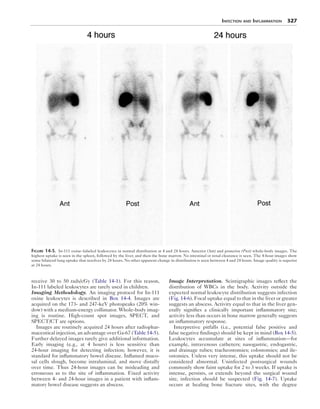
pool, lungs, liver, and spleen. Early lung uptake is the
result of cellular activation from in vitro cell manipulation.
By 4 hours after reinjection, lung and blood pool activity
decrease, although not always completely (Fig. 14-5).
By 24 hours, blood-pool activity is normally no longer
present. Persistent blood pool at 24 hours suggests a high
percentage of labeled erythrocytes or platelets. The highest
uptake is in the spleen, followed by liver and then bone
marrow (Fig. 14-5). Neither genitourinary, hepatobiliary, nor
intestinal clearance is normally seen (Table 14-3).
The ultimate test of viability of leukocytes is in  vivo
function manifested by a normal distribution within the
body and the ability to detect infection. If the infused leu-
kocytes become nonviable, increased liver and lung uptake
may be seen on scintigraphy. With excessive erythrocyte
and platelet labeling, blood pool is prominent.
Radiation Dosimetry
The adult spleen receives 15 to 20 rads/500 μCi (15-20
cGy/18.5 MBq); however, in small children the spleen may
	Box 14-3.  Radiolabeling Autologous Leukocytes
with Indium-111 Oxine
PREPARATION
Patient’s peripheral leukocyte count should be
greater than 5000 cells/mm3.
PROCEDURE
	 1.	Collect autologous blood
Draw 30 to 50 mL into an ACD anticoagulated
syringe using a 19-gauge needle.
	 2.	Isolate leukocytes:
Separate red blood cells (RBCs) by gravity
sedimentation and 6% hetastarch, a settling
agent.
Centrifuge the leukocyte-rich plasma at 300 to
350 g for 5 minutes to remove platelets and
proteins.
A white blood cell (WBC) button forms at the
bottom of the tube.
Draw off and save the leukocyte-poor plasma
(LRP) for later washing and resuspension.
	 3.	Label leukocytes
Suspend WBCs (LRP) in saline (includes
neutrophils, lymphocytes, monocytes, some
RBCs).
Incubate with In-111 oxine for 30 minutes at
room temperature and gently agitate.
Remove unbound In-111 by centrifugation. Save
wash for calculation of labeling efficiency.
	 4.	Prepare injectate
Resuspend 500 μmCi In-111–labeled leuko-
cytes in saved plasma (LPP).
Inject via peripheral vein within 2 to 4 hours.
	 5.	Perform quality control
Microscopic examination of cells.
Calculate labeling efficiency:
Assay the cells and wash in dose calibrator.
Labeling efficiency = C/([C+ W] × 100%)
where C is activity associated with the cells
and W is activity associated with the wash.
Table 14-4  Radiation Dosimetry for Gallium-67
Citrate, Indium-111 Oxine, and Technetium-99m  
HMPAO Leukocytes
Organ
Ga-67 citrate
rads/5 mCi
(cGy/185
MBq)
In-111 oxine
WBCs rads/500
μCi (cGy/18.5
MBq)
Tc-99m
HMPAO WBCs
rads/10 mCi
(cGy/370 MBq)
Bladder wall 2.8
Large
intestine
3.7 3.6
Liver 2.2 2.66 1.5
Bone marrow 3.5 1.99 1.6
Spleen 1.8 20.00 2.2
Ovaries 1.5 0.20 0.3
Testes 1.0 0.014 1.9
Total body
Effective
dose
2.2
1.9
0.37
0.7
0.3
0.4
HMPAO, Hexamethylpropyleneamine oxime; WBCs, white blood cells.
Target organ dose is in bold.
Infection and Inflammation  327
receive 30 to 50 rads/cGy (Table 14-1). For this reason,
In-111 labeled leukocytes are rarely used in children.
Imaging Methodology.  An imaging protocol for In-111
oxine leukocytes is described in Box 14-4. Images are
acquired on the 173- and 247-keV photopeaks (20% win-
dow) with a medium-energy collimator. Whole-body imag-
ing is routine. High-count spot images, SPECT, and
SPECT/CT are options.
Images are routinely acquired 24 hours after radiophar-
maceutical injection, an advantage over Ga-67 (Table 14-5).
Further delayed images rarely give additional information.
Early imaging (e.g., at 4 hours) is less sensitive than
24-hour imaging for detecting infection; however, it is
standard for inflammatory bowel disease. Inflamed muco-
sal cells slough, become intraluminal, and move distally
over time. Thus 24-hour images can be misleading and
erroneous as to the site of inflammation. Fixed activity
between 4- and 24-hour images in a patient with inflam-
matory bowel disease suggests an abscess.
Image Interpretation.  Scintigraphic images reflect the
distribution of WBCs in the body. Activity outside the
expected normal leukocyte distribution suggests infection
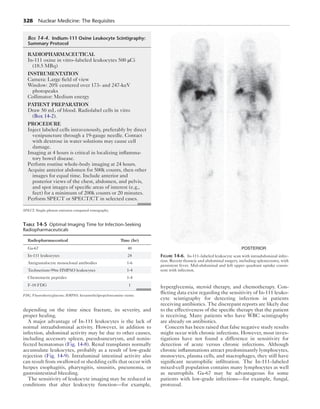
(Fig. 14-6). Focal uptake equal to that in the liver or greater
suggests an abscess. Activity equal to that in the liver gen-
erally signifies a clinically important inflammatory site;
activity less than occurs in bone marrow generally suggests
an inflammatory response.
Interpretive pitfalls (i.e., potential false positive and
false negative findings) should be kept in mind (Box 14-5).
Leukocytes accumulate at sites of inflammation—for
example, intravenous catheters; nasogastric, endogastric,
and drainage tubes; tracheostomies; colostomies; and ile-
ostomies. Unless very intense, this uptake should not be
considered abnormal. Uninfected postsurgical wounds
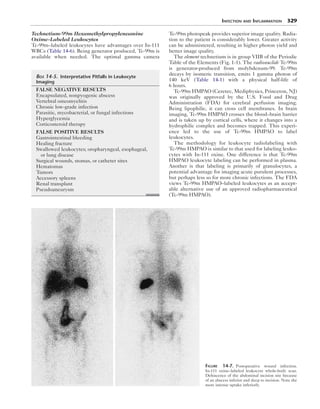
commonly show faint uptake for 2 to 3 weeks. If uptake is
intense, persists, or extends beyond the surgical wound
site, infection should be suspected (Fig. 14-7). Uptake
occurs at healing bone fracture sites, with the degree
Figure 14-5.  In-111 oxine–labeled leukocytes in normal distribution at 4 and 24 hours. Anterior (Ant) and posterior (Post) whole-body images. The
highest uptake is seen in the spleen, followed by the liver, and then the bone marrow. No intestinal or renal clearance is seen. The 4-hour images show
some bilateral lung uptake that resolves by 24 hours. No other apparent change in distribution is seen between 4 and 24 hours. Image quality is superior
at 24 hours.
328  Nuclear Medicine: The Requisites
depending on the time since fracture, its severity, and
proper healing.
A major advantage of In-111 leukocytes is the lack of
normal intraabdominal activity. However, in addition to
infection, abdominal activity may be due to other causes,
including accessory spleen, pseudoaneurysm, and nonin-
fected hematomas (Fig. 14-8). Renal transplants normally
accumulate leukocytes, probably as a result of low-grade
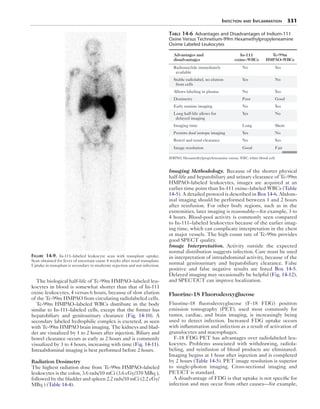
rejection (Fig. 14-9). Intraluminal intestinal activity also
can result from swallowed or shedding cells that occur with
herpes esophagitis, pharyngitis, sinusitis, pneumonia, or
gastrointestinal bleeding.
The sensitivity of leukocyte imaging may be reduced in
conditions that alter leukocyte function—for example,
hyperglycemia, steroid therapy, and chemotherapy. Con-
flicting data exist regarding the sensitivity of In-111 leuko-
cyte scintigraphy for detecting infection in patients
receiving antibiotics. The discrepant reports are likely due
to the effectiveness of the specific therapy that the patient
is receiving. Many patients who have WBC scintigraphy
are already on antibiotics.
Concern has been raised that false negative study results
might occur with chronic infections. However, most inves-
tigations have not found a difference in sensitivity for
detection of acute versus chronic infections. Although
chronic inflammations attract predominantly lymphocytes,
monocytes, plasma cells, and macrophages, they still have
significant neutrophilic infiltration. The In-111–labeled
mixed-cell population contains many lymphocytes as well
as neutrophils. Ga-67 may be advantageous for some
patients with low-grade infections—for example, fungal,
protozoal.
	Box 14-4.  Indium-111 Oxine Leukocyte Scintigraphy:
Summary Protocol
RADIOPHARMACEUTICAL
In-111 oxine in vitro–labeled leukocytes 500 μCi
(18.5 MBq)
INSTRUMENTATION
Camera: Large field of view
Window: 20% centered over 173- and 247-keV
photopeaks
Collimator: Medium energy
PATIENT PREPARATION
Draw 50 mL of blood. Radiolabel cells in vitro
(Box 14-2).
PROCEDURE
Inject labeled cells intravenously, preferably by direct
venipuncture through a 19-gauge needle. Contact
with dextrose in water solutions may cause cell
damage.
Imaging at 4 hours is critical in localizing inflamma-
tory bowel disease.
Perform routine whole-body imaging at 24 hours.
Acquire anterior abdomen for 500k counts, then other
images for equal time. Include anterior and
posterior views of the chest, abdomen, and pelvis,
and spot images of specific areas of interest (e.g.,
feet) for a minimum of 200k counts or 20 minutes.
Perform SPECT or SPECT/CT in selected cases.
SPECT, Single-photon emission computed tomography.
POSTERIOR
Figure 14-6.  In-111–labeled leukocyte scan with intraabdominal infec-
tion. Recent thoracic and abdominal surgery, including splenectomy, with
persistent fever. Mid-abdominal and left upper quadrant uptake consis-
tent with infection.
Table 14-5  Optimal Imaging Time for Infection-Seeking
Radiopharmaceuticals
Radiopharmaceutical Time (hr)
Ga-67 48
In-111 leukocytes 24
Antigranulocyte monoclonal antibodies 1-6
Technetium-99m HMPAO leukocytes 1-4
Chemotactic peptides 1-4
F-18 FDG 1
FDG, Fluorodeoxyglucose; HMPAO, hexamethylpropyleneamine oxime.
Infection and Inflammation  329
Technetium-99m Hexamethylpropyleneamine
Oxime–Labeled Leukocytes
Tc-99m–labeled leukocytes have advantages over In-111
WBCs (Table 14-6). Being generator produced, Tc-99m is
available when needed. The optimal gamma camera
Tc-99m photopeak provides superior image quality. Radia-
tion to the patient is considerably lower. Greater activity
can be administered, resulting in higher photon yield and
better image quality.
The element technetium is in group VIIB of the Periodic
Table of the Elements (Fig. 1-1). The radionuclide Tc-99m
is generator-produced from molybdenum-99. Tc-99m
decays by isomeric transition, emits 1 gamma photon of
140 keV (Table 14-1) with a physical half-life of
6 hours.
Tc-99m HMPAO (Ceretec, Mediphysics, Princeton, NJ)
was originally approved by the U.S. Food and Drug
Administration (FDA) for cerebral perfusion imaging.
Being lipophilic, it can cross cell membranes. In brain
imaging, Tc-99m HMPAO crosses the blood–brain barrier
and is taken up by cortical cells, where it changes into a
hydrophilic complex and becomes trapped. This experi-
ence led to the use of Tc-99m HMPAO to label
leukocytes.
The methodology for leukocyte radiolabeling with
Tc-99m HMPAO is similar to that used for labeling leuko-
cytes with In-111 oxine. One difference is that Tc-99m
HMPAO leukocyte labeling can be performed in plasma.
Another is that labeling is primarily of granulocytes, a
potential advantage for imaging acute purulent processes,
but perhaps less so for more chronic infections. The FDA
views Tc-99m HMPAO–labeled leukocytes as an accept-
able alternative use of an approved radiopharmaceutical
(Tc-99m HMPAO).
	Box 14-5.  Interpretative Pitfalls in Leukocyte
Imaging
FALSE NEGATIVE RESULTS
Encapsulated, nonpyogenic abscess
Vertebral osteomyelitis
Chronic low-grade infection
Parasitic, mycobacterial, or fungal infections
Hyperglycemia
Corticosteroid therapy
FALSE POSITIVE RESULTS
Gastrointestinal bleeding
Healing fracture
Swallowed leukocytes; oropharyngeal, esophageal,
or lung disease
Surgical wounds, stomas, or catheter sites
Hematomas
Tumors
Accessory spleens
Renal transplant
Pseudoaneurysm
Figure 14-7.  Postoperative wound infection.
In-111 oxine–labeled leukocyte whole-body scan.
Dehiscence of the abdominal incision site because
of an abscess inferior and deep to incision. Note the
more intense uptake inferiorly.
330  Nuclear Medicine: The Requisites
A
B
NM TransaxialsCT Transaxials
Figure 14-8.  False positive In-111–labeled leukocyte scan. The patient presented with recurrent fever. A, Static spot images of the chest (anterior and
posterior) and abdomen (anterior and posterior). Low-grade subtle uptake occurred in the left lower lobe of the lung consistent with pneumonitis seen
on chest radiograph, but poorly seen here. Note that no spleen uptake is seen. Multiple very intense foci of uptake are seen in the abdomen, confirmed
as splenules. The patient had splenectomy in the past after trauma. B, In-111–labeled leukocyte SPECT/CT and splenules. Patient had fever and
bacteremia. History of prior splenectomy and multiple splenules on CT. The study shows the advantage of SPECT/CT for clearly localizing the uptake
to splenules seen on CT.
Infection and Inflammation  331
The biological half-life of Tc-99m HMPAO–labeled leu-
kocytes in blood is somewhat shorter than that of In-111
oxine leukocytes, 4 versus 6 hours, because of slow elution
of the Tc-99m HMPAO from circulating radiolabeled cells.
Tc-99m HMPAO–labeled WBCs distribute in the body
similar to In-111–labeled cells, except that the former has
hepatobiliary and genitourinary clearance (Fig. 14-10). A
secondary labeled hydrophilic complex is excreted, as seen
with Tc-99m HMPAO brain imaging. The kidneys and blad-
der are visualized by 1 to 2 hours after injection. Biliary and
bowel clearance occurs as early as 2 hours and is commonly
visualized by 3 to 4 hours, increasing with time (Fig. 14-11).
Intraabdominal imaging is best performed before 2 hours.
Radiation Dosimetry
The highest radiation dose from Tc-99m HMPAO–labeled
leukocytes is the colon, 3.6 rads/10 mCi (3.6 cGy/370 MBq ),
followed by the bladder and spleen 2.2 rads/10 mCi (2.2 cGy/
MBq ) (Table 14-4).
Imaging Methodology.  Because of the shorter physical
half-life and hepatobiliary and urinary clearance of Tc-99m
HMPAO–labeled leukocytes, images are acquired at an
earlier time point than In-111 oxine–labeled WBCs (Table
14-5). A detailed protocol is described in Box 14-6. Abdom-
inal imaging should be performed between 1 and 2 hours
after reinfusion. For other body regions, such as in the
extremities, later imaging is reasonable—for example, 3 to
4 hours. Blood-pool activity is commonly seen compared
to In-111–labeled leukocytes because of the earlier imag-
ing time, which can complicate interpretation in the chest
or major vessels. The high count rate of Tc-99m provides
good SPECT quality.
Image Interpretation.  Activity outside the expected
normal distribution suggests infection. Care must be used
in interpretation of intraabdominal activity, because of the
normal genitourinary and hepatobiliary clearance. False
positive and false negative results are listed Box 14-5.
Delayed imaging may occasionally be helpful (Fig. 14-12),
and SPECT/CT can improve localization.
Fluorine-18 Fluorodeoxyglucose
Fluorine-18 fluorodeoxyglucose (F-18 FDG) positron
emission tomography (PET), used most commonly for
tumor, cardiac, and brain imaging, is increasingly being
used to detect infection. Increased FDG uptake occurs
with inflammation and infection as a result of activation of
granulocytes and macrophages.
F-18 FDG PET has advantages over radiolabeled leu-
kocytes. Problems associated with withdrawing, radiola-
beling, and reinfusion of blood products are eliminated.
Imaging begins at 1 hour after injection and is completed
by 2 hours (Table 14-5). PET image resolution is superior
to single-photon imaging. Cross-sectional imaging and
PET/CT is standard.
A disadvantage of FDG is that uptake is not specific for
infection and may occur from other causes—for example,
Figure 14-9.  In-111–labeled leukocyte scan with transplant uptake.
Scan obtained for fever of uncertain cause 4 weeks after renal transplant.
Uptake in transplant is secondary to moderate rejection and not infection.
Table 14-6  Advantages and Disadvantages of Indium-111
Oxine Versus Technetium-99m Hexamethylpropyleneamine
Oxime Labeled Leukocytes
Advantages and
disadvantages
In-111
oxine–WBCs
Tc-99m
HMPAO–WBCs
Radionuclide immediately
available
No Yes
Stable radiolabel, no elution
from cells
Yes No
Allows labeling in plasma No Yes
Dosimetry Poor Good
Early routine imaging No Yes
Long half-life allows for
delayed imaging
Yes No
Imaging time Long Short
Permits dual isotope imaging Yes No
Bowel and renal clearance No Yes
Image resolution Good Fair
HMPAO, Hexamethylpropyleneamine oxime; WBC, white blood cell.
332  Nuclear Medicine: The Requisites
fractures, postoperative inflammation, degenerative dis-
ease, reaction to orthopedic hardware, and so forth. Pub-
lished data are limited, although growing. Few accepted
diagnostic criteria exist. Reimbursement can be an issue.
Preliminary investigations suggest that F-18 FDG may
be useful for diagnosing infection in patients with fever of
unknown origin; osteomyelitis, especially in the spine; and
vascular grafts (Fig. 14-13). Although investigations have
sought to differentiate aseptic from septic hip prostheses,
false positive results are not uncommon. For knee prosthe-
ses, specificity is poor. FDG has been used to diagnose and
localize sarcoidosis, inflammatory bowel disease, and large
vessel vasculitis.
Investigational Radiopharmaceuticals
Alternative single-photon radiopharmaceuticals that do
not require radiolabeling blood products are desirable.
NeutroSpec was thought to be the answer.
Tc-99m fanolesomab (NeutroSpec, Mallinckrodt,
St. Louis, MO) is a murine immunoglobulin (Ig)M mono-
clonal antibody that binds avidly to surface CD15 anti-
gens expressed on human neutrophils and was approved
in the United States by the FDA in 2004. Approval
was subsequently withdrawn because two patient
deaths were reported after the administration of the
radiopharmaceutical.
Technetium-99m sulesomab (LeukoScan), a Tc-99m–
labeled antigranulocyte (IgG1) murine antibody Fab′ frag-
ment, is used clinically in Europe. Fab′ fragments have
less immunoreactivity than whole antibodies and a better
target-to-background ratio because of their rapid renal
clearance. Accuracy is similar to that of In-111–labeled
leukocytes.
New infection-seeking radiopharmaceuticals are under
investigation. Areas of investigation have changed over
time, from developing large proteins with nonspecific
uptake mechanism (IgG) to receptor-specific proteins of
large size (antigranulocyte antibodies) and moderate size
(antibody fragments) to small receptor-binding proteins
and peptides (cytokines).
Chemotactic peptides, or cytokines (e.g., interleukin-8),
interact with specific cell-surface receptors. Produced by
bacteria, chemotactic peptides bind to receptors on the
cell membrane of neutrophils, stimulating the cells to
undergo chemotaxis. Peptide analogs have been synthe-
sized, radiolabeled, and investigated. Localization at sites
of infection is rapid because of the small size of these com-
pounds; they easily pass through vascular walls and quickly
enter an abscess.
Figure 14-10.  Tc-99m HMPAO–labeled leukocyte whole-body imaging (anterior and posterior) at 4 (left) and 24 hours (right). No intraadominal activ-
ity is seen at 4 hours, except for faint visualization of the renal pelvices. At 24 hours considerable intraabdominal activity is seen, which seems to be in
the bowel. Image quality is inferior to that at 4 hours because of the 6-hour half-life of Tc-99m.
Infection and Inflammation  333
Tc-99m ciprofloxacin (Infecton) is a Tc-99m–radiola-
beled fluoroquinolone broad-spectrum antimicrobial agent
that binds to DNA of living bacteria. Studies have shown
sensitivity similar to that of radiolabeled leukocytes and
suggest utility in patients with suspected vertebral infec-
tion in which radiolabeled WBCs have reduced sensitivity.
CLINICAL APPLICATIONS FOR INFECTION
SCINTIGRAPHY
This section focuses on the most common indications for
infection scintigraphy, reviews the pathophysiology of the
disease processes, and discusses scintigraphic approaches.
Figure 14-11.  Whole-body Tc-99m HMPAO images at 4 hours showing
radiotracer in the gallbladder, small bowel, and urinary bladder. Urinary
contamination is noted.
	Box 14-6.  Technetium-99m HMPAO Leukocyte
Scintigraphy: Summary Protocol
PATIENT PREPARATION
Wound dressings changed before imaging.
RADIOPHARMACEUTICAL
Tc-99m HMPAO in vitro–labeled WBCs 10 mCi
(370 MBq)
INSTRUMENTATION
Camera: Large field of view; two-headed camera
preferable for whole-body imaging
Collimator: Low energy, high resolution
Windows: 20%, centered over 140-keV photopeaks
PATIENT PREPARATION
Draw 50 mL of blood.
PROCEDURE
Radiolabel patient’s leukocytes in vitro with Tc-99m
HMPAO.
Reinject labeled cells intravenously, preferably by
direct venipuncture through 19-gauge needle.
Contact with dextrose in water solutions may cause
cell damage.
IMAGING
Imaging between 1 and 2 hours is mandatory for
intraabdominal imaging or to localize inflammatory
bowel disease.
Imaging at 4 hours or later may be advantageous for
peripheral skeleton (e.g., osteomyelitis of feet).
Whole-body imaging: Two-headed camera with
whole-body acquisition for 30 minutes; 10-minute
spot images for regions of special interest.
SPECT or SPECT/CT in selected cases.
HMPAO, Hexamethylpropyleneamine oxime; SPECT, single-photon emission
computed tomography.
Figure 14-12.  Infected arteriovenous graft imaged with Tc-99m HMPAO–labeled leukocytes. Image obtained at 4 hours (above) shows focal uptake
within the graft on the right. Delayed image at 24 hours (below) show increasing uptake in the same region.
334  Nuclear Medicine: The Requisites
Osteomyelitis
Osteomyelitis is one of the oldest recorded diseases, first
described by Hippocrates in 400 bc.
The histopathology of acute osteomyelitis includes neu-
trophilic inflammation, edema, and vascular congestion.
Because of the bone’s rigidity, intramedullary pressure
increases, compromising the blood supply and causing isch-
emia and vascular thrombosis. Over several days, the sup-
purativeandischemicinjurymayresultinbonefragmentation
into devitalized segments called sequestra. Infection may
spread via haversian and Volkmann canals to the periosteum,
resulting in abscesses, soft-tissue infection, and sinus tracts.
With persistent infection, chronic inflammatory cells
(e.g., lymphocytes, histiocytes, plasma cells) join the neu-
trophils. Fibroblastic proliferation and new bone forma-
tion occur. Periosteal osteogenesis may surround the
inflammation to form a bony envelope, or involucrum.
Occasionally a dense fibrous capsule confines the infection
to a localized area (Brodie abscess).
Bone infection is usually bacterial in origin. Microorgan-
isms reach the bone by one of three mechanisms: hema-
togenous spread, extension from a contiguous site of
infection, and direct introduction of organisms into bone
by trauma and surgery.
The terminology for acute and chronic osteomyelitis is not
always consistent and can be confusing. Acute usually indi-
cates hematogenous spread. Chronic usually indicates an
infection starting in overlying soft tissue or introduced at the
time of surgery or trauma. It is an active infection, sometimes
reactivated, with a neutrophilic inflammatory component.
Acute Hematogenous Osteomyelitis
Hematogenous spread is most commonly seen in children.
It involves the red marrow of long bones because of the
relatively slow blood flow in metaphyseal capillaries and
sinusoidal veins in the region adjacent to the growth plate
and the paucity of phagocytes (Figs. 14-14 and 14-15). The
bone infection is often secondary to a distant staphylococ-
cal skin or mucosal infection.
In adults, osteomyelitis caused by hematogenous spread
most commonly occurs in diabetes. It rarely involves the
long bones because red marrow has been replaced by yel-
low marrow (adipose tissue). It typically occurs in vertebral
bodies, where the marrow is cellular with an abundant vas-
cular supply. Infection begins near the anterior longitudi-
nal ligament and spreads to adjacent vertebrae by direct
extension through the disk space or by communicating
venous channels. Because the adult disk does not have a
vascular supply, disk space infection is invariably the result
of osteomyelitis in an adjacent vertebra. The initiating
event is usually septicemia from urinary tract infection,
bacterial endocarditis, or intravenous drug abuse.
Extension From a Contiguous Site of Infection
The most common cause of osteomyelitis is direct extension
from overlying soft tissue infection, often secondary to
trauma, pressure sores, radiation therapy, or burns. In patients
with diabetes and vascular insufficiency, organisms enter the
soft tissues through a cutaneous ulcer, usually in the foot,
producing cellulitis and subsequently osteomyelitis.
Direct Introduction of Organisms Into Bone
Direct inoculation of infection may occur with open frac-
tures, open surgical reduction of closed fractures, or pen-
etrating trauma by foreign bodies. Osteomyelitis may also
arise from perioperative contamination of bone during
surgery for nontraumatic orthopedic disorders—for exam-
ple, laminectomy, diskectomy, or placement of a joint
prosthesis.
A B
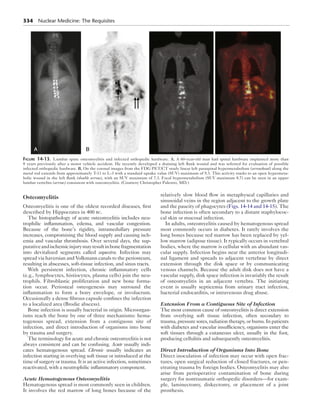
Figure 14-13.  Lumbar spine osteomyelitis and infected orthopedic hardware. A, A 60-year-old man had spinal hardware implanted more than
8 years previously after a motor vehicle accident. He recently developed a draining left flank wound and was referred for evaluation of possible
infected orthopedic hardware. B, On the coronal images from the FDG PET/CT study linear left paraspinal hypermetabolism (arrowhead) along the
metal rod extends from approximately T-11 to L-3 with a standard uptake value (SUV) maximum of 9.3. This activity tracks to an open hypermeta-
bolic wound in the left flank (double arrow), with an SUV maximum of 7.3. Focal hypermetabolism (SUV maximum 8.7) can be seen in an upper
lumbar vertebra (arrow) consistent with osteomyelitis. (Courtesy Christopher Palestro, MD.)
Infection and Inflammation  335
Osteomyelitis initially acquired as a child or in adulthood
may be manifested years later as recurrent intermittent or
persistent drainage from sinus tracts communicating with
the involved bone, usually the femur, tibia, or humerus, or
as a soft tissue infection overlying it.
Clinical Diagnosis
Biopsy with culture is the definitive test for the diagnosis
of osteomyelitis; however, it is invasive and sometimes
contraindicated because noninfected bone may become
contaminated by overlying soft tissue infection. Risk also
exists for pathological fracture in the small bones of the
hands and feet. Imaging is often required to confirm or
exclude the diagnosis.
Conventional Imaging
Plain film radiographs are indicated when osteomyelitis is
suspected. The characteristic changes are permeative
radiolucencies, destructive changes, and periosteal new
bone formation. These findings can take 10 to 14 days to
develop.
Magnetic resonance imaging (MRI) can detect marrow
changes of osteomyelitis, such as low-signal intensity
on T1-weighted images, high-signal intensity on
T2-weighted images, and gadolinium enhancement. Sec-
ondary changes such as sinus tracts and cortical interrup-
tion increase the diagnostic certainty. Sensitivity and
specificity are reported to be high. However, any disease
that replaces bone marrow and results in increased tissue
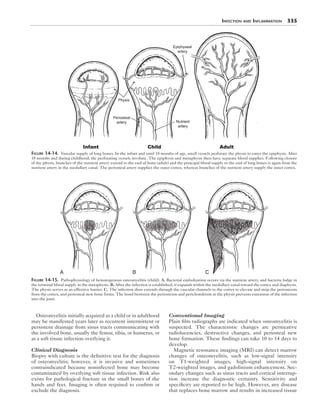
Figure 14-14.  Vascular supply of long bones. In the infant and until 18 months of age, small vessels perforate the physis to enter the epiphysis. After
18 months and during childhood, the perforating vessels involute. The epiphysis and metaphysis then have separate blood supplies. Following closure
of the physis, branches of the nutrient artery extend to the end of bone (adult) and the principal blood supply to the end of long bones is again from the
nutrient artery in the medullary canal. The periosteal artery supplies the outer cortex, whereas branches of the nutrient artery supply the inner cortex.
A B C
Figure 14-15.  Pathophysiology of hematogenous osteomyelitis (child). A, Bacterial embolization occurs via the nutrient artery, and bacteria lodge in
the terminal blood supply in the metaphysis. B, After the infection is established, it expands within the medullary canal toward the cortex and diaphysis.
The physis serves as an effective barrier. C, The infection then extends through the vascular channels to the cortex to elevate and strip the periosteum
from the cortex, and periosteal new bone forms. The bond between the periosteum and perichondrium at the physis prevents extension of the infection
into the joint.
336  Nuclear Medicine: The Requisites
water (e.g., healing fractures, tumors, and Charcot joints)
may not be distinguishable from infection, and thus MRI
is often not specific.
Scintigraphy
The preferred scintigraphic method for diagnosis of
osteomyelitis depends on the specific clinical indication
(Box 14-7).
Bone Scan
In patients without underlying bone pathology, a three-
phase bone scan should be the first scintigraphic study.
Sensitivity for the diagnosis of osteomyelitis is high, at
greater than 95%; a negative study result excludes osteo-
myelitis with a high degree of certainty (high negative pre-
dictive value). An exception may be neonates who are
reported to have false negative study results.
Although the sensitivity of the bone scan is high in
patients with underlying bone disease, fractures, orthope-
dic implants, and neuropathic joints, specificity is poor
(30%-50%). Thus by itself it is not usually diagnostic
(Table 14-7). Distinguishing soft tissue from bone uptake
can be a problem in planar imaging of the feet because of
slow soft tissue clearance because of edema. Delayed
imaging or particularly SPECT/CT can help distinguish
the two (Fig. 14-16).
Gallium-67 Citrate
Because Ga-67 is taken up by bone and bone marrow,
increased uptake is often seen at sites of increased bone
turnover, similar to that seen on bone scans. Thus false
positive interpretations may result in patients with
underlying bone disease or orthopedic hardware. Speci-
ficity can be increased if interpreted in conjunction with
a bone scan.
The criteria for diagnosis of osteomyelitis using Ga-67
scintigraphy in conjunction with a bone scan are (1) if
Ga-67 uptake is greater than that seen on the bone scan or
(2) if the Ga-67 and bone scan distribution are incongru-
ent (Fig. 14-17). Ga-67 uptake less than on the bone scan
is negative for osteomyelitis. A similar degree of uptake
on both studies is considered equivocal, and infection
cannot be excluded. The accuracy of the combined two
studies is still inferior to that of radiolabeled leukocytes,
with the important exception of vertebral osteomyelitis
(Table 14-7).
Radiolabeled Leukocytes
The reported accuracy of radiolabeled leukocytes for diag-
nosis of osteomyelitis has varied. Attempts have been
made to improve the accuracy by interpreting the study in
conjunction with a bone scan, similar to the approach used
with Ga-67 (Figs. 14-18 through 14-20). However, this has
not appreciably improved the overall accuracy, particularly
in the problematic diabetic foot, spine, and hip and knee
prostheses. SPECT/CT will likely improve diagnostic
accuracy (Fig. 14-21).
Bone Marrow Scan in Conjunction with
a Leukocyte Scan
An underlying assumption of leukocyte scintigraphy inter-
pretation for osteomyelitis is that the bone marrow distri-
bution is uniform and symmetric and that an area of focally
increased uptake is diagnostic of infection. However, when
marrow distribution is altered (e.g., by prior infection, frac-
ture, orthopedic hardware, etc.), radiolabled leukoycte
uptake could be misinterpreted as infection.
Tc-99m sulfur colloid can serve as a template for the
patient’s bone marrow distribution. With infection, the
radiolabeled leukocyte study will be discordant with
the marrow scan—that is, focal increased uptake on the
leukocyte study and decreased or normal uptake on mar-
row study (Fig. 14-22). With no infection, the leukocyte
and marrow scan will have similar distribution.
For Tc-99m HMPAO–labeled leukocytes, the two stud-
ies would best be performed on separate days, although
subtraction imaging on the same day is feasible. Dual-
isotope studies with In-111 oxine–labeled leukocytes and
Tc-99m sulfur colloid have advantages but require special
attention to methodology. One approach is to perform the
Tc-99m scan first because of its shorter half-life. By
24 hours, 94% of the Tc-99m activity will have decayed.
Blood required for In-111 leukocyte labeling can be
drawn before injection of the Tc-99m tracer and the In-
111–radiolabeled cells reinfused after acquiring the
Tc-99m scan. The In-111 leukocyte study would be
imaged the following day.
An alternative attractive approach is to acquire both stud-
ies simultaneously, using a dual-isotope acquisition method.
The Tc-99m sulfur colloid is injected immediately before
Table 14-7  Diagnosis of Osteomyelitis: Accuracy of Different
Scintigraphic and Magnetic Resonance Imaging Methods
Type of study Sensitivity (%) Specificity (%)
Three-phase bone scan
(normal radiograph)
94 95
Three-phase bone scan
(underlying bone disease)
95 33
Ga-67 81 69
In-111 oxine–labeled leukocytes 88 85
Tc-99m HMPAO WBCs 87 81
Leukocytes (vertebral) 40 90
Leukocytes + bone marrow
Magnetic resonance imaging
95
95
90
87
HMPAO, Hexamethylpropyleneamine oxime; WBC, white blood cell.
	Box 14-7.  Scintigraphic Diagnosis of Osteomyelitis
in Different Clinical Situations
Normal x-ray: Three-phase bone scan
Neonates: Three-phase bone scan; if negative,
Tc-99m HMPAO WBCs
Suspected vertebral osteomyelitis: Ga-67 citrate or
F-18 FDG
Suspected osteomyelitis in bone marrow-containing
skeleton (hips and knees, mid- and hind-foot):
Marrow scan + leukocyte study
FDG, Fluorodeoxyglucose; HMPAO, hexamethylpropyleneamine oxime; WBC,
white blood cells.
Infection and Inflammation  337
Immediate Blood Pool
Delayed Imaging
R
R
R
R
A
B
Figure 14-16.  Heel pain and SPECT CT. A (above) Blood pool and delayed (plantar and lateral) Tc-99m MDP images show abnormal increased
accumulation in the region of the heel. B. Tc-99m HMPAO SPECT/CT shows intense uptake in the soft tissue inferior to the calcaneus consistent with
soft tissue infection. Osteomyelitis was ruled out.
338  Nuclear Medicine: The Requisites
24-hour In-111 leukocyte imaging. This approach ensures
identically positioned images for direct comparison. Upscat-
ter from Tc-99m could be minimized by acquiring only the
upper 247-keV photopeak of In-111. A narrowed window
for the lower 173-keV photopeak could also be used. In-111
downscatter into the Tc-99m window is not usually a prob-
lem with the recommended doses because of the low activ-
ity of In-111 (500 μCi) compared to Tc-99m (10 mCi).
Fluorine-18 Fluorodeoxyglucose
An increasing number of investigations have shown the
value of F-18 FDG for diagnosis of infection. Most of these
studies are small, but generally show that FDG imaging can
detect infection with high sensitivity and good specificity.
Infection in patients with controlled diabetes may be an
exception because of the effect of hyperglyemia or hyperin-
sulinemia on FDG uptake. Nonspecific uptake may be
seen with orthopedic hardware, inflammation, and so forth.
Diabetic Foot
Insensitivity of the neuropathic foot to pain can result in
asymptomatic trauma, fractures, ulcers, infection, and
delay in diagnosis. The diagnosis of osteomyelitis in the
setting of soft tissue infection is challenging for clinicians
and imagers. Radiographs and MRI may not be specific.
Interpretation of the three-phase bone scan can be com-
plicated by the fact that the flow portion of the study may
be positive because of overlying soft tissue infection and
delayed images may be positive because of fractures,
Charcot joints, or degenerative disease. Although sensitiv-
ity for diagnosis of osteomyelitis is high, the specificity is
poor (Table 14-7).
With In-111–labeled leukocytes for suspected distal foot
(toes and metatarsals) osteomyelitis, differentiation of
bone uptake from overlying soft tissue infection can be
problematic because of the limited anatomical information
on the planar WBC scan (Fig. 14-18). The improved reso-
lution of Tc-99m HMPAO–labeled leukocytes can be an
advantage because of better bone and soft tissue discrimi-
nation. SPECT/CT can be particularly helpful in separat-
ing soft tissue and bone uptake. Tc-99m sulfur colloid
bone marrow imaging should be used for the mid- and
hind-foot in conjunction with radiolabeled leukocytes. A
mismatch is consistent with infection (Fig. 14-21).
Although red marrow is not normally present in the dis-
tal extremities in adults, neuropathic Charcot joints form
marrow and accumulate leukocytes. Fractures may also
stimulate marrow formation. Thus Tc-99m sulfur colloid
marrow scintigraphy in conjunction with In-111 WBCs is
recommended for evaluation of the diabetic mid- and
hind-foot.
Vertebral Osteomyelitis
The most common route for vertebral infection is hema-
togenous spread via the arterial or venous system, although
postoperative infection secondary to direct implantation of
microorganisms into the intervertebral disk may also occur.
Microorganisms lodge at different sites depending on
patient age. Below age 4, end arteries perforate the vertebral
A
B
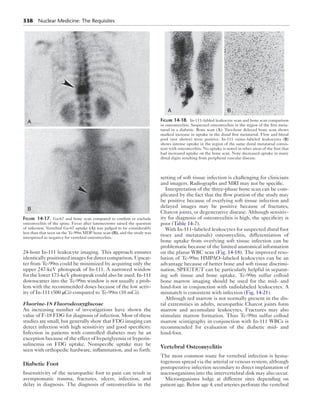
Figure 14-17.  Ga-67 and bone scan compared to confirm or exclude
osteomyelitis of the spine. Fever after laminectomy raised the question
of infection. Vertebral Ga-67 uptake (A) was judged to be considerably
less than that seen on the Tc-99m MDP bone scan (B), and the study was
interpreted as negative for vertebral osteomyelitis.
A B
Figure 14-18.  In-111–labled leukocyte scan and bone scan comparison
in osteomyelitis. Suspected osteomyelitis in the region of the first meta-
tarsal in a diabetic. Bone scan (A): Two-hour delayed bone scan shows
marked increase in uptake in the distal first metatarsal. Flow and blood
pool (not shown) were positive. In-111 oxine–labeled leukocytes (B)
shows intense uptake in the region of the same distal metatarsal consis-
tent with osteomyelitis. No uptake is noted in other areas of the foot that
had increased uptake on the bone scan. Note decreased uptake in many
distal digits resulting from peripheral vascular disease.
Infection and Inflammation  339
A
B
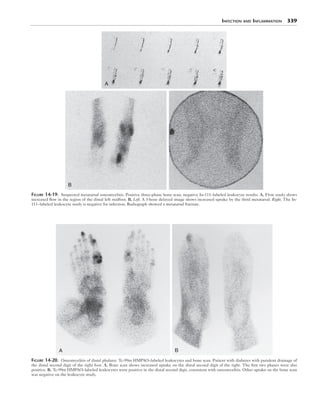
Figure 14-19.  Suspected metatarsal osteomyelitis. Positive three-phase bone scan, negative In-111–labeled leukocyte results. A, Flow study shows
increased flow in the region of the distal left midfoot. B, Left, A 3-hour delayed image shows increased uptake by the third metatarsal. Right, The In-
111–labeled leukocyte study is negative for infection. Radiograph showed a metatarsal fracture.
A B
Figure 14-20.  Osteomyelitis of distal phalanx: Tc-99m HMPAO–labeled leukocytes and bone scan. Patient with diabetes with purulent drainage of
the distal second digit of the right foot. A, Bone scan shows increased uptake on the distal second digit of the right. The first two phases were also
positive. B, Tc-99m HMPAO–labeled leukocytes were positive in the distal second digit, consistent with osteomyelitis. Other uptake on the bone scan
was negative on the leukocyte study.
340  Nuclear Medicine: The Requisites
body end plates and enter the disk space to produce diskitis.
In adults, the most common infection site is the subchon-
dral region of the vertebral body, which has the richest net-
work of nutrient arterioles, similar to the vascular tree in the
childhood metaphysis. The infection is primarily spondyli-
tis, with secondary spread into the disk space. The infection
spreads from the anterior subchondral focus through the
vertebral end plate into the intervertebral disk. Later, it
destroys the neighboring end plate, involves the opposite
vertebral body, and may extend to adjacent soft tissue,
resulting in epidural or paravertebral abscess formation.
Bone Scan
The usual scintigraphic pattern of diskitis is increased
arterial blood flow, pool, and delayed uptake involving
adjacent ends of adjoining vertebral bodies. With localized
osteomyelitis, the bone scan will be three-phase positive.
Blood flow and pool images can be difficult to evaluate in
the thoracic spine because of normal cardiac, pulmonary,
and vascular structures.
Leukocyte Scintigraphy
Multiple studies have reported a high false negative rate
for vertebral osteomyelitis (40%-50%) using In-111
oxine–radiolabeled or Tc-99m HMPAO–radiolabeled
WBCs. Normal or decreased uptake may be seen at the
site of infection (Fig. 14-23). This may be due to stagnant
blood flow in a bone marrow filled with pus, thrombosis, or
infarction.
Gallium-67 Scintigraphy
Ga-67 citrate is superior to leukocyte scintigraphy for verte-
bral osteomyelitis (Fig. 14-23 and Box 14-8). For best accu-
racy, Ga-67 should be used in conjunction with a bone scan,
using the criteria described previously (Fig. 14-17). An asso-
ciated paraspinal abscess or disk infection may be also
detected with the Ga-67 scan. SPECT and SPECT/CT can
be helpful.
Fluorine-18 Fluordeoxyglucose
F-18 FDG is increasingly used as an alternative to Ga-67
for suspected vertebral osteomyelitis. Published data
suggest it has good accuracy. Orthopedic hardware and
postoperative changes can complicate interpretation.
FDG uptake usually normalizes by 3 to 4 months after
surgery or fracture (Fig. 14-13). False positive study
results can occur. A negative FDG study result is highly
predictive.
NM TransaxialsCT Transaxials
Figure 14-21.  SPECT/CT In-111–labeled leukocyte study. Patient with diabetes suspected of having osteomyelitis due to a draining infected large
toe ulcer. The maximum intensity projection view (right lower quadrant) shows diffuse uptake in the region of the distal large toe. Soft tissue cannot be
differentiated from bone uptake. The fused SPECT/CT image shows (left lower) that the uptake is in both soft tissue and bone, consistent with the
known overlying soft tissue infection and osteomyelitis.
Infection and Inflammation  341
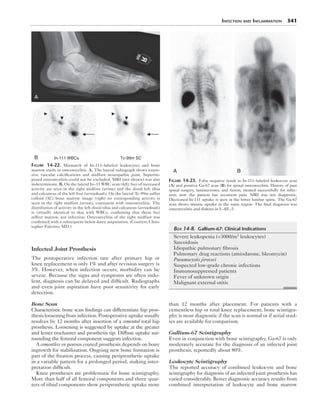
Infected Joint Prosthesis
The postoperative infection rate after primary hip or
knee replacement is only 1% and after revision surgery is
3%. However, when infection occurs, morbidity can be
severe. Because the signs and symptoms are often indo-
lent, diagnosis can be delayed and difficult. Radiographs
and even joint aspiration have poor sensitivity for early
detection.
Bone Scan
Characteristic bone scan findings can differentiate hip pros-
thesis loosening from infection. Postoperative uptake usually
resolves by 12 months after insertion of a cemented total hip
prosthesis. Loosening is suggested by uptake at the greater
and lesser trochanter and prosthesis tip. Diffuse uptake sur-
rounding the femoral component suggests infection.
A cementless or porous coated prosthesis depends on bony
ingrowth for stabilization. Ongoing new bone formation is
part of the fixation process, causing periprosthetic uptake
in a variable pattern for a prolonged period, making inter-
pretation difficult.
Knee prostheses are problematic for bone scintigraphy.
More than half of all femoral components and three quar-
ters of tibial components show periprosthetic uptake more
than 12 months after placement. For patients with a
cementless hip or total knee replacement, bone scintigra-
phy is most diagnostic if the scan is normal or if serial stud-
ies are available for comparison.
Gallium-67 Scintigraphy
Even in conjunction with bone scintigraphy, Ga-67 is only
moderately accurate for the diagnosis of an infected joint
prosthesis, reportedly about 80%.
Leukocyte Scintigraphy
The reported accuracy of combined leukocyte and bone
scintigraphy for diagnosis of an infected joint prosthesis has
varied considerably. Better diagnostic accuracy results from
combined interpretation of leukocyte and bone marrow
A
B In-111 WBCs Tc-99m SC
Figure 14-22.  Mismatch of In-111–labeled leukocytes and bone
marrow study in osteomyelitis. A, The lateral radiograph shows exten-
sive vascular calcifications and midfoot neuropathic joint. Superim-
posed osteomyelitis could not be excluded. MRI (not shown) was also
indeterminate. B, On the lateral In–11 WBC scan (left), foci of increased
activity are seen in the right midfoot (arrow) and the distal left tibia
and calcaneus of the left foot (arrowheads). On the lateral Tc-99m sulfur
colloid (SC) bone marrow image (right) no corresponding activity is
seen in the right midfoot (arrow), consistent with osteomyelitis. The
distribution of activity in the left distal tibia and calcaneus (arrowheads)
is virtually identical to that with WBCs, confirming that these foci
reflect marrow, not infection. Osteomyelitis of the right midfoot was
confirmed with a subsequent below-knee amputation. (Courtesy Chris-
topher Palestro, MD.)
A B
Figure 14-23.  False negative result in In-111–labeled leukocyte scan
(A) and positive Ga-67 scan (B) for spinal osteomyelitis. History of past
spinal surgery, laminectomy, and fusion, treated successfully for infec-
tion; now the patient has recurrent pain. MRI was not diagnostic.
Decreased In-111 uptake is seen in the lower lumbar spine. The Ga-67
scan shows intense uptake in the same region. The final diagnosis was
osteomyelitis and diskitis in L-4/L-5.
	Box 14-8.  Gallium-67: Clinical Indications
Severe leukopenia (3000/m3 leukocytes)
Sarcoidosis
Idiopathic pulmonary fibrosis
Pulmonary drug reactions (amiodarone, bleomycin)
Pneumocystis jiroveci
Suspected low-grade chronic infections
Immunosuppressed patients
Fever of unknown origin
Malignant external otitis
342  Nuclear Medicine: The Requisites
scintigraphy. This is because joint prosthesis inevitably
results in marrow displacement in an unpredictable man-
ner. Discordance of uptake on leukocyte and marrow scin-
tigraphy is diagnostic of infection (Fig. 14-24). The Tc-99m
sulfur colloid marrow study avoids the potential for a false
positive study result—that is, interpretation of focal uptake
as infection when it is merely displaced marrow. Accuracy
is reported to be greater than 90%.
Response to Therapy
Ga-67 and leukocyte scintigraphy can be used to monitor
response to therapy—for example, to determine whether an
infection has been controlled before surgical replacement of
a new prosthesis. Scintigraphic findings revert to normal
within 2 to 8 weeks of appropriate antibiotic therapy.
Intraabdominal Infection
Postoperative intraabdominal infection is often confirmed
with CT and directed interventional aspiration. However,
in patients with nonlocalizing symptoms and negative con-
ventional imaging, the preferred radiopharmaceutical is
In-111 oxine–labeled leukocytes (Figs. 14-25 and 14-26)
(Table 14-6). There is no intraabdominal intestinal or uri-
nary clearance; thus uptake seen is usually infection. Sen-
sitivity is reported to be approximately 90%.
Early imaging at 4 hours with In-111–labeled WBCs has
a lower sensitivity for the detection of infection compared
to 24 hours; however, in some urgent situations, early imag-
ing may allow for earlier diagnosis—for example, suspected
abscess, acute appendicitis, or diverticulitis.
Tc-99m HMPAO–labeled leukocytes can be used, par-
ticularly in children. Early imaging is required because
hepatobiliary and renal clearance may be seen by 2 hours.
Sensitivity for detecting intraabdominal infection is
reported to be high. Delayed imaging can sometimes be
helpful to confirm that early detected abnormal activity
remains in a fixed pattern. A shifting pattern of activity
over time implies intraluminal transit of labeled leuko-
cytes, as seen with inflammatory or ischemic bowel disease,
fistula, abscess in communication with bowel, or false
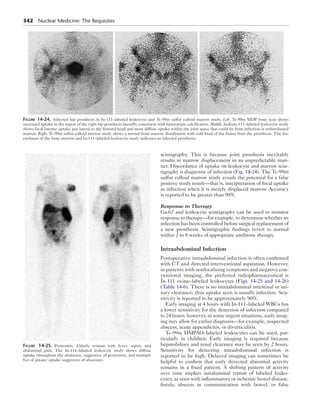
Figure 14-24.  Infected hip prosthesis in In-111–labeled leukocyte and Tc-99m sulfur colloid marrow study. Left, Tc-99m MDP bone scan shows
increased uptake in the region of the right hip prosthesis laterally, consistent with heterotopic calcification. Middle, Indium-111–labeled leukocyte study
shows focal intense uptake just lateral to the femoral head and more diffuse uptake within the joint space that could be from infection or redistributed
marrow. Right, Tc-99m sulfur colloid marrow study shows a normal bone marrow distribution with cold head of the femur from the prosthesis. The dis-
cordance of the bone marrow and In-111–labeled leukocyte study indicates an infected prosthesis.
Figure 14-25.  Peritonitis. Elderly woman with fever, sepsis, and
abdominal pain. The In-111–labeled leukocyte study shows diffuse
uptake throughout the abdomen, suggestive of peritonitis, and multiple
foci of greater uptake suggestive of abscesses.
Infection and Inflammation  343
positive causes—for example, swallowed leukocytes from
sinus or tracheobronchial infection (Box 14-5).
Abnormal leukocyte uptake is also seen in a variety of
noninfectious inflammatory diseases, such as pancreatitis,
acute cholecystitis, polyarteritis nodosa, rheumatoid vas-
culitis, ischemic colitis, pseudomembranous colitis, and
bowel infarction.
Inflammatory Bowel Disease
Both ulcerative colitis and granulomatous or regional
enteritis or Crohn disease are characterized by intestinal
inflammation. Leukocyte scintigraphy can be used to
make the diagnosis, determine active disease distribution,
and confirm relapse (Figs. 14-27 and 14-28). It can also aid
in evaluation of regions hard to see with endoscopy and
monitor therapeutic effectiveness.
Comparative studies have indicated that Tc-99m
HMPAO–labeled leukocytes are superior to In-111 oxine–
labeled leukocytes for diagnosis of inflammatory bowel
disease, probably because of the superior image resolution
enabling disease localization to specific bowel segments.
Crohn disease and ulcerative colitis usually can be distin-
guished by their distribution. Ulcerative colitis typically
has continuous colonic and rectal involvement, whereas
Crohn disease involves the small bowel, has skip areas,
and spares the rectum.
Leukocyte scintigraphy can differentiate reactivation of
inflammatory bowel disease from abscess formation result-
ing from bowel perforation, a serious complication requir-
ing surgical rather than medical therapy. Radiolabeled
leukocyte uptake in an abscess is typically focal, whereas
uptake in inflamed bowel follows the contour of the intes-
tinal wall.
Figure 14-26.  Liver abscess on In-111 oxide–labeled leukocytes.
Transverse (above) and coronal (below) cross-sectional SPECT slices with
focal uptake of leukocytes in the right lobe of the liver. An abscess was
subsequently drained.
Figure 14-27.  Patient with known inflammatory bowel disease and
suspected recurrence, referred for confirmation of active disease and
localization. In-111 oxine–radiolabeled leukocyte study obtained 4 hours
after reinfusion of the radiolabeled white blood cells shows localization in
the ascending colon adjacent to the cecum. RT, Right.
344  Nuclear Medicine: The Requisites
If In-111–labeled leukocyte scintigraphy is used, images
should be acquired at 4 hours rather than 24 hours because
of shedding of the inflamed leukocytes into the bowel
lumen from the inflammatory sites and subsequent peri-
stalsis, which can result in incorrect assignment of disease
to sites distal to the true lesion. Tc-99m HMPAO imaging
should be performed by 2 hours.
Renal Disease
Ga-67 has been used to diagnose diffuse interstitial nephri-
tis and localized renal infection. Delayed 48-hour imaging
is required because of early urinary tract clearance. Renal
parenchymal infection, (e.g., pyelonephritis, diffuse inter-
stitial nephritis, lobar nephronia [focal interstitial nephri-
tis], and perirenal infections) can be diagnosed. Generally,
Ga-67 has been superseded by radiolabeled leukocyte
imaging (Fig. 14-29) or Tc-99m dimercaptosuccinic acid
(DMSA) for pyelonephritis. Radiolabeled leukocytes
seem to have similar accuracy. However, radiolabeled
WBCs have limited utility for evaluation of renal trans-
plants because all exhibit uptake, regardless of the pres-
ence or absence of clinical infection, probably as a result of
ongoing low-grade rejection.
Cardiovascular Disease
In-111–labeled leukocytes are not sensitive for detection
of subacute bacterial endocarditis. The vegetative lesions
contain high concentrations of bacteria, platelets, and
fibrin adherent to damaged valvular endothelium, but rela-
tively few leukocytes. However, SPECT and SPECT/CT
have improved detection and localization (Fig. 14-30).
Prompt diagnosis of graft infection is critical but often
delayed because of its indolent and insidious course. With
infection of arterial prosthetic grafts (e.g., femoropopliteal
or aortofemoral), ultrasound, CT, and MRI are often
unable to distinguish infection from aseptic fluid collec-
tions around the graft. Radiolabeled leukocytes can detect
Figure 14-28.  Crohn disease on 4-hour In-111 oxine–labeled leukocytes.
Patient with several-year history of regional ileitis and 2 months of recur-
rent and worsening symptoms. Scintigraphy confirms active inflammation
of ileum.
Figure 14-29.  Infected polycystic kidneys on In-111–labeled leukocyte scan for renal stones, recurrent urinary tract infections, and recent persistent
fever of uncertain cause. Low-dose CT (above) demonstrates very large multicystic kidneys. Fused SPECT/CT images (below) show multiple areas of
increased uptake (yellow) in the renal cysts diagnostic of infection.
Infection and Inflammation  345
surgical prosthetic graft infection. In-111 has the advan-
tage of having no blood pool distribution, a limitation of
Tc-99m HMPAO. However, early and serial imaging with
Tc-99m HMPAO at 5 minutes, 30 minutes, and 3 hours
has been shown accurate for confirming the diagnosis
(Fig. 14-12).
Pulmonary Infection
Radiolabeled leukocytes are not commonly used to detect
pulmonary infection. Low-grade diffuse uptake is seen
with a variety of noninfectious inflammatory causes,
including acute respiratory distress syndrome, atelectasis,
and congestive heart failure, and thus is not diagnostic of
infection. Focal intense uptake is likely to be due to infec-
tion. Tuberculosis and fungal infections may be detected
by In-111–labeled leukocytes, but with poorer sensitivity
than Ga-67.
Ga-67 citrate accumulates in many types of acute and
chronic pulmonary infections and inflammatory diseases
(Box 14-9). It has been used most successfully in the past for
detection of chronic diseases such as sarcoidosis (Fig. 14-31),
idiopathic pulmonary fibrosis, Pneumocystis jiroveci (formerly
known as P. carinii) (Fig. 14-32), and therapeutic drug-
induced pulmonary disease (Boxes 14-8 and 14-9).
Sarcoidosis
Sarcoidosis is a chronic granulomatous multisystem dis-
ease of unknown cause characterized by accumulation of
T-lymphocytes, mononuclear phagocytes, and noncaseat-
ing epithelioid granulomas in any organ of the body, most
commonly the lung, liver, and spleen.
Common systemic symptoms include weight loss,
fatigue, weakness, malaise, and fever. Pulmonary manifes-
tations include hilar and mediastinal adenopathy, endo-
bronchial granuloma formation, interstitial or alveolar
pulmonary infiltrates, and pulmonary fibrosis.
	Box 14-9.  Gallium-67 Uptake in Interstitial
and Granulomatous Pulmonary Diseases
Tuberculosis
Histoplasmosis
Sarcoidosis
Idiopathic pulmonary fibrosis
Pneumocystis jiroveci
Cytomegalovirus
Pneumonoconioses (asbestosis, silicosis)
Hypersensitivity pneumonitis
A
B
Figure 14-30.  A 17-year-old patient with DiGeorge syndrome. truncus arteriosus, and a right ventricular pulmonary artery conduit. He has experi-
enced recent chills and fever and blood cultures positive for Staphylococcus aureus. A, Coronal and transverse CT shows the pulmonary artery conduit. B,
Fused SPECT/CT In-111 oxine leukocyte images show uptake that indicates that the conduit is infected.
346  Nuclear Medicine: The Requisites
Extrapulmonary manifestations of the skin, eyes, heart,
central nervous system, bones, and muscle are not rare.
Central nervous system and cardiac involvement may lead
to death.
The initial presentation is commonly pulmonary, with
dyspnea and dry cough, although 20% may be asymptom-
atic and have only an abnormal chest radiograph. The clin-
ical course is variable. Spontaneous resolution occurs in
30%, 40% have a smoldering or progressively worsening
course, 20% develop permanent lung function loss, and
10% die of respiratory failure.
Four categories of radiographic findings identify sarcoid-
osis (Table 14-8). The alveolitis of sarcoidosis is mani-
fested on radiographs as an infiltrative process. Although
patients with radiographs showing type I findings tend to
have a reversible form of the disease, those with types II
and III usually have chronic progressive disease; these are
not necessarily consecutive stages.
Diagnosis is based on a combination of clinical, radio-
graphic, and histological findings. The chest radiograph,
although characteristic, is not diagnostic because the typi-
cal bilateral hilar adenopathy may be seen with other
diseases.
Various diagnostic tests have been used. Bronchoalveo-
lar lavage is an accurate method. An increase in the relative
and absolute numbers of T-lymphocytes, monocytes, and
macrophages is an indication for therapy. The serum
angiotensin-converting enzyme is negative in two thirds of
patients, and false positive results are common. The
Kveim-Siltzbach test requires intradermal injection of
human sarcoid tissue. A nodule develops at the injection
site in 4 to 6 weeks in patients with sarcoidosis, and biopsy
A
B
Figure 14-31.  A, Sarcoidosis and Ga-67 scan in a 35-year-old woman with
new diagnosis of sarcoidosis. Ga-67 scintigraphy demonstrates the “lambda”
sign with uptake in paratracheal and hilar adenopathy. B, The “panda” sign
in a patient with sarcoidosis. Prominent characteristic increased uptake in
the lacrimal, parotid, and submandibular salivary glands.
Figure 14-32.  Pneumocystis jiroveci (formerly P. carinii) and whole-body
Ga-67 scan. A 57-year-old HIV-positive man with bilateral pulmonary
pneumonitis. Note characteristic diffuse bilateral Ga-67 uptake.
Table 14-8  Classification of Chest Radiographic Findings
in Sarcoidosis
Type Radiographic findings
0 Hilar and/or mediastinal node enlargement with normal
lung parenchyma
II Hilar and/or mediastinal node enlargement and diffuse
interstitial pulmonary disease
III Diffuse pulmonary disease without node involvement
IV Pulmonary fibrosis
Infection and Inflammation  347
reveals noncaseating granulomas in 70% to 80%. Biopsy
evidence of a mononuclear cell granulomatous inflamma-
tory process is mandatory for definitive diagnosis.
Bronchoalveolar lavage and Ga-67 and F-18 FDG scans
have been used as indicators of disease activity. Although
many patients require no specific therapy, patients with
severe active disease are often treated with glucocorticoids
that suppress the activated T-cells at the disease site and
the clinical manifestations of the disease.
Gallium-67 Scintigraphy
Ga-67 scans are positive in most patients with active sar-
coidosis. The scan has been used to assess the magnitude
of alveolitis, guide lung biopsy, and choose the pulmonary
segments for bronchoalveolar lavage. It can distinguish
active granuloma formation and alveolitis from inactive
disease and fibrotic changes. Increased Ga-67 uptake in
the lungs is more than 90% sensitive for clinically active
disease. Scans are negative in inactive cases.
Ga-67 is more sensitive than a chest radiograph for
detecting early disease. Pulmonary uptake on scintigra-
phy may occur before characteristic abnormalities are
present on radiographs (Table 14-8). Patients with a nor-
mal Ga-67 scan nearly always have a negative biopsy.
Patients with a diagnosis of sarcoidosis and an abnormal
chest radiograph, but inactive disease, have negative
Ga-67 scans. Ga-67 has been shown to be a sensitive
indicator of treatment response, superior to clinical
symptoms, chest radiograph, and pulmonary function
tests.
Increasingly, F-18 FDG is being used to confirm or
exclude the diagnosis of sarcoidosis and determine the
extent of disease, its distribution, and disease activity.
Although assumed to be at least equal, if not superior, to
Ga-67, clinical data are limited.
Scintigraphic Patterns
In early disease, Ga-67 scintigraphy and F-18 FDG often
show bilateral hilar and paratracheal uptake (lambda sign)
(Figs. 14-31 and 14-33). Pulmonary parenchymal uptake is
typically intense and symmetric and may or may not be
associated with hilar and mediastinal involvement. Promi-
nent Ga-67 uptake may be seen in the nasopharyngeal
region and parotid, salivary, and lacrimal glands (panda
sign). The latter is not seen with F-18 FDG.
In contrast to sarcoidosis, patients with malignant lym-
phoma usually have asymmetric hilar or mediastinal
uptake, often involving the anterior mediastinal and para-
tracheal nodes. Although paraaortic, mesenteric, and retro-
peritoneal lymph node involvement may be seen in
sarcoidosis, this pattern of uptake is considerably more
common in lymphoma.
Figure 14-33.  Sarcoidosis and F-18 FDG. FDG (above), CT (middle), and fused images (below). Mediastinal and bilateral hilar adenopathy.
348  Nuclear Medicine: The Requisites
Idiopathic Interstitial Pulmonary Fibrosis
Idiopathic interstitial pulmonary fibrosis typically fol-
lows a progression through stages of alveolitis, with
derangement of the alveolar-capillary units and leading
to end-stage fibrotic disease. The cause is unknown.
Ga-67 uptake occurs in approximately 70% of patients
and has been used to monitor disease course and response
to therapy. The degree of uptake correlates with the
amount of cellular infiltration. Limited data show similar
findings for F-18 FDG.
Pulmonary Drug Reactions
Common therapeutic drugs known to cause lung injury
and result in Ga-67 uptake include cytoxan, nitrofurantoin,
bleomycin, and amiodarone (Box 14-10). Ga-67 uptake is
an early indicator of drug-induced lung injury, before the
radiograph becomes abnormal.
Malignant External Otitis
Malignant external otitis is a life-threatening infection
caused by Pseudomonas organisms and most commonly
seen in patients with diabetes. The three-phase bone scan
can be diagnostic, with uptake in the mastoid and tempo-
ral bone (Fig. 14-34). Increased Ga-67 can be diagnostic
and used to judge response to therapy.
	Box 14-10.  Therapeutic Agents Associated
with Gallium-67 Lung Uptake
Bleomycin
Amiodarone
Busulfan
Nitrofurantoin
Cyclophosphamide
Methotrexate
Nitrosourea
Figure 14-34.  Malignant external otitis with osteomyelitis on Tc-99 MDP. SPECT/CT fused images localize uptake to the region of the mastoid and
temporal lobes, transverse (left), coronal (middle), and sagittal (right).
Infection and Inflammation  349
Fever of Unknown Origin
Fever of unknown origin has been defined as a tempera-
ture of at least 38.3° C (100.9° F) that occurs on more
than three occasions, remains undiagnosed for at least
3 weeks, and results in at least 7 days of hospitalization.
Ga-67 is a sensitive test for uncovering the source of the
fever. In addition to localizing acute infection, Ga-67 can
detect chronic, indolent, and granulomatous infections
and also tumor sources of fever (Box 14-8). However,
postoperative patients with fever are better served with
In-111–labeled leukocytes because fever is most com-
monly caused by an acute infection. F-18 FDG PET/CT
is increasingly used for this indication. Early data are
promising.
Suggested Reading
Datz FL, Taylor AT Jr. Cell labeling: techniques and clinical utility. Freeman and
Johnson’s Clinical Radionuclide Imaging. 3rd ed. New York: Grune  Stratton;
1986.
Gemmel F, Rijk PC, Collins JMP, et al. Expanding role of F-18 fluoro-d-deoxyglucose
PET and PET/CT in spinal infections. Eur Spine J. 2010;19(4):540-551.
Glaudemans AW, Signore A. FDG-PET/CT in infections: the imaging method of
choice? Eur J Nucl Med Mol Imaging. 2010;37(10):1986-1991.
Gotthardt M, Bleeker-Rovers CP, Boerman OC, Oyen WJG. Imaging of
inflammation by PET, conventional scintigraphy, and other imaging techniques.
J Nucl Med. 2010;51(12):1937-1949.
Meller J, Koster G, Liersch, et al. Chronic bacterial osteomyelitis: prospective
comparison of F-18 FDG imaging with a dual-headed coincidence camera and
In-111 labeled autologous leukocyte scintigraphy. Eur J Nucl Med. 2001;29(10):
53-60.
Merkel KD, Brown ML, Dewanjee MK, Fitzgerald RH Jr. Comparison of
indium-labeled-leukocyte imaging with sequential technetium-gallium
scanning in the diagnosis of low-grade musculoskeletal sepsis. J Bone Joint Surg
Am. 1985;67(3):465-476.
Oyen WJG, Boerman OC, van der Laken CJ, et al. The uptake mechanism of
inflammation- and infection-localizing agents. Eur J Nucl Med. 1996;23(4):459-465.
Palestro CJ. 18F-FDG and diabetic foot infections: the verdict is…. J Nucl Med.
2011;52(7):1009-1011.
Palestro CJ, Kim CK, Swyer AJ, et al. Total-hip arthroplasty: periprosthetic
indium-111-labeled leukocyte activity and complementary technetium-99m-
sulfur colloid imaging in suspected infection. J Nucl Med. 1990;31(12):1950-1955.
Palestro CJ, Mehta HH, Patel M, et al. Marrow versus infection in the Charcot
joint: indium-111 leukocyte and technetium-99m sulfur colloid scintigraphy.
J Nucl Med. 1998;39(2):346-350.
Peters AM, Danpure HJ, Osman S, et al. Clinical experience with 99mTc-
hexamethylpropylene-amineoxime for labeling leucocytes and imaging
inflammation. Lancet. 1986;2525(8513):946-948.
Van der Bruggen W, Beeker-Rovers CP, Boerman OC, et al. PET and SPECT
in osteomyelitis and prosthetic bone and joint infections: a systematic review.
Semin Nucl Med. 2010;40(1):3-15.

14 infection inflammation

  • 1.
    322 Infection imaging haslong been an important area for nuclear scintigraphy. Gallium-67 citrate was the first clinical infection-seeking radiopharmaceutical and is still used today, although in a more limited role. Radiola- beled leukocytes (white blood cells [WBCs]) are usually the preferred radiopharmaceutical. Fluorine-18 fluorode- oxyglucose (FDG) is increasingly used (Box 14-1). New radiopharmaceuticals with various mechanisms of uptake are under active investigation. PATHOPHYSIOLOGY OF INFLAMMATION AND INFECTION Inflammation is a tissue response to injury that attracts cells of the immune system, specialized serum proteins, and chemical mediators to the site of damage. Infection implies the presence of microorganisms. Although infection is usu- ally associated with inflammation, the reverse is not always true. The inflammatory reaction is triggered by the prod- ucts of tissue injury. which may result from trauma, foreign particles, ischemia, and neoplasm. Infection without inflam- mation occurs in severely immunosuppressed patients. The inflammatory response is associated with increased blood flow, increased vascular permeability, and emigra- tion of leukocytes out of blood vessels into the tissues (chemotaxis). Plasma carries proteins, antibodies, and chemical mediators that modulate the inflammatory response to the site of infection (Fig. 14-1). RADIOPHARMACEUTICALS Gallium-67 Citrate The radiopharmaceutical Ga-67 citrate was originally developed as a bone-seeking radiopharmaceutical, used initially as a tumor-imaging agent and subsequently for its infection-seeking properties. Gallium is a group III element in the Periodic Table of the Elements (Fig. 1-1) with atomic structure and biological behavior similar to those of iron. The radionuclide Ga-67 is produced by cyclotron. It decays by electron capture, emits a spectrum of gamma rays (93, 185, 288, 394 keV), and has a physical half-life of 78 hours (Table 14-1). With each decay, it emits four photopeaks ranging from 93 to 394 keV, all with low abundance (% likelihood of emission with each decay) (Table 14-1). The lower-energy photons cause considerable scatter; the higher-energy photons are difficult to collimate and not efficiently detected by the thin crystal (three-eighth inch) of present-day gamma cameras. Mechanism of Uptake, Pharmacokinetics, and Distribution After intravenous injection, Ga-67 citrate circulates in plasma bound to transferrin. The complex is transported to the inflammatory site by locally increased blood flow and vascular permeability (Table 14-2). Its ferric ion–like properties allow it to bind to lactoferrin released from dying leukocytes (higher binding affinity than to transfer- rin) and bacterial siderophores. Ga-67 clears slowly from the blood pool. By 48 hours after injection, 10% is still bound to plasma proteins and total body clearance is slow (biological half-life of 25 days). Bind- ing at the site of infection occurs by 12 to 24 hours. Excretion is primarily via the kidneys the first 24 hours. Subsequently, the colon becomes the major route of excretion. Ga-67 has widespread organ uptake and soft tissue dis- tribution (Table 14-3). Greatest uptake is seen in the liver, followed by bone and bone marrow and spleen (Fig. 14-2). Renal clearance is seen during the initial 24 hours. By 48 hours, the kidneys are only faintly seen. Sites of variable uptake include the nasopharynx, lacri- mal and salivary glands, and breast (Fig. 14-2); all elabo- rate lactoferrin. Inflammatory or stimulatory processes increase lactoferrin production and uptake, thus increased uptake occurs in the salivary glands in Sjögren’s syndrome, in lacrimal glands in sarcoidosis, and breast during lacta- tion. Breast uptake varies according to the menstrual cycle phase and is seen prominently postpartum. Thymic uptake is normal in children. Postoperative sites may have increased Ga-67 uptake for 2 to 3 weeks. Uptake occurs at healing fractures (Fig. 14-3) and in sterile abscesses associated with frequent intramus- cular injections (e.g., insulin or iron-depot injections). Sali- vary gland uptake is increased after local external beam irradiation or chemotherapy. Normal distribution is altered by whole-body irradiation, multiple blood transfusions (excess ferric ions), or recent gadolinium MRI (Fig. 14-4). Methodology An imaging protocol for Ga-67 is described in Box 14-2. Bowel preparation with laxatives and enemas to facilitate more rapid clearance is no longer recommended because it is not usually effective and may cause mucosal irritation and inflammation, producing increased Ga-67 uptake. Chapter 14 Infection and Inflammation  Box 14-1.  Radiopharmaceuticals for Infection Imaging Approved for Clinical Use Ga-67 citrate In-111 oxine–labeled leukocytes Tc-99m HMPAO–labeled leukocytes F-18 FDG Tc-99m fanolesomab (NeutroSpec) (FDA approved, then withdrawn from U.S. market) Tc-99m sulesomab (LeuTech) (approved and used in Europe) FDA, U.S. Food and Drug Administration; FDG, fluorodeoxyglucose; HMPAO, hexamethylpropyleneamine oxime.
  • 2.
    Infection and Inflammation 323 Figure 14-1.  Pathophysiology of inflammation. This diagram illustrates the body’s response to tissue injury and infection. Permeability of the vascular endothelium plays a central role in allowing blood cells and serum components access to the tissues. Antibodies and lymphocytes amplify or focus these primary mechanisms. If inflammation persists beyond a few days, macrophages and lymphocytes play an increasing role. CRP, chronic reactive protein; IFNγ, interferon gamma; IL, interleukin; LT, leukotriene; MONO, monocyte; PG, prostaglandin; PMN, polymorphonuclear neutrophil; T, t-lymphocyte; TNF, tumor necrosis factor. (Modified from Playfair JHL and Chaim BM. Immunology at a Glance. 7th ed. Malden, MA: Blackwell Publishing; 2001.) Table 14-1  Physical Characteristics of Gallium-67, Indium-111, and Technetium-99m Radionuclide Half-life (hr) Photopeak (keV) Relative abundance of photons (%) Ga-67 78 93 41 185 23 288 18 394 4 In-111 67 173 89 247 94 Tc-99m 6 140 89 Table 14-2  Mechanisms of Localization of Infection-Seeking Radiopharmaceuticals Radiopharmaceutical Mechanism Ga-67 citrate Radiolabeled leukocytes Binds to lactoferrin and bacterial siderophores Diapedesis and chemotaxis Antigranulocyte monoclonal antibodies Antibody-antigen binding to activated leukocytes Chemotactic peptides Binding to activated leukocytes Tc-99m ciprofloxacin Binds to living bacteria Table 14-3  Normal Distribution of Radiopharmaceuticals Used for Infection Imaging Radiopharmaceutical Liver Spleen Marrow Bone Gastrointestinal Genitourinary Lung Ga-67 citrate *** * * * *** * In-111 oxine–labeled leukocytes ** *** ** * Tc-99m HMPAO–labeled leukocytes ** *** ** ** ** * HMPAO, Hexamethylpropyleneamine oxime.
  • 3.
    324  Nuclear Medicine:The Requisites A medium-energy collimator is indicated. Only the three lower photopeaks (93, 185, 300 keV) are acquired for imag- ing. The usual administered adult dose is 5 mCi (185 MBq). Although 24-hour images may be diagnostic, whole-body imaging at 48 hours is standard. This ensures adequate back- ground clearance and a good target-to-background ratio. Spot images, single-photon emission computed tomography (SPECT) or SPECT/CT are frequently obtained. Dosimetry The highest radiation absorbed dose from Ga-67 is to the large intestine, 3.7 rads/5 mCi (3.7 cGy/185 MBq), fol- lowed by the bone marrow, 3.5 rads/cGy. Whole-body effective dose is 1.9 rads/5 mCi (1.9 cGy/185 MBq) (Table 14-4). Radiolabeled leukocytes have now been used for more than three decades for detection of infection and inflammation. Both indium-111 oxine and technetium- 99m hexamethylpropyleneamine oxime (HMPAO) labeled WBCs are used clinically. Each has advantages and disadvantages. Leukocyte Physiology Leukocytes are the major cellular components of the inflammatory and immune response that protect against infection and neoplasia and assist in the repair of damaged tissue. Nucleated precursor cells differentiate into mature cells within the bone marrow. Peripheral leukocytes include granulocytes (neutro- phils, 55%-65%; eosinophils, 3%; and basophils, 0.5%), lymphocytes (25%-35%), and monocytes (3%-7%). At any one time, only 2% to 3% of neutrophils reside in the circu- lating blood, using it mainly for transportation to sites of need. The rest are distributed in a “marginated” pool that is adherent to vascular endothelial cells in tissues: 90% are in the bone marrow, the rest are in the spleen, liver, lung, and, to a lesser extent, the gastrointestinal tract and oro- pharynx. These marginated cells can be marshaled into the circulating pool by various stimuli, including exercise, epinephrine, or bacterial endotoxins. Neutrophils circulate in the peripheral blood for 5 to 9 hours. They respond to an acute inflammatory stimulus by migrating toward an attractant (chemotaxis) and enter tis- sues between postcapillary endothelial cells (diapedesis) (Fig. 14-1). They phagocytize the infectious agent or for- eign body and enzymatically destroy it within cytoplasmic vacuoles. This process is inhibited by exposure to cortico- steroids and ethanol. Leukocytes survive in tissues for only 2 to 3 days. Lymphocytes arrive at inflammatory sites during the chronic phase. Monocytes act as tissue scavengers, phago- cytosing damaged cells and bacteria and detoxifying chemicals and toxins. At sites of inflammation, monocytes transform into tissue macrophages. Indium-111 Oxine Leukocytes Since the early 1980s, mixed leukocytes have been radio- labeled with In-111 8-hydroxyquinoline (oxine) and used clinically to detect infection and inflammation. Indium is a group III element in the Periodic Table of the Elements (Fig. 1-1). It decays by electron cap- ture, emits two gamma photons of 173 and 247 keV (Table 14-1), and has a physical half-life of 67 hours (2.8 days). The radionuclide In-111 is cyclotron pro- duced and thus must be ordered the day before cell Figure 14-2.  Normal Ga-67 distribution. Considerable soft tissue and breast distribution are seen. Prominent lac- rimal uptake is noted bilaterally. Highest organ uptake is seen in the liver, followed by bone and bone marrow. Lesser uptake is seen in the spleen, scrotum, and naso- pharyngeal region. Some large intestinal clearance is noted.
  • 4.
    Infection and Inflammation 325 labeling. Oxine is a lipid-soluble complex that chelates metal ions (e.g., indium). Adequate radiolabeling and imaging requires more than 5000/mm3 peripheral leukocytes, although it can some- times be performed with counts as low as 3000/mm3. Radiolabeling must be performed under a laminar flow hood. The in vitro labeling procedure requires a minimum of 2 hours. Lacking facilities and trained personnel to radiolabel the cells, many hospitals send the patient’s blood to an outside commercial radiopharmacy. Thus it takes 3 to 4 hours before the cells are returned and reinfused. Fifty milliliters of venous blood ensures sufficient num- bers of radiolabeled leukocytes for adequate labeling; however, 20 to 30 mL is sometimes acceptable for chil- dren. Careful handling is required to avoid damaging the cells, which could adversely affect their migration and via- bility. Proper labeling does not affect normal physiological Figure 14-3.  Ga-67 citrate uptake with fractures. Patient was in acci- dent 2 weeks earlier causing extensive trauma. Scan requested for post- operative fever and concern for possible infection in known fractured L-3 vertebral body. Note very mild uptake in L-3, thought not to be infected, but prominent uptake in known right femur fracture. Figure 14-4.  Abnormal Ga-67 distribution. This patient received che- motherapy the day before administration. No uptake is seen in the liver, the organ normally having greatest Ga-67 uptake, nor the spleen. This has also been reported in patients with multiple blood transfusions or recent gadolinium contrast administration with MRI. Box 14-2.  Gallium-67 Citrate Imaging: Summary Protocol PATIENT PREPARATION No recent barium contrast studies RADIOPHARMACEUTICAL Ga-67 citrate 5 mCi (185 MBq) injected intrave- nously INSTRUMENTATION Gamma camera: Large field of view Photopeak: 20% window over 93-keV, 185-keV, and 300-keV photopeaks Collimator: Medium energy IMAGING PROCEDURE 48-hour images: Whole body anterior and imaging, including head and extremities High count spot images (e.g., laterals, obliques, etc.) SPECT or SPECT/CT of the head and neck, chest, abdomen, or pelvis, as indicated SPECT, Single-photon emission computed tomography.
  • 5.
    326  Nuclear Medicine:The Requisites function. The radiolabel usually remains stable in vivo for more than 24 hours. Details of the radiolabeling process are detailed (Box 14-3). The patient’s blood is drawn, it is allowed to settle, and then the majority of the erythrocytes removed. In-111 oxine labels granulocytes, lymphocytes, mono- cytes, platelets, and erythrocytes. Radiolabeling cannot be performed in plasma. It must be separated and retained for later resuspension with the WBCs before reinfusion. The leukocyte pellet is sus- pended in saline and incubated with In-111 oxine. The lipid solubility of the In-111 oxine complex allows it to dif- fuse through cell membranes. Intracellularly, the complex dissociates, oxine diffuses back out of the cell, and In-111 binds to nuclear and cytoplasmic proteins. Pure granulocyte preparations have been radiolabeled and used clinically. However, they require elaborate den- sity gradient separation techniques and have not shown a clinical advantage over mixed leukocytes and thus are not generally used. Standard quality control measures, such as testing for ste- rility and pyrogenicity, cannot be performed because of the need for prompt reinfusion after labeling to ensure cell via- bility. However, the final radiopharmaceutical preparation is routinely examined for abnormal morphology, clumping, excessive red cell contamination, and percent labeling effi- ciency, which typically ranges from 75% to 90% (Box 14-2). When labeling is less than 50%, the cells should not be rein- fused. The final preparation contains radiolabeled granulo- cytes, lymphocytes, and monocytes, but there will also be 10% to 20% platelets and erythrocytes. After infusion of the radiolabeled leukocytes, no signifi- cant elution of the In-111 from the leukocytes occurs. The effective half-life of clearance from the blood circulation is 7.5 hours. Initial distribution after reinfusion is to the blood pool, lungs, liver, and spleen. Early lung uptake is the result of cellular activation from in vitro cell manipulation. By 4 hours after reinjection, lung and blood pool activity decrease, although not always completely (Fig. 14-5). By 24 hours, blood-pool activity is normally no longer present. Persistent blood pool at 24 hours suggests a high percentage of labeled erythrocytes or platelets. The highest uptake is in the spleen, followed by liver and then bone marrow (Fig. 14-5). Neither genitourinary, hepatobiliary, nor intestinal clearance is normally seen (Table 14-3). The ultimate test of viability of leukocytes is in  vivo function manifested by a normal distribution within the body and the ability to detect infection. If the infused leu- kocytes become nonviable, increased liver and lung uptake may be seen on scintigraphy. With excessive erythrocyte and platelet labeling, blood pool is prominent. Radiation Dosimetry The adult spleen receives 15 to 20 rads/500 μCi (15-20 cGy/18.5 MBq); however, in small children the spleen may Box 14-3.  Radiolabeling Autologous Leukocytes with Indium-111 Oxine PREPARATION Patient’s peripheral leukocyte count should be greater than 5000 cells/mm3. PROCEDURE 1. Collect autologous blood Draw 30 to 50 mL into an ACD anticoagulated syringe using a 19-gauge needle. 2. Isolate leukocytes: Separate red blood cells (RBCs) by gravity sedimentation and 6% hetastarch, a settling agent. Centrifuge the leukocyte-rich plasma at 300 to 350 g for 5 minutes to remove platelets and proteins. A white blood cell (WBC) button forms at the bottom of the tube. Draw off and save the leukocyte-poor plasma (LRP) for later washing and resuspension. 3. Label leukocytes Suspend WBCs (LRP) in saline (includes neutrophils, lymphocytes, monocytes, some RBCs). Incubate with In-111 oxine for 30 minutes at room temperature and gently agitate. Remove unbound In-111 by centrifugation. Save wash for calculation of labeling efficiency. 4. Prepare injectate Resuspend 500 μmCi In-111–labeled leuko- cytes in saved plasma (LPP). Inject via peripheral vein within 2 to 4 hours. 5. Perform quality control Microscopic examination of cells. Calculate labeling efficiency: Assay the cells and wash in dose calibrator. Labeling efficiency = C/([C+ W] × 100%) where C is activity associated with the cells and W is activity associated with the wash. Table 14-4  Radiation Dosimetry for Gallium-67 Citrate, Indium-111 Oxine, and Technetium-99m   HMPAO Leukocytes Organ Ga-67 citrate rads/5 mCi (cGy/185 MBq) In-111 oxine WBCs rads/500 μCi (cGy/18.5 MBq) Tc-99m HMPAO WBCs rads/10 mCi (cGy/370 MBq) Bladder wall 2.8 Large intestine 3.7 3.6 Liver 2.2 2.66 1.5 Bone marrow 3.5 1.99 1.6 Spleen 1.8 20.00 2.2 Ovaries 1.5 0.20 0.3 Testes 1.0 0.014 1.9 Total body Effective dose 2.2 1.9 0.37 0.7 0.3 0.4 HMPAO, Hexamethylpropyleneamine oxime; WBCs, white blood cells. Target organ dose is in bold.
  • 6.
    Infection and Inflammation 327 receive 30 to 50 rads/cGy (Table 14-1). For this reason, In-111 labeled leukocytes are rarely used in children. Imaging Methodology.  An imaging protocol for In-111 oxine leukocytes is described in Box 14-4. Images are acquired on the 173- and 247-keV photopeaks (20% win- dow) with a medium-energy collimator. Whole-body imag- ing is routine. High-count spot images, SPECT, and SPECT/CT are options. Images are routinely acquired 24 hours after radiophar- maceutical injection, an advantage over Ga-67 (Table 14-5). Further delayed images rarely give additional information. Early imaging (e.g., at 4 hours) is less sensitive than 24-hour imaging for detecting infection; however, it is standard for inflammatory bowel disease. Inflamed muco- sal cells slough, become intraluminal, and move distally over time. Thus 24-hour images can be misleading and erroneous as to the site of inflammation. Fixed activity between 4- and 24-hour images in a patient with inflam- matory bowel disease suggests an abscess. Image Interpretation.  Scintigraphic images reflect the distribution of WBCs in the body. Activity outside the expected normal leukocyte distribution suggests infection (Fig. 14-6). Focal uptake equal to that in the liver or greater suggests an abscess. Activity equal to that in the liver gen- erally signifies a clinically important inflammatory site; activity less than occurs in bone marrow generally suggests an inflammatory response. Interpretive pitfalls (i.e., potential false positive and false negative findings) should be kept in mind (Box 14-5). Leukocytes accumulate at sites of inflammation—for example, intravenous catheters; nasogastric, endogastric, and drainage tubes; tracheostomies; colostomies; and ile- ostomies. Unless very intense, this uptake should not be considered abnormal. Uninfected postsurgical wounds commonly show faint uptake for 2 to 3 weeks. If uptake is intense, persists, or extends beyond the surgical wound site, infection should be suspected (Fig. 14-7). Uptake occurs at healing bone fracture sites, with the degree Figure 14-5.  In-111 oxine–labeled leukocytes in normal distribution at 4 and 24 hours. Anterior (Ant) and posterior (Post) whole-body images. The highest uptake is seen in the spleen, followed by the liver, and then the bone marrow. No intestinal or renal clearance is seen. The 4-hour images show some bilateral lung uptake that resolves by 24 hours. No other apparent change in distribution is seen between 4 and 24 hours. Image quality is superior at 24 hours.
  • 7.
    328  Nuclear Medicine:The Requisites depending on the time since fracture, its severity, and proper healing. A major advantage of In-111 leukocytes is the lack of normal intraabdominal activity. However, in addition to infection, abdominal activity may be due to other causes, including accessory spleen, pseudoaneurysm, and nonin- fected hematomas (Fig. 14-8). Renal transplants normally accumulate leukocytes, probably as a result of low-grade rejection (Fig. 14-9). Intraluminal intestinal activity also can result from swallowed or shedding cells that occur with herpes esophagitis, pharyngitis, sinusitis, pneumonia, or gastrointestinal bleeding. The sensitivity of leukocyte imaging may be reduced in conditions that alter leukocyte function—for example, hyperglycemia, steroid therapy, and chemotherapy. Con- flicting data exist regarding the sensitivity of In-111 leuko- cyte scintigraphy for detecting infection in patients receiving antibiotics. The discrepant reports are likely due to the effectiveness of the specific therapy that the patient is receiving. Many patients who have WBC scintigraphy are already on antibiotics. Concern has been raised that false negative study results might occur with chronic infections. However, most inves- tigations have not found a difference in sensitivity for detection of acute versus chronic infections. Although chronic inflammations attract predominantly lymphocytes, monocytes, plasma cells, and macrophages, they still have significant neutrophilic infiltration. The In-111–labeled mixed-cell population contains many lymphocytes as well as neutrophils. Ga-67 may be advantageous for some patients with low-grade infections—for example, fungal, protozoal. Box 14-4.  Indium-111 Oxine Leukocyte Scintigraphy: Summary Protocol RADIOPHARMACEUTICAL In-111 oxine in vitro–labeled leukocytes 500 μCi (18.5 MBq) INSTRUMENTATION Camera: Large field of view Window: 20% centered over 173- and 247-keV photopeaks Collimator: Medium energy PATIENT PREPARATION Draw 50 mL of blood. Radiolabel cells in vitro (Box 14-2). PROCEDURE Inject labeled cells intravenously, preferably by direct venipuncture through a 19-gauge needle. Contact with dextrose in water solutions may cause cell damage. Imaging at 4 hours is critical in localizing inflamma- tory bowel disease. Perform routine whole-body imaging at 24 hours. Acquire anterior abdomen for 500k counts, then other images for equal time. Include anterior and posterior views of the chest, abdomen, and pelvis, and spot images of specific areas of interest (e.g., feet) for a minimum of 200k counts or 20 minutes. Perform SPECT or SPECT/CT in selected cases. SPECT, Single-photon emission computed tomography. POSTERIOR Figure 14-6.  In-111–labeled leukocyte scan with intraabdominal infec- tion. Recent thoracic and abdominal surgery, including splenectomy, with persistent fever. Mid-abdominal and left upper quadrant uptake consis- tent with infection. Table 14-5  Optimal Imaging Time for Infection-Seeking Radiopharmaceuticals Radiopharmaceutical Time (hr) Ga-67 48 In-111 leukocytes 24 Antigranulocyte monoclonal antibodies 1-6 Technetium-99m HMPAO leukocytes 1-4 Chemotactic peptides 1-4 F-18 FDG 1 FDG, Fluorodeoxyglucose; HMPAO, hexamethylpropyleneamine oxime.
  • 8.
    Infection and Inflammation 329 Technetium-99m Hexamethylpropyleneamine Oxime–Labeled Leukocytes Tc-99m–labeled leukocytes have advantages over In-111 WBCs (Table 14-6). Being generator produced, Tc-99m is available when needed. The optimal gamma camera Tc-99m photopeak provides superior image quality. Radia- tion to the patient is considerably lower. Greater activity can be administered, resulting in higher photon yield and better image quality. The element technetium is in group VIIB of the Periodic Table of the Elements (Fig. 1-1). The radionuclide Tc-99m is generator-produced from molybdenum-99. Tc-99m decays by isomeric transition, emits 1 gamma photon of 140 keV (Table 14-1) with a physical half-life of 6 hours. Tc-99m HMPAO (Ceretec, Mediphysics, Princeton, NJ) was originally approved by the U.S. Food and Drug Administration (FDA) for cerebral perfusion imaging. Being lipophilic, it can cross cell membranes. In brain imaging, Tc-99m HMPAO crosses the blood–brain barrier and is taken up by cortical cells, where it changes into a hydrophilic complex and becomes trapped. This experi- ence led to the use of Tc-99m HMPAO to label leukocytes. The methodology for leukocyte radiolabeling with Tc-99m HMPAO is similar to that used for labeling leuko- cytes with In-111 oxine. One difference is that Tc-99m HMPAO leukocyte labeling can be performed in plasma. Another is that labeling is primarily of granulocytes, a potential advantage for imaging acute purulent processes, but perhaps less so for more chronic infections. The FDA views Tc-99m HMPAO–labeled leukocytes as an accept- able alternative use of an approved radiopharmaceutical (Tc-99m HMPAO). Box 14-5.  Interpretative Pitfalls in Leukocyte Imaging FALSE NEGATIVE RESULTS Encapsulated, nonpyogenic abscess Vertebral osteomyelitis Chronic low-grade infection Parasitic, mycobacterial, or fungal infections Hyperglycemia Corticosteroid therapy FALSE POSITIVE RESULTS Gastrointestinal bleeding Healing fracture Swallowed leukocytes; oropharyngeal, esophageal, or lung disease Surgical wounds, stomas, or catheter sites Hematomas Tumors Accessory spleens Renal transplant Pseudoaneurysm Figure 14-7.  Postoperative wound infection. In-111 oxine–labeled leukocyte whole-body scan. Dehiscence of the abdominal incision site because of an abscess inferior and deep to incision. Note the more intense uptake inferiorly.
  • 9.
    330  Nuclear Medicine:The Requisites A B NM TransaxialsCT Transaxials Figure 14-8.  False positive In-111–labeled leukocyte scan. The patient presented with recurrent fever. A, Static spot images of the chest (anterior and posterior) and abdomen (anterior and posterior). Low-grade subtle uptake occurred in the left lower lobe of the lung consistent with pneumonitis seen on chest radiograph, but poorly seen here. Note that no spleen uptake is seen. Multiple very intense foci of uptake are seen in the abdomen, confirmed as splenules. The patient had splenectomy in the past after trauma. B, In-111–labeled leukocyte SPECT/CT and splenules. Patient had fever and bacteremia. History of prior splenectomy and multiple splenules on CT. The study shows the advantage of SPECT/CT for clearly localizing the uptake to splenules seen on CT.
  • 10.
    Infection and Inflammation 331 The biological half-life of Tc-99m HMPAO–labeled leu- kocytes in blood is somewhat shorter than that of In-111 oxine leukocytes, 4 versus 6 hours, because of slow elution of the Tc-99m HMPAO from circulating radiolabeled cells. Tc-99m HMPAO–labeled WBCs distribute in the body similar to In-111–labeled cells, except that the former has hepatobiliary and genitourinary clearance (Fig. 14-10). A secondary labeled hydrophilic complex is excreted, as seen with Tc-99m HMPAO brain imaging. The kidneys and blad- der are visualized by 1 to 2 hours after injection. Biliary and bowel clearance occurs as early as 2 hours and is commonly visualized by 3 to 4 hours, increasing with time (Fig. 14-11). Intraabdominal imaging is best performed before 2 hours. Radiation Dosimetry The highest radiation dose from Tc-99m HMPAO–labeled leukocytes is the colon, 3.6 rads/10 mCi (3.6 cGy/370 MBq ), followed by the bladder and spleen 2.2 rads/10 mCi (2.2 cGy/ MBq ) (Table 14-4). Imaging Methodology.  Because of the shorter physical half-life and hepatobiliary and urinary clearance of Tc-99m HMPAO–labeled leukocytes, images are acquired at an earlier time point than In-111 oxine–labeled WBCs (Table 14-5). A detailed protocol is described in Box 14-6. Abdom- inal imaging should be performed between 1 and 2 hours after reinfusion. For other body regions, such as in the extremities, later imaging is reasonable—for example, 3 to 4 hours. Blood-pool activity is commonly seen compared to In-111–labeled leukocytes because of the earlier imag- ing time, which can complicate interpretation in the chest or major vessels. The high count rate of Tc-99m provides good SPECT quality. Image Interpretation.  Activity outside the expected normal distribution suggests infection. Care must be used in interpretation of intraabdominal activity, because of the normal genitourinary and hepatobiliary clearance. False positive and false negative results are listed Box 14-5. Delayed imaging may occasionally be helpful (Fig. 14-12), and SPECT/CT can improve localization. Fluorine-18 Fluorodeoxyglucose Fluorine-18 fluorodeoxyglucose (F-18 FDG) positron emission tomography (PET), used most commonly for tumor, cardiac, and brain imaging, is increasingly being used to detect infection. Increased FDG uptake occurs with inflammation and infection as a result of activation of granulocytes and macrophages. F-18 FDG PET has advantages over radiolabeled leu- kocytes. Problems associated with withdrawing, radiola- beling, and reinfusion of blood products are eliminated. Imaging begins at 1 hour after injection and is completed by 2 hours (Table 14-5). PET image resolution is superior to single-photon imaging. Cross-sectional imaging and PET/CT is standard. A disadvantage of FDG is that uptake is not specific for infection and may occur from other causes—for example, Figure 14-9.  In-111–labeled leukocyte scan with transplant uptake. Scan obtained for fever of uncertain cause 4 weeks after renal transplant. Uptake in transplant is secondary to moderate rejection and not infection. Table 14-6  Advantages and Disadvantages of Indium-111 Oxine Versus Technetium-99m Hexamethylpropyleneamine Oxime Labeled Leukocytes Advantages and disadvantages In-111 oxine–WBCs Tc-99m HMPAO–WBCs Radionuclide immediately available No Yes Stable radiolabel, no elution from cells Yes No Allows labeling in plasma No Yes Dosimetry Poor Good Early routine imaging No Yes Long half-life allows for delayed imaging Yes No Imaging time Long Short Permits dual isotope imaging Yes No Bowel and renal clearance No Yes Image resolution Good Fair HMPAO, Hexamethylpropyleneamine oxime; WBC, white blood cell.
  • 11.
    332  Nuclear Medicine:The Requisites fractures, postoperative inflammation, degenerative dis- ease, reaction to orthopedic hardware, and so forth. Pub- lished data are limited, although growing. Few accepted diagnostic criteria exist. Reimbursement can be an issue. Preliminary investigations suggest that F-18 FDG may be useful for diagnosing infection in patients with fever of unknown origin; osteomyelitis, especially in the spine; and vascular grafts (Fig. 14-13). Although investigations have sought to differentiate aseptic from septic hip prostheses, false positive results are not uncommon. For knee prosthe- ses, specificity is poor. FDG has been used to diagnose and localize sarcoidosis, inflammatory bowel disease, and large vessel vasculitis. Investigational Radiopharmaceuticals Alternative single-photon radiopharmaceuticals that do not require radiolabeling blood products are desirable. NeutroSpec was thought to be the answer. Tc-99m fanolesomab (NeutroSpec, Mallinckrodt, St. Louis, MO) is a murine immunoglobulin (Ig)M mono- clonal antibody that binds avidly to surface CD15 anti- gens expressed on human neutrophils and was approved in the United States by the FDA in 2004. Approval was subsequently withdrawn because two patient deaths were reported after the administration of the radiopharmaceutical. Technetium-99m sulesomab (LeukoScan), a Tc-99m– labeled antigranulocyte (IgG1) murine antibody Fab′ frag- ment, is used clinically in Europe. Fab′ fragments have less immunoreactivity than whole antibodies and a better target-to-background ratio because of their rapid renal clearance. Accuracy is similar to that of In-111–labeled leukocytes. New infection-seeking radiopharmaceuticals are under investigation. Areas of investigation have changed over time, from developing large proteins with nonspecific uptake mechanism (IgG) to receptor-specific proteins of large size (antigranulocyte antibodies) and moderate size (antibody fragments) to small receptor-binding proteins and peptides (cytokines). Chemotactic peptides, or cytokines (e.g., interleukin-8), interact with specific cell-surface receptors. Produced by bacteria, chemotactic peptides bind to receptors on the cell membrane of neutrophils, stimulating the cells to undergo chemotaxis. Peptide analogs have been synthe- sized, radiolabeled, and investigated. Localization at sites of infection is rapid because of the small size of these com- pounds; they easily pass through vascular walls and quickly enter an abscess. Figure 14-10.  Tc-99m HMPAO–labeled leukocyte whole-body imaging (anterior and posterior) at 4 (left) and 24 hours (right). No intraadominal activ- ity is seen at 4 hours, except for faint visualization of the renal pelvices. At 24 hours considerable intraabdominal activity is seen, which seems to be in the bowel. Image quality is inferior to that at 4 hours because of the 6-hour half-life of Tc-99m.
  • 12.
    Infection and Inflammation 333 Tc-99m ciprofloxacin (Infecton) is a Tc-99m–radiola- beled fluoroquinolone broad-spectrum antimicrobial agent that binds to DNA of living bacteria. Studies have shown sensitivity similar to that of radiolabeled leukocytes and suggest utility in patients with suspected vertebral infec- tion in which radiolabeled WBCs have reduced sensitivity. CLINICAL APPLICATIONS FOR INFECTION SCINTIGRAPHY This section focuses on the most common indications for infection scintigraphy, reviews the pathophysiology of the disease processes, and discusses scintigraphic approaches. Figure 14-11.  Whole-body Tc-99m HMPAO images at 4 hours showing radiotracer in the gallbladder, small bowel, and urinary bladder. Urinary contamination is noted. Box 14-6.  Technetium-99m HMPAO Leukocyte Scintigraphy: Summary Protocol PATIENT PREPARATION Wound dressings changed before imaging. RADIOPHARMACEUTICAL Tc-99m HMPAO in vitro–labeled WBCs 10 mCi (370 MBq) INSTRUMENTATION Camera: Large field of view; two-headed camera preferable for whole-body imaging Collimator: Low energy, high resolution Windows: 20%, centered over 140-keV photopeaks PATIENT PREPARATION Draw 50 mL of blood. PROCEDURE Radiolabel patient’s leukocytes in vitro with Tc-99m HMPAO. Reinject labeled cells intravenously, preferably by direct venipuncture through 19-gauge needle. Contact with dextrose in water solutions may cause cell damage. IMAGING Imaging between 1 and 2 hours is mandatory for intraabdominal imaging or to localize inflammatory bowel disease. Imaging at 4 hours or later may be advantageous for peripheral skeleton (e.g., osteomyelitis of feet). Whole-body imaging: Two-headed camera with whole-body acquisition for 30 minutes; 10-minute spot images for regions of special interest. SPECT or SPECT/CT in selected cases. HMPAO, Hexamethylpropyleneamine oxime; SPECT, single-photon emission computed tomography. Figure 14-12.  Infected arteriovenous graft imaged with Tc-99m HMPAO–labeled leukocytes. Image obtained at 4 hours (above) shows focal uptake within the graft on the right. Delayed image at 24 hours (below) show increasing uptake in the same region.
  • 13.
    334  Nuclear Medicine:The Requisites Osteomyelitis Osteomyelitis is one of the oldest recorded diseases, first described by Hippocrates in 400 bc. The histopathology of acute osteomyelitis includes neu- trophilic inflammation, edema, and vascular congestion. Because of the bone’s rigidity, intramedullary pressure increases, compromising the blood supply and causing isch- emia and vascular thrombosis. Over several days, the sup- purativeandischemicinjurymayresultinbonefragmentation into devitalized segments called sequestra. Infection may spread via haversian and Volkmann canals to the periosteum, resulting in abscesses, soft-tissue infection, and sinus tracts. With persistent infection, chronic inflammatory cells (e.g., lymphocytes, histiocytes, plasma cells) join the neu- trophils. Fibroblastic proliferation and new bone forma- tion occur. Periosteal osteogenesis may surround the inflammation to form a bony envelope, or involucrum. Occasionally a dense fibrous capsule confines the infection to a localized area (Brodie abscess). Bone infection is usually bacterial in origin. Microorgan- isms reach the bone by one of three mechanisms: hema- togenous spread, extension from a contiguous site of infection, and direct introduction of organisms into bone by trauma and surgery. The terminology for acute and chronic osteomyelitis is not always consistent and can be confusing. Acute usually indi- cates hematogenous spread. Chronic usually indicates an infection starting in overlying soft tissue or introduced at the time of surgery or trauma. It is an active infection, sometimes reactivated, with a neutrophilic inflammatory component. Acute Hematogenous Osteomyelitis Hematogenous spread is most commonly seen in children. It involves the red marrow of long bones because of the relatively slow blood flow in metaphyseal capillaries and sinusoidal veins in the region adjacent to the growth plate and the paucity of phagocytes (Figs. 14-14 and 14-15). The bone infection is often secondary to a distant staphylococ- cal skin or mucosal infection. In adults, osteomyelitis caused by hematogenous spread most commonly occurs in diabetes. It rarely involves the long bones because red marrow has been replaced by yel- low marrow (adipose tissue). It typically occurs in vertebral bodies, where the marrow is cellular with an abundant vas- cular supply. Infection begins near the anterior longitudi- nal ligament and spreads to adjacent vertebrae by direct extension through the disk space or by communicating venous channels. Because the adult disk does not have a vascular supply, disk space infection is invariably the result of osteomyelitis in an adjacent vertebra. The initiating event is usually septicemia from urinary tract infection, bacterial endocarditis, or intravenous drug abuse. Extension From a Contiguous Site of Infection The most common cause of osteomyelitis is direct extension from overlying soft tissue infection, often secondary to trauma, pressure sores, radiation therapy, or burns. In patients with diabetes and vascular insufficiency, organisms enter the soft tissues through a cutaneous ulcer, usually in the foot, producing cellulitis and subsequently osteomyelitis. Direct Introduction of Organisms Into Bone Direct inoculation of infection may occur with open frac- tures, open surgical reduction of closed fractures, or pen- etrating trauma by foreign bodies. Osteomyelitis may also arise from perioperative contamination of bone during surgery for nontraumatic orthopedic disorders—for exam- ple, laminectomy, diskectomy, or placement of a joint prosthesis. A B Figure 14-13.  Lumbar spine osteomyelitis and infected orthopedic hardware. A, A 60-year-old man had spinal hardware implanted more than 8 years previously after a motor vehicle accident. He recently developed a draining left flank wound and was referred for evaluation of possible infected orthopedic hardware. B, On the coronal images from the FDG PET/CT study linear left paraspinal hypermetabolism (arrowhead) along the metal rod extends from approximately T-11 to L-3 with a standard uptake value (SUV) maximum of 9.3. This activity tracks to an open hypermeta- bolic wound in the left flank (double arrow), with an SUV maximum of 7.3. Focal hypermetabolism (SUV maximum 8.7) can be seen in an upper lumbar vertebra (arrow) consistent with osteomyelitis. (Courtesy Christopher Palestro, MD.)
  • 14.
    Infection and Inflammation 335 Osteomyelitis initially acquired as a child or in adulthood may be manifested years later as recurrent intermittent or persistent drainage from sinus tracts communicating with the involved bone, usually the femur, tibia, or humerus, or as a soft tissue infection overlying it. Clinical Diagnosis Biopsy with culture is the definitive test for the diagnosis of osteomyelitis; however, it is invasive and sometimes contraindicated because noninfected bone may become contaminated by overlying soft tissue infection. Risk also exists for pathological fracture in the small bones of the hands and feet. Imaging is often required to confirm or exclude the diagnosis. Conventional Imaging Plain film radiographs are indicated when osteomyelitis is suspected. The characteristic changes are permeative radiolucencies, destructive changes, and periosteal new bone formation. These findings can take 10 to 14 days to develop. Magnetic resonance imaging (MRI) can detect marrow changes of osteomyelitis, such as low-signal intensity on T1-weighted images, high-signal intensity on T2-weighted images, and gadolinium enhancement. Sec- ondary changes such as sinus tracts and cortical interrup- tion increase the diagnostic certainty. Sensitivity and specificity are reported to be high. However, any disease that replaces bone marrow and results in increased tissue Figure 14-14.  Vascular supply of long bones. In the infant and until 18 months of age, small vessels perforate the physis to enter the epiphysis. After 18 months and during childhood, the perforating vessels involute. The epiphysis and metaphysis then have separate blood supplies. Following closure of the physis, branches of the nutrient artery extend to the end of bone (adult) and the principal blood supply to the end of long bones is again from the nutrient artery in the medullary canal. The periosteal artery supplies the outer cortex, whereas branches of the nutrient artery supply the inner cortex. A B C Figure 14-15.  Pathophysiology of hematogenous osteomyelitis (child). A, Bacterial embolization occurs via the nutrient artery, and bacteria lodge in the terminal blood supply in the metaphysis. B, After the infection is established, it expands within the medullary canal toward the cortex and diaphysis. The physis serves as an effective barrier. C, The infection then extends through the vascular channels to the cortex to elevate and strip the periosteum from the cortex, and periosteal new bone forms. The bond between the periosteum and perichondrium at the physis prevents extension of the infection into the joint.
  • 15.
    336  Nuclear Medicine:The Requisites water (e.g., healing fractures, tumors, and Charcot joints) may not be distinguishable from infection, and thus MRI is often not specific. Scintigraphy The preferred scintigraphic method for diagnosis of osteomyelitis depends on the specific clinical indication (Box 14-7). Bone Scan In patients without underlying bone pathology, a three- phase bone scan should be the first scintigraphic study. Sensitivity for the diagnosis of osteomyelitis is high, at greater than 95%; a negative study result excludes osteo- myelitis with a high degree of certainty (high negative pre- dictive value). An exception may be neonates who are reported to have false negative study results. Although the sensitivity of the bone scan is high in patients with underlying bone disease, fractures, orthope- dic implants, and neuropathic joints, specificity is poor (30%-50%). Thus by itself it is not usually diagnostic (Table 14-7). Distinguishing soft tissue from bone uptake can be a problem in planar imaging of the feet because of slow soft tissue clearance because of edema. Delayed imaging or particularly SPECT/CT can help distinguish the two (Fig. 14-16). Gallium-67 Citrate Because Ga-67 is taken up by bone and bone marrow, increased uptake is often seen at sites of increased bone turnover, similar to that seen on bone scans. Thus false positive interpretations may result in patients with underlying bone disease or orthopedic hardware. Speci- ficity can be increased if interpreted in conjunction with a bone scan. The criteria for diagnosis of osteomyelitis using Ga-67 scintigraphy in conjunction with a bone scan are (1) if Ga-67 uptake is greater than that seen on the bone scan or (2) if the Ga-67 and bone scan distribution are incongru- ent (Fig. 14-17). Ga-67 uptake less than on the bone scan is negative for osteomyelitis. A similar degree of uptake on both studies is considered equivocal, and infection cannot be excluded. The accuracy of the combined two studies is still inferior to that of radiolabeled leukocytes, with the important exception of vertebral osteomyelitis (Table 14-7). Radiolabeled Leukocytes The reported accuracy of radiolabeled leukocytes for diag- nosis of osteomyelitis has varied. Attempts have been made to improve the accuracy by interpreting the study in conjunction with a bone scan, similar to the approach used with Ga-67 (Figs. 14-18 through 14-20). However, this has not appreciably improved the overall accuracy, particularly in the problematic diabetic foot, spine, and hip and knee prostheses. SPECT/CT will likely improve diagnostic accuracy (Fig. 14-21). Bone Marrow Scan in Conjunction with a Leukocyte Scan An underlying assumption of leukocyte scintigraphy inter- pretation for osteomyelitis is that the bone marrow distri- bution is uniform and symmetric and that an area of focally increased uptake is diagnostic of infection. However, when marrow distribution is altered (e.g., by prior infection, frac- ture, orthopedic hardware, etc.), radiolabled leukoycte uptake could be misinterpreted as infection. Tc-99m sulfur colloid can serve as a template for the patient’s bone marrow distribution. With infection, the radiolabeled leukocyte study will be discordant with the marrow scan—that is, focal increased uptake on the leukocyte study and decreased or normal uptake on mar- row study (Fig. 14-22). With no infection, the leukocyte and marrow scan will have similar distribution. For Tc-99m HMPAO–labeled leukocytes, the two stud- ies would best be performed on separate days, although subtraction imaging on the same day is feasible. Dual- isotope studies with In-111 oxine–labeled leukocytes and Tc-99m sulfur colloid have advantages but require special attention to methodology. One approach is to perform the Tc-99m scan first because of its shorter half-life. By 24 hours, 94% of the Tc-99m activity will have decayed. Blood required for In-111 leukocyte labeling can be drawn before injection of the Tc-99m tracer and the In- 111–radiolabeled cells reinfused after acquiring the Tc-99m scan. The In-111 leukocyte study would be imaged the following day. An alternative attractive approach is to acquire both stud- ies simultaneously, using a dual-isotope acquisition method. The Tc-99m sulfur colloid is injected immediately before Table 14-7  Diagnosis of Osteomyelitis: Accuracy of Different Scintigraphic and Magnetic Resonance Imaging Methods Type of study Sensitivity (%) Specificity (%) Three-phase bone scan (normal radiograph) 94 95 Three-phase bone scan (underlying bone disease) 95 33 Ga-67 81 69 In-111 oxine–labeled leukocytes 88 85 Tc-99m HMPAO WBCs 87 81 Leukocytes (vertebral) 40 90 Leukocytes + bone marrow Magnetic resonance imaging 95 95 90 87 HMPAO, Hexamethylpropyleneamine oxime; WBC, white blood cell. Box 14-7.  Scintigraphic Diagnosis of Osteomyelitis in Different Clinical Situations Normal x-ray: Three-phase bone scan Neonates: Three-phase bone scan; if negative, Tc-99m HMPAO WBCs Suspected vertebral osteomyelitis: Ga-67 citrate or F-18 FDG Suspected osteomyelitis in bone marrow-containing skeleton (hips and knees, mid- and hind-foot): Marrow scan + leukocyte study FDG, Fluorodeoxyglucose; HMPAO, hexamethylpropyleneamine oxime; WBC, white blood cells.
  • 16.
    Infection and Inflammation 337 Immediate Blood Pool Delayed Imaging R R R R A B Figure 14-16.  Heel pain and SPECT CT. A (above) Blood pool and delayed (plantar and lateral) Tc-99m MDP images show abnormal increased accumulation in the region of the heel. B. Tc-99m HMPAO SPECT/CT shows intense uptake in the soft tissue inferior to the calcaneus consistent with soft tissue infection. Osteomyelitis was ruled out.
  • 17.
    338  Nuclear Medicine:The Requisites 24-hour In-111 leukocyte imaging. This approach ensures identically positioned images for direct comparison. Upscat- ter from Tc-99m could be minimized by acquiring only the upper 247-keV photopeak of In-111. A narrowed window for the lower 173-keV photopeak could also be used. In-111 downscatter into the Tc-99m window is not usually a prob- lem with the recommended doses because of the low activ- ity of In-111 (500 μCi) compared to Tc-99m (10 mCi). Fluorine-18 Fluorodeoxyglucose An increasing number of investigations have shown the value of F-18 FDG for diagnosis of infection. Most of these studies are small, but generally show that FDG imaging can detect infection with high sensitivity and good specificity. Infection in patients with controlled diabetes may be an exception because of the effect of hyperglyemia or hyperin- sulinemia on FDG uptake. Nonspecific uptake may be seen with orthopedic hardware, inflammation, and so forth. Diabetic Foot Insensitivity of the neuropathic foot to pain can result in asymptomatic trauma, fractures, ulcers, infection, and delay in diagnosis. The diagnosis of osteomyelitis in the setting of soft tissue infection is challenging for clinicians and imagers. Radiographs and MRI may not be specific. Interpretation of the three-phase bone scan can be com- plicated by the fact that the flow portion of the study may be positive because of overlying soft tissue infection and delayed images may be positive because of fractures, Charcot joints, or degenerative disease. Although sensitiv- ity for diagnosis of osteomyelitis is high, the specificity is poor (Table 14-7). With In-111–labeled leukocytes for suspected distal foot (toes and metatarsals) osteomyelitis, differentiation of bone uptake from overlying soft tissue infection can be problematic because of the limited anatomical information on the planar WBC scan (Fig. 14-18). The improved reso- lution of Tc-99m HMPAO–labeled leukocytes can be an advantage because of better bone and soft tissue discrimi- nation. SPECT/CT can be particularly helpful in separat- ing soft tissue and bone uptake. Tc-99m sulfur colloid bone marrow imaging should be used for the mid- and hind-foot in conjunction with radiolabeled leukocytes. A mismatch is consistent with infection (Fig. 14-21). Although red marrow is not normally present in the dis- tal extremities in adults, neuropathic Charcot joints form marrow and accumulate leukocytes. Fractures may also stimulate marrow formation. Thus Tc-99m sulfur colloid marrow scintigraphy in conjunction with In-111 WBCs is recommended for evaluation of the diabetic mid- and hind-foot. Vertebral Osteomyelitis The most common route for vertebral infection is hema- togenous spread via the arterial or venous system, although postoperative infection secondary to direct implantation of microorganisms into the intervertebral disk may also occur. Microorganisms lodge at different sites depending on patient age. Below age 4, end arteries perforate the vertebral A B Figure 14-17.  Ga-67 and bone scan compared to confirm or exclude osteomyelitis of the spine. Fever after laminectomy raised the question of infection. Vertebral Ga-67 uptake (A) was judged to be considerably less than that seen on the Tc-99m MDP bone scan (B), and the study was interpreted as negative for vertebral osteomyelitis. A B Figure 14-18.  In-111–labled leukocyte scan and bone scan comparison in osteomyelitis. Suspected osteomyelitis in the region of the first meta- tarsal in a diabetic. Bone scan (A): Two-hour delayed bone scan shows marked increase in uptake in the distal first metatarsal. Flow and blood pool (not shown) were positive. In-111 oxine–labeled leukocytes (B) shows intense uptake in the region of the same distal metatarsal consis- tent with osteomyelitis. No uptake is noted in other areas of the foot that had increased uptake on the bone scan. Note decreased uptake in many distal digits resulting from peripheral vascular disease.
  • 18.
    Infection and Inflammation 339 A B Figure 14-19.  Suspected metatarsal osteomyelitis. Positive three-phase bone scan, negative In-111–labeled leukocyte results. A, Flow study shows increased flow in the region of the distal left midfoot. B, Left, A 3-hour delayed image shows increased uptake by the third metatarsal. Right, The In- 111–labeled leukocyte study is negative for infection. Radiograph showed a metatarsal fracture. A B Figure 14-20.  Osteomyelitis of distal phalanx: Tc-99m HMPAO–labeled leukocytes and bone scan. Patient with diabetes with purulent drainage of the distal second digit of the right foot. A, Bone scan shows increased uptake on the distal second digit of the right. The first two phases were also positive. B, Tc-99m HMPAO–labeled leukocytes were positive in the distal second digit, consistent with osteomyelitis. Other uptake on the bone scan was negative on the leukocyte study.
  • 19.
    340  Nuclear Medicine:The Requisites body end plates and enter the disk space to produce diskitis. In adults, the most common infection site is the subchon- dral region of the vertebral body, which has the richest net- work of nutrient arterioles, similar to the vascular tree in the childhood metaphysis. The infection is primarily spondyli- tis, with secondary spread into the disk space. The infection spreads from the anterior subchondral focus through the vertebral end plate into the intervertebral disk. Later, it destroys the neighboring end plate, involves the opposite vertebral body, and may extend to adjacent soft tissue, resulting in epidural or paravertebral abscess formation. Bone Scan The usual scintigraphic pattern of diskitis is increased arterial blood flow, pool, and delayed uptake involving adjacent ends of adjoining vertebral bodies. With localized osteomyelitis, the bone scan will be three-phase positive. Blood flow and pool images can be difficult to evaluate in the thoracic spine because of normal cardiac, pulmonary, and vascular structures. Leukocyte Scintigraphy Multiple studies have reported a high false negative rate for vertebral osteomyelitis (40%-50%) using In-111 oxine–radiolabeled or Tc-99m HMPAO–radiolabeled WBCs. Normal or decreased uptake may be seen at the site of infection (Fig. 14-23). This may be due to stagnant blood flow in a bone marrow filled with pus, thrombosis, or infarction. Gallium-67 Scintigraphy Ga-67 citrate is superior to leukocyte scintigraphy for verte- bral osteomyelitis (Fig. 14-23 and Box 14-8). For best accu- racy, Ga-67 should be used in conjunction with a bone scan, using the criteria described previously (Fig. 14-17). An asso- ciated paraspinal abscess or disk infection may be also detected with the Ga-67 scan. SPECT and SPECT/CT can be helpful. Fluorine-18 Fluordeoxyglucose F-18 FDG is increasingly used as an alternative to Ga-67 for suspected vertebral osteomyelitis. Published data suggest it has good accuracy. Orthopedic hardware and postoperative changes can complicate interpretation. FDG uptake usually normalizes by 3 to 4 months after surgery or fracture (Fig. 14-13). False positive study results can occur. A negative FDG study result is highly predictive. NM TransaxialsCT Transaxials Figure 14-21.  SPECT/CT In-111–labeled leukocyte study. Patient with diabetes suspected of having osteomyelitis due to a draining infected large toe ulcer. The maximum intensity projection view (right lower quadrant) shows diffuse uptake in the region of the distal large toe. Soft tissue cannot be differentiated from bone uptake. The fused SPECT/CT image shows (left lower) that the uptake is in both soft tissue and bone, consistent with the known overlying soft tissue infection and osteomyelitis.
  • 20.
    Infection and Inflammation 341 Infected Joint Prosthesis The postoperative infection rate after primary hip or knee replacement is only 1% and after revision surgery is 3%. However, when infection occurs, morbidity can be severe. Because the signs and symptoms are often indo- lent, diagnosis can be delayed and difficult. Radiographs and even joint aspiration have poor sensitivity for early detection. Bone Scan Characteristic bone scan findings can differentiate hip pros- thesis loosening from infection. Postoperative uptake usually resolves by 12 months after insertion of a cemented total hip prosthesis. Loosening is suggested by uptake at the greater and lesser trochanter and prosthesis tip. Diffuse uptake sur- rounding the femoral component suggests infection. A cementless or porous coated prosthesis depends on bony ingrowth for stabilization. Ongoing new bone formation is part of the fixation process, causing periprosthetic uptake in a variable pattern for a prolonged period, making inter- pretation difficult. Knee prostheses are problematic for bone scintigraphy. More than half of all femoral components and three quar- ters of tibial components show periprosthetic uptake more than 12 months after placement. For patients with a cementless hip or total knee replacement, bone scintigra- phy is most diagnostic if the scan is normal or if serial stud- ies are available for comparison. Gallium-67 Scintigraphy Even in conjunction with bone scintigraphy, Ga-67 is only moderately accurate for the diagnosis of an infected joint prosthesis, reportedly about 80%. Leukocyte Scintigraphy The reported accuracy of combined leukocyte and bone scintigraphy for diagnosis of an infected joint prosthesis has varied considerably. Better diagnostic accuracy results from combined interpretation of leukocyte and bone marrow A B In-111 WBCs Tc-99m SC Figure 14-22.  Mismatch of In-111–labeled leukocytes and bone marrow study in osteomyelitis. A, The lateral radiograph shows exten- sive vascular calcifications and midfoot neuropathic joint. Superim- posed osteomyelitis could not be excluded. MRI (not shown) was also indeterminate. B, On the lateral In–11 WBC scan (left), foci of increased activity are seen in the right midfoot (arrow) and the distal left tibia and calcaneus of the left foot (arrowheads). On the lateral Tc-99m sulfur colloid (SC) bone marrow image (right) no corresponding activity is seen in the right midfoot (arrow), consistent with osteomyelitis. The distribution of activity in the left distal tibia and calcaneus (arrowheads) is virtually identical to that with WBCs, confirming that these foci reflect marrow, not infection. Osteomyelitis of the right midfoot was confirmed with a subsequent below-knee amputation. (Courtesy Chris- topher Palestro, MD.) A B Figure 14-23.  False negative result in In-111–labeled leukocyte scan (A) and positive Ga-67 scan (B) for spinal osteomyelitis. History of past spinal surgery, laminectomy, and fusion, treated successfully for infec- tion; now the patient has recurrent pain. MRI was not diagnostic. Decreased In-111 uptake is seen in the lower lumbar spine. The Ga-67 scan shows intense uptake in the same region. The final diagnosis was osteomyelitis and diskitis in L-4/L-5. Box 14-8.  Gallium-67: Clinical Indications Severe leukopenia (3000/m3 leukocytes) Sarcoidosis Idiopathic pulmonary fibrosis Pulmonary drug reactions (amiodarone, bleomycin) Pneumocystis jiroveci Suspected low-grade chronic infections Immunosuppressed patients Fever of unknown origin Malignant external otitis
  • 21.
    342  Nuclear Medicine:The Requisites scintigraphy. This is because joint prosthesis inevitably results in marrow displacement in an unpredictable man- ner. Discordance of uptake on leukocyte and marrow scin- tigraphy is diagnostic of infection (Fig. 14-24). The Tc-99m sulfur colloid marrow study avoids the potential for a false positive study result—that is, interpretation of focal uptake as infection when it is merely displaced marrow. Accuracy is reported to be greater than 90%. Response to Therapy Ga-67 and leukocyte scintigraphy can be used to monitor response to therapy—for example, to determine whether an infection has been controlled before surgical replacement of a new prosthesis. Scintigraphic findings revert to normal within 2 to 8 weeks of appropriate antibiotic therapy. Intraabdominal Infection Postoperative intraabdominal infection is often confirmed with CT and directed interventional aspiration. However, in patients with nonlocalizing symptoms and negative con- ventional imaging, the preferred radiopharmaceutical is In-111 oxine–labeled leukocytes (Figs. 14-25 and 14-26) (Table 14-6). There is no intraabdominal intestinal or uri- nary clearance; thus uptake seen is usually infection. Sen- sitivity is reported to be approximately 90%. Early imaging at 4 hours with In-111–labeled WBCs has a lower sensitivity for the detection of infection compared to 24 hours; however, in some urgent situations, early imag- ing may allow for earlier diagnosis—for example, suspected abscess, acute appendicitis, or diverticulitis. Tc-99m HMPAO–labeled leukocytes can be used, par- ticularly in children. Early imaging is required because hepatobiliary and renal clearance may be seen by 2 hours. Sensitivity for detecting intraabdominal infection is reported to be high. Delayed imaging can sometimes be helpful to confirm that early detected abnormal activity remains in a fixed pattern. A shifting pattern of activity over time implies intraluminal transit of labeled leuko- cytes, as seen with inflammatory or ischemic bowel disease, fistula, abscess in communication with bowel, or false Figure 14-24.  Infected hip prosthesis in In-111–labeled leukocyte and Tc-99m sulfur colloid marrow study. Left, Tc-99m MDP bone scan shows increased uptake in the region of the right hip prosthesis laterally, consistent with heterotopic calcification. Middle, Indium-111–labeled leukocyte study shows focal intense uptake just lateral to the femoral head and more diffuse uptake within the joint space that could be from infection or redistributed marrow. Right, Tc-99m sulfur colloid marrow study shows a normal bone marrow distribution with cold head of the femur from the prosthesis. The dis- cordance of the bone marrow and In-111–labeled leukocyte study indicates an infected prosthesis. Figure 14-25.  Peritonitis. Elderly woman with fever, sepsis, and abdominal pain. The In-111–labeled leukocyte study shows diffuse uptake throughout the abdomen, suggestive of peritonitis, and multiple foci of greater uptake suggestive of abscesses.
  • 22.
    Infection and Inflammation 343 positive causes—for example, swallowed leukocytes from sinus or tracheobronchial infection (Box 14-5). Abnormal leukocyte uptake is also seen in a variety of noninfectious inflammatory diseases, such as pancreatitis, acute cholecystitis, polyarteritis nodosa, rheumatoid vas- culitis, ischemic colitis, pseudomembranous colitis, and bowel infarction. Inflammatory Bowel Disease Both ulcerative colitis and granulomatous or regional enteritis or Crohn disease are characterized by intestinal inflammation. Leukocyte scintigraphy can be used to make the diagnosis, determine active disease distribution, and confirm relapse (Figs. 14-27 and 14-28). It can also aid in evaluation of regions hard to see with endoscopy and monitor therapeutic effectiveness. Comparative studies have indicated that Tc-99m HMPAO–labeled leukocytes are superior to In-111 oxine– labeled leukocytes for diagnosis of inflammatory bowel disease, probably because of the superior image resolution enabling disease localization to specific bowel segments. Crohn disease and ulcerative colitis usually can be distin- guished by their distribution. Ulcerative colitis typically has continuous colonic and rectal involvement, whereas Crohn disease involves the small bowel, has skip areas, and spares the rectum. Leukocyte scintigraphy can differentiate reactivation of inflammatory bowel disease from abscess formation result- ing from bowel perforation, a serious complication requir- ing surgical rather than medical therapy. Radiolabeled leukocyte uptake in an abscess is typically focal, whereas uptake in inflamed bowel follows the contour of the intes- tinal wall. Figure 14-26.  Liver abscess on In-111 oxide–labeled leukocytes. Transverse (above) and coronal (below) cross-sectional SPECT slices with focal uptake of leukocytes in the right lobe of the liver. An abscess was subsequently drained. Figure 14-27.  Patient with known inflammatory bowel disease and suspected recurrence, referred for confirmation of active disease and localization. In-111 oxine–radiolabeled leukocyte study obtained 4 hours after reinfusion of the radiolabeled white blood cells shows localization in the ascending colon adjacent to the cecum. RT, Right.
  • 23.
    344  Nuclear Medicine:The Requisites If In-111–labeled leukocyte scintigraphy is used, images should be acquired at 4 hours rather than 24 hours because of shedding of the inflamed leukocytes into the bowel lumen from the inflammatory sites and subsequent peri- stalsis, which can result in incorrect assignment of disease to sites distal to the true lesion. Tc-99m HMPAO imaging should be performed by 2 hours. Renal Disease Ga-67 has been used to diagnose diffuse interstitial nephri- tis and localized renal infection. Delayed 48-hour imaging is required because of early urinary tract clearance. Renal parenchymal infection, (e.g., pyelonephritis, diffuse inter- stitial nephritis, lobar nephronia [focal interstitial nephri- tis], and perirenal infections) can be diagnosed. Generally, Ga-67 has been superseded by radiolabeled leukocyte imaging (Fig. 14-29) or Tc-99m dimercaptosuccinic acid (DMSA) for pyelonephritis. Radiolabeled leukocytes seem to have similar accuracy. However, radiolabeled WBCs have limited utility for evaluation of renal trans- plants because all exhibit uptake, regardless of the pres- ence or absence of clinical infection, probably as a result of ongoing low-grade rejection. Cardiovascular Disease In-111–labeled leukocytes are not sensitive for detection of subacute bacterial endocarditis. The vegetative lesions contain high concentrations of bacteria, platelets, and fibrin adherent to damaged valvular endothelium, but rela- tively few leukocytes. However, SPECT and SPECT/CT have improved detection and localization (Fig. 14-30). Prompt diagnosis of graft infection is critical but often delayed because of its indolent and insidious course. With infection of arterial prosthetic grafts (e.g., femoropopliteal or aortofemoral), ultrasound, CT, and MRI are often unable to distinguish infection from aseptic fluid collec- tions around the graft. Radiolabeled leukocytes can detect Figure 14-28.  Crohn disease on 4-hour In-111 oxine–labeled leukocytes. Patient with several-year history of regional ileitis and 2 months of recur- rent and worsening symptoms. Scintigraphy confirms active inflammation of ileum. Figure 14-29.  Infected polycystic kidneys on In-111–labeled leukocyte scan for renal stones, recurrent urinary tract infections, and recent persistent fever of uncertain cause. Low-dose CT (above) demonstrates very large multicystic kidneys. Fused SPECT/CT images (below) show multiple areas of increased uptake (yellow) in the renal cysts diagnostic of infection.
  • 24.
    Infection and Inflammation 345 surgical prosthetic graft infection. In-111 has the advan- tage of having no blood pool distribution, a limitation of Tc-99m HMPAO. However, early and serial imaging with Tc-99m HMPAO at 5 minutes, 30 minutes, and 3 hours has been shown accurate for confirming the diagnosis (Fig. 14-12). Pulmonary Infection Radiolabeled leukocytes are not commonly used to detect pulmonary infection. Low-grade diffuse uptake is seen with a variety of noninfectious inflammatory causes, including acute respiratory distress syndrome, atelectasis, and congestive heart failure, and thus is not diagnostic of infection. Focal intense uptake is likely to be due to infec- tion. Tuberculosis and fungal infections may be detected by In-111–labeled leukocytes, but with poorer sensitivity than Ga-67. Ga-67 citrate accumulates in many types of acute and chronic pulmonary infections and inflammatory diseases (Box 14-9). It has been used most successfully in the past for detection of chronic diseases such as sarcoidosis (Fig. 14-31), idiopathic pulmonary fibrosis, Pneumocystis jiroveci (formerly known as P. carinii) (Fig. 14-32), and therapeutic drug- induced pulmonary disease (Boxes 14-8 and 14-9). Sarcoidosis Sarcoidosis is a chronic granulomatous multisystem dis- ease of unknown cause characterized by accumulation of T-lymphocytes, mononuclear phagocytes, and noncaseat- ing epithelioid granulomas in any organ of the body, most commonly the lung, liver, and spleen. Common systemic symptoms include weight loss, fatigue, weakness, malaise, and fever. Pulmonary manifes- tations include hilar and mediastinal adenopathy, endo- bronchial granuloma formation, interstitial or alveolar pulmonary infiltrates, and pulmonary fibrosis. Box 14-9.  Gallium-67 Uptake in Interstitial and Granulomatous Pulmonary Diseases Tuberculosis Histoplasmosis Sarcoidosis Idiopathic pulmonary fibrosis Pneumocystis jiroveci Cytomegalovirus Pneumonoconioses (asbestosis, silicosis) Hypersensitivity pneumonitis A B Figure 14-30.  A 17-year-old patient with DiGeorge syndrome. truncus arteriosus, and a right ventricular pulmonary artery conduit. He has experi- enced recent chills and fever and blood cultures positive for Staphylococcus aureus. A, Coronal and transverse CT shows the pulmonary artery conduit. B, Fused SPECT/CT In-111 oxine leukocyte images show uptake that indicates that the conduit is infected.
  • 25.
    346  Nuclear Medicine:The Requisites Extrapulmonary manifestations of the skin, eyes, heart, central nervous system, bones, and muscle are not rare. Central nervous system and cardiac involvement may lead to death. The initial presentation is commonly pulmonary, with dyspnea and dry cough, although 20% may be asymptom- atic and have only an abnormal chest radiograph. The clin- ical course is variable. Spontaneous resolution occurs in 30%, 40% have a smoldering or progressively worsening course, 20% develop permanent lung function loss, and 10% die of respiratory failure. Four categories of radiographic findings identify sarcoid- osis (Table 14-8). The alveolitis of sarcoidosis is mani- fested on radiographs as an infiltrative process. Although patients with radiographs showing type I findings tend to have a reversible form of the disease, those with types II and III usually have chronic progressive disease; these are not necessarily consecutive stages. Diagnosis is based on a combination of clinical, radio- graphic, and histological findings. The chest radiograph, although characteristic, is not diagnostic because the typi- cal bilateral hilar adenopathy may be seen with other diseases. Various diagnostic tests have been used. Bronchoalveo- lar lavage is an accurate method. An increase in the relative and absolute numbers of T-lymphocytes, monocytes, and macrophages is an indication for therapy. The serum angiotensin-converting enzyme is negative in two thirds of patients, and false positive results are common. The Kveim-Siltzbach test requires intradermal injection of human sarcoid tissue. A nodule develops at the injection site in 4 to 6 weeks in patients with sarcoidosis, and biopsy A B Figure 14-31.  A, Sarcoidosis and Ga-67 scan in a 35-year-old woman with new diagnosis of sarcoidosis. Ga-67 scintigraphy demonstrates the “lambda” sign with uptake in paratracheal and hilar adenopathy. B, The “panda” sign in a patient with sarcoidosis. Prominent characteristic increased uptake in the lacrimal, parotid, and submandibular salivary glands. Figure 14-32.  Pneumocystis jiroveci (formerly P. carinii) and whole-body Ga-67 scan. A 57-year-old HIV-positive man with bilateral pulmonary pneumonitis. Note characteristic diffuse bilateral Ga-67 uptake. Table 14-8  Classification of Chest Radiographic Findings in Sarcoidosis Type Radiographic findings 0 Hilar and/or mediastinal node enlargement with normal lung parenchyma II Hilar and/or mediastinal node enlargement and diffuse interstitial pulmonary disease III Diffuse pulmonary disease without node involvement IV Pulmonary fibrosis
  • 26.
    Infection and Inflammation 347 reveals noncaseating granulomas in 70% to 80%. Biopsy evidence of a mononuclear cell granulomatous inflamma- tory process is mandatory for definitive diagnosis. Bronchoalveolar lavage and Ga-67 and F-18 FDG scans have been used as indicators of disease activity. Although many patients require no specific therapy, patients with severe active disease are often treated with glucocorticoids that suppress the activated T-cells at the disease site and the clinical manifestations of the disease. Gallium-67 Scintigraphy Ga-67 scans are positive in most patients with active sar- coidosis. The scan has been used to assess the magnitude of alveolitis, guide lung biopsy, and choose the pulmonary segments for bronchoalveolar lavage. It can distinguish active granuloma formation and alveolitis from inactive disease and fibrotic changes. Increased Ga-67 uptake in the lungs is more than 90% sensitive for clinically active disease. Scans are negative in inactive cases. Ga-67 is more sensitive than a chest radiograph for detecting early disease. Pulmonary uptake on scintigra- phy may occur before characteristic abnormalities are present on radiographs (Table 14-8). Patients with a nor- mal Ga-67 scan nearly always have a negative biopsy. Patients with a diagnosis of sarcoidosis and an abnormal chest radiograph, but inactive disease, have negative Ga-67 scans. Ga-67 has been shown to be a sensitive indicator of treatment response, superior to clinical symptoms, chest radiograph, and pulmonary function tests. Increasingly, F-18 FDG is being used to confirm or exclude the diagnosis of sarcoidosis and determine the extent of disease, its distribution, and disease activity. Although assumed to be at least equal, if not superior, to Ga-67, clinical data are limited. Scintigraphic Patterns In early disease, Ga-67 scintigraphy and F-18 FDG often show bilateral hilar and paratracheal uptake (lambda sign) (Figs. 14-31 and 14-33). Pulmonary parenchymal uptake is typically intense and symmetric and may or may not be associated with hilar and mediastinal involvement. Promi- nent Ga-67 uptake may be seen in the nasopharyngeal region and parotid, salivary, and lacrimal glands (panda sign). The latter is not seen with F-18 FDG. In contrast to sarcoidosis, patients with malignant lym- phoma usually have asymmetric hilar or mediastinal uptake, often involving the anterior mediastinal and para- tracheal nodes. Although paraaortic, mesenteric, and retro- peritoneal lymph node involvement may be seen in sarcoidosis, this pattern of uptake is considerably more common in lymphoma. Figure 14-33.  Sarcoidosis and F-18 FDG. FDG (above), CT (middle), and fused images (below). Mediastinal and bilateral hilar adenopathy.
  • 27.
    348  Nuclear Medicine:The Requisites Idiopathic Interstitial Pulmonary Fibrosis Idiopathic interstitial pulmonary fibrosis typically fol- lows a progression through stages of alveolitis, with derangement of the alveolar-capillary units and leading to end-stage fibrotic disease. The cause is unknown. Ga-67 uptake occurs in approximately 70% of patients and has been used to monitor disease course and response to therapy. The degree of uptake correlates with the amount of cellular infiltration. Limited data show similar findings for F-18 FDG. Pulmonary Drug Reactions Common therapeutic drugs known to cause lung injury and result in Ga-67 uptake include cytoxan, nitrofurantoin, bleomycin, and amiodarone (Box 14-10). Ga-67 uptake is an early indicator of drug-induced lung injury, before the radiograph becomes abnormal. Malignant External Otitis Malignant external otitis is a life-threatening infection caused by Pseudomonas organisms and most commonly seen in patients with diabetes. The three-phase bone scan can be diagnostic, with uptake in the mastoid and tempo- ral bone (Fig. 14-34). Increased Ga-67 can be diagnostic and used to judge response to therapy. Box 14-10.  Therapeutic Agents Associated with Gallium-67 Lung Uptake Bleomycin Amiodarone Busulfan Nitrofurantoin Cyclophosphamide Methotrexate Nitrosourea Figure 14-34.  Malignant external otitis with osteomyelitis on Tc-99 MDP. SPECT/CT fused images localize uptake to the region of the mastoid and temporal lobes, transverse (left), coronal (middle), and sagittal (right).
  • 28.
    Infection and Inflammation 349 Fever of Unknown Origin Fever of unknown origin has been defined as a tempera- ture of at least 38.3° C (100.9° F) that occurs on more than three occasions, remains undiagnosed for at least 3 weeks, and results in at least 7 days of hospitalization. Ga-67 is a sensitive test for uncovering the source of the fever. In addition to localizing acute infection, Ga-67 can detect chronic, indolent, and granulomatous infections and also tumor sources of fever (Box 14-8). However, postoperative patients with fever are better served with In-111–labeled leukocytes because fever is most com- monly caused by an acute infection. F-18 FDG PET/CT is increasingly used for this indication. Early data are promising. Suggested Reading Datz FL, Taylor AT Jr. Cell labeling: techniques and clinical utility. Freeman and Johnson’s Clinical Radionuclide Imaging. 3rd ed. New York: Grune Stratton; 1986. Gemmel F, Rijk PC, Collins JMP, et al. Expanding role of F-18 fluoro-d-deoxyglucose PET and PET/CT in spinal infections. Eur Spine J. 2010;19(4):540-551. Glaudemans AW, Signore A. FDG-PET/CT in infections: the imaging method of choice? Eur J Nucl Med Mol Imaging. 2010;37(10):1986-1991. Gotthardt M, Bleeker-Rovers CP, Boerman OC, Oyen WJG. Imaging of inflammation by PET, conventional scintigraphy, and other imaging techniques. J Nucl Med. 2010;51(12):1937-1949. Meller J, Koster G, Liersch, et al. Chronic bacterial osteomyelitis: prospective comparison of F-18 FDG imaging with a dual-headed coincidence camera and In-111 labeled autologous leukocyte scintigraphy. Eur J Nucl Med. 2001;29(10): 53-60. Merkel KD, Brown ML, Dewanjee MK, Fitzgerald RH Jr. Comparison of indium-labeled-leukocyte imaging with sequential technetium-gallium scanning in the diagnosis of low-grade musculoskeletal sepsis. J Bone Joint Surg Am. 1985;67(3):465-476. Oyen WJG, Boerman OC, van der Laken CJ, et al. The uptake mechanism of inflammation- and infection-localizing agents. Eur J Nucl Med. 1996;23(4):459-465. Palestro CJ. 18F-FDG and diabetic foot infections: the verdict is…. J Nucl Med. 2011;52(7):1009-1011. Palestro CJ, Kim CK, Swyer AJ, et al. Total-hip arthroplasty: periprosthetic indium-111-labeled leukocyte activity and complementary technetium-99m- sulfur colloid imaging in suspected infection. J Nucl Med. 1990;31(12):1950-1955. Palestro CJ, Mehta HH, Patel M, et al. Marrow versus infection in the Charcot joint: indium-111 leukocyte and technetium-99m sulfur colloid scintigraphy. J Nucl Med. 1998;39(2):346-350. Peters AM, Danpure HJ, Osman S, et al. Clinical experience with 99mTc- hexamethylpropylene-amineoxime for labeling leucocytes and imaging inflammation. Lancet. 1986;2525(8513):946-948. Van der Bruggen W, Beeker-Rovers CP, Boerman OC, et al. PET and SPECT in osteomyelitis and prosthetic bone and joint infections: a systematic review. Semin Nucl Med. 2010;40(1):3-15.