New Techniques in Radiation therapy Moderator: Dr S C Sharma Department of Radiotherapy PGIMER Chandigarh
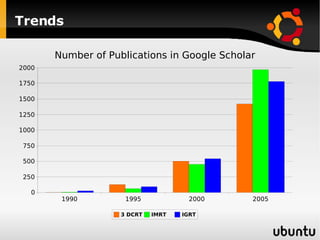
Trends
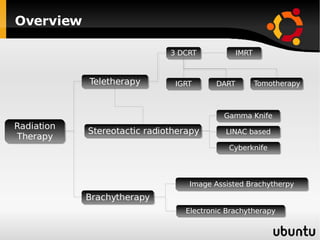
Overview 3 DCRT Radiation Therapy Teletherapy Brachytherapy IMRT IGRT DART Electronic Brachytherapy Tomotherapy Image Assisted Brachytherpy Stereotactic radiotherapy Gamma Knife LINAC based Cyberknife
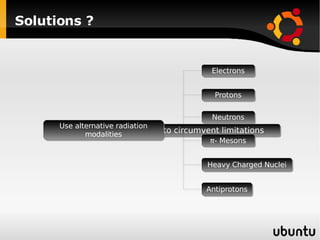
Solutions ? Develop technologies to circumvent limitations Use alternative radiation modalities Electrons Protons Neutrons π - Mesons Heavy Charged Nuclei Antiprotons
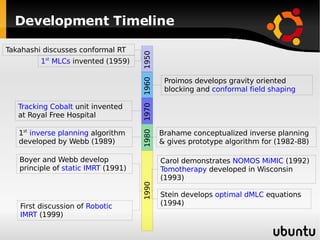
Development Timeline 1990 1960 Proimos develops gravity oriented blocking and  conformal field shaping 1980 Brahame conceptualized inverse planning & gives prototype algorithm for (1982-88) 1 st   inverse planning  algorithm developed by Webb (1989) 1970 Tracking Cobalt  unit invented at Royal Free Hospital 1950 Takahashi discusses conformal RT 1 st  MLCs  invented (1959) Boyer and Webb develop principle of  static IMRT  (1991) Carol demonstrates  NOMOS MiMIC  (1992) Tomotherapy  developed in Wisconsin (1993) Stein develops  optimal dMLC  equations (1994) First discussion of  Robotic IMRT  (1999)
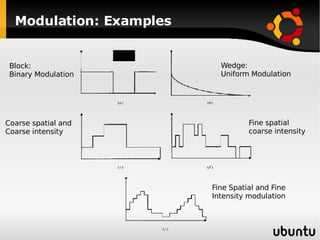
Modulation: Examples Block:  Binary Modulation Wedge: Uniform Modulation Coarse spatial and Coarse intensity Fine spatial  coarse intensity  Fine Spatial and Fine Intensity modulation
Conformal Radiotherapy Conformal radiotherapy (CFRT) is a technique that aims to exploit the potential biological improvements consequent on better spatial localization of the high-dose irradiation volume - S. Webb in Intensity Modulated Radiotherapy IOP
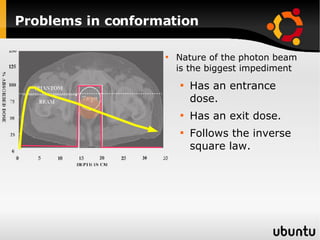
Problems in conformation Nature of the photon beam is the biggest impediment Has an entrance dose. Has an exit dose. Follows the inverse square law.
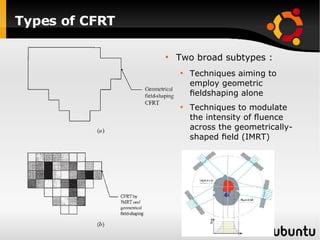
Types of CFRT Two broad subtypes : Techniques aiming to employ geometric fieldshaping alone Techniques to modulate the intensity of fluence across the geometrically-shaped field (IMRT)
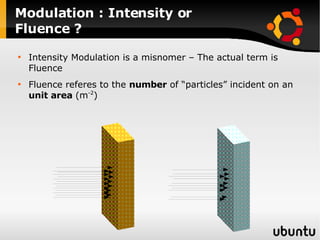
Modulation : Intensity or Fluence ? Intensity Modulation is a misnomer – The actual term is Fluence Fluence referes to the  number  of “particles” incident on an  unit area  (m -2 )
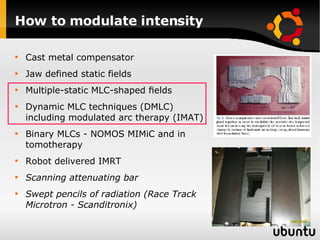
How to modulate intensity Cast metal compensator Jaw defined static fields Multiple-static MLC-shaped fields  Dynamic MLC techniques (DMLC) including modulated arc therapy (IMAT)  Binary MLCs - NOMOS MIMiC and in tomotherapy Robot delivered IMRT Scanning attenuating bar Swept pencils of radiation (Race Track Microtron - Scanditronix)
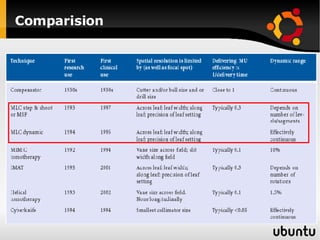
Comparision
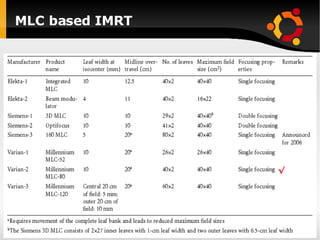
MLC based IMRT √
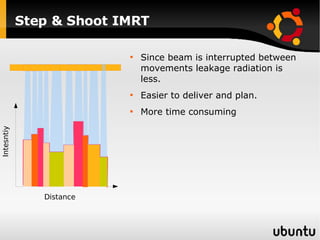
Step & Shoot IMRT Intesntiy Distance Since beam is interrupted between movements leakage radiation is less. Easier to deliver and plan. More time consuming
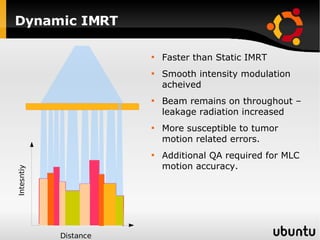
Dynamic IMRT Faster than Static IMRT Smooth intensity modulation acheived Beam remains on throughout – leakage radiation increased More susceptible to tumor motion related errors. Additional QA required for MLC motion accuracy. Intesntiy Distance
Caveats: Conformal Therapy Significantly  increased  expenditure: Machine with treatment capability Imaging equipment: Planning and Verification Software and Computer hardware Extensive physics manpower and time required. Conformal nature – highly susceptible to motion and setup related errors –  Achilles heel of CFRT Target delineation remains problematic. Treatment and Planning time both significantly increased Radiobiological disadvantage: Decreased “dose-rate” to the tumor Increased integral dose (Cyberknife > Tomotherapy > IMRT)
3D Conformal Radiation Planning
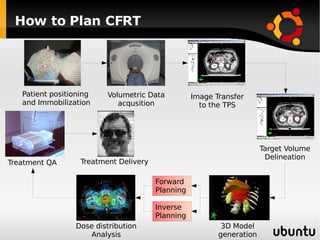
How to Plan CFRT Patient positioning and Immobilization Volumetric Data acqusition Image Transfer to the TPS Target Volume Delineation 3D Model generation Forward Planning Inverse Planning Dose distribution Analysis Treatment QA Treatment Delivery
Positioning and Immobilization Two of the most important aspects of conformal radiation therapy. Basis for the precision in conformal RT Needs to be: Comfortable Reproducible Minimal beam attenuating Affordable Holds the Target in place while the beam is turned on
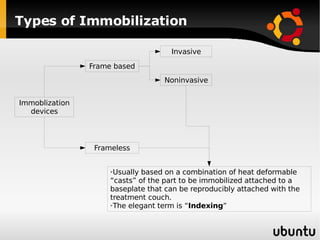
Types of Immobilization Immoblization devices Frame based Frameless Invasive Noninvasive Usually based on a combination of heat deformable “casts” of the part to be immobilized attached to a baseplate that can be reproducibly attached with the treatment couch. The elegant term is “ Indexing ”
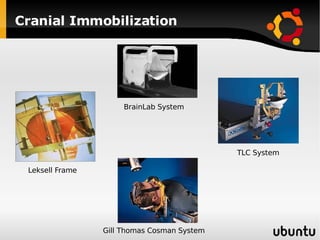
Cranial Immobilization TLC System Gill Thomas Cosman System Leksell Frame BrainLab System
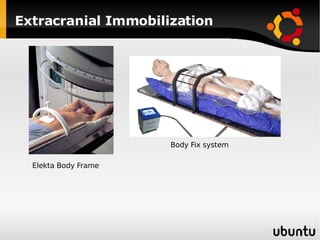
Extracranial Immobilization Elekta Body Frame Body Fix system
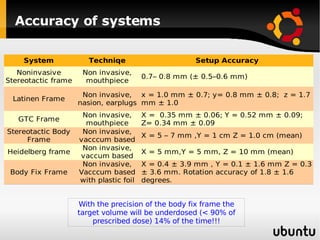
Accuracy of systems With the precision of the body fix frame the target volume will be underdosed (< 90% of prescribed dose) 14% of the time!!!
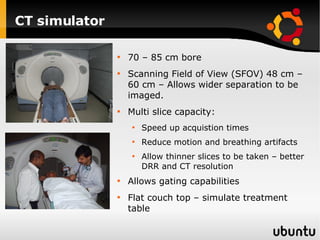
CT simulator 70 – 85 cm bore  Scanning Field of View (SFOV) 48 cm – 60 cm – Allows wider separation to be imaged. Multi slice capacity: Speed up acquistion times Reduce motion and breathing artifacts Allow thinner slices to be taken – better DRR and CT resolution Allows gating capabilities Flat couch top – simulate treatment table
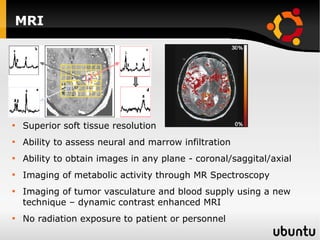
MRI Superior soft tissue resolution Ability to assess neural and marrow infiltration Ability to obtain images in any plane - coronal/saggital/axial Imaging of metabolic activity through MR Spectroscopy Imaging of tumor vasculature and blood supply using a new technique – dynamic contrast enhanced MRI No radiation exposure to patient or personnel
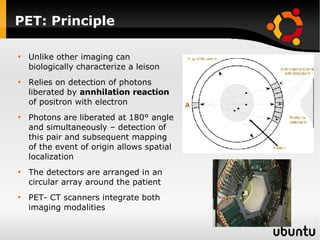
PET: Principle Unlike other imaging can biologically characterize a leison Relies on detection of photons liberated by  annhilation reaction  of positron with electron Photons are liberated at 180 °  angle and simultaneously – detection of this pair and subsequent mapping of the event of origin allows spatial localization The detectors are arranged in an circular array around the patient PET- CT scanners integrate both imaging modalities
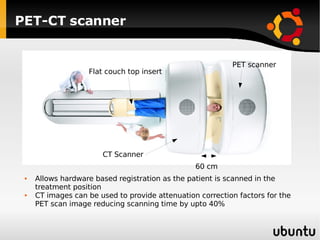
PET-CT scanner Flat couch top insert CT Scanner PET scanner 60 cm Allows hardware based registration as the patient is scanned in the treatment position CT images can be used to provide attenuation correction factors for the PET scan image reducing scanning time by upto 40%
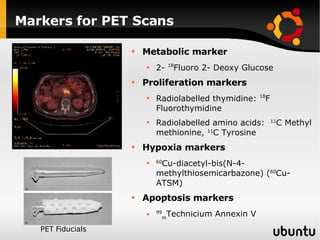
Markers for PET Scans Metabolic marker 2-  18 Fluoro 2- Deoxy Glucose Proliferation markers Radiolabelled thymidine:  18 F Fluorothymidine Radiolabelled amino acids: 11 C Methyl methionine,  11 C Tyrosine Hypoxia markers 60 Cu-diacetyl-bis(N-4-methylthiosemicarbazone) ( 60 Cu-ATSM) Apoptosis markers 99 m Technicium Annexin V  PET Fiducials
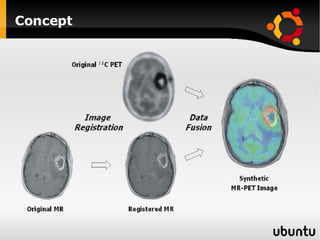
Image Registration Technique by which the coordinates of  identical points  in two imaging data sets are determined and a set of  transformations  determined to  map  the coordinates of one image to another Uses  of Image registration: Study Organ Motion (4 D CT) Assess Tumor extent (PET / MRI fusion) Assess Changes in organ and tumor volumes over time (Adaptive RT) Types of Transformations : Rigid – Translations and Rotations  Deformable – For motion studies
Concept
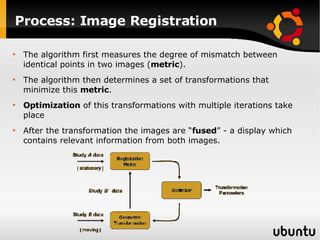
Process: Image Registration The algorithm first measures the degree of mismatch between identical points in two images ( metric ). The algorithm then determines a set of transformations that minimize this  metric . Optimization  of this transformations with multiple iterations take place After the transformation the images are “ fused ” - a display which contains relevant information from both images.
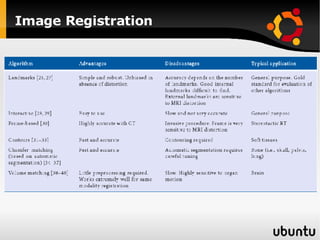
Image Registration
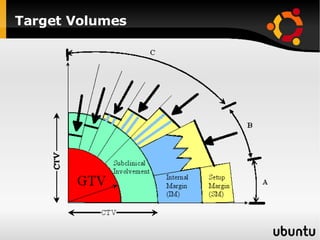
Target Volume delineation The most important and most error prone step in radiotherapy. Also called  Image Segmentation The target volume is of following types: GTV (Gross Target Volume) CTV (Clinical Target Volume) ITV (Internal Target Volume) PTV (Planning Target Volume) Other  volumes: Targeted Volume Irradiated Volume Biological Volume
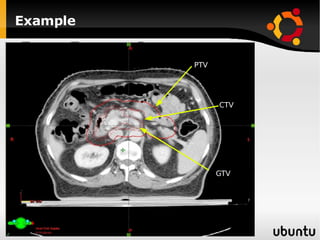
Target Volumes GTV :  Macroscopic  extent of the tumor as defined by radiological  and  clinical investigations. CTV : The GTV  together  with the surrounding microscopic extension of the tumor constitutes the CTV. The CTV also includes the  tumor bed  of a R0 resection (no residual). ITV (ICRU 62) : The ITV encompasses the GTV/CTV with an additional margin to account for  physiological  movement of the tumor or organs. It is defined with respect to a  internal reference  – most commonly rigid bony skeleton. PTV : A margin given to above to account for  uncertainities  in patient setup and beam adjustment.
Target Volumes
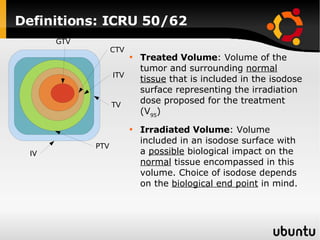
Definitions: ICRU 50/62 GTV CTV ITV PTV TV IV Treated Volume : Volume of the tumor and surrounding  normal tissue  that is included in the isodose surface representing the irradiation dose proposed for the treatment (V 95 ) Irradiated Volume : Volume included in an isodose surface with a  possible  biological impact on the  normal  tissue encompassed in this volume. Choice of isodose depends on the  biological end point  in mind.
Example PTV CTV GTV
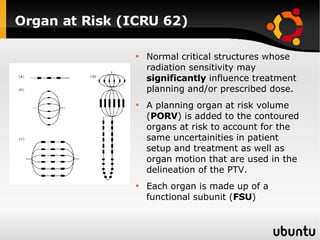
Organ at Risk (ICRU 62) Normal critical structures whose radiation sensitivity may  significantly  influence treatment planning and/or prescribed dose.  A planning organ at risk volume ( PORV ) is added to the contoured organs at risk to account for the same uncertainities in patient setup and treatment as well as organ motion that are used in the delineation of the PTV. Each organ is made up of a functional subunit ( FSU )
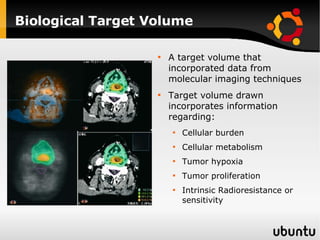
Biological Target Volume A target volume that incorporated data from molecular imaging techniques Target volume drawn incorporates information regarding: Cellular burden Cellular metabolism Tumor hypoxia Tumor proliferation Intrinsic Radioresistance or sensitivity
Biological Target Volumes Lung Cancer : 30 -60% of all GTVs and PTVs are changed with PET. Increase in the volume can be seen in 20 -40%.  Decrease in the volume in 20 – 30%. Several studies show significant improvement in nodal delineation. Head and Neck Cancer : PET fused images lead to a change in GTV volume in 79%. Can improve parotid sparing in 70% patients.
3 D TPS Treatment planning systems are complex computer systems that help design radiation treatments and facilitate the calculation of patient doses. Several vendors with varying characteristics Provide tools for: Image registration Image segmentation: Manual and automated Virtual Simualtion Dose calculation Plan Evaluation Data Storage and transmission to console Treatment verification
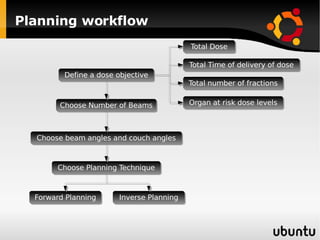
Planning workflow Define a dose objective Total Dose Total Time of delivery of dose Total number of fractions Choose Number of Beams Choose beam angles and couch angles Organ at risk dose levels Choose Planning Technique Forward Planning Inverse Planning
“Forward” Planning A technique where the planner will try a variety of combinations of beam angles, couch angles, beam weights and beam modifying devices (e.g. wedges) to find a optimum dose distribution. Iterations are done manually till the optimum solution is reached. Choice for  some  situations: Small number of fields: 4 or less. Convex dose distribution required. Conventional dose distribution desired. Conformity of high dose region is a less important concern.
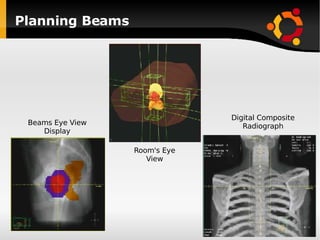
Planning Beams Beams Eye View Display Room's Eye View Digital Composite Radiograph
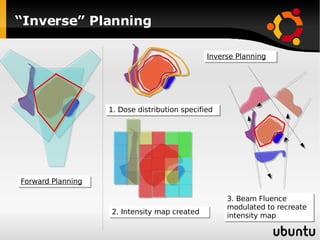
“Inverse” Planning 1. Dose distribution specified Forward Planning 2. Intensity map created 3. Beam Fluence modulated to recreate intensity map Inverse Planning
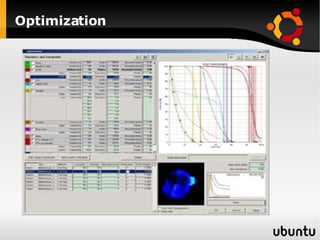
Optimization Refers to the technique of finding the  best  physical and technically possible treatment plan to fulfill the  specified  physical and clinical criteria. A mathematical  technique  that aims to maximize (or minimize) a  score  under certain  constraints . It is one of the most commonly used techniques for inverse planning. Variables that  may be  optimized: Intensity maps Number of beams Number of intensity levels Beam angles Beam energy
Optimization
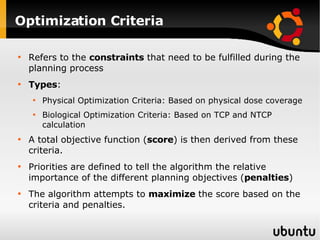
Optimization Criteria Refers to the  constraints  that need to be fulfilled during the planning process Types : Physical Optimization Criteria: Based on physical dose coverage Biological Optimization Criteria: Based on TCP and NTCP calculation A total objective function ( score ) is then derived from these criteria. Priorities are defined to tell the algorithm the relative importance of the different planning objectives ( penalties ) The algorithm attempts to  maximize  the score based on the criteria and penalties.
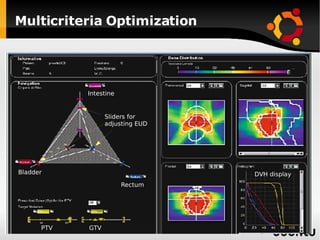
Multicriteria Optimization Sliders for adjusting EUD  Rectum Bladder Intestine PTV GTV DVH display
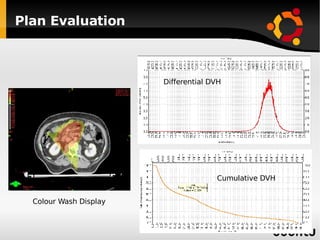
Plan Evaluation Colour Wash Display Differential DVH Cumulative DVH
Image Guided  Radiotherapy and 4D planning
Why 4D Planning? Organ motion types: Interfraction motion Intrafraction motion Even intracranial structures can move – 1.5 mm shift when patient goes from sitting to supine!! Types of movement: Translations: Craniocaudal Lateral Vertical Rotations: Roll  Pitch Yaw Shape: Flattening Balloning Pulsation
Interfraction Motion Prostate : Motion max in SI and AP SI 1.7 - 4.5 mm AP 1.5 – 4.1 mm Lateral 0.7 – 1.9 mm SV motion > Prostate Uterus : SI: 7 mm  AP : 4 mm Cervix : SI: 4 mm Rectum : Diameter: 3 – 46 mm Volumes: 20 – 40% In many studies decrease in volume found Bladder : Max transverse diameter mean 15 mm variation SI displacement 15 mm Volume variation 20% - 50%
Intrafraction Motion Liver : Normal Breathing: 10 – 25 mm Deep breathing: 37 – 55 mm Kidney : Normal breathing: 11 -18 mm Deep Breathing: 14 -40 mm Pancreas : Average 10 -30 mm Lung : Quiet breathing AP 2.4 ± 1.3 mm Lateral 2.4 ± 1.4 mm  SI 3.9 ± 2.6 mm 2 °  to Cardiac motion: 9  ±  6 mm lateral motion Tumors located close to the chest wall and in upper lobe show reduced interfraction motion. Maximum motion is in tumors close to mediastinum
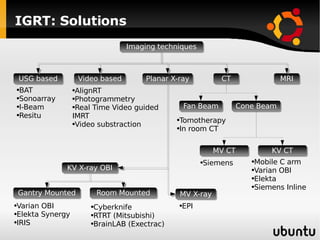
IGRT: Solutions Mobile C arm Varian OBI Elekta Siemens Inline Imaging techniques USG based Video based Planar X-ray CT MRI BAT Sonoarray I-Beam Resitu AlignRT Photogrammetry Real Time Video guided IMRT Video substraction KV X-ray OBI MV X-ray Gantry Mounted Room Mounted Varian OBI Elekta Synergy IRIS  Cyberknife RTRT (Mitsubishi) BrainLAB (Exectrac) EPI Fan Beam Cone Beam Tomotherapy In room CT MV CT KV CT Siemens
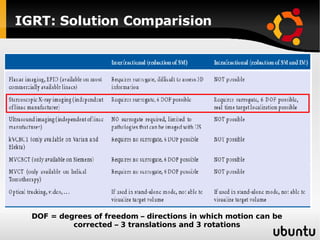
IGRT: Solution Comparision DOF = degrees of freedom – directions in which motion can be corrected – 3 translations and 3 rotations
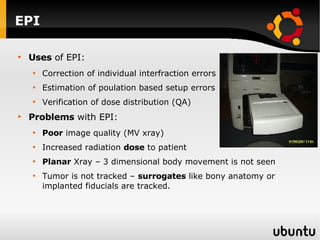
EPI Uses  of EPI: Correction of individual interfraction errors Estimation of poulation based setup errors  Verification of dose distribution (QA) Problems  with EPI: Poor  image quality (MV xray) Increased radiation  dose  to patient  Planar  Xray – 3 dimensional body movement is not seen Tumor is not tracked –  surrogates  like bony anatomy or implanted fiducials are tracked.
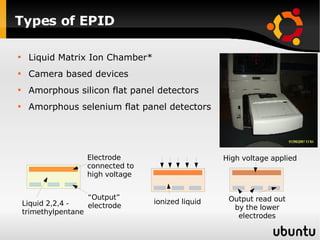
Types of EPID Liquid Matrix Ion Chamber* Camera based devices Amorphous silicon flat panel detectors Amorphous selenium flat panel detectors Electrode connected to  high voltage “ Output” electrode Liquid 2,2,4 - trimethylpentane ionized liquid High voltage applied Output read out by the lower electrodes
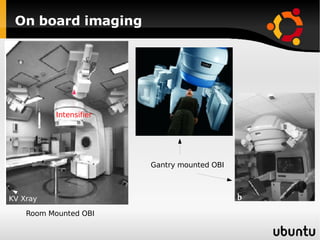
On board imaging Room Mounted OBI Gantry mounted OBI KV Xray Intensifier
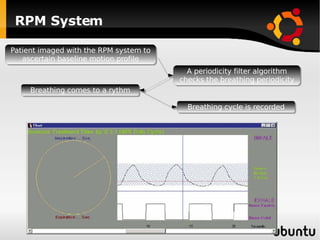
4 D CT acqusition Axial scans are acquired with the use of a RPM camera attached to couch. The “cine” mode of the scanner is used to acquire multiple axial scans at predetermined phases of respiratory cycle for each couch position
RPM System Patient imaged with the RPM system to ascertain baseline motion profile A periodicity filter algorithm checks the breathing periodicity Breathing comes to a rythm Breathing cycle is recorded
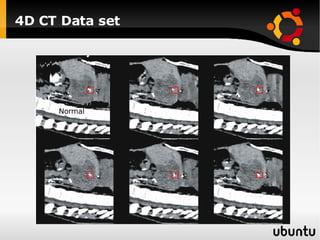
4D CT Data set Normal
Problems with 4 D CT The image quality depends on the  reproducibility  of the respiratory motion. The  volume  of images produced is increased by a factor of 10. Specialized software needed to  sort  and  visualize  the 4D data. Dose delivered during the scans can  increase  3-4 times. Image  fusion  with other modalities remains an unsolved problem
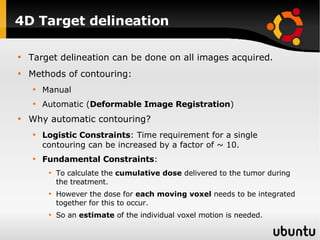
4D Target delineation Target delineation can be done on all images acquired. Methods of contouring: Manual Automatic ( Deformable Image Registration ) Why automatic contouring? Logistic Constraints : Time requirement for a single contouring can be increased by a factor of ~ 10. Fundamental Constraints :  To calculate the  cumulative dose  delivered to the tumor during the treatment.  However the dose for  each moving voxel  needs to be integrated together for this to occur. So an  estimate  of the individual voxel motion is needed.
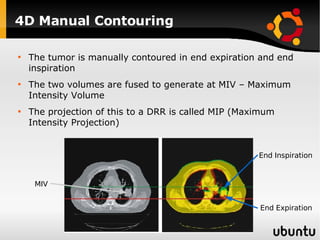
4D Manual Contouring The tumor is manually contoured in end expiration and end inspiration The two volumes are fused to generate at MIV – Maximum Intensity Volume  The projection of this to a DRR is called MIP (Maximum Intensity Projection) End Expiration End Inspiration MIV
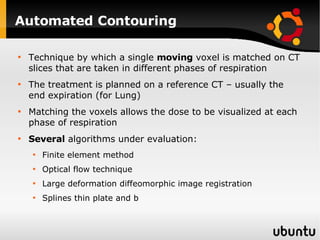
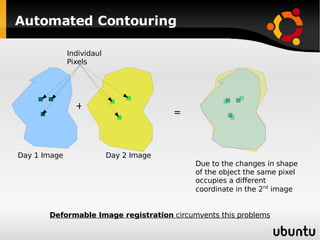
Automated Contouring Technique by which a single  moving  voxel is matched on CT slices that are taken in different phases of respiration The treatment is planned on a reference CT – usually the end expiration (for Lung) Matching the voxels allows the dose to be visualized at each phase of respiration Several  algorithms under evaluation: Finite element method Optical flow technique Large deformation diffeomorphic image registration Splines thin plate and b
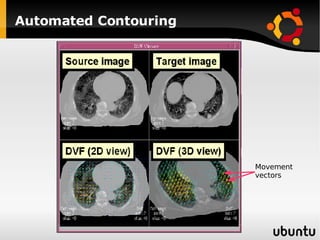
Automated Contouring Movement vectors
Automated Contouring Day 1 Image Day 2 Image Individaul Pixels Due to the changes in shape of the object the same pixel occupies a different coordinate in the 2 nd  image + = Deformable Image registration  circumvents this problems
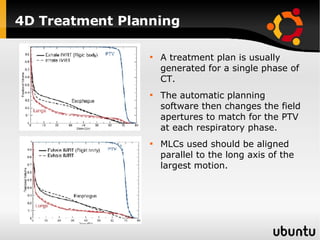
4D Treatment Planning A treatment plan is usually generated for a single phase of CT. The automatic planning software then changes the field apertures to match for the PTV at each respiratory phase. MLCs used should be aligned parallel to the long axis of the largest motion.
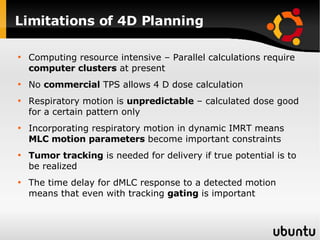
Limitations of 4D Planning Computing resource intensive – Parallel calculations require  computer clusters  at present No  commercial  TPS allows 4 D dose calculation  Respiratory motion is  unpredictable  – calculated dose good for a certain pattern only Incorporating respiratory motion in dynamic IMRT means  MLC motion parameters  become important constraints Tumor tracking  is needed for delivery if true potential is to be realized The time delay for dMLC response to a detected motion means that even with tracking  gating  is important
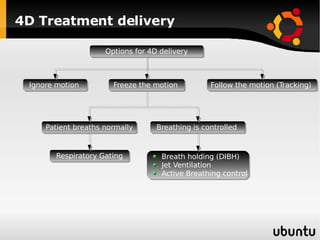
4D Treatment delivery Options for 4D delivery Ignore motion  Freeze the motion  Follow the motion (Tracking)  Patient breaths normally Breathing is controlled  Respiratory Gating Breath holding (DIBH) Jet Ventilation Active Breathing control
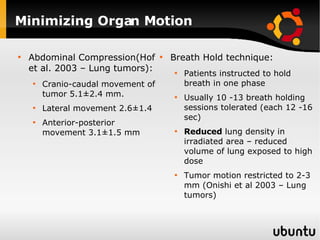
Minimizing Organ Motion Abdominal Compression(Hof et al. 2003 – Lung tumors): Cranio-caudal movement of tumor 5.1±2.4 mm.  Lateral movement 2.6±1.4  Anterior-posterior movement 3.1±1.5 mm  Breath Hold technique: Patients instructed to hold breath in one phase Usually 10 -13 breath holding sessions tolerated (each 12 -16 sec) Reduced  lung density in irradiated area – reduced volume of lung exposed to high dose  Tumor motion restricted to 2-3 mm (Onishi et al 2003 – Lung tumors)
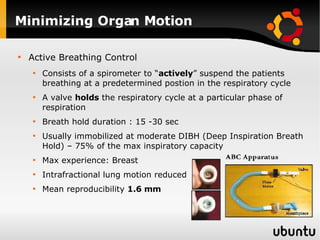
Minimizing Organ Motion Active Breathing Control Consists of a spirometer to “ actively ” suspend the patients breathing at a predetermined postion in the respiratory cycle A valve  holds  the respiratory cycle at a particular phase of respiration  Breath hold duration : 15 -30 sec Usually immobilized at moderate DIBH (Deep Inspiration Breath Hold) – 75% of the max inspiratory capacity Max experience: Breast Intrafractional lung motion reduced Mean reproducibility  1.6 mm
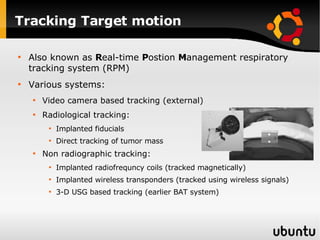
Tracking Target motion Also known as  R eal-time  P ostion  M anagement respiratory tracking system (RPM) Various systems: Video camera based tracking (external) Radiological tracking: Implanted fiducials Direct tracking of tumor mass Non radiographic tracking: Implanted radiofrequncy coils (tracked magnetically) Implanted wireless transponders (tracked using wireless signals) 3-D USG based tracking (earlier BAT system)
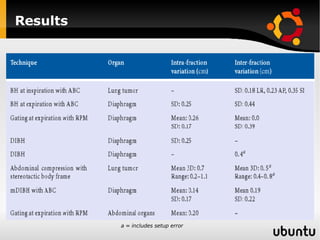
Results a = includes setup error
Adaptive Radiotherapy Planning
Adaptive Radiotherapy (ART) Adaptive radiotherapy is a technique by which a conformal radiation dose plan is modified to conform to a mobile and deformable target. Two components: Adapt to tumor motion (IGRT) Adapt to tumor / organ deformation and volume change. 4 ways to  adapt  radiation beam to tracked tumor motion: Move couch electronically to adapt to the moving tumor Move a charged particle beam electromagnetically Move a robotic lightweight linear accelerator Move aperture shaped by a dynamic MLC
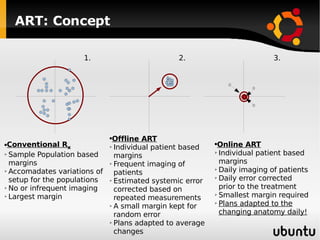
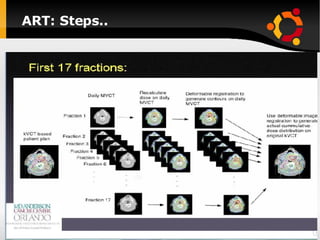
ART: Concept Conventional R x Sample Population based margins  Accomadates variations of setup for the populations No or infrequent imaging Largest margin Offline ART Individual patient based margins Frequent imaging of patients Estimated systemic error corrected based on repeated measurements A small margin kept for random error Plans adapted to average changes Online ART Individual patient based margins Daily imaging of patients Daily error corrected prior to the treatment Smallest margin required Plans adapted to the changing anatomy daily! 1. 2. 3.
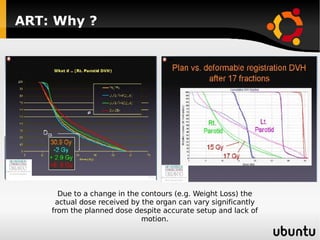
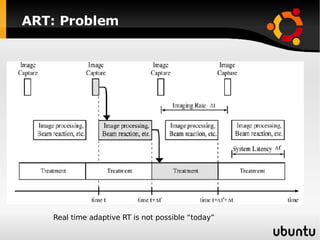
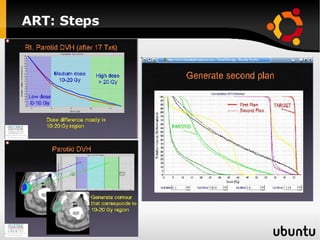
ART: Why ? Due to a change in the contours (e.g. Weight Loss) the actual dose received by the organ can vary significantly from the planned dose despite accurate setup and lack of motion.
ART: Problem Real time adaptive RT is not possible “today”
ART: Steps..
ART: Steps
Helical Tomotherapy
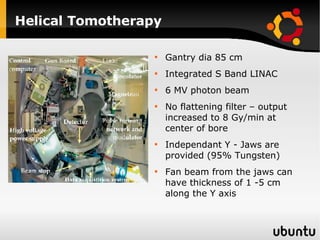
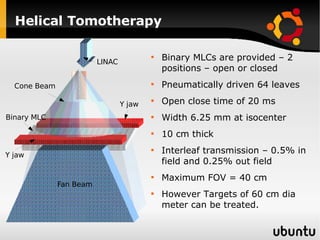
Helical Tomotherapy Gantry dia 85 cm Integrated S Band LINAC 6 MV photon beam No flattening filter – output increased to 8 Gy/min at center of bore Independant Y - Jaws are provided (95% Tungsten) Fan beam from the jaws can have thickness of 1 -5 cm along the Y axis
Helical Tomotherapy Binary MLCs are provided – 2 positions – open or closed Pneumatically driven 64 leaves Open close time of 20 ms Width 6.25 mm at isocenter 10 cm thick Interleaf transmission – 0.5% in field and 0.25% out field Maximum FOV = 40 cm However Targets of 60 cm dia meter can be treated. LINAC Cone Beam Y jaw Y jaw Fan Beam Binary MLC
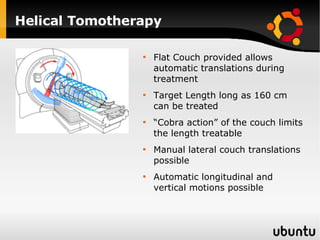
Helical Tomotherapy Flat Couch provided allows automatic translations during treatment Target Length long as 160 cm can be treated  “Cobra action” of the couch limits the length treatable  Manual lateral couch translations possible Automatic longitudinal and vertical motions possible
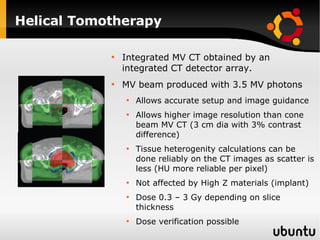
Helical Tomotherapy Integrated MV CT obtained by an integrated CT detector array. MV beam produced with 3.5 MV photons Allows accurate setup and image guidance Allows higher image resolution than cone beam MV CT (3 cm dia with 3% contrast difference) Tissue heterogenity calculations can be done reliably on the CT images as scatter is less (HU more reliable per pixel) Not affected by High Z materials (implant) Dose 0.3 – 3 Gy depending on slice thickness Dose verification possible
Newer Techniques in Radiation therapy Treatment Results (Clinical)
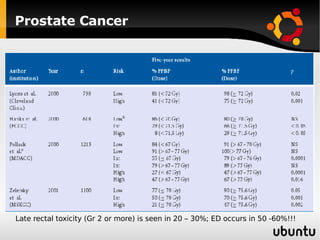
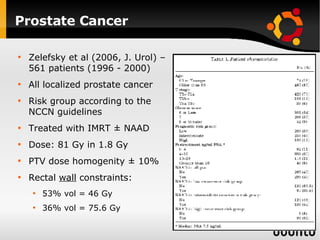
Prostate Cancer Late rectal toxicity (Gr 2 or more) is seen in 20 – 30%; ED occurs in 50 -60%!!!
Prostate Cancer Zelefsky et al (2006, J. Urol) – 561 patients (1996 - 2000) All localized prostate cancer Risk group according to the NCCN guidelines Treated with IMRT  ±  NAAD Dose: 81 Gy in 1.8 Gy PTV dose homogenity  ±  10% Rectal  wall  constraints: 53% vol = 46 Gy 36% vol = 75.6 Gy
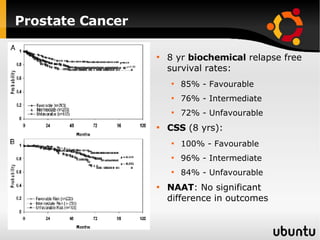
Prostate Cancer 8 yr  biochemical  relapse free survival rates: 85% - Favourable 76% - Intermediate 72% - Unfavourable CSS  (8 yrs): 100% - Favourable 96% - Intermediate 84% - Unfavourable NAAT : No significant difference in outcomes
Prostate Cancer Rectal Toxicity : Grade 2: 7 patients (1.5%); Grade 3: 3 patients (less than 1%)  The 8-year actuarial likelihood of late grade 2 or greater rectal toxicity 1.6%.  Urinary Toxicity : Grade 2 chronic urethritis in 50 patients (9%); Urethral stricture requiring dilation (grade 3) developed in 18 patients (3%). The 8-year actuarial likelihood of late grade 2 or greater urinary toxicities was 15%. 47% patient developed  ED  (43% IMRT alone; 57% ADT) No 2 nd  cancers!
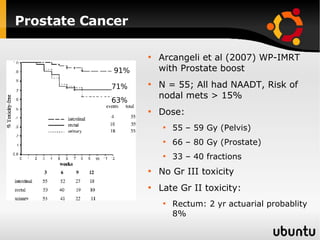
Prostate Cancer Arcangeli et al (2007) WP-IMRT with Prostate boost N = 55; All had NAADT, Risk of nodal mets > 15% Dose: 55 – 59 Gy (Pelvis) 66 – 80 Gy (Prostate) 33 – 40 fractions No Gr III toxicity Late Gr II toxicity: Rectum: 2 yr actuarial probablity 8% 91% 71% 63%
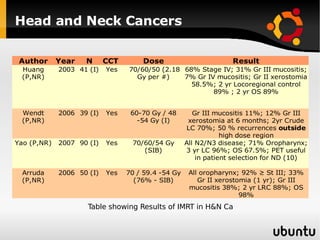
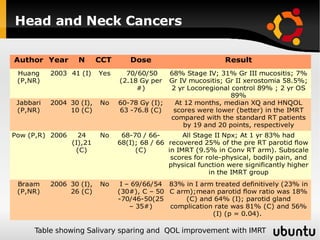
Head and Neck Cancers Table showing Results of IMRT in H&N Ca
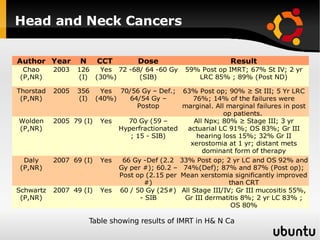
Head and Neck Cancers Table showing results of IMRT in H& N Ca
Head and Neck Cancers Table showing Salivary sparing and  QOL improvement with IMRT
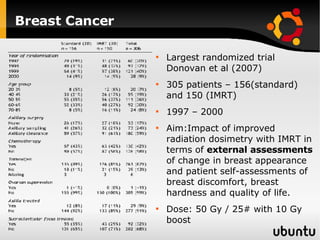
Breast Cancer Largest randomized trial Donovan et al (2007) 305 patients – 156(standard) and 150 (IMRT) 1997 – 2000 Aim:Impact of improved radiation dosimetry with IMRT in terms of  external assessments  of change in breast appearance and patient self-assessments of breast discomfort, breast hardness and quality of life. Dose: 50 Gy / 25# with 10 Gy boost
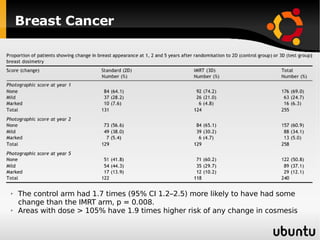
Breast Cancer The control arm had 1.7 times (95% CI 1.2–2.5) more likely to have had some change than the IMRT arm, p = 0.008.  Areas with dose > 105% have 1.9 times higher risk of any change in cosmesis
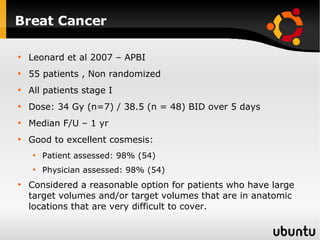
Breat Cancer Leonard et al 2007 – APBI 55 patients , Non randomized All patients stage I Dose: 34 Gy (n=7) / 38.5 (n = 48) BID over 5 days Median F/U – 1 yr Good to excellent cosmesis: Patient assessed: 98% (54) Physician assessed: 98% (54) Considered a reasonable option for patients who have large target volumes and/or target volumes that are in anatomic locations that are very difficult to cover.
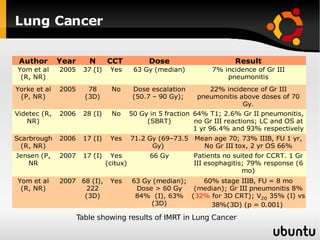
Lung Cancer Table showing results of IMRT in Lung Cancer
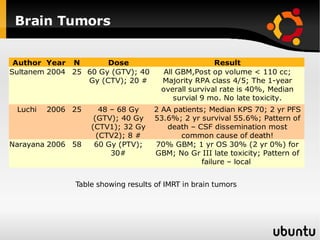
Brain Tumors Table showing results of IMRT in brain tumors
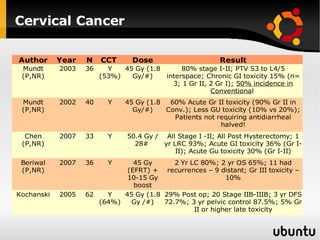
Cervical Cancer
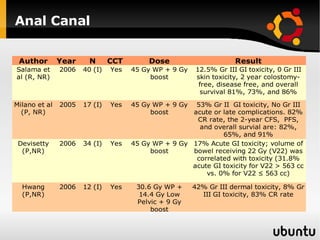
Anal Canal
New Techniques in Stereotactic Radiation therapy
Stereotaxy Derived from the greek words  Stereo =  3 dimensional space and  Taxis  = to arrange. A method which defines a point in the patient’s body by using an external three-dimensional coordinate system which is rigidly attached to the patient.  Stereotactic radiotherapy uses this technique to position a target reference point, defined in the tumor, in the isocenter of the radiation machine (LINAC, gamma knife, etc.). Units used: Gamma Knife LINAC with special collimators or mico MLC Cyberknife Neutron beams
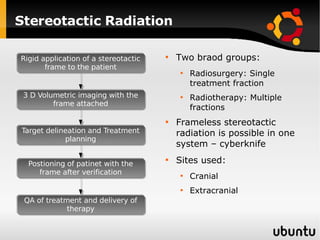
Stereotactic Radiation Two braod groups: Radiosurgery: Single treatment fraction Radiotherapy: Multiple fractions Frameless stereotactic radiation is possible in one system – cyberknife Sites used: Cranial Extracranial Rigid application of a stereotactic frame to the patient 3 D Volumetric imaging with the frame attached Target delineation and Treatment planning Postioning of patinet with the frame after verification QA of treatment and delivery of therapy
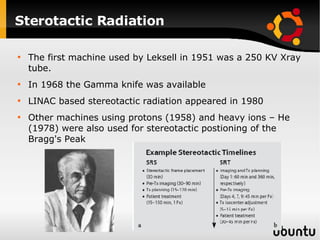
Sterotactic Radiation The first machine used by Leksell in 1951 was a 250 KV Xray tube. In 1968 the Gamma knife was available LINAC based stereotactic radiation appeared in 1980 Other machines using protons (1958) and heavy ions – He (1978) were also used for stereotactic postioning of the Bragg's Peak
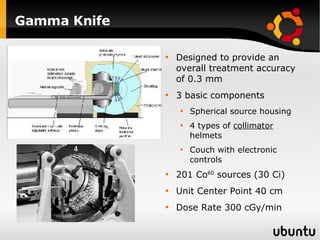
Gamma Knife Designed to provide an overall treatment accuracy of 0.3 mm 3 basic components Spherical source housing 4 types of  collimator  helmets Couch with electronic controls 201 Co 60  sources (30 Ci) Unit Center Point 40 cm Dose Rate 300 cGy/min
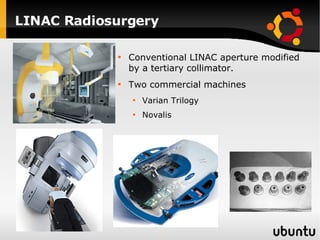
LINAC Radiosurgery Conventional LINAC aperture modified by a tertiary collimator. Two commercial machines Varian Trilogy Novalis
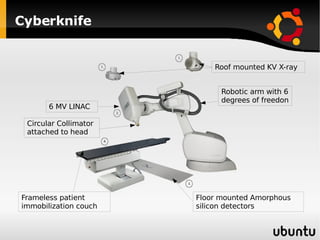
Cyberknife Floor mounted Amorphous silicon detectors 6 MV LINAC Roof mounted KV X-ray Frameless patient immobilization couch Robotic arm with 6 degrees of freedon Circular Collimator attached to head
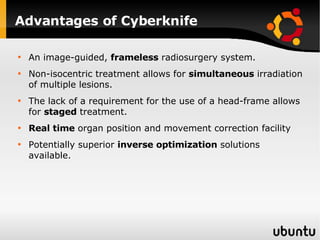
Advantages of Cyberknife An image-guided,  frameless  radiosurgery system.  Non-isocentric treatment allows for  simultaneous  irradiation of multiple lesions.  The lack of a requirement for the use of a head-frame allows for  staged  treatment.  Real time  organ position and movement correction facility Potentially superior  inverse optimization  solutions available.
Cyberknife 185 published articles till date; 5000 patients treated. 73 worldwide installations Areas where clinically evaluated: Intracranial tumors Trigeminal neuralgia and AVMs Paraspinal tumors – 1 °  and 2 ° Juvenile Nasopharyngeal Angiofibroma Perioptic tumors Localized prostate cancer However till date maximum expirence with Intracranial or Peri-spinal Stereotactic RT
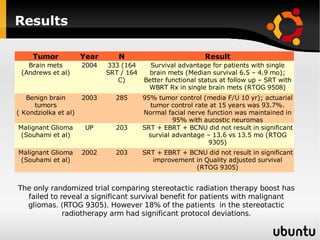
Results The only randomized trial comparing stereotactic radiation therapy boost has failed to reveal a significant survival benefit for patients with malignant gliomas. (RTOG 9305). However 18% of the patients  in the stereotactic radiotherapy arm had significant protocol deviations.
New Techniques in Brachytherapy
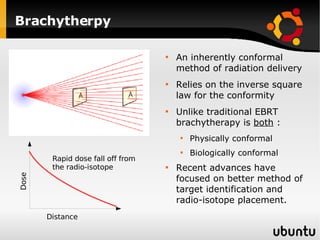
Brachytherpy An inherently conformal method of radiation delivery Relies on the inverse square law for the conformity Unlike traditional EBRT brachytherapy is  both  : Physically conformal  Biologically conformal Recent advances have focused on better method of target identification and radio-isotope placement. Dose Distance Rapid dose fall off from the radio-isotope
Brachytherapy: What's New Image Based Brachytherapy Image Guided Brachytherapy Robotic Brachytherapy ‡ Electronic Brachytherapy* Image  Based  Brachytherapy : Technique where advanced imaging modalites are used to gain information about the volumetric dose delivery by brachytherapy Image  Guided  Brachytherapy : Technique where imaging is used to  guide  brachytherapy source placement as well give information regarding the volumetric dose distribution Image Assisted Brachytherapy
Image Assisted Brachytherapy Principle : Cross sectional imaging utilized to plan and analyze a brachytherapy procedure Steps : Image assisted provisional treatment planning Image guided application Image assisted definitive treatment planning Image assisted quality control of dose delivery Provisional planning  refers to the planning of the implant prior to the placement of the applicator in situ – important to realize the significant anatomical distrortions 2 °  to the applicator placement. Definitive planning  refers to the definitve treatment planning with the applicator in situ.
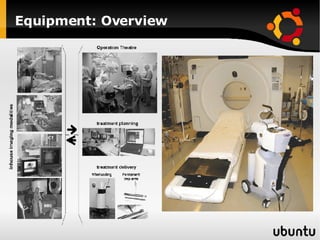
Equipment: Overview
Equipment: Imaging Table showing Imaging modality of choice in different anatomical areas
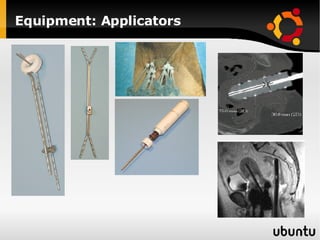
Equipment: Applicators
Image Acqusition Images should be acquired in 3 dimensions parallel and perpendicular to the axis of the applicator This minimizes reconstruction related artifacts The best modality in this respect is the MRI CE MRI can provide excellent soft tissue contrast too Para Sagittal Para Coronal Para Axial
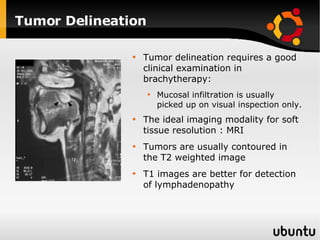
Tumor Delineation Tumor delineation requires a good clinical examination in brachytherapy: Mucosal infiltration is usually picked up on visual inspection only. The ideal imaging modality for soft tissue resolution : MRI Tumors are usually contoured in the T2 weighted image  T1 images are better for detection of lymphadenopathy
Target Volumes The target volumes as defined by ICRU 58 are similiar to the ICRU 62 recommendations Modifications  specific  to brachytherapy: PTV generally “approximates” CTV as applicators are considered to maintain positional accuracy. If the patient is treated with EBRT / Sx prior to brachy the CTV is the initial tumor volume (GTV) prior to treatment. The GTV for brachytherapy should be recorded seperately in such cases. Due to high dose gradient organ delineation is meaningful if done in the vicinity of the applicator For luminal structures wall delineation can give a better idea about the dose received as compared to the whole volume
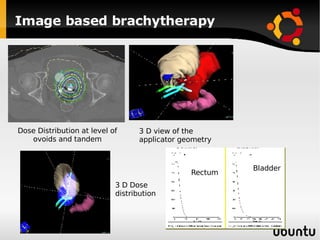
Image based brachytherapy Dose Distribution at level of ovoids and tandem 3 D view of the applicator geometry 3 D Dose distribution Rectum Bladder
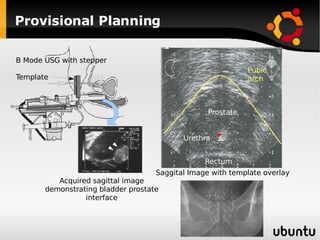
Provisional Planning B Mode USG with stepper Template Acquired sagittal image demonstrating bladder prostate interface Saggital Image with template overlay Pubic arch Prostate Urethra Rectum
Provisional Planning  Beaulieu et al reported on 35 cases (IJROBP 2002) Prostate contours were created in a preplan setting as well as in the operating room (OR). In 63% of patients the volume of the prostate drawn had changed.  These changes in volume and shape resulted in a  mean dose  coverage loss of 5.7%. In extreme cases, the  V 100  coverage loss was 20.9%. At present applied clinically for prostate cancer only. For both intraluminal and intracavitary significant changes of the anatomy on application preclude provisional planning.
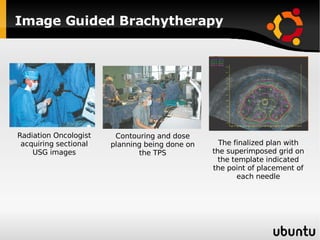
Image Guided Brachytherapy Radiation Oncologist acquiring sectional USG images Contouring and dose planning being done on the TPS The finalized plan with the superimposed grid on the template indicated the point of placement of each needle
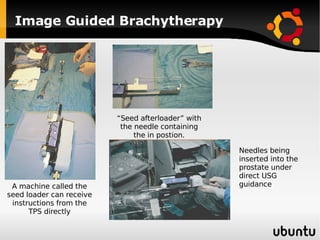
Image Guided Brachytherapy A machine called the seed loader can receive instructions from the TPS directly “Seed afterloader” with the needle containing the in postion. Needles being inserted into the prostate under direct USG guidance
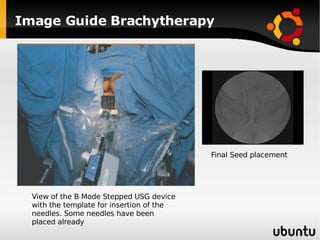
Image Guide Brachytherapy View of the B Mode Stepped USG device with the template for insertion of the needles. Some needles have been placed already Final Seed placement
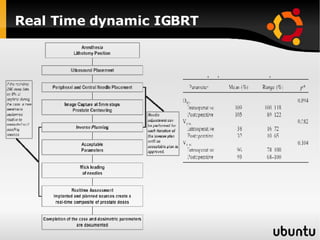
Real Time dynamic IGBRT
Results Keasten et al (IJROBP 2006) 564 patients of prostate CA – IGRT or IGBRT (5 yr FU) 5-year BC rates were similar in both groups (78–82% for IGRT vs 80–84% for IGBRT) IGRT higher chronic grade≥2 GI toxicity (22% vs 12% for EBRT+HDR) EBRT+HDR higher chronic grade≥2 GU toxicity (30% vs 17% for IGRT) Nandalur et al (IJROBP 2006) 479 Prostate cancer patients IGRT vs IGBT 5 yr biochemical control rates > 90% (GR III toxicity ~ 4-6%!!) C-IGBT patients experienced significantly less chronic grade 2 GI toxicity and sexual dysfunction.
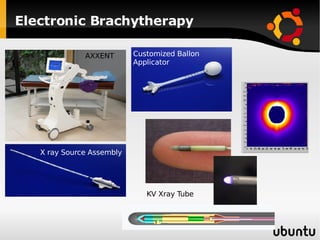
Electronic Brachytherapy Customized Ballon Applicator KV Xray Tube AXXENT X ray Source Assembly
Conclusions Conformal radiation therapy requires a good imaging guidance and better machines for delivery – development expensive and time consuming Dosimetric results invariably show superiorty of conformal avoidance IMRT the best conformal EBRT technique can allow new methods of radiotherapy – bringing hypofractionation back into fashion Several unresolved questions – sparse  but emerging  clinical data Cancers of developing nations – stand maximum to gain from Conformal radiation therapy Approach –  Cautious Embrace ?
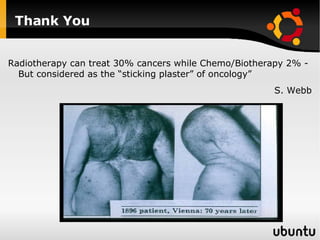
Thank You  Radiotherapy can treat 30% cancers while Chemo/Biotherapy 2% - But considered as the “sticking plaster” of oncology”  S. Webb

New Techniques in Radiotherapy

  • 1.
    New Techniques inRadiation therapy Moderator: Dr S C Sharma Department of Radiotherapy PGIMER Chandigarh
  • 2.
  • 3.
    Overview 3 DCRTRadiation Therapy Teletherapy Brachytherapy IMRT IGRT DART Electronic Brachytherapy Tomotherapy Image Assisted Brachytherpy Stereotactic radiotherapy Gamma Knife LINAC based Cyberknife
  • 4.
    Solutions ? Developtechnologies to circumvent limitations Use alternative radiation modalities Electrons Protons Neutrons π - Mesons Heavy Charged Nuclei Antiprotons
  • 5.
    Development Timeline 19901960 Proimos develops gravity oriented blocking and conformal field shaping 1980 Brahame conceptualized inverse planning & gives prototype algorithm for (1982-88) 1 st inverse planning algorithm developed by Webb (1989) 1970 Tracking Cobalt unit invented at Royal Free Hospital 1950 Takahashi discusses conformal RT 1 st MLCs invented (1959) Boyer and Webb develop principle of static IMRT (1991) Carol demonstrates NOMOS MiMIC (1992) Tomotherapy developed in Wisconsin (1993) Stein develops optimal dMLC equations (1994) First discussion of Robotic IMRT (1999)
  • 6.
    Modulation: Examples Block: Binary Modulation Wedge: Uniform Modulation Coarse spatial and Coarse intensity Fine spatial coarse intensity Fine Spatial and Fine Intensity modulation
  • 7.
    Conformal Radiotherapy Conformalradiotherapy (CFRT) is a technique that aims to exploit the potential biological improvements consequent on better spatial localization of the high-dose irradiation volume - S. Webb in Intensity Modulated Radiotherapy IOP
  • 8.
    Problems in conformationNature of the photon beam is the biggest impediment Has an entrance dose. Has an exit dose. Follows the inverse square law.
  • 9.
    Types of CFRTTwo broad subtypes : Techniques aiming to employ geometric fieldshaping alone Techniques to modulate the intensity of fluence across the geometrically-shaped field (IMRT)
  • 10.
    Modulation : Intensityor Fluence ? Intensity Modulation is a misnomer – The actual term is Fluence Fluence referes to the number of “particles” incident on an unit area (m -2 )
  • 11.
    How to modulateintensity Cast metal compensator Jaw defined static fields Multiple-static MLC-shaped fields Dynamic MLC techniques (DMLC) including modulated arc therapy (IMAT) Binary MLCs - NOMOS MIMiC and in tomotherapy Robot delivered IMRT Scanning attenuating bar Swept pencils of radiation (Race Track Microtron - Scanditronix)
  • 12.
  • 13.
  • 14.
    Step & ShootIMRT Intesntiy Distance Since beam is interrupted between movements leakage radiation is less. Easier to deliver and plan. More time consuming
  • 15.
    Dynamic IMRT Fasterthan Static IMRT Smooth intensity modulation acheived Beam remains on throughout – leakage radiation increased More susceptible to tumor motion related errors. Additional QA required for MLC motion accuracy. Intesntiy Distance
  • 16.
    Caveats: Conformal TherapySignificantly increased expenditure: Machine with treatment capability Imaging equipment: Planning and Verification Software and Computer hardware Extensive physics manpower and time required. Conformal nature – highly susceptible to motion and setup related errors – Achilles heel of CFRT Target delineation remains problematic. Treatment and Planning time both significantly increased Radiobiological disadvantage: Decreased “dose-rate” to the tumor Increased integral dose (Cyberknife > Tomotherapy > IMRT)
  • 17.
  • 18.
    How to PlanCFRT Patient positioning and Immobilization Volumetric Data acqusition Image Transfer to the TPS Target Volume Delineation 3D Model generation Forward Planning Inverse Planning Dose distribution Analysis Treatment QA Treatment Delivery
  • 19.
    Positioning and ImmobilizationTwo of the most important aspects of conformal radiation therapy. Basis for the precision in conformal RT Needs to be: Comfortable Reproducible Minimal beam attenuating Affordable Holds the Target in place while the beam is turned on
  • 20.
    Types of ImmobilizationImmoblization devices Frame based Frameless Invasive Noninvasive Usually based on a combination of heat deformable “casts” of the part to be immobilized attached to a baseplate that can be reproducibly attached with the treatment couch. The elegant term is “ Indexing ”
  • 21.
    Cranial Immobilization TLCSystem Gill Thomas Cosman System Leksell Frame BrainLab System
  • 22.
    Extracranial Immobilization ElektaBody Frame Body Fix system
  • 23.
    Accuracy of systemsWith the precision of the body fix frame the target volume will be underdosed (< 90% of prescribed dose) 14% of the time!!!
  • 24.
    CT simulator 70– 85 cm bore Scanning Field of View (SFOV) 48 cm – 60 cm – Allows wider separation to be imaged. Multi slice capacity: Speed up acquistion times Reduce motion and breathing artifacts Allow thinner slices to be taken – better DRR and CT resolution Allows gating capabilities Flat couch top – simulate treatment table
  • 25.
    MRI Superior softtissue resolution Ability to assess neural and marrow infiltration Ability to obtain images in any plane - coronal/saggital/axial Imaging of metabolic activity through MR Spectroscopy Imaging of tumor vasculature and blood supply using a new technique – dynamic contrast enhanced MRI No radiation exposure to patient or personnel
  • 26.
    PET: Principle Unlikeother imaging can biologically characterize a leison Relies on detection of photons liberated by annhilation reaction of positron with electron Photons are liberated at 180 ° angle and simultaneously – detection of this pair and subsequent mapping of the event of origin allows spatial localization The detectors are arranged in an circular array around the patient PET- CT scanners integrate both imaging modalities
  • 27.
    PET-CT scanner Flatcouch top insert CT Scanner PET scanner 60 cm Allows hardware based registration as the patient is scanned in the treatment position CT images can be used to provide attenuation correction factors for the PET scan image reducing scanning time by upto 40%
  • 28.
    Markers for PETScans Metabolic marker 2- 18 Fluoro 2- Deoxy Glucose Proliferation markers Radiolabelled thymidine: 18 F Fluorothymidine Radiolabelled amino acids: 11 C Methyl methionine, 11 C Tyrosine Hypoxia markers 60 Cu-diacetyl-bis(N-4-methylthiosemicarbazone) ( 60 Cu-ATSM) Apoptosis markers 99 m Technicium Annexin V PET Fiducials
  • 29.
    Image Registration Techniqueby which the coordinates of identical points in two imaging data sets are determined and a set of transformations determined to map the coordinates of one image to another Uses of Image registration: Study Organ Motion (4 D CT) Assess Tumor extent (PET / MRI fusion) Assess Changes in organ and tumor volumes over time (Adaptive RT) Types of Transformations : Rigid – Translations and Rotations Deformable – For motion studies
  • 30.
  • 31.
    Process: Image RegistrationThe algorithm first measures the degree of mismatch between identical points in two images ( metric ). The algorithm then determines a set of transformations that minimize this metric . Optimization of this transformations with multiple iterations take place After the transformation the images are “ fused ” - a display which contains relevant information from both images.
  • 32.
  • 33.
    Target Volume delineationThe most important and most error prone step in radiotherapy. Also called Image Segmentation The target volume is of following types: GTV (Gross Target Volume) CTV (Clinical Target Volume) ITV (Internal Target Volume) PTV (Planning Target Volume) Other volumes: Targeted Volume Irradiated Volume Biological Volume
  • 34.
    Target Volumes GTV: Macroscopic extent of the tumor as defined by radiological and clinical investigations. CTV : The GTV together with the surrounding microscopic extension of the tumor constitutes the CTV. The CTV also includes the tumor bed of a R0 resection (no residual). ITV (ICRU 62) : The ITV encompasses the GTV/CTV with an additional margin to account for physiological movement of the tumor or organs. It is defined with respect to a internal reference – most commonly rigid bony skeleton. PTV : A margin given to above to account for uncertainities in patient setup and beam adjustment.
  • 35.
  • 36.
    Definitions: ICRU 50/62GTV CTV ITV PTV TV IV Treated Volume : Volume of the tumor and surrounding normal tissue that is included in the isodose surface representing the irradiation dose proposed for the treatment (V 95 ) Irradiated Volume : Volume included in an isodose surface with a possible biological impact on the normal tissue encompassed in this volume. Choice of isodose depends on the biological end point in mind.
  • 37.
  • 38.
    Organ at Risk(ICRU 62) Normal critical structures whose radiation sensitivity may significantly influence treatment planning and/or prescribed dose. A planning organ at risk volume ( PORV ) is added to the contoured organs at risk to account for the same uncertainities in patient setup and treatment as well as organ motion that are used in the delineation of the PTV. Each organ is made up of a functional subunit ( FSU )
  • 39.
    Biological Target VolumeA target volume that incorporated data from molecular imaging techniques Target volume drawn incorporates information regarding: Cellular burden Cellular metabolism Tumor hypoxia Tumor proliferation Intrinsic Radioresistance or sensitivity
  • 40.
    Biological Target VolumesLung Cancer : 30 -60% of all GTVs and PTVs are changed with PET. Increase in the volume can be seen in 20 -40%. Decrease in the volume in 20 – 30%. Several studies show significant improvement in nodal delineation. Head and Neck Cancer : PET fused images lead to a change in GTV volume in 79%. Can improve parotid sparing in 70% patients.
  • 41.
    3 D TPSTreatment planning systems are complex computer systems that help design radiation treatments and facilitate the calculation of patient doses. Several vendors with varying characteristics Provide tools for: Image registration Image segmentation: Manual and automated Virtual Simualtion Dose calculation Plan Evaluation Data Storage and transmission to console Treatment verification
  • 42.
    Planning workflow Definea dose objective Total Dose Total Time of delivery of dose Total number of fractions Choose Number of Beams Choose beam angles and couch angles Organ at risk dose levels Choose Planning Technique Forward Planning Inverse Planning
  • 43.
    “Forward” Planning Atechnique where the planner will try a variety of combinations of beam angles, couch angles, beam weights and beam modifying devices (e.g. wedges) to find a optimum dose distribution. Iterations are done manually till the optimum solution is reached. Choice for some situations: Small number of fields: 4 or less. Convex dose distribution required. Conventional dose distribution desired. Conformity of high dose region is a less important concern.
  • 44.
    Planning Beams BeamsEye View Display Room's Eye View Digital Composite Radiograph
  • 45.
    “Inverse” Planning 1.Dose distribution specified Forward Planning 2. Intensity map created 3. Beam Fluence modulated to recreate intensity map Inverse Planning
  • 46.
    Optimization Refers tothe technique of finding the best physical and technically possible treatment plan to fulfill the specified physical and clinical criteria. A mathematical technique that aims to maximize (or minimize) a score under certain constraints . It is one of the most commonly used techniques for inverse planning. Variables that may be optimized: Intensity maps Number of beams Number of intensity levels Beam angles Beam energy
  • 47.
  • 48.
    Optimization Criteria Refersto the constraints that need to be fulfilled during the planning process Types : Physical Optimization Criteria: Based on physical dose coverage Biological Optimization Criteria: Based on TCP and NTCP calculation A total objective function ( score ) is then derived from these criteria. Priorities are defined to tell the algorithm the relative importance of the different planning objectives ( penalties ) The algorithm attempts to maximize the score based on the criteria and penalties.
  • 49.
    Multicriteria Optimization Slidersfor adjusting EUD Rectum Bladder Intestine PTV GTV DVH display
  • 50.
    Plan Evaluation ColourWash Display Differential DVH Cumulative DVH
  • 51.
    Image Guided Radiotherapy and 4D planning
  • 52.
    Why 4D Planning?Organ motion types: Interfraction motion Intrafraction motion Even intracranial structures can move – 1.5 mm shift when patient goes from sitting to supine!! Types of movement: Translations: Craniocaudal Lateral Vertical Rotations: Roll Pitch Yaw Shape: Flattening Balloning Pulsation
  • 53.
    Interfraction Motion Prostate: Motion max in SI and AP SI 1.7 - 4.5 mm AP 1.5 – 4.1 mm Lateral 0.7 – 1.9 mm SV motion > Prostate Uterus : SI: 7 mm AP : 4 mm Cervix : SI: 4 mm Rectum : Diameter: 3 – 46 mm Volumes: 20 – 40% In many studies decrease in volume found Bladder : Max transverse diameter mean 15 mm variation SI displacement 15 mm Volume variation 20% - 50%
  • 54.
    Intrafraction Motion Liver: Normal Breathing: 10 – 25 mm Deep breathing: 37 – 55 mm Kidney : Normal breathing: 11 -18 mm Deep Breathing: 14 -40 mm Pancreas : Average 10 -30 mm Lung : Quiet breathing AP 2.4 ± 1.3 mm Lateral 2.4 ± 1.4 mm SI 3.9 ± 2.6 mm 2 ° to Cardiac motion: 9 ± 6 mm lateral motion Tumors located close to the chest wall and in upper lobe show reduced interfraction motion. Maximum motion is in tumors close to mediastinum
  • 55.
    IGRT: Solutions MobileC arm Varian OBI Elekta Siemens Inline Imaging techniques USG based Video based Planar X-ray CT MRI BAT Sonoarray I-Beam Resitu AlignRT Photogrammetry Real Time Video guided IMRT Video substraction KV X-ray OBI MV X-ray Gantry Mounted Room Mounted Varian OBI Elekta Synergy IRIS Cyberknife RTRT (Mitsubishi) BrainLAB (Exectrac) EPI Fan Beam Cone Beam Tomotherapy In room CT MV CT KV CT Siemens
  • 56.
    IGRT: Solution ComparisionDOF = degrees of freedom – directions in which motion can be corrected – 3 translations and 3 rotations
  • 57.
    EPI Uses of EPI: Correction of individual interfraction errors Estimation of poulation based setup errors Verification of dose distribution (QA) Problems with EPI: Poor image quality (MV xray) Increased radiation dose to patient Planar Xray – 3 dimensional body movement is not seen Tumor is not tracked – surrogates like bony anatomy or implanted fiducials are tracked.
  • 58.
    Types of EPIDLiquid Matrix Ion Chamber* Camera based devices Amorphous silicon flat panel detectors Amorphous selenium flat panel detectors Electrode connected to high voltage “ Output” electrode Liquid 2,2,4 - trimethylpentane ionized liquid High voltage applied Output read out by the lower electrodes
  • 59.
    On board imagingRoom Mounted OBI Gantry mounted OBI KV Xray Intensifier
  • 60.
    4 D CTacqusition Axial scans are acquired with the use of a RPM camera attached to couch. The “cine” mode of the scanner is used to acquire multiple axial scans at predetermined phases of respiratory cycle for each couch position
  • 61.
    RPM System Patientimaged with the RPM system to ascertain baseline motion profile A periodicity filter algorithm checks the breathing periodicity Breathing comes to a rythm Breathing cycle is recorded
  • 62.
    4D CT Dataset Normal
  • 63.
    Problems with 4D CT The image quality depends on the reproducibility of the respiratory motion. The volume of images produced is increased by a factor of 10. Specialized software needed to sort and visualize the 4D data. Dose delivered during the scans can increase 3-4 times. Image fusion with other modalities remains an unsolved problem
  • 64.
    4D Target delineationTarget delineation can be done on all images acquired. Methods of contouring: Manual Automatic ( Deformable Image Registration ) Why automatic contouring? Logistic Constraints : Time requirement for a single contouring can be increased by a factor of ~ 10. Fundamental Constraints : To calculate the cumulative dose delivered to the tumor during the treatment. However the dose for each moving voxel needs to be integrated together for this to occur. So an estimate of the individual voxel motion is needed.
  • 65.
    4D Manual ContouringThe tumor is manually contoured in end expiration and end inspiration The two volumes are fused to generate at MIV – Maximum Intensity Volume The projection of this to a DRR is called MIP (Maximum Intensity Projection) End Expiration End Inspiration MIV
  • 66.
    Automated Contouring Techniqueby which a single moving voxel is matched on CT slices that are taken in different phases of respiration The treatment is planned on a reference CT – usually the end expiration (for Lung) Matching the voxels allows the dose to be visualized at each phase of respiration Several algorithms under evaluation: Finite element method Optical flow technique Large deformation diffeomorphic image registration Splines thin plate and b
  • 67.
  • 68.
    Automated Contouring Day1 Image Day 2 Image Individaul Pixels Due to the changes in shape of the object the same pixel occupies a different coordinate in the 2 nd image + = Deformable Image registration circumvents this problems
  • 69.
    4D Treatment PlanningA treatment plan is usually generated for a single phase of CT. The automatic planning software then changes the field apertures to match for the PTV at each respiratory phase. MLCs used should be aligned parallel to the long axis of the largest motion.
  • 70.
    Limitations of 4DPlanning Computing resource intensive – Parallel calculations require computer clusters at present No commercial TPS allows 4 D dose calculation Respiratory motion is unpredictable – calculated dose good for a certain pattern only Incorporating respiratory motion in dynamic IMRT means MLC motion parameters become important constraints Tumor tracking is needed for delivery if true potential is to be realized The time delay for dMLC response to a detected motion means that even with tracking gating is important
  • 71.
    4D Treatment deliveryOptions for 4D delivery Ignore motion Freeze the motion Follow the motion (Tracking) Patient breaths normally Breathing is controlled Respiratory Gating Breath holding (DIBH) Jet Ventilation Active Breathing control
  • 72.
    Minimizing Organ MotionAbdominal Compression(Hof et al. 2003 – Lung tumors): Cranio-caudal movement of tumor 5.1±2.4 mm. Lateral movement 2.6±1.4 Anterior-posterior movement 3.1±1.5 mm Breath Hold technique: Patients instructed to hold breath in one phase Usually 10 -13 breath holding sessions tolerated (each 12 -16 sec) Reduced lung density in irradiated area – reduced volume of lung exposed to high dose Tumor motion restricted to 2-3 mm (Onishi et al 2003 – Lung tumors)
  • 73.
    Minimizing Organ MotionActive Breathing Control Consists of a spirometer to “ actively ” suspend the patients breathing at a predetermined postion in the respiratory cycle A valve holds the respiratory cycle at a particular phase of respiration Breath hold duration : 15 -30 sec Usually immobilized at moderate DIBH (Deep Inspiration Breath Hold) – 75% of the max inspiratory capacity Max experience: Breast Intrafractional lung motion reduced Mean reproducibility 1.6 mm
  • 74.
    Tracking Target motionAlso known as R eal-time P ostion M anagement respiratory tracking system (RPM) Various systems: Video camera based tracking (external) Radiological tracking: Implanted fiducials Direct tracking of tumor mass Non radiographic tracking: Implanted radiofrequncy coils (tracked magnetically) Implanted wireless transponders (tracked using wireless signals) 3-D USG based tracking (earlier BAT system)
  • 75.
    Results a =includes setup error
  • 76.
  • 77.
    Adaptive Radiotherapy (ART)Adaptive radiotherapy is a technique by which a conformal radiation dose plan is modified to conform to a mobile and deformable target. Two components: Adapt to tumor motion (IGRT) Adapt to tumor / organ deformation and volume change. 4 ways to adapt radiation beam to tracked tumor motion: Move couch electronically to adapt to the moving tumor Move a charged particle beam electromagnetically Move a robotic lightweight linear accelerator Move aperture shaped by a dynamic MLC
  • 78.
    ART: Concept ConventionalR x Sample Population based margins Accomadates variations of setup for the populations No or infrequent imaging Largest margin Offline ART Individual patient based margins Frequent imaging of patients Estimated systemic error corrected based on repeated measurements A small margin kept for random error Plans adapted to average changes Online ART Individual patient based margins Daily imaging of patients Daily error corrected prior to the treatment Smallest margin required Plans adapted to the changing anatomy daily! 1. 2. 3.
  • 79.
    ART: Why ?Due to a change in the contours (e.g. Weight Loss) the actual dose received by the organ can vary significantly from the planned dose despite accurate setup and lack of motion.
  • 80.
    ART: Problem Realtime adaptive RT is not possible “today”
  • 81.
  • 82.
  • 83.
  • 84.
    Helical Tomotherapy Gantrydia 85 cm Integrated S Band LINAC 6 MV photon beam No flattening filter – output increased to 8 Gy/min at center of bore Independant Y - Jaws are provided (95% Tungsten) Fan beam from the jaws can have thickness of 1 -5 cm along the Y axis
  • 85.
    Helical Tomotherapy BinaryMLCs are provided – 2 positions – open or closed Pneumatically driven 64 leaves Open close time of 20 ms Width 6.25 mm at isocenter 10 cm thick Interleaf transmission – 0.5% in field and 0.25% out field Maximum FOV = 40 cm However Targets of 60 cm dia meter can be treated. LINAC Cone Beam Y jaw Y jaw Fan Beam Binary MLC
  • 86.
    Helical Tomotherapy FlatCouch provided allows automatic translations during treatment Target Length long as 160 cm can be treated “Cobra action” of the couch limits the length treatable Manual lateral couch translations possible Automatic longitudinal and vertical motions possible
  • 87.
    Helical Tomotherapy IntegratedMV CT obtained by an integrated CT detector array. MV beam produced with 3.5 MV photons Allows accurate setup and image guidance Allows higher image resolution than cone beam MV CT (3 cm dia with 3% contrast difference) Tissue heterogenity calculations can be done reliably on the CT images as scatter is less (HU more reliable per pixel) Not affected by High Z materials (implant) Dose 0.3 – 3 Gy depending on slice thickness Dose verification possible
  • 88.
    Newer Techniques inRadiation therapy Treatment Results (Clinical)
  • 89.
    Prostate Cancer Laterectal toxicity (Gr 2 or more) is seen in 20 – 30%; ED occurs in 50 -60%!!!
  • 90.
    Prostate Cancer Zelefskyet al (2006, J. Urol) – 561 patients (1996 - 2000) All localized prostate cancer Risk group according to the NCCN guidelines Treated with IMRT ± NAAD Dose: 81 Gy in 1.8 Gy PTV dose homogenity ± 10% Rectal wall constraints: 53% vol = 46 Gy 36% vol = 75.6 Gy
  • 91.
    Prostate Cancer 8yr biochemical relapse free survival rates: 85% - Favourable 76% - Intermediate 72% - Unfavourable CSS (8 yrs): 100% - Favourable 96% - Intermediate 84% - Unfavourable NAAT : No significant difference in outcomes
  • 92.
    Prostate Cancer RectalToxicity : Grade 2: 7 patients (1.5%); Grade 3: 3 patients (less than 1%) The 8-year actuarial likelihood of late grade 2 or greater rectal toxicity 1.6%. Urinary Toxicity : Grade 2 chronic urethritis in 50 patients (9%); Urethral stricture requiring dilation (grade 3) developed in 18 patients (3%). The 8-year actuarial likelihood of late grade 2 or greater urinary toxicities was 15%. 47% patient developed ED (43% IMRT alone; 57% ADT) No 2 nd cancers!
  • 93.
    Prostate Cancer Arcangeliet al (2007) WP-IMRT with Prostate boost N = 55; All had NAADT, Risk of nodal mets > 15% Dose: 55 – 59 Gy (Pelvis) 66 – 80 Gy (Prostate) 33 – 40 fractions No Gr III toxicity Late Gr II toxicity: Rectum: 2 yr actuarial probablity 8% 91% 71% 63%
  • 94.
    Head and NeckCancers Table showing Results of IMRT in H&N Ca
  • 95.
    Head and NeckCancers Table showing results of IMRT in H& N Ca
  • 96.
    Head and NeckCancers Table showing Salivary sparing and QOL improvement with IMRT
  • 97.
    Breast Cancer Largestrandomized trial Donovan et al (2007) 305 patients – 156(standard) and 150 (IMRT) 1997 – 2000 Aim:Impact of improved radiation dosimetry with IMRT in terms of external assessments of change in breast appearance and patient self-assessments of breast discomfort, breast hardness and quality of life. Dose: 50 Gy / 25# with 10 Gy boost
  • 98.
    Breast Cancer Thecontrol arm had 1.7 times (95% CI 1.2–2.5) more likely to have had some change than the IMRT arm, p = 0.008. Areas with dose > 105% have 1.9 times higher risk of any change in cosmesis
  • 99.
    Breat Cancer Leonardet al 2007 – APBI 55 patients , Non randomized All patients stage I Dose: 34 Gy (n=7) / 38.5 (n = 48) BID over 5 days Median F/U – 1 yr Good to excellent cosmesis: Patient assessed: 98% (54) Physician assessed: 98% (54) Considered a reasonable option for patients who have large target volumes and/or target volumes that are in anatomic locations that are very difficult to cover.
  • 100.
    Lung Cancer Tableshowing results of IMRT in Lung Cancer
  • 101.
    Brain Tumors Tableshowing results of IMRT in brain tumors
  • 102.
  • 103.
  • 104.
    New Techniques inStereotactic Radiation therapy
  • 105.
    Stereotaxy Derived fromthe greek words Stereo = 3 dimensional space and Taxis = to arrange. A method which defines a point in the patient’s body by using an external three-dimensional coordinate system which is rigidly attached to the patient. Stereotactic radiotherapy uses this technique to position a target reference point, defined in the tumor, in the isocenter of the radiation machine (LINAC, gamma knife, etc.). Units used: Gamma Knife LINAC with special collimators or mico MLC Cyberknife Neutron beams
  • 106.
    Stereotactic Radiation Twobraod groups: Radiosurgery: Single treatment fraction Radiotherapy: Multiple fractions Frameless stereotactic radiation is possible in one system – cyberknife Sites used: Cranial Extracranial Rigid application of a stereotactic frame to the patient 3 D Volumetric imaging with the frame attached Target delineation and Treatment planning Postioning of patinet with the frame after verification QA of treatment and delivery of therapy
  • 107.
    Sterotactic Radiation Thefirst machine used by Leksell in 1951 was a 250 KV Xray tube. In 1968 the Gamma knife was available LINAC based stereotactic radiation appeared in 1980 Other machines using protons (1958) and heavy ions – He (1978) were also used for stereotactic postioning of the Bragg's Peak
  • 108.
    Gamma Knife Designedto provide an overall treatment accuracy of 0.3 mm 3 basic components Spherical source housing 4 types of collimator helmets Couch with electronic controls 201 Co 60 sources (30 Ci) Unit Center Point 40 cm Dose Rate 300 cGy/min
  • 109.
    LINAC Radiosurgery ConventionalLINAC aperture modified by a tertiary collimator. Two commercial machines Varian Trilogy Novalis
  • 110.
    Cyberknife Floor mountedAmorphous silicon detectors 6 MV LINAC Roof mounted KV X-ray Frameless patient immobilization couch Robotic arm with 6 degrees of freedon Circular Collimator attached to head
  • 111.
    Advantages of CyberknifeAn image-guided, frameless radiosurgery system. Non-isocentric treatment allows for simultaneous irradiation of multiple lesions. The lack of a requirement for the use of a head-frame allows for staged treatment. Real time organ position and movement correction facility Potentially superior inverse optimization solutions available.
  • 112.
    Cyberknife 185 publishedarticles till date; 5000 patients treated. 73 worldwide installations Areas where clinically evaluated: Intracranial tumors Trigeminal neuralgia and AVMs Paraspinal tumors – 1 ° and 2 ° Juvenile Nasopharyngeal Angiofibroma Perioptic tumors Localized prostate cancer However till date maximum expirence with Intracranial or Peri-spinal Stereotactic RT
  • 113.
    Results The onlyrandomized trial comparing stereotactic radiation therapy boost has failed to reveal a significant survival benefit for patients with malignant gliomas. (RTOG 9305). However 18% of the patients in the stereotactic radiotherapy arm had significant protocol deviations.
  • 114.
    New Techniques inBrachytherapy
  • 115.
    Brachytherpy An inherentlyconformal method of radiation delivery Relies on the inverse square law for the conformity Unlike traditional EBRT brachytherapy is both : Physically conformal Biologically conformal Recent advances have focused on better method of target identification and radio-isotope placement. Dose Distance Rapid dose fall off from the radio-isotope
  • 116.
    Brachytherapy: What's NewImage Based Brachytherapy Image Guided Brachytherapy Robotic Brachytherapy ‡ Electronic Brachytherapy* Image Based Brachytherapy : Technique where advanced imaging modalites are used to gain information about the volumetric dose delivery by brachytherapy Image Guided Brachytherapy : Technique where imaging is used to guide brachytherapy source placement as well give information regarding the volumetric dose distribution Image Assisted Brachytherapy
  • 117.
    Image Assisted BrachytherapyPrinciple : Cross sectional imaging utilized to plan and analyze a brachytherapy procedure Steps : Image assisted provisional treatment planning Image guided application Image assisted definitive treatment planning Image assisted quality control of dose delivery Provisional planning refers to the planning of the implant prior to the placement of the applicator in situ – important to realize the significant anatomical distrortions 2 ° to the applicator placement. Definitive planning refers to the definitve treatment planning with the applicator in situ.
  • 118.
  • 119.
    Equipment: Imaging Tableshowing Imaging modality of choice in different anatomical areas
  • 120.
  • 121.
    Image Acqusition Imagesshould be acquired in 3 dimensions parallel and perpendicular to the axis of the applicator This minimizes reconstruction related artifacts The best modality in this respect is the MRI CE MRI can provide excellent soft tissue contrast too Para Sagittal Para Coronal Para Axial
  • 122.
    Tumor Delineation Tumordelineation requires a good clinical examination in brachytherapy: Mucosal infiltration is usually picked up on visual inspection only. The ideal imaging modality for soft tissue resolution : MRI Tumors are usually contoured in the T2 weighted image T1 images are better for detection of lymphadenopathy
  • 123.
    Target Volumes Thetarget volumes as defined by ICRU 58 are similiar to the ICRU 62 recommendations Modifications specific to brachytherapy: PTV generally “approximates” CTV as applicators are considered to maintain positional accuracy. If the patient is treated with EBRT / Sx prior to brachy the CTV is the initial tumor volume (GTV) prior to treatment. The GTV for brachytherapy should be recorded seperately in such cases. Due to high dose gradient organ delineation is meaningful if done in the vicinity of the applicator For luminal structures wall delineation can give a better idea about the dose received as compared to the whole volume
  • 124.
    Image based brachytherapyDose Distribution at level of ovoids and tandem 3 D view of the applicator geometry 3 D Dose distribution Rectum Bladder
  • 125.
    Provisional Planning BMode USG with stepper Template Acquired sagittal image demonstrating bladder prostate interface Saggital Image with template overlay Pubic arch Prostate Urethra Rectum
  • 126.
    Provisional Planning Beaulieu et al reported on 35 cases (IJROBP 2002) Prostate contours were created in a preplan setting as well as in the operating room (OR). In 63% of patients the volume of the prostate drawn had changed. These changes in volume and shape resulted in a mean dose coverage loss of 5.7%. In extreme cases, the V 100 coverage loss was 20.9%. At present applied clinically for prostate cancer only. For both intraluminal and intracavitary significant changes of the anatomy on application preclude provisional planning.
  • 127.
    Image Guided BrachytherapyRadiation Oncologist acquiring sectional USG images Contouring and dose planning being done on the TPS The finalized plan with the superimposed grid on the template indicated the point of placement of each needle
  • 128.
    Image Guided BrachytherapyA machine called the seed loader can receive instructions from the TPS directly “Seed afterloader” with the needle containing the in postion. Needles being inserted into the prostate under direct USG guidance
  • 129.
    Image Guide BrachytherapyView of the B Mode Stepped USG device with the template for insertion of the needles. Some needles have been placed already Final Seed placement
  • 130.
  • 131.
    Results Keasten etal (IJROBP 2006) 564 patients of prostate CA – IGRT or IGBRT (5 yr FU) 5-year BC rates were similar in both groups (78–82% for IGRT vs 80–84% for IGBRT) IGRT higher chronic grade≥2 GI toxicity (22% vs 12% for EBRT+HDR) EBRT+HDR higher chronic grade≥2 GU toxicity (30% vs 17% for IGRT) Nandalur et al (IJROBP 2006) 479 Prostate cancer patients IGRT vs IGBT 5 yr biochemical control rates > 90% (GR III toxicity ~ 4-6%!!) C-IGBT patients experienced significantly less chronic grade 2 GI toxicity and sexual dysfunction.
  • 132.
    Electronic Brachytherapy CustomizedBallon Applicator KV Xray Tube AXXENT X ray Source Assembly
  • 133.
    Conclusions Conformal radiationtherapy requires a good imaging guidance and better machines for delivery – development expensive and time consuming Dosimetric results invariably show superiorty of conformal avoidance IMRT the best conformal EBRT technique can allow new methods of radiotherapy – bringing hypofractionation back into fashion Several unresolved questions – sparse but emerging clinical data Cancers of developing nations – stand maximum to gain from Conformal radiation therapy Approach – Cautious Embrace ?
  • 134.
    Thank You Radiotherapy can treat 30% cancers while Chemo/Biotherapy 2% - But considered as the “sticking plaster” of oncology” S. Webb