Antibiotics’ Protocols &
Pharmaceutical Dosage
Forms Conversions
Alaa F. Hassan (MSc. Pharmacology)
Member of Antibiotic stewardship
Medication errors & rational use
Parenteral to oral antibiotic conversion
• Rule: whenever pt. are clinically improving & absorbing oral drugs
adequately, consider switching to oral antibiotics after 48hr of IV
regimen
• Criteria: pt. that needs antibiotic therapy, with functioning GIT, no
poor absorption issue like short gut syndrome or active GI bleeding,
and tolerate oral intake or on NG tube feeding without high
residual/other medications, with clinical signs of improvements like
WBCs trends, temperature < 37.5°C for 24-48hr, no signs of sepsis &
finally when appropriate oral antibiotic with proper tissue
concentration exists.
Convert parenteral to oral antibiotics
• Gram negative bacteraemia
• Hospital acquired infections
• Intra-abdominal infections
• Pneumonia
• Skin & soft tissue infections
• Urinary tract infections
Donoconvertparenteraltooralantibiotics(cond.
requireprolongedcourse/high tissueconcentration)
• Blood stream infections
• Non-resolving neutropenia
• Cystic fibrosis
• Deep abscess
• Immunocompromised pt.
• Nothing by mouth/ continuous
NG suctioning pt.
• Pt. scheduled for surgery
• Recent oral therapeutic failure
• Malabsorption disorders, short
gut syndrome, severe diarrhoea,
nausea & vomiting
• Inflammatory bowel disease,
bowel obstruction, ileus
• Active GI bleeding
• Hypotensive pt. (BP<100/60)
• Bacterial meningitis,
bacteraemia, endocarditis &
deep joint/bone inf.
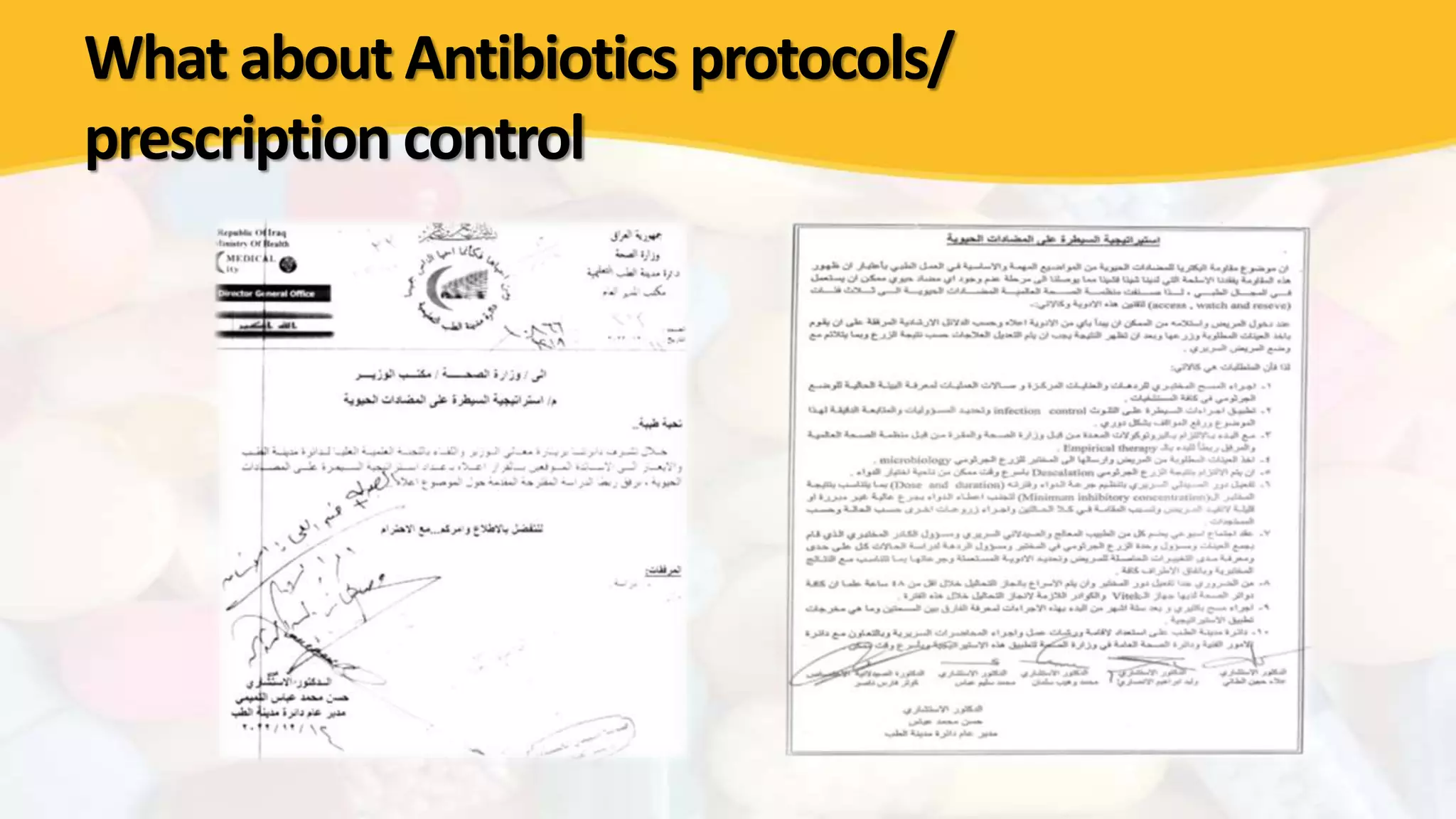
What about Antibiotics protocols/
prescription control
Empiric antibiotic therapy, revision
Recommendations:
• When the diagnosis excludes infection, stop antimicrobial
therapy.
• When a pathogen is not identified. re-assess the need for
antimicrobial therapy. lf on going treatment is indicated,
consider de-escalation (i.e. change from a broad-spectrum to a
narrower-spectrum antimicrobial), for a defined duration.
• When the pathogen is identified, change to directed therapy.
AWaRe classification
The AWaRe classification of antibiotics, developed in 2017 & updated in 2021 by the
WHO Expert Committee on selection and Use of Essential medicines as a tool to
support antibiotic stewardship efforts at local, national and global levels.
Antibiotics are classified into three groups:
• ACCESS: have a narrow spectrum of activity, lower cost, a good safety profile
and generally low resistance potential, are recommended as empiric 1st - or 2nd
choice treatment options for common infections.
• WATCH: are broader-spectrum antibiotics, generally with higher costs and are
recommended only as 1st choice options for patients with more severe clinical
presentations or for infections where the causative pathogens are more likely to
be resistant to Access antibiotics (e.g. upper urinary tract infections).
• RESERVE: are last-choice antibiotics used to treat multidrug-resistant infections.
Blood stream infections
Sepsis and septic shock
• Detection of bacteria in blood cultures is not part of the
definition of sepsis or septic shock, despite many patients with
sepsis have bacteremia (not a universal finding and most
patients with bacteremia do not meet sepsis criteria).
• The quick Sequential Organ Failure Assessment (qSOFA) is used
to recognize and stratify the risk of Patients presenting with
suspected sepsis.
Blood stream infections
Sepsis and septic shock – qSOFA score
A aSOFA score of 2 or more helps to, identify adult patients with
suspected infection who are likely to have poor outcomes
(prolonged lCU admission and death) and should therefore be
prioritized for timely investigation and intervention.
Blood stream infections
Sepsis and septic shock
Microbiology epidemiology
Community setting
• Gram-negative Bactria: Escherichia coli, Klebsiella pneumoniae and other Enterobacterales
(including ESBLs and carbapenemases)
• Gram-positive bacteria: Staphylococcus aureus (including MRSA)
Hospital setting
• Gram-negative bacteria: Acinetobacter boumannii, pseudomonas aeruginosa, Escherichia
coli, Klebsiella pneumoniae and other Enterobacterales (including ESBLs & carbapenemases)
• Gram-positive bacteria: Stophylococcus aureus (including MRSA)
Maternal sepsis (in addition to community/hospital setting):
• Gram-positive bacteria: Listeria monocytogenes, Streptococcus agalactiae (group B
streptococcus)
Source of infection Empiric treatment Treatment duration
Clinical sepsis
Of unknown origin -
Community/hospital
-acquired
MEROPENEM 1g tid +
VANCOMYCIN 25-30mg/kg IV loading
dose, then 15-20 mg/kg lV, bid
Duration dependent on source/pathogen
identified and clinical progression;
7 days usually sufficient
Enteric fever AZITHROMYCIN 500 mg IV od, until
oral azithromycin can be tolerated
5 to 7 days (lV + oral)
lntra-abdominal
infection
MEROPENEM 1g lV tid Duration depends on type of inf., adequate
surgical source control achieved and clinical
recovery; 7 days usually sufficient.
Meningitis CEFTRIAXONE 2g lV bid OR
CEFOTAXIME 2g lV qid
Duration dependent on pathogen identified
e.g. 5 days for meningococcal meningitis, or
10 to 14 days for pneumococcal meningitis.
lf a pathogen is not isolated,
continue the empiric antibiotic regimen for a
minimum of 10 days,(depending on response)
Source of infection Empiric treatment Treatment duration
Lower respiratory
tract infection -
Community/hospital
-acquired
BENZYLPENICILLIN 1.2 g lV qid +
GENTAMICIN 4-7 mg/kg (use upper end
range in pt. without kidney impairment)
lV for the 1st dose, with review prior to
subsequent doses; (max 3 doses for
empiric tx) +
AZITHROMYCIN 500 mg lV od until oral
azithromycin can be tolerated
+ (if staphylococcal pneumonia is
suspected e.g. rapid progression to sepsis,
multilobar consolidation. cavitating or
necrotising pneumonia )
VANCOMYCIN 2S-30 mg/kg lV loading
dose, then 15-20 mg/kg lV bid
7 days (lV + oral)
Source of infection Empiric treatment Treatment duration
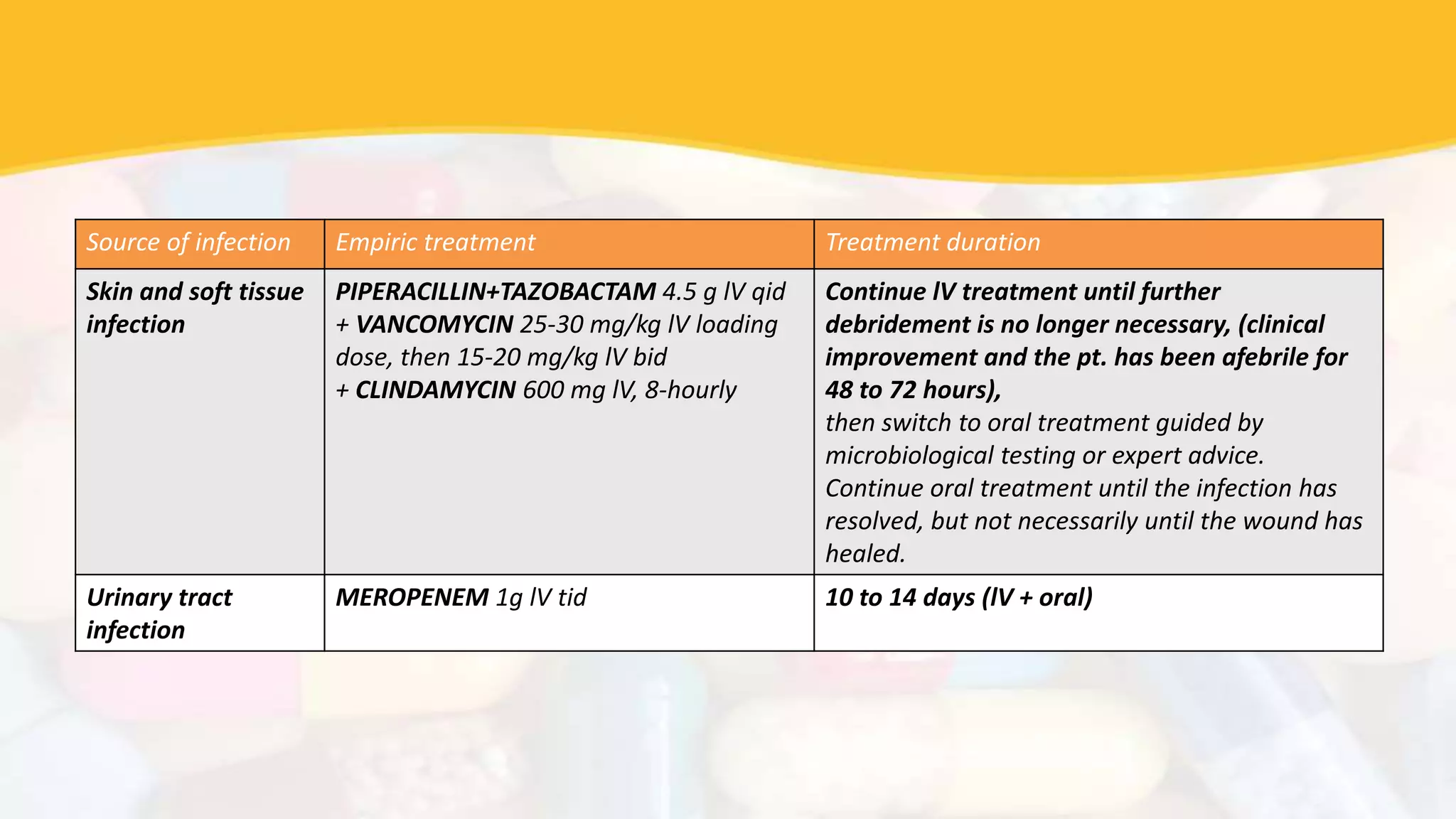
Skin and soft tissue
infection
PIPERACILLIN+TAZOBACTAM 4.5 g lV qid
+ VANCOMYCIN 25-30 mg/kg lV loading
dose, then 15-20 mg/kg lV bid
+ CLINDAMYCIN 600 mg lV, 8-hourly
Continue lV treatment until further
debridement is no longer necessary, (clinical
improvement and the pt. has been afebrile for
48 to 72 hours),
then switch to oral treatment guided by
microbiological testing or expert advice.
Continue oral treatment until the infection has
resolved, but not necessarily until the wound has
healed.
Urinary tract
infection
MEROPENEM 1g lV tid 10 to 14 days (lV + oral)
Blood stream infections
Neutropenic fever
Fever >38.0°C with neutrophils < 0.5 x 7Os/L, or < 1x 10e/L with a predicted
decline to < 0.5 x 10e/L, consider infection in any unwell patient with
neutropenia (fever may not always be present), Especially if the patient is
elderly or taking corticosteroids.
Microbiology epidemiology
• Bacteria: Staphylococcus epidermidis, Staphylococcus aureus, Streptococcus
spp., other Gram positive bacteria e.g. (Enterococcus spp.), Enterobacterales,
Pseudomonas aeruginosa, anaerobes
• Viruses: Cytomegalovirus, human herpesvirus 6 (consider in high-risk patients)
• Fungi: Candida spp., Aspergillus Spp. (in prolonged neutropenia)
Patient risk Empiric treatment Treatment du ration
Low risk (duration
of neutropenia <7
days, no major
comorbidities ,no
organ dysfunction,
possible out-pt. tx)
AMOXICILLIN+CLAVULANIC AClD
625 mg orally tid +
CIPROFLOXACIN 500 mg orally bid
7 days
High risk (duration
of
neutropenia > 7
days, major
comorbidities,
organ dysfunction)
PIPERACILLIN+TAZOBACTAM 4.5g IV
qid OR CEFTAZIDIME 2g lV tid
+ (in pt. with sepsis, at increased risk
of MRSA susp. catheter-related inf.)
VANCOMYN I5-20mg/kg (use a 25-30
mg/kg loading dose for critically ill pt.)
lV bid + (in pt. with septic shock or
requiring intensive care support)
GENTAMICIN 4-7mg/kg (use upper end
range in critically ill pt. without kidney
impairment) lV for the first dose, with
review prior to subsequent doses max
3 doses for empiric tx
Continue until clinical signs of infection have
resolved (absence of fever for least 48 hr.)
lf a pathogen is identified, duration of therapy based
on particular pathogen & site of infection.
Antifungal agent may be indicated if the pt: (receiving
total parental nutrition, had prolonged course of
broad-spectrum antibiotics, hematologic malignancy,
or is bone marrow/solid organ transplant recipient,
has femoral catheterization), choice of treatment
depends on the prophylactic antifungal regimen used.
If the patient still has neutropenia, monitor closely
for 24-48 hours and if fever returns, antibiotics
should be restarted.
Blood stream infections
Catheter-related bloodstream infections
The Global Antimicrobial Resistance and Use Surveillance System (GLASS)
uses the following definition of suspected bloodstream infection:
Presence of two or more of the following clinical signs in an adult patient
• Hyperthermia (> 38.0 "C) or hypothermia (< 36.0 "C)
• Respiratory rate > 20 breaths/minute
• Heart rate > 90 beats/minute
Microbiology epidemiology
• Most common: coagulase-negative staphylococci, Staphylococcus aureus
• Others: Gram-negative bacilli, Candida species
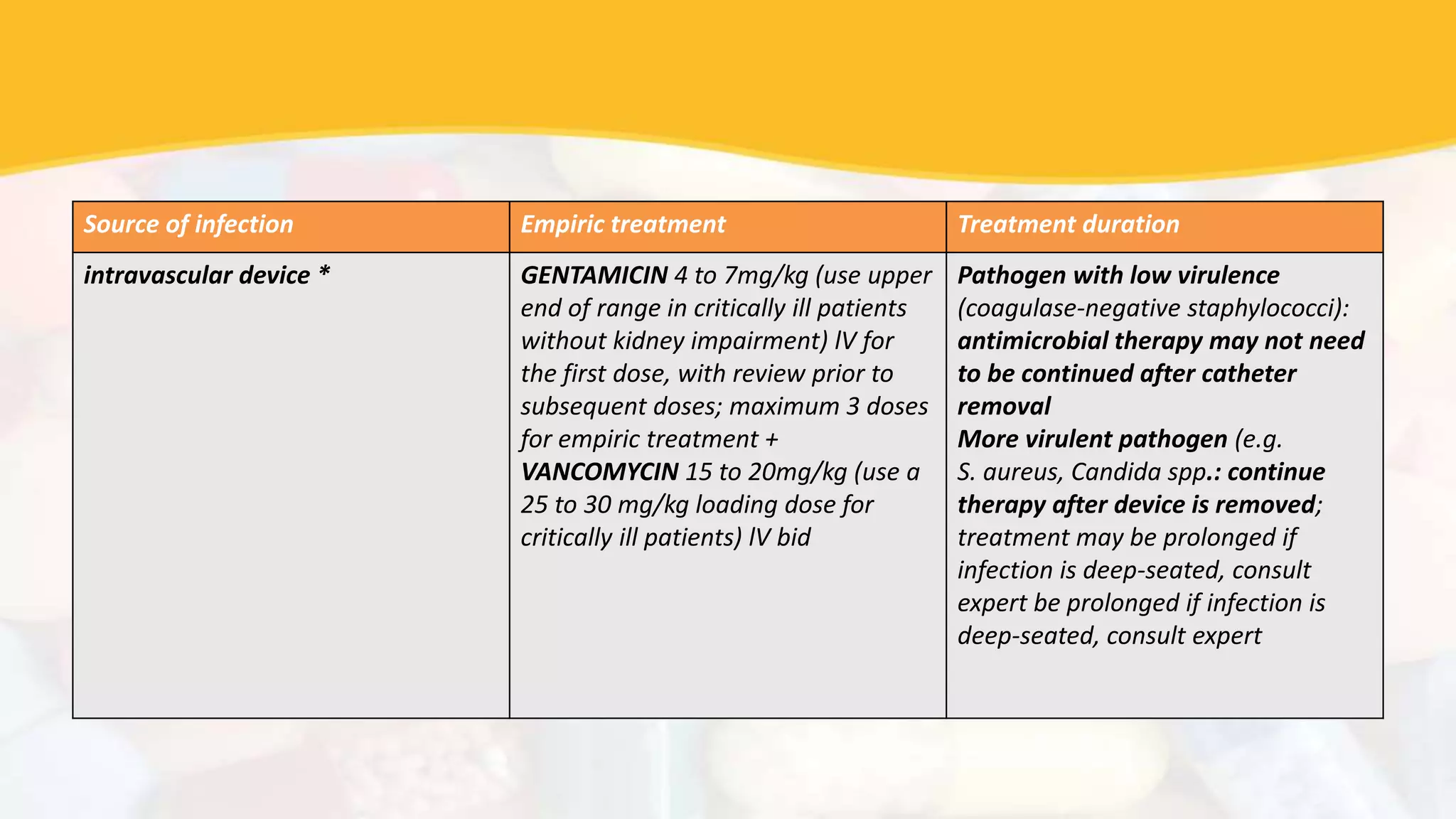
Source of infection Empiric treatment Treatment duration
intravascular device * GENTAMICIN 4 to 7mg/kg (use upper
end of range in critically ill patients
without kidney impairment) lV for
the first dose, with review prior to
subsequent doses; maximum 3 doses
for empiric treatment +
VANCOMYCIN 15 to 20mg/kg (use a
25 to 30 mg/kg loading dose for
critically ill patients) lV bid
Pathogen with low virulence
(coagulase-negative staphylococci):
antimicrobial therapy may not need
to be continued after catheter
removal
More virulent pathogen (e.g.
S. aureus, Candida spp.: continue
therapy after device is removed;
treatment may be prolonged if
infection is deep-seated, consult
expert be prolonged if infection is
deep-seated, consult expert
Lower Respiratory Tract infection (RTl)
Community-acquired pneumonia (CAP)
Assessment of severity
Step 1: Determine whether the patient requires hospital admission
The CURB-65 tool can be used for patient assessment in the emergency department, in
conjunction with clinical judgment, to decide whether to admit the patient to hospital.
Lower Respiratory Tract infection
Community-acquired pneumonia
Step 2: identify patients who may need intensive care support
The SMART-COP tool can be used to identify patients at higher risk of death or
requiring intensive care support.
Lower Respiratory Tract infection
Community-acquired pneumonia
Lower Respiratory Tract infection
Community-acquired pneumonia
Microbiology epidemiology
• Most common bacteria: Streptococcus pneumoniae
• Atypical bacterial pathogens: Mycoplosma pneumoniae, chlamydophila
(Chlamydia) pneumoniae, LegioneIIa species
Microbiology tests
• Blood cultures (prior to administration of antimicrobials whenever possible)
• Sputum Gram stain and culture
• Nose and throat swabs for nucleic acid amplification testing
• Pneumococcal urinary antigen assay
• Legionella urinary antigen assay
Infection
severity
Empiric treatment Alternate empiric treatment (in
case of non-severe penicillin
hypersensitivity)
Treatment
duration
Low AMOXICILLIN 1g orally tid
+ either (risk that follow-up within 48
hours may not occur)
DOXYCYCLINE 100mg orally bid
OR (if doxycycline is poorly tolerated)
CLARITHROMYCIN 500mg orally bid
CEFUROXIME 500 mg orally bid
+ either (risk that follow-up
within 48 hours may not occur)
DOXYCYCLINE 100mg orally bid
Or (if doxycyclne is poorly
tolerated)
CLARITHROMYCIN 500mg orally
bid
5 to 7 days
Moderate BENZYLPENICILLIN 1.2 g lV qid until
pt. improved and clinically stable,
then switch to AMOXICILLIN 1g orally
tid
+ either DOXYCYCIINE 100 mg orally
bid OR (if doxycycline ls poorly
tolerated) CLARITHROMYCIN 500 mg
orally bid
CEFTRIAXONE 1g lV, daily until
pt. improved & clinically stable,
then switch to CEFUROXIME 500
mg orally bid + either
DOXYCYCTINE 100 mg orally bid
OR (if doxycycline is poorly
tolerated) CLARITHROMYCIN 500
mg oraIly bid
5 to 7 days
(lV + oral)
Infection
severity
Empiric treatment Alternate empiric treatment (in
case of non-severe penicillin
hypersensitivity)
Treatment
duration
High BENZYLPENICILLIN 1.2 g lV qid until pt. has
improved and clinically stable, then switch
to AMOXICILLIN 1g orally qid +
GENTAMICIN 4-7 mg/kg (use
upper end range in pt. without kidney
impairment) lV for the 1st dose, with
review prior to subsequent doses; max 3
doses for empiric tx. + AZITHROMYCIN
500mg lV, daily until oral azithromycin can
be tolerated + (if staphylococcaI
pneumonia is suspected e.g. rapid
progression to sepsis, multilobar
consolidation, cavitating or necrotising
pneumonia) VANCOMYCIN 25-30 mg/kg lV
loading dose, then 15 to 20 mg/kg
IV bid
CEFTRIAXONE 1g lV bid until pt.
has improved and clinically
stable, then switch to
CEFUROXIME 500 mB orally bid
+ AZITHROMYCIN 500mg lV,
daily until oral azithromycin can
be tolerated +(if staphylococcaI
pneumonia is suspected e.g.
rapid progression to sepsis,
multilobar consolidation,
cavitating or necrotising
pneumonia)
VANCOMYCIN 25-30 mg/kg lV
loading dose, then 15 to 70
mg/kg IV bid
7 days (lV+ oral),
except for
azithromycin,
which is onIy
required for 3-5 days.
Review ongoing
Therapy with
vancomycin
at 24-48 hours.
Lower Respiratory Tract infection
Hospital-acquired pneumonia (HAP)
Assessment of severity
The criteria for diagnosing high-severity HAP are not well defined, consider high-
severity HAP in patients with any of the following clinical features:
• Septic shock
• Respiratory failure, particularly if requiring mechanical ventilation
• Rapid progression of infiltrates on chest x-ray
Microbiology epidemiology
• Most common bacteria: Streptococcus pneumoniae
• Less common bacteria: aerobic Gram-negative bacilli
• Atypical bacterial pathogens: Legionella species (rare but can be acquired from a
contaminated environmental reservoir in the hospital)
Infection
severity
Empiric treatment Alternate empiric treatment (in
case of non-severe penicillin
hypersensitivity)
Treatment
duration
Low/
moderate
AMOXICILLN+CLAVULANATE 1000mg
orally bid
CEFUROXIME 500 mg orally bid 7 days
High PIPERACI LLIN+TAZOBACTAM 4.5 g lV qid
until pt. improved and clinically stable,
then switch to AMOXICILLIN +
CLAVULANATE 1000mg orally bid +
(if Gram-negative pneumonia is suspected
or in patients with septic shock)
GENTAMICIN 4-7mg/kg (use upper end
range in pt. without kidney impairment)
lV for the 1st dose, with review prior to
subsequent doses; max 3 doses for
empiric treatment + (if staphylococcal
pneumonia is suspected or in pt. with
septic shock) VANCOMYCIN 25-30 mg/kg
lV loading dose, then 15-20 mg/kg
lV bid
CEFEPIME 2 g lV tid until pt.
improved and clinically stable, then
switch to CEFUROXIME 500 mg
orally bid +(if Gram-negative
pneumonia is suspected or in
Pt. with septic shock)
GENTAMICIN 4-7 mg/kg (use
upper end range in pt. without
kidney impairment) lV for
the 1st dose, with review prior to
subsequent doses; max 3
doses for empiric treatment
+ (if staphylococcaI pneumonia is
suspected or in pt. with septic shock)
VANCOMYCIN 25-30 mg/kg lV
loading dose, then 15-7O m4/kg
lV bid
7 days (lV+ oral)
but review
ongoing therapy
with gentamicin
and vancomycin
at 24-48 hours
Lower Respiratory Tract infection
Ventilator-associated pneumonia (VAP)
Microbiology epidemiology
Similar to pathogens causing HAP
• Streptococcus pneumoniae
• Aerobic Gram-negative bacilli
Microbiology tests
• Blood cultures (prior to administration of antimicrobials whenever
possible)
• Lower respiratory tract sample Gram stain and culture
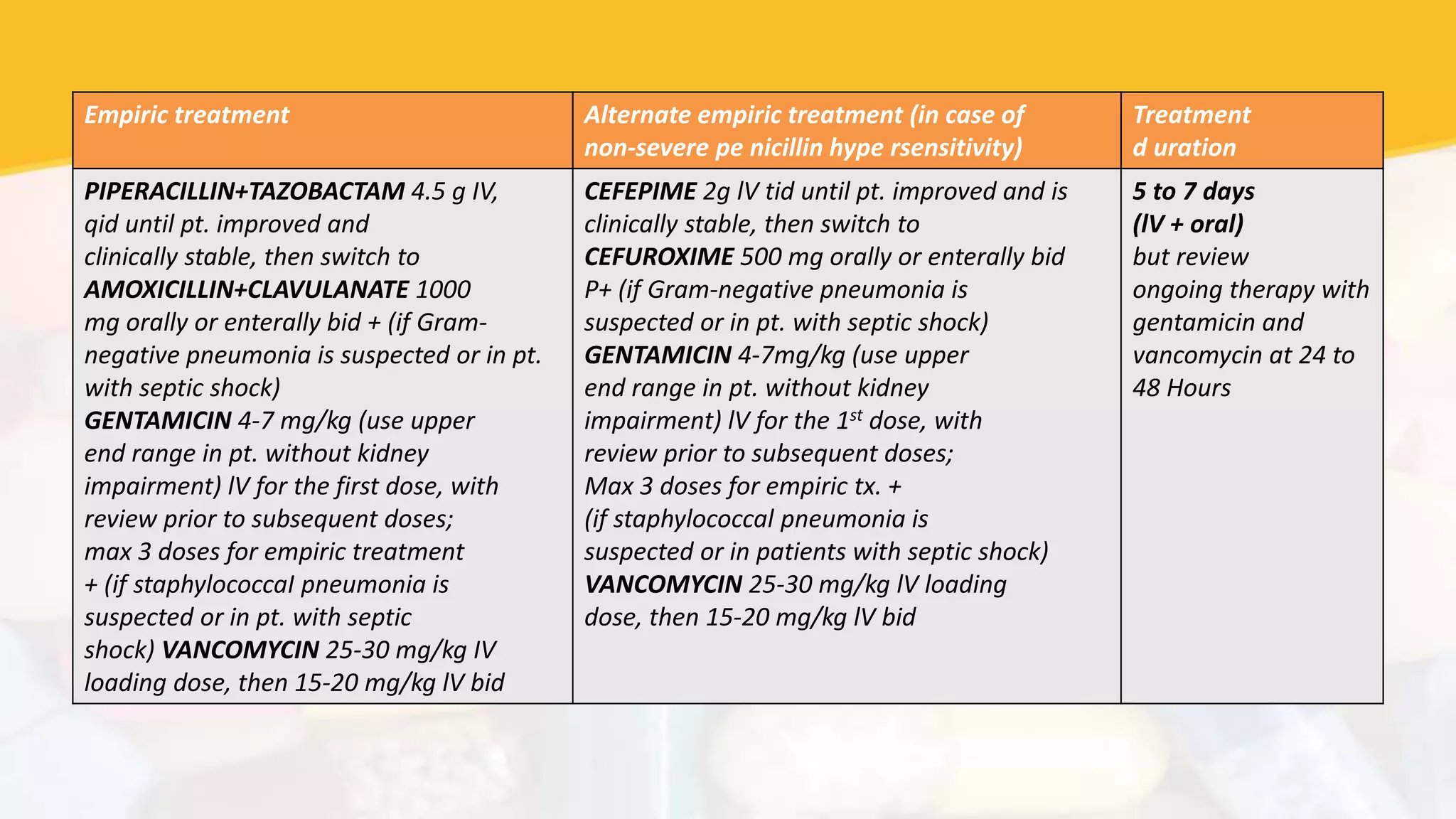
Empiric treatment Alternate empiric treatment (in case of
non-severe pe nicillin hype rsensitivity)
Treatment
d uration
PIPERACILLIN+TAZOBACTAM 4.5 g IV,
qid until pt. improved and
clinically stable, then switch to
AMOXICILLIN+CLAVULANATE 1000
mg orally or enterally bid + (if Gram-
negative pneumonia is suspected or in pt.
with septic shock)
GENTAMICIN 4-7 mg/kg (use upper
end range in pt. without kidney
impairment) lV for the first dose, with
review prior to subsequent doses;
max 3 doses for empiric treatment
+ (if staphylococcaI pneumonia is
suspected or in pt. with septic
shock) VANCOMYCIN 25-30 mg/kg IV
loading dose, then 15-20 mg/kg lV bid
CEFEPIME 2g lV tid until pt. improved and is
clinically stable, then switch to
CEFUROXIME 500 mg orally or enterally bid
P+ (if Gram-negative pneumonia is
suspected or in pt. with septic shock)
GENTAMICIN 4-7mg/kg (use upper
end range in pt. without kidney
impairment) lV for the 1st dose, with
review prior to subsequent doses;
Max 3 doses for empiric tx. +
(if staphylococcal pneumonia is
suspected or in patients with septic shock)
VANCOMYCIN 25-30 mg/kg lV loading
dose, then 15-20 mg/kg lV bid
5 to 7 days
(lV + oral)
but review
ongoing therapy with
gentamicin and
vancomycin at 24 to
48 Hours
Lower Respiratory Tract infection
Exacerbation of bronchiectasis
Microbiology epidemiology
ln patients with bronchiectasis, the airways are often colonized with organisms such as
• Haemophilus influenzae
• Streptococcus pneumoniae
• Moraxella catarrhalis
• Pseudomonas aeruginosa
• Staphylococcus aureus
Exacerbations of bronchiectasis may be caused by colonizing organisms or infection with a new
organism, including common respiratory viruses.
Microbiology tests
• Sputum culture
• Nose and throat swabs for nucleic acid amplification testing
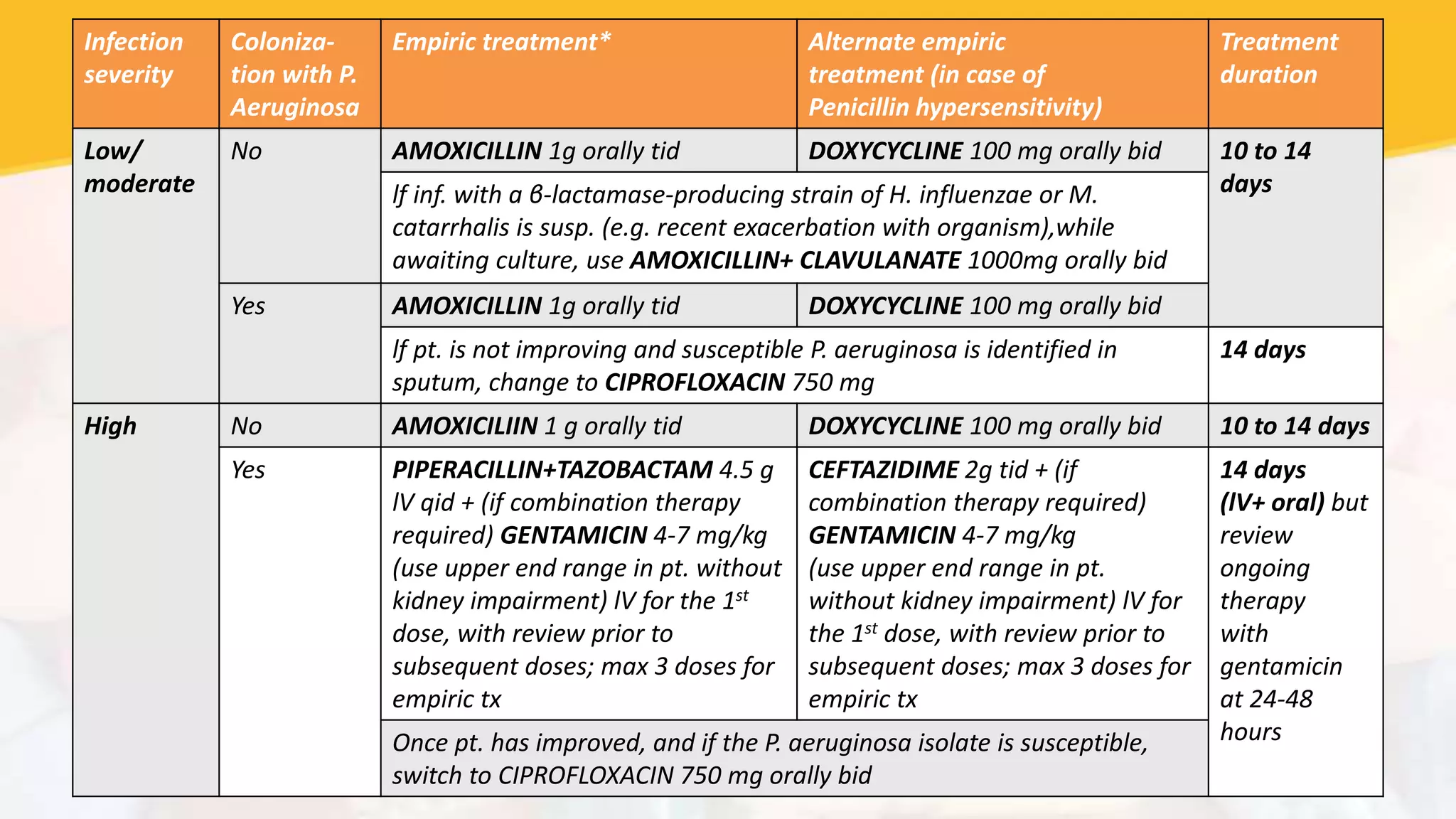
Infection
severity
Coloniza-
tion with P.
Aeruginosa
Empiric treatment* Alternate empiric
treatment (in case of
Penicillin hypersensitivity)
Treatment
duration
Low/
moderate
No AMOXICILLIN 1g orally tid DOXYCYCLINE 100 mg orally bid 10 to 14
days
lf inf. with a β-lactamase-producing strain of H. influenzae or M.
catarrhalis is susp. (e.g. recent exacerbation with organism),while
awaiting culture, use AMOXICILLIN+ CLAVULANATE 1000mg orally bid
Yes AMOXICILLIN 1g orally tid DOXYCYCLINE 100 mg orally bid
lf pt. is not improving and susceptible P. aeruginosa is identified in
sputum, change to CIPROFLOXACIN 750 mg
14 days
High No AMOXICILIIN 1 g orally tid DOXYCYCLINE 100 mg orally bid 10 to 14 days
Yes PIPERACILLIN+TAZOBACTAM 4.5 g
lV qid + (if combination therapy
required) GENTAMICIN 4-7 mg/kg
(use upper end range in pt. without
kidney impairment) lV for the 1st
dose, with review prior to
subsequent doses; max 3 doses for
empiric tx
CEFTAZIDIME 2g tid + (if
combination therapy required)
GENTAMICIN 4-7 mg/kg
(use upper end range in pt.
without kidney impairment) lV for
the 1st dose, with review prior to
subsequent doses; max 3 doses for
empiric tx
14 days
(lV+ oral) but
review
ongoing
therapy
with
gentamicin
at 24-48
hours
Once pt. has improved, and if the P. aeruginosa isolate is susceptible,
switch to CIPROFLOXACIN 750 mg orally bid
Lower Respiratory Tract infection
Lung abscess
Microbiology epidemiology
• Lung abscess due to aspiration: polymicrobial, including
anaerobic bacteria and microaerophilic streptococci
• Lung abscess as a metastatic complication of bacteremia: S.
aureus, anaerobic bacteria
• Lung abscess as a complication of pneumonia: S. aureus,
Klebsiella pneumoniae, Nocardia species
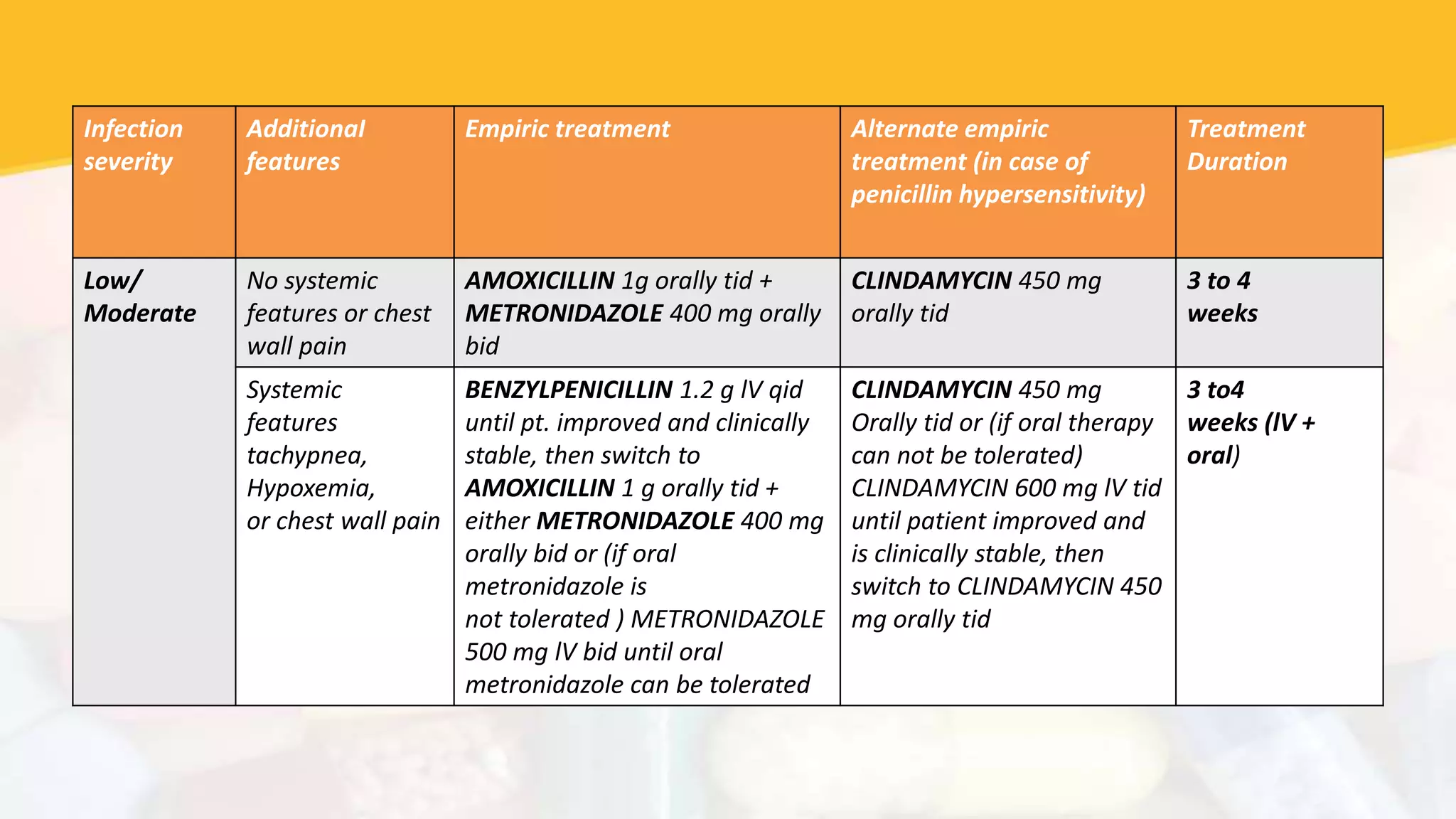
Infection
severity
AdditionaI
features
Empiric treatment Alternate empiric
treatment (in case of
penicillin hypersensitivity)
Treatment
Duration
Low/
Moderate
No systemic
features or chest
wall pain
AMOXICILLIN 1g orally tid +
METRONIDAZOLE 400 mg orally
bid
CLINDAMYCIN 450 mg
orally tid
3 to 4
weeks
Systemic
features
tachypnea,
Hypoxemia,
or chest wall pain
BENZYLPENICILLIN 1.2 g lV qid
until pt. improved and clinically
stable, then switch to
AMOXICILLIN 1 g orally tid +
either METRONIDAZOLE 400 mg
orally bid or (if oral
metronidazole is
not tolerated ) METRONIDAZOLE
500 mg lV bid until oral
metronidazole can be tolerated
CLINDAMYCIN 450 mg
Orally tid or (if oral therapy
can not be tolerated)
CLINDAMYCIN 600 mg lV tid
until patient improved and
is clinically stable, then
switch to CLINDAMYCIN 450
mg orally tid
3 to4
weeks (lV +
oral)
Infection
severity
AdditionaI
features
Empiric treatment Alternate empiric
treatment (in case of
penicillin hypersensitivity)
Treatment
Duration
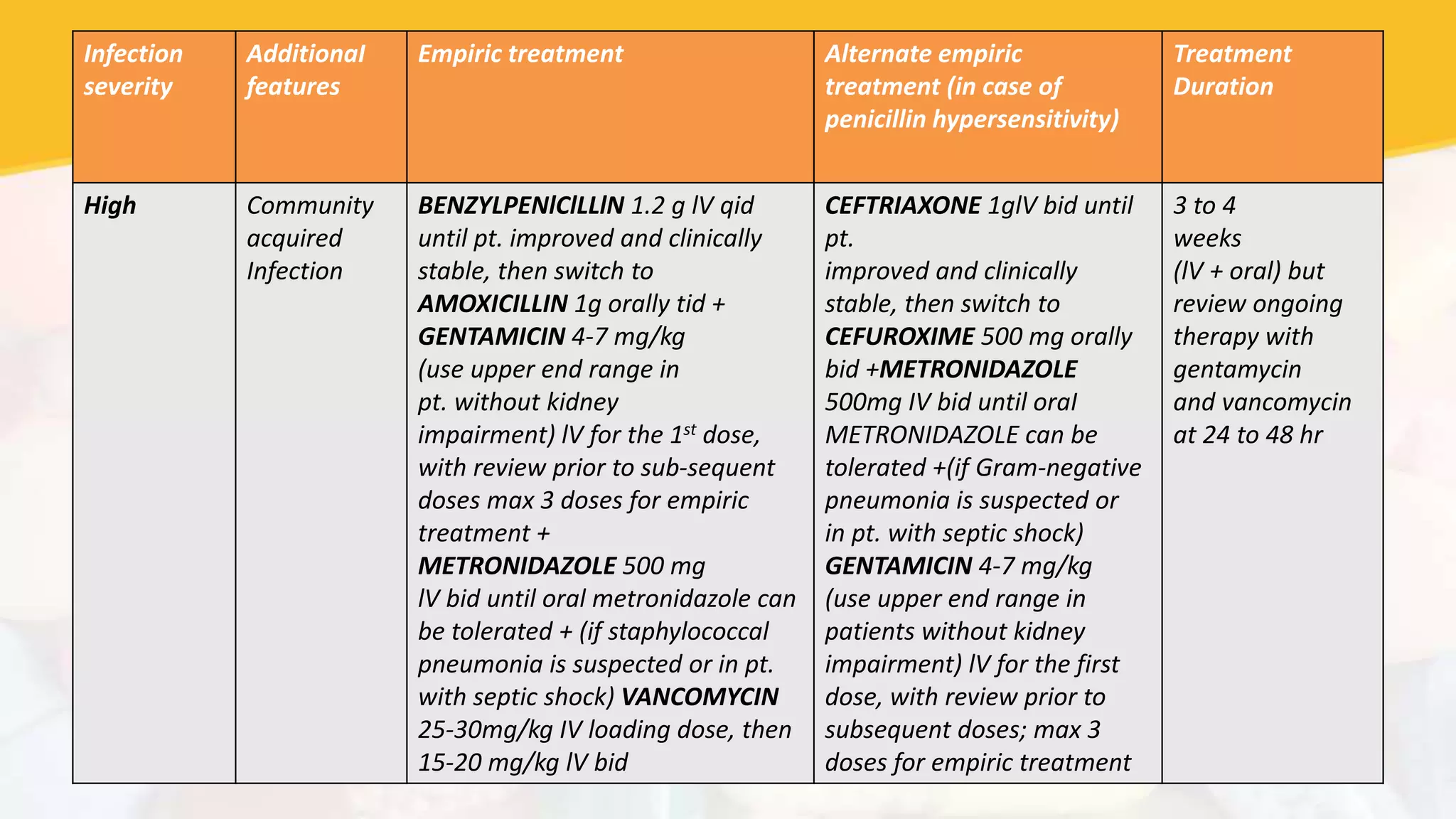
High Community
acquired
Infection
BENZYLPENlClLLlN 1.2 g lV qid
until pt. improved and clinically
stable, then switch to
AMOXICILLIN 1g orally tid +
GENTAMICIN 4-7 mg/kg
(use upper end range in
pt. without kidney
impairment) lV for the 1st dose,
with review prior to sub-sequent
doses max 3 doses for empiric
treatment +
METRONIDAZOLE 500 mg
lV bid until oral metronidazole can
be tolerated + (if staphylococcal
pneumonia is suspected or in pt.
with septic shock) VANCOMYCIN
25-30mg/kg IV loading dose, then
15-20 mg/kg lV bid
CEFTRIAXONE 1glV bid until
pt.
improved and clinically
stable, then switch to
CEFUROXIME 500 mg orally
bid +METRONIDAZOLE
500mg IV bid until oraI
METRONIDAZOLE can be
tolerated +(if Gram-negative
pneumonia is suspected or
in pt. with septic shock)
GENTAMICIN 4-7 mg/kg
(use upper end range in
patients without kidney
impairment) lV for the first
dose, with review prior to
subsequent doses; max 3
doses for empiric treatment
3 to 4
weeks
(lV + oral) but
review ongoing
therapy with
gentamycin
and vancomycin
at 24 to 48 hr
Infection
severity
AdditionaI
features
Empiric treatment Alternate empiric
treatment (in case of
penicillin hypersensitivity)
Treatment
Duration
High Hospital
acquired
infection
PIPERACILLIN+TAZOBACTAM
4.5g lV qid until pt. improved
and clinically stable, then
switch to AMOXICILLIN
+CLAVULANATE 1000 mg
orally bid +(if Gram-negative
pneumonia is suspected or in
pt. with septic shock)
GENTAMICIN 4-7mg/kg
(use upper end range in
Pt. without kidney impairment)
lV for the 1st dose, with review
prior to subsequent doses;
max 3 doses for empiric
treatment + (if staphylococcal
pneumonia is suspected or
in pt. with septic shock)
VANCOMYCIN 25-30 mg/kg lV
loading dose, then 15-20
mg/kg lV bid
CEFEPIME 2g lV tid until pt.
improved and clinically stable,
then switch to CEFUROXIME
500mg orally or parenterally bid
+ METRONIDAZOLE 500mg
lV bid until oral metronidazole
can be tolerated + (if Gram
negative pneumonia is
suspected or in pt. with septic
shock) GENTAMICIN 4-7mg/kg
(use upper end range in pt.
without kidney impairment) lV
for the 1st dose, with review
prior to subsequent doses;
max 3 doses for empiric tx. +
(if staphylococcaI pneumonia is
suspected or in pt. with septic
shock) VANCOMYCIN 25-30
mg/kg lV loading dose, then
15-20 mglk8 lV bid
3 to 4 weeks
lV + oral) but
review ongoing
Therapy with
gentamycin and
vancomycin
at 24 to 48 hr
Antibiotics' protocols & pharmaceutical dosage forms conversions.pptx

Antibiotics' protocols & pharmaceutical dosage forms conversions.pptx

  • 1.
    Antibiotics’ Protocols & PharmaceuticalDosage Forms Conversions Alaa F. Hassan (MSc. Pharmacology) Member of Antibiotic stewardship Medication errors & rational use
  • 2.
    Parenteral to oralantibiotic conversion
  • 3.
    Parenteral to oralantibiotic conversion • Rule: whenever pt. are clinically improving & absorbing oral drugs adequately, consider switching to oral antibiotics after 48hr of IV regimen • Criteria: pt. that needs antibiotic therapy, with functioning GIT, no poor absorption issue like short gut syndrome or active GI bleeding, and tolerate oral intake or on NG tube feeding without high residual/other medications, with clinical signs of improvements like WBCs trends, temperature < 37.5°C for 24-48hr, no signs of sepsis & finally when appropriate oral antibiotic with proper tissue concentration exists.
  • 4.
    Convert parenteral tooral antibiotics • Gram negative bacteraemia • Hospital acquired infections • Intra-abdominal infections • Pneumonia • Skin & soft tissue infections • Urinary tract infections
  • 5.
    Donoconvertparenteraltooralantibiotics(cond. requireprolongedcourse/high tissueconcentration) • Bloodstream infections • Non-resolving neutropenia • Cystic fibrosis • Deep abscess • Immunocompromised pt. • Nothing by mouth/ continuous NG suctioning pt. • Pt. scheduled for surgery • Recent oral therapeutic failure • Malabsorption disorders, short gut syndrome, severe diarrhoea, nausea & vomiting • Inflammatory bowel disease, bowel obstruction, ileus • Active GI bleeding • Hypotensive pt. (BP<100/60) • Bacterial meningitis, bacteraemia, endocarditis & deep joint/bone inf.
  • 6.
    What about Antibioticsprotocols/ prescription control
  • 7.
    Empiric antibiotic therapy,revision Recommendations: • When the diagnosis excludes infection, stop antimicrobial therapy. • When a pathogen is not identified. re-assess the need for antimicrobial therapy. lf on going treatment is indicated, consider de-escalation (i.e. change from a broad-spectrum to a narrower-spectrum antimicrobial), for a defined duration. • When the pathogen is identified, change to directed therapy.
  • 8.
    AWaRe classification The AWaReclassification of antibiotics, developed in 2017 & updated in 2021 by the WHO Expert Committee on selection and Use of Essential medicines as a tool to support antibiotic stewardship efforts at local, national and global levels. Antibiotics are classified into three groups: • ACCESS: have a narrow spectrum of activity, lower cost, a good safety profile and generally low resistance potential, are recommended as empiric 1st - or 2nd choice treatment options for common infections. • WATCH: are broader-spectrum antibiotics, generally with higher costs and are recommended only as 1st choice options for patients with more severe clinical presentations or for infections where the causative pathogens are more likely to be resistant to Access antibiotics (e.g. upper urinary tract infections). • RESERVE: are last-choice antibiotics used to treat multidrug-resistant infections.
  • 9.
    Blood stream infections Sepsisand septic shock • Detection of bacteria in blood cultures is not part of the definition of sepsis or septic shock, despite many patients with sepsis have bacteremia (not a universal finding and most patients with bacteremia do not meet sepsis criteria). • The quick Sequential Organ Failure Assessment (qSOFA) is used to recognize and stratify the risk of Patients presenting with suspected sepsis.
  • 10.
    Blood stream infections Sepsisand septic shock – qSOFA score A aSOFA score of 2 or more helps to, identify adult patients with suspected infection who are likely to have poor outcomes (prolonged lCU admission and death) and should therefore be prioritized for timely investigation and intervention.
  • 11.
    Blood stream infections Sepsisand septic shock Microbiology epidemiology Community setting • Gram-negative Bactria: Escherichia coli, Klebsiella pneumoniae and other Enterobacterales (including ESBLs and carbapenemases) • Gram-positive bacteria: Staphylococcus aureus (including MRSA) Hospital setting • Gram-negative bacteria: Acinetobacter boumannii, pseudomonas aeruginosa, Escherichia coli, Klebsiella pneumoniae and other Enterobacterales (including ESBLs & carbapenemases) • Gram-positive bacteria: Stophylococcus aureus (including MRSA) Maternal sepsis (in addition to community/hospital setting): • Gram-positive bacteria: Listeria monocytogenes, Streptococcus agalactiae (group B streptococcus)
  • 12.
    Source of infectionEmpiric treatment Treatment duration Clinical sepsis Of unknown origin - Community/hospital -acquired MEROPENEM 1g tid + VANCOMYCIN 25-30mg/kg IV loading dose, then 15-20 mg/kg lV, bid Duration dependent on source/pathogen identified and clinical progression; 7 days usually sufficient Enteric fever AZITHROMYCIN 500 mg IV od, until oral azithromycin can be tolerated 5 to 7 days (lV + oral) lntra-abdominal infection MEROPENEM 1g lV tid Duration depends on type of inf., adequate surgical source control achieved and clinical recovery; 7 days usually sufficient. Meningitis CEFTRIAXONE 2g lV bid OR CEFOTAXIME 2g lV qid Duration dependent on pathogen identified e.g. 5 days for meningococcal meningitis, or 10 to 14 days for pneumococcal meningitis. lf a pathogen is not isolated, continue the empiric antibiotic regimen for a minimum of 10 days,(depending on response)
  • 13.
    Source of infectionEmpiric treatment Treatment duration Lower respiratory tract infection - Community/hospital -acquired BENZYLPENICILLIN 1.2 g lV qid + GENTAMICIN 4-7 mg/kg (use upper end range in pt. without kidney impairment) lV for the 1st dose, with review prior to subsequent doses; (max 3 doses for empiric tx) + AZITHROMYCIN 500 mg lV od until oral azithromycin can be tolerated + (if staphylococcal pneumonia is suspected e.g. rapid progression to sepsis, multilobar consolidation. cavitating or necrotising pneumonia ) VANCOMYCIN 2S-30 mg/kg lV loading dose, then 15-20 mg/kg lV bid 7 days (lV + oral)
  • 14.
    Source of infectionEmpiric treatment Treatment duration Skin and soft tissue infection PIPERACILLIN+TAZOBACTAM 4.5 g lV qid + VANCOMYCIN 25-30 mg/kg lV loading dose, then 15-20 mg/kg lV bid + CLINDAMYCIN 600 mg lV, 8-hourly Continue lV treatment until further debridement is no longer necessary, (clinical improvement and the pt. has been afebrile for 48 to 72 hours), then switch to oral treatment guided by microbiological testing or expert advice. Continue oral treatment until the infection has resolved, but not necessarily until the wound has healed. Urinary tract infection MEROPENEM 1g lV tid 10 to 14 days (lV + oral)
  • 15.
    Blood stream infections Neutropenicfever Fever >38.0°C with neutrophils < 0.5 x 7Os/L, or < 1x 10e/L with a predicted decline to < 0.5 x 10e/L, consider infection in any unwell patient with neutropenia (fever may not always be present), Especially if the patient is elderly or taking corticosteroids. Microbiology epidemiology • Bacteria: Staphylococcus epidermidis, Staphylococcus aureus, Streptococcus spp., other Gram positive bacteria e.g. (Enterococcus spp.), Enterobacterales, Pseudomonas aeruginosa, anaerobes • Viruses: Cytomegalovirus, human herpesvirus 6 (consider in high-risk patients) • Fungi: Candida spp., Aspergillus Spp. (in prolonged neutropenia)
  • 16.
    Patient risk Empirictreatment Treatment du ration Low risk (duration of neutropenia <7 days, no major comorbidities ,no organ dysfunction, possible out-pt. tx) AMOXICILLIN+CLAVULANIC AClD 625 mg orally tid + CIPROFLOXACIN 500 mg orally bid 7 days High risk (duration of neutropenia > 7 days, major comorbidities, organ dysfunction) PIPERACILLIN+TAZOBACTAM 4.5g IV qid OR CEFTAZIDIME 2g lV tid + (in pt. with sepsis, at increased risk of MRSA susp. catheter-related inf.) VANCOMYN I5-20mg/kg (use a 25-30 mg/kg loading dose for critically ill pt.) lV bid + (in pt. with septic shock or requiring intensive care support) GENTAMICIN 4-7mg/kg (use upper end range in critically ill pt. without kidney impairment) lV for the first dose, with review prior to subsequent doses max 3 doses for empiric tx Continue until clinical signs of infection have resolved (absence of fever for least 48 hr.) lf a pathogen is identified, duration of therapy based on particular pathogen & site of infection. Antifungal agent may be indicated if the pt: (receiving total parental nutrition, had prolonged course of broad-spectrum antibiotics, hematologic malignancy, or is bone marrow/solid organ transplant recipient, has femoral catheterization), choice of treatment depends on the prophylactic antifungal regimen used. If the patient still has neutropenia, monitor closely for 24-48 hours and if fever returns, antibiotics should be restarted.
  • 17.
    Blood stream infections Catheter-relatedbloodstream infections The Global Antimicrobial Resistance and Use Surveillance System (GLASS) uses the following definition of suspected bloodstream infection: Presence of two or more of the following clinical signs in an adult patient • Hyperthermia (> 38.0 "C) or hypothermia (< 36.0 "C) • Respiratory rate > 20 breaths/minute • Heart rate > 90 beats/minute Microbiology epidemiology • Most common: coagulase-negative staphylococci, Staphylococcus aureus • Others: Gram-negative bacilli, Candida species
  • 18.
    Source of infectionEmpiric treatment Treatment duration intravascular device * GENTAMICIN 4 to 7mg/kg (use upper end of range in critically ill patients without kidney impairment) lV for the first dose, with review prior to subsequent doses; maximum 3 doses for empiric treatment + VANCOMYCIN 15 to 20mg/kg (use a 25 to 30 mg/kg loading dose for critically ill patients) lV bid Pathogen with low virulence (coagulase-negative staphylococci): antimicrobial therapy may not need to be continued after catheter removal More virulent pathogen (e.g. S. aureus, Candida spp.: continue therapy after device is removed; treatment may be prolonged if infection is deep-seated, consult expert be prolonged if infection is deep-seated, consult expert
  • 19.
    Lower Respiratory Tractinfection (RTl) Community-acquired pneumonia (CAP) Assessment of severity Step 1: Determine whether the patient requires hospital admission The CURB-65 tool can be used for patient assessment in the emergency department, in conjunction with clinical judgment, to decide whether to admit the patient to hospital.
  • 20.
    Lower Respiratory Tractinfection Community-acquired pneumonia Step 2: identify patients who may need intensive care support The SMART-COP tool can be used to identify patients at higher risk of death or requiring intensive care support.
  • 21.
    Lower Respiratory Tractinfection Community-acquired pneumonia
  • 22.
    Lower Respiratory Tractinfection Community-acquired pneumonia Microbiology epidemiology • Most common bacteria: Streptococcus pneumoniae • Atypical bacterial pathogens: Mycoplosma pneumoniae, chlamydophila (Chlamydia) pneumoniae, LegioneIIa species Microbiology tests • Blood cultures (prior to administration of antimicrobials whenever possible) • Sputum Gram stain and culture • Nose and throat swabs for nucleic acid amplification testing • Pneumococcal urinary antigen assay • Legionella urinary antigen assay
  • 23.
    Infection severity Empiric treatment Alternateempiric treatment (in case of non-severe penicillin hypersensitivity) Treatment duration Low AMOXICILLIN 1g orally tid + either (risk that follow-up within 48 hours may not occur) DOXYCYCLINE 100mg orally bid OR (if doxycycline is poorly tolerated) CLARITHROMYCIN 500mg orally bid CEFUROXIME 500 mg orally bid + either (risk that follow-up within 48 hours may not occur) DOXYCYCLINE 100mg orally bid Or (if doxycyclne is poorly tolerated) CLARITHROMYCIN 500mg orally bid 5 to 7 days Moderate BENZYLPENICILLIN 1.2 g lV qid until pt. improved and clinically stable, then switch to AMOXICILLIN 1g orally tid + either DOXYCYCIINE 100 mg orally bid OR (if doxycycline ls poorly tolerated) CLARITHROMYCIN 500 mg orally bid CEFTRIAXONE 1g lV, daily until pt. improved & clinically stable, then switch to CEFUROXIME 500 mg orally bid + either DOXYCYCTINE 100 mg orally bid OR (if doxycycline is poorly tolerated) CLARITHROMYCIN 500 mg oraIly bid 5 to 7 days (lV + oral)
  • 24.
    Infection severity Empiric treatment Alternateempiric treatment (in case of non-severe penicillin hypersensitivity) Treatment duration High BENZYLPENICILLIN 1.2 g lV qid until pt. has improved and clinically stable, then switch to AMOXICILLIN 1g orally qid + GENTAMICIN 4-7 mg/kg (use upper end range in pt. without kidney impairment) lV for the 1st dose, with review prior to subsequent doses; max 3 doses for empiric tx. + AZITHROMYCIN 500mg lV, daily until oral azithromycin can be tolerated + (if staphylococcaI pneumonia is suspected e.g. rapid progression to sepsis, multilobar consolidation, cavitating or necrotising pneumonia) VANCOMYCIN 25-30 mg/kg lV loading dose, then 15 to 20 mg/kg IV bid CEFTRIAXONE 1g lV bid until pt. has improved and clinically stable, then switch to CEFUROXIME 500 mB orally bid + AZITHROMYCIN 500mg lV, daily until oral azithromycin can be tolerated +(if staphylococcaI pneumonia is suspected e.g. rapid progression to sepsis, multilobar consolidation, cavitating or necrotising pneumonia) VANCOMYCIN 25-30 mg/kg lV loading dose, then 15 to 70 mg/kg IV bid 7 days (lV+ oral), except for azithromycin, which is onIy required for 3-5 days. Review ongoing Therapy with vancomycin at 24-48 hours.
  • 25.
    Lower Respiratory Tractinfection Hospital-acquired pneumonia (HAP) Assessment of severity The criteria for diagnosing high-severity HAP are not well defined, consider high- severity HAP in patients with any of the following clinical features: • Septic shock • Respiratory failure, particularly if requiring mechanical ventilation • Rapid progression of infiltrates on chest x-ray Microbiology epidemiology • Most common bacteria: Streptococcus pneumoniae • Less common bacteria: aerobic Gram-negative bacilli • Atypical bacterial pathogens: Legionella species (rare but can be acquired from a contaminated environmental reservoir in the hospital)
  • 26.
    Infection severity Empiric treatment Alternateempiric treatment (in case of non-severe penicillin hypersensitivity) Treatment duration Low/ moderate AMOXICILLN+CLAVULANATE 1000mg orally bid CEFUROXIME 500 mg orally bid 7 days High PIPERACI LLIN+TAZOBACTAM 4.5 g lV qid until pt. improved and clinically stable, then switch to AMOXICILLIN + CLAVULANATE 1000mg orally bid + (if Gram-negative pneumonia is suspected or in patients with septic shock) GENTAMICIN 4-7mg/kg (use upper end range in pt. without kidney impairment) lV for the 1st dose, with review prior to subsequent doses; max 3 doses for empiric treatment + (if staphylococcal pneumonia is suspected or in pt. with septic shock) VANCOMYCIN 25-30 mg/kg lV loading dose, then 15-20 mg/kg lV bid CEFEPIME 2 g lV tid until pt. improved and clinically stable, then switch to CEFUROXIME 500 mg orally bid +(if Gram-negative pneumonia is suspected or in Pt. with septic shock) GENTAMICIN 4-7 mg/kg (use upper end range in pt. without kidney impairment) lV for the 1st dose, with review prior to subsequent doses; max 3 doses for empiric treatment + (if staphylococcaI pneumonia is suspected or in pt. with septic shock) VANCOMYCIN 25-30 mg/kg lV loading dose, then 15-7O m4/kg lV bid 7 days (lV+ oral) but review ongoing therapy with gentamicin and vancomycin at 24-48 hours
  • 27.
    Lower Respiratory Tractinfection Ventilator-associated pneumonia (VAP) Microbiology epidemiology Similar to pathogens causing HAP • Streptococcus pneumoniae • Aerobic Gram-negative bacilli Microbiology tests • Blood cultures (prior to administration of antimicrobials whenever possible) • Lower respiratory tract sample Gram stain and culture
  • 28.
    Empiric treatment Alternateempiric treatment (in case of non-severe pe nicillin hype rsensitivity) Treatment d uration PIPERACILLIN+TAZOBACTAM 4.5 g IV, qid until pt. improved and clinically stable, then switch to AMOXICILLIN+CLAVULANATE 1000 mg orally or enterally bid + (if Gram- negative pneumonia is suspected or in pt. with septic shock) GENTAMICIN 4-7 mg/kg (use upper end range in pt. without kidney impairment) lV for the first dose, with review prior to subsequent doses; max 3 doses for empiric treatment + (if staphylococcaI pneumonia is suspected or in pt. with septic shock) VANCOMYCIN 25-30 mg/kg IV loading dose, then 15-20 mg/kg lV bid CEFEPIME 2g lV tid until pt. improved and is clinically stable, then switch to CEFUROXIME 500 mg orally or enterally bid P+ (if Gram-negative pneumonia is suspected or in pt. with septic shock) GENTAMICIN 4-7mg/kg (use upper end range in pt. without kidney impairment) lV for the 1st dose, with review prior to subsequent doses; Max 3 doses for empiric tx. + (if staphylococcal pneumonia is suspected or in patients with septic shock) VANCOMYCIN 25-30 mg/kg lV loading dose, then 15-20 mg/kg lV bid 5 to 7 days (lV + oral) but review ongoing therapy with gentamicin and vancomycin at 24 to 48 Hours
  • 29.
    Lower Respiratory Tractinfection Exacerbation of bronchiectasis Microbiology epidemiology ln patients with bronchiectasis, the airways are often colonized with organisms such as • Haemophilus influenzae • Streptococcus pneumoniae • Moraxella catarrhalis • Pseudomonas aeruginosa • Staphylococcus aureus Exacerbations of bronchiectasis may be caused by colonizing organisms or infection with a new organism, including common respiratory viruses. Microbiology tests • Sputum culture • Nose and throat swabs for nucleic acid amplification testing
  • 30.
    Infection severity Coloniza- tion with P. Aeruginosa Empirictreatment* Alternate empiric treatment (in case of Penicillin hypersensitivity) Treatment duration Low/ moderate No AMOXICILLIN 1g orally tid DOXYCYCLINE 100 mg orally bid 10 to 14 days lf inf. with a β-lactamase-producing strain of H. influenzae or M. catarrhalis is susp. (e.g. recent exacerbation with organism),while awaiting culture, use AMOXICILLIN+ CLAVULANATE 1000mg orally bid Yes AMOXICILLIN 1g orally tid DOXYCYCLINE 100 mg orally bid lf pt. is not improving and susceptible P. aeruginosa is identified in sputum, change to CIPROFLOXACIN 750 mg 14 days High No AMOXICILIIN 1 g orally tid DOXYCYCLINE 100 mg orally bid 10 to 14 days Yes PIPERACILLIN+TAZOBACTAM 4.5 g lV qid + (if combination therapy required) GENTAMICIN 4-7 mg/kg (use upper end range in pt. without kidney impairment) lV for the 1st dose, with review prior to subsequent doses; max 3 doses for empiric tx CEFTAZIDIME 2g tid + (if combination therapy required) GENTAMICIN 4-7 mg/kg (use upper end range in pt. without kidney impairment) lV for the 1st dose, with review prior to subsequent doses; max 3 doses for empiric tx 14 days (lV+ oral) but review ongoing therapy with gentamicin at 24-48 hours Once pt. has improved, and if the P. aeruginosa isolate is susceptible, switch to CIPROFLOXACIN 750 mg orally bid
  • 31.
    Lower Respiratory Tractinfection Lung abscess Microbiology epidemiology • Lung abscess due to aspiration: polymicrobial, including anaerobic bacteria and microaerophilic streptococci • Lung abscess as a metastatic complication of bacteremia: S. aureus, anaerobic bacteria • Lung abscess as a complication of pneumonia: S. aureus, Klebsiella pneumoniae, Nocardia species
  • 32.
    Infection severity AdditionaI features Empiric treatment Alternateempiric treatment (in case of penicillin hypersensitivity) Treatment Duration Low/ Moderate No systemic features or chest wall pain AMOXICILLIN 1g orally tid + METRONIDAZOLE 400 mg orally bid CLINDAMYCIN 450 mg orally tid 3 to 4 weeks Systemic features tachypnea, Hypoxemia, or chest wall pain BENZYLPENICILLIN 1.2 g lV qid until pt. improved and clinically stable, then switch to AMOXICILLIN 1 g orally tid + either METRONIDAZOLE 400 mg orally bid or (if oral metronidazole is not tolerated ) METRONIDAZOLE 500 mg lV bid until oral metronidazole can be tolerated CLINDAMYCIN 450 mg Orally tid or (if oral therapy can not be tolerated) CLINDAMYCIN 600 mg lV tid until patient improved and is clinically stable, then switch to CLINDAMYCIN 450 mg orally tid 3 to4 weeks (lV + oral)
  • 33.
    Infection severity AdditionaI features Empiric treatment Alternateempiric treatment (in case of penicillin hypersensitivity) Treatment Duration High Community acquired Infection BENZYLPENlClLLlN 1.2 g lV qid until pt. improved and clinically stable, then switch to AMOXICILLIN 1g orally tid + GENTAMICIN 4-7 mg/kg (use upper end range in pt. without kidney impairment) lV for the 1st dose, with review prior to sub-sequent doses max 3 doses for empiric treatment + METRONIDAZOLE 500 mg lV bid until oral metronidazole can be tolerated + (if staphylococcal pneumonia is suspected or in pt. with septic shock) VANCOMYCIN 25-30mg/kg IV loading dose, then 15-20 mg/kg lV bid CEFTRIAXONE 1glV bid until pt. improved and clinically stable, then switch to CEFUROXIME 500 mg orally bid +METRONIDAZOLE 500mg IV bid until oraI METRONIDAZOLE can be tolerated +(if Gram-negative pneumonia is suspected or in pt. with septic shock) GENTAMICIN 4-7 mg/kg (use upper end range in patients without kidney impairment) lV for the first dose, with review prior to subsequent doses; max 3 doses for empiric treatment 3 to 4 weeks (lV + oral) but review ongoing therapy with gentamycin and vancomycin at 24 to 48 hr
  • 34.
    Infection severity AdditionaI features Empiric treatment Alternateempiric treatment (in case of penicillin hypersensitivity) Treatment Duration High Hospital acquired infection PIPERACILLIN+TAZOBACTAM 4.5g lV qid until pt. improved and clinically stable, then switch to AMOXICILLIN +CLAVULANATE 1000 mg orally bid +(if Gram-negative pneumonia is suspected or in pt. with septic shock) GENTAMICIN 4-7mg/kg (use upper end range in Pt. without kidney impairment) lV for the 1st dose, with review prior to subsequent doses; max 3 doses for empiric treatment + (if staphylococcal pneumonia is suspected or in pt. with septic shock) VANCOMYCIN 25-30 mg/kg lV loading dose, then 15-20 mg/kg lV bid CEFEPIME 2g lV tid until pt. improved and clinically stable, then switch to CEFUROXIME 500mg orally or parenterally bid + METRONIDAZOLE 500mg lV bid until oral metronidazole can be tolerated + (if Gram negative pneumonia is suspected or in pt. with septic shock) GENTAMICIN 4-7mg/kg (use upper end range in pt. without kidney impairment) lV for the 1st dose, with review prior to subsequent doses; max 3 doses for empiric tx. + (if staphylococcaI pneumonia is suspected or in pt. with septic shock) VANCOMYCIN 25-30 mg/kg lV loading dose, then 15-20 mglk8 lV bid 3 to 4 weeks lV + oral) but review ongoing Therapy with gentamycin and vancomycin at 24 to 48 hr