DRUG: cefazolin                                                  NAME: Jiyoung Shin


    NAME OF       ACTION OF DRUG      THERAPEUTIC   COMMON OR         DRUG               NURSING       EVALUATION:
  MEDICATION      (cellular action)   DOSE/ROUTE    MINOR SIDE    INTERACTIONS        CONSIDERATIONS
                                      FREQUENCY &    EFFECTS
                                        ROUTE
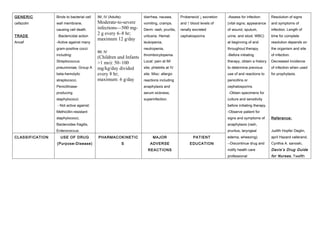
GENERIC          Binds to bacterial cell   IM, IV (Adults):        diarrhea, nausea,       Probenecid ↓ excretion   -Assess for infection        Resolution of signs
cefazolin        wall membrane,            Moderate-to-severe      vomiting, cramps.       and ↑ blood levels of    (vital signs; appearance     and symptoms of
                 causing cell death.       infections—500 mg-      Derm: rash, pruritis,   renally excreted         of wound, sputum,            infection. Length of
TRADE            -Bactericidal action
                                           2 g every 6–8 hr;       urticaria. Hemat:       cephalosporins           urine, and stool; WBC)       time for complete
                                           maximum 12 g/day
Ancef            -Active against many                              leukopenia,                                      at beginning of and          resolution depends on
                 gram-positive cocci                               neutropenia,                                     throughout therapy.          the organism and site
                                           IM, IV
                 including:                                        thrombocytopenia.                                -Before initiating           of infection.
                                           (Children and Infants
                 Streptococcus             >1 mo): 50–100          Local: pain at IM                                therapy, obtain a history    Decreased incidence
                 pneumoniae, Group A       mg/kg/day divided       site, phlebitis at IV                            to determine previous        of infection when used
                 beta-hemolytic            every 8 hr;             site. Misc: allergic                             use of and reactions to      for prophylaxis.
                 streptococci,             maximum: 6 g/day        reactions including                              penicillins or
                 Penicillinase-                                    anaphylaxis and                                  cephalosporins.
                 producing                                         serum sickness,                                  -Obtain specimens for
                 staphylococci.                                    superinfection.                                  culture and sensitivity
                 - Not active against:                                                                              before initiating therapy.
                 Methicillin-resistant                                                                              -Observe patient for
                 staphylococci,                                                                                     signs and symptoms of        Reference:
                 Bacteroides fragilis,                                                                              anaphylaxis (rash,
                 Enterococcus.                                                                                      pruritus, laryngeal          Judith Hopfer Deglin,
CLASSIFICATION     USE OF DRUG             PHARMACOKINETIC               MAJOR                     PATIENT          edema, wheezing).            april Hazard vallerand,
                 (Purpose-Disease)                        S            ADVERSE                  EDUCATION           --Discontinue drug and       Cynthia A. sanoski,
                                                                     REACTIONS                                      notify health care           Davis’s Drug Guide
                                                                                                                    professional                 for Nurses , Twelfth
Pharmacologic      Treatment of the            Absorption:                 CNS: SEIZURES       -Advise patient to report      immediately if these       Edition, F.A. Davis
(Chemical)         following infections        Well absorbed after IM      (HIGH DOSES). GI:   signs of superinfection        problems occur.            Company
                   due to susceptible          administration.             PSEUDOMEMBRA        (furry overgrowth on the       -Monitor bowel function.
first-generation   organisms: Skin and         Distribution:               NOUS COLITIS,       tongue, vaginal itching or     Diarrhea, abdominal
cephalosporins     skin structure              Widely distributed.         STEVENS-            discharge, loose or foul-      cramping, fever, and
                   infections (including       Penetrates bone and         JOHNSON             smelling stools) and           bloody , a sign of
Therapeutic        burn wounds),               synovial fluid well.        SYNDROME,           allergy.                       pseudomembranous
(Functional)       Pneumonia, Urinary          Crosses the placenta and                        -Instruct patient to notify    colitis.
                   tract infections, Biliary   enters breast milk in low                       health care professional if
anti-infectives    tract infections,           concentrations. Minimal                         fever and diarrhea
                   Genital infections,         CSF penetration.                                develop, especially if
                   Bone and joint              Protein Binding: 74—                            diarrhea contains blood,
                   infections, Septicemia,     86%.                                            mucus, or pus.
                   Bacterial endocarditis                                                      -Advise patient not to treat
                   prophylaxis for dental      Metabolism/Excretion                            diarrhea without
                   and upper respiratory       :                                               consulting health care
                   procedures.                 Excreted almost entirely                        professional.
                   Perioperative               unchanged by the
                   prophylaxis. Not            kidneys
                   suitable for the
                   treatment of
                   meningitis.

Cefazolin medication cards

  • 1.
    DRUG: cefazolin NAME: Jiyoung Shin NAME OF ACTION OF DRUG THERAPEUTIC COMMON OR DRUG NURSING EVALUATION: MEDICATION (cellular action) DOSE/ROUTE MINOR SIDE INTERACTIONS CONSIDERATIONS FREQUENCY & EFFECTS ROUTE
  • 2.
    GENERIC Binds to bacterial cell IM, IV (Adults): diarrhea, nausea, Probenecid ↓ excretion -Assess for infection Resolution of signs cefazolin wall membrane, Moderate-to-severe vomiting, cramps. and ↑ blood levels of (vital signs; appearance and symptoms of causing cell death. infections—500 mg- Derm: rash, pruritis, renally excreted of wound, sputum, infection. Length of TRADE -Bactericidal action 2 g every 6–8 hr; urticaria. Hemat: cephalosporins urine, and stool; WBC) time for complete maximum 12 g/day Ancef -Active against many leukopenia, at beginning of and resolution depends on gram-positive cocci neutropenia, throughout therapy. the organism and site IM, IV including: thrombocytopenia. -Before initiating of infection. (Children and Infants Streptococcus >1 mo): 50–100 Local: pain at IM therapy, obtain a history Decreased incidence pneumoniae, Group A mg/kg/day divided site, phlebitis at IV to determine previous of infection when used beta-hemolytic every 8 hr; site. Misc: allergic use of and reactions to for prophylaxis. streptococci, maximum: 6 g/day reactions including penicillins or Penicillinase- anaphylaxis and cephalosporins. producing serum sickness, -Obtain specimens for staphylococci. superinfection. culture and sensitivity - Not active against: before initiating therapy. Methicillin-resistant -Observe patient for staphylococci, signs and symptoms of Reference: Bacteroides fragilis, anaphylaxis (rash, Enterococcus. pruritus, laryngeal Judith Hopfer Deglin, CLASSIFICATION USE OF DRUG PHARMACOKINETIC MAJOR PATIENT edema, wheezing). april Hazard vallerand, (Purpose-Disease) S ADVERSE EDUCATION --Discontinue drug and Cynthia A. sanoski, REACTIONS notify health care Davis’s Drug Guide professional for Nurses , Twelfth
  • 3.
    Pharmacologic Treatment of the Absorption: CNS: SEIZURES -Advise patient to report immediately if these Edition, F.A. Davis (Chemical) following infections Well absorbed after IM (HIGH DOSES). GI: signs of superinfection problems occur. Company due to susceptible administration. PSEUDOMEMBRA (furry overgrowth on the -Monitor bowel function. first-generation organisms: Skin and Distribution: NOUS COLITIS, tongue, vaginal itching or Diarrhea, abdominal cephalosporins skin structure Widely distributed. STEVENS- discharge, loose or foul- cramping, fever, and infections (including Penetrates bone and JOHNSON smelling stools) and bloody , a sign of Therapeutic burn wounds), synovial fluid well. SYNDROME, allergy. pseudomembranous (Functional) Pneumonia, Urinary Crosses the placenta and -Instruct patient to notify colitis. tract infections, Biliary enters breast milk in low health care professional if anti-infectives tract infections, concentrations. Minimal fever and diarrhea Genital infections, CSF penetration. develop, especially if Bone and joint Protein Binding: 74— diarrhea contains blood, infections, Septicemia, 86%. mucus, or pus. Bacterial endocarditis -Advise patient not to treat prophylaxis for dental Metabolism/Excretion diarrhea without and upper respiratory : consulting health care procedures. Excreted almost entirely professional. Perioperative unchanged by the prophylaxis. Not kidneys suitable for the treatment of meningitis.