Understanding the nature of
        interactive learning
Many of the     "The structural approach to cooperative learning
elements of     is based on the creation, analysis and systematic
cooperative     application of structures, or content-free ways of
learning may    organizing social interaction in the classroom.
                Structures usually involve a series of steps, with
be used in
                proscribed behavior at each step. An important
collaborative   cornerstone of the approach is the distinction
situations.     between "structures" and "activities".
                             Spencer Kagan in an article in Educational Leadership (Dec/Jan 1989/1990)
   Collaboration
    is a philosophy


                      whereas
    of interaction
    and personal
    lifestyle
                                •   Cooperation is a
                                    structure of
                                    interaction designed
                                    to facilitate the
                                    accomplishment of
                                    an end product or
                                    goal.
In all situations where people
                                      come together in groups
The underlying premise of
    collaborative learning is              • it suggests a way of dealing
    based upon consensus                   with people which respects and
                                           highlights individual group
    building through cooperation           members' abilities and
    by group members, in                   contributions.
    contrast to competition in
                                            • There is a sharing of authority
    which individuals best other            and acceptance of responsibility
    group members.                          among group members for the
                                            groups actions


                                    not just a classroom technique
   in the classroom
apply this
  philosophy:      at committee meetings
                   with community groups
                   within their families


                generally as a way of living
                with and dealing with other
                                    people.
more directive than a     is defined by a set of processes which help
collaborative system      people interact together in order to accomplish
                          a specific goal or develop an end product
                          which is usually content specific.
closely controlled by
the teacher


                        the fundamental approach is teacher
                                    centered
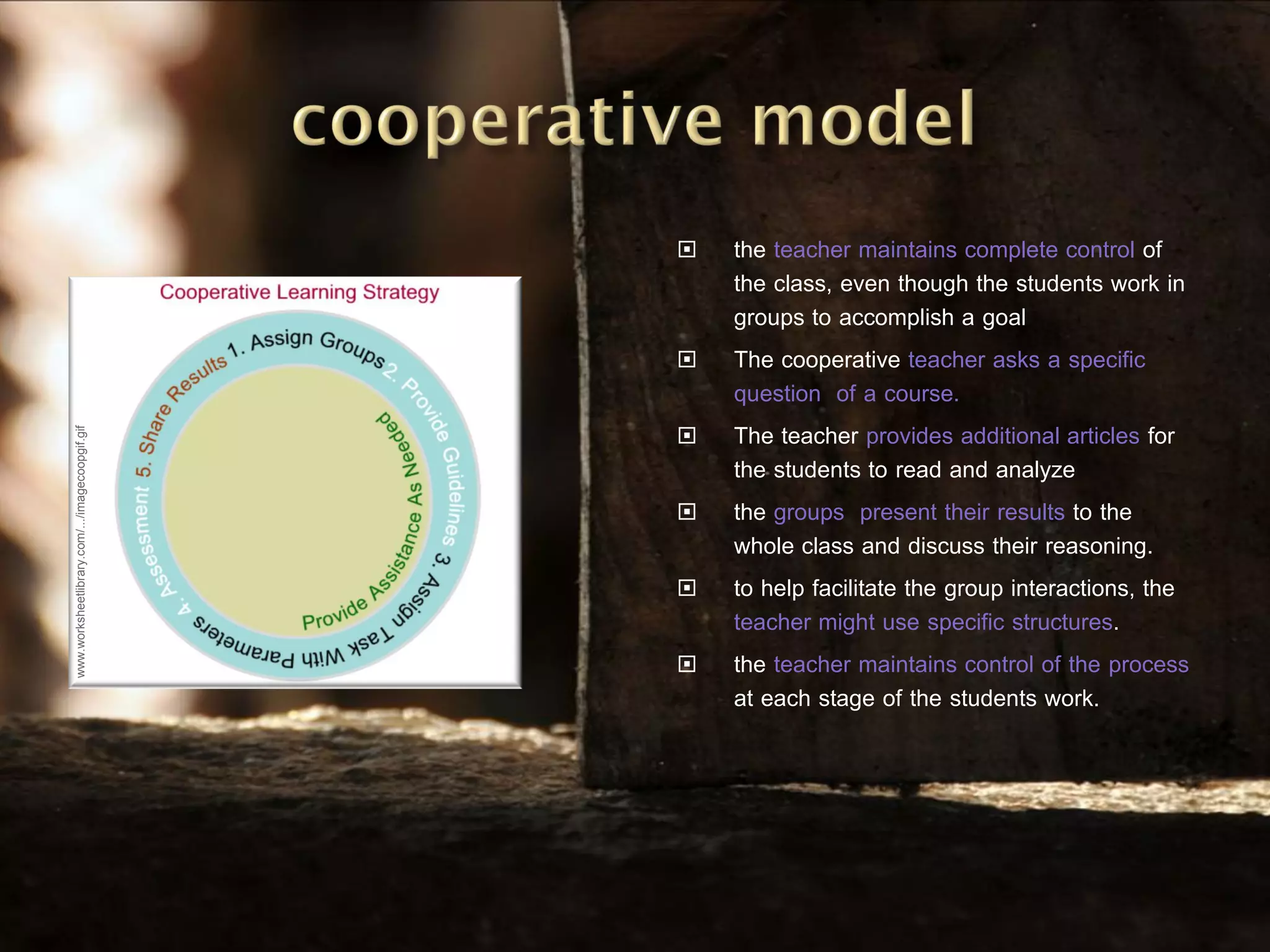
   the teacher maintains complete control of
                                                    the class, even though the students work in
                                                    groups to accomplish a goal
                                                   The cooperative teacher asks a specific
                                                    question of a course.
                                                   The teacher provides additional articles for
www.worksheetlibrary.com/.../imagecoopgif.gif


                                                    the students to read and analyze
                                                   the groups present their results to the
                                                    whole class and discuss their reasoning.
                                                   to help facilitate the group interactions, the
                                                    teacher might use specific structures.
                                                   the teacher maintains control of the process
                                                    at each stage of the students work.
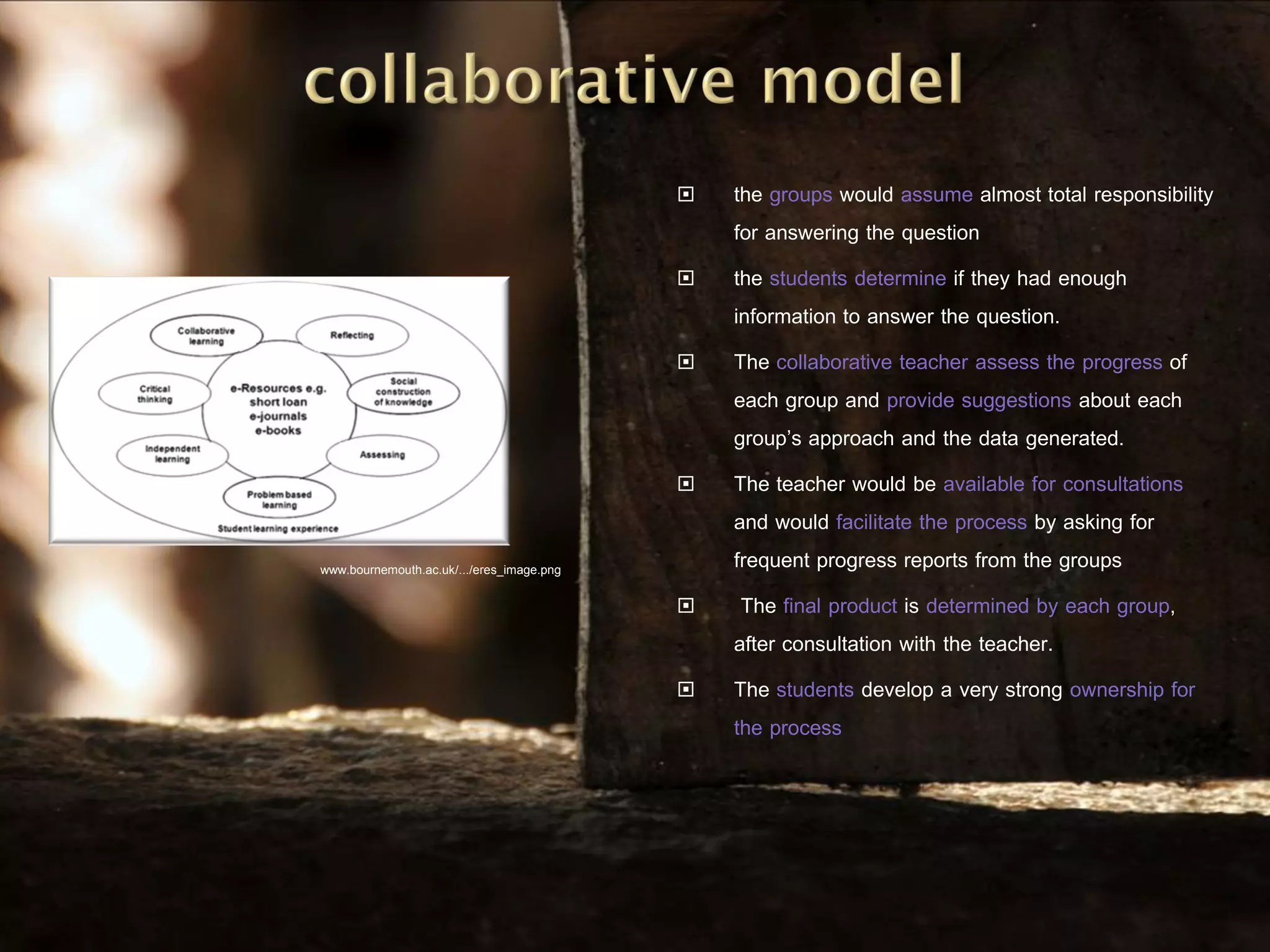
   the groups would assume almost total responsibility
                                               for answering the question
                                              the students determine if they had enough
                                               information to answer the question.
                                              The collaborative teacher assess the progress of
                                               each group and provide suggestions about each
                                               group’s approach and the data generated.
                                              The teacher would be available for consultations
                                               and would facilitate the process by asking for
www.bournemouth.ac.uk/.../eres_image.png
                                               frequent progress reports from the groups
                                               The final product is determined by each group,
                                               after consultation with the teacher.
                                              The students develop a very strong ownership for
                                               the process
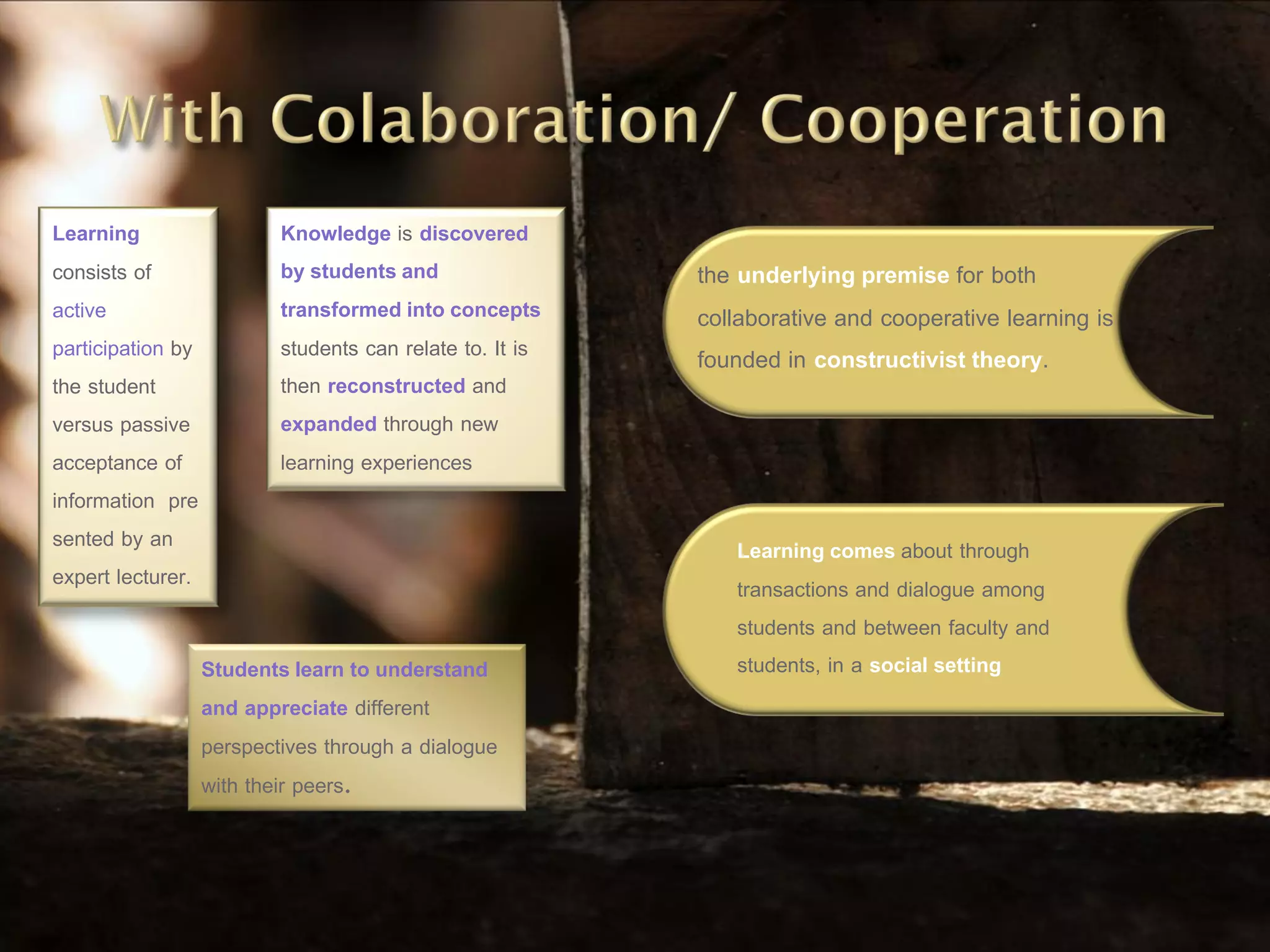
Learning                   Knowledge is discovered
consists of                by students and                 the underlying premise for both
active                     transformed into concepts       collaborative and cooperative learning is
participation by           students can relate to. It is   founded in constructivist theory.
the student                then reconstructed and
versus passive             expanded through new
acceptance of              learning experiences
information pre
sented by an                                                  Learning comes about through
expert lecturer.                                              transactions and dialogue among
                                                              students and between faculty and
                   Students learn to understand               students, in a social setting
                   and appreciate different
                   perspectives through a dialogue
                   with their peers.
Panitz Ted; A Definition of Collaborative vs
Cooperative Learning (1996) in
http://www.londonmet.ac.uk/deliberations/collaborative-
learning/panitz-paper.cfm visited in 27/10/2009

 Panitz ,Ted, COLLABORATIVE VERSUS COOPERATIVE LEARNING-
A COMPARISON OF THE TWO CONCEPTS WHICH WILL HELP US
UNDERSTAND THE UNDERLYING NATURE OF INTERACTIVE
LEARNING in
http://home.capecod.net/~tpanitz/tedsarticles/coopdefinition.htm
Visited in 27/10/2009

Science Education, What are the benefits of cooperative
and collaborative learning ?
http://www.thirteen.org/edonline/concept2class/coopcollab/i
ndex.html visited in 14 /01/2010
made by
       Teresa Rafael


                       PPEL/MPEL09
                  Universidade Aberta
                      Fevereiro 2010

Collaborative Versus Cooperative Learning

  • 1.
    Understanding the natureof interactive learning
  • 2.
    Many of the "The structural approach to cooperative learning elements of is based on the creation, analysis and systematic cooperative application of structures, or content-free ways of learning may organizing social interaction in the classroom. Structures usually involve a series of steps, with be used in proscribed behavior at each step. An important collaborative cornerstone of the approach is the distinction situations. between "structures" and "activities". Spencer Kagan in an article in Educational Leadership (Dec/Jan 1989/1990)
  • 3.
    Collaboration is a philosophy whereas of interaction and personal lifestyle • Cooperation is a structure of interaction designed to facilitate the accomplishment of an end product or goal.
  • 4.
    In all situationswhere people come together in groups The underlying premise of collaborative learning is • it suggests a way of dealing based upon consensus with people which respects and highlights individual group building through cooperation members' abilities and by group members, in contributions. contrast to competition in • There is a sharing of authority which individuals best other and acceptance of responsibility group members. among group members for the groups actions not just a classroom technique
  • 5.
    in the classroom apply this philosophy:  at committee meetings  with community groups  within their families generally as a way of living with and dealing with other people.
  • 6.
    more directive thana is defined by a set of processes which help collaborative system people interact together in order to accomplish a specific goal or develop an end product which is usually content specific. closely controlled by the teacher the fundamental approach is teacher centered
  • 7.
    the teacher maintains complete control of the class, even though the students work in groups to accomplish a goal  The cooperative teacher asks a specific question of a course.  The teacher provides additional articles for www.worksheetlibrary.com/.../imagecoopgif.gif the students to read and analyze  the groups present their results to the whole class and discuss their reasoning.  to help facilitate the group interactions, the teacher might use specific structures.  the teacher maintains control of the process at each stage of the students work.
  • 8.
    the groups would assume almost total responsibility for answering the question  the students determine if they had enough information to answer the question.  The collaborative teacher assess the progress of each group and provide suggestions about each group’s approach and the data generated.  The teacher would be available for consultations and would facilitate the process by asking for www.bournemouth.ac.uk/.../eres_image.png frequent progress reports from the groups  The final product is determined by each group, after consultation with the teacher.  The students develop a very strong ownership for the process
  • 9.
    Learning Knowledge is discovered consists of by students and the underlying premise for both active transformed into concepts collaborative and cooperative learning is participation by students can relate to. It is founded in constructivist theory. the student then reconstructed and versus passive expanded through new acceptance of learning experiences information pre sented by an Learning comes about through expert lecturer. transactions and dialogue among students and between faculty and Students learn to understand students, in a social setting and appreciate different perspectives through a dialogue with their peers.
  • 10.
    Panitz Ted; ADefinition of Collaborative vs Cooperative Learning (1996) in http://www.londonmet.ac.uk/deliberations/collaborative- learning/panitz-paper.cfm visited in 27/10/2009 Panitz ,Ted, COLLABORATIVE VERSUS COOPERATIVE LEARNING- A COMPARISON OF THE TWO CONCEPTS WHICH WILL HELP US UNDERSTAND THE UNDERLYING NATURE OF INTERACTIVE LEARNING in http://home.capecod.net/~tpanitz/tedsarticles/coopdefinition.htm Visited in 27/10/2009 Science Education, What are the benefits of cooperative and collaborative learning ? http://www.thirteen.org/edonline/concept2class/coopcollab/i ndex.html visited in 14 /01/2010
  • 11.
    made by Teresa Rafael PPEL/MPEL09 Universidade Aberta Fevereiro 2010