


Cooperative
Learning Approach
                        Albano, Krizel
                   Alvaro, Jenise Shareen
                   Bolinao, Jensine Fatima
                         Buan, Jane
                     Lorenzo, Florence


   Effective Teaching Mathods 2nd Edition
   www.KaganOnline.com
   www.Wikipedia.com
What is Cooperative
Learning Approach?
      a method of teaching and
    learning in which students form
    teams for structured activities to
    achieve a common goal.
What is Cooperative
Learning Approach?
      They are individually accountable
    for their work, and the work of the
    entire group. Members of cooperative
    teams work together and have clearly
    defined roles.
What is Cooperative
Learning Approach?

      allows students to observe, imitate,
    and learn from each other.
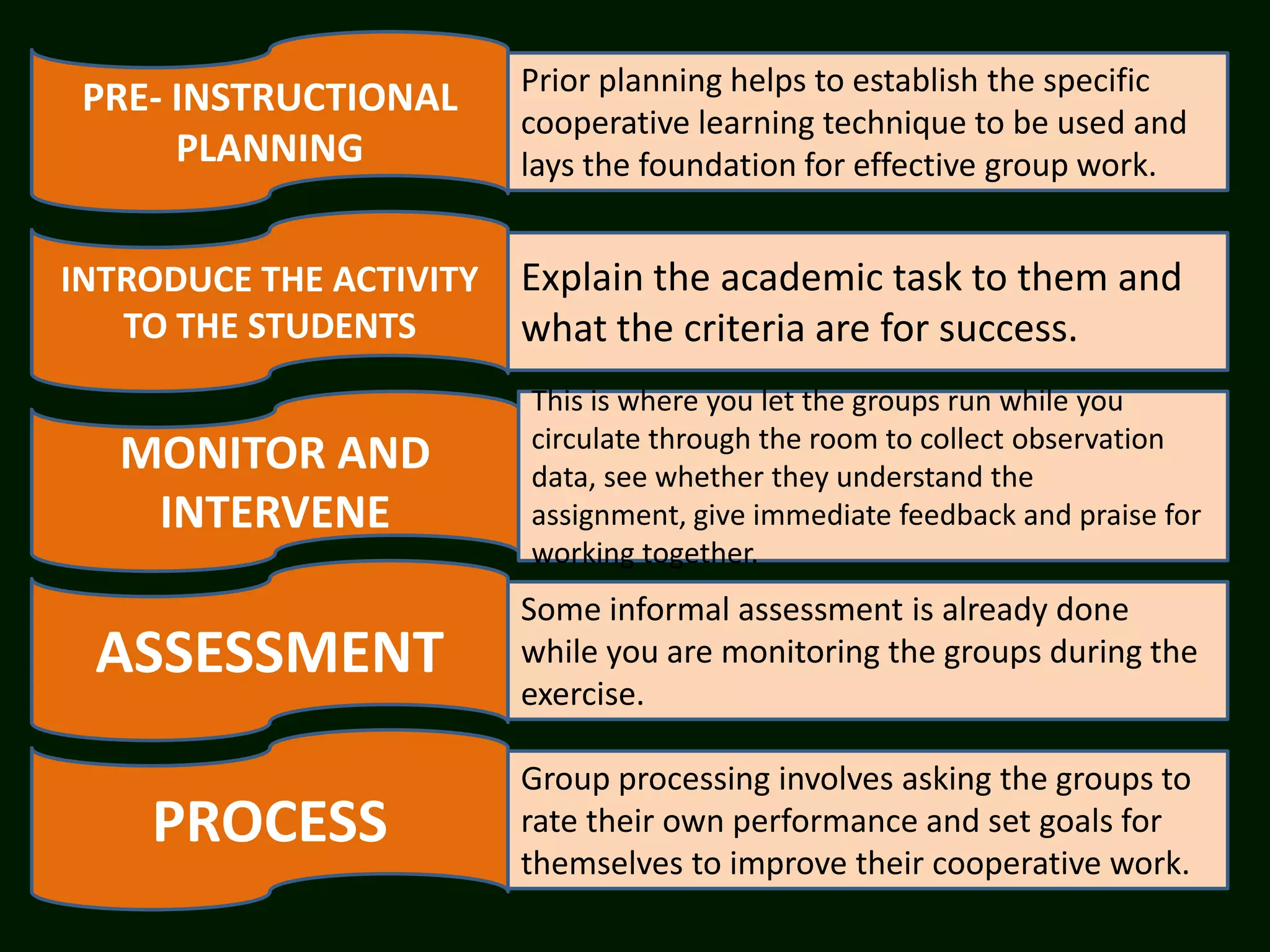
5 Key Steps in Conducting
Cooperative Learning Approach
Prior planning helps to establish the specific
 PRE- INSTRUCTIONAL
                         cooperative learning technique to be used and
      PLANNING           lays the foundation for effective group work.


INTRODUCE THE ACTIVITY   Explain the academic task to them and
   TO THE STUDENTS       what the criteria are for success.
                         This is where you let the groups run while you
                         circulate through the room to collect observation
   MONITOR AND           data, see whether they understand the
    INTERVENE            assignment, give immediate feedback and praise for
                         working together.
                         Some informal assessment is already done
 ASSESSMENT              while you are monitoring the groups during the
                         exercise.

                         Group processing involves asking the groups to
    PROCESS              rate their own performance and set goals for
                         themselves to improve their cooperative work.
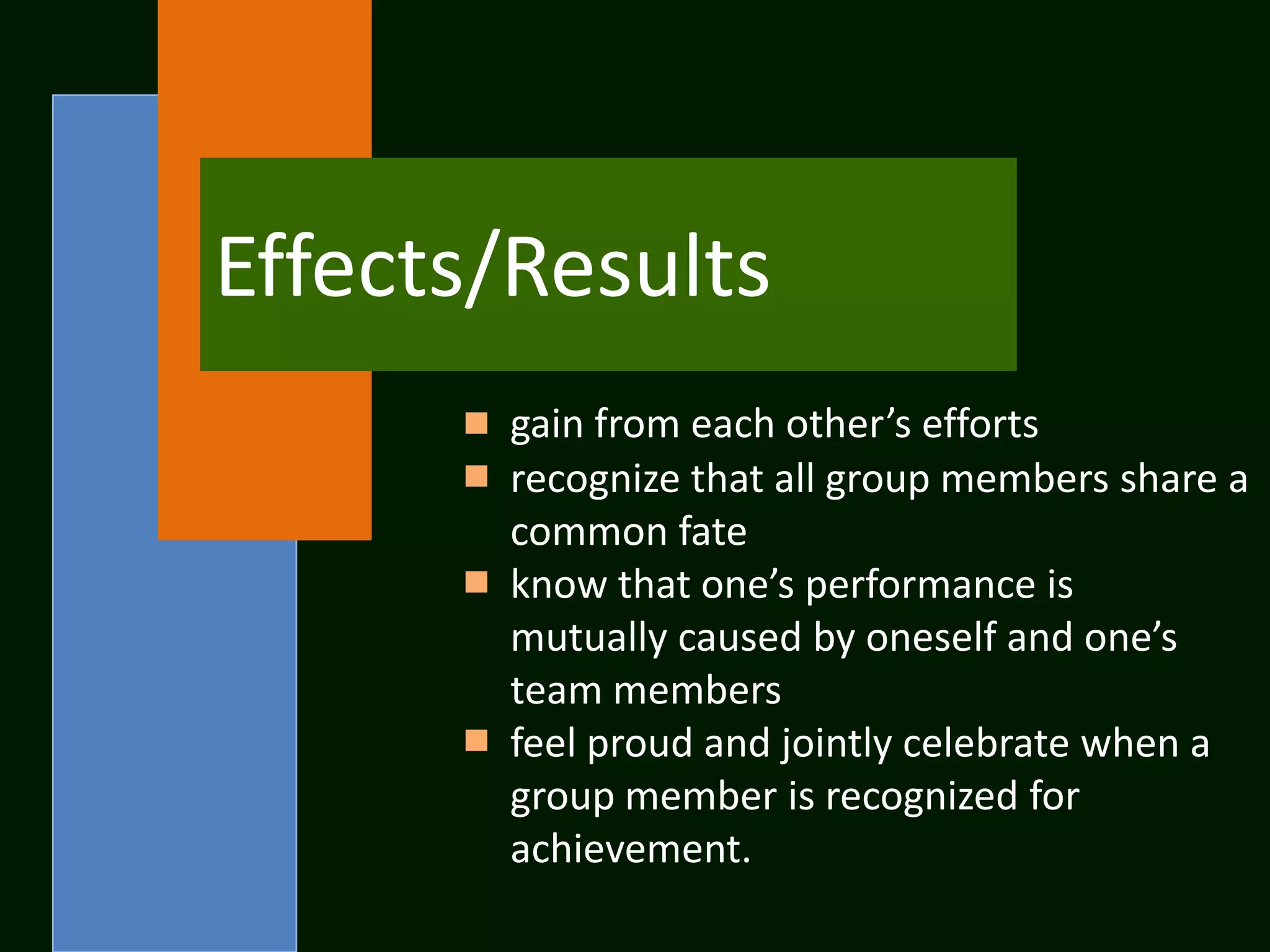
Effects/Results
       gain from each other’s efforts
       recognize that all group members share a
       common fate
       know that one’s performance is
       mutually caused by oneself and one’s
       team members
       feel proud and jointly celebrate when a
       group member is recognized for
       achievement.
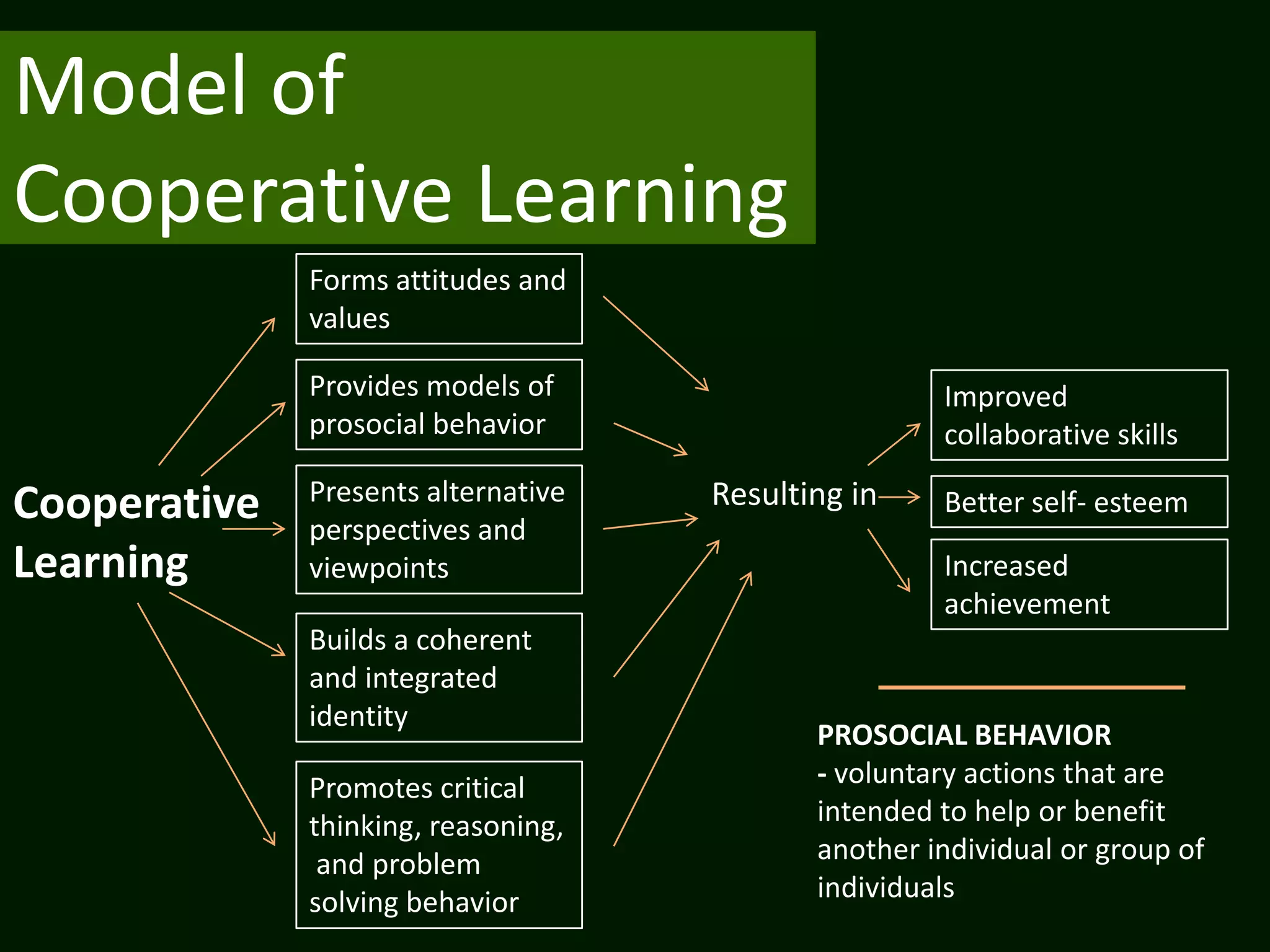
Model of
Cooperative Learning
              Forms attitudes and
              values

              Provides models of                     Improved
              prosocial behavior                     collaborative skills
              Presents alternative   Resulting in
Cooperative   perspectives and
                                                     Better self- esteem

Learning      viewpoints                             Increased
                                                     achievement
              Builds a coherent
              and integrated
              identity
                                            PROSOCIAL BEHAVIOR
              Promotes critical             - voluntary actions that are
              thinking, reasoning,          intended to help or benefit
               and problem                  another individual or group of
              solving behavior              individuals
TRADITIONAL LEARNING GROUP
          VS
COOPERATIVE LEARNING GROUP
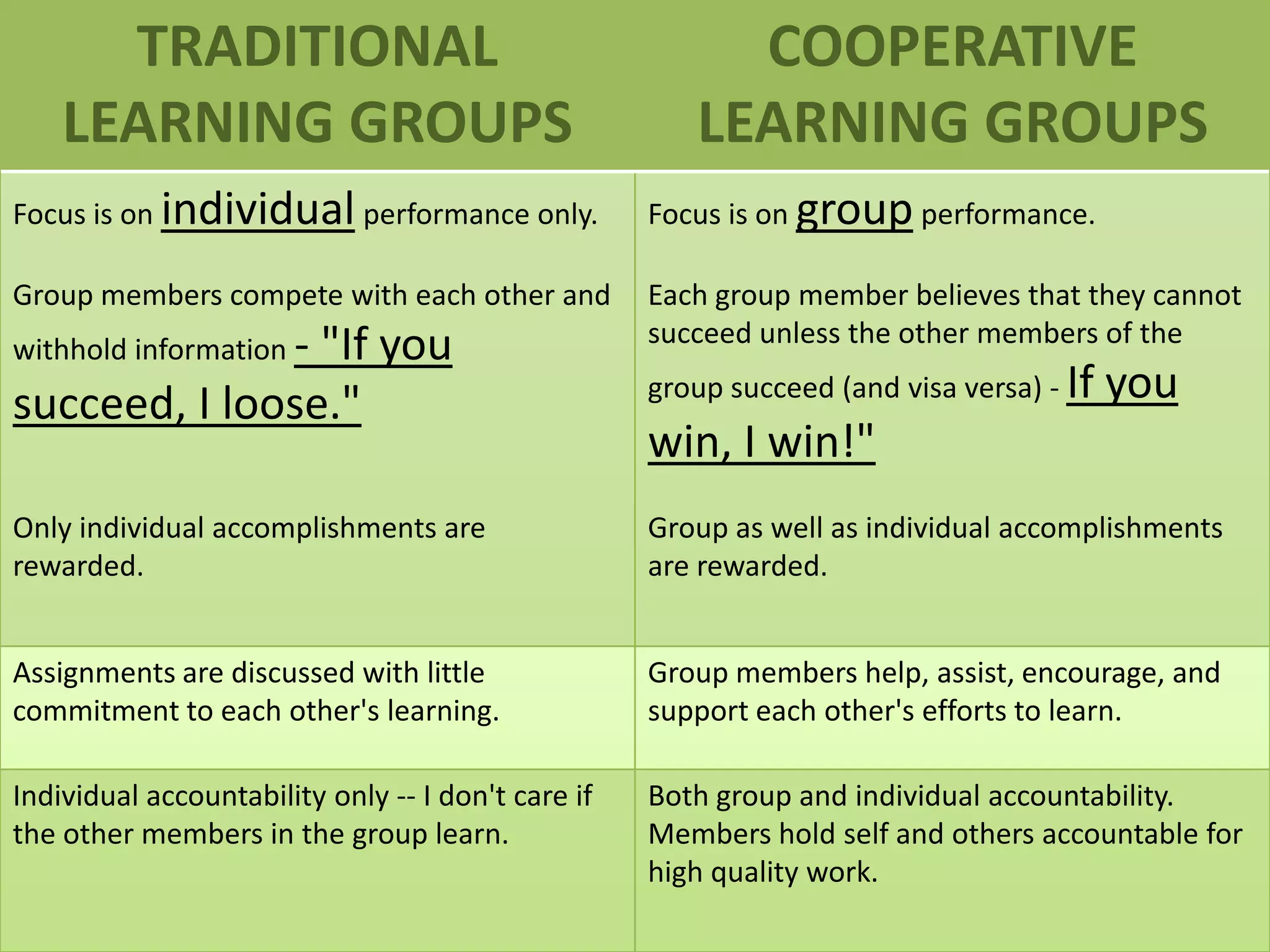
TRADITIONAL                                        COOPERATIVE
    LEARNING GROUPS                                    LEARNING GROUPS
Focus is on individual performance only.            Focus is on group performance.

Group members compete with each other and           Each group member believes that they cannot
                                                    succeed unless the other members of the
withhold information -
                "If you
                                                    group succeed (and visa versa) - If   you
succeed, I loose."
                                                    win, I win!"
Only individual accomplishments are                 Group as well as individual accomplishments
rewarded.                                           are rewarded.


Assignments are discussed with little               Group members help, assist, encourage, and
commitment to each other's learning.                support each other's efforts to learn.

Individual accountability only -- I don't care if   Both group and individual accountability.
the other members in the group learn.               Members hold self and others accountable for
                                                    high quality work.
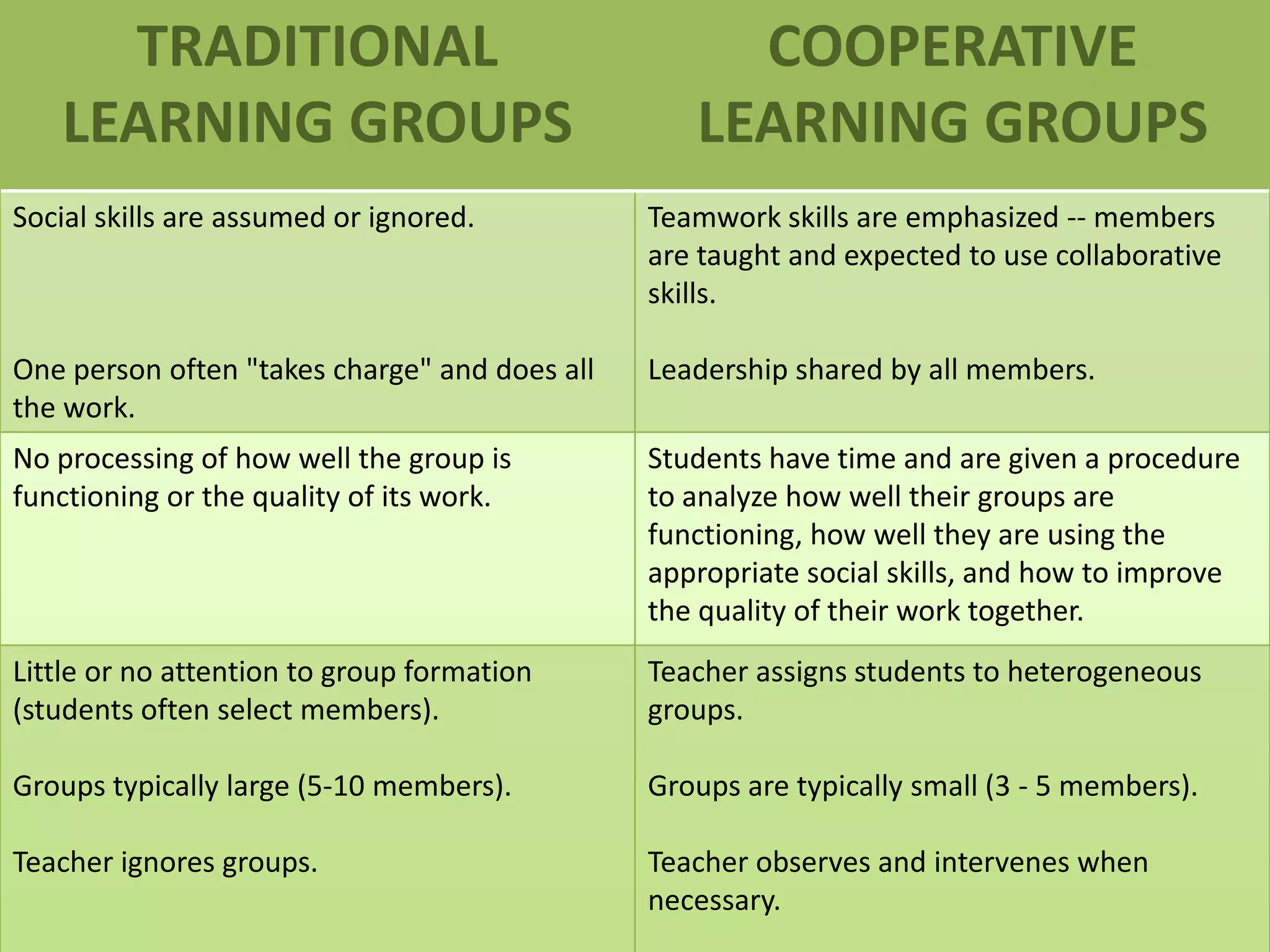
TRADITIONAL                                    COOPERATIVE
   LEARNING GROUPS                                LEARNING GROUPS
Social skills are assumed or ignored.          Teamwork skills are emphasized -- members
                                               are taught and expected to use collaborative
                                               skills.

One person often "takes charge" and does all   Leadership shared by all members.
the work.
No processing of how well the group is         Students have time and are given a procedure
functioning or the quality of its work.        to analyze how well their groups are
                                               functioning, how well they are using the
                                               appropriate social skills, and how to improve
                                               the quality of their work together.
Little or no attention to group formation      Teacher assigns students to heterogeneous
(students often select members).               groups.

Groups typically large (5-10 members).         Groups are typically small (3 - 5 members).

Teacher ignores groups.                        Teacher observes and intervenes when
                                               necessary.
Outcomes of
Cooperation
        Cooperative learning
    activities can instill in
    your learners:
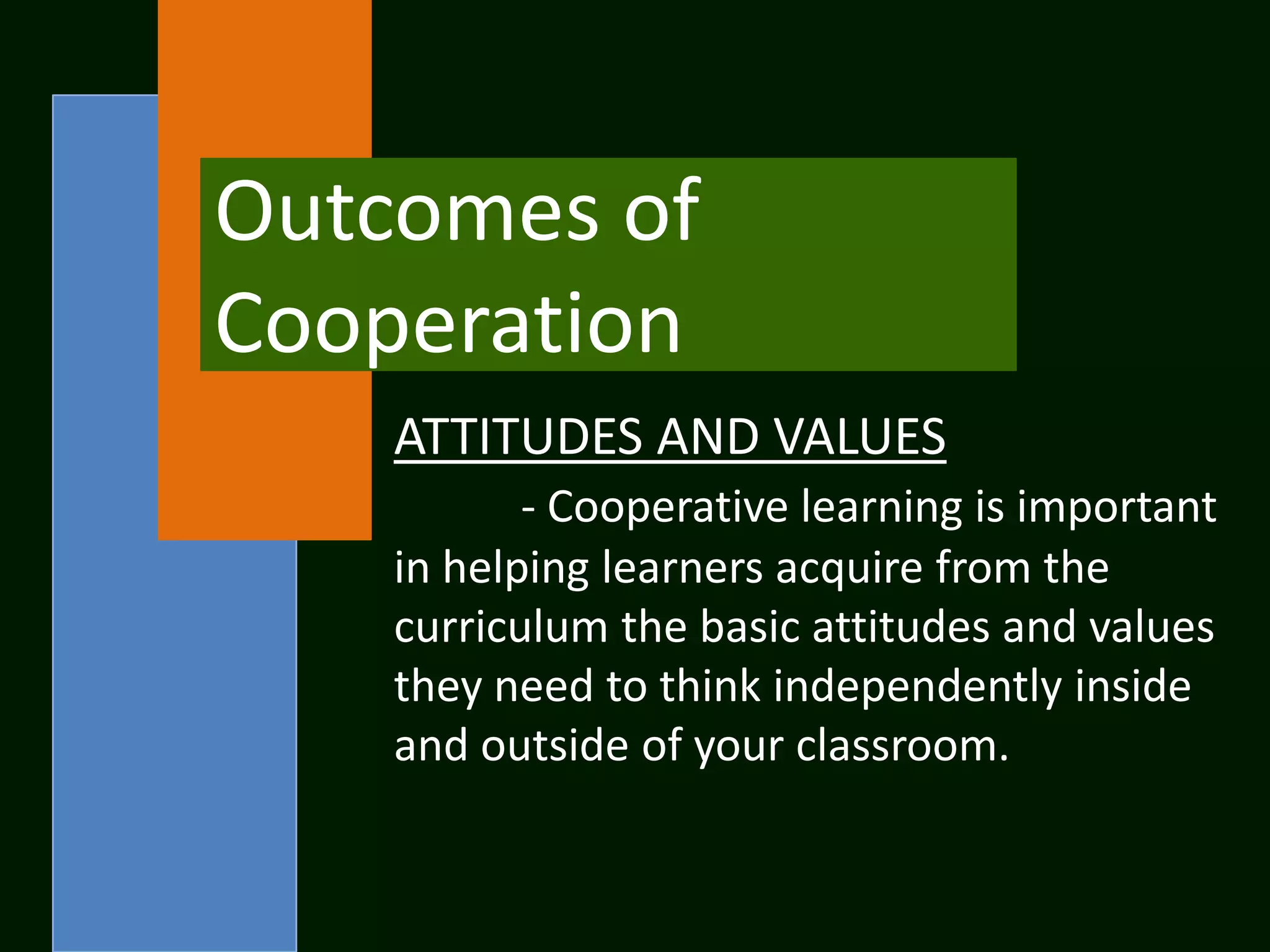
Outcomes of
Cooperation
    ATTITUDES AND VALUES
           - Cooperative learning is important
    in helping learners acquire from the
    curriculum the basic attitudes and values
    they need to think independently inside
    and outside of your classroom.
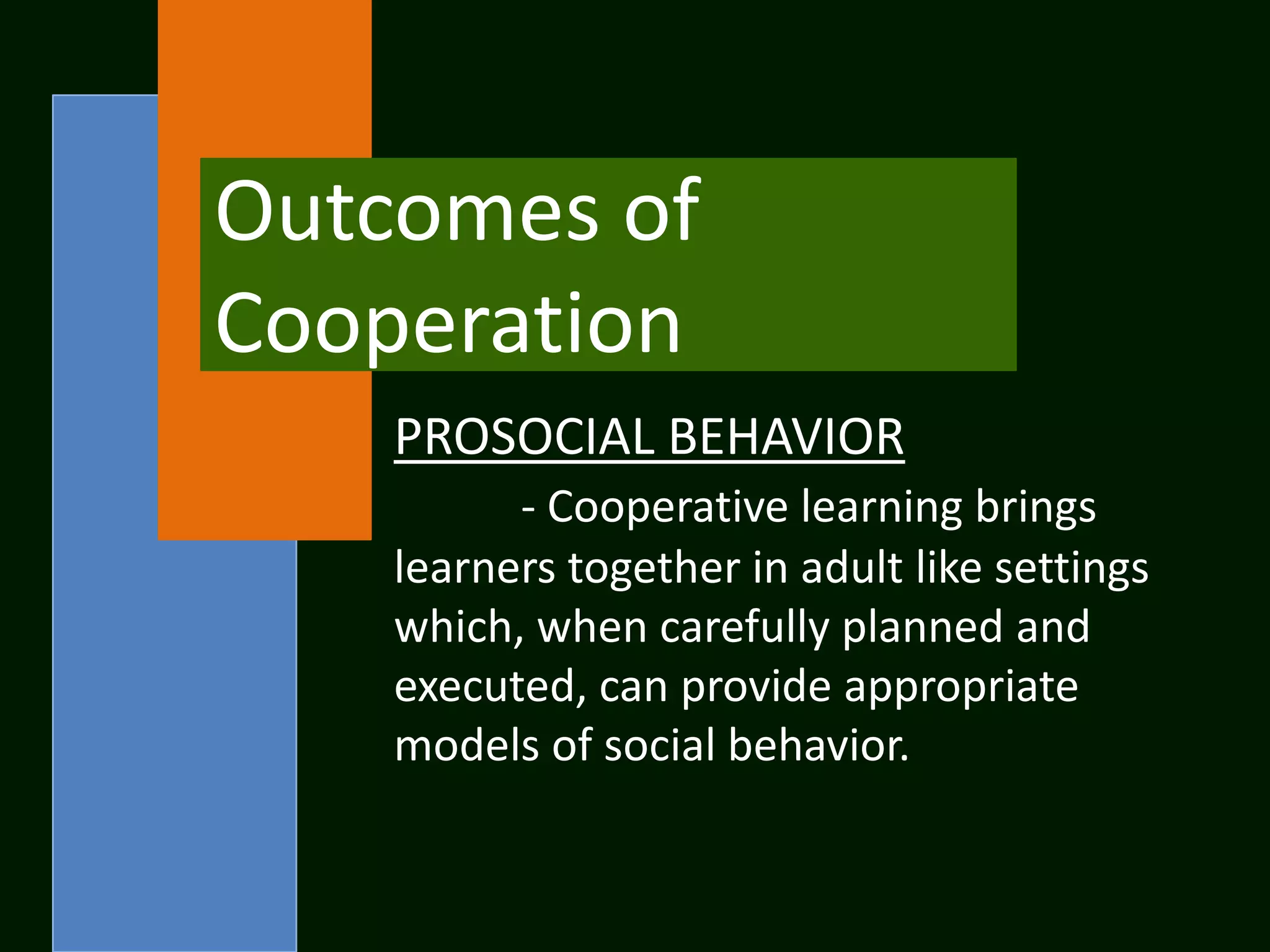
Outcomes of
Cooperation
    PROSOCIAL BEHAVIOR
          - Cooperative learning brings
    learners together in adult like settings
    which, when carefully planned and
    executed, can provide appropriate
    models of social behavior.
Outcomes of
Cooperation
    ALTERNATIVE PERSPECTIVES AND
    VIEWPOINTS
           - Cooperative learning provides the
    context or “meeting ground” where
    many different viewpoints can be
    orchestrated, from which we form more
    articulate attitudes and values.
Outcomes of
Cooperation
    INTEGRATED IDENTITY
          - Cooperative learning can be the
    start of stripping away the irrelevant,
    overly dramatic, and superficial
    appendages that mask our deepest
    thoughts and feelings.
Outcomes of
Cooperation
    HIGHER THOUGHT PROCESSES
            - Cooperative learning actively
    engages the student in the learning
    process and seeks to improve the critical
    thinking, reasoning, and problem solving
    skills of the learner.
COMPONENTS OF A
COOPERATIVE
LEARNING ACTIVITY
Cooperative Task
Structure
       1) Specifying the GOAL of the activity.
       2) Structuring the task.
       3) Teaching the collaborative process.
       4) Monitoring group performance.
       5) Debriefing.
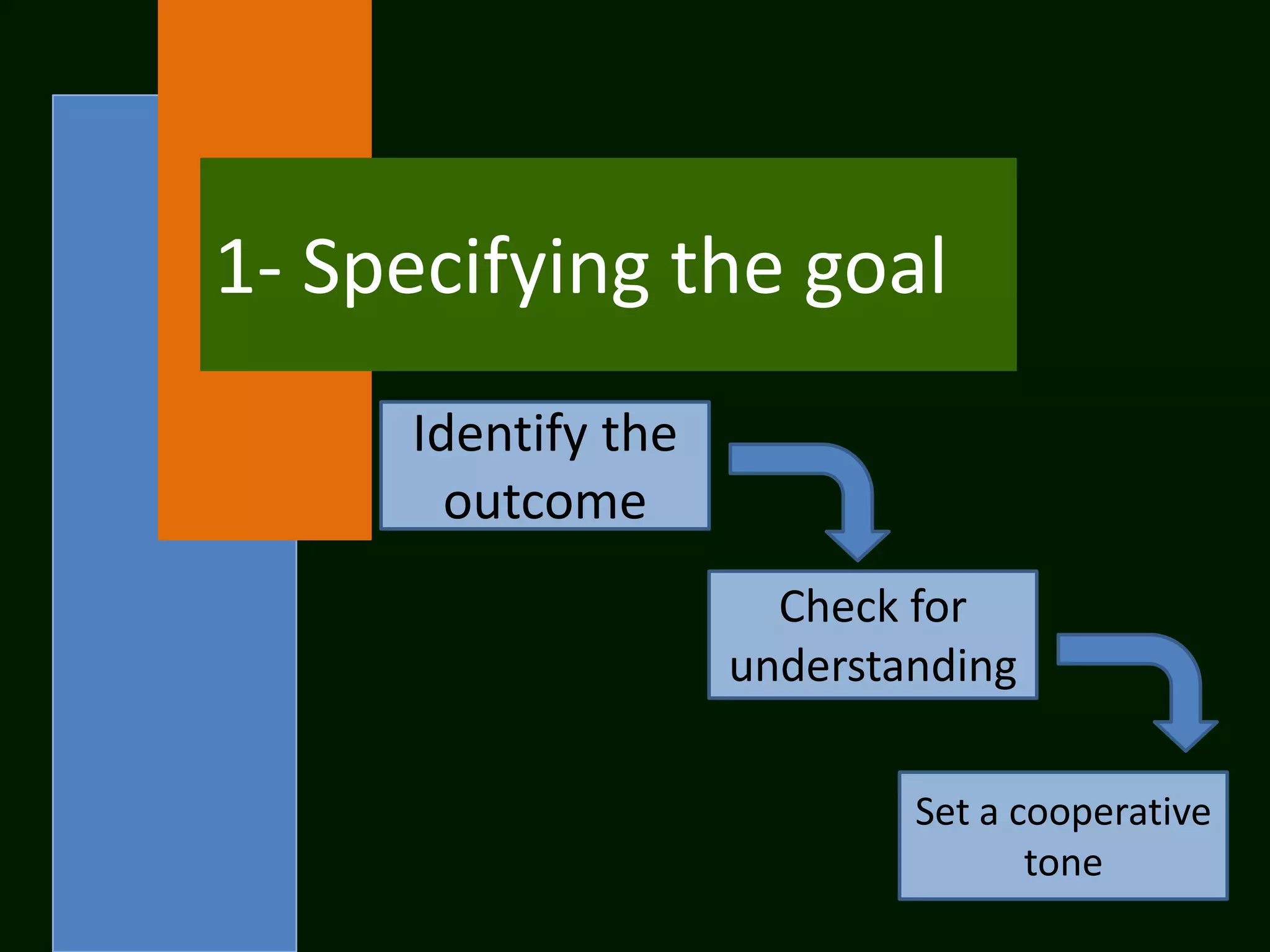
1- Specifying the goal
     Identify the
       outcome
                      Check for
                    understanding

                            Set a cooperative
                                   tone
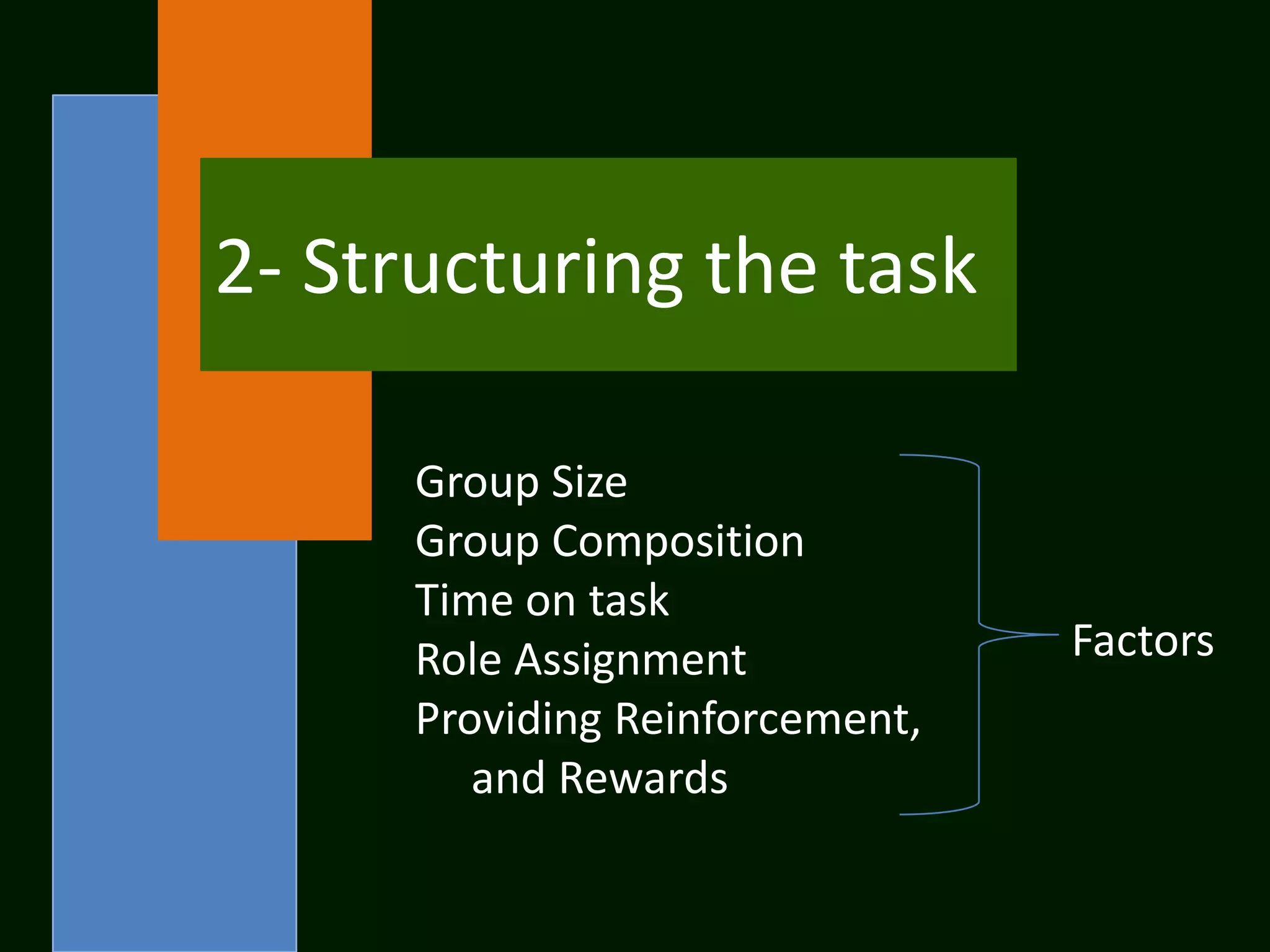
2- Structuring the task

      Group Size
      Group Composition
      Time on task
      Role Assignment            Factors
      Providing Reinforcement,
         and Rewards
3- Teaching and Evaluating
the Collaborative Process

               At the heart of the collaborative
      skills is the ability to exchange
      thoughts and feelings with each other
      at the same conceptual level. Students
      need to feel comfortable in
      communicating their ideas, beliefs and
      opinions to others in a timely and
      efficient manner.
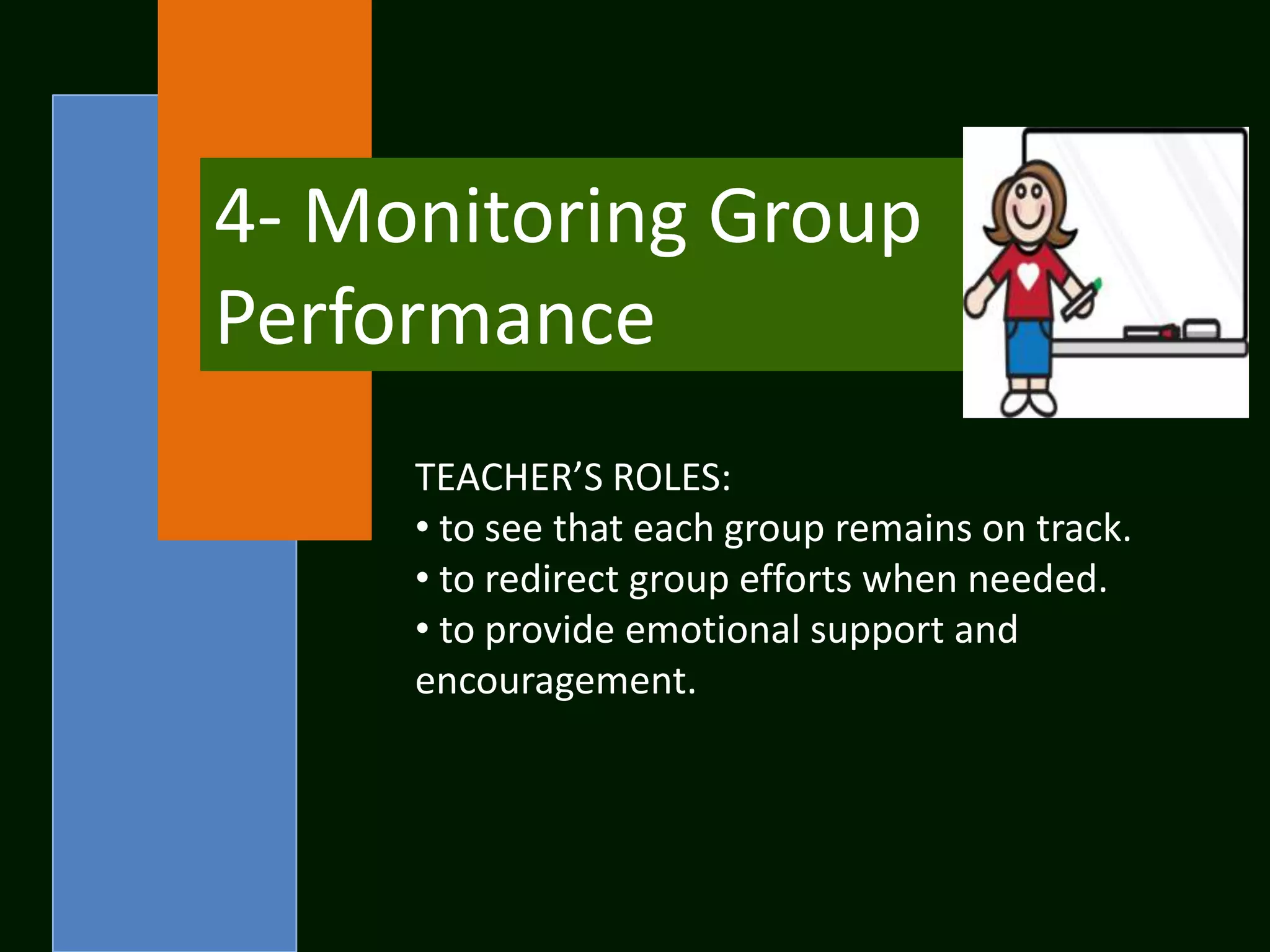
4- Monitoring Group
Performance
     TEACHER’S ROLES:
     • to see that each group remains on track.
     • to redirect group efforts when needed.
     • to provide emotional support and
     encouragement.
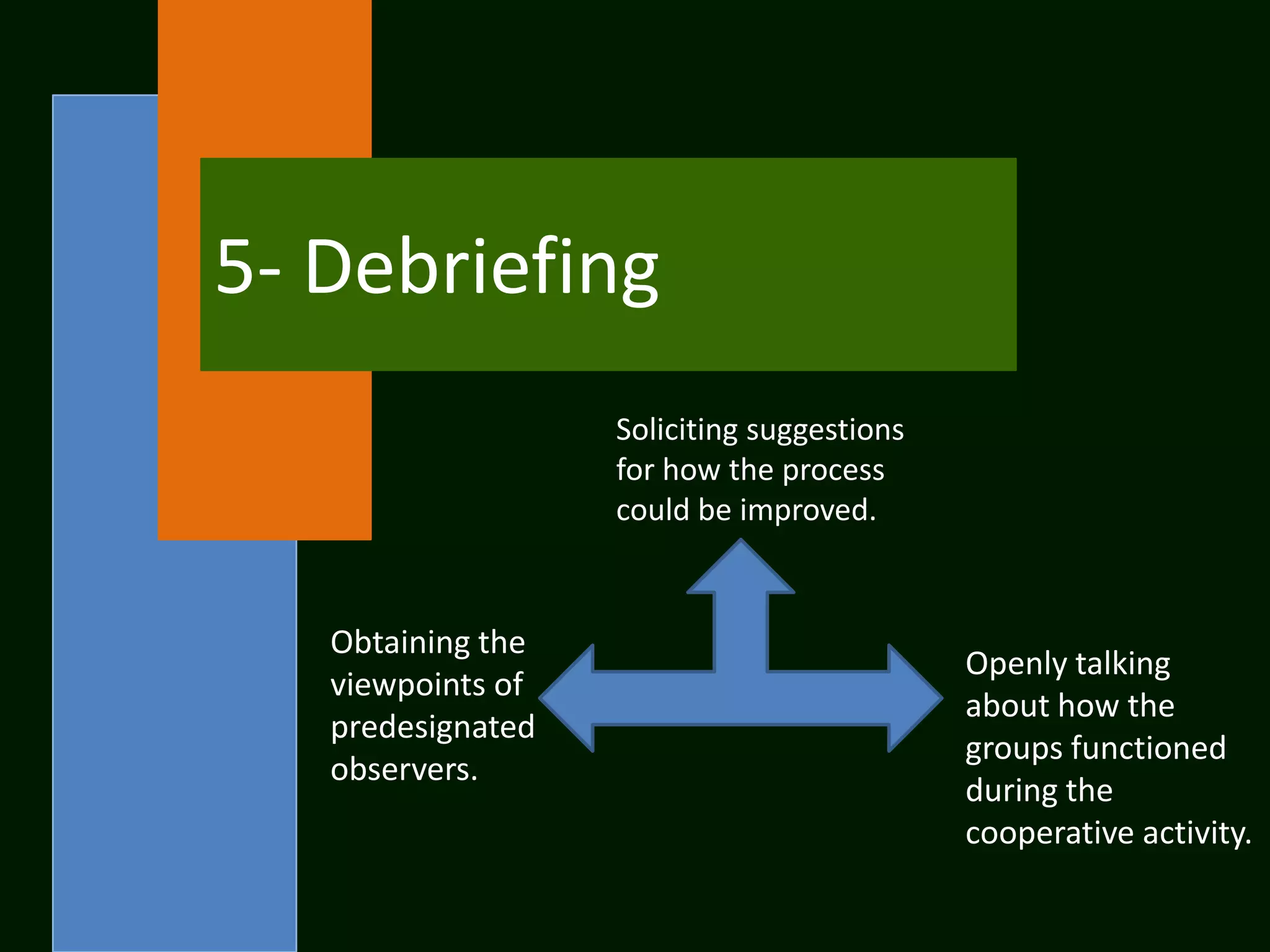
5- Debriefing
                   Soliciting suggestions
                   for how the process
                   could be improved.


   Obtaining the
                                            Openly talking
   viewpoints of
                                            about how the
   predesignated
                                            groups functioned
   observers.
                                            during the
                                            cooperative activity.
COOPERATIVE
LEARNING
STRATEGIES
RESEARCH SUPPORTING
COOPERATIVE
LEARNING
Essentials
    1) Positive Interdependence
            Students realize that each
    individual affects the work and success of
    the others. The work is structured so that
    students must share information in order
    to complete their cooperative tasks.
Essentials
    2) Student-to-Student Interaction
             The teacher openly encourages
    students to help each other.
Essentials
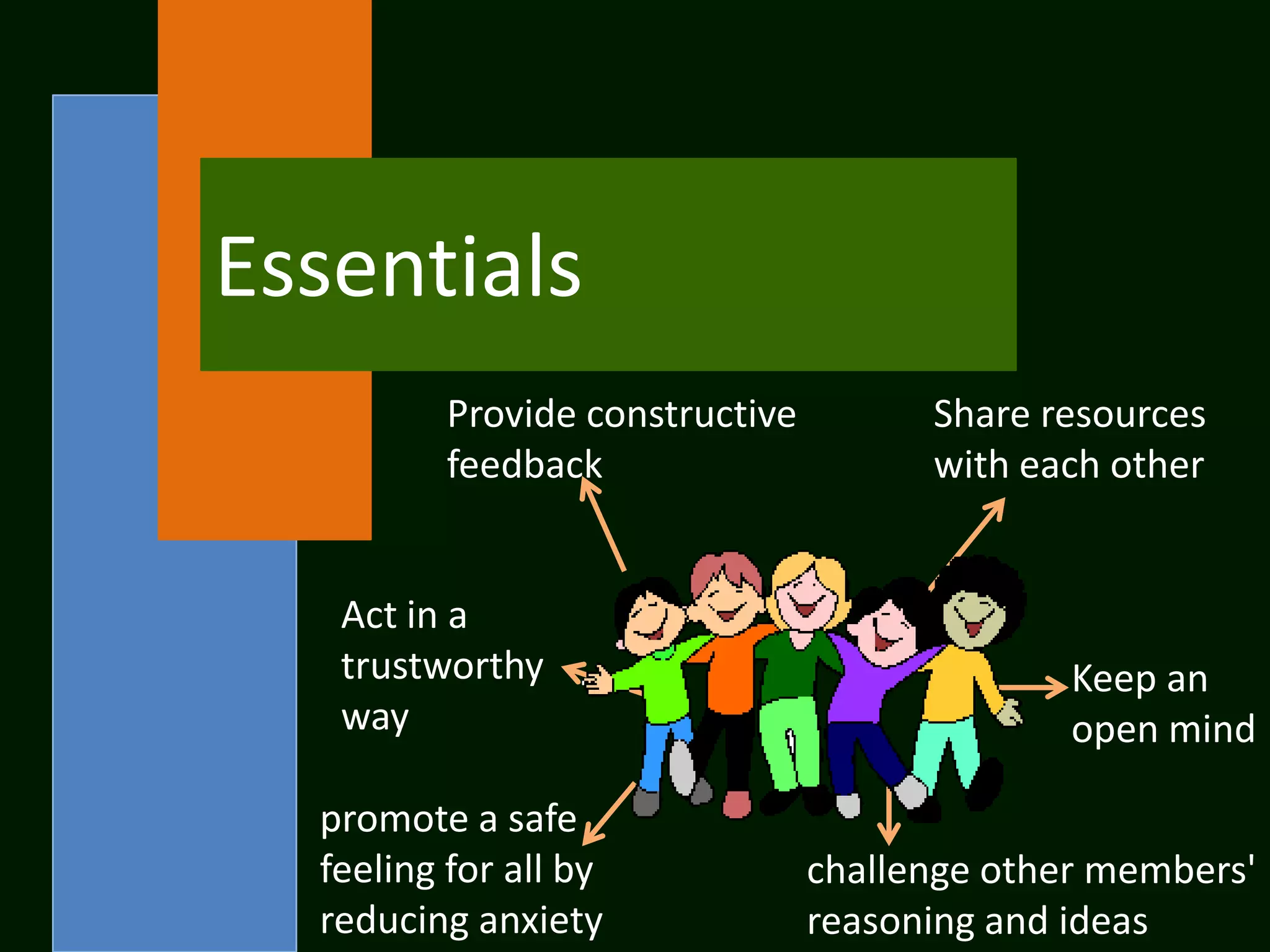
          Provide constructive         Share resources
          feedback                     with each other


   Act in a
   trustworthy                                 Keep an
   way                                         open mind

  promote a safe
  feeling for all by             challenge other members'
  reducing anxiety               reasoning and ideas
Essentials
    3) Individual Accountability
            Even though students work
    together, they also perform
    independently. Each individual's
    performance is assessed. Students must
    take personal responsibility for working
    toward the group goal(s).
Essentials

    4) Social Skills
            Students learn and use
    appropriate social skills.
           Leadership       Communication

        Decision-making   Conflict Management

         Trust building

Group 7 cla

  • 1.
    Cooperative Learning Approach Albano, Krizel Alvaro, Jenise Shareen Bolinao, Jensine Fatima Buan, Jane Lorenzo, Florence Effective Teaching Mathods 2nd Edition www.KaganOnline.com www.Wikipedia.com
  • 2.
    What is Cooperative LearningApproach? a method of teaching and learning in which students form teams for structured activities to achieve a common goal.
  • 3.
    What is Cooperative LearningApproach? They are individually accountable for their work, and the work of the entire group. Members of cooperative teams work together and have clearly defined roles.
  • 4.
    What is Cooperative LearningApproach? allows students to observe, imitate, and learn from each other.
  • 5.
    5 Key Stepsin Conducting Cooperative Learning Approach
  • 6.
    Prior planning helpsto establish the specific PRE- INSTRUCTIONAL cooperative learning technique to be used and PLANNING lays the foundation for effective group work. INTRODUCE THE ACTIVITY Explain the academic task to them and TO THE STUDENTS what the criteria are for success. This is where you let the groups run while you circulate through the room to collect observation MONITOR AND data, see whether they understand the INTERVENE assignment, give immediate feedback and praise for working together. Some informal assessment is already done ASSESSMENT while you are monitoring the groups during the exercise. Group processing involves asking the groups to PROCESS rate their own performance and set goals for themselves to improve their cooperative work.
  • 7.
    Effects/Results gain from each other’s efforts recognize that all group members share a common fate know that one’s performance is mutually caused by oneself and one’s team members feel proud and jointly celebrate when a group member is recognized for achievement.
  • 8.
    Model of Cooperative Learning Forms attitudes and values Provides models of Improved prosocial behavior collaborative skills Presents alternative Resulting in Cooperative perspectives and Better self- esteem Learning viewpoints Increased achievement Builds a coherent and integrated identity PROSOCIAL BEHAVIOR Promotes critical - voluntary actions that are thinking, reasoning, intended to help or benefit and problem another individual or group of solving behavior individuals
  • 9.
    TRADITIONAL LEARNING GROUP VS COOPERATIVE LEARNING GROUP
  • 10.
    TRADITIONAL COOPERATIVE LEARNING GROUPS LEARNING GROUPS Focus is on individual performance only. Focus is on group performance. Group members compete with each other and Each group member believes that they cannot succeed unless the other members of the withhold information - "If you group succeed (and visa versa) - If you succeed, I loose." win, I win!" Only individual accomplishments are Group as well as individual accomplishments rewarded. are rewarded. Assignments are discussed with little Group members help, assist, encourage, and commitment to each other's learning. support each other's efforts to learn. Individual accountability only -- I don't care if Both group and individual accountability. the other members in the group learn. Members hold self and others accountable for high quality work.
  • 11.
    TRADITIONAL COOPERATIVE LEARNING GROUPS LEARNING GROUPS Social skills are assumed or ignored. Teamwork skills are emphasized -- members are taught and expected to use collaborative skills. One person often "takes charge" and does all Leadership shared by all members. the work. No processing of how well the group is Students have time and are given a procedure functioning or the quality of its work. to analyze how well their groups are functioning, how well they are using the appropriate social skills, and how to improve the quality of their work together. Little or no attention to group formation Teacher assigns students to heterogeneous (students often select members). groups. Groups typically large (5-10 members). Groups are typically small (3 - 5 members). Teacher ignores groups. Teacher observes and intervenes when necessary.
  • 12.
    Outcomes of Cooperation Cooperative learning activities can instill in your learners:
  • 13.
    Outcomes of Cooperation ATTITUDES AND VALUES - Cooperative learning is important in helping learners acquire from the curriculum the basic attitudes and values they need to think independently inside and outside of your classroom.
  • 14.
    Outcomes of Cooperation PROSOCIAL BEHAVIOR - Cooperative learning brings learners together in adult like settings which, when carefully planned and executed, can provide appropriate models of social behavior.
  • 15.
    Outcomes of Cooperation ALTERNATIVE PERSPECTIVES AND VIEWPOINTS - Cooperative learning provides the context or “meeting ground” where many different viewpoints can be orchestrated, from which we form more articulate attitudes and values.
  • 16.
    Outcomes of Cooperation INTEGRATED IDENTITY - Cooperative learning can be the start of stripping away the irrelevant, overly dramatic, and superficial appendages that mask our deepest thoughts and feelings.
  • 17.
    Outcomes of Cooperation HIGHER THOUGHT PROCESSES - Cooperative learning actively engages the student in the learning process and seeks to improve the critical thinking, reasoning, and problem solving skills of the learner.
  • 18.
  • 19.
    Cooperative Task Structure 1) Specifying the GOAL of the activity. 2) Structuring the task. 3) Teaching the collaborative process. 4) Monitoring group performance. 5) Debriefing.
  • 20.
    1- Specifying thegoal Identify the outcome Check for understanding Set a cooperative tone
  • 21.
    2- Structuring thetask Group Size Group Composition Time on task Role Assignment Factors Providing Reinforcement, and Rewards
  • 22.
    3- Teaching andEvaluating the Collaborative Process At the heart of the collaborative skills is the ability to exchange thoughts and feelings with each other at the same conceptual level. Students need to feel comfortable in communicating their ideas, beliefs and opinions to others in a timely and efficient manner.
  • 23.
    4- Monitoring Group Performance TEACHER’S ROLES: • to see that each group remains on track. • to redirect group efforts when needed. • to provide emotional support and encouragement.
  • 24.
    5- Debriefing Soliciting suggestions for how the process could be improved. Obtaining the Openly talking viewpoints of about how the predesignated groups functioned observers. during the cooperative activity.
  • 25.
  • 26.
  • 27.
    Essentials 1) Positive Interdependence Students realize that each individual affects the work and success of the others. The work is structured so that students must share information in order to complete their cooperative tasks.
  • 28.
    Essentials 2) Student-to-Student Interaction The teacher openly encourages students to help each other.
  • 29.
    Essentials Provide constructive Share resources feedback with each other Act in a trustworthy Keep an way open mind promote a safe feeling for all by challenge other members' reducing anxiety reasoning and ideas
  • 30.
    Essentials 3) Individual Accountability Even though students work together, they also perform independently. Each individual's performance is assessed. Students must take personal responsibility for working toward the group goal(s).
  • 31.
    Essentials 4) Social Skills Students learn and use appropriate social skills. Leadership Communication Decision-making Conflict Management Trust building