FIRST AID
Presented by,
M.Sujapradeepa
KIT college
First aid?
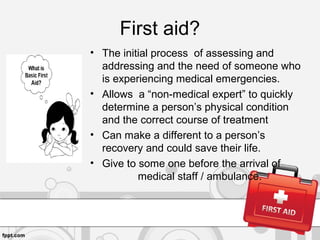
• The initial process of assessing and
addressing and the need of someone who
is experiencing medical emergencies.
• Allows a “non-medical expert” to quickly
determine a person’s physical condition
and the correct course of treatment
• Can make a different to a person’s
recovery and could save their life.
• Give to some one before the arrival of
medical staff / ambulance.
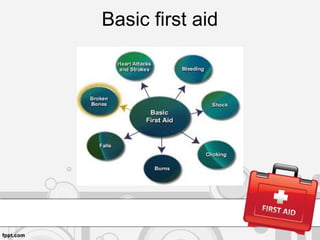
Basic first aid
First aid kit
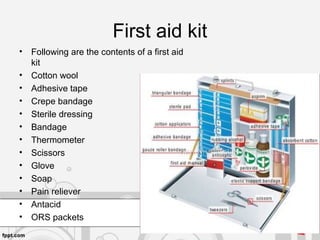
• Following are the contents of a first aid
kit
• Cotton wool
• Adhesive tape
• Crepe bandage
• Sterile dressing
• Bandage
• Thermometer
• Scissors
• Glove
• Soap
• Pain reliever
• Antacid
• ORS packets
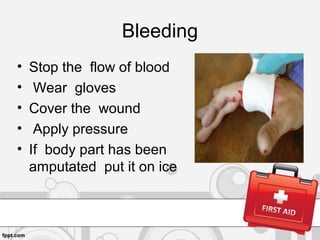
Bleeding
• Stop the flow of blood
• Wear gloves
• Cover the wound
• Apply pressure
• If body part has been
amputated put it on ice
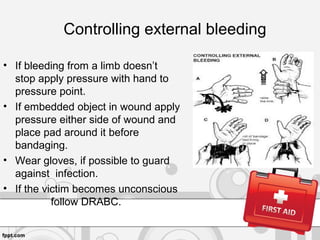
Controlling external bleeding
• If bleeding from a limb doesn’t
stop apply pressure with hand to
pressure point.
• If embedded object in wound apply
pressure either side of wound and
place pad around it before
bandaging.
• Wear gloves, if possible to guard
against infection.
• If the victim becomes unconscious
follow DRABC.
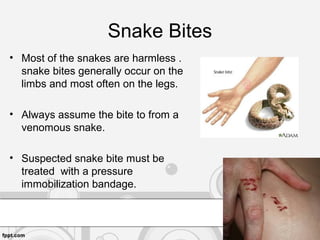
Snake Bites
• Most of the snakes are harmless .
snake bites generally occur on the
limbs and most often on the legs.
• Always assume the bite to from a
venomous snake.
• Suspected snake bite must be
treated with a pressure
immobilization bandage.
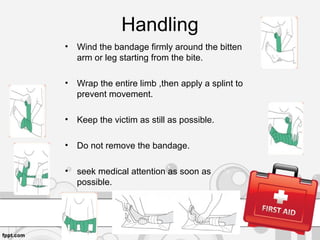
Handling
• Wind the bandage firmly around the bitten
arm or leg starting from the bite.
• Wrap the entire limb ,then apply a splint to
prevent movement.
• Keep the victim as still as possible.
• Do not remove the bandage.
• seek medical attention as soon as
possible.
Dog Bites
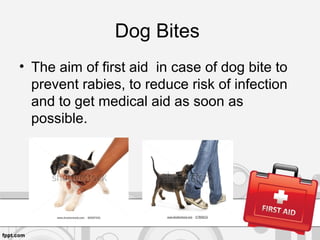
• The aim of first aid in case of dog bite to
prevent rabies, to reduce risk of infection
and to get medical aid as soon as
possible.
Heart attack
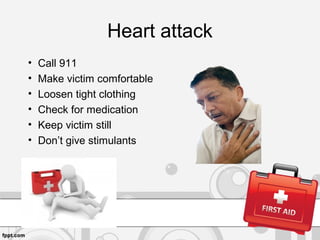
• Call 911
• Make victim comfortable
• Loosen tight clothing
• Check for medication
• Keep victim still
• Don’t give stimulants
Burns
• First Degree Burn – Minor redness
– Run cold water over burn for >5 minutes (No
ice or ointments!)
• Second Degree Burn – Blistered skin
– Do Not Break the Blisters
– If the Blisters Break:
• Clean & apply antibiotic ointment
• Cover with sterile dressing
• Change dressing every day
• Third Degree Burn – Charred skin
– Call 9-1-1 immediately
Electrical Shock
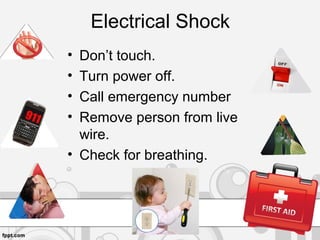
• Don’t touch.
• Turn power off.
• Call emergency number
• Remove person from live
wire.
• Check for breathing.
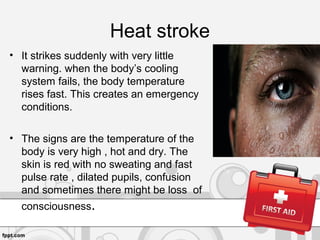
Heat stroke
• It strikes suddenly with very little
warning. when the body’s cooling
system fails, the body temperature
rises fast. This creates an emergency
conditions.
• The signs are the temperature of the
body is very high , hot and dry. The
skin is red with no sweating and fast
pulse rate , dilated pupils, confusion
and sometimes there might be loss of
consciousness.
General Guidance for Injuries
• Remain calm
– Take time to assess the situation and
hazards (Avoid tunnel vision)
– Call 9-1-1 ASAP if serious – Using a Cell
Phone call the ‘9-1-1 Equivalent’ local phone
number
• After calling 9-1-1 contact Building Security to
initiate internal response
Key points to remember!
• Medical emergencies can happen anytime
• Act quickly, calmly and correctly
• Consider being certified in first aid and
CPR
First aid

First aid

  • 1.
  • 2.
    First aid? • Theinitial process of assessing and addressing and the need of someone who is experiencing medical emergencies. • Allows a “non-medical expert” to quickly determine a person’s physical condition and the correct course of treatment • Can make a different to a person’s recovery and could save their life. • Give to some one before the arrival of medical staff / ambulance.
  • 3.
  • 4.
    First aid kit •Following are the contents of a first aid kit • Cotton wool • Adhesive tape • Crepe bandage • Sterile dressing • Bandage • Thermometer • Scissors • Glove • Soap • Pain reliever • Antacid • ORS packets
  • 5.
    Bleeding • Stop theflow of blood • Wear gloves • Cover the wound • Apply pressure • If body part has been amputated put it on ice
  • 6.
    Controlling external bleeding •If bleeding from a limb doesn’t stop apply pressure with hand to pressure point. • If embedded object in wound apply pressure either side of wound and place pad around it before bandaging. • Wear gloves, if possible to guard against infection. • If the victim becomes unconscious follow DRABC.
  • 7.
    Snake Bites • Mostof the snakes are harmless . snake bites generally occur on the limbs and most often on the legs. • Always assume the bite to from a venomous snake. • Suspected snake bite must be treated with a pressure immobilization bandage.
  • 8.
    Handling • Wind thebandage firmly around the bitten arm or leg starting from the bite. • Wrap the entire limb ,then apply a splint to prevent movement. • Keep the victim as still as possible. • Do not remove the bandage. • seek medical attention as soon as possible.
  • 9.
    Dog Bites • Theaim of first aid in case of dog bite to prevent rabies, to reduce risk of infection and to get medical aid as soon as possible.
  • 10.
    Heart attack • Call911 • Make victim comfortable • Loosen tight clothing • Check for medication • Keep victim still • Don’t give stimulants
  • 11.
    Burns • First DegreeBurn – Minor redness – Run cold water over burn for >5 minutes (No ice or ointments!) • Second Degree Burn – Blistered skin – Do Not Break the Blisters – If the Blisters Break: • Clean & apply antibiotic ointment • Cover with sterile dressing • Change dressing every day • Third Degree Burn – Charred skin – Call 9-1-1 immediately
  • 12.
    Electrical Shock • Don’ttouch. • Turn power off. • Call emergency number • Remove person from live wire. • Check for breathing.
  • 13.
    Heat stroke • Itstrikes suddenly with very little warning. when the body’s cooling system fails, the body temperature rises fast. This creates an emergency conditions. • The signs are the temperature of the body is very high , hot and dry. The skin is red with no sweating and fast pulse rate , dilated pupils, confusion and sometimes there might be loss of consciousness.
  • 14.
    General Guidance forInjuries • Remain calm – Take time to assess the situation and hazards (Avoid tunnel vision) – Call 9-1-1 ASAP if serious – Using a Cell Phone call the ‘9-1-1 Equivalent’ local phone number • After calling 9-1-1 contact Building Security to initiate internal response
  • 15.
    Key points toremember! • Medical emergencies can happen anytime • Act quickly, calmly and correctly • Consider being certified in first aid and CPR