Knee & Ankle Goniometry


     By: Dr. Gehan Shaalan
  Physical Therapy Lecturer BMC
Knee Flexion
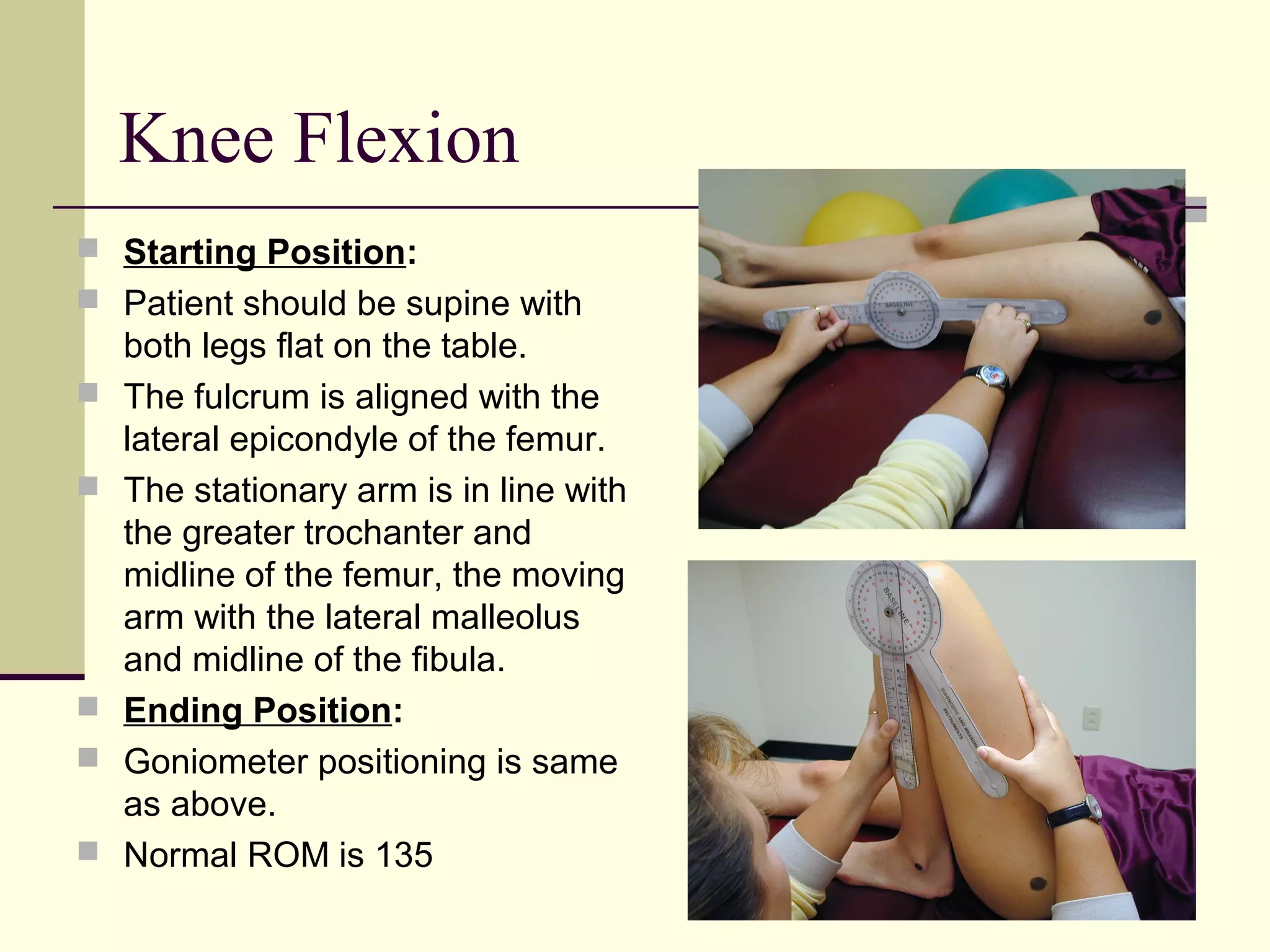
 Starting Position:
 Patient should be supine with
    both legs flat on the table.
   The fulcrum is aligned with the
    lateral epicondyle of the femur.
   The stationary arm is in line with
    the greater trochanter and
    midline of the femur, the moving
    arm with the lateral malleolus
    and midline of the fibula.
   Ending Position:
   Goniometer positioning is same
    as above.
   Normal ROM is 135
Knee Flexion

Precaution
 1-Prevent hip rotation, adduction and
  abduction.
 2-Hip flexed to 90 degrees only to prevent
  stretching of the rectus femoris muscle.
Factors limiting motion
 Tension of muscles of knee extension
  ( quadriceps muscles)
 Contact of bulk of calf muscles of posterior leg
  with posterior thigh.
Knee Extension
 Starting and Ending
  Position:
 The patient should be
  lying prone with both
  legs flat on the table.
 The goniometer
  positioning for knee
  extension is the same
  as it is for knee flexion.
 Normal ROM for knee
  extension is between 0
  and –10 degrees. The
  patient has –3 degrees
  of knee extension.
Knee Extension
Precaution
 Prevent hip rotation and flexion.
Factors limiting motion
 Tension of knee flexor muscles.
 Tension of cruciate ligament.
 Tension collateral ligament
Ankle Dorsi Flexion
Starting Position
 Patient is supine with legs off the
   table.
 The fulcrum is aligned with the
   lateral malleolus.
 The stationary arm is in line with
   the midline of the lower leg; use
   the head of the fibula for
   reference. The moving arm is
   parallel to the fifth metatarsal.
 Note: Once again remember
   that the goniometer will be at 90
   degrees and to adjust for that
   when recording the angles.
Ending Position:
    Same as above
 Normal ROM for dorsiflexion is
   between 0 and 20 degrees.
Ankle Dorsi Flexion
Precaution
 Avoid eversion and inversion.
 Avoid motion of hip and knee.
Factors limiting motion
 Tension of peroneus muscles.
 Contact of lateral bones medially.
 Tension of the lateral tarsal ligaments
Ankle Plantar Flexion
 Starting Position and
  Ending Position:
 Patient is sitting with
  legs off table.
 Goniometer alignment
  is the same as for
  dorsiflexion.
 Normal ROM is 45
  degrees
Ankle Plantar Flexion
Precaution
 Prevent hip rotation
 Avoid forefoot flexion.
 Prevent inversion and eversion of the foot.
Factors limiting motion
 Tension of the dorsiflexor muscles of ankle.
 Contact of posterior portion of talus with tibia.
 Tension of ligaments:
a) anterior talofibular.
b) Anterior fiber of deltoid ligament
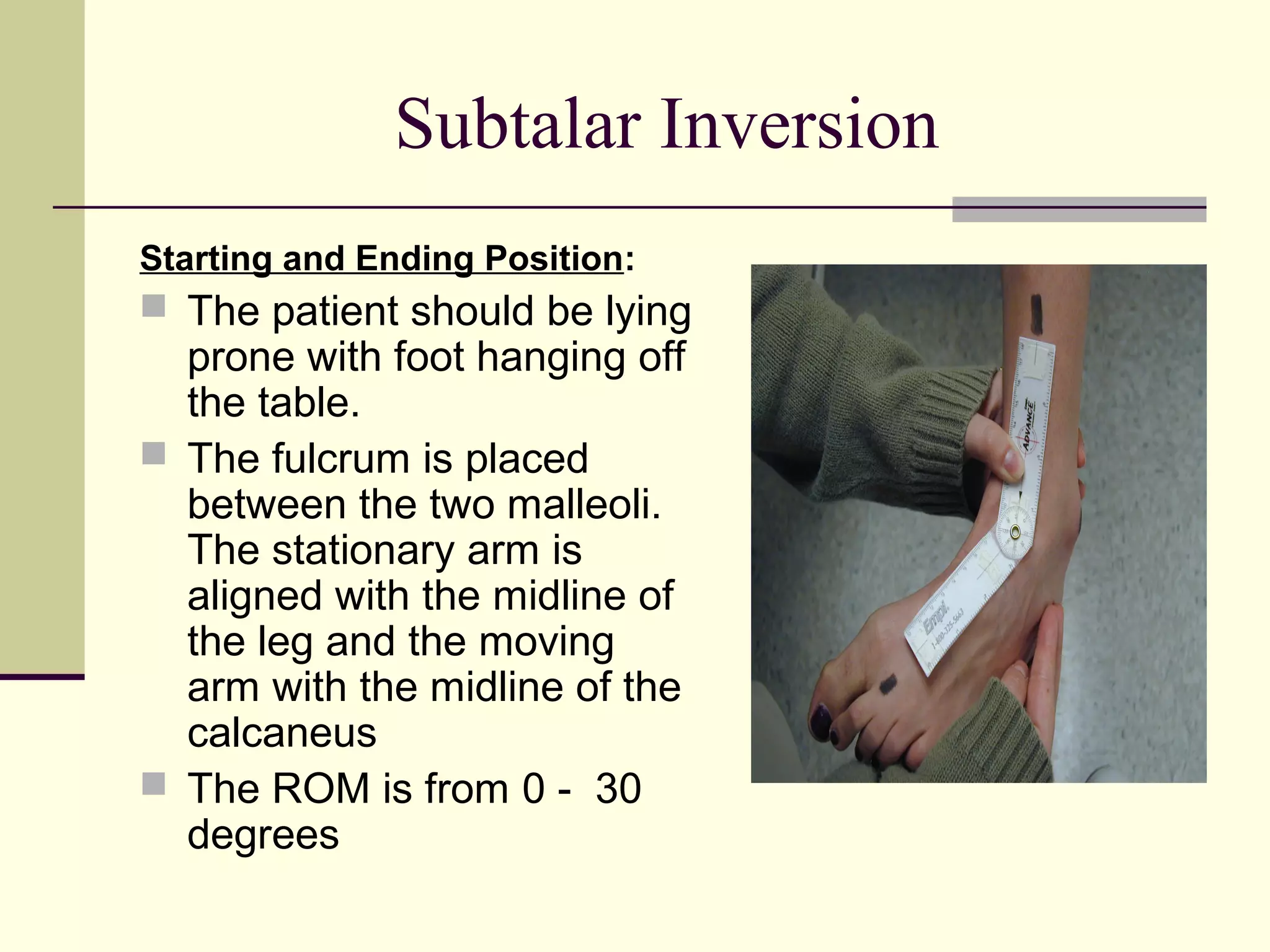
Subtalar Inversion
Starting and Ending Position:
 The patient should be lying
  prone with foot hanging off
  the table.
 The fulcrum is placed
  between the two malleoli.
  The stationary arm is
  aligned with the midline of
  the leg and the moving
  arm with the midline of the
  calcaneus
 The ROM is from 0 - 30
  degrees
Subtalar Inversion
Precaution
 Prevent medial rotation of the knee.
 Prevent lateral rotation and abduction of the
  hip.
 Allow ankle joint plantar flexion.
Factors Limiting ROM
 Contact of tarsal bones medially.
 Tension of eversion muscles ( peroneal
  group)
 Tension of lateral tarsal ligament.
Subtalar Eversion
Starting and Ending Position:
 The patient should be lying
  prone with foot hanging off
  the table.
 The fulcrum is placed
  between the two malleoli.
  The stationary arm is
  aligned with the midline of
  the leg and the moving arm
  with the midline of the
  calcaneus.
 The ROM is from 0 - 25
  degrees
Subtalar Eversion
Precautions
 Prevent lateral rotation of knee.
 Prevent medial rotation and abduction of the hip.
 Allow dorsiflexion at the ankle.
Factors Limiting ROM
 Contact of tarsal bones laterally.
 Tension of muscles of inversion tibialis posterior.
 Tension of medial tarsal ligaments.
Knee & ankle goiometry

Knee & ankle goiometry

  • 1.
    Knee & AnkleGoniometry By: Dr. Gehan Shaalan Physical Therapy Lecturer BMC
  • 2.
    Knee Flexion  StartingPosition:  Patient should be supine with both legs flat on the table.  The fulcrum is aligned with the lateral epicondyle of the femur.  The stationary arm is in line with the greater trochanter and midline of the femur, the moving arm with the lateral malleolus and midline of the fibula.  Ending Position:  Goniometer positioning is same as above.  Normal ROM is 135
  • 3.
    Knee Flexion Precaution  1-Preventhip rotation, adduction and abduction.  2-Hip flexed to 90 degrees only to prevent stretching of the rectus femoris muscle. Factors limiting motion  Tension of muscles of knee extension ( quadriceps muscles)  Contact of bulk of calf muscles of posterior leg with posterior thigh.
  • 4.
    Knee Extension  Startingand Ending Position:  The patient should be lying prone with both legs flat on the table.  The goniometer positioning for knee extension is the same as it is for knee flexion.  Normal ROM for knee extension is between 0 and –10 degrees. The patient has –3 degrees of knee extension.
  • 5.
    Knee Extension Precaution  Preventhip rotation and flexion. Factors limiting motion  Tension of knee flexor muscles.  Tension of cruciate ligament.  Tension collateral ligament
  • 6.
    Ankle Dorsi Flexion StartingPosition  Patient is supine with legs off the table.  The fulcrum is aligned with the lateral malleolus.  The stationary arm is in line with the midline of the lower leg; use the head of the fibula for reference. The moving arm is parallel to the fifth metatarsal.  Note: Once again remember that the goniometer will be at 90 degrees and to adjust for that when recording the angles. Ending Position:  Same as above  Normal ROM for dorsiflexion is between 0 and 20 degrees.
  • 7.
    Ankle Dorsi Flexion Precaution Avoid eversion and inversion.  Avoid motion of hip and knee. Factors limiting motion  Tension of peroneus muscles.  Contact of lateral bones medially.  Tension of the lateral tarsal ligaments
  • 8.
    Ankle Plantar Flexion Starting Position and Ending Position:  Patient is sitting with legs off table.  Goniometer alignment is the same as for dorsiflexion.  Normal ROM is 45 degrees
  • 9.
    Ankle Plantar Flexion Precaution Prevent hip rotation  Avoid forefoot flexion.  Prevent inversion and eversion of the foot. Factors limiting motion  Tension of the dorsiflexor muscles of ankle.  Contact of posterior portion of talus with tibia.  Tension of ligaments: a) anterior talofibular. b) Anterior fiber of deltoid ligament
  • 10.
    Subtalar Inversion Starting andEnding Position:  The patient should be lying prone with foot hanging off the table.  The fulcrum is placed between the two malleoli. The stationary arm is aligned with the midline of the leg and the moving arm with the midline of the calcaneus  The ROM is from 0 - 30 degrees
  • 11.
    Subtalar Inversion Precaution  Preventmedial rotation of the knee.  Prevent lateral rotation and abduction of the hip.  Allow ankle joint plantar flexion. Factors Limiting ROM  Contact of tarsal bones medially.  Tension of eversion muscles ( peroneal group)  Tension of lateral tarsal ligament.
  • 12.
    Subtalar Eversion Starting andEnding Position:  The patient should be lying prone with foot hanging off the table.  The fulcrum is placed between the two malleoli. The stationary arm is aligned with the midline of the leg and the moving arm with the midline of the calcaneus.  The ROM is from 0 - 25 degrees
  • 13.
    Subtalar Eversion Precautions  Preventlateral rotation of knee.  Prevent medial rotation and abduction of the hip.  Allow dorsiflexion at the ankle. Factors Limiting ROM  Contact of tarsal bones laterally.  Tension of muscles of inversion tibialis posterior.  Tension of medial tarsal ligaments.