Gait And Gait Cycle
1
Gait
Normal Gait
Series of rhythmical , alternating
movements of the trunk & limbs which
result in the forward progression of the
center of gravity…
2
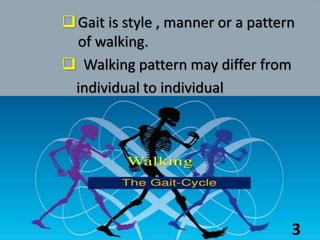
Gait is style , manner or a pattern
of walking.
 Walking pattern may differ from
individual to individual
3
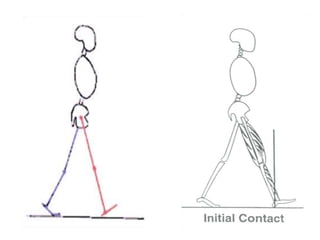
Gait Cycle
• Defined as the period of time
from one heel strike to the next
heel strike of the same limb
4
Gait Cycle
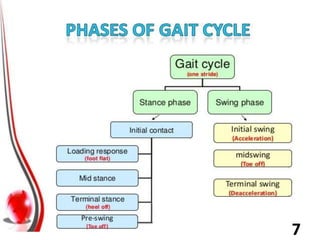
The gait cycle consists of two
phases…
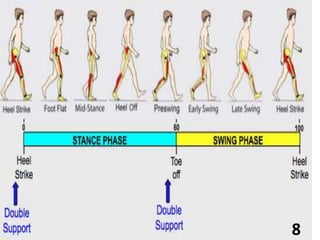
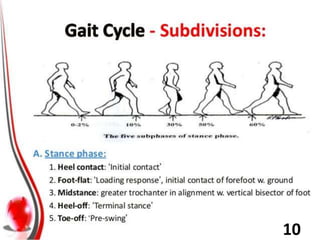
1) STANCE PHASE
2) SWING PHASE
5
• Gait is style , manner or a pattern of walking.
• Walking pattern may differ from individual to
individual
6
7
8
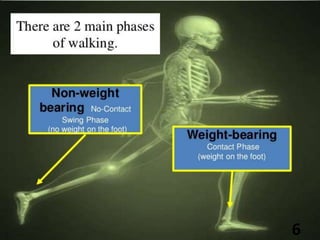
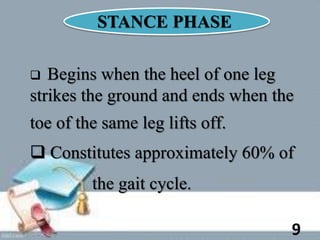
STANCE PHASE
 Begins when the heel of one leg
strikes the ground and ends when the
toe of the same leg lifts off.
 Constitutes approximately 60% of
the gait cycle.
9
10
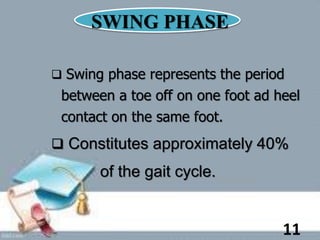
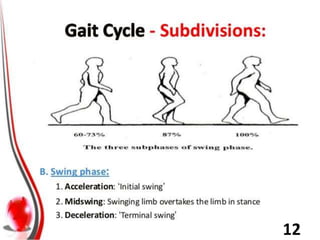
 Swing phase represents the period
between a toe off on one foot ad heel
contact on the same foot.
 Constitutes approximately 40%
of the gait cycle.
SWING PHASE
11
12
GAIT TERMINOLOGIES
 Time and distances are two basic
parameters of motion.
1. Temporal (Time) variables
2. Distance (Spatial) variables
13
TEMPORAL VARIABLES
1. Single limb support time
2. Double support time
3. Cadence
4. Speed
14
Amount of time that spent
during the period when only
one extremity is on the
supporting surface is a gait
cycle.
Single Limb Support Time
15
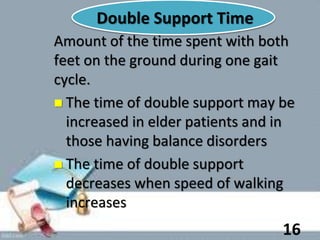
Double Support Time
Amount of the time spent with both
feet on the ground during one gait
cycle.
 The time of double support may be
increased in elder patients and in
those having balance disorders
 The time of double support
decreases when speed of walking
increases
16
17
Distance Variables
1. Stride length
2. Step length
3. Degree of toe out
18
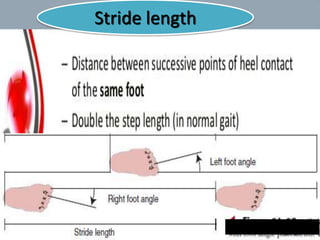
Stride length
19
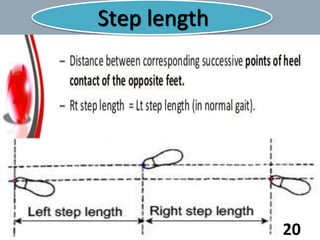
Step length
20
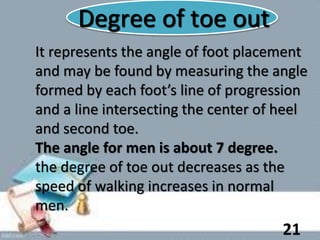
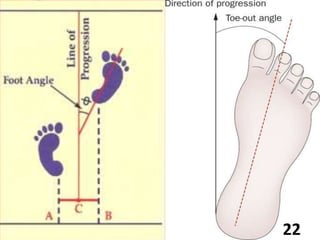
Degree of toe out
It represents the angle of foot placement
and may be found by measuring the angle
formed by each foot’s line of progression
and a line intersecting the center of heel
and second toe.
The angle for men is about 7 degree.
the degree of toe out decreases as the
speed of walking increases in normal
men.
21
22
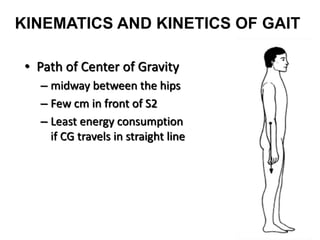
KINEMATICS AND KINETICS OF GAIT
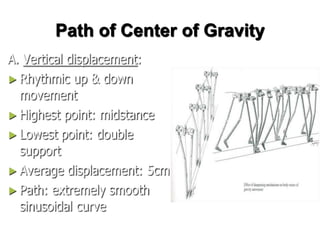
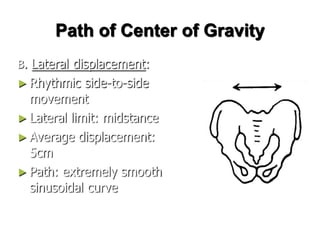
• Path of Center of Gravity
– midway between the hips
– Few cm in front of S2
– Least energy consumption
if CG travels in straight line
Path of Center of Gravity
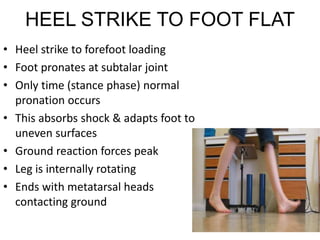
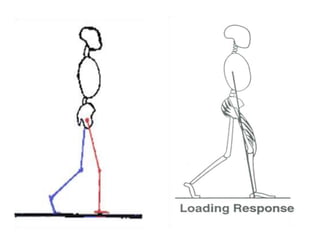
HEEL STRIKE TO FOOT FLAT
• Heel strike to forefoot loading
• Foot pronates at subtalar joint
• Only time (stance phase) normal
pronation occurs
• This absorbs shock & adapts foot to
uneven surfaces
• Ground reaction forces peak
• Leg is internally rotating
• Ends with metatarsal heads
contacting ground
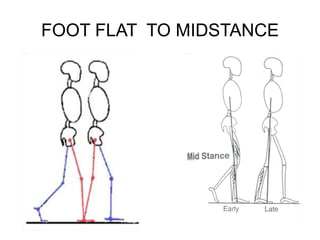
FOOT FLAT TO MIDSTANCE
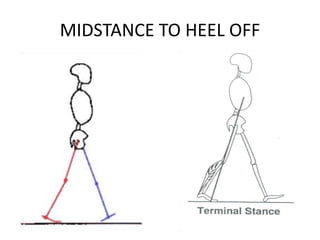
MIDSTANCE TO HEEL OFF
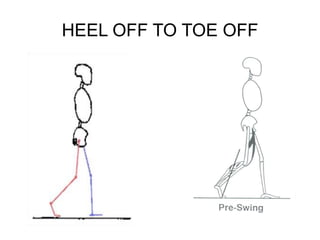
HEEL OFF TO TOE OFF
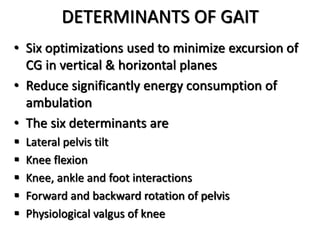
DETERMINANTS OF GAIT
• Six optimizations used to minimize excursion of
CG in vertical & horizontal planes
• Reduce significantly energy consumption of
ambulation
• The six determinants are
 Lateral pelvis tilt
 Knee flexion
 Knee, ankle and foot interactions
 Forward and backward rotation of pelvis
 Physiological valgus of knee
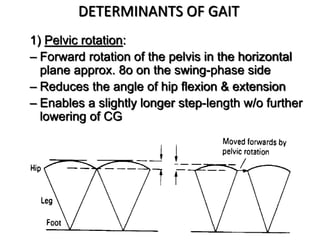
DETERMINANTS OF GAIT
1) Pelvic rotation:
– Forward rotation of the pelvis in the horizontal
plane approx. 8o on the swing-phase side
– Reduces the angle of hip flexion & extension
– Enables a slightly longer step-length w/o further
lowering of CG
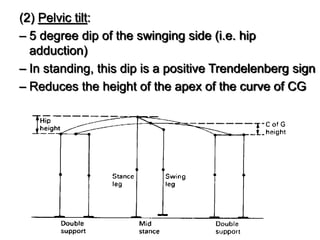
(2) Pelvic tilt:
– 5 degree dip of the swinging side (i.e. hip
adduction)
– In standing, this dip is a positive Trendelenberg sign
– Reduces the height of the apex of the curve of CG
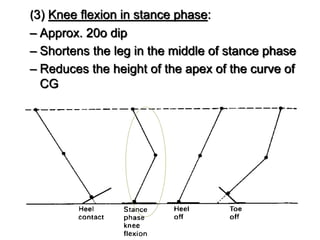
(3) Knee flexion in stance phase:
– Approx. 20o dip
– Shortens the leg in the middle of stance phase
– Reduces the height of the apex of the curve of
CG
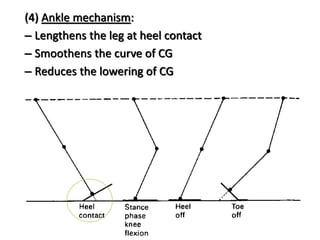
(4) Ankle mechanism:
– Lengthens the leg at heel contact
– Smoothens the curve of CG
– Reduces the lowering of CG
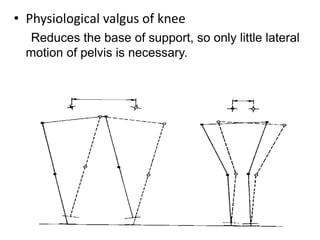
• Physiological valgus of knee
Reduces the base of support, so only little lateral
motion of pelvis is necessary.
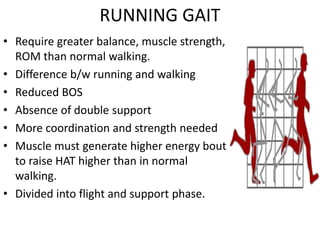
RUNNING GAIT
• Require greater balance, muscle strength,
ROM than normal walking.
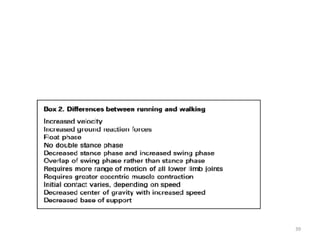
• Difference b/w running and walking
• Reduced BOS
• Absence of double support
• More coordination and strength needed
• Muscle must generate higher energy bout
to raise HAT higher than in normal
walking.
• Divided into flight and support phase.
39
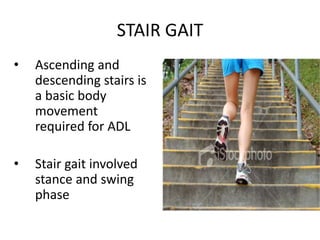
STAIR GAIT
• Ascending and
descending stairs is
a basic body
movement
required for ADL
• Stair gait involved
stance and swing
phase
kinematics
• SWING PHASE(36%)
• Foot clearance
• Foot placement
• STANCE PHASE(64%)
• Weight acceptance
• Pull up
• Forward continuance
Gait biomechanics

Gait biomechanics

  • 1.
  • 2.
    Gait Normal Gait Series ofrhythmical , alternating movements of the trunk & limbs which result in the forward progression of the center of gravity… 2
  • 3.
    Gait is style, manner or a pattern of walking.  Walking pattern may differ from individual to individual 3
  • 4.
    Gait Cycle • Definedas the period of time from one heel strike to the next heel strike of the same limb 4
  • 5.
    Gait Cycle The gaitcycle consists of two phases… 1) STANCE PHASE 2) SWING PHASE 5
  • 6.
    • Gait isstyle , manner or a pattern of walking. • Walking pattern may differ from individual to individual 6
  • 7.
  • 8.
  • 9.
    STANCE PHASE  Beginswhen the heel of one leg strikes the ground and ends when the toe of the same leg lifts off.  Constitutes approximately 60% of the gait cycle. 9
  • 10.
  • 11.
     Swing phaserepresents the period between a toe off on one foot ad heel contact on the same foot.  Constitutes approximately 40% of the gait cycle. SWING PHASE 11
  • 12.
  • 13.
    GAIT TERMINOLOGIES  Timeand distances are two basic parameters of motion. 1. Temporal (Time) variables 2. Distance (Spatial) variables 13
  • 14.
    TEMPORAL VARIABLES 1. Singlelimb support time 2. Double support time 3. Cadence 4. Speed 14
  • 15.
    Amount of timethat spent during the period when only one extremity is on the supporting surface is a gait cycle. Single Limb Support Time 15
  • 16.
    Double Support Time Amountof the time spent with both feet on the ground during one gait cycle.  The time of double support may be increased in elder patients and in those having balance disorders  The time of double support decreases when speed of walking increases 16
  • 17.
  • 18.
    Distance Variables 1. Stridelength 2. Step length 3. Degree of toe out 18
  • 19.
  • 20.
  • 21.
    Degree of toeout It represents the angle of foot placement and may be found by measuring the angle formed by each foot’s line of progression and a line intersecting the center of heel and second toe. The angle for men is about 7 degree. the degree of toe out decreases as the speed of walking increases in normal men. 21
  • 22.
  • 23.
    KINEMATICS AND KINETICSOF GAIT • Path of Center of Gravity – midway between the hips – Few cm in front of S2 – Least energy consumption if CG travels in straight line
  • 24.
    Path of Centerof Gravity
  • 25.
    Path of Centerof Gravity
  • 26.
    HEEL STRIKE TOFOOT FLAT • Heel strike to forefoot loading • Foot pronates at subtalar joint • Only time (stance phase) normal pronation occurs • This absorbs shock & adapts foot to uneven surfaces • Ground reaction forces peak • Leg is internally rotating • Ends with metatarsal heads contacting ground
  • 29.
    FOOT FLAT TOMIDSTANCE
  • 30.
  • 31.
    HEEL OFF TOTOE OFF
  • 32.
    DETERMINANTS OF GAIT •Six optimizations used to minimize excursion of CG in vertical & horizontal planes • Reduce significantly energy consumption of ambulation • The six determinants are  Lateral pelvis tilt  Knee flexion  Knee, ankle and foot interactions  Forward and backward rotation of pelvis  Physiological valgus of knee
  • 33.
    DETERMINANTS OF GAIT 1)Pelvic rotation: – Forward rotation of the pelvis in the horizontal plane approx. 8o on the swing-phase side – Reduces the angle of hip flexion & extension – Enables a slightly longer step-length w/o further lowering of CG
  • 34.
    (2) Pelvic tilt: –5 degree dip of the swinging side (i.e. hip adduction) – In standing, this dip is a positive Trendelenberg sign – Reduces the height of the apex of the curve of CG
  • 35.
    (3) Knee flexionin stance phase: – Approx. 20o dip – Shortens the leg in the middle of stance phase – Reduces the height of the apex of the curve of CG
  • 36.
    (4) Ankle mechanism: –Lengthens the leg at heel contact – Smoothens the curve of CG – Reduces the lowering of CG
  • 37.
    • Physiological valgusof knee Reduces the base of support, so only little lateral motion of pelvis is necessary.
  • 38.
    RUNNING GAIT • Requiregreater balance, muscle strength, ROM than normal walking. • Difference b/w running and walking • Reduced BOS • Absence of double support • More coordination and strength needed • Muscle must generate higher energy bout to raise HAT higher than in normal walking. • Divided into flight and support phase.
  • 39.
  • 40.
    STAIR GAIT • Ascendingand descending stairs is a basic body movement required for ADL • Stair gait involved stance and swing phase
  • 41.
    kinematics • SWING PHASE(36%) •Foot clearance • Foot placement • STANCE PHASE(64%) • Weight acceptance • Pull up • Forward continuance