







XANTHOPHYTA
Yellow green algae
Presented by:
Sohail Hashmi
Presented to:
Dr Umair Ahmed Awan
CONTENTS
01
02
03
Introduction
Genral account
Evolution
Classification04
SECTION 1
introduction and genral
account
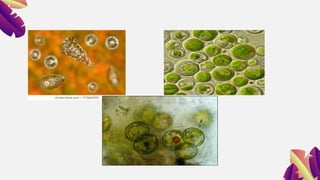
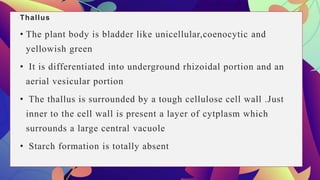
INTRODUCTION
• Yellow-green algae or the Xanthophyceae are an important group of
algae
• Most live in fresh water, but some are found in marine and soil
habitats
• They vary from single celled flagellates to simple colonial and
filamentous forms
• Oil and fats are usual reserve food products
• The division includes 375 species and 75 genera
Characteristics of Class Xanthophyceae (Yellow Green Algae)
• Mostly fresh water and unicellular
• Cells are eukaryotic with silica and pectin in the cell wall
• Chief pigments include chlorophyll a and e, beta carotene, neoxanthin and
violaxanthin
• Reserve food includes chrysolaminarin and oils,Starch and pyrenoids absent
• Sexual reproduction is isogamous, anisogamous or oogamous
• Zoospore formation is common
• Male gametes are flagellate
• Flagella are heterokont (unequal)
• Life cycle is mostly haplontic
C l i c k h e r e t o a d d t o t h e t i t l e
Pigments
• Xanthophyte chloroplasts contain the photosynthetic pigments
• chlorophyll a
• chlorophyll c
• β-carotene
• carotenoid diadinoxanthin
• Unlike other heterokonts, their chloroplasts do not contain
fucoxanthin, which accounts for their lighter colour
• Their storage polysaccharide is chrysolaminarin
• Xanthophyte cell walls are produced of cellulose and hemicellulose
Classification
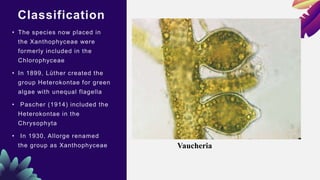
• The species now placed in
the Xanthophyceae were
formerly included in the
Chlorophyceae
• In 1899, Lüther created the
group Heterokontae for green
algae with unequal flagella
• Pascher (1914) included the
Heterokontae in the
Chrysophyta
• In 1930, Allorge renamed
the group as Xanthophyceae Vaucheria
Classification
• Xanthophyceae have been divided into the following four orders
in some classification systems:
• Order Botrydiales
• Asterosiphon
• Botrydium
Order Mischococcales
• Botrydiopsis
• Botryochloris
• Bumilleriopsis
• Chlorellidium
• Mischococcus
• Monodus
• Ophiocytium
• Pleurochloris
Order Tribonematales Pascher
• Bumilleria
• Heterococcus
• Heterothrix
• Tribonema
• Order Vaucheriales
• Vaucheria
Lüther system of classification
• Classification according to Lüther (1899)
Class Heterokontae
Order Chloromonadales
Order Confervales
Classification according to Pascher
 Heterokontae
 Heterochloridales
 Heterocapsales
Evolutionary perspective
• Three major evolutionary lines can be traced among the Xanthophyta
I. One line may have developed from an unicellular motile ancestry giving rise to
non-motile unicells which may be solitary or colonial
II. Another tendency is to produce a tubular, or siphonaceous form
III. While the third one is leading to the formation of multicellular filamentous
type
Reproduction
1. Vegetative reproduction
• the reproduction in filamentous form oocur by fragmentation
• unicellular forms divided by simple division
Asexual reproduction
• They form one or more zoospores in each cell.Zoospores are
biflagellated.The flagella have unequal length.The longer flagella is
tinsel type and shorter flagellum is whiplash type
• aplanospores are also produced in some bacteria
• Sexual reproduction
• sexual reproduction is rare in this group.sexual reproduction is
oogamous or sometimes isogamous type
• in case of oogamous antheridia and oogonia are produced
examples
i. Unicellular motile form e.g Chloramoeba,heterochloris
ii. Palmelloid forms e.g Chlorosaccus,chlorogolea.
iii. Dendroid forms e.g Mischococcus
iv. Rhizopodial forms e.g Stipitococcus
v. Coccoid form e.g Chlorobotrys
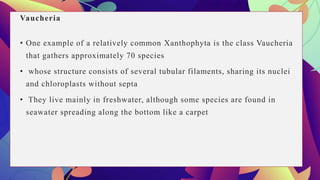
Thallus
• The plant body is bladder like unicellular,coenocytic and
yellowish green
• It is differentiated into underground rhizoidal portion and an
aerial vesicular portion
• The thallus is surrounded by a tough cellulose cell wall .Just
inner to the cell wall is present a layer of cytplasm which
surrounds a large central vacuole
• Starch formation is totally absent
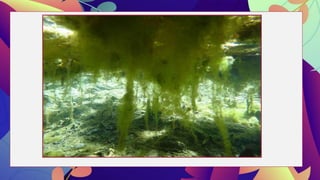
Vaucheria
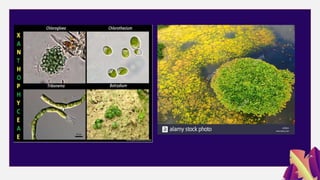
• One example of a relatively common Xanthophyta is the class Vaucheria
that gathers approximately 70 species
• whose structure consists of several tubular filaments, sharing its nuclei
and chloroplasts without septa
• They live mainly in freshwater, although some species are found in
seawater spreading along the bottom like a carpet
Thank you

Xanthophyta by sohail riaz hashmi

  • 1.
  • 2.
  • 3.
  • 4.
  • 5.
    INTRODUCTION • Yellow-green algaeor the Xanthophyceae are an important group of algae • Most live in fresh water, but some are found in marine and soil habitats • They vary from single celled flagellates to simple colonial and filamentous forms • Oil and fats are usual reserve food products • The division includes 375 species and 75 genera
  • 6.
    Characteristics of ClassXanthophyceae (Yellow Green Algae) • Mostly fresh water and unicellular • Cells are eukaryotic with silica and pectin in the cell wall • Chief pigments include chlorophyll a and e, beta carotene, neoxanthin and violaxanthin • Reserve food includes chrysolaminarin and oils,Starch and pyrenoids absent • Sexual reproduction is isogamous, anisogamous or oogamous • Zoospore formation is common • Male gametes are flagellate • Flagella are heterokont (unequal) • Life cycle is mostly haplontic
  • 7.
    C l ic k h e r e t o a d d t o t h e t i t l e
  • 8.
    Pigments • Xanthophyte chloroplastscontain the photosynthetic pigments • chlorophyll a • chlorophyll c • β-carotene • carotenoid diadinoxanthin • Unlike other heterokonts, their chloroplasts do not contain fucoxanthin, which accounts for their lighter colour • Their storage polysaccharide is chrysolaminarin • Xanthophyte cell walls are produced of cellulose and hemicellulose
  • 9.
    Classification • The speciesnow placed in the Xanthophyceae were formerly included in the Chlorophyceae • In 1899, Lüther created the group Heterokontae for green algae with unequal flagella • Pascher (1914) included the Heterokontae in the Chrysophyta • In 1930, Allorge renamed the group as Xanthophyceae Vaucheria
  • 10.
    Classification • Xanthophyceae havebeen divided into the following four orders in some classification systems: • Order Botrydiales • Asterosiphon • Botrydium
  • 11.
    Order Mischococcales • Botrydiopsis •Botryochloris • Bumilleriopsis • Chlorellidium • Mischococcus • Monodus • Ophiocytium • Pleurochloris
  • 12.
    Order Tribonematales Pascher •Bumilleria • Heterococcus • Heterothrix • Tribonema • Order Vaucheriales • Vaucheria
  • 13.
    Lüther system ofclassification • Classification according to Lüther (1899) Class Heterokontae Order Chloromonadales Order Confervales Classification according to Pascher  Heterokontae  Heterochloridales  Heterocapsales
  • 14.
    Evolutionary perspective • Threemajor evolutionary lines can be traced among the Xanthophyta I. One line may have developed from an unicellular motile ancestry giving rise to non-motile unicells which may be solitary or colonial II. Another tendency is to produce a tubular, or siphonaceous form III. While the third one is leading to the formation of multicellular filamentous type
  • 15.
    Reproduction 1. Vegetative reproduction •the reproduction in filamentous form oocur by fragmentation • unicellular forms divided by simple division
  • 16.
    Asexual reproduction • Theyform one or more zoospores in each cell.Zoospores are biflagellated.The flagella have unequal length.The longer flagella is tinsel type and shorter flagellum is whiplash type • aplanospores are also produced in some bacteria • Sexual reproduction • sexual reproduction is rare in this group.sexual reproduction is oogamous or sometimes isogamous type • in case of oogamous antheridia and oogonia are produced
  • 17.
    examples i. Unicellular motileform e.g Chloramoeba,heterochloris ii. Palmelloid forms e.g Chlorosaccus,chlorogolea. iii. Dendroid forms e.g Mischococcus iv. Rhizopodial forms e.g Stipitococcus v. Coccoid form e.g Chlorobotrys
  • 19.
    Thallus • The plantbody is bladder like unicellular,coenocytic and yellowish green • It is differentiated into underground rhizoidal portion and an aerial vesicular portion • The thallus is surrounded by a tough cellulose cell wall .Just inner to the cell wall is present a layer of cytplasm which surrounds a large central vacuole • Starch formation is totally absent
  • 20.
    Vaucheria • One exampleof a relatively common Xanthophyta is the class Vaucheria that gathers approximately 70 species • whose structure consists of several tubular filaments, sharing its nuclei and chloroplasts without septa • They live mainly in freshwater, although some species are found in seawater spreading along the bottom like a carpet
  • 23.