X-ray diffraction
(Modern Pharmaceutical
Analytical Technique)
PRESENTED BY
AJAY PATIL
M PHARMACY,1ST SEM
(DEPT OF PHARMACEUTICS)
ACHARYA AND B.M REDDY COLLEGE OF
PHARMACY
What is diffraction?
The process by which a beam of light or other
system of waves is spread out as a result of
passing through a narrow aperture or across
an edge, typically accompanied by
interferences between the wave forms
produced.
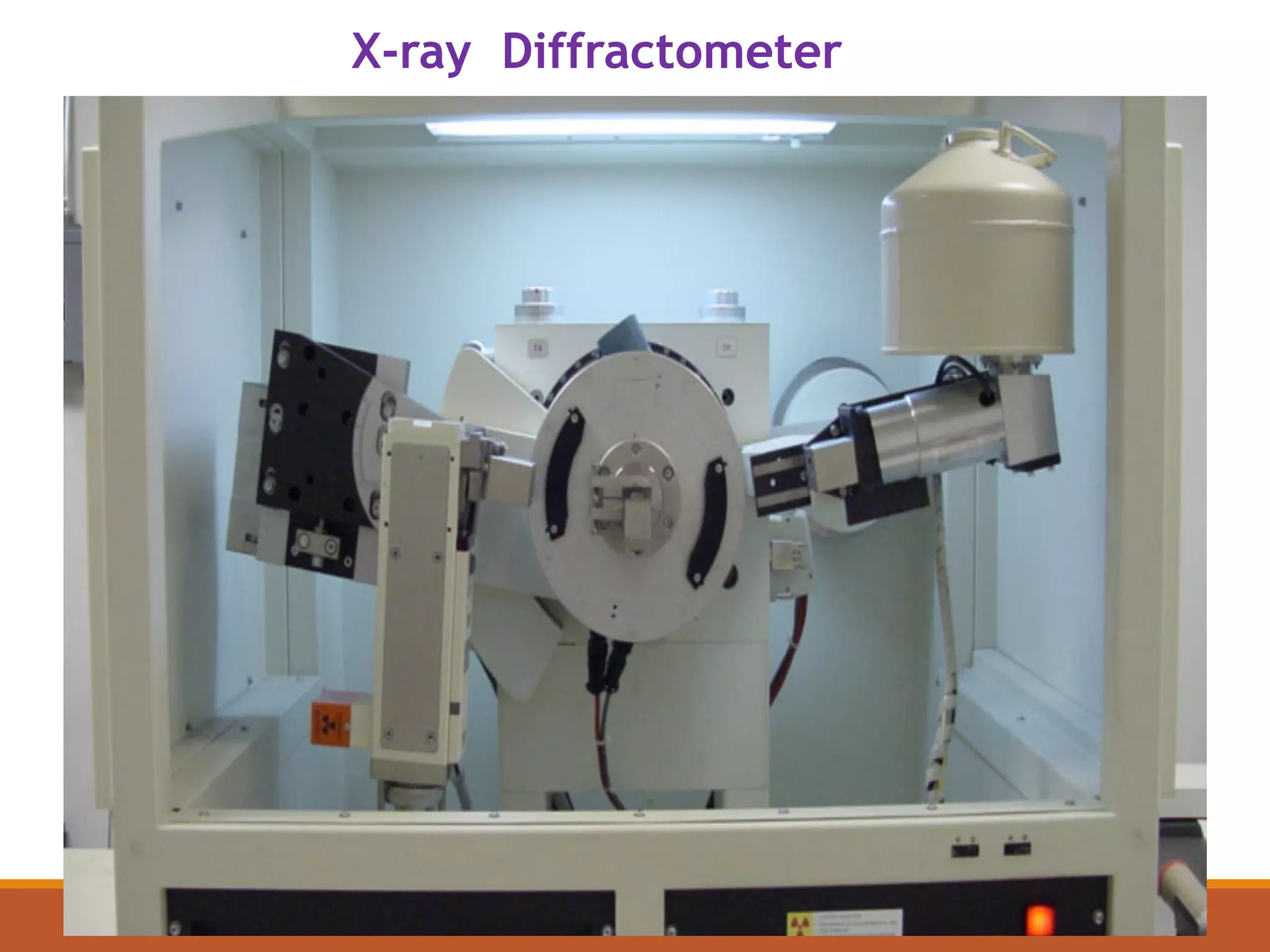
X-ray Diffractometer
X RAY DIFFRACTION
METHODS
Laue photographic method
Bragg x ray spectrometer method
Rotating crystal method
Powder method
X-ray diffraction is generally used for
investigating the internal structure.
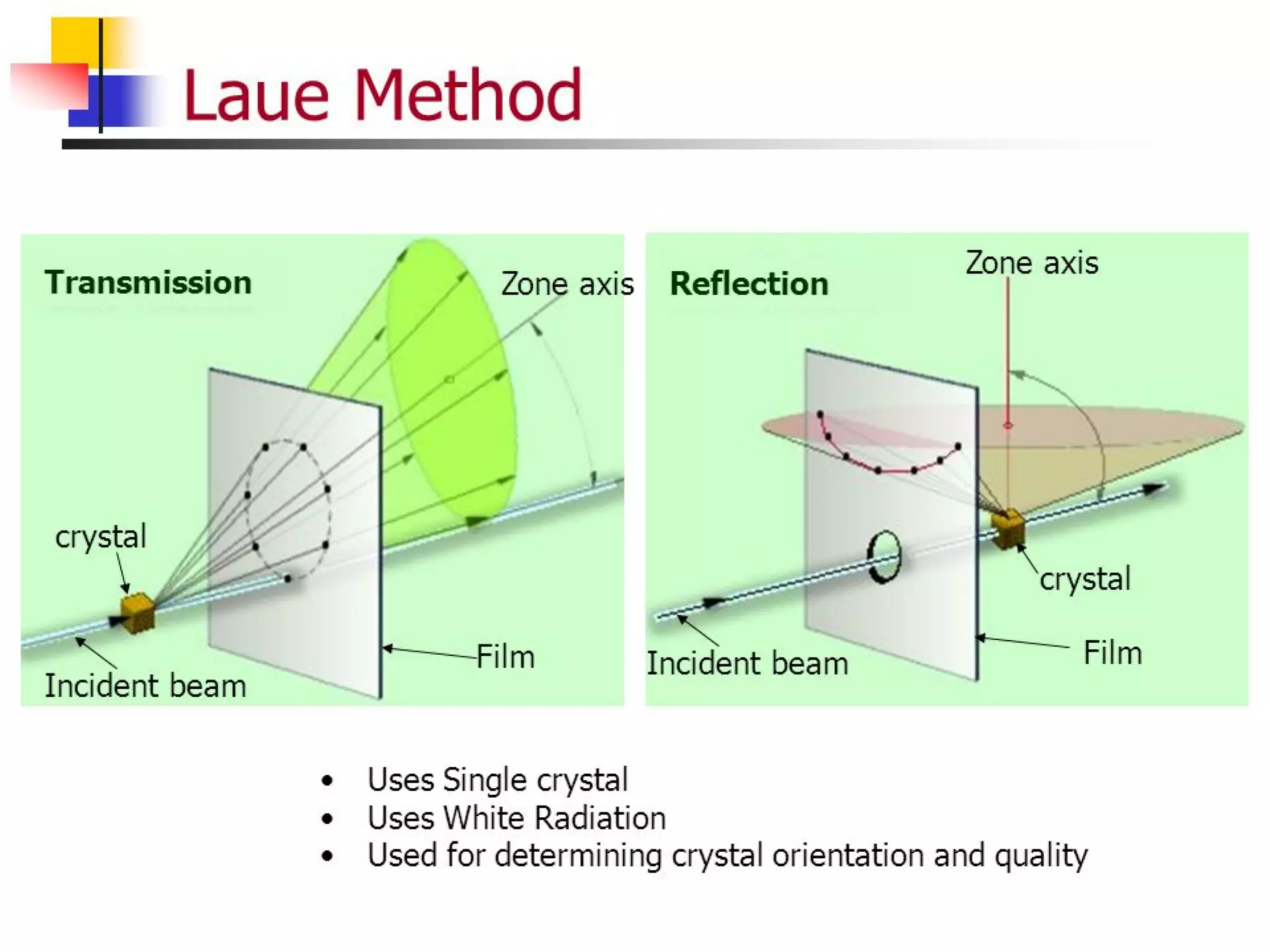
Laue method
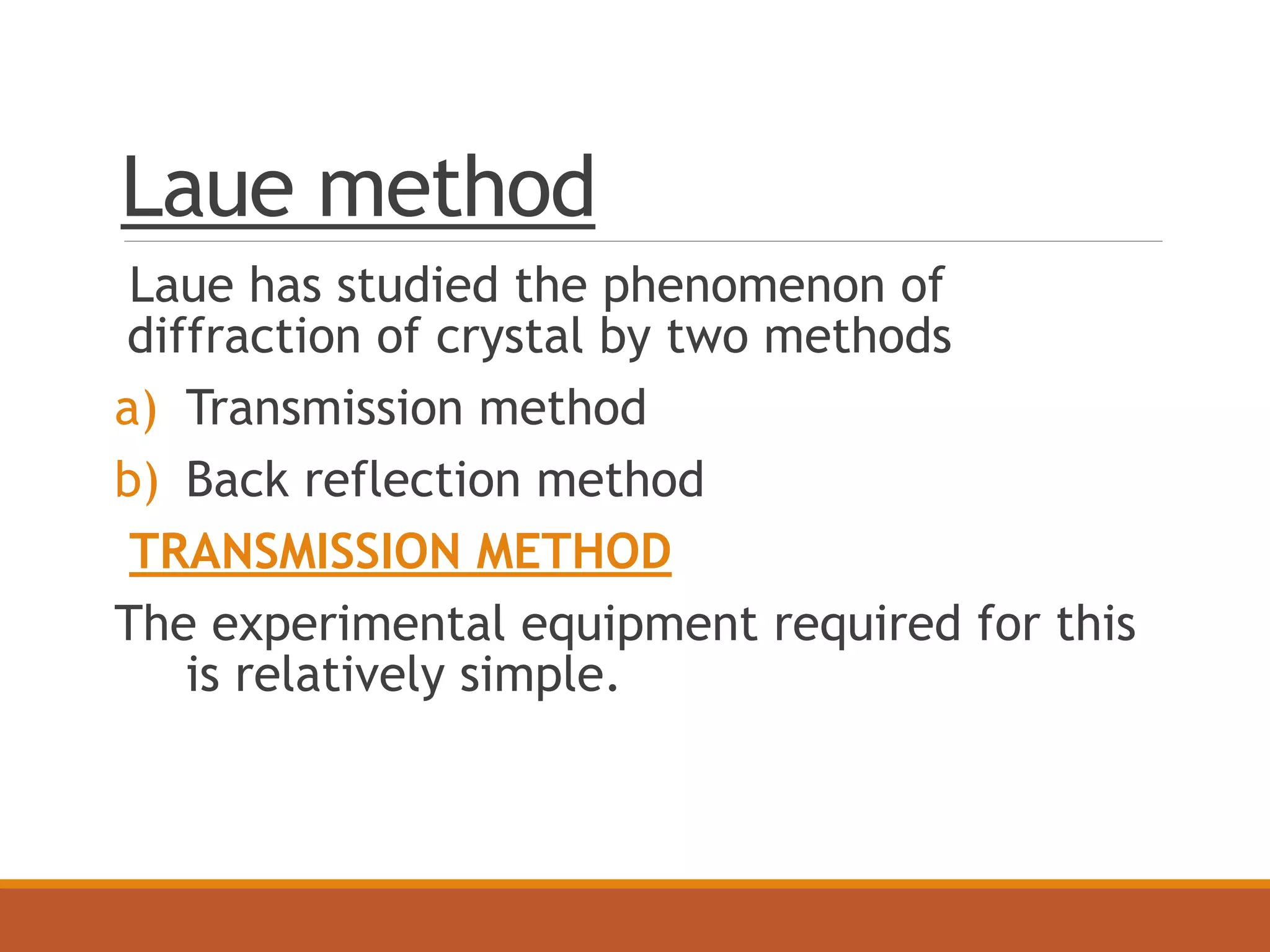
Laue has studied the phenomenon of
diffraction of crystal by two methods
a) Transmission method
b) Back reflection method
TRANSMISSION METHOD
The experimental equipment required for this
is relatively simple.
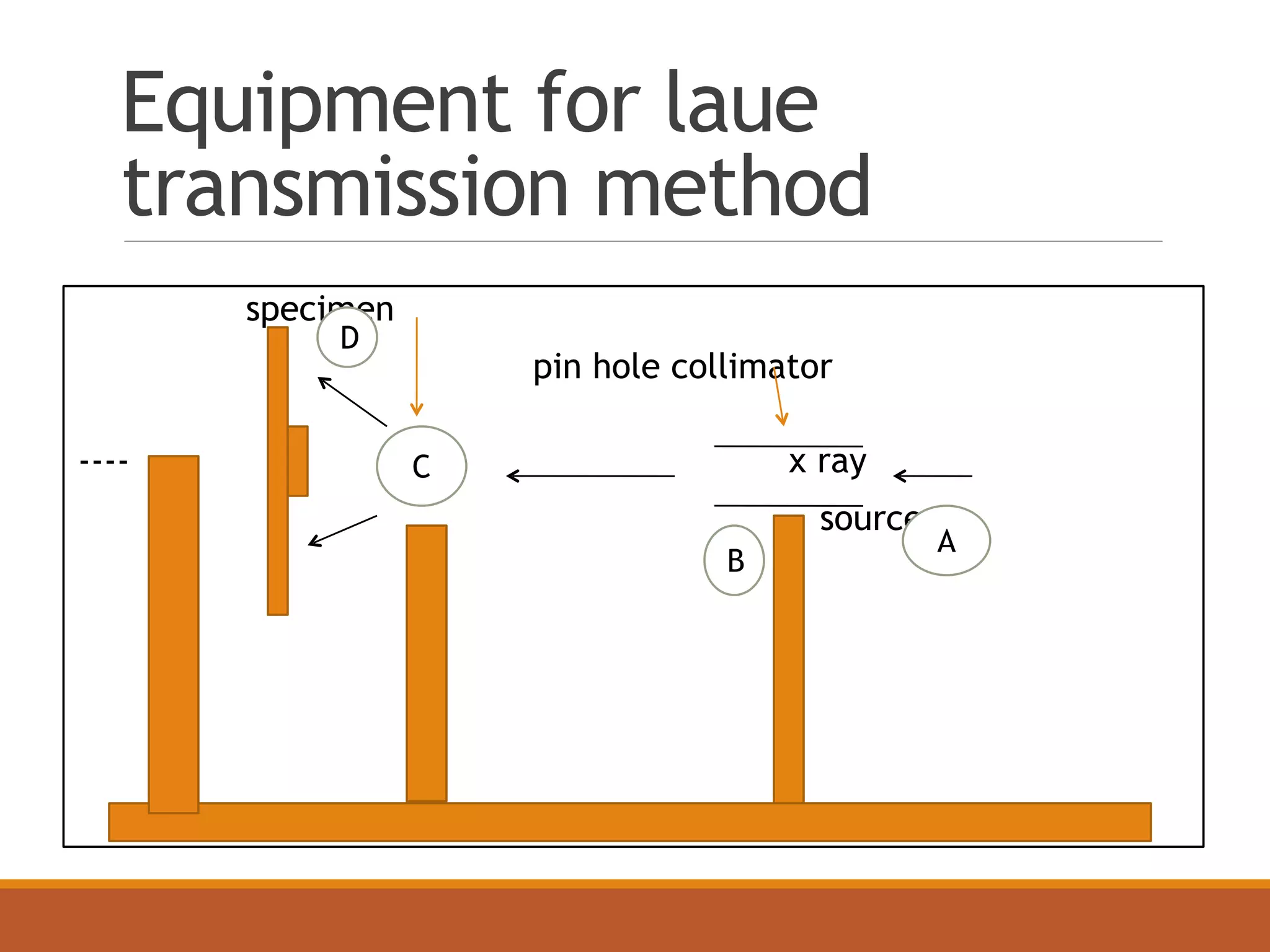
Equipment for laue
transmission method
specimen
pin hole collimator
---- x ray
source
C
A
B
D
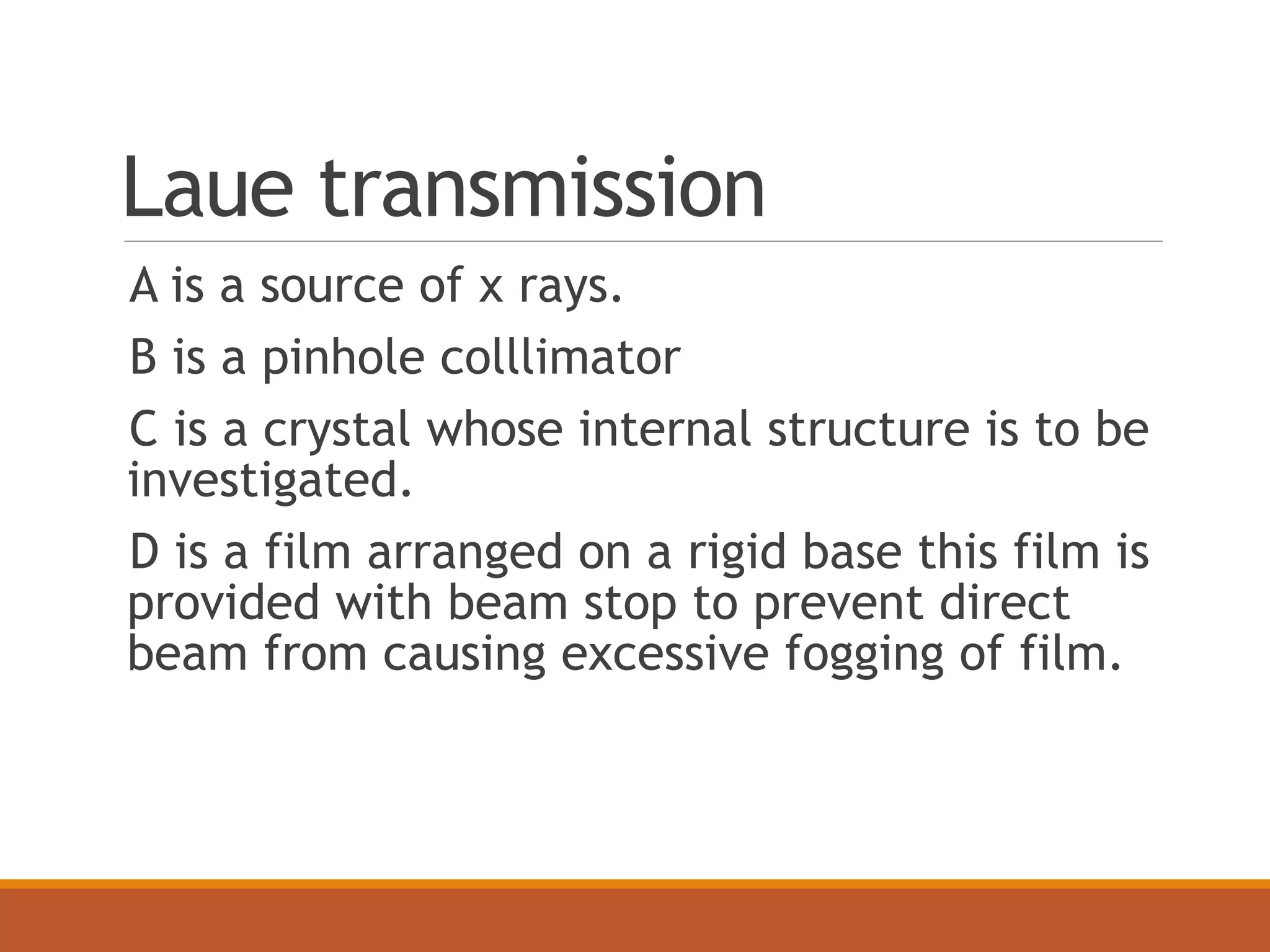
Laue transmission
A is a source of x rays.
B is a pinhole colllimator
C is a crystal whose internal structure is to be
investigated.
D is a film arranged on a rigid base this film is
provided with beam stop to prevent direct
beam from causing excessive fogging of film.
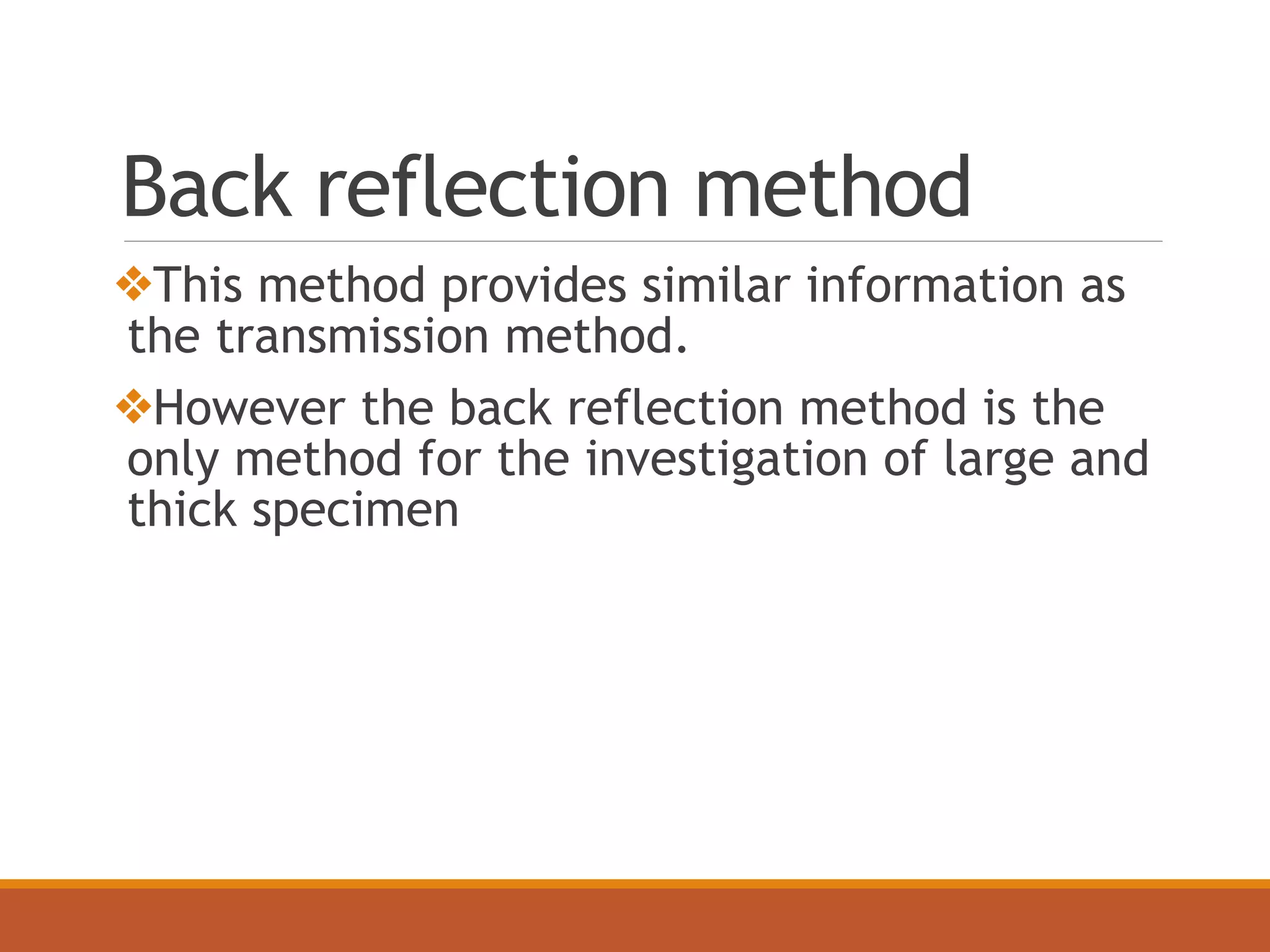
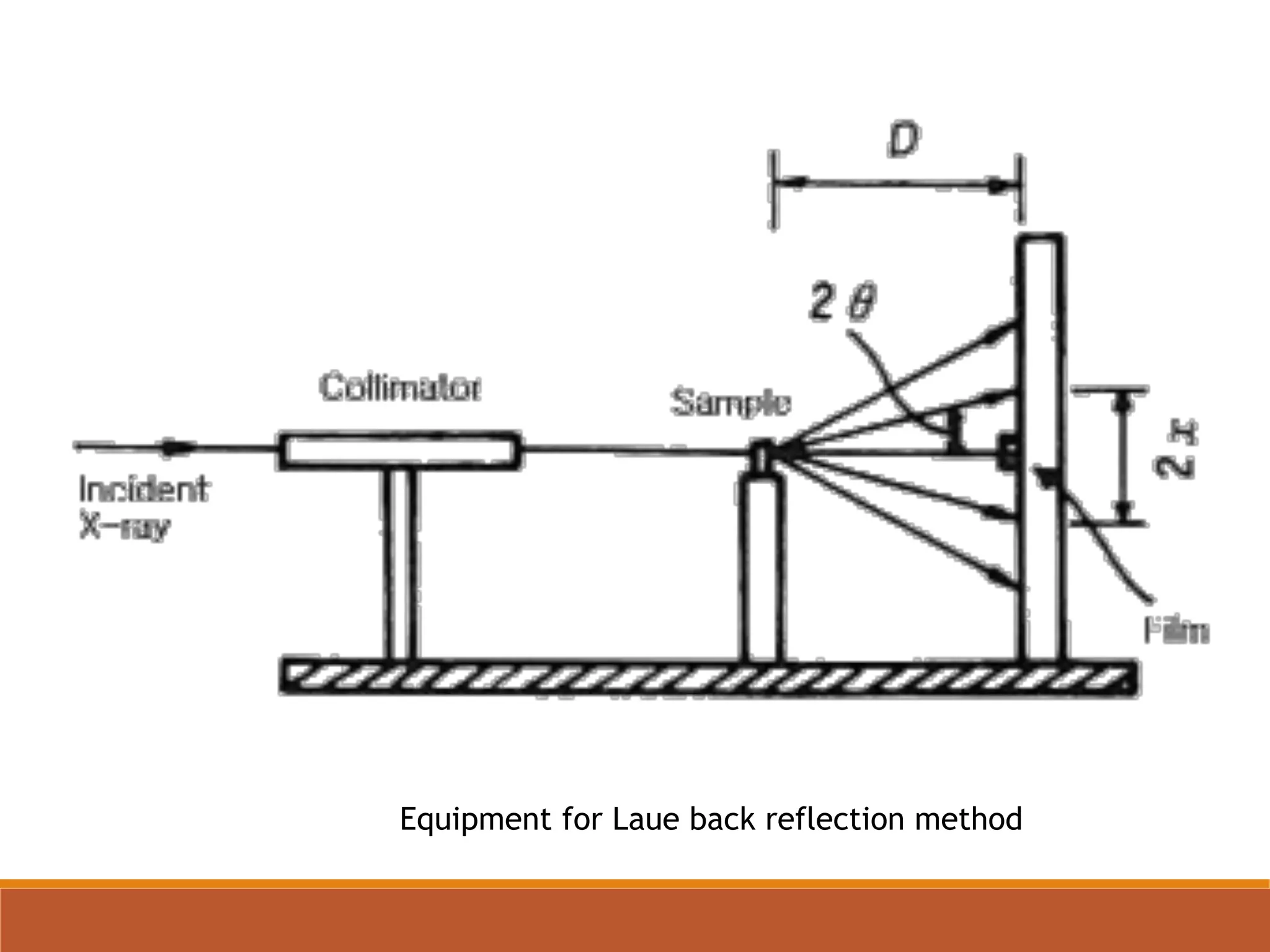
Back reflection method
❖This method provides similar information as
the transmission method.
❖However the back reflection method is the
only method for the investigation of large and
thick specimen
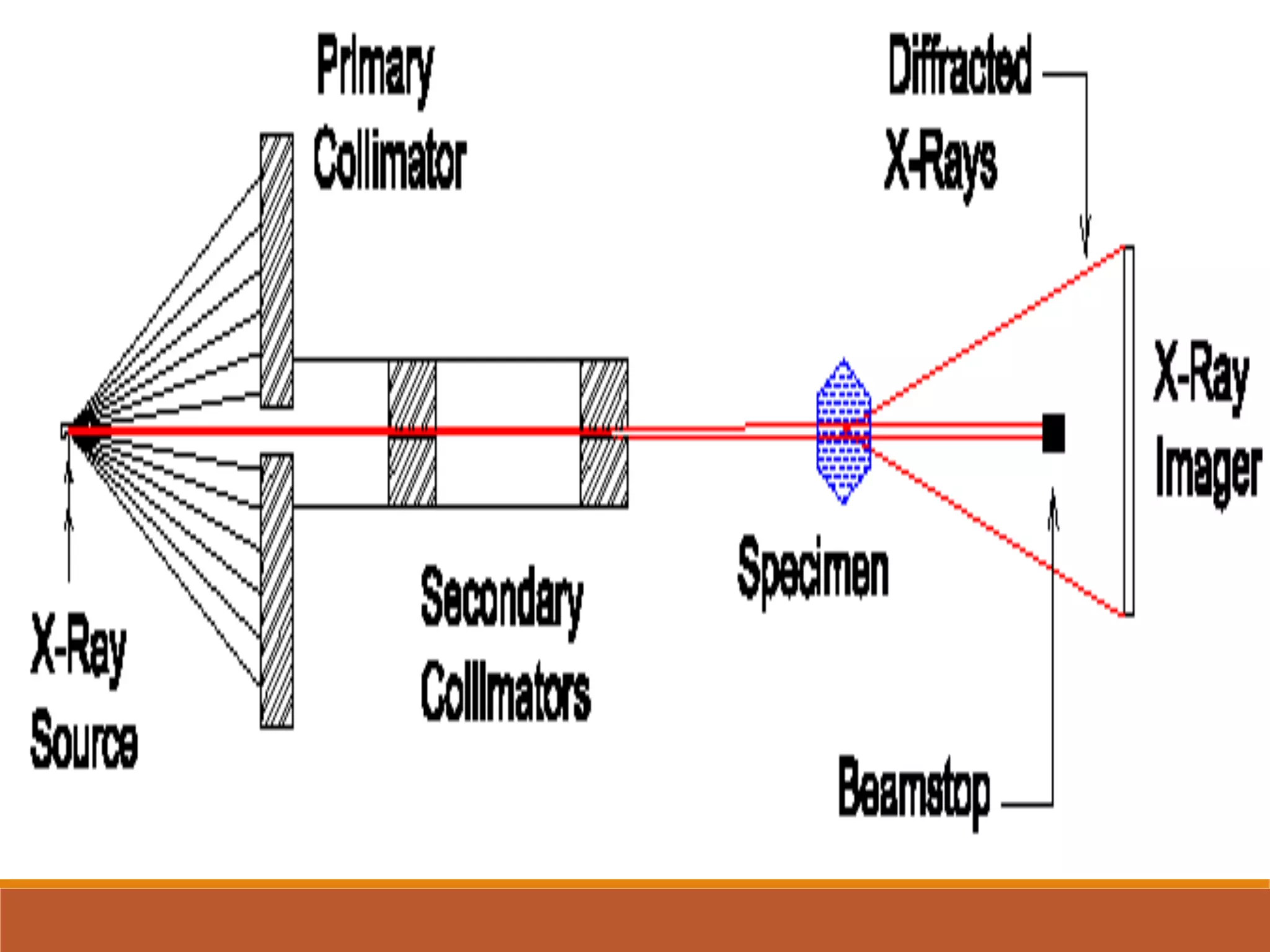
Equipment for Laue back reflection method
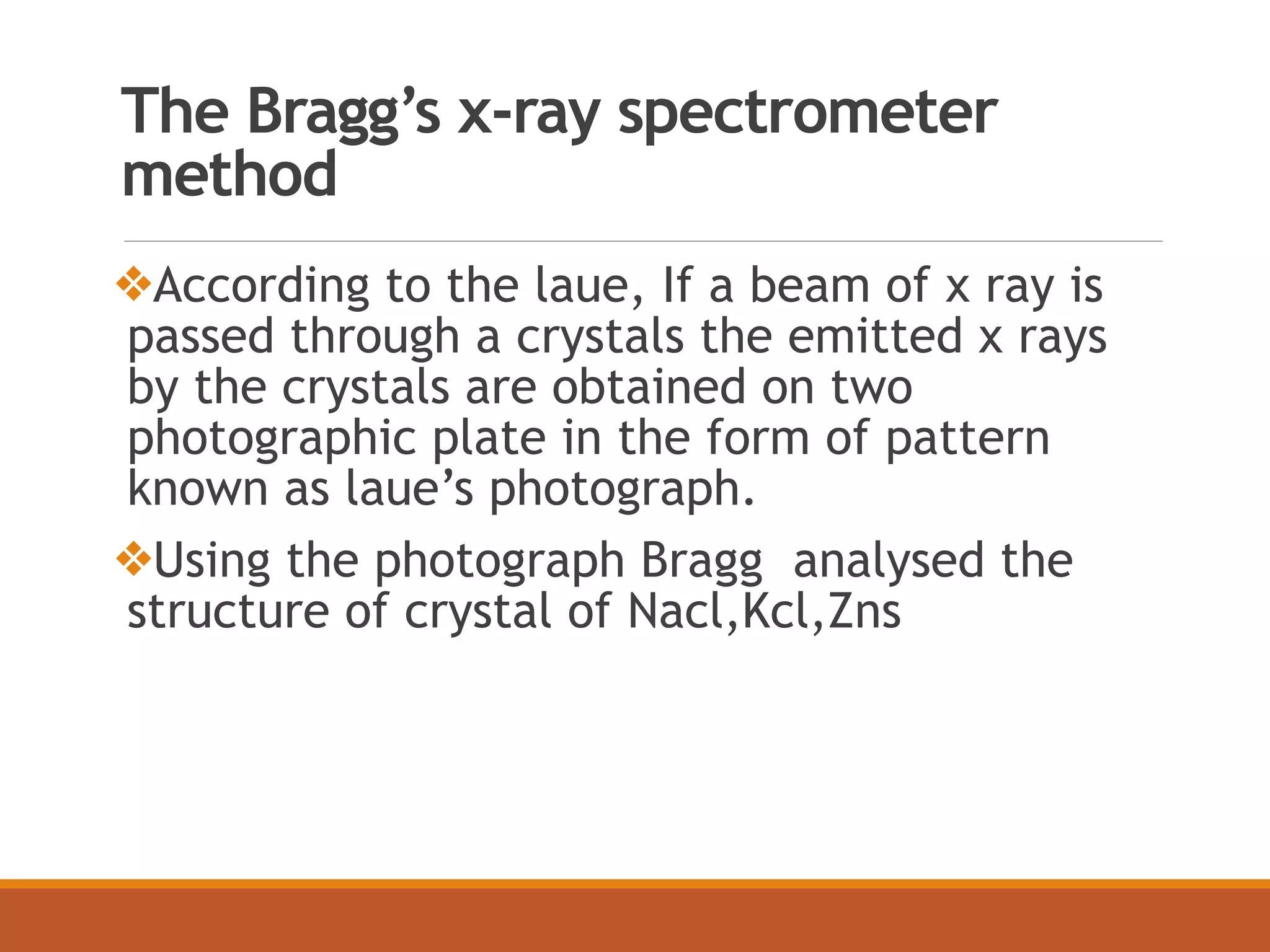
The Bragg’s x-ray spectrometer
method
❖According to the laue, If a beam of x ray is
passed through a crystals the emitted x rays
by the crystals are obtained on two
photographic plate in the form of pattern
known as laue’s photograph.
❖Using the photograph Bragg analysed the
structure of crystal of Nacl,Kcl,Zns
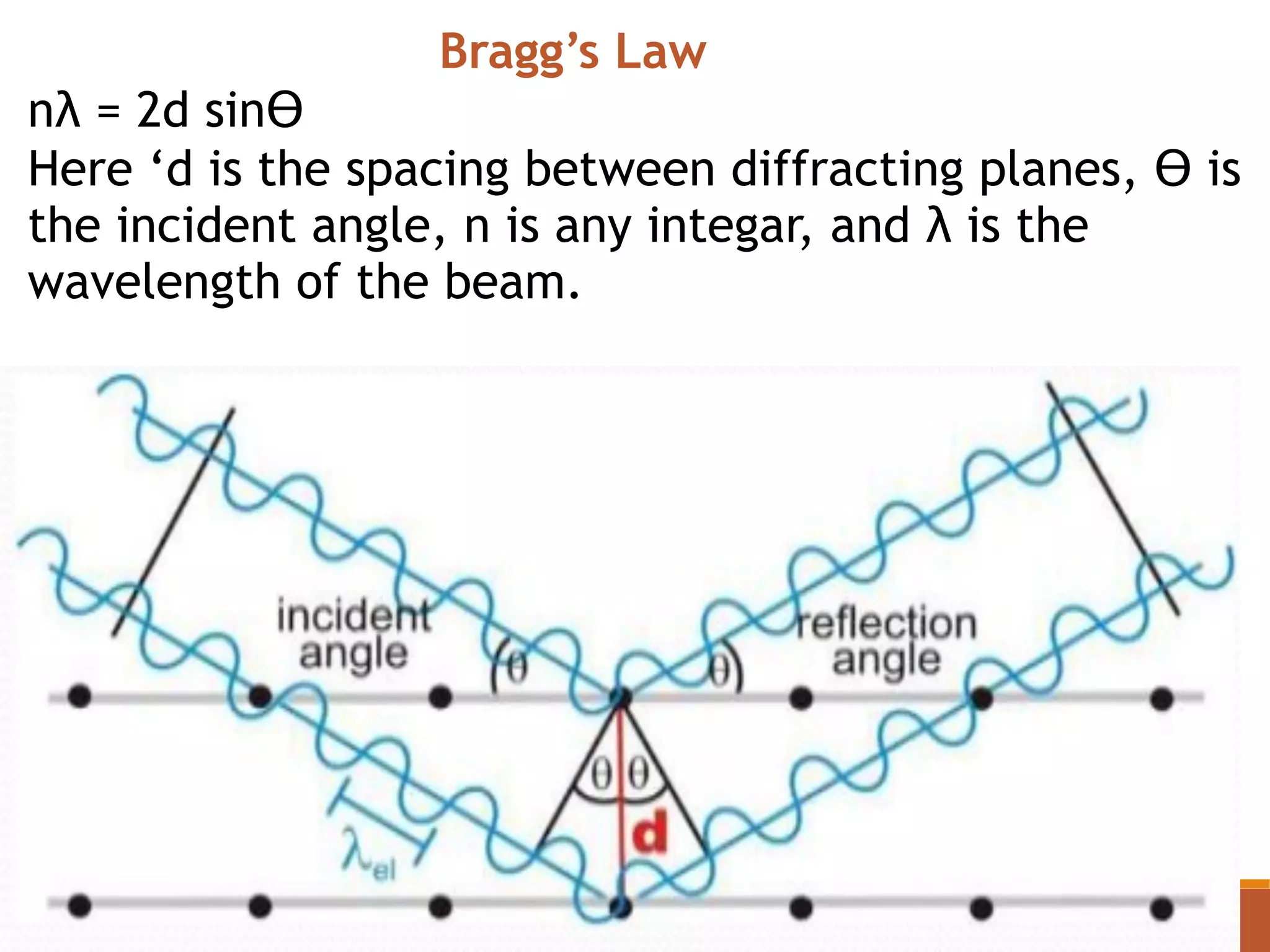
Bragg’s Law
nλ = 2d sinƟ
Here ‘d is the spacing between diffracting planes, Ɵ is
the incident angle, n is any integar, and λ is the
wavelength of the beam.
Working
❖In using the Bragg’s spectrometer the crystal is
mounted in such a position that the ion is at ion
chamber and is adjusted to receive the x rays
❖The crystal and ionization chamber are made to
move in small steps so that the angle through
which the chamber is moved is twice the angle
through which the crystal is rotated.
Rotating crystal method
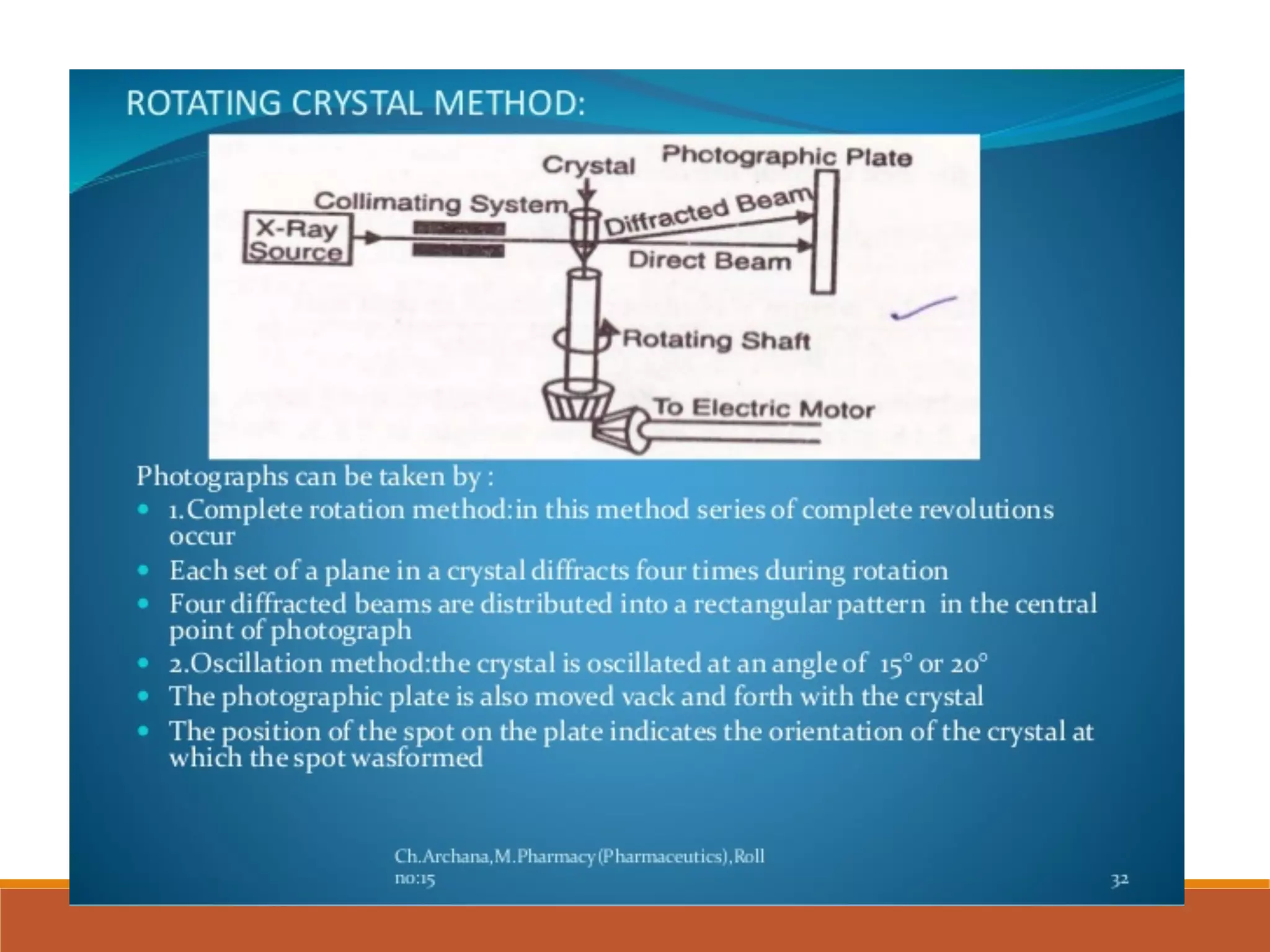
❖The x rays are generated in the x ray tube and
then the beam is made monochromatic by a filter.
❖From the filter is then aallowed to pass through
collimating system which permits a fine pencil of
parallel x rays.
❖From the collimator the x ray beam is made to
fall on crystal mounted on a shaft which can be
rotated at a uniform angular rate by a small
motor.
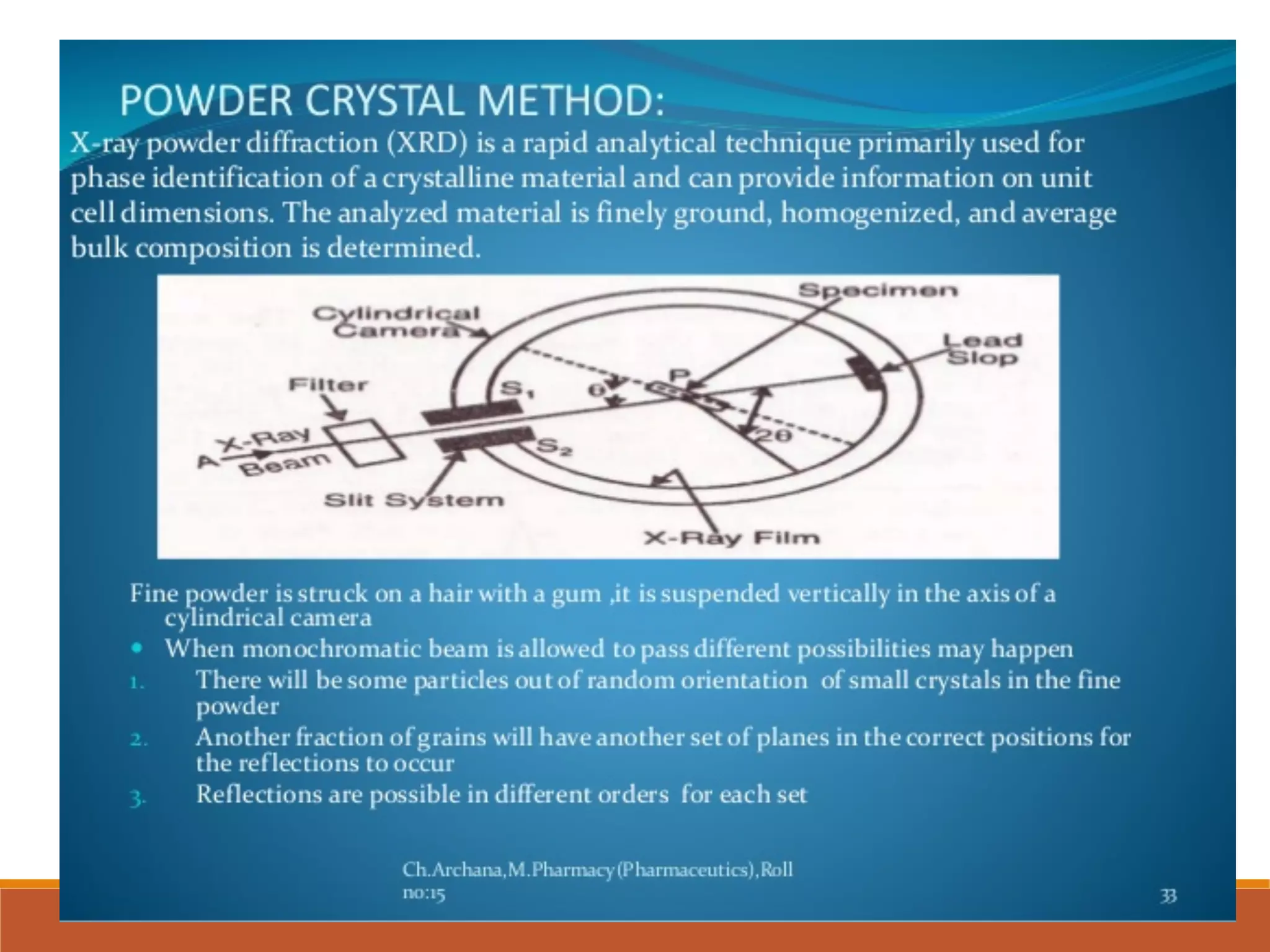
Powder crystal method
❖In this method powdered specimen is
mounted vertically on the axis of cylindrical
camera
❖The photographic film is held around the
camera in the form of a circular arc.
❖The diffracted beams are recorded as traces
on the film.
Applications of X-ray Chrystallography
X-Ray Analysis of Milk Powder
❖ To determine the effect of different milk
powdering processes upon structural group
spacings within the milk protein.
Differentiation of Sugar
❖ For the identification and the differentiation
of the common sugars (sucrose, dextrose and
lactose) is made simple by X-rays.
In HIV
❖ Scientists also determined the X-ray
crystallographic structure of HIV protease, a viral
enzyme critical in HIV’s life cycle, in 1989.
❖ Pharmaceutical scientists hoped that by blocking
this enzyme, they could prevent the virus from
spreading in the body.
❖ By feeding the structural information into a
computer modeling program, they could use the
model structure as a reference to determine the
types of molecules that might block the enzyme.
Arthritis
❖To create an effective painkiller in
case of arthritis that doesn’t cause
ulcers, scientists realized they needed
to develop new medicines that shut
down COX-2 but not COX-1
❖Through structural biology,they could
see exactly why Celebrex plugs up
COX-2 but not COX-1.
Applications of X-Ray Crystallography in Dairy
Science
❖ For elucidation of compounds present in milk and
other types of information obtained through
structure function relationship.
❖ Stewart has shown that even solutions tend to
assume an orderly arrangement of groups within the
solution. Hence, liquid milk should, and does show
some type of arrangement.
❖ The mineral constituent and lactose are the only
true crystalline constituents in dairy products that
can be analyzed by X-ray.
In case of new materials
❖ X-ray crystallography is still the chief
method for characterizing the atomic
structure of new materials and in
discerning materials that appear similar
by other experiments.
Analysis of Milk Stones
❖Applied for analysing the chemical
composition of milk stones.
❖Since each chemical compound gives a
definite pattern on a photographic film
according to atomic arrangement, X-
rays can be used for qualitative
chemical analysis as well as structural
analysis.
Thank you

X ray diffraction (ANALYSIS) 1ST MPHARM

  • 1.
    X-ray diffraction (Modern Pharmaceutical AnalyticalTechnique) PRESENTED BY AJAY PATIL M PHARMACY,1ST SEM (DEPT OF PHARMACEUTICS) ACHARYA AND B.M REDDY COLLEGE OF PHARMACY
  • 2.
    What is diffraction? Theprocess by which a beam of light or other system of waves is spread out as a result of passing through a narrow aperture or across an edge, typically accompanied by interferences between the wave forms produced.
  • 3.
  • 4.
    X RAY DIFFRACTION METHODS Lauephotographic method Bragg x ray spectrometer method Rotating crystal method Powder method X-ray diffraction is generally used for investigating the internal structure.
  • 5.
    Laue method Laue hasstudied the phenomenon of diffraction of crystal by two methods a) Transmission method b) Back reflection method TRANSMISSION METHOD The experimental equipment required for this is relatively simple.
  • 6.
    Equipment for laue transmissionmethod specimen pin hole collimator ---- x ray source C A B D
  • 7.
    Laue transmission A isa source of x rays. B is a pinhole colllimator C is a crystal whose internal structure is to be investigated. D is a film arranged on a rigid base this film is provided with beam stop to prevent direct beam from causing excessive fogging of film.
  • 9.
    Back reflection method ❖Thismethod provides similar information as the transmission method. ❖However the back reflection method is the only method for the investigation of large and thick specimen
  • 10.
    Equipment for Laueback reflection method
  • 12.
    The Bragg’s x-rayspectrometer method ❖According to the laue, If a beam of x ray is passed through a crystals the emitted x rays by the crystals are obtained on two photographic plate in the form of pattern known as laue’s photograph. ❖Using the photograph Bragg analysed the structure of crystal of Nacl,Kcl,Zns
  • 14.
    Bragg’s Law nλ =2d sinƟ Here ‘d is the spacing between diffracting planes, Ɵ is the incident angle, n is any integar, and λ is the wavelength of the beam.
  • 15.
    Working ❖In using theBragg’s spectrometer the crystal is mounted in such a position that the ion is at ion chamber and is adjusted to receive the x rays ❖The crystal and ionization chamber are made to move in small steps so that the angle through which the chamber is moved is twice the angle through which the crystal is rotated.
  • 16.
    Rotating crystal method ❖Thex rays are generated in the x ray tube and then the beam is made monochromatic by a filter. ❖From the filter is then aallowed to pass through collimating system which permits a fine pencil of parallel x rays. ❖From the collimator the x ray beam is made to fall on crystal mounted on a shaft which can be rotated at a uniform angular rate by a small motor.
  • 18.
    Powder crystal method ❖Inthis method powdered specimen is mounted vertically on the axis of cylindrical camera ❖The photographic film is held around the camera in the form of a circular arc. ❖The diffracted beams are recorded as traces on the film.
  • 20.
    Applications of X-rayChrystallography X-Ray Analysis of Milk Powder ❖ To determine the effect of different milk powdering processes upon structural group spacings within the milk protein. Differentiation of Sugar ❖ For the identification and the differentiation of the common sugars (sucrose, dextrose and lactose) is made simple by X-rays.
  • 21.
    In HIV ❖ Scientistsalso determined the X-ray crystallographic structure of HIV protease, a viral enzyme critical in HIV’s life cycle, in 1989. ❖ Pharmaceutical scientists hoped that by blocking this enzyme, they could prevent the virus from spreading in the body. ❖ By feeding the structural information into a computer modeling program, they could use the model structure as a reference to determine the types of molecules that might block the enzyme.
  • 22.
    Arthritis ❖To create aneffective painkiller in case of arthritis that doesn’t cause ulcers, scientists realized they needed to develop new medicines that shut down COX-2 but not COX-1 ❖Through structural biology,they could see exactly why Celebrex plugs up COX-2 but not COX-1.
  • 23.
    Applications of X-RayCrystallography in Dairy Science ❖ For elucidation of compounds present in milk and other types of information obtained through structure function relationship. ❖ Stewart has shown that even solutions tend to assume an orderly arrangement of groups within the solution. Hence, liquid milk should, and does show some type of arrangement. ❖ The mineral constituent and lactose are the only true crystalline constituents in dairy products that can be analyzed by X-ray.
  • 24.
    In case ofnew materials ❖ X-ray crystallography is still the chief method for characterizing the atomic structure of new materials and in discerning materials that appear similar by other experiments.
  • 25.
    Analysis of MilkStones ❖Applied for analysing the chemical composition of milk stones. ❖Since each chemical compound gives a definite pattern on a photographic film according to atomic arrangement, X- rays can be used for qualitative chemical analysis as well as structural analysis.
  • 26.