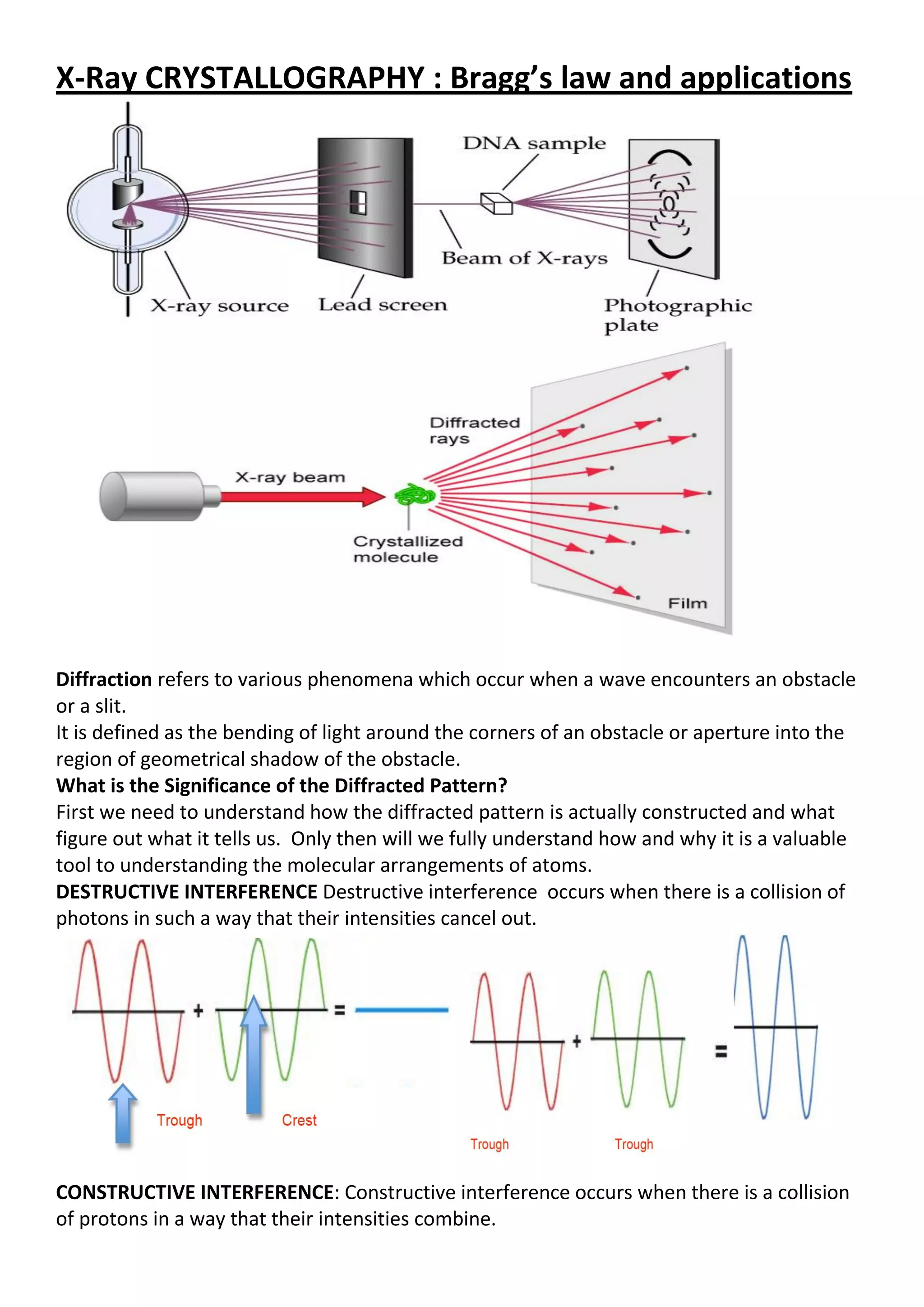
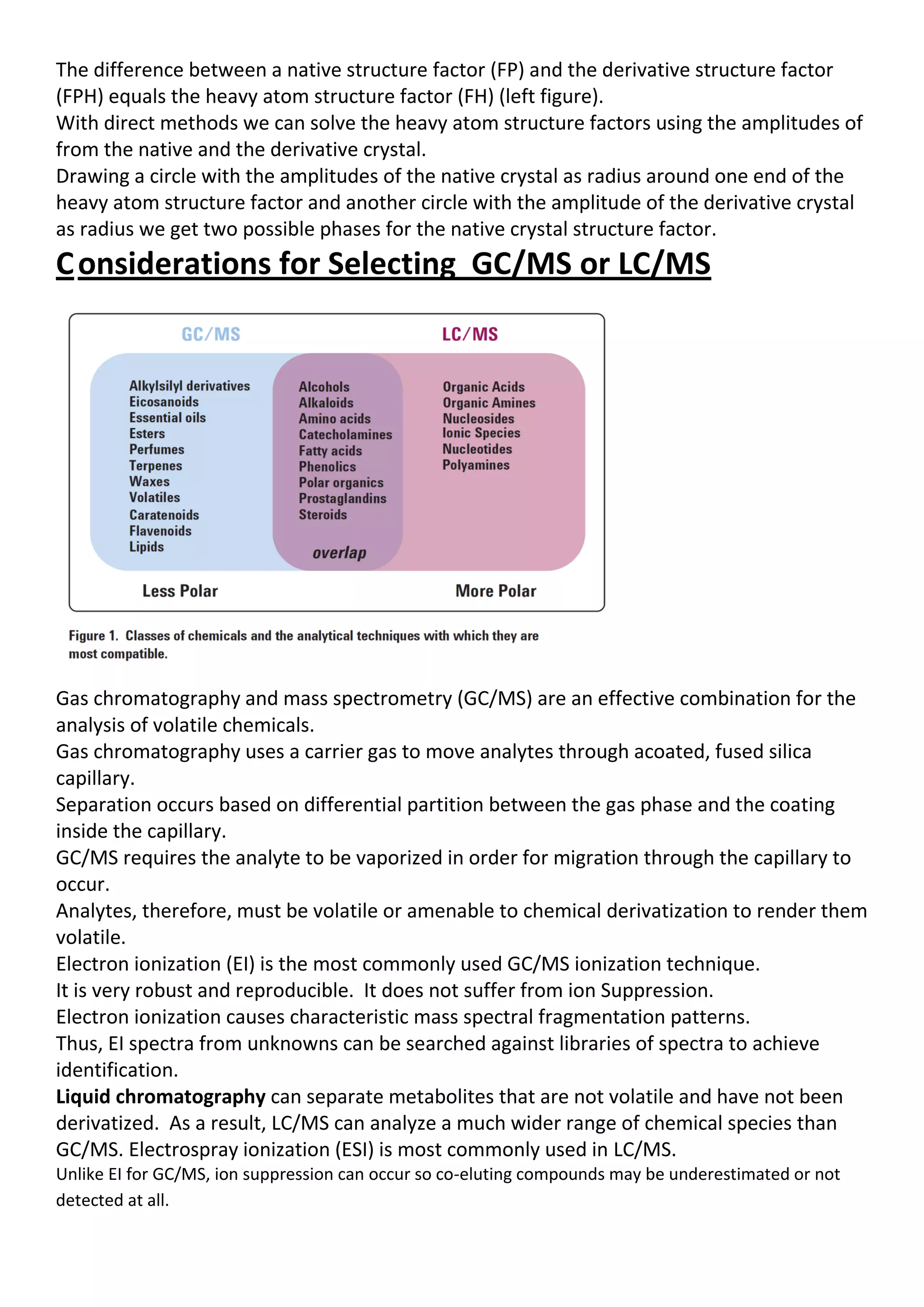
This document discusses x-ray crystallography techniques including Bragg's law and applications such as determining molecular arrangements of atoms. It explains key concepts like diffraction, constructive and destructive interference patterns, and how a crystal's perfection impacts the clarity of patterns. Bragg's law is derived and its importance explained. Techniques like isomorphous replacement that use heavy atoms to solve phase problems are covered. Considerations for selecting gas chromatography/mass spectrometry or liquid chromatography/mass spectrometry are presented. The importance of animals in biomedical research and various animal models are discussed. Alternatives to animal testing including cell culture and computer models are also summarized.