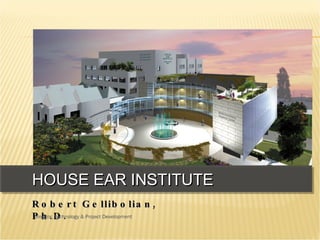

HOUSE EAR INSTITUTE Robert Gellibolian, Ph.D.
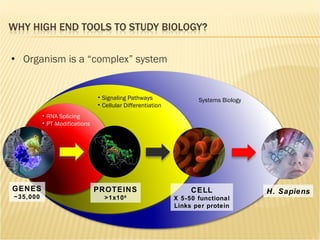
Organism is a “complex” system Systems Biology H. Sapiens Signaling Pathways Cellular Differentiation CELL X 5-50 functional Links per protein RNA Splicing PT Modifications GENES ~35,000 PROTEINS >1x10 6
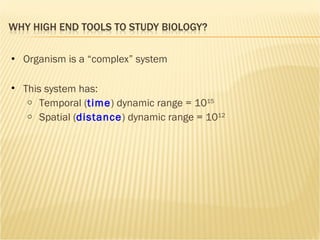
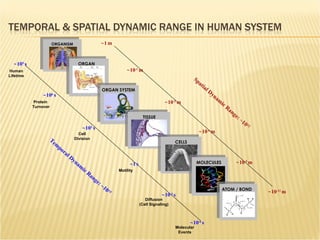
Organism is a “complex” system This system has: Temporal ( time ) dynamic range = 10 15   Spatial ( distance ) dynamic range = 10 12
Spatial Dynamic Range: ~10 12   ~ 10 -12  m ~ 10 -9  m ~ 10 -6  m ~ 1   m ~ 10 -2  m ~ 10 -1  m Temporal Dynamic Range: ~10 15   ~ 10 -6  s ~ 10 -3  s ~ 1   s ~ 10 3  s ~ 10 6  s ~ 10 9  s Molecular Events Diffusion (Cell Signaling) Motility Cell Division Protein  Turnover Human Lifetime ORGANISM ORGAN ORGAN SYSTEM TISSUE CELLS MOLECULES ATOM / BOND
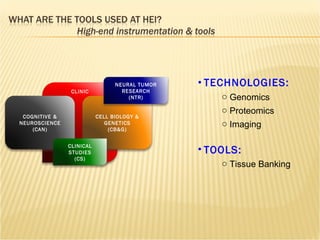
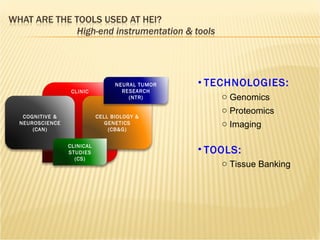
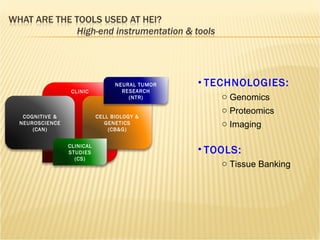
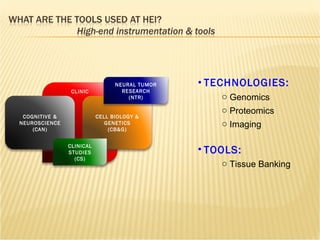
TECHNOLOGIES: Genomics TOOLS: Proteomics Imaging Tissue Banking CLINIC COGNITIVE & NEUROSCIENCE (CAN) CELL BIOLOGY & GENETICS (CB&G) CLINICAL STUDIES (CS) NEURAL TUMOR RESEARCH (NTR)
 
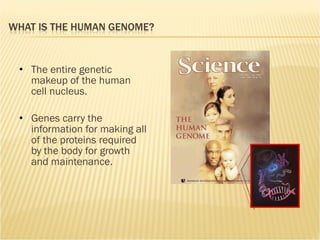
The entire genetic makeup of the human cell nucleus. Genes carry the information for making all of the proteins required by the body for growth and maintenance.
Made up of ~35,000-50,000 genes which code for functional proteins in the body. Includes non-coding sequences located between genes, which makes up the vast majority of the DNA in the genome (~95%).
Identify all of the genes in human DNA. Determine the sequence of the 3 billion bases that make up human DNA. Store this information in data bases. Develop faster, more efficient sequencing technologies. Develop tools for data analysis. Address the ethical, legal, and social issues (ELSI).
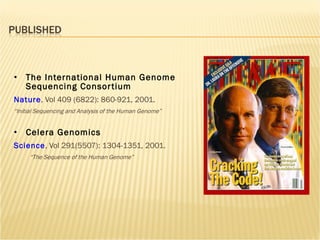
The International Human Genome Sequencing Consortium Nature , Vol 409 (6822): 860-921, 2001. “ Initial Sequencing and Analysis of the Human Genome” Celera Genomics Science , Vol 291(5507): 1304-1351, 2001. “ The Sequence of the Human Genome”
 
Improvements in diagnostic and therapeutic applications Use of genetic information to diagnose and treat disease. Implementation of preventative measures. Increases in gene/protein therapeutic applications. Faster drug development: (pharmacogenomics) Personalized medicine?
Production of useful protein products for use in medicine, agriculture, bioremediation and pharmaceutical industries. Antibiotics Protein replacement (factor VIII, TPA, streptokinase, insulin, interferon…) BT insecticide toxin (from  Bacillus thuringiensis ) Herbicide resistance (glyphosate resistance) Bioengineered foods [e.g. Flavr Savr tomato - delay rotting] “ Pharm” animals
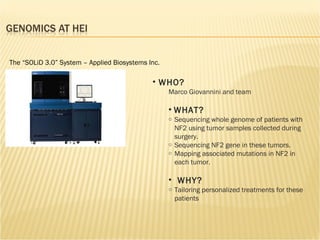
The “SOLiD 3.0” System – Applied Biosystems Inc. WHO?  Marco Giovannini and team WHAT? Sequencing whole genome of patients with NF2 using tumor samples collected during surgery. Sequencing NF2 gene in these tumors. Mapping associated mutations in NF2 in each tumor. WHY? Tailoring personalized treatments for these patients
TECHNOLOGIES: Genomics TOOLS: Proteomics Imaging Tissue Banking CLINIC COGNITIVE & NEUROSCIENCE (CAN) CELL BIOLOGY & GENETICS (CB&G) CLINICAL STUDIES (CS) NEURAL TUMOR RESEARCH (NTR)
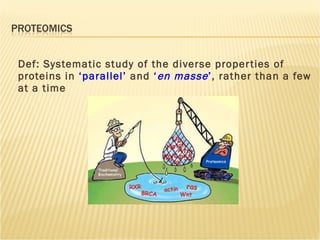
Def: Systematic study of the diverse properties of proteins in  ‘parallel’  and  ‘ en masse ’ , rather than a few at a time
Emerged as a direct consequence of: The results obtained from ambitious projects aimed at mapping and sequencing the complete genome of many species.  The changes to our models that are catalyzed by such projects. Rich source of biological information because: Proteins are involved in almost all biological activities  Proteins have diverse properties.
The direct characterization of a sample’s proteins  en masse .  Proteins are the machines that drive much of biology Genes are merely the recipe How much of each protein is present? What proteins are present?   Initial goal was to rapidly ID all the proteins expressed by cell/tissue  If we get info from Genomics, why study proteomics?
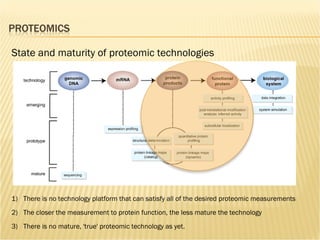
There is no technology platform that can satisfy all of the desired proteomic measurements The closer the measurement to protein function, the less mature the technology There is no mature, 'true' proteomic technology as yet. State and maturity of proteomic technologies
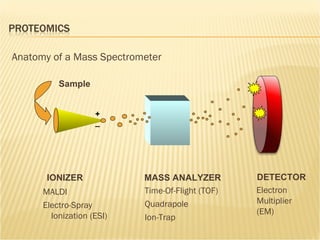
IONIZER MASS ANALYZER DETECTOR MALDI Electro-Spray Ionization (ESI) Time-Of-Flight (TOF) Quadrapole Ion-Trap Electron Multiplier (EM) Anatomy of a Mass Spectrometer Sample + _
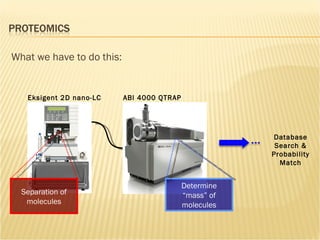
What we have to do this: Database Search & Probability Match Eksigent 2D nano-LC Separation of molecules ABI 4000 QTRAP Determine “mass” of molecules
WHO?  Fred Linthicum Federico Kalinec Paul Webster WHAT? Make up of Temporal Bone proteins. ID proteins in hair cells and looking at effects of ototoxic injurants on protein changes. ID proteins in various stages of biofilm formation.
TECHNOLOGIES: Genomics TOOLS: Proteomics Imaging Tissue Banking CLINIC COGNITIVE & NEUROSCIENCE (CAN) CELL BIOLOGY & GENETICS (CB&G) CLINICAL STUDIES (CS) NEURAL TUMOR RESEARCH (NTR)
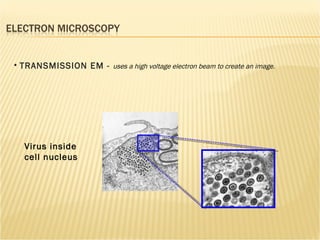
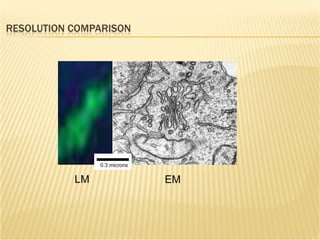
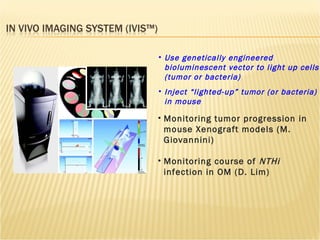
ELECTRON MICROSCOPY Produces an electronically-magnified image of a specimen for detailed observation. The EM uses a particle beam of electrons to illuminate the specimen and create a magnified image of it. It uses electrons that have wavelengths about 100,000 times shorter than visible light, and can achieve magnifications of up to 1,000,000x. CONFOCAL MICROSCOPY An optical imaging technique used to increase optical resolution and contrast by using a spatial pinhole to eliminate out-of-focus light in specimens that are thicker than the focal plane. IN VIVO IMAGING SYSTEM (IVIS) An optical imaging optical imaging technology to facilitate non-invasive longitudinal monitoring of disease progression, cell trafficking and gene expression patterns in  living animals .
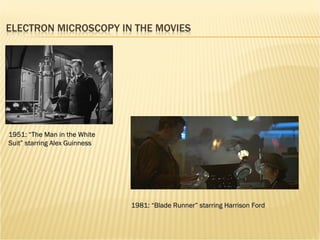
1951: “The Man in the White Suit” starring Alex Guinness 1981: “Blade Runner” starring Harrison Ford
TRANSMISSION EM -  uses a high voltage electron beam to create an image. Virus inside cell nucleus
LM EM 0.3 microns
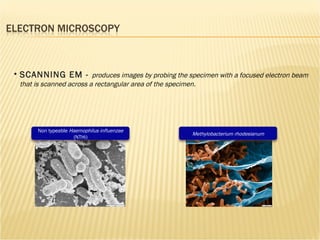
SCANNING EM -  produces images by probing the specimen with a focused electron beam that is scanned across a rectangular area of the specimen.  Non typeable  Haemophilus influenzae  (NTHi) Methylobacterium rhodesianum
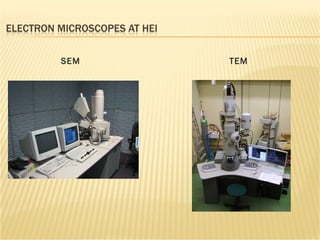
SEM TEM
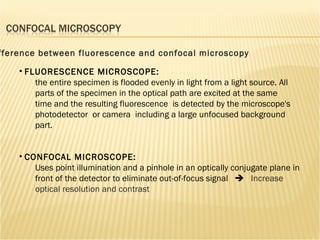
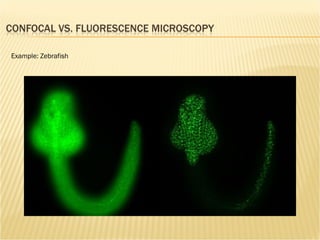
CONFOCAL MICROSCOPE: Uses point illumination and a pinhole in an optically conjugate plane in front of the detector to eliminate out-of-focus signal     Increase optical resolution and contrast FLUORESCENCE MICROSCOPE:   the entire specimen is flooded evenly in light from a light source. All parts of the specimen in the optical path are excited at the same time and the resulting fluorescence  is detected by the microscope's photodetector  or camera  including a large unfocused background part.  Difference between fluorescence and confocal microscopy
Example: Zebrafish
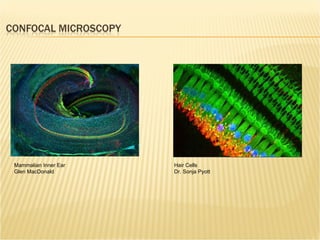
Mammalian Inner Ear Glen MacDonald Hair Cells Dr. Sonja Pyott
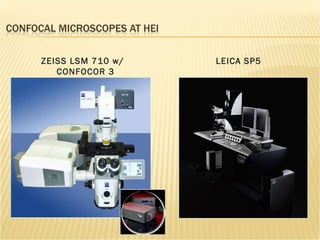
ZEISS LSM 710 w/ CONFOCOR 3 LEICA SP5
Monitoring tumor progression in mouse Xenograft models (M. Giovannini) Monitoring course of  NTHi  infection in OM (D. Lim) Use genetically engineered bioluminescent vector to light up cells (tumor or bacteria) Inject “lighted-up” tumor (or bacteria) in mouse
TECHNOLOGIES: Genomics TOOLS: Proteomics Imaging Tissue Banking CLINIC COGNITIVE & NEUROSCIENCE (CAN) CELL BIOLOGY & GENETICS (CB&G) CLINICAL STUDIES (CS) NEURAL TUMOR RESEARCH (NTR)
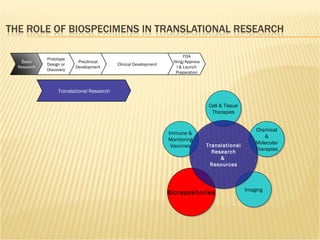
Biorepositories Imaging Chemical & Molecular Therapies Cell & Tissue Therapies Immune & Monitoring Vaccines Translational Research &  Resources Basic Research Prototype Design or Discovery Preclinical Development Clinical Development FDA filing/Approval & Launch Preparation Translational Research
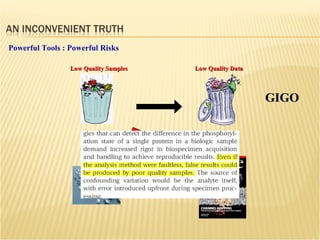
Powerful Tools : Powerful Risks Low Quality Samples Low Quality Data GIGO
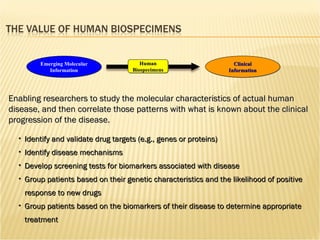
Identify and validate drug targets (e.g., genes or proteins) Identify disease mechanisms Develop screening tests for biomarkers associated with disease Group patients based on their genetic characteristics and the likelihood of positive response to new drugs Group patients based on the biomarkers of their disease to determine appropriate treatment Emerging Molecular Information Clinical Information Enabling researchers to study the molecular characteristics of actual human disease, and then correlate those patterns with what is known about the clinical progression of the disease. Human Biospecimens
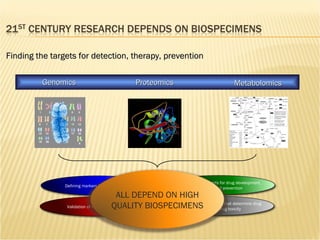
Finding the targets for detection, therapy, prevention Genomics Proteomics Metabolomics Identification of targets for drug development,  treatment and prevention Identify biologic variations that determine drug efficacy and drug toxicity Defining markers for susceptibility Validation of new therapeutics  ALL DEPEND ON HIGH QUALITY BIOSPECIMENS
Consensus of the Broad Scientific Community:  The lack of high-quality human specimens has become the limiting factor for post-genomic biomedical science.
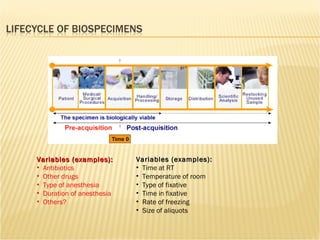
Variables (examples): Antibiotics Other drugs Type of anesthesia Duration of anesthesia Others? Variables (examples): Time at RT Temperature of room Type of fixative Time in fixative Rate of freezing Size of aliquots
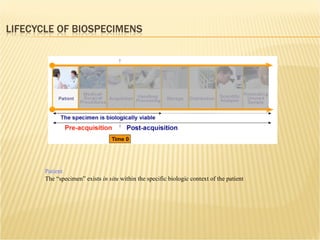
Patient The “specimen” exists  in situ  within the specific biologic context of the patient
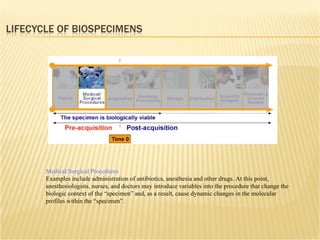
Medical/Surgical Procedures Examples include administration of antibiotics, anesthesia and other drugs. At this point, anesthesiologists, nurses, and doctors may introduce variables into the procedure that change the biologic context of the “specimen” and, as a result, cause dynamic changes in the molecular profiles within the “specimen”.
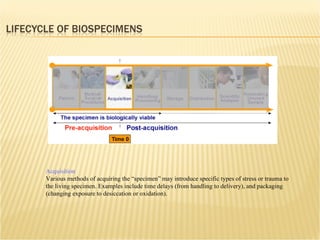
Acquisition Various methods of acquiring the “specimen” may introduce specific types of stress or trauma to the living specimen. Examples include time delays (from handling to delivery), and packaging (changing exposure to desiccation or oxidation).
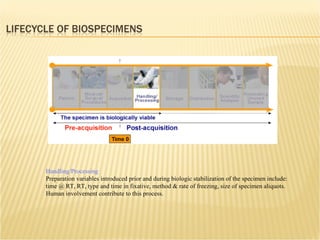
Handling/Processing Preparation variables introduced prior and during biologic stabilization of the specimen include: time @ RT, RT, type and time in fixative, method & rate of freezing, size of specimen aliquots. Human involvement contribute to this process.
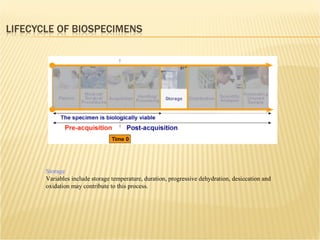
Storage Variables include storage temperature, duration, progressive dehydration, desiccation and oxidation may contribute to this process.
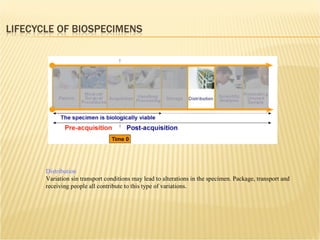
Distribution Variation sin transport conditions may lead to alterations in the specimen. Package, transport and receiving people all contribute to this type of variations.
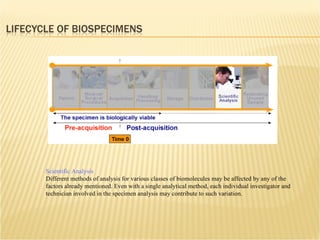
Scientific Analysis Different methods of analysis for various classes of biomolecules may be affected by any of the factors already mentioned. Even with a single analytical method, each individual investigator and technician involved in the specimen analysis may contribute to such variation.
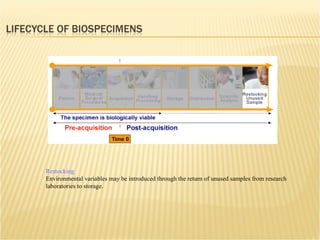
Restocking Environmental variables may be introduced through the return of unused samples from research laboratories to storage.
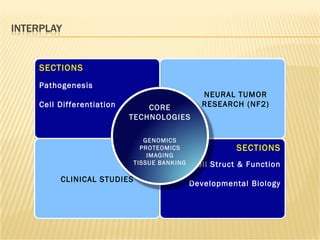
CLINICAL STUDIES SECTIONS Cell Struct & Function Developmental Biology NEURAL TUMOR RESEARCH (NF2) SECTIONS Pathogenesis Cell Differentiation CORE TECHNOLOGIES GENOMICS PROTEOMICS IMAGING TISSUE BANKING

Gellibolian 2010 Audio Visual2

  • 1.
    HOUSE EAR INSTITUTERobert Gellibolian, Ph.D.
  • 2.
    Organism is a“complex” system Systems Biology H. Sapiens Signaling Pathways Cellular Differentiation CELL X 5-50 functional Links per protein RNA Splicing PT Modifications GENES ~35,000 PROTEINS >1x10 6
  • 3.
    Organism is a“complex” system This system has: Temporal ( time ) dynamic range = 10 15 Spatial ( distance ) dynamic range = 10 12
  • 4.
    Spatial Dynamic Range:~10 12 ~ 10 -12 m ~ 10 -9 m ~ 10 -6 m ~ 1 m ~ 10 -2 m ~ 10 -1 m Temporal Dynamic Range: ~10 15 ~ 10 -6 s ~ 10 -3 s ~ 1 s ~ 10 3 s ~ 10 6 s ~ 10 9 s Molecular Events Diffusion (Cell Signaling) Motility Cell Division Protein Turnover Human Lifetime ORGANISM ORGAN ORGAN SYSTEM TISSUE CELLS MOLECULES ATOM / BOND
  • 5.
    TECHNOLOGIES: Genomics TOOLS:Proteomics Imaging Tissue Banking CLINIC COGNITIVE & NEUROSCIENCE (CAN) CELL BIOLOGY & GENETICS (CB&G) CLINICAL STUDIES (CS) NEURAL TUMOR RESEARCH (NTR)
  • 6.
  • 7.
    The entire geneticmakeup of the human cell nucleus. Genes carry the information for making all of the proteins required by the body for growth and maintenance.
  • 8.
    Made up of~35,000-50,000 genes which code for functional proteins in the body. Includes non-coding sequences located between genes, which makes up the vast majority of the DNA in the genome (~95%).
  • 9.
    Identify all ofthe genes in human DNA. Determine the sequence of the 3 billion bases that make up human DNA. Store this information in data bases. Develop faster, more efficient sequencing technologies. Develop tools for data analysis. Address the ethical, legal, and social issues (ELSI).
  • 10.
    The International HumanGenome Sequencing Consortium Nature , Vol 409 (6822): 860-921, 2001. “ Initial Sequencing and Analysis of the Human Genome” Celera Genomics Science , Vol 291(5507): 1304-1351, 2001. “ The Sequence of the Human Genome”
  • 11.
  • 12.
    Improvements in diagnosticand therapeutic applications Use of genetic information to diagnose and treat disease. Implementation of preventative measures. Increases in gene/protein therapeutic applications. Faster drug development: (pharmacogenomics) Personalized medicine?
  • 13.
    Production of usefulprotein products for use in medicine, agriculture, bioremediation and pharmaceutical industries. Antibiotics Protein replacement (factor VIII, TPA, streptokinase, insulin, interferon…) BT insecticide toxin (from Bacillus thuringiensis ) Herbicide resistance (glyphosate resistance) Bioengineered foods [e.g. Flavr Savr tomato - delay rotting] “ Pharm” animals
  • 14.
    The “SOLiD 3.0”System – Applied Biosystems Inc. WHO? Marco Giovannini and team WHAT? Sequencing whole genome of patients with NF2 using tumor samples collected during surgery. Sequencing NF2 gene in these tumors. Mapping associated mutations in NF2 in each tumor. WHY? Tailoring personalized treatments for these patients
  • 15.
    TECHNOLOGIES: Genomics TOOLS:Proteomics Imaging Tissue Banking CLINIC COGNITIVE & NEUROSCIENCE (CAN) CELL BIOLOGY & GENETICS (CB&G) CLINICAL STUDIES (CS) NEURAL TUMOR RESEARCH (NTR)
  • 16.
    Def: Systematic studyof the diverse properties of proteins in ‘parallel’ and ‘ en masse ’ , rather than a few at a time
  • 17.
    Emerged as adirect consequence of: The results obtained from ambitious projects aimed at mapping and sequencing the complete genome of many species. The changes to our models that are catalyzed by such projects. Rich source of biological information because: Proteins are involved in almost all biological activities Proteins have diverse properties.
  • 18.
    The direct characterizationof a sample’s proteins en masse . Proteins are the machines that drive much of biology Genes are merely the recipe How much of each protein is present? What proteins are present? Initial goal was to rapidly ID all the proteins expressed by cell/tissue If we get info from Genomics, why study proteomics?
  • 19.
    There is notechnology platform that can satisfy all of the desired proteomic measurements The closer the measurement to protein function, the less mature the technology There is no mature, 'true' proteomic technology as yet. State and maturity of proteomic technologies
  • 20.
    IONIZER MASS ANALYZERDETECTOR MALDI Electro-Spray Ionization (ESI) Time-Of-Flight (TOF) Quadrapole Ion-Trap Electron Multiplier (EM) Anatomy of a Mass Spectrometer Sample + _
  • 21.
    What we haveto do this: Database Search & Probability Match Eksigent 2D nano-LC Separation of molecules ABI 4000 QTRAP Determine “mass” of molecules
  • 22.
    WHO? FredLinthicum Federico Kalinec Paul Webster WHAT? Make up of Temporal Bone proteins. ID proteins in hair cells and looking at effects of ototoxic injurants on protein changes. ID proteins in various stages of biofilm formation.
  • 23.
    TECHNOLOGIES: Genomics TOOLS:Proteomics Imaging Tissue Banking CLINIC COGNITIVE & NEUROSCIENCE (CAN) CELL BIOLOGY & GENETICS (CB&G) CLINICAL STUDIES (CS) NEURAL TUMOR RESEARCH (NTR)
  • 24.
    ELECTRON MICROSCOPY Producesan electronically-magnified image of a specimen for detailed observation. The EM uses a particle beam of electrons to illuminate the specimen and create a magnified image of it. It uses electrons that have wavelengths about 100,000 times shorter than visible light, and can achieve magnifications of up to 1,000,000x. CONFOCAL MICROSCOPY An optical imaging technique used to increase optical resolution and contrast by using a spatial pinhole to eliminate out-of-focus light in specimens that are thicker than the focal plane. IN VIVO IMAGING SYSTEM (IVIS) An optical imaging optical imaging technology to facilitate non-invasive longitudinal monitoring of disease progression, cell trafficking and gene expression patterns in living animals .
  • 25.
    1951: “The Manin the White Suit” starring Alex Guinness 1981: “Blade Runner” starring Harrison Ford
  • 26.
    TRANSMISSION EM - uses a high voltage electron beam to create an image. Virus inside cell nucleus
  • 27.
    LM EM 0.3microns
  • 28.
    SCANNING EM - produces images by probing the specimen with a focused electron beam that is scanned across a rectangular area of the specimen. Non typeable Haemophilus influenzae (NTHi) Methylobacterium rhodesianum
  • 29.
  • 30.
    CONFOCAL MICROSCOPE: Usespoint illumination and a pinhole in an optically conjugate plane in front of the detector to eliminate out-of-focus signal  Increase optical resolution and contrast FLUORESCENCE MICROSCOPE: the entire specimen is flooded evenly in light from a light source. All parts of the specimen in the optical path are excited at the same time and the resulting fluorescence is detected by the microscope's photodetector or camera including a large unfocused background part. Difference between fluorescence and confocal microscopy
  • 31.
  • 32.
    Mammalian Inner EarGlen MacDonald Hair Cells Dr. Sonja Pyott
  • 33.
    ZEISS LSM 710w/ CONFOCOR 3 LEICA SP5
  • 34.
    Monitoring tumor progressionin mouse Xenograft models (M. Giovannini) Monitoring course of NTHi infection in OM (D. Lim) Use genetically engineered bioluminescent vector to light up cells (tumor or bacteria) Inject “lighted-up” tumor (or bacteria) in mouse
  • 35.
    TECHNOLOGIES: Genomics TOOLS:Proteomics Imaging Tissue Banking CLINIC COGNITIVE & NEUROSCIENCE (CAN) CELL BIOLOGY & GENETICS (CB&G) CLINICAL STUDIES (CS) NEURAL TUMOR RESEARCH (NTR)
  • 36.
    Biorepositories Imaging Chemical& Molecular Therapies Cell & Tissue Therapies Immune & Monitoring Vaccines Translational Research & Resources Basic Research Prototype Design or Discovery Preclinical Development Clinical Development FDA filing/Approval & Launch Preparation Translational Research
  • 37.
    Powerful Tools :Powerful Risks Low Quality Samples Low Quality Data GIGO
  • 38.
    Identify and validatedrug targets (e.g., genes or proteins) Identify disease mechanisms Develop screening tests for biomarkers associated with disease Group patients based on their genetic characteristics and the likelihood of positive response to new drugs Group patients based on the biomarkers of their disease to determine appropriate treatment Emerging Molecular Information Clinical Information Enabling researchers to study the molecular characteristics of actual human disease, and then correlate those patterns with what is known about the clinical progression of the disease. Human Biospecimens
  • 39.
    Finding the targetsfor detection, therapy, prevention Genomics Proteomics Metabolomics Identification of targets for drug development, treatment and prevention Identify biologic variations that determine drug efficacy and drug toxicity Defining markers for susceptibility Validation of new therapeutics ALL DEPEND ON HIGH QUALITY BIOSPECIMENS
  • 40.
    Consensus of theBroad Scientific Community: The lack of high-quality human specimens has become the limiting factor for post-genomic biomedical science.
  • 41.
    Variables (examples): AntibioticsOther drugs Type of anesthesia Duration of anesthesia Others? Variables (examples): Time at RT Temperature of room Type of fixative Time in fixative Rate of freezing Size of aliquots
  • 42.
    Patient The “specimen”exists in situ within the specific biologic context of the patient
  • 43.
    Medical/Surgical Procedures Examplesinclude administration of antibiotics, anesthesia and other drugs. At this point, anesthesiologists, nurses, and doctors may introduce variables into the procedure that change the biologic context of the “specimen” and, as a result, cause dynamic changes in the molecular profiles within the “specimen”.
  • 44.
    Acquisition Various methodsof acquiring the “specimen” may introduce specific types of stress or trauma to the living specimen. Examples include time delays (from handling to delivery), and packaging (changing exposure to desiccation or oxidation).
  • 45.
    Handling/Processing Preparation variablesintroduced prior and during biologic stabilization of the specimen include: time @ RT, RT, type and time in fixative, method & rate of freezing, size of specimen aliquots. Human involvement contribute to this process.
  • 46.
    Storage Variables includestorage temperature, duration, progressive dehydration, desiccation and oxidation may contribute to this process.
  • 47.
    Distribution Variation sintransport conditions may lead to alterations in the specimen. Package, transport and receiving people all contribute to this type of variations.
  • 48.
    Scientific Analysis Differentmethods of analysis for various classes of biomolecules may be affected by any of the factors already mentioned. Even with a single analytical method, each individual investigator and technician involved in the specimen analysis may contribute to such variation.
  • 49.
    Restocking Environmental variablesmay be introduced through the return of unused samples from research laboratories to storage.
  • 50.
    CLINICAL STUDIES SECTIONSCell Struct & Function Developmental Biology NEURAL TUMOR RESEARCH (NF2) SECTIONS Pathogenesis Cell Differentiation CORE TECHNOLOGIES GENOMICS PROTEOMICS IMAGING TISSUE BANKING

Editor's Notes