WRITING SKILLS
PRESENTTED BY:
MUHAMMAD AZAZ
#0331-8788660
DEPARTMENT OF GEOGRAPHY
GC UNIVERSITY FAISALABAD
Outline
 Definition of writing
 History of writing
I. Mesopotamia
II. Elamite scripts
 Process of writing
 4 Types of writing
 How one can improve his/her writing
skills
“A writer doesn't solve
problems. He or she
allows them to emerge.”
Friedrich Dürrenmatt
Definition
To communicate specific information
or ideas, utilizing the formats,
language, and content relevant to
the workplace.
History of writing
Mesopotamia (8000
BC)
o Cuneiform: the oldest
form of writing.
o Signs imprinted on
clay with wedge
shaped stylus
o count their
agricultural and
manufactured goods.
Cuneiform
Elamite scripts
Over the centuries, two distinct Elamite scripts
developed
 Proto-Elamite-is the oldest known writing
system from Iran.
 It was used during a brief period of time (ca.
3200 – 2900 BC)
 The Proto-Elamite script consists of more
than 1,000 signs.
 The Elamite Cuneiform script was used
from about 2500 to 331 BC. adapted from
the Akkadian people and contain about 130
symbols.
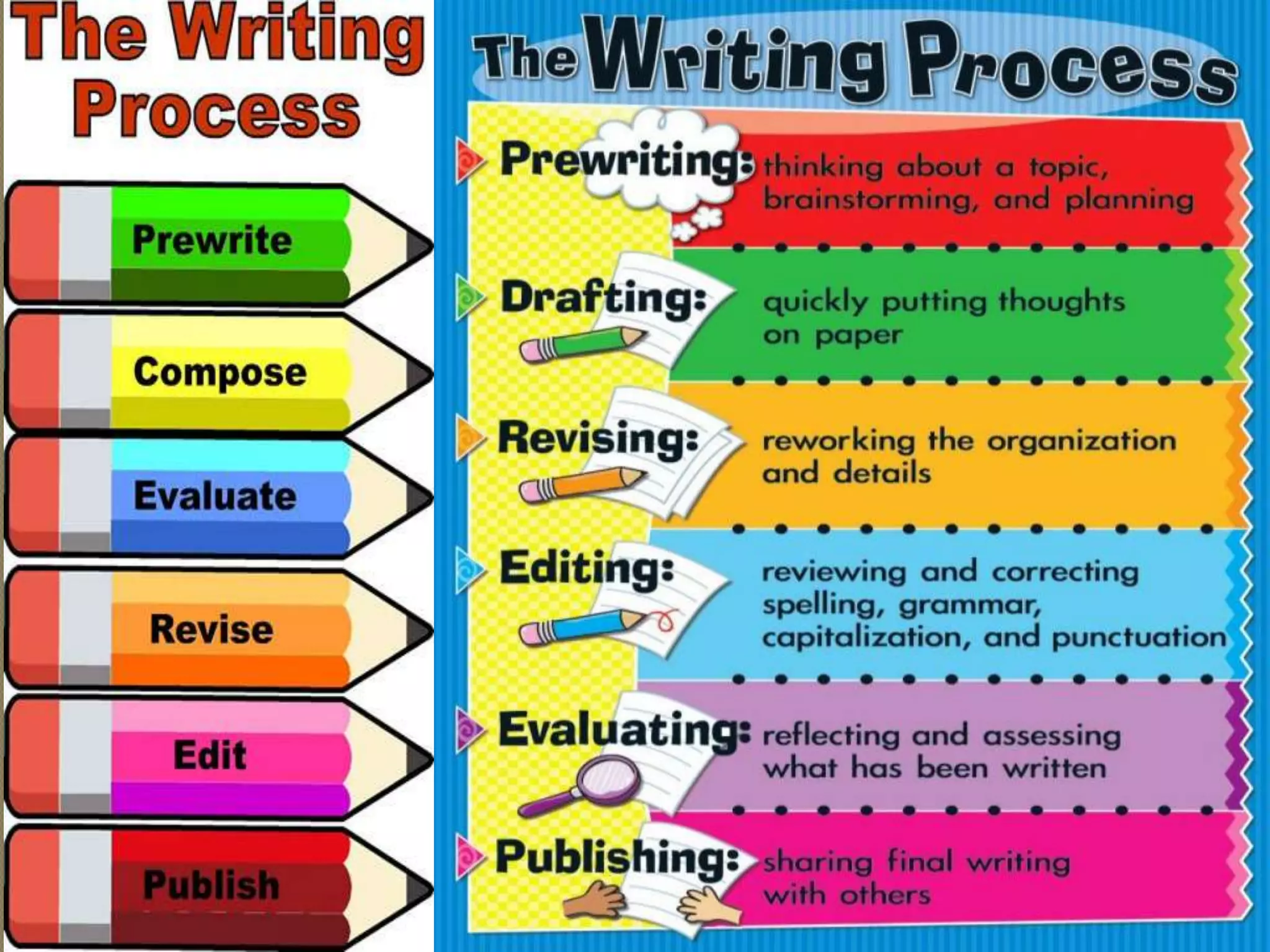
Writing process is based on SIX steps,
 PREWRITING THINK
 DRAFTING WRITE
 REVISING MAKE IT BETTER
 PROOFREADING MAKE IT CORRECT
 EVALUATING
 PUBLISHING
PREWRITING THINK
 Decide on a topic to write about.
 Brainstorm ideas about the subject.
 Do your research.
DRAFTING WRITE
 Put the information you researched into your
own words.
 Write sentences and paragraphs even if they
are not perfect.
 Read what you have written and judge if it
says what you mean.
 Show it to others and ask for suggestions.
REVISING MAKE IT
BETTER
 Read what you have written again.
 Think about what others said about it.
 Rearrange words or sentences.
 Take out or add parts.
 Replace overused or unclear words.
 Read your writing aloud to be sure it flows
smoothly.
PROOFREADING MAKE IT
CORRECT
 Be sure all sentences are complete.
 Correct spelling, capitalization, and
punctuation.
 Change words that are not used
correctly.
Have someone check your work.
 Recopy it correctly and neatly.
PUBLISHING
SHARE THE FINISHED
PRODUCT
 Read your writing aloud to a group.
 Create a book of your work.
 Send a copy to a friend or relative.
 Put your writing on display.
 Illustrate, perform, or set your creation to
music.
 Congratulate yourself on a job well done!
4 types of writing
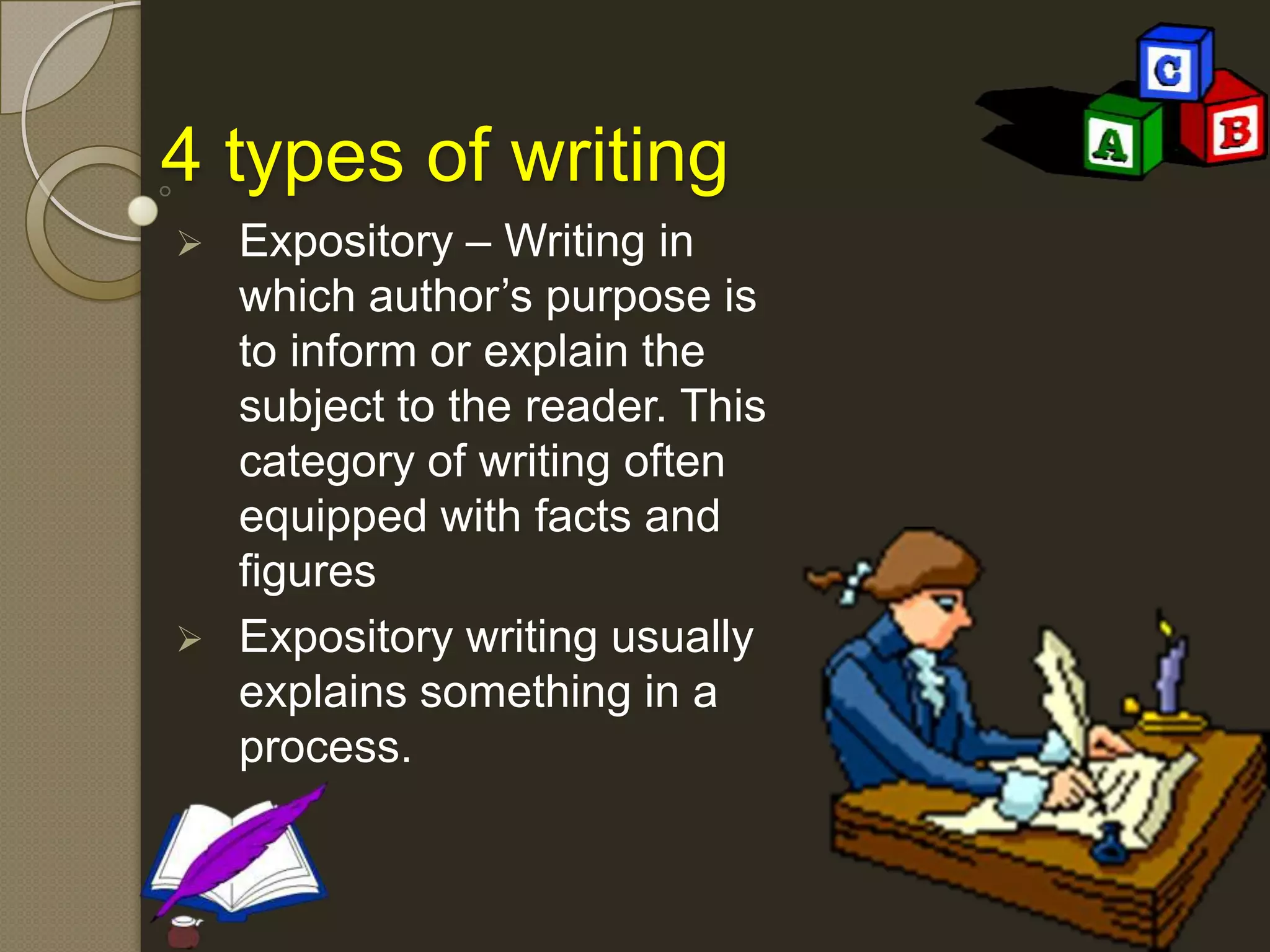
 Expository – Writing in
which author’s purpose is
to inform or explain the
subject to the reader. This
category of writing often
equipped with facts and
figures
 Expository writing usually
explains something in a
process.
4 types of writing
Persuasive – Writing that states the
opinion of the writer and attempts to
influence the reader. E.g complain
letters.
 Persuasive writing is equipped with
reasons, arguments and
justifications.
 In persuasive writing, the author
takes a stand and asks you to believe
his point of view.
4 types of writing
 Narrative-writing is an art to
describe a story author places
himself as the character and
narrates you to the story. E.g
Novels, short stories, poetry.
 Narrative writing has characters
and dialogues in it.
 Narrative writing often has
situations like disputes, conflicts,
actions, motivational events,
problems and their solutions.
4 types of writing
Descriptive-writing is used to
create a vivid picture of an idea,
place or person. It is much like
painting with words.
E.g In descriptive writing, the
author will not just say: “The
vampire killed his lover”
“The red-eyed, bloody vampire,
flushed his rusty teeth into the
soft skin of his lover, and ended
her life.”
How one can improve his/her
writing skills
There are many ways one can improve his/her
writing skills.
1.Daily dairy writing may improve your writing
skill as well as memory as you describe how
you spent the day.
2.Choosing very ordinary topics and writing on
them may improve your writing skill as well as
creative skills.
3.Read a passage from a book and then try to
reproduce it in your own words.
4.Read a good writer well and note his/her style
then try to copy their style.
How one can improve his/her
writing skills
These are the two
basic principles to
improve the writing
skills,
 read, read and
read.
 Write, write and
write.
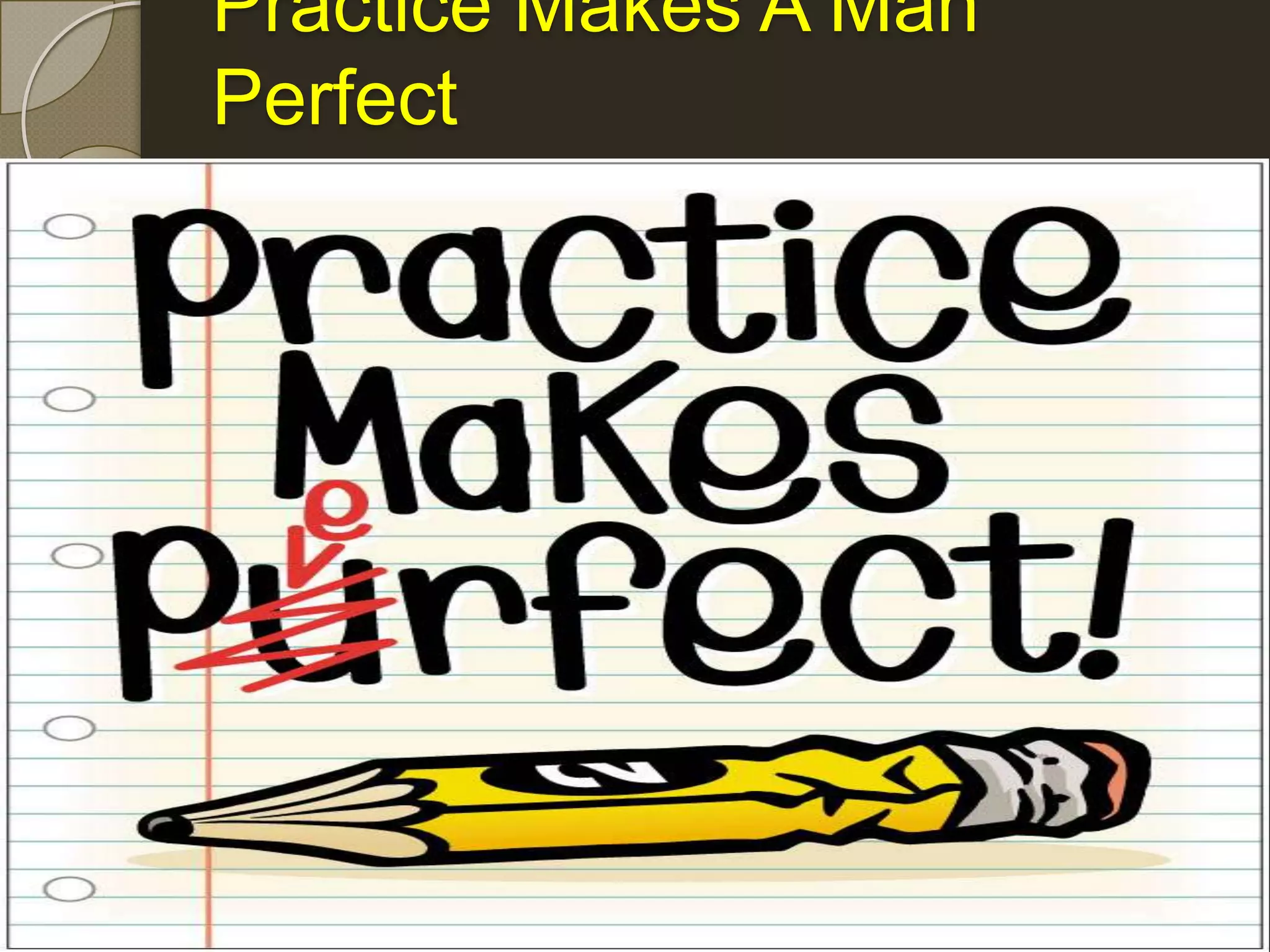
Practice Makes A Man
Perfect
Writting skills
Writting skills

Writting skills

  • 2.
    WRITING SKILLS PRESENTTED BY: MUHAMMADAZAZ #0331-8788660 DEPARTMENT OF GEOGRAPHY GC UNIVERSITY FAISALABAD
  • 4.
    Outline  Definition ofwriting  History of writing I. Mesopotamia II. Elamite scripts  Process of writing  4 Types of writing  How one can improve his/her writing skills
  • 5.
    “A writer doesn'tsolve problems. He or she allows them to emerge.” Friedrich Dürrenmatt
  • 6.
    Definition To communicate specificinformation or ideas, utilizing the formats, language, and content relevant to the workplace.
  • 7.
    History of writing Mesopotamia(8000 BC) o Cuneiform: the oldest form of writing. o Signs imprinted on clay with wedge shaped stylus o count their agricultural and manufactured goods.
  • 8.
  • 9.
    Elamite scripts Over thecenturies, two distinct Elamite scripts developed  Proto-Elamite-is the oldest known writing system from Iran.  It was used during a brief period of time (ca. 3200 – 2900 BC)  The Proto-Elamite script consists of more than 1,000 signs.  The Elamite Cuneiform script was used from about 2500 to 331 BC. adapted from the Akkadian people and contain about 130 symbols.
  • 10.
    Writing process isbased on SIX steps,  PREWRITING THINK  DRAFTING WRITE  REVISING MAKE IT BETTER  PROOFREADING MAKE IT CORRECT  EVALUATING  PUBLISHING
  • 11.
    PREWRITING THINK  Decideon a topic to write about.  Brainstorm ideas about the subject.  Do your research. DRAFTING WRITE  Put the information you researched into your own words.  Write sentences and paragraphs even if they are not perfect.  Read what you have written and judge if it says what you mean.  Show it to others and ask for suggestions.
  • 12.
    REVISING MAKE IT BETTER Read what you have written again.  Think about what others said about it.  Rearrange words or sentences.  Take out or add parts.  Replace overused or unclear words.  Read your writing aloud to be sure it flows smoothly.
  • 13.
    PROOFREADING MAKE IT CORRECT Be sure all sentences are complete.  Correct spelling, capitalization, and punctuation.  Change words that are not used correctly. Have someone check your work.  Recopy it correctly and neatly.
  • 14.
    PUBLISHING SHARE THE FINISHED PRODUCT Read your writing aloud to a group.  Create a book of your work.  Send a copy to a friend or relative.  Put your writing on display.  Illustrate, perform, or set your creation to music.  Congratulate yourself on a job well done!
  • 16.
    4 types ofwriting  Expository – Writing in which author’s purpose is to inform or explain the subject to the reader. This category of writing often equipped with facts and figures  Expository writing usually explains something in a process.
  • 17.
    4 types ofwriting Persuasive – Writing that states the opinion of the writer and attempts to influence the reader. E.g complain letters.  Persuasive writing is equipped with reasons, arguments and justifications.  In persuasive writing, the author takes a stand and asks you to believe his point of view.
  • 18.
    4 types ofwriting  Narrative-writing is an art to describe a story author places himself as the character and narrates you to the story. E.g Novels, short stories, poetry.  Narrative writing has characters and dialogues in it.  Narrative writing often has situations like disputes, conflicts, actions, motivational events, problems and their solutions.
  • 19.
    4 types ofwriting Descriptive-writing is used to create a vivid picture of an idea, place or person. It is much like painting with words. E.g In descriptive writing, the author will not just say: “The vampire killed his lover” “The red-eyed, bloody vampire, flushed his rusty teeth into the soft skin of his lover, and ended her life.”
  • 20.
    How one canimprove his/her writing skills There are many ways one can improve his/her writing skills. 1.Daily dairy writing may improve your writing skill as well as memory as you describe how you spent the day. 2.Choosing very ordinary topics and writing on them may improve your writing skill as well as creative skills. 3.Read a passage from a book and then try to reproduce it in your own words. 4.Read a good writer well and note his/her style then try to copy their style.
  • 21.
    How one canimprove his/her writing skills These are the two basic principles to improve the writing skills,  read, read and read.  Write, write and write.
  • 22.
    Practice Makes AMan Perfect