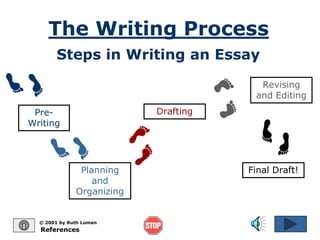
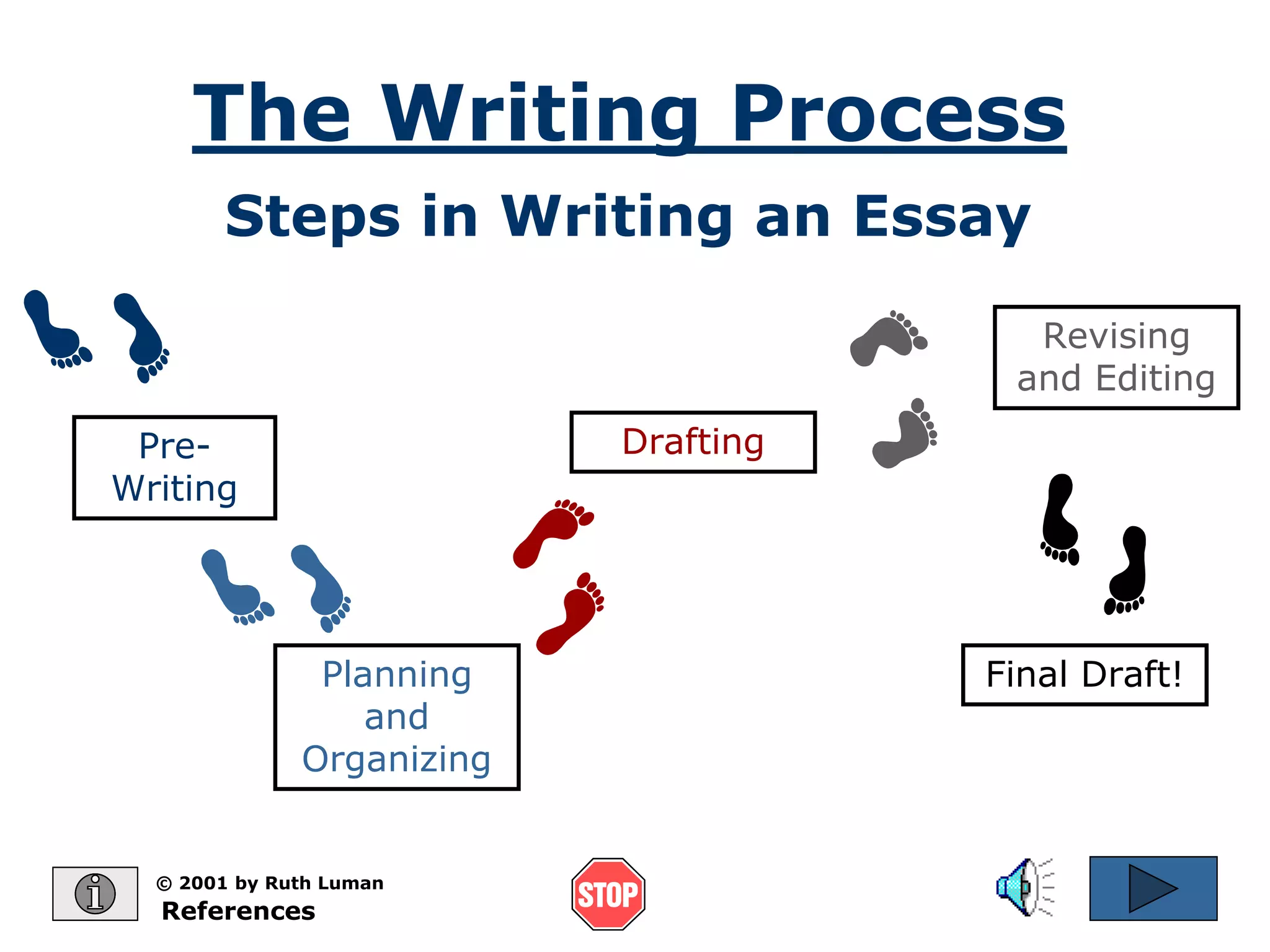
The Writing Process 
Steps in Writing an Essay 
Pre- 
Writing 
© 2001 by Ruth Luman 
References 
Planning 
and 
Organizing 
Drafting 
Revising 
and Editing 
Final Draft!
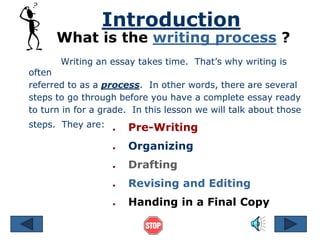
Introduction 
What is the writing process ? 
Writing an essay takes time. That’s why writing is 
often 
referred to as a process. In other words, there are several 
steps to go through before you have a complete essay ready 
to turn in for a grade. In this lesson we will talk about those 
steps. They are: 
● Pre-Writing 
● Organizing 
● Drafting 
● Revising and Editing 
● Handing in a Final Copy
Pre-Writing 
Step One 
Pre-writing literally means, “before writing.” Before 
you 
actually begin writing your essay, you will need to do the 
following things: 
● choose a topic to write on 
● brainstorm or generate ideas for 
your topic 
● focus in on central ideas
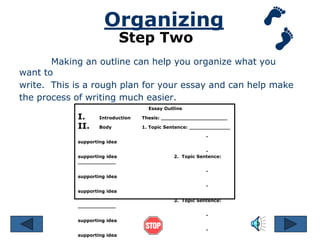
Organizing 
Step Two 
Making an outline can help you organize what you 
want to 
write. This is a rough plan for your essay and can help make 
the process of writing much easier. 
Essay Outline 
I. Introduction Thesis: _____________________ 
II. Body 1. Topic Sentence: _____________ 
- 
supporting idea 
- 
supporting idea 2. Topic Sentence: 
____________ 
- 
supporting idea 
- 
supporting idea 
3. Topic Sentence: 
____________ 
- 
supporting idea 
- 
supporting idea 
III.
Drafting 
Step Three 
After getting ideas and making an outline of your 
essay, 
it is time to start writing the essay. When you begin writing 
your rough draft, try to remember the following guidelines. 
● Don’t worry about writing the ‘perfect’ paper 
the first time. 
● Your goal in writing a rough draft is to develop 
and support the ideas listed in your outline. 
● Don’t focus on spelling and grammar as you 
write your rough draft. You can check 
this later 
in the writing process.
Revising and Editing 
Step Four 
After you write your first draft, go back over it and 
look for 
ways to improve your essay in content and organization. 
This step is called revision. After you revise for content and 
organization, begin editing your draft for spelling, grammar, 
punctuation, and sentence structure errors. 
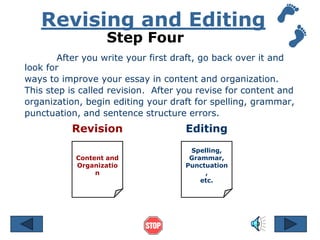
Revision Editing 
Content and 
Organizatio 
n 
Spelling, 
Grammar, 
Punctuation 
, 
etc.
The Final Copy 
Step Five 
The last step is turning in your essay to be graded. 
Look 
at the guidelines below for turning in the final draft of your 
essay. 
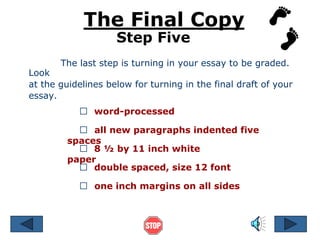
word-processed 
all new paragraphs indented five 
spaces 
8 ½ by 11 inch white 
paper 
double spaced, size 12 font 
one inch margins on all sides
Evaluation 
Now, you are ready to review what you’ve learned. Click on the button 
below to return to Unit A. Do the interactive exercise. Then click on 
the essay rubric link to see how your essay will be evaluated.
References 
●PowerPoint Presentation by Ruth Luman: Modesto 
Junior College. 
●Reid, J. (1993). Teaching ESL Writing. New 
Jersey: Prentice Hall Regents. 
●This project incorporates portions of copyrighted works. 
These items are included under the fair use exemption of the 
U.S. Copyright Law and have been prepared according to the 
educational fair use guidelines. They are restricted from 
further use.

Writing process.ppt

  • 1.
    The Writing Process Steps in Writing an Essay Pre- Writing © 2001 by Ruth Luman References Planning and Organizing Drafting Revising and Editing Final Draft!
  • 2.
    Introduction What isthe writing process ? Writing an essay takes time. That’s why writing is often referred to as a process. In other words, there are several steps to go through before you have a complete essay ready to turn in for a grade. In this lesson we will talk about those steps. They are: ● Pre-Writing ● Organizing ● Drafting ● Revising and Editing ● Handing in a Final Copy
  • 3.
    Pre-Writing Step One Pre-writing literally means, “before writing.” Before you actually begin writing your essay, you will need to do the following things: ● choose a topic to write on ● brainstorm or generate ideas for your topic ● focus in on central ideas
  • 4.
    Organizing Step Two Making an outline can help you organize what you want to write. This is a rough plan for your essay and can help make the process of writing much easier. Essay Outline I. Introduction Thesis: _____________________ II. Body 1. Topic Sentence: _____________ - supporting idea - supporting idea 2. Topic Sentence: ____________ - supporting idea - supporting idea 3. Topic Sentence: ____________ - supporting idea - supporting idea III.
  • 5.
    Drafting Step Three After getting ideas and making an outline of your essay, it is time to start writing the essay. When you begin writing your rough draft, try to remember the following guidelines. ● Don’t worry about writing the ‘perfect’ paper the first time. ● Your goal in writing a rough draft is to develop and support the ideas listed in your outline. ● Don’t focus on spelling and grammar as you write your rough draft. You can check this later in the writing process.
  • 6.
    Revising and Editing Step Four After you write your first draft, go back over it and look for ways to improve your essay in content and organization. This step is called revision. After you revise for content and organization, begin editing your draft for spelling, grammar, punctuation, and sentence structure errors. Revision Editing Content and Organizatio n Spelling, Grammar, Punctuation , etc.
  • 7.
    The Final Copy Step Five The last step is turning in your essay to be graded. Look at the guidelines below for turning in the final draft of your essay. word-processed all new paragraphs indented five spaces 8 ½ by 11 inch white paper double spaced, size 12 font one inch margins on all sides
  • 8.
    Evaluation Now, youare ready to review what you’ve learned. Click on the button below to return to Unit A. Do the interactive exercise. Then click on the essay rubric link to see how your essay will be evaluated.
  • 9.
    References ●PowerPoint Presentationby Ruth Luman: Modesto Junior College. ●Reid, J. (1993). Teaching ESL Writing. New Jersey: Prentice Hall Regents. ●This project incorporates portions of copyrighted works. These items are included under the fair use exemption of the U.S. Copyright Law and have been prepared according to the educational fair use guidelines. They are restricted from further use.