WORLD CLASS MANUAFACTURING
FUNDAMENTALS
PHILOSOPHIES
ENABLERS
10 PILLARS
ENGLISH
WORLD CLASS MANUFACTURING
WCM is a management concept, which can be translated as a production on a global level.
✔ WCM is a continuous improvement system. It is a way of thinking which was made to bring organization
manufacturing on a worldwide level.
✔ WCM is a set of concepts, policies, techniques, and principles for operating and managing a manufacturing company.
▪ Reduce wastage and losses
▪ Improve the standards and methods
▪ Involve all employees in the process of continuous improvement
The fundamental principles of WCM are;
"No procedure is flawless. There is consistently a place for improvement".
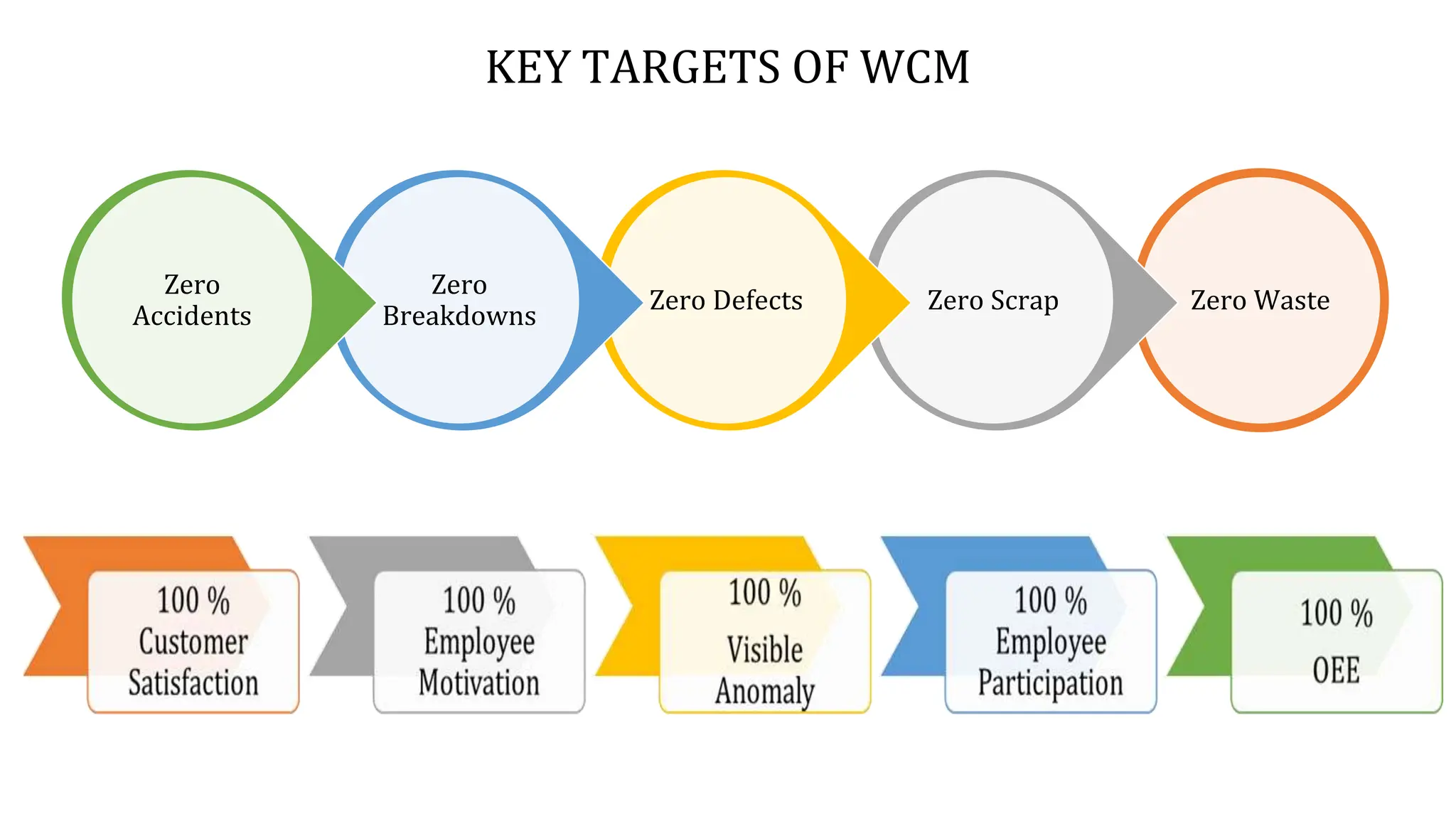
KEY TARGETS OF WCM
Zero Waste
Zero Scrap
Zero Defects
Zero
Breakdowns
Zero
Accidents
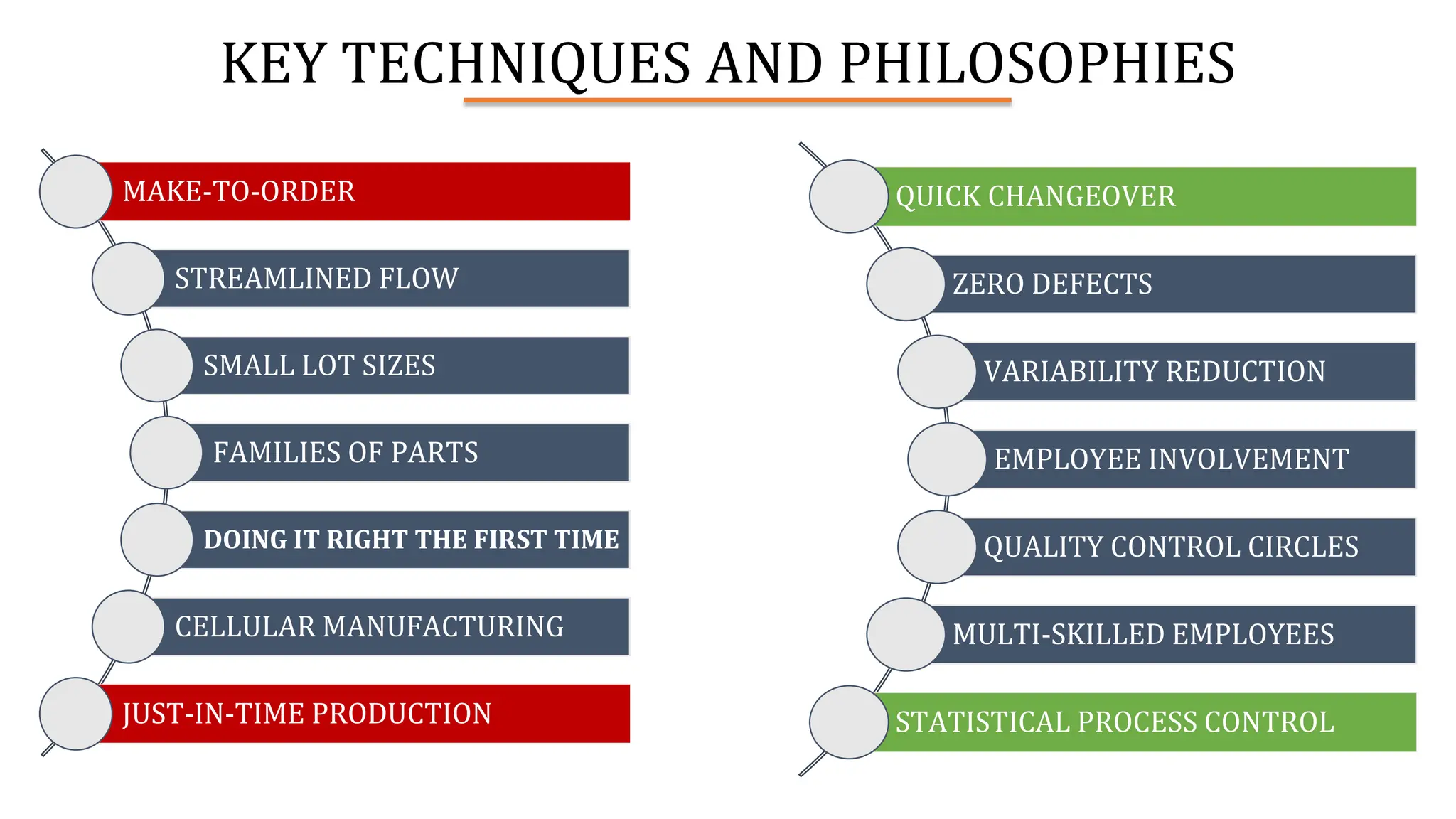
KEY TECHNIQUES AND PHILOSOPHIES
MAKE-TO-ORDER
STREAMLINED FLOW
SMALL LOT SIZES
FAMILIES OF PARTS
DOING IT RIGHT THE FIRST TIME
CELLULAR MANUFACTURING
JUST-IN-TIME PRODUCTION
QUICK CHANGEOVER
ZERO DEFECTS
VARIABILITY REDUCTION
EMPLOYEE INVOLVEMENT
QUALITY CONTROL CIRCLES
MULTI-SKILLED EMPLOYEES
STATISTICAL PROCESS CONTROL
Voice of the customer is heard to the last level in the
organization
People are the driving force of change
Motivating environment
All faults are visible
Continuous improvement through loss eradication
No type of waste is accepted
Methods for improvements are applied strictly
KEY RULES
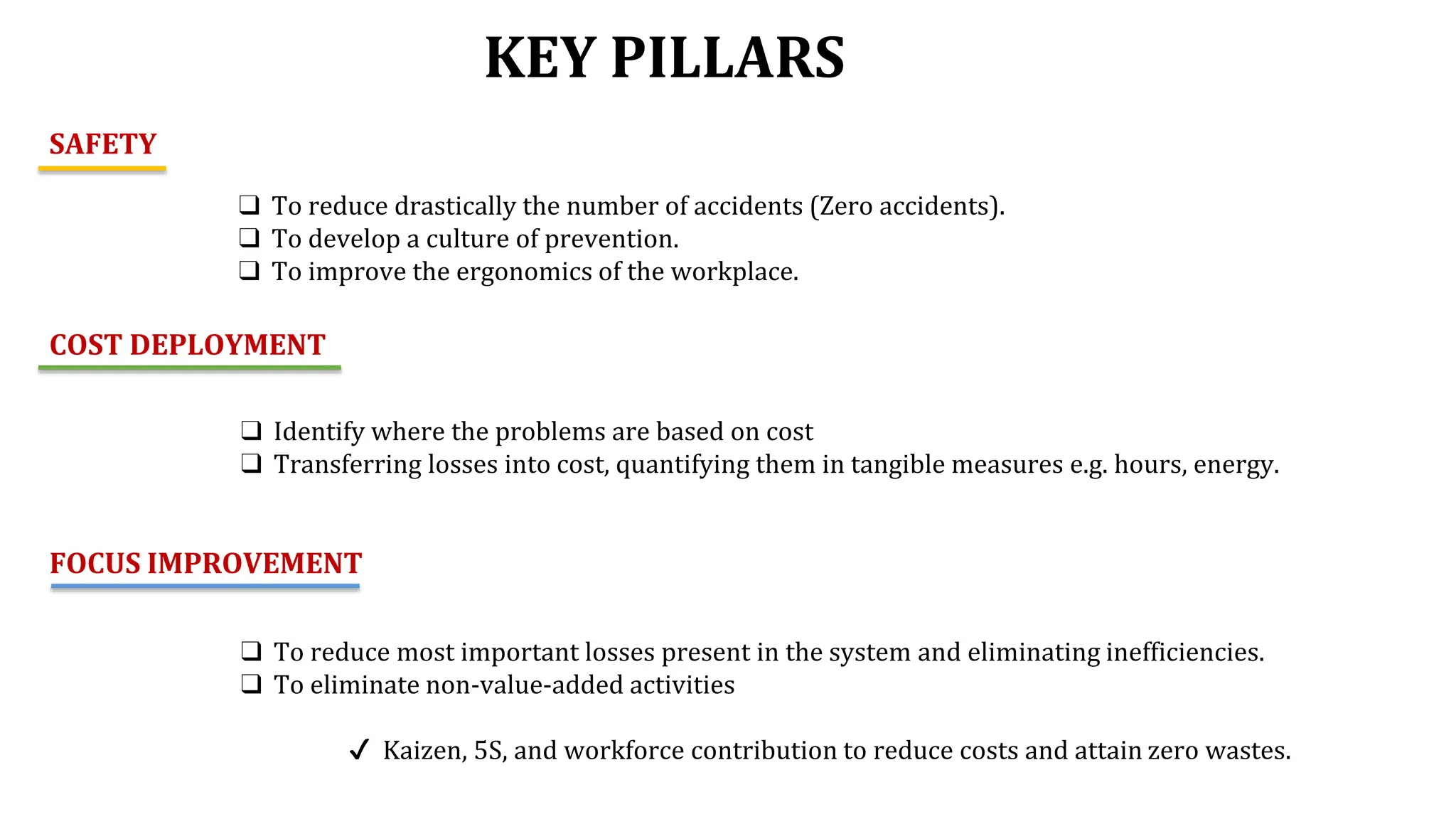
KEY PILLARS
❑ To reduce drastically the number of accidents (Zero accidents).
❑ To develop a culture of prevention.
❑ To improve the ergonomics of the workplace.
❑ Identify where the problems are based on cost
❑ Transferring losses into cost, quantifying them in tangible measures e.g. hours, energy.
❑ To reduce most important losses present in the system and eliminating inefficiencies.
❑ To eliminate non-value-added activities
✔ Kaizen, 5S, and workforce contribution to reduce costs and attain zero wastes.
SAFETY
COST DEPLOYMENT
FOCUS IMPROVEMENT
AUTONOMOUS MAINTENANCE
❑ Implement a reliable maintenance model to increase equipment availability and reliability.
❑ Increasing the life cycle of machines through maintenance practices (attain zero breakdowns with
maintenance team)
❑ To ensure quality products with zero defects.
❑ To reduce non-compliance.
❑ To increase the skills of the employees.
❑ Maintain the basic conditions & perform maintenance tasks of machines and equipment by the operators.
❑ Operators can perform basic maintenance work on the equipment.
QUALITY CONTROL
PROFESSIONAL MAINTENANCE
KEY PILLARS
❑ Ensure customers are satisfied through continuous flow of materials and attaining zero shortages
❑ To reduce significantly the levels of stocks.
❑ To minimize the material handling, even with direct deliveries from suppliers to the assembly line.
❑ To put in place new plants as scheduled.
❑ To ensure a rapid start-up and stability.
❑ To reduce the Life Cycle Cost (LCC).
❑ To design systems easily maintained and inspected.
❑ To ensure, through a structured system of training, correct skills and abilities for each workstation.
❑ Extinguishing human errors, developing employees in high-level techniques, making autonomous
maintenance occur, obtaining good results in process control, motivating and involving people;
LOGISTICS AND CUSTOMER SERVICE
EARLY EQUIPMENT MANAGEMENT
PEOPLE DEVELOPMENT
KEY PILLARS
❑ To comply with the requirements and standards of environmental management.
❑ To develop an energy culture and to reduce the energy costs and losses.
ENVIRONMENT
KEY PILLARS
Watch You-Tube video tutorial of this ppt explaining all the concepts by clicking
below links
https://youtu.be/iXPqs4d0P9E
https://youtu.be/tUUCLjOpPSk
English
Urdu

World Class Manufacturing.pptx

  • 1.
  • 2.
    WORLD CLASS MANUFACTURING WCMis a management concept, which can be translated as a production on a global level. ✔ WCM is a continuous improvement system. It is a way of thinking which was made to bring organization manufacturing on a worldwide level. ✔ WCM is a set of concepts, policies, techniques, and principles for operating and managing a manufacturing company. ▪ Reduce wastage and losses ▪ Improve the standards and methods ▪ Involve all employees in the process of continuous improvement The fundamental principles of WCM are; "No procedure is flawless. There is consistently a place for improvement".
  • 3.
    KEY TARGETS OFWCM Zero Waste Zero Scrap Zero Defects Zero Breakdowns Zero Accidents
  • 4.
    KEY TECHNIQUES ANDPHILOSOPHIES MAKE-TO-ORDER STREAMLINED FLOW SMALL LOT SIZES FAMILIES OF PARTS DOING IT RIGHT THE FIRST TIME CELLULAR MANUFACTURING JUST-IN-TIME PRODUCTION QUICK CHANGEOVER ZERO DEFECTS VARIABILITY REDUCTION EMPLOYEE INVOLVEMENT QUALITY CONTROL CIRCLES MULTI-SKILLED EMPLOYEES STATISTICAL PROCESS CONTROL
  • 5.
    Voice of thecustomer is heard to the last level in the organization People are the driving force of change Motivating environment All faults are visible Continuous improvement through loss eradication No type of waste is accepted Methods for improvements are applied strictly KEY RULES
  • 6.
    KEY PILLARS ❑ Toreduce drastically the number of accidents (Zero accidents). ❑ To develop a culture of prevention. ❑ To improve the ergonomics of the workplace. ❑ Identify where the problems are based on cost ❑ Transferring losses into cost, quantifying them in tangible measures e.g. hours, energy. ❑ To reduce most important losses present in the system and eliminating inefficiencies. ❑ To eliminate non-value-added activities ✔ Kaizen, 5S, and workforce contribution to reduce costs and attain zero wastes. SAFETY COST DEPLOYMENT FOCUS IMPROVEMENT
  • 7.
    AUTONOMOUS MAINTENANCE ❑ Implementa reliable maintenance model to increase equipment availability and reliability. ❑ Increasing the life cycle of machines through maintenance practices (attain zero breakdowns with maintenance team) ❑ To ensure quality products with zero defects. ❑ To reduce non-compliance. ❑ To increase the skills of the employees. ❑ Maintain the basic conditions & perform maintenance tasks of machines and equipment by the operators. ❑ Operators can perform basic maintenance work on the equipment. QUALITY CONTROL PROFESSIONAL MAINTENANCE KEY PILLARS
  • 8.
    ❑ Ensure customersare satisfied through continuous flow of materials and attaining zero shortages ❑ To reduce significantly the levels of stocks. ❑ To minimize the material handling, even with direct deliveries from suppliers to the assembly line. ❑ To put in place new plants as scheduled. ❑ To ensure a rapid start-up and stability. ❑ To reduce the Life Cycle Cost (LCC). ❑ To design systems easily maintained and inspected. ❑ To ensure, through a structured system of training, correct skills and abilities for each workstation. ❑ Extinguishing human errors, developing employees in high-level techniques, making autonomous maintenance occur, obtaining good results in process control, motivating and involving people; LOGISTICS AND CUSTOMER SERVICE EARLY EQUIPMENT MANAGEMENT PEOPLE DEVELOPMENT KEY PILLARS
  • 9.
    ❑ To complywith the requirements and standards of environmental management. ❑ To develop an energy culture and to reduce the energy costs and losses. ENVIRONMENT KEY PILLARS Watch You-Tube video tutorial of this ppt explaining all the concepts by clicking below links https://youtu.be/iXPqs4d0P9E https://youtu.be/tUUCLjOpPSk English Urdu