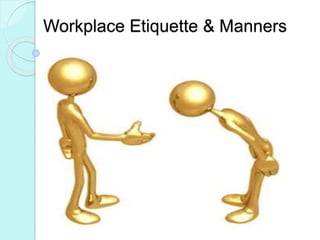
Workplace Etiquette & Manners
Definition of Etiquette
 Etiquette - rules governing socially
acceptable behavior.
 The practices and forms prescribed by
social convention or by authority.
 The word “Etiquette” is derived from
French which actually means “ Ticket".
your ticket to getting anything & any
place you want.
 It is defined as a good behavior which
distinguishes human beings from
Animals
The why’s of Etiquette?
 To avoid negative confrontation
 To avoid politics, i.e., in the office or
work place
 To communicate effectively with an
opposing opinion of another person(s).
 To be organized and in a uniformed
way.
 Avoid work-place tension / Conflicts
 To avoid employee stress
 Avoid
misunderstandings
 Employee job
satisfaction
 Increase productivity
 Get the job done
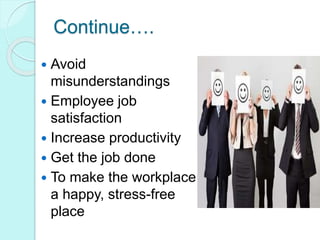
 To make the workplace
a happy, stress-free
place
Continue….
Etiquette Basics
Behavior:
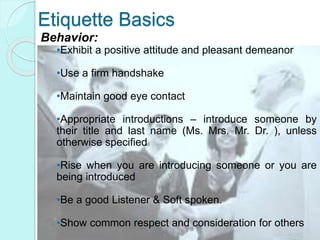
•Exhibit a positive attitude and pleasant demeanor
•Use a firm handshake
•Maintain good eye contact
•Appropriate introductions – introduce someone by
their title and last name (Ms. Mrs. Mr. Dr. ), unless
otherwise specified
•Rise when you are introducing someone or you are
being introduced
•Be a good Listener & Soft spoken.
•Show common respect and consideration for others
Sensory reminders of how to get
along in the workplace
 Monitor the volume of conversations
 Keep personal telephone conversations
and emails to a minimum
 Maintain privacy - keep all workplace
conversations professional
 Avoid interruptions
 Use appropriate tone
of Voice
• Find out what the organization values, philosophy
of conducting Business , work ethic etc .
Continue…..
 Remove slang terms
and use good listening
skills
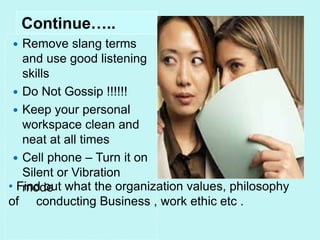
 Do Not Gossip !!!!!!
 Keep your personal
workspace clean and
neat at all times
 Cell phone – Turn it on
Silent or Vibration
mode
Making a positive impression
–
• Arrive on time
• Remember your manners
• Be ready to learn , adapt & change
• Exercise professional maturity by showing
good judgment & build good relationship
• Show a healthy respect for your colleague’s
experience & expertise
• Do not laugh at others weakness
• Respond properly to your co-workers,
supervisor & clients.
• Proper posture is important.
Continue……..
 “PLEASE & THANK YOU” use it often
 Willingness to help
 Mutual respect & Punctuality
 Teamwork
 Show appreciation & give credits for job
well done
 Treat everyone equally
 Try not to step on anyone’s toes, or hurt
anyone’s feelings
 Be Kind, Be Courteous, Be Respectful
Continue……
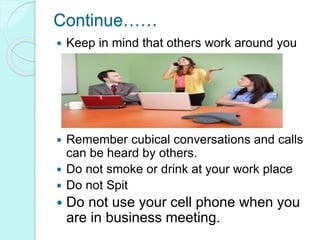
 Keep in mind that others work around you
 Remember cubical conversations and calls
can be heard by others.
 Do not smoke or drink at your work place
 Do not Spit
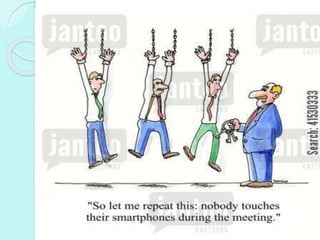
 Do not use your cell phone when you
are in business meeting.
Thank you
Whatever you do just do it with
all your heart…..

Workplace etiquette & manners

  • 1.
  • 2.
    Definition of Etiquette Etiquette - rules governing socially acceptable behavior.  The practices and forms prescribed by social convention or by authority.  The word “Etiquette” is derived from French which actually means “ Ticket". your ticket to getting anything & any place you want.  It is defined as a good behavior which distinguishes human beings from Animals
  • 3.
    The why’s ofEtiquette?  To avoid negative confrontation  To avoid politics, i.e., in the office or work place  To communicate effectively with an opposing opinion of another person(s).  To be organized and in a uniformed way.  Avoid work-place tension / Conflicts  To avoid employee stress
  • 4.
     Avoid misunderstandings  Employeejob satisfaction  Increase productivity  Get the job done  To make the workplace a happy, stress-free place Continue….
  • 5.
    Etiquette Basics Behavior: •Exhibit apositive attitude and pleasant demeanor •Use a firm handshake •Maintain good eye contact •Appropriate introductions – introduce someone by their title and last name (Ms. Mrs. Mr. Dr. ), unless otherwise specified •Rise when you are introducing someone or you are being introduced •Be a good Listener & Soft spoken. •Show common respect and consideration for others
  • 6.
    Sensory reminders ofhow to get along in the workplace  Monitor the volume of conversations  Keep personal telephone conversations and emails to a minimum  Maintain privacy - keep all workplace conversations professional  Avoid interruptions  Use appropriate tone of Voice
  • 7.
    • Find outwhat the organization values, philosophy of conducting Business , work ethic etc . Continue…..  Remove slang terms and use good listening skills  Do Not Gossip !!!!!!  Keep your personal workspace clean and neat at all times  Cell phone – Turn it on Silent or Vibration mode
  • 8.
    Making a positiveimpression – • Arrive on time • Remember your manners • Be ready to learn , adapt & change • Exercise professional maturity by showing good judgment & build good relationship • Show a healthy respect for your colleague’s experience & expertise • Do not laugh at others weakness • Respond properly to your co-workers, supervisor & clients. • Proper posture is important.
  • 9.
    Continue……..  “PLEASE &THANK YOU” use it often  Willingness to help  Mutual respect & Punctuality  Teamwork  Show appreciation & give credits for job well done  Treat everyone equally  Try not to step on anyone’s toes, or hurt anyone’s feelings  Be Kind, Be Courteous, Be Respectful
  • 10.
    Continue……  Keep inmind that others work around you  Remember cubical conversations and calls can be heard by others.  Do not smoke or drink at your work place  Do not Spit  Do not use your cell phone when you are in business meeting.
  • 12.
    Thank you Whatever youdo just do it with all your heart…..