1. define workethics;
2. enumerate characteristics needed in developing
good work ethics;
3. get oriented on the different work ethics; and
4. practice good work ethics.
Learning Objectives
3.
Imagine you arean employer of a company. There are two
applicants left after previous screenings. But you need only
one to fill in the vacant position. Whom are you going to
choose? Is it the applicant with very good credentials besides
being an honor graduate, but during the interview, he
appears to be arrogant as seen on his ways or actions; or is
it the other applicant who is just an ordinary graduate but
seems to be humble and sincere as what is projected in the
interview?
4.
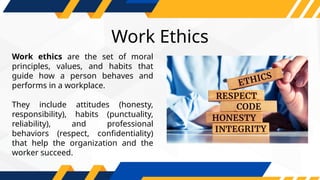
Work ethics arethe set of moral
principles, values, and habits that
guide how a person behaves and
performs in a workplace.
They include attitudes (honesty,
responsibility), habits (punctuality,
reliability), and professional
behaviors (respect, confidentiality)
that help the organization and the
worker succeed.
Work Ethics
5.
In short:
work ethics= values + behaviours that
show you’re dependable, responsible, and
professional at work.
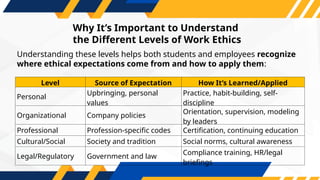
6.
1.Noncompliance with therules and regulations
2.Harassment to fellow employees
3.Theft or stealing
4.Utterance of offensive language
5.Negligence of the responsibility
6.Troublemakers or frequent cause of conflict
7.Grievous offenses
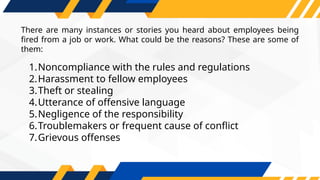
There are many instances or stories you heard about employees being
fired from a job or work. What could be the reasons? These are some of
them:
Work ethics arethe moral principles and values that
guide an individual’s behavior in a professional
environment. They shape how people perform their
duties, treat others, and contribute to the success of
an organization. Having strong work ethics does not
only make a person more employable but also helps
them gain respect, trust, and long-term success in
their chosen field. Below are the key characteristics
that build a solid foundation for good work ethics,
along with explanations and examples.
9.
Honesty
In the workplace,honesty builds trust and
credibility. When employers and colleagues
know they can rely on you to tell the truth, it
strengthens teamwork and integrity in the
organization.
Example: Returning a lost wallet, gadget, or
amount of money found in the workplace
instead of keeping it. Admitting mistakes in a
project rather than covering them up shows
maturity and honesty.
Why It Matters: Without honesty,
relationships in the workplace weaken, and
credibility is lost. Employers prefer workers
they can trust to do what is right even when
no one is watching.
Honesty is the cornerstone of good
work ethics. It involves telling the
truth, being transparent in your
actions, and taking responsibility
for your words and decisions. An
honest worker does not lie about
attendance, manipulate reports, or
take credit for someone else’s
work.
10.
Punctuality and Attendance
Beingon time and present are basic yet vital signs of professionalism and
respect for others. It demonstrates that you value time — your own and that of
others.
Punctuality means arriving on time or even earlier to prepare for work,
meetings, or appointments. Regular attendance shows commitment and
reliability.
Example: Arriving 10–15 minutes early before a scheduled shift or meeting;
consistently meeting deadlines for reports and tasks.
Why It Matters: Chronic lateness or absenteeism can disrupt workflow and
show a lack of responsibility. Punctual workers earn a reputation for being
dependable and disciplined.
11.
Reliability and Accountability
Reliabilitymeans being consistent and dependable, while accountability means
accepting responsibility for your actions, both good and bad.
Reliable workers complete their tasks efficiently and accurately even without
constant supervision. Being accountable means acknowledging your mistakes and
taking steps to correct them.
Example: If you miss a deadline, you apologize, explain the cause, and offer to work
extra hours to complete the task.
Why It Matters: Employers value employees who can be trusted to perform well
without being reminded. Accountability also creates a culture of ownership and
continuous improvement.
12.
Integrity and Loyalty
Integrityinvolves always doing the right thing, even when no one is watching, while
loyalty means showing dedication and faithfulness to your organization and its
goals.
Workers with integrity avoid dishonesty and unethical behavior. Loyalty means
supporting your team, respecting confidentiality, and not spreading gossip or
private company matters.
Example: Not sharing confidential business information or company strategies with
outsiders. Remaining committed to your organization even during challenging
times.
Why It Matters: Integrity and loyalty create mutual trust between employees and
employers. They also enhance the company’s reputation and strengthen workplace
relationships.
13.
Professionalism
A professional workerunderstands that how
they act, speak, and look reflects their
competence and the organization’s image.
They know when to seek help and how to
interact courteously with others.
Example: Wearing the proper uniform, using
polite language, greeting colleagues
respectfully, and avoiding rude or offensive
behavior.
Why It Matters: Professionalism builds
respect and promotes a healthy, productive
work environment where everyone feels
valued.
Professionalism refers to the way an
individual conducts themselves at
work. It includes dressing
appropriately, communicating
respectfully, and maintaining good
manners and ethics.
14.
Teamwork and Cooperation
Noworkplace thrives on individual effort alone. Teamwork is the ability to
collaborate and contribute positively with others to achieve common goals.
Cooperation involves respecting different opinions, sharing tasks, and helping
teammates when needed. Effective teamwork leads to better results and stronger
workplace relationships.
Example: Assisting a co-worker to meet a tight deadline or brainstorming ideas
together to solve a problem.
Why It Matters: Working well with others shows maturity, flexibility, and respect —
qualities that employers highly value. Team players often inspire trust and foster
unity in the workplace.
15.
Commitment to Excellence
Commitmentto excellence means striving to do your best at all times — not
just doing what’s required, but exceeding expectations whenever possible.
This involves paying attention to detail, taking pride in your work, and always
looking for ways to improve. It’s about setting high standards for yourself.
Example: Reviewing your work before submission to ensure accuracy and
quality; volunteering to take additional tasks that contribute to the team’s
success.
Why It Matters: Workers who are committed to excellence drive innovation
and quality. They become role models and are often rewarded with growth
opportunities.
16.
Productivity and TimeManagement
Time management is the skill of organizing and prioritizing tasks to make the
most of working hours. Productivity means accomplishing more in less time
without sacrificing quality.
Good time management prevents procrastination and helps balance multiple
responsibilities. Productive workers avoid distractions and focus on achieving
results.
Example: Creating a daily to-do list, setting deadlines, and avoiding excessive
phone use, gossip, or idle talk during work hours.
Why It Matters: Managing time effectively increases output, reduces stress,
and helps you maintain a good work-life balance.
17.
Right Attitude andPositivity
Having a positive attitude means maintaining optimism, respect, and openness
to learning — even during difficult situations.
A positive worker accepts constructive criticism, remains polite under pressure,
and approaches new challenges with enthusiasm.
Example: Responding to feedback by improving instead of arguing, smiling
and greeting co-workers cheerfully, and showing willingness to accept new
assignments.
Why It Matters: A positive mindset encourages cooperation, boosts morale,
and makes the workplace more enjoyable and productive.
18.
Focus and Discipline
Focusmeans concentrating on what needs to be done, while discipline is the
ability to control impulses and maintain consistent performance.
Disciplined workers stay organized, follow rules, and do not let personal issues
interfere with their professional responsibilities. They finish what they start and
continuously aim for improvement.
Example: Ignoring distractions like social media during work hours, staying
committed to tasks until they are completed accurately.
Why It Matters: Focus and discipline lead to efficiency, reliability, and
consistent success in one’s career.
19.
Developing good workethics is not just about following
company rules; it’s about building character,
responsibility, and integrity that will guide you
throughout your professional life. A person with strong
work ethics — who is honest, punctual, reliable,
professional, loyal, cooperative, committed,
productive, positive, focused, and disciplined —
becomes an asset to any organization.
20.
As a student,what do you think are the importance of having a
credentials in getting a job?
_____________________________________________________
___________________________________
_____________________________________________________
___________________________________
_____________________________________________________
___________________________________
Work ethics arenot just about individual behavior —
they exist at different levels that influence how
people and organization's function. Understanding
these levels helps trainees, employees, and employers
know where certain expectations come from and how
to apply them properly. Each level represents a
different source of ethical guidance — from personal
values to legal obligations.
23.
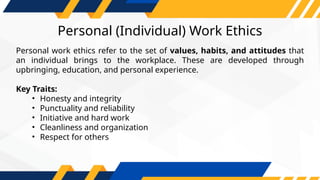
Personal (Individual) WorkEthics
Personal work ethics refer to the set of values, habits, and attitudes that
an individual brings to the workplace. These are developed through
upbringing, education, and personal experience.
Key Traits:
• Honesty and integrity
• Punctuality and reliability
• Initiative and hard work
• Cleanliness and organization
• Respect for others
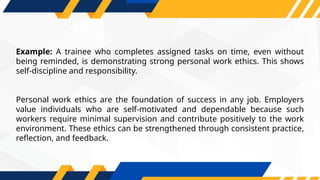
24.
Example: A traineewho completes assigned tasks on time, even without
being reminded, is demonstrating strong personal work ethics. This shows
self-discipline and responsibility.
Personal work ethics are the foundation of success in any job. Employers
value individuals who are self-motivated and dependable because such
workers require minimal supervision and contribute positively to the work
environment. These ethics can be strengthened through consistent practice,
reflection, and feedback.
25.
Organizational (Company) Ethics/ Code
of Conduct
Organizational ethics refer to the formal rules, standards, and principles
established by a company to guide the behavior of its employees. These are
usually written in a Code of Conduct or Employee Handbook.
Common Examples:
Anti-harassment and anti-discrimination policies
Confidentiality and data privacy rules
Dress codes and professional behavior guidelines
Conflict of interest and honesty in reporting
Compliance with company mission and values
26.
Example: A companymay have a policy that forbids employees from
sharing customer data with outsiders or using office resources for personal
gain.
Organizational ethics ensure that everyone in the company follows a
consistent standard of behavior. This promotes fairness, accountability, and
a positive workplace culture. Training programs and management
leadership play important roles in helping employees understand and follow
these ethical standards.
27.
Professional Ethics
Professional ethicsare the specialized moral standards and guidelines
that apply to specific professions. These rules are often developed and
monitored by professional organizations or governing bodies to ensure
that members maintain integrity, quality, and public trust.
Examples of Professions with Ethical Standards:
• Healthcare professionals: Must maintain patient confidentiality (e.g.,
doctors and nurses follow the “Patient Privacy” rule).
• Lawyers: Must uphold client confidentiality and avoid conflicts of
interest.
• Teachers: Must treat students fairly and act as role models of integrity.
• Engineers: Must ensure safety, honesty, and environmental
responsibility in their projects.
28.
Professional ethics ensurethat workers in specialized fields maintain the
reputation and credibility of their professions. Violating these standards can
lead to disciplinary actions such as suspension or loss of license.
29.
Cultural / SocialWork Ethics
Cultural or social work ethics refer to the broader beliefs and
values that a society holds about work, responsibility, and morality.
These influence how people view hard work, success, and duty.
Examples:
• The “Protestant work ethic” emphasizes diligence, discipline,
and frugality.
• In many Asian cultures, teamwork, respect for authority, and
loyalty to the company are highly valued.
• In Filipino culture, the “Bayanihan spirit” encourages
cooperation and helping others at work.
30.
Cultural ethics shapeworkplace expectations and employee behavior. While cultural
values vary among societies, they influence how people interpret responsibility and
fairness at work. For classroom and workplace immersion, the focus is usually on
personal and organizational ethics, but understanding the cultural context helps
students adapt better to different work environments.
31.
Legal / RegulatoryEthics
Legal or regulatory ethics involve the laws and government
rules that organizations and workers must follow to ensure
fairness, safety, and equality in the workplace.
Examples of Legal Requirements:
Labor laws (e.g., proper working hours, wages, and
benefits)
Occupational health and safety standards
Anti-discrimination and equal opportunity laws
Anti-harassment and gender equality regulations
Data privacy and intellectual property rights
32.
Example: Companies mustcomply with labor laws set by the Department of
Labor and Employment (DOLE) to ensure fair treatment of employees.
Legal ethics are not optional — they are mandatory. Violations can lead to
legal penalties, lawsuits, or closure of the business. Compliance training
helps workers understand their rights and responsibilities under the law.
33.
Why It’s Importantto Understand
the Different Levels of Work Ethics
Understanding these levels helps both students and employees recognize
where ethical expectations come from and how to apply them:
Level Source of Expectation How It’s Learned/Applied
Personal
Upbringing, personal
values
Practice, habit-building, self-
discipline
Organizational Company policies
Orientation, supervision, modeling
by leaders
Professional Profession-specific codes Certification, continuing education
Cultural/Social Society and tradition Social norms, cultural awareness
Legal/Regulatory Government and law
Compliance training, HR/legal
briefings
34.
Understanding these levelshelps students and workers know
how ethical expectations are formed and applied. Personal
ethics can be developed through habits, organizational
ethics through policies and leadership, and professional or
legal ethics through training and compliance.
In short, good work ethics are built when individuals combine
their personal discipline, follow organizational standards,
uphold professional integrity, respect cultural values, and
comply with legal responsibilities — creating a workplace that
is honest, safe, and productive for everyone.
#33 Each level reinforces the other. For instance, personal ethics influence how you follow organizational policies, while legal ethics ensure that both employees and employers act within the boundaries of the law.



![2018 Jun 29 [v] - Work Ethics for Professional Excellence - EEI [Please dow...](https://cdn.slidesharecdn.com/ss_thumbnails/2018jun29-v-workethicsforprofessionalexcellence-eei-180629135725-thumbnail.jpg?width=640&height=640&fit=bounds)


