What is wireless communication? 
• In layman language it is 
communication in which information 
is transferred between two or more 
points without any wire.
Modes of wireless communication! 
• Bluetooth 
• NFC (Near Field Communication) 
• Wifi 
• Lifi
What is Bluetooth? 
• Bluetooth is a method for data 
communication that used short 
range radio links to replace cables 
between computers and their 
connected units. 
• Named on – Danish king harald 
Bluetooth 
• Developed in Scandinavia.
How does Bluetooth works? 
• Bluetooth networking transmits data via low-power 
radio waves. It communicates on a 
frequency of 2.45 gigahertz. 
• Bluetooth doesn't require line of sight 
between communicating devices. 
• Bluetooth can connect up to eight 
devices simultaneously. 
• Bluetooth uses a technique called spread-spectrum 
frequency hopping
Bluetooth is essentially a networking 
standard that works at two levels: 
• It provides agreement at the physical level -- 
Bluetooth is a radio-frequency standard. 
• It provides agreement at the protocol level, 
where products have to agree on when bits 
are sent, how many will be sent at a time, and 
how the parties in a conversation can be sure 
that the message received is the same as the 
message sent.
Applications of bluetooth! 
• Bluetooth speakers 
• Bluetooth headphones 
• Cable less connections to the printers 
• Bluetooth keyboard 
• Etc
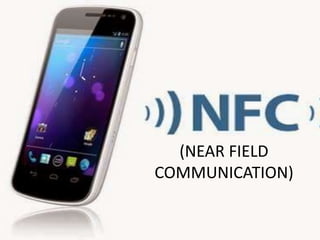
(NEAR FIELD 
COMMUNICATION)
What is NFC? 
• NFC is a short-range high frequency wireless 
communication technology that enables the 
exchange of data between devices over about 
a 10 cm distance. 
• It allows devices to establish peer-to-peer 
radio communications, passing data from one 
device to another by touching them or putting 
them very close together.
How NFC works? 
• NFC came out of RFID. RFID, or radio-frequency 
identification, is the technology used by superstores to 
keep track of goods, it uses electromagnetic induction 
in order to transmit information. NFC is similar 
technology, but standardized for consumer 
smartphones. 
• NFC is a means of sending data over radio waves. In 
that sense it is similar to Wi-Fi or Bluetooth, but unlike 
those protocols (and like RFID) NFC can be used to 
induce electric currents within passive components as 
well as just send data. And it is faster than Bluetooth.
Benefits over Bluetooth.. 
• The significant advantage of NFC over 
Bluetooth is the shorter set-up time. 
• Due to its shorter range, NFC provides a 
higher degree of security than Bluetooth and 
makes NFC suitable for crowded areas. 
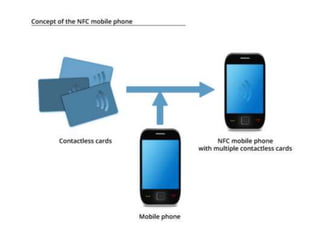
• NFC can also work when one of the devices is 
not powered by a battery. 
• Unlike Bluetooth, no pairing code is needed.
Applications… 
• NFC chips or tags are very small in size, it can 
be embedded in the movie posters, real estate 
agent posters etc. 
• Health care department. 
• NFC will replace car keys, ID badges and 
credit/debit cards. 
• Implementation in food packaging, flyers and 
merchandisers as well.
What is wifi? 
 Wifi or wireless fidelity, allows you to access the internet 
while on the move; you can remain online while moving 
from one area to another in a wireless mode. 
 Wifi enabled computers send and receive data indoors 
and out ;anywhere within the range of a base station. 
 Its just as fast as cable modem connection. 
 Wifi is a generic term that refers to the IEEE 80211 
communications standard for wireless local area 
networks(WLANs)
Lifi? (light fidelity) 
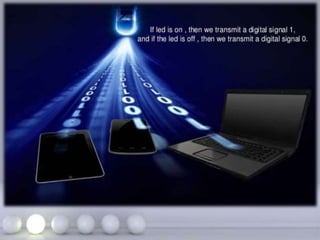
lifi is transmission of data through 
illumination by taking the fiber out of fiber 
optics by sending data through LED light bulb. 
This varies in intensity faster than human eye 
can follow. 
It is the fast and cheap wireless 
communication system which is optical 
version of wifi.
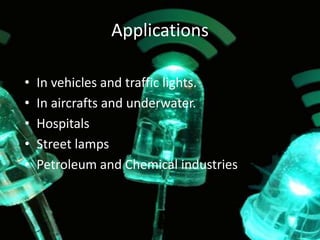
Applications 
• In vehicles and traffic lights. 
• In aircrafts and underwater. 
• Hospitals 
• Street lamps 
• Petroleum and Chemical industries
Advantages of wireless communication 
• Wireless 
• Speed 
• Cost 
• Durability 
• Flexibility 
• Place of device
Disadvantages of wireless 
communication 
• Power consumption 
• Security issues 
• Compatibility issues
THANK YOU!! 
wireless communication

wireless communication

  • 2.
    What is wirelesscommunication? • In layman language it is communication in which information is transferred between two or more points without any wire.
  • 3.
    Modes of wirelesscommunication! • Bluetooth • NFC (Near Field Communication) • Wifi • Lifi
  • 5.
    What is Bluetooth? • Bluetooth is a method for data communication that used short range radio links to replace cables between computers and their connected units. • Named on – Danish king harald Bluetooth • Developed in Scandinavia.
  • 6.
    How does Bluetoothworks? • Bluetooth networking transmits data via low-power radio waves. It communicates on a frequency of 2.45 gigahertz. • Bluetooth doesn't require line of sight between communicating devices. • Bluetooth can connect up to eight devices simultaneously. • Bluetooth uses a technique called spread-spectrum frequency hopping
  • 7.
    Bluetooth is essentiallya networking standard that works at two levels: • It provides agreement at the physical level -- Bluetooth is a radio-frequency standard. • It provides agreement at the protocol level, where products have to agree on when bits are sent, how many will be sent at a time, and how the parties in a conversation can be sure that the message received is the same as the message sent.
  • 8.
    Applications of bluetooth! • Bluetooth speakers • Bluetooth headphones • Cable less connections to the printers • Bluetooth keyboard • Etc
  • 9.
  • 10.
    What is NFC? • NFC is a short-range high frequency wireless communication technology that enables the exchange of data between devices over about a 10 cm distance. • It allows devices to establish peer-to-peer radio communications, passing data from one device to another by touching them or putting them very close together.
  • 11.
    How NFC works? • NFC came out of RFID. RFID, or radio-frequency identification, is the technology used by superstores to keep track of goods, it uses electromagnetic induction in order to transmit information. NFC is similar technology, but standardized for consumer smartphones. • NFC is a means of sending data over radio waves. In that sense it is similar to Wi-Fi or Bluetooth, but unlike those protocols (and like RFID) NFC can be used to induce electric currents within passive components as well as just send data. And it is faster than Bluetooth.
  • 13.
    Benefits over Bluetooth.. • The significant advantage of NFC over Bluetooth is the shorter set-up time. • Due to its shorter range, NFC provides a higher degree of security than Bluetooth and makes NFC suitable for crowded areas. • NFC can also work when one of the devices is not powered by a battery. • Unlike Bluetooth, no pairing code is needed.
  • 14.
    Applications… • NFCchips or tags are very small in size, it can be embedded in the movie posters, real estate agent posters etc. • Health care department. • NFC will replace car keys, ID badges and credit/debit cards. • Implementation in food packaging, flyers and merchandisers as well.
  • 16.
    What is wifi?  Wifi or wireless fidelity, allows you to access the internet while on the move; you can remain online while moving from one area to another in a wireless mode.  Wifi enabled computers send and receive data indoors and out ;anywhere within the range of a base station.  Its just as fast as cable modem connection.  Wifi is a generic term that refers to the IEEE 80211 communications standard for wireless local area networks(WLANs)
  • 23.
    Lifi? (light fidelity) lifi is transmission of data through illumination by taking the fiber out of fiber optics by sending data through LED light bulb. This varies in intensity faster than human eye can follow. It is the fast and cheap wireless communication system which is optical version of wifi.
  • 27.
    Applications • Invehicles and traffic lights. • In aircrafts and underwater. • Hospitals • Street lamps • Petroleum and Chemical industries
  • 28.
    Advantages of wirelesscommunication • Wireless • Speed • Cost • Durability • Flexibility • Place of device
  • 29.
    Disadvantages of wireless communication • Power consumption • Security issues • Compatibility issues
  • 30.