WHAT ARE WEARABLE
TECHNOLOGIES??
Wearable technology (also called wearable
gadgets) is a category of
technology devices that can be worn by a
consumer and often include tracking
information related to health and fitness.
Other wearable tech gadgets include devices
that have small motion sensors to take
photos and sync with your mobile devices.
Today’s gadgets!!
• Google glasses
• Air umbrella
• Lark pro
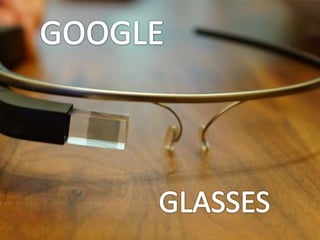
What is Google Glasses???
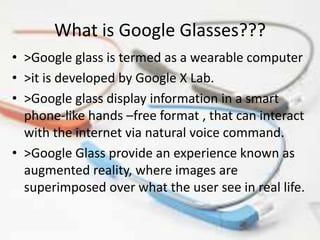
• >Google glass is termed as a wearable computer
• >it is developed by Google X Lab.
• >Google glass display information in a smart
phone-like hands –free format , that can interact
with the internet via natural voice command.
• >Google Glass provide an experience known as
augmented reality, where images are
superimposed over what the user see in real life.
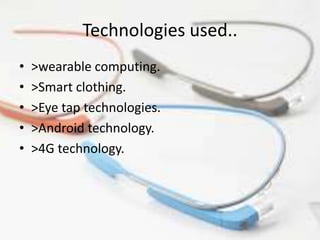
Technologies used..
• >wearable computing.
• >Smart clothing.
• >Eye tap technologies.
• >Android technology.
• >4G technology.
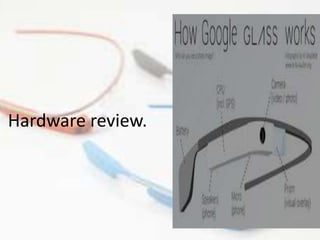
Hardware review.
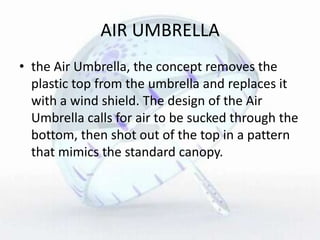
AIR UMBRELLA
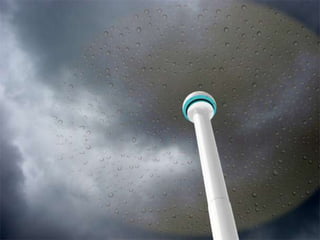
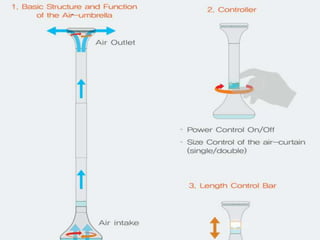
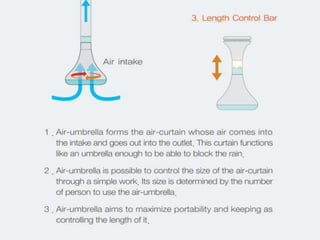
• the Air Umbrella, the concept removes the
plastic top from the umbrella and replaces it
with a wind shield. The design of the Air
Umbrella calls for air to be sucked through the
bottom, then shot out of the top in a pattern
that mimics the standard canopy.
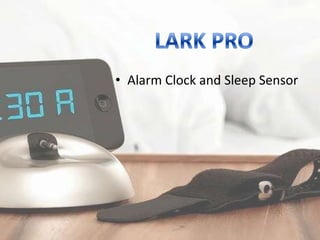
• Alarm Clock and Sleep Sensor
As an alarm clock
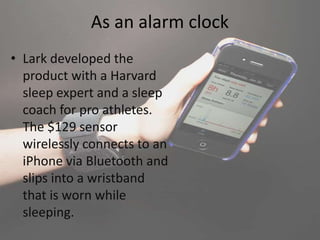
• Lark developed the
product with a Harvard
sleep expert and a sleep
coach for pro athletes.
The $129 sensor
wirelessly connects to an
iPhone via Bluetooth and
slips into a wristband
that is worn while
sleeping.
As a Sleep Sensor
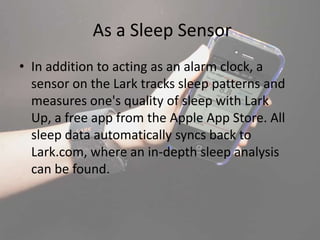
• In addition to acting as an alarm clock, a
sensor on the Lark tracks sleep patterns and
measures one's quality of sleep with Lark
Up, a free app from the Apple App Store. All
sleep data automatically syncs back to
Lark.com, where an in-depth sleep analysis
can be found.
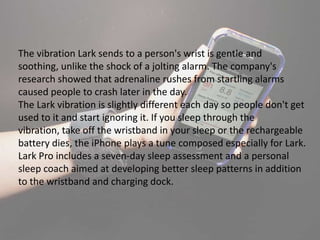
The vibration Lark sends to a person's wrist is gentle and
soothing, unlike the shock of a jolting alarm. The company's
research showed that adrenaline rushes from startling alarms
caused people to crash later in the day.
The Lark vibration is slightly different each day so people don't get
used to it and start ignoring it. If you sleep through the
vibration, take off the wristband in your sleep or the rechargeable
battery dies, the iPhone plays a tune composed especially for Lark.
Lark Pro includes a seven-day sleep assessment and a personal
sleep coach aimed at developing better sleep patterns in addition
to the wristband and charging dock.
• Battery Life -- By far, the biggest problem for most
wearable devices is the limited battery life.
• Google Glass' battery can run down in as little as 1.5 to
2 hours if you're shooting a lot of videoes
• Samsung's new smart watch can only last a day with
'regular use' and will run out a lot sooner if you're
doing a lot with it
• Pebble Watch might last a few days on a single
charge, it will run down your phone's battery instead.
• A short battery life is always an issue in tech and this
problem becomes more acute with a wearable device.
If consumers have to take off their watch or glasses
more than once a day to charge it, that's going to limit
how often they're willing to use it. In order for
wearable tech to take off, we first need to see some
real innovation in battery design
• Size -One side effect of adding in
these advanced new features into
watches and eyeglasses is that they
need extra hardware to carry them
out. Manufacturers have to figure
out a way to either overcome the
larger size with better aesthetics or
to reduce the size of these
hardware components..... these
products are bigger and chunkier
than their normal counterparts --
and that's going to be a turn-off for
an average consumer.
The Dork Factor - Unlike other computerized
products, 'style' is a critical factor when it
comes to wearable tech. Since these products
are essentially accessories, they have to look
like it -- unless a smart watch looks more like
a Gucci or Fossil than it does a gadget out of
the Jetsons, it won't attract the average
consumer.
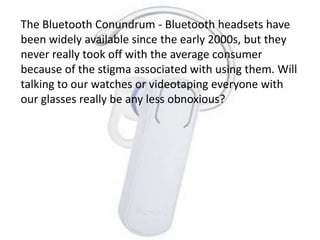
The Bluetooth Conundrum - Bluetooth headsets have
been widely available since the early 2000s, but they
never really took off with the average consumer
because of the stigma associated with using them. Will
talking to our watches or videotaping everyone with
our glasses really be any less obnoxious?
Value Add - Compared to a smartphone a smart watch
has
a smaller screen poor resolution quality
doesn't run as fast can't do as much
is a pain to charge.
Really, the only benefit of owning a smart watch is that you
don't have to take your phone out of your pocket to get
important information. At some point down the road, I expect
to see brilliant new features incorporated into these devices --
but for now, it's just not there yet. That said, not every
wearable device lacks value -- products like Google
Glass, which allows for first-person video shooting and
augmented reality viewing, and the Nike Fuel Band, which
monitors your personal health information, both offer a new
experience for the user
 wearable technology

wearable technology

  • 2.
    WHAT ARE WEARABLE TECHNOLOGIES?? Wearabletechnology (also called wearable gadgets) is a category of technology devices that can be worn by a consumer and often include tracking information related to health and fitness. Other wearable tech gadgets include devices that have small motion sensors to take photos and sync with your mobile devices.
  • 3.
    Today’s gadgets!! • Googleglasses • Air umbrella • Lark pro
  • 5.
    What is GoogleGlasses??? • >Google glass is termed as a wearable computer • >it is developed by Google X Lab. • >Google glass display information in a smart phone-like hands –free format , that can interact with the internet via natural voice command. • >Google Glass provide an experience known as augmented reality, where images are superimposed over what the user see in real life.
  • 6.
    Technologies used.. • >wearablecomputing. • >Smart clothing. • >Eye tap technologies. • >Android technology. • >4G technology.
  • 7.
  • 9.
    AIR UMBRELLA • theAir Umbrella, the concept removes the plastic top from the umbrella and replaces it with a wind shield. The design of the Air Umbrella calls for air to be sucked through the bottom, then shot out of the top in a pattern that mimics the standard canopy.
  • 13.
    • Alarm Clockand Sleep Sensor
  • 14.
    As an alarmclock • Lark developed the product with a Harvard sleep expert and a sleep coach for pro athletes. The $129 sensor wirelessly connects to an iPhone via Bluetooth and slips into a wristband that is worn while sleeping.
  • 15.
    As a SleepSensor • In addition to acting as an alarm clock, a sensor on the Lark tracks sleep patterns and measures one's quality of sleep with Lark Up, a free app from the Apple App Store. All sleep data automatically syncs back to Lark.com, where an in-depth sleep analysis can be found.
  • 16.
    The vibration Larksends to a person's wrist is gentle and soothing, unlike the shock of a jolting alarm. The company's research showed that adrenaline rushes from startling alarms caused people to crash later in the day. The Lark vibration is slightly different each day so people don't get used to it and start ignoring it. If you sleep through the vibration, take off the wristband in your sleep or the rechargeable battery dies, the iPhone plays a tune composed especially for Lark. Lark Pro includes a seven-day sleep assessment and a personal sleep coach aimed at developing better sleep patterns in addition to the wristband and charging dock.
  • 18.
    • Battery Life-- By far, the biggest problem for most wearable devices is the limited battery life. • Google Glass' battery can run down in as little as 1.5 to 2 hours if you're shooting a lot of videoes • Samsung's new smart watch can only last a day with 'regular use' and will run out a lot sooner if you're doing a lot with it • Pebble Watch might last a few days on a single charge, it will run down your phone's battery instead. • A short battery life is always an issue in tech and this problem becomes more acute with a wearable device. If consumers have to take off their watch or glasses more than once a day to charge it, that's going to limit how often they're willing to use it. In order for wearable tech to take off, we first need to see some real innovation in battery design
  • 19.
    • Size -Oneside effect of adding in these advanced new features into watches and eyeglasses is that they need extra hardware to carry them out. Manufacturers have to figure out a way to either overcome the larger size with better aesthetics or to reduce the size of these hardware components..... these products are bigger and chunkier than their normal counterparts -- and that's going to be a turn-off for an average consumer.
  • 20.
    The Dork Factor- Unlike other computerized products, 'style' is a critical factor when it comes to wearable tech. Since these products are essentially accessories, they have to look like it -- unless a smart watch looks more like a Gucci or Fossil than it does a gadget out of the Jetsons, it won't attract the average consumer.
  • 21.
    The Bluetooth Conundrum- Bluetooth headsets have been widely available since the early 2000s, but they never really took off with the average consumer because of the stigma associated with using them. Will talking to our watches or videotaping everyone with our glasses really be any less obnoxious?
  • 22.
    Value Add -Compared to a smartphone a smart watch has a smaller screen poor resolution quality doesn't run as fast can't do as much is a pain to charge. Really, the only benefit of owning a smart watch is that you don't have to take your phone out of your pocket to get important information. At some point down the road, I expect to see brilliant new features incorporated into these devices -- but for now, it's just not there yet. That said, not every wearable device lacks value -- products like Google Glass, which allows for first-person video shooting and augmented reality viewing, and the Nike Fuel Band, which monitors your personal health information, both offer a new experience for the user