NEAR FIELD
COMMUNICATION
PRESENTED BY;Mainpal
ECE SEMESTER -VII
WIT (UTU)
CONTENT
 INTRODUCTION OF NEAR FIELD COMMUNICATION
 WHAT IS NFC
 OPERATION OF NFC
 MODES OF NFC
 FEATURES OF NFC
 ADVANTAGE
 DISADVANTAGE
 APPLICATION
 CONCLUSION
INTRODUCTION OF NFC
 Near-field communication (NFC) is a form of short-range
wireless communication .
 NFC is wireless technology which provide communication
between two mobile phones, which contain NFC tags, using
short range radio waves.
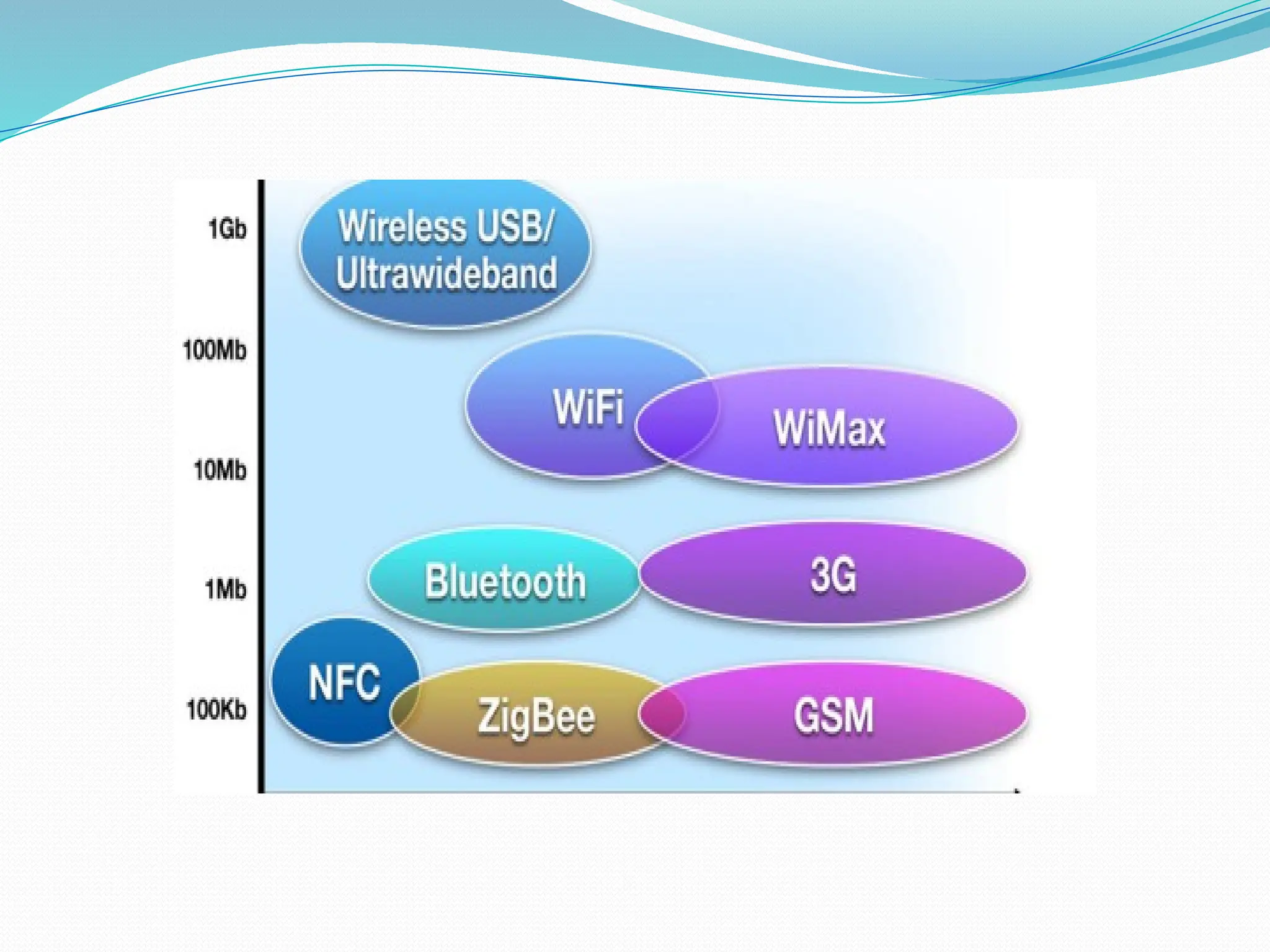
 NFC technology uses RFID for data/information exchange
between two devices over a short distance like Bluetooth &
Wi-Fi technology.
 NFC enabled smart phone users can make transaction &
access info with only a simple touch.
 NFC device can send & receive data simultaneously, so this
technology has a very bright future scope.
WHAT IS NFC
 NFC is a short range high frequency wireless communication
technology.
 A radio communication is established by touching the two phones or
keeping them in a proximity of a few centimeters.
 NFC is mainly aimed for mobile or handheld devices.
 NFC is an extension of Radio frequency identification or RFID
technology.
 RFID is mainly used for tracking and identification by sending radio
waves.
 It allows for simplified transaction , data exchange, and wireless
connection between two devices.
 Allows communication between:
 Two powered (active)devices.
 Powered and non self-powered(passive)devices.
OPERATION OF NFC
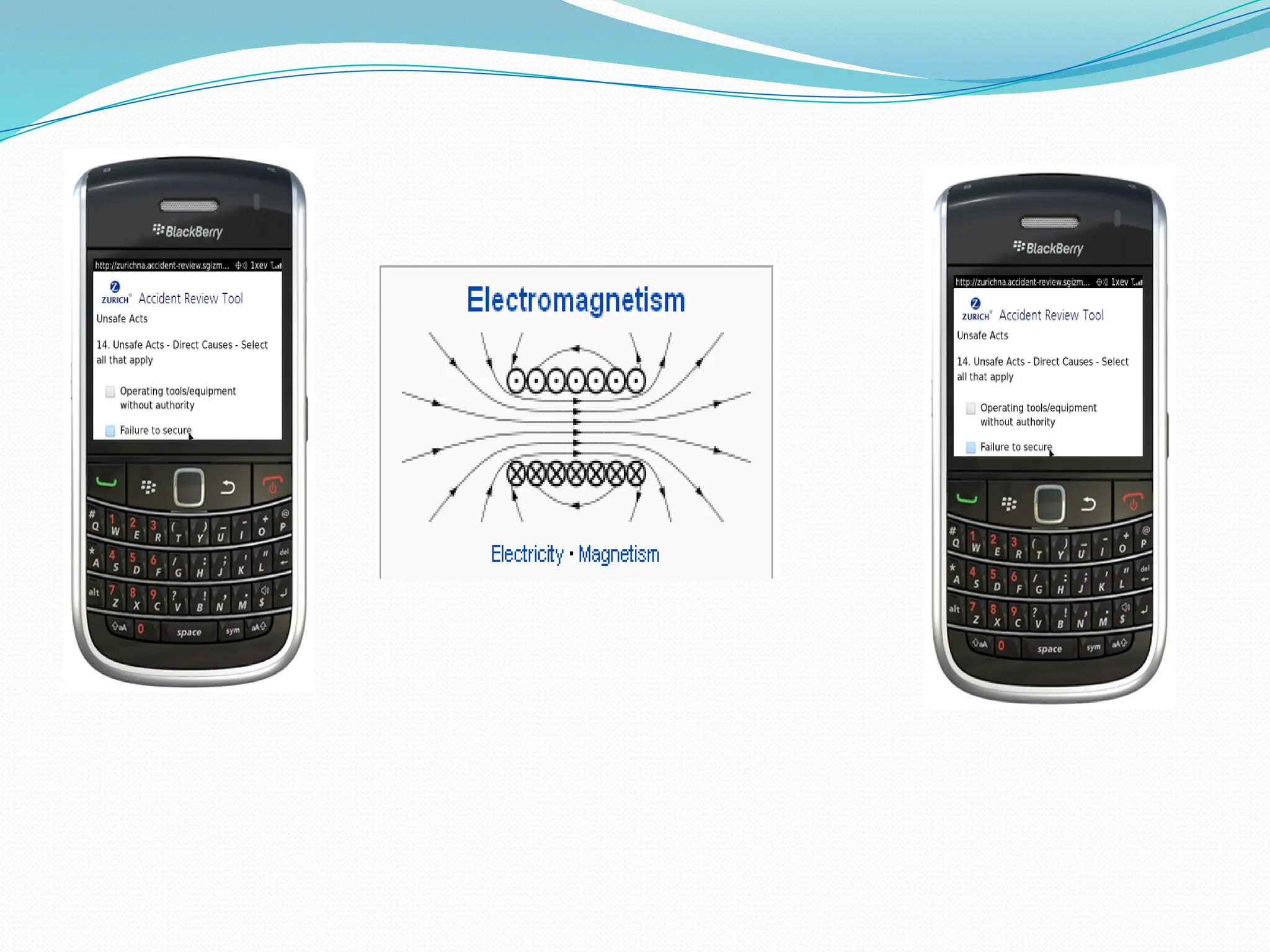
 NFC is based on inductive coupling.
 NFC works using magnetic induction between
two loop antennas.
 A reader emits a small electric current , which
creates a magnetic field.
 That field is received by a similar coil in the
client device, where it is turned back into
electrical impulses to communicate data.
 So, NFC use an initiator and a target.
 NFC technology is also working offline.
FEATURES OF NFC
 NFC allow two –way communication between
endpoints.
 It operates frequency band of 13.56MHZ, a
bandwidth of 14 KHZ.
 Working distance up to 10 cm.
 Supported data rates: 106, 212 and kb.
 Two devices to communicate using NFC ,one
devices must have an NFC reader/writer and one
must have an NFC tag.
ADVANTAGE
 NFC provide secure communication to all users.
 It promotes the transfer of data through safe
channel.
 It allow indivisuals to share data cost efficiently.
 NFC allow user to connect to other device in less
than one second.
 To way data communication.
DISADVANTAGE
 It may not be compatible with other device.
 NFC compatible device is costly.
 It may not align with the goals of the
organization.
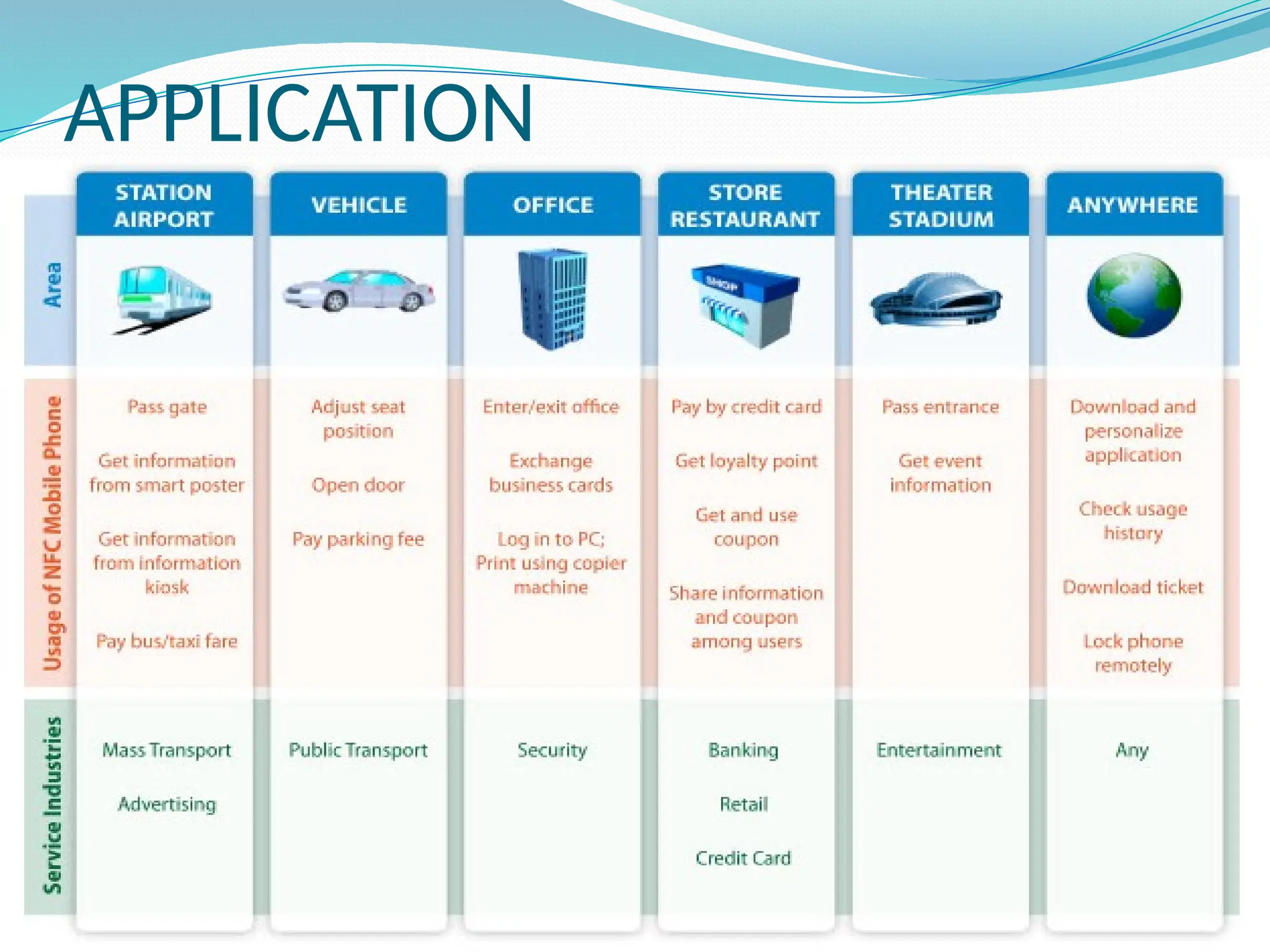
APPLICATION
CONCLUSION
 The range transmission is much shorter than
Bluetooth.
 Perfect for passive device, such as the
advertising tags that operate rate any major
power source requirement.
 Speed faster connectivity.
 NFC operate on a much lower
frequency(13.56mhz) compare to
Bluetooth(2.4to2.5ghz).
THANK YOU

near field communication near field communication near field communication near field communication near field communication

  • 1.
  • 2.
    CONTENT  INTRODUCTION OFNEAR FIELD COMMUNICATION  WHAT IS NFC  OPERATION OF NFC  MODES OF NFC  FEATURES OF NFC  ADVANTAGE  DISADVANTAGE  APPLICATION  CONCLUSION
  • 3.
    INTRODUCTION OF NFC Near-field communication (NFC) is a form of short-range wireless communication .  NFC is wireless technology which provide communication between two mobile phones, which contain NFC tags, using short range radio waves.  NFC technology uses RFID for data/information exchange between two devices over a short distance like Bluetooth & Wi-Fi technology.  NFC enabled smart phone users can make transaction & access info with only a simple touch.  NFC device can send & receive data simultaneously, so this technology has a very bright future scope.
  • 5.
    WHAT IS NFC NFC is a short range high frequency wireless communication technology.  A radio communication is established by touching the two phones or keeping them in a proximity of a few centimeters.  NFC is mainly aimed for mobile or handheld devices.  NFC is an extension of Radio frequency identification or RFID technology.  RFID is mainly used for tracking and identification by sending radio waves.  It allows for simplified transaction , data exchange, and wireless connection between two devices.  Allows communication between:  Two powered (active)devices.  Powered and non self-powered(passive)devices.
  • 7.
    OPERATION OF NFC NFC is based on inductive coupling.  NFC works using magnetic induction between two loop antennas.  A reader emits a small electric current , which creates a magnetic field.  That field is received by a similar coil in the client device, where it is turned back into electrical impulses to communicate data.  So, NFC use an initiator and a target.  NFC technology is also working offline.
  • 10.
    FEATURES OF NFC NFC allow two –way communication between endpoints.  It operates frequency band of 13.56MHZ, a bandwidth of 14 KHZ.  Working distance up to 10 cm.  Supported data rates: 106, 212 and kb.  Two devices to communicate using NFC ,one devices must have an NFC reader/writer and one must have an NFC tag.
  • 11.
    ADVANTAGE  NFC providesecure communication to all users.  It promotes the transfer of data through safe channel.  It allow indivisuals to share data cost efficiently.  NFC allow user to connect to other device in less than one second.  To way data communication.
  • 12.
    DISADVANTAGE  It maynot be compatible with other device.  NFC compatible device is costly.  It may not align with the goals of the organization.
  • 13.
  • 14.
    CONCLUSION  The rangetransmission is much shorter than Bluetooth.  Perfect for passive device, such as the advertising tags that operate rate any major power source requirement.  Speed faster connectivity.  NFC operate on a much lower frequency(13.56mhz) compare to Bluetooth(2.4to2.5ghz).
  • 15.