By
                          Dibyadip Das


Saturday, July 21, 2012
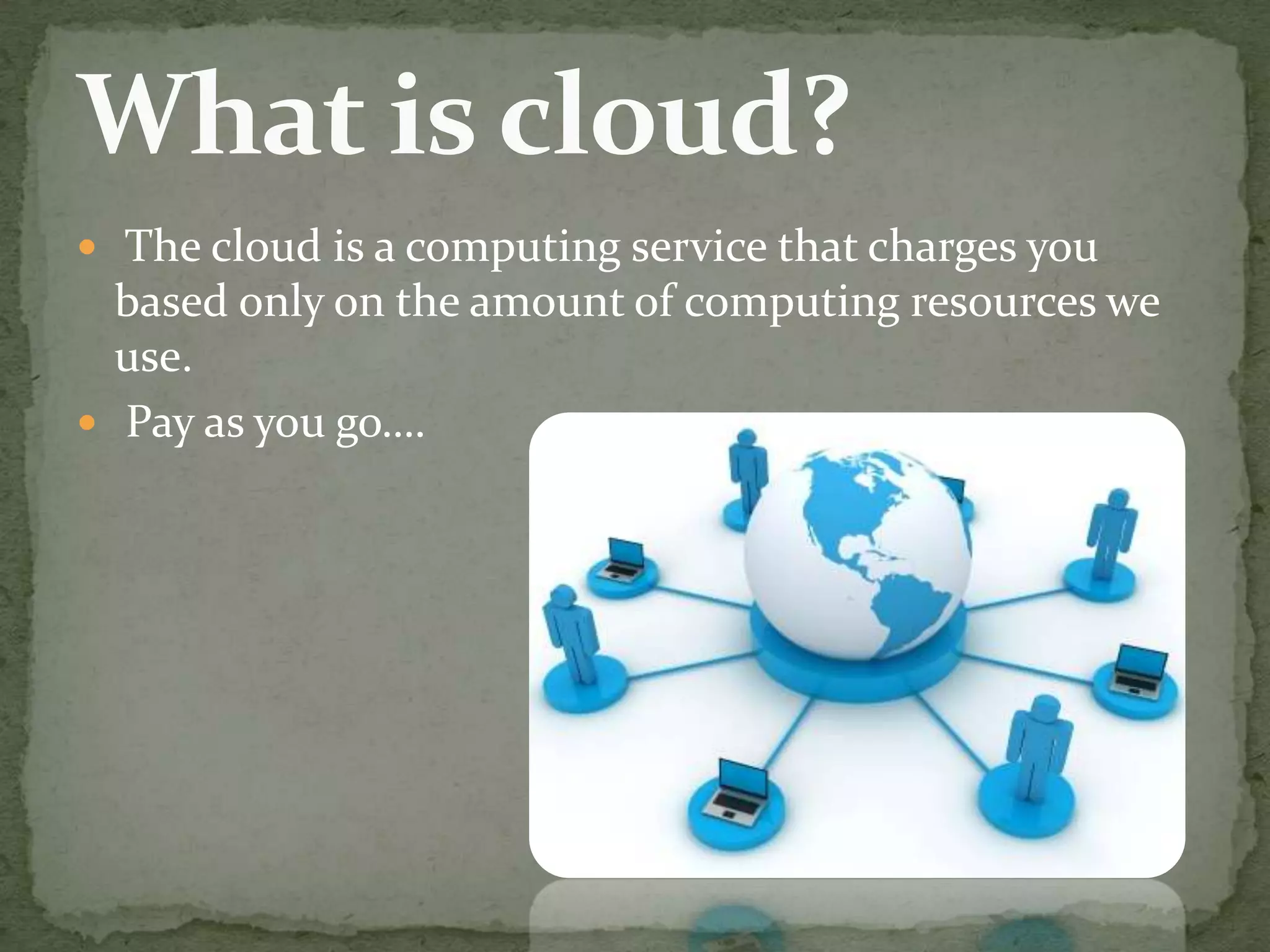
 The cloud is a computing service that charges you
  based only on the amount of computing resources we
  use.
 Pay as you go….
Cloud computing is a natural evolution of the
             widespread adoption of :

 Virtualization
 service-oriented architecture
 autonomic, and
 utility computing..


  Details are abstracted from end-users, who no longer have
    need for expertise in, or control over, the technology
      infrastructure "in the cloud" that supports them
What Is Cloud Computing??
Broadly, it is combination of three Computing concepts :

 Grid Computing-Cluster of loosely coupled computers
  for a common cause

 Utility Computing-Packaging of computer resources as
  a metered

 Service Autonomic Computing-Capable of self
  management
Key Characteristics
 Agility
 Cost
 Device and
 Reliability
 Scalability
 Security
 location
 independence
 Multi tenancy
 Sustainability
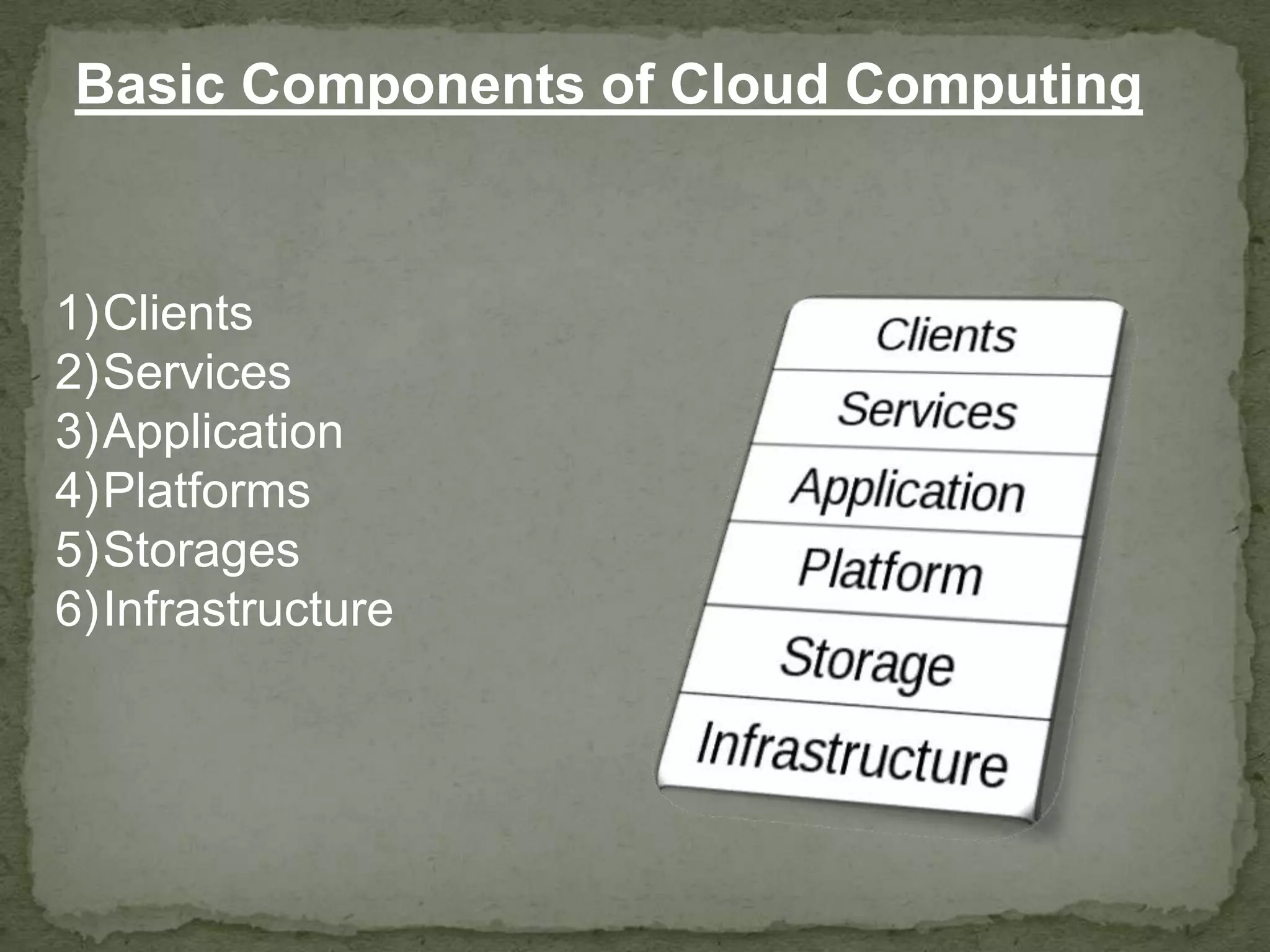
Basic Components of Cloud Computing


1)Clients
2)Services
3)Application
4)Platforms
5)Storages
6)Infrastructure
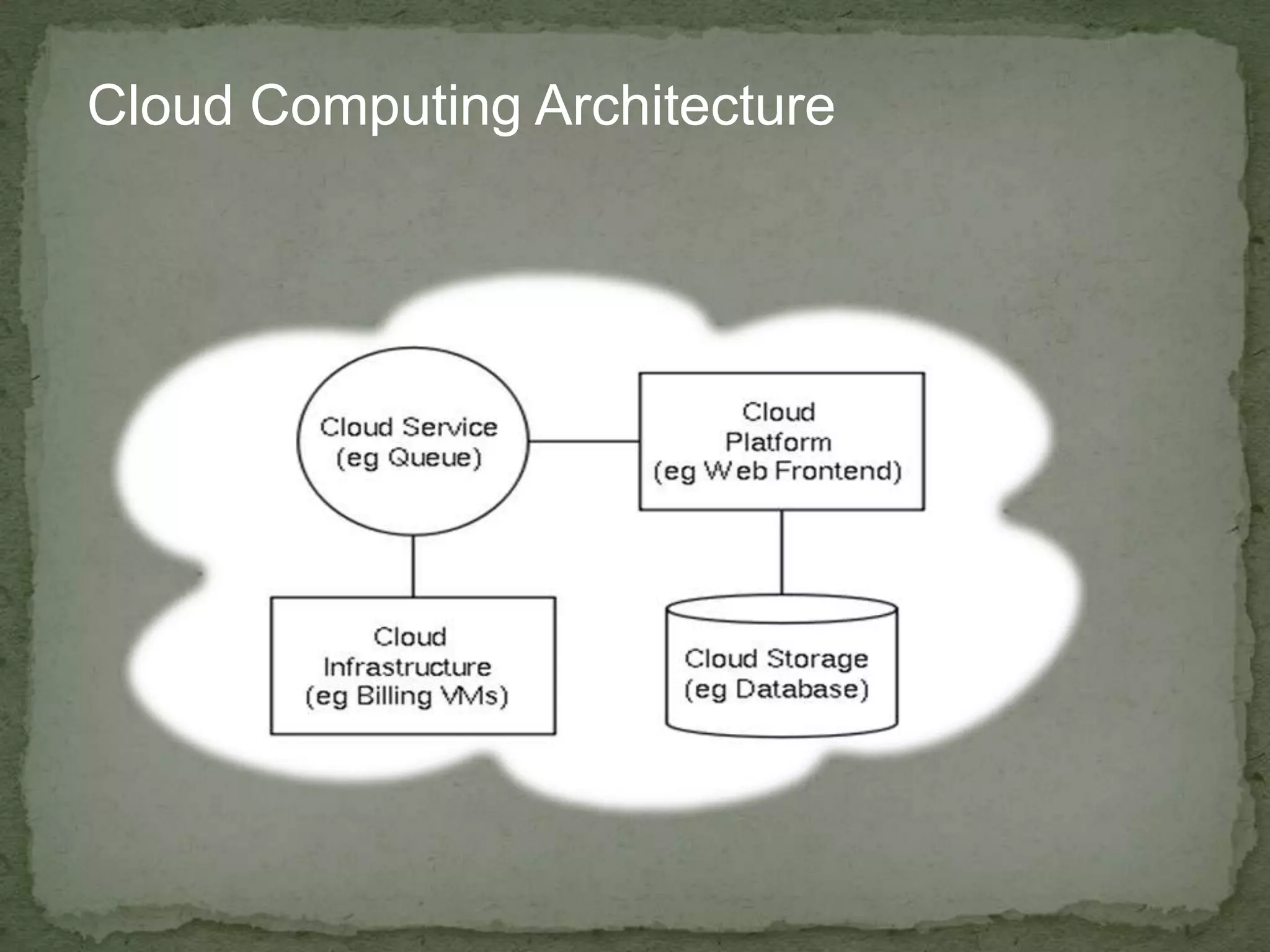
Cloud Computing Architecture
Cloud architecture, the systems architecture of the software
systems involved in the delivery of cloud computing, typically involves
multiple cloud components communicating with each other over a loose
coupling mechanism such as a messaging queue.


Cloud engineering is the application of engineering disciplines to cloud
computing. It brings a systematic approach to the high level concerns of
commercialization, standardization, and governance in developing, operating
and maintaining cloud computing systems.


It is a multidisciplinary method encompassing contributions from diverse areas
such
as systems, software, web, performance, information, security, platform, risk, and
 quality engineering.
Cloud Computing Architecture

1)Software as a Service

2)Platform as a Service

3)Infrastructure as a Service

These 3 services encapsulate the basic 6
Cloud Computing Components
Software as a Service

• Software as a service features a complete application
offered as a service on demand.
• A single instance of the software runs on the cloud
and services multiple end users or client organizations.
• Eg: salesforce.com , Google Apps


Platform as a Service

 • Platform as a service encapsulates a layer of software and provides it as a
 service that can be used to build
 higher-level services.
  Two Perspectives for Platform as a Service
 1. Producer:- Someone producing Platform as a Service might produce a
     platform by integrating an OS, middleware, application software, and even
     a development environment that is then provided to a customer as a
     service.
2.Consumer:-
              Someone using Process as a Service would see an
   encapsulated service that is presented to them through an API.
   The customer interacts with the platform through the API, and
   the platform does what is necessary to manage and scale itself
   to provide a given level of service


Infrastructure as a Service
• “Infrastructure as a service “delivers basic storage and computing
capabilities as standardized services over the network.
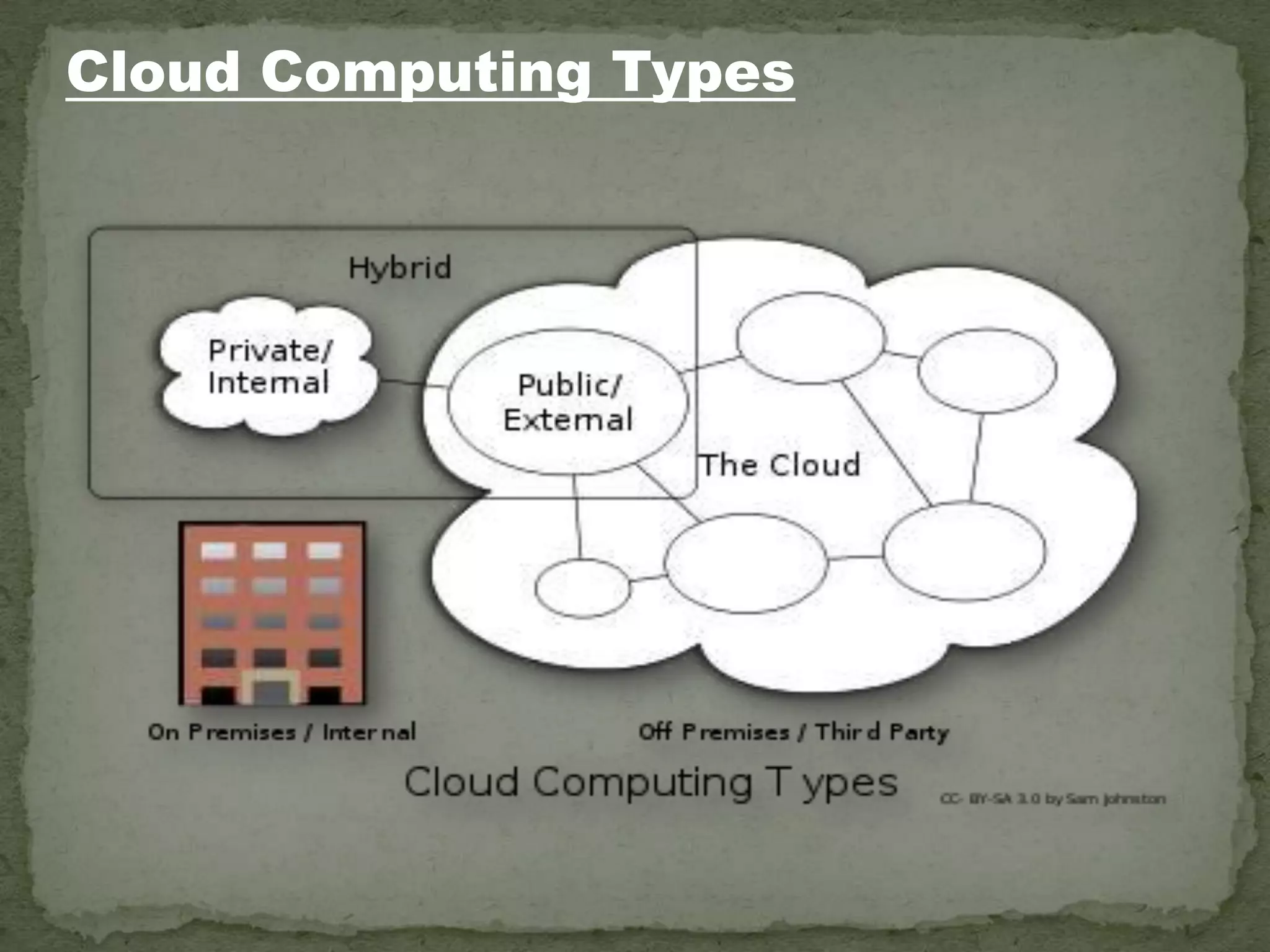
Cloud Computing Types
Public Clouds


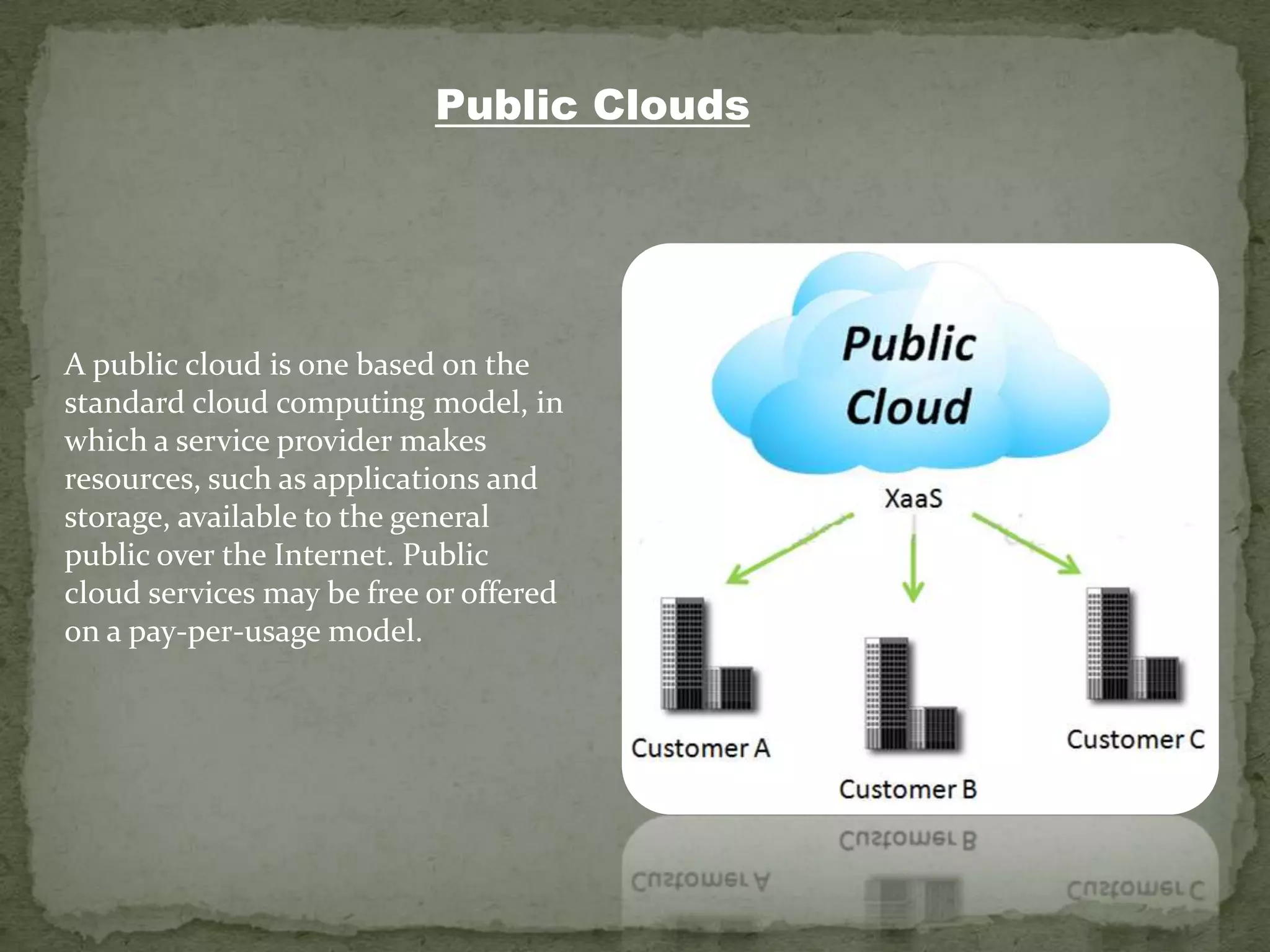
A public cloud is one based on the
standard cloud computing model, in
which a service provider makes
resources, such as applications and
storage, available to the general
public over the Internet. Public
cloud services may be free or offered
on a pay-per-usage model.
Private Clouds


Private cloud is infrastructure operated
solely for a single
organization, whether managed
internally or by a third-party and
hosted internally or externally.
They have attracted criticism because
users "still have to buy, build, and
manage them" and thus do not benefit
from lower up-front capital costs and
less hands-on management, essentially
"[lacking] the economic model that
makes cloud computing such an
intriguing concept".
Hybrid Clouds


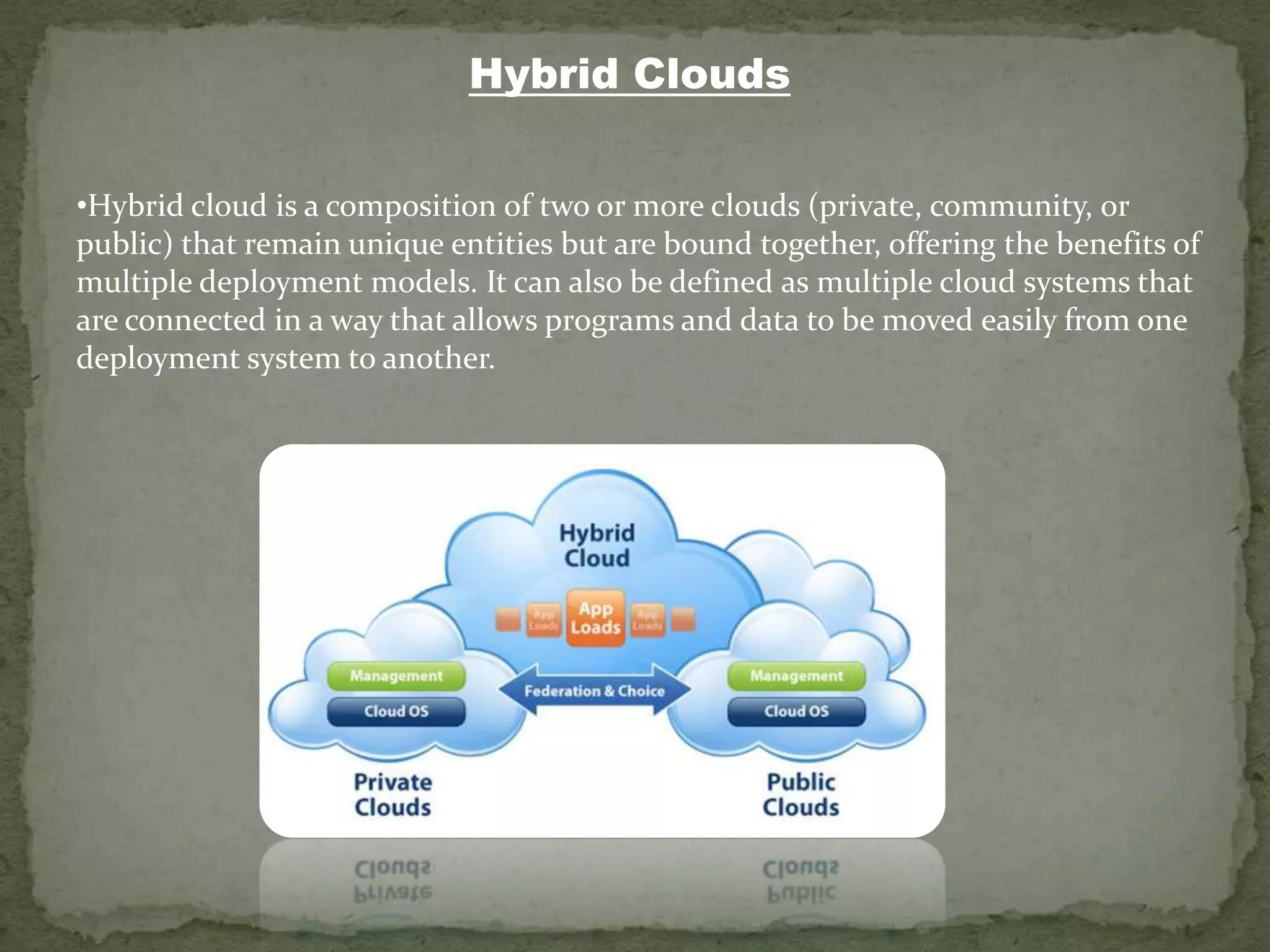
•Hybrid cloud is a composition of two or more clouds (private, community, or
public) that remain unique entities but are bound together, offering the benefits of
multiple deployment models. It can also be defined as multiple cloud systems that
are connected in a way that allows programs and data to be moved easily from one
deployment system to another.
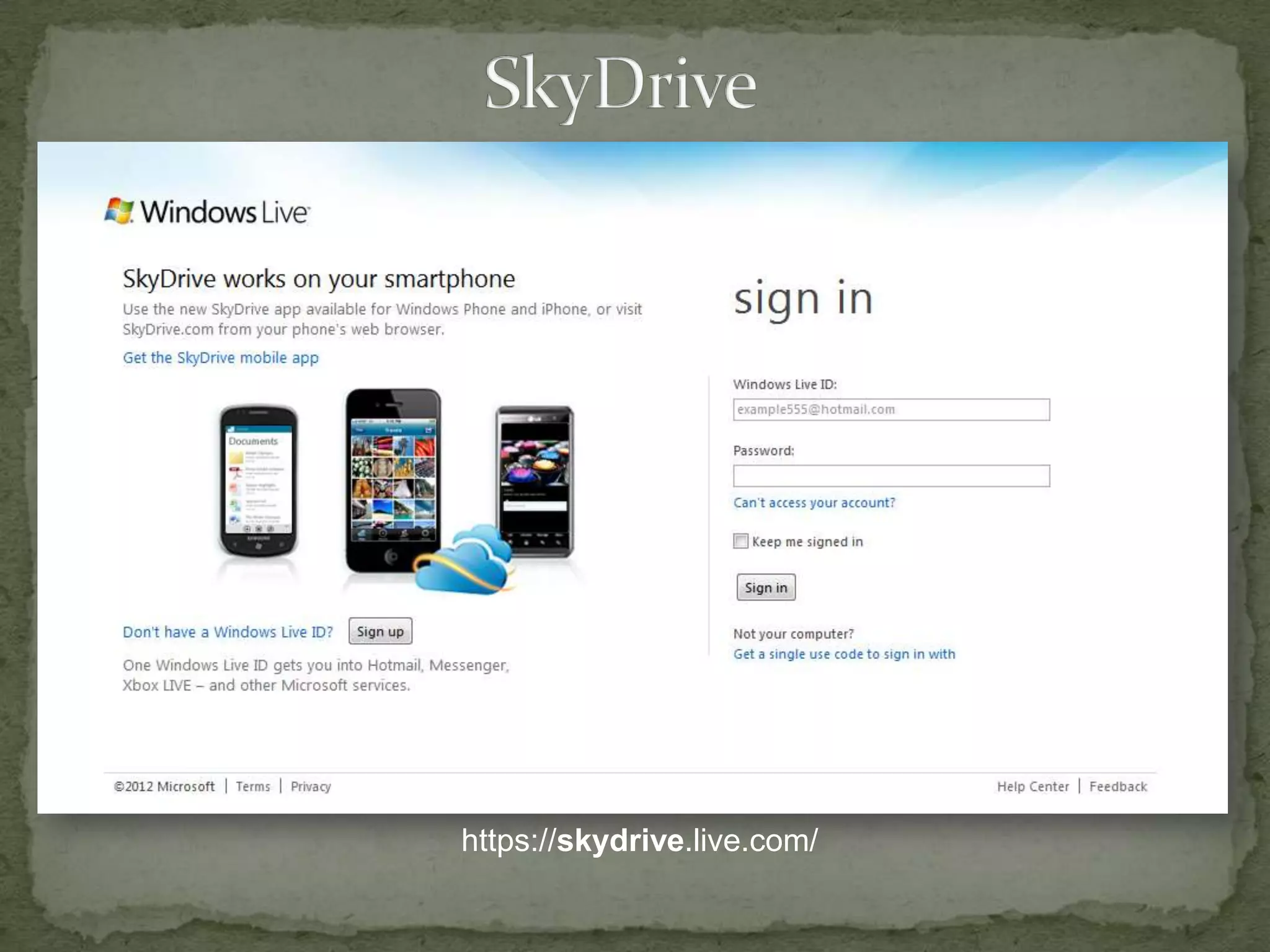
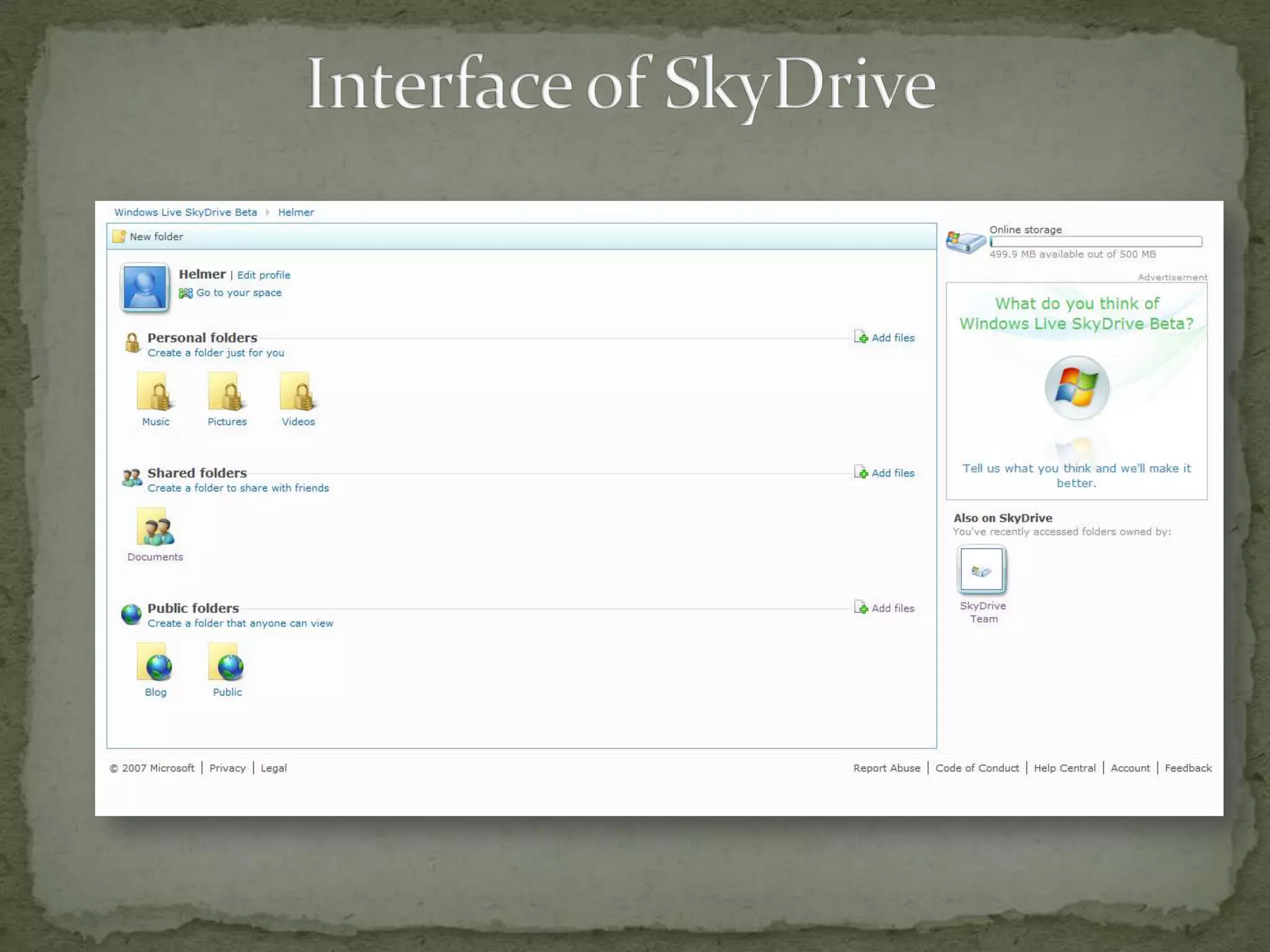
https://skydrive.live.com/
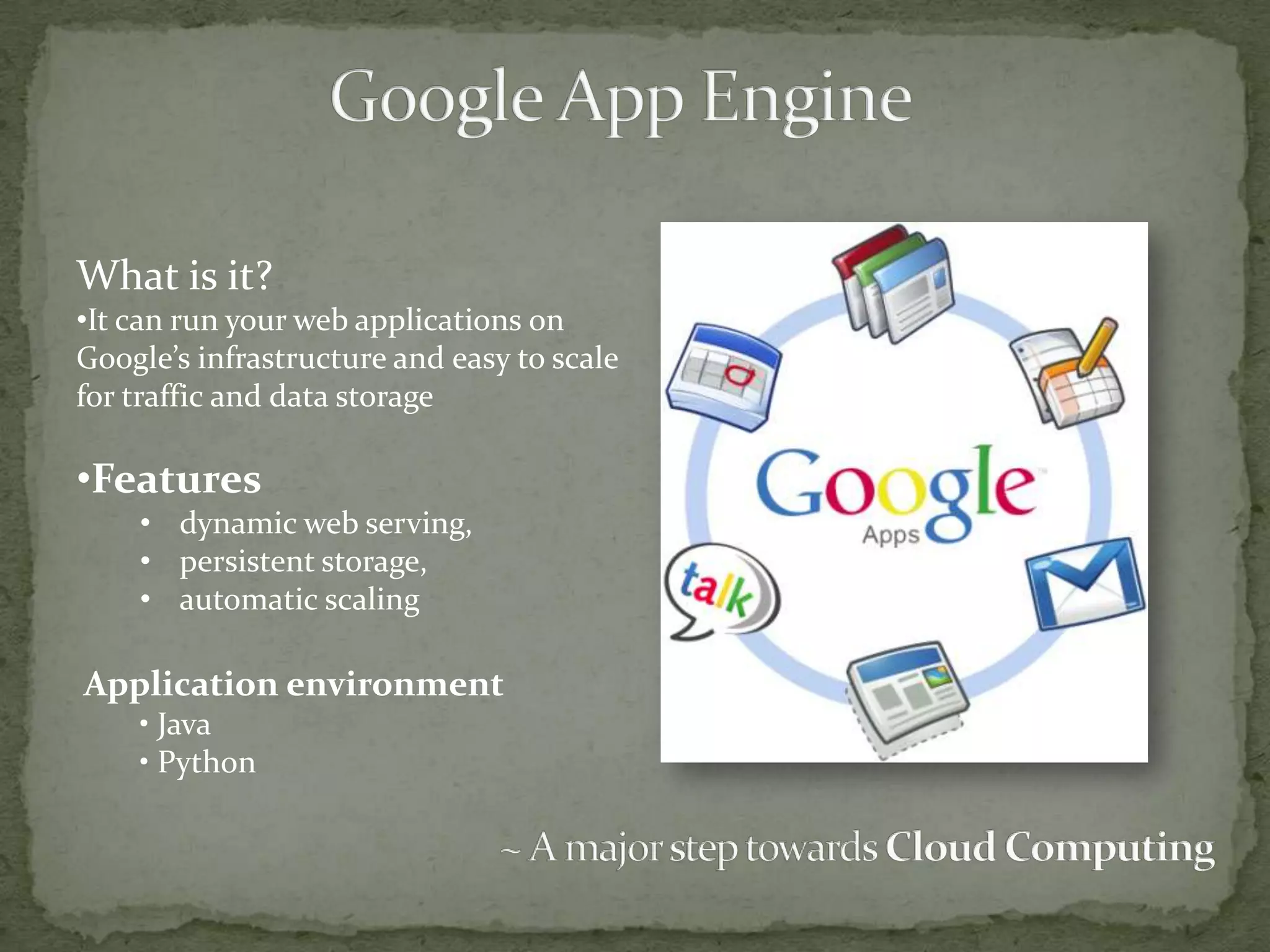
What is it?
•It can run your web applications on
Google’s infrastructure and easy to scale
for traffic and data storage

•Features
    • dynamic web serving,
    • persistent storage,
    • automatic scaling

Application environment
    • Java
    • Python
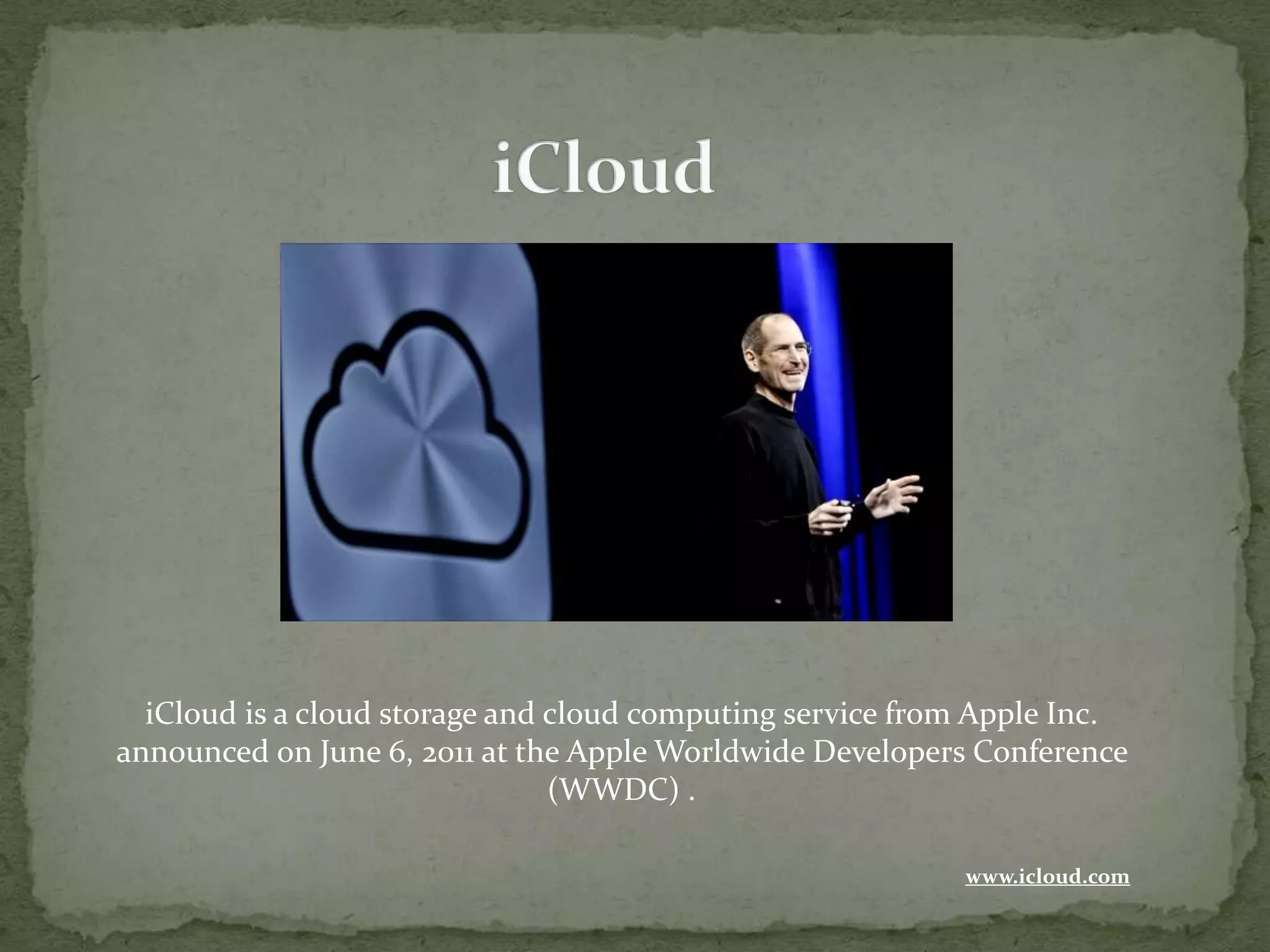
iCloud is a cloud storage and cloud computing service from Apple Inc.
announced on June 6, 2011 at the Apple Worldwide Developers Conference
                                (WWDC) .

                                                           www.icloud.com
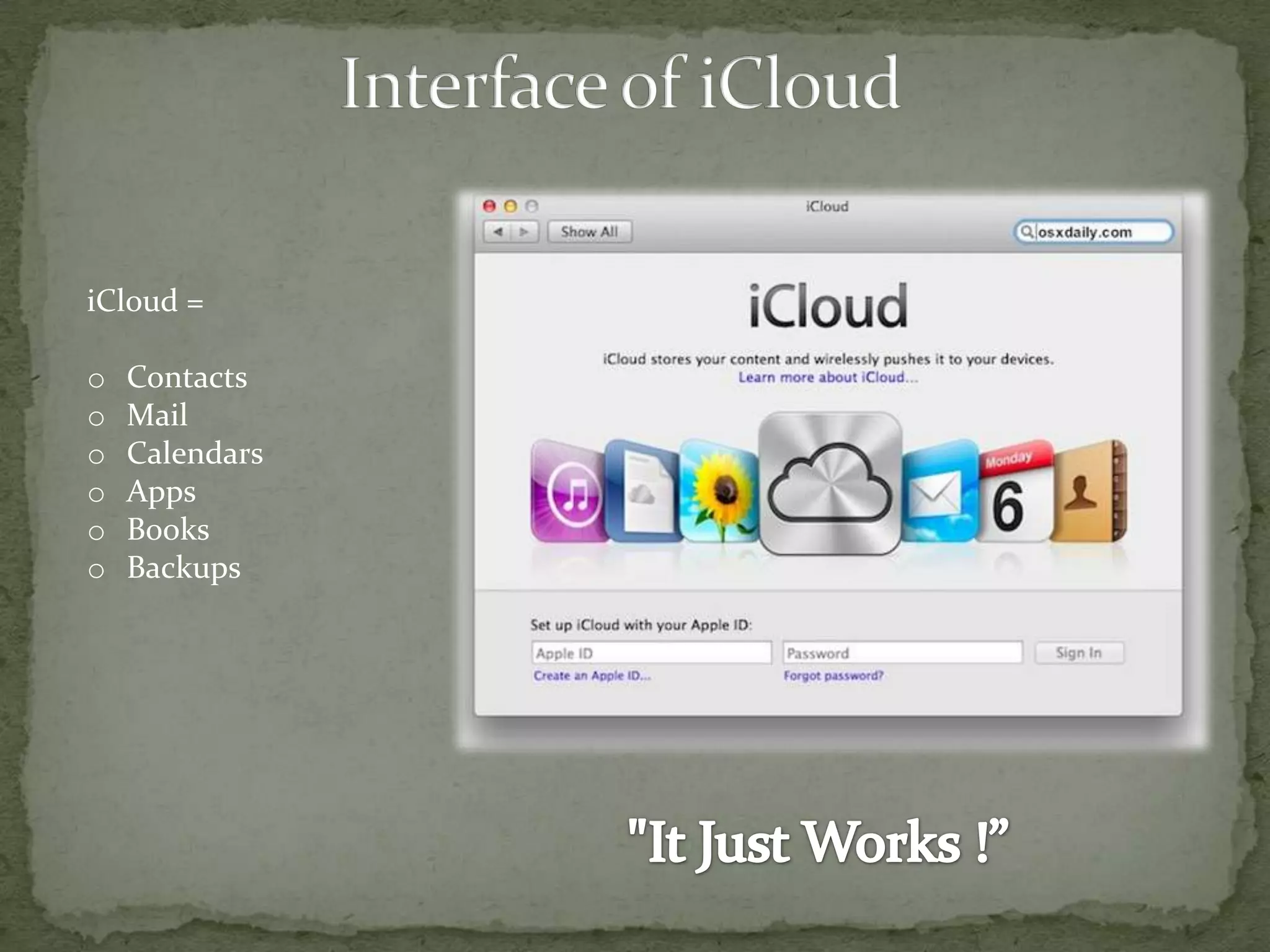
iCloud =

o   Contacts
o   Mail
o   Calendars
o   Apps
o   Books
o   Backups
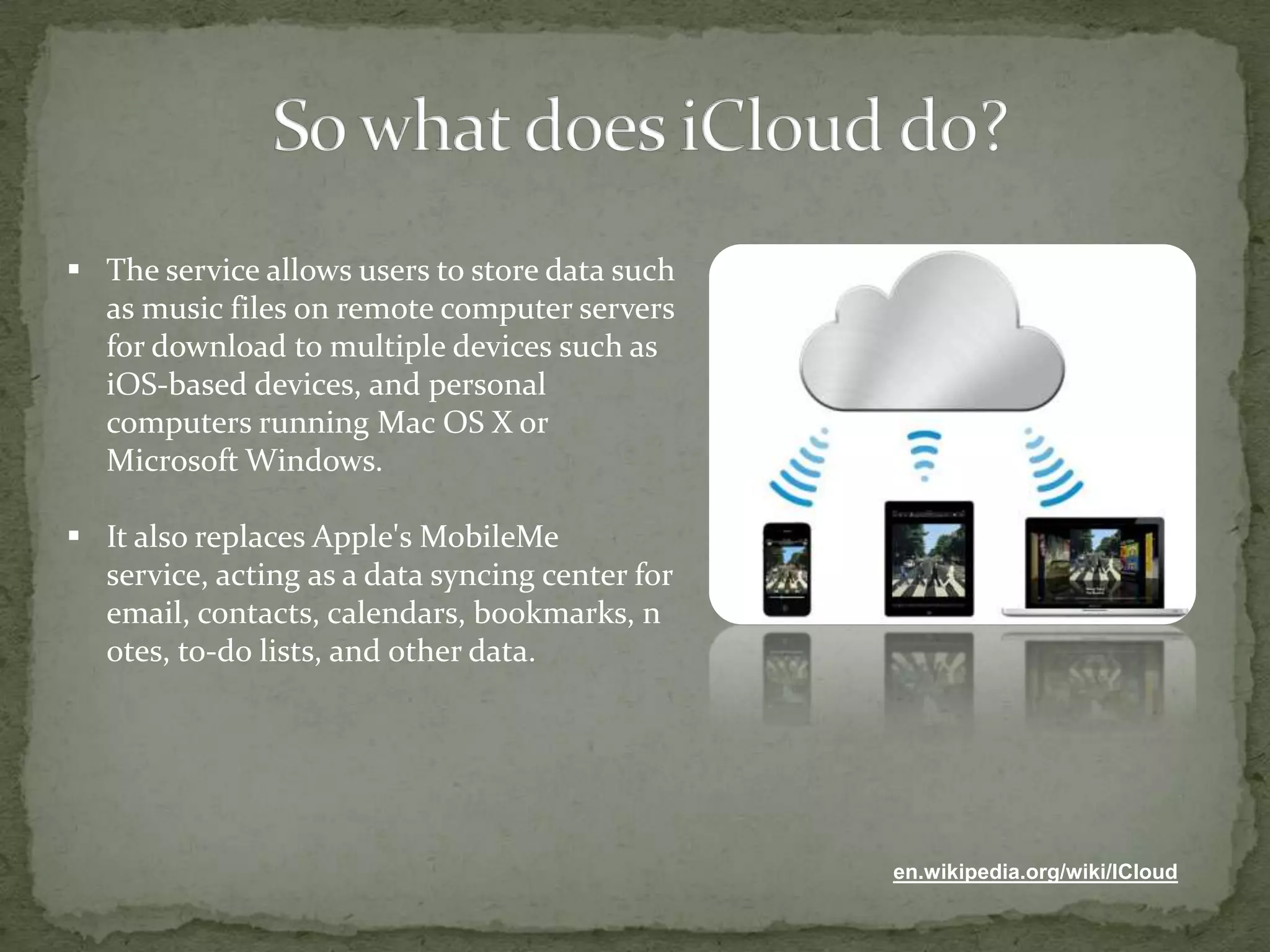
 The service allows users to store data such
  as music files on remote computer servers
  for download to multiple devices such as
  iOS-based devices, and personal
  computers running Mac OS X or
  Microsoft Windows.

 It also replaces Apple's MobileMe
  service, acting as a data syncing center for
  email, contacts, calendars, bookmarks, n
  otes, to-do lists, and other data.


                                                 en.wikipedia.org/wiki/ICloud
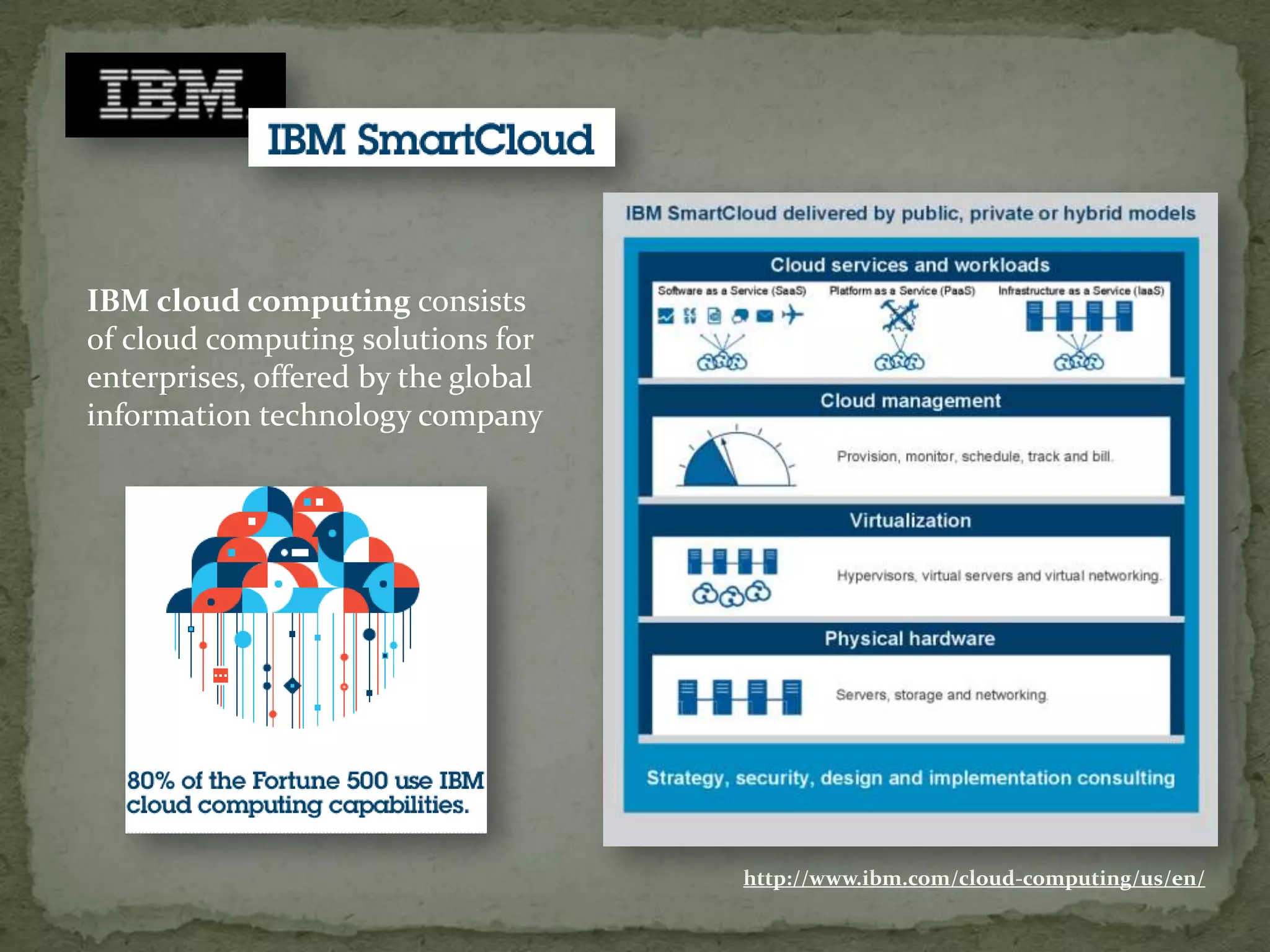
IBM cloud computing consists
of cloud computing solutions for
enterprises, offered by the global
information technology company


                                     http://www.ibm.com/cloud-computing/us/en/
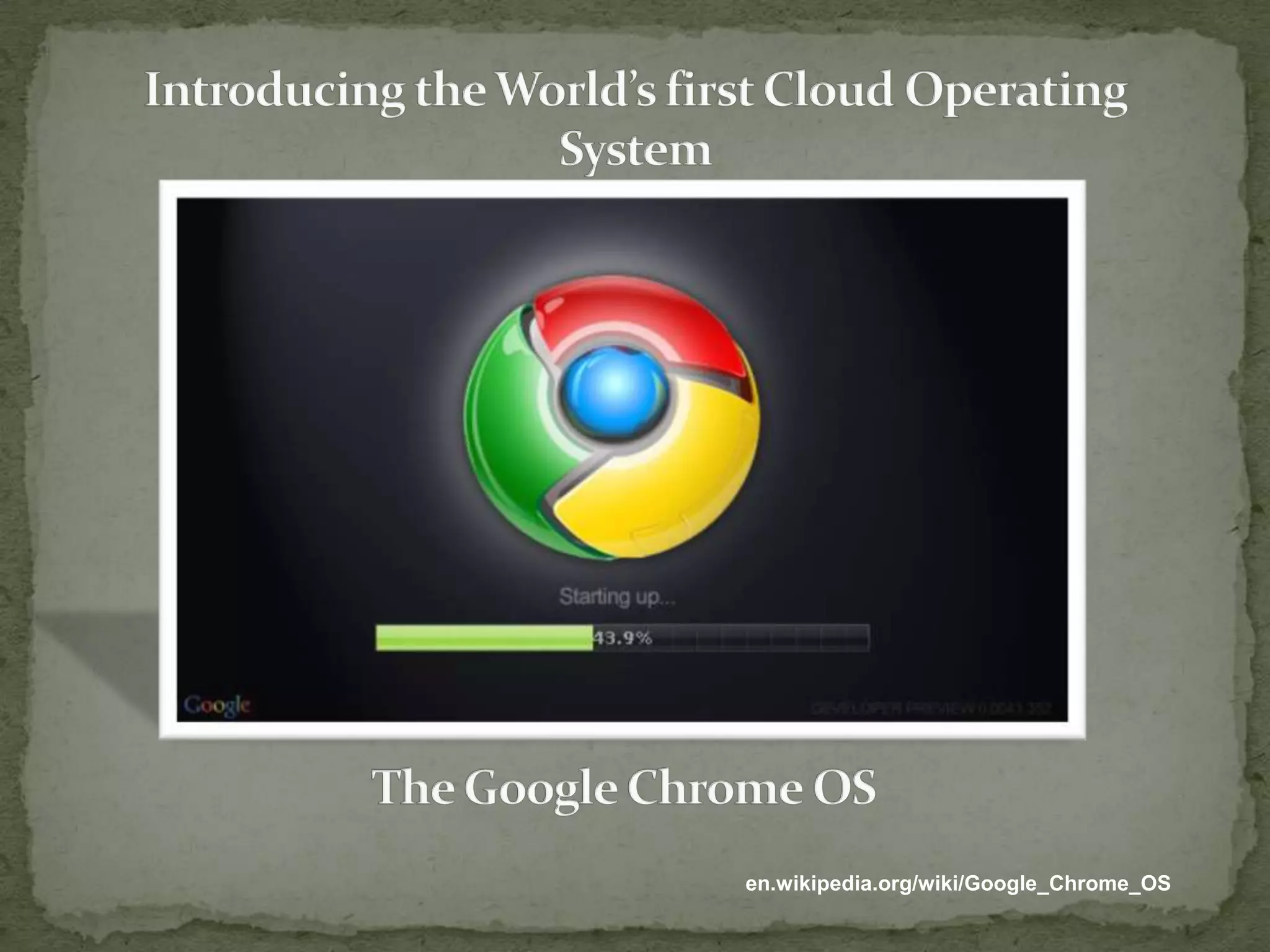
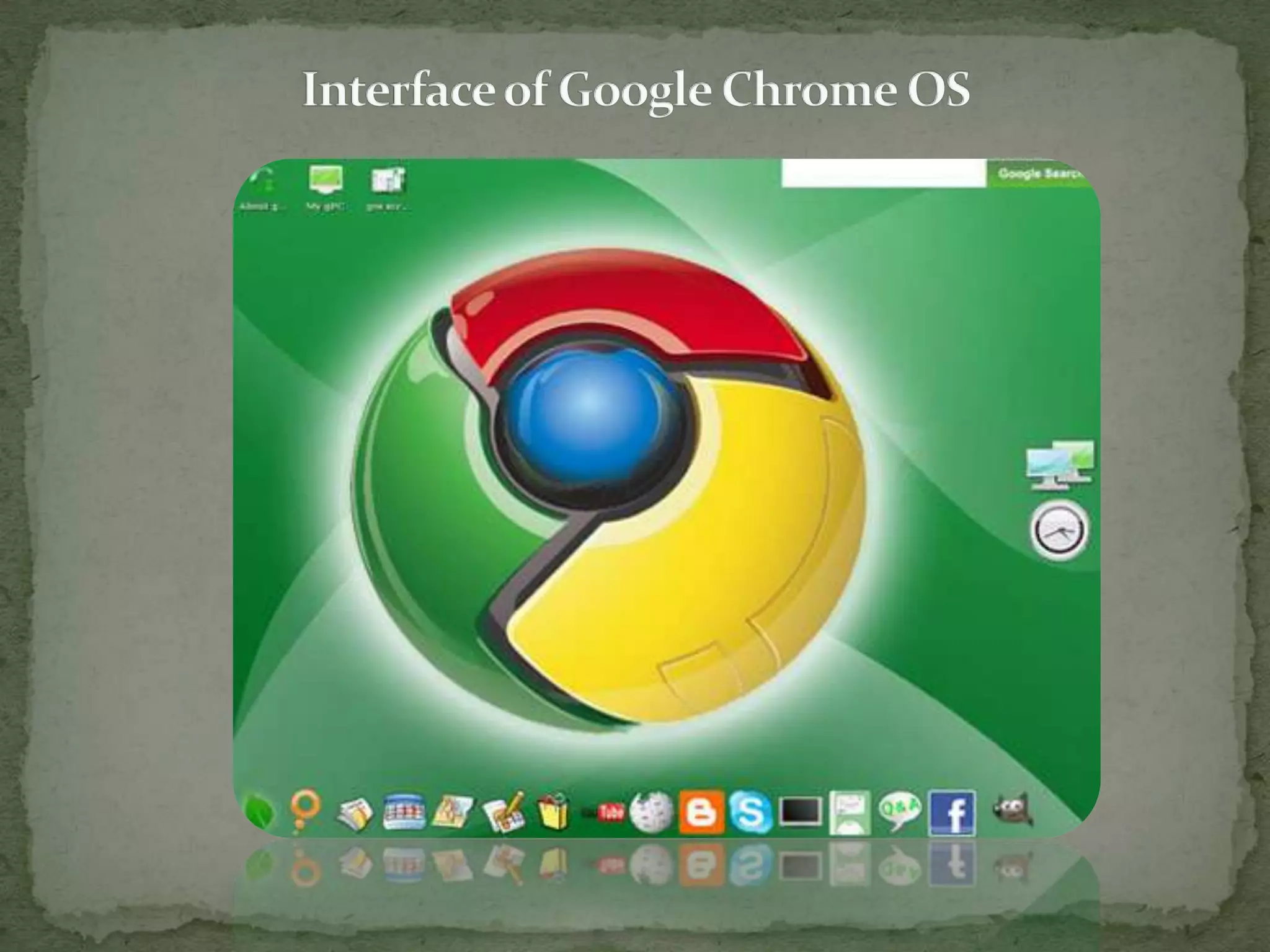
en.wikipedia.org/wiki/Google_Chrome_OS
 Cloud Computing holds a lot of promise and we
 believe that it is likely to be a major influence on
 hosting and application development.

 SmarterTools is preparing all of our products for
 potential Cloud compatibility in the future because we
 have confidence that the incumbent issues will be
 satisfactorily resolved as this new technology matures.
https://www.facebook.com/pages/Cloud-
computing/109623395723700?sk=wall


http://en.wikipedia.org/wiki/Cloud_computing

What is cloud ?

  • 1.
    By Dibyadip Das Saturday, July 21, 2012
  • 2.
     The cloudis a computing service that charges you based only on the amount of computing resources we use.  Pay as you go….
  • 3.
    Cloud computing isa natural evolution of the widespread adoption of :  Virtualization  service-oriented architecture  autonomic, and  utility computing.. Details are abstracted from end-users, who no longer have need for expertise in, or control over, the technology infrastructure "in the cloud" that supports them
  • 4.
    What Is CloudComputing?? Broadly, it is combination of three Computing concepts :  Grid Computing-Cluster of loosely coupled computers for a common cause  Utility Computing-Packaging of computer resources as a metered  Service Autonomic Computing-Capable of self management
  • 5.
    Key Characteristics  Agility Cost  Device and  Reliability  Scalability  Security  location  independence  Multi tenancy  Sustainability
  • 6.
    Basic Components ofCloud Computing 1)Clients 2)Services 3)Application 4)Platforms 5)Storages 6)Infrastructure
  • 7.
  • 8.
    Cloud architecture, thesystems architecture of the software systems involved in the delivery of cloud computing, typically involves multiple cloud components communicating with each other over a loose coupling mechanism such as a messaging queue. Cloud engineering is the application of engineering disciplines to cloud computing. It brings a systematic approach to the high level concerns of commercialization, standardization, and governance in developing, operating and maintaining cloud computing systems. It is a multidisciplinary method encompassing contributions from diverse areas such as systems, software, web, performance, information, security, platform, risk, and quality engineering.
  • 9.
    Cloud Computing Architecture 1)Softwareas a Service 2)Platform as a Service 3)Infrastructure as a Service These 3 services encapsulate the basic 6 Cloud Computing Components
  • 10.
    Software as aService • Software as a service features a complete application offered as a service on demand. • A single instance of the software runs on the cloud and services multiple end users or client organizations. • Eg: salesforce.com , Google Apps Platform as a Service • Platform as a service encapsulates a layer of software and provides it as a service that can be used to build higher-level services. Two Perspectives for Platform as a Service 1. Producer:- Someone producing Platform as a Service might produce a platform by integrating an OS, middleware, application software, and even a development environment that is then provided to a customer as a service.
  • 11.
    2.Consumer:- Someone using Process as a Service would see an encapsulated service that is presented to them through an API. The customer interacts with the platform through the API, and the platform does what is necessary to manage and scale itself to provide a given level of service Infrastructure as a Service • “Infrastructure as a service “delivers basic storage and computing capabilities as standardized services over the network.
  • 12.
  • 13.
    Public Clouds A publiccloud is one based on the standard cloud computing model, in which a service provider makes resources, such as applications and storage, available to the general public over the Internet. Public cloud services may be free or offered on a pay-per-usage model.
  • 14.
    Private Clouds Private cloudis infrastructure operated solely for a single organization, whether managed internally or by a third-party and hosted internally or externally. They have attracted criticism because users "still have to buy, build, and manage them" and thus do not benefit from lower up-front capital costs and less hands-on management, essentially "[lacking] the economic model that makes cloud computing such an intriguing concept".
  • 15.
    Hybrid Clouds •Hybrid cloudis a composition of two or more clouds (private, community, or public) that remain unique entities but are bound together, offering the benefits of multiple deployment models. It can also be defined as multiple cloud systems that are connected in a way that allows programs and data to be moved easily from one deployment system to another.
  • 17.
  • 19.
    What is it? •Itcan run your web applications on Google’s infrastructure and easy to scale for traffic and data storage •Features • dynamic web serving, • persistent storage, • automatic scaling Application environment • Java • Python
  • 21.
    iCloud is acloud storage and cloud computing service from Apple Inc. announced on June 6, 2011 at the Apple Worldwide Developers Conference (WWDC) . www.icloud.com
  • 22.
    iCloud = o Contacts o Mail o Calendars o Apps o Books o Backups
  • 23.
     The serviceallows users to store data such as music files on remote computer servers for download to multiple devices such as iOS-based devices, and personal computers running Mac OS X or Microsoft Windows.  It also replaces Apple's MobileMe service, acting as a data syncing center for email, contacts, calendars, bookmarks, n otes, to-do lists, and other data. en.wikipedia.org/wiki/ICloud
  • 24.
    IBM cloud computingconsists of cloud computing solutions for enterprises, offered by the global information technology company http://www.ibm.com/cloud-computing/us/en/
  • 25.
  • 27.
     Cloud Computingholds a lot of promise and we believe that it is likely to be a major influence on hosting and application development.  SmarterTools is preparing all of our products for potential Cloud compatibility in the future because we have confidence that the incumbent issues will be satisfactorily resolved as this new technology matures.
  • 28.