A
SEMINAR PRESENTATION
on
(CLOUD COMPUTING)
Submitted To: Submitted By:
Ms. KANIKA JINDAL IMRAN
Mr. DEVENDRA PRATAP SINGH 1313331904, B
Ms. GITANJALI ANAND
2/29/2016 1
CONTENTS
 Introduction
 Motivation
 Technology description
 Circuit Diagram
 Advantages/disadvantages
 Future Aspects
 Real time Applications
 References (at least 10 excluding websites name eg. Wikipedia
etc.)
2/29/2016 2
2/29/2016 3
WHAT IS CLOUD COMPUTING?
2/29/2016 4
CLOUD COMPUTING
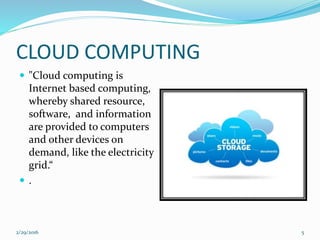
 "Cloud computing is
Internet based computing,
whereby shared resource,
software, and information
are provided to computers
and other devices on
demand, like the electricity
grid.“
 .
2/29/2016 5
• High demand of
interactive applications1
• Parallel batch processing2
• New trend in business
world and scientific
community
3
MOTIVATION:
2/29/2016 6
7
A
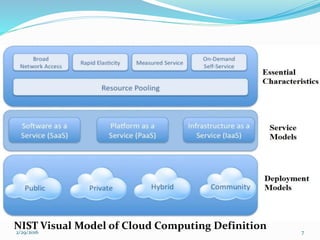
NIST Visual Model of Cloud Computing Definition2/29/2016
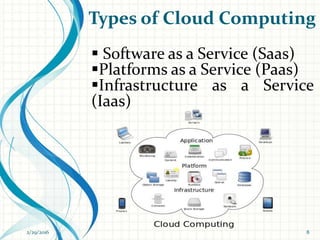
Types of Cloud Computing
 Software as a Service (Saas)
Platforms as a Service (Paas)
Infrastructure as a Service
(Iaas)
2/29/2016 8
Software As A Service (SaaS)
 Software As a Service (SaaS)is a software
distribution model in which applications are
hosted by a vendor or service provider and
made available to customers over a network,
typically the Internet.
 Customer of SaaS accesses the application
through Internet.
2/29/2016 9
Platform As A Service
 Platform as a Service (PaaS) is a way to rent hardware,
operating systems, storage and network capacity over
the Internet.
 Cloud providers offer an Internet-based platform to
developers who want to create services but don't want to
build their own cloud
2/29/2016 10
Infrastructure As A Service (IaaS)
 Infrastructure as a Service (IaaS) is a provision
model in which an organization outsources the
equipment used to support operations,
including storage, hardware, servers and
networking components.
 Datacenter as a service
 Cloud users rent storage, computation, and
maintenance from cloud providers (pay-as-you
go; like utility
2/29/2016 11
Cloud Deployment Models
 Public Cloud.
 Private Cloud.
 Community Cloud.
 Hybrid Cloud.
2/29/2016 12
Cloud Providers
 There are various providers of cloud storage
 Examples:
 Apple iCloud
 Dropbox
 Google Drive
 Amazon Cloud Drive
 Microsoft SkyDrive
2/29/2016 13
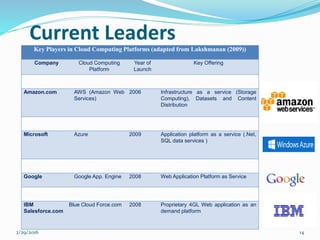
Current Leaders
Key Players in Cloud Computing Platforms (adapted from Lakshmanan (2009))
Company Cloud Computing
Platform
Year of
Launch
Key Offering
Amazon.com AWS (Amazon Web
Services)
2006 Infrastructure as a service (Storage
Computing), Datasets and Content
Distribution
Microsoft Azure 2009 Application platform as a service (.Net,
SQL data services )
Google Google App. Engine 2008 Web Application Platform as Service
IBM
Salesforce.com
Blue Cloud Force.com 2008 Proprietary 4GL Web application as an
demand platform
2/29/2016 14
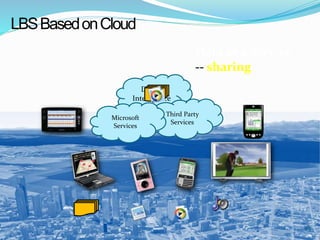
LBSBasedonCloud
Data +
Intelligence
Third Party
Services
Microsoft
Services
Data as a Service
-- sharing
15
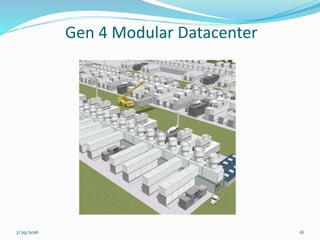
Gen 4 Modular Datacenter
2/29/2016 16
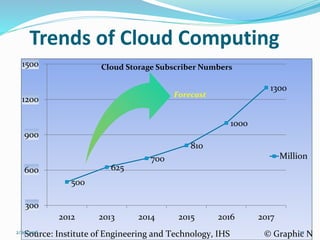
Trends of Cloud Computing
500
625
700
810
1000
1300
300
600
900
1200
1500
2012 2013 2014 2015 2016 2017
Cloud Storage Subscriber Numbers
Million
Forecast
Source: Institute of Engineering and Technology, IHS © Graphic New2/29/2016 17
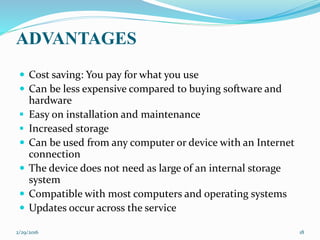
 Cost saving: You pay for what you use
 Can be less expensive compared to buying software and
hardware
 Easy on installation and maintenance
 Increased storage
 Can be used from any computer or device with an Internet
connection
 The device does not need as large of an internal storage
system
 Compatible with most computers and operating systems
 Updates occur across the service
ADVANTAGES
2/29/2016 18
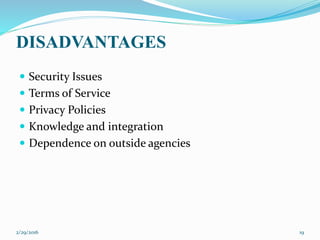
 Security Issues
 Terms of Service
 Privacy Policies
 Knowledge and integration
 Dependence on outside agencies
DISADVANTAGES
2/29/2016 19
 Cloud Computing is in a period of strong growth, but
this technology is still has some issues of security and
somewhat it is immature. Government Technology
Research Alliance (GTRA) research showed that the
most common concern about implementing Cloud
Computing technology was security.
 The real value of cloud computing is that it makes your
library related software and data available transparently
and everywhere including in latest available smart
phone devices.
 We are all aware, country like India faced problems like
digital divide and off course very low internet
bandwidth. So, benefit of new technology can be
reached to limited area of educational area.
Conclusion
2/29/2016 20
Questions?
2/29/2016 21

Cloud computing

  • 1.
    A SEMINAR PRESENTATION on (CLOUD COMPUTING) SubmittedTo: Submitted By: Ms. KANIKA JINDAL IMRAN Mr. DEVENDRA PRATAP SINGH 1313331904, B Ms. GITANJALI ANAND 2/29/2016 1
  • 2.
    CONTENTS  Introduction  Motivation Technology description  Circuit Diagram  Advantages/disadvantages  Future Aspects  Real time Applications  References (at least 10 excluding websites name eg. Wikipedia etc.) 2/29/2016 2
  • 3.
  • 4.
    WHAT IS CLOUDCOMPUTING? 2/29/2016 4
  • 5.
    CLOUD COMPUTING  "Cloudcomputing is Internet based computing, whereby shared resource, software, and information are provided to computers and other devices on demand, like the electricity grid.“  . 2/29/2016 5
  • 6.
    • High demandof interactive applications1 • Parallel batch processing2 • New trend in business world and scientific community 3 MOTIVATION: 2/29/2016 6
  • 7.
    7 A NIST Visual Modelof Cloud Computing Definition2/29/2016
  • 8.
    Types of CloudComputing  Software as a Service (Saas) Platforms as a Service (Paas) Infrastructure as a Service (Iaas) 2/29/2016 8
  • 9.
    Software As AService (SaaS)  Software As a Service (SaaS)is a software distribution model in which applications are hosted by a vendor or service provider and made available to customers over a network, typically the Internet.  Customer of SaaS accesses the application through Internet. 2/29/2016 9
  • 10.
    Platform As AService  Platform as a Service (PaaS) is a way to rent hardware, operating systems, storage and network capacity over the Internet.  Cloud providers offer an Internet-based platform to developers who want to create services but don't want to build their own cloud 2/29/2016 10
  • 11.
    Infrastructure As AService (IaaS)  Infrastructure as a Service (IaaS) is a provision model in which an organization outsources the equipment used to support operations, including storage, hardware, servers and networking components.  Datacenter as a service  Cloud users rent storage, computation, and maintenance from cloud providers (pay-as-you go; like utility 2/29/2016 11
  • 12.
    Cloud Deployment Models Public Cloud.  Private Cloud.  Community Cloud.  Hybrid Cloud. 2/29/2016 12
  • 13.
    Cloud Providers  Thereare various providers of cloud storage  Examples:  Apple iCloud  Dropbox  Google Drive  Amazon Cloud Drive  Microsoft SkyDrive 2/29/2016 13
  • 14.
    Current Leaders Key Playersin Cloud Computing Platforms (adapted from Lakshmanan (2009)) Company Cloud Computing Platform Year of Launch Key Offering Amazon.com AWS (Amazon Web Services) 2006 Infrastructure as a service (Storage Computing), Datasets and Content Distribution Microsoft Azure 2009 Application platform as a service (.Net, SQL data services ) Google Google App. Engine 2008 Web Application Platform as Service IBM Salesforce.com Blue Cloud Force.com 2008 Proprietary 4GL Web application as an demand platform 2/29/2016 14
  • 15.
  • 16.
    Gen 4 ModularDatacenter 2/29/2016 16
  • 17.
    Trends of CloudComputing 500 625 700 810 1000 1300 300 600 900 1200 1500 2012 2013 2014 2015 2016 2017 Cloud Storage Subscriber Numbers Million Forecast Source: Institute of Engineering and Technology, IHS © Graphic New2/29/2016 17
  • 18.
     Cost saving:You pay for what you use  Can be less expensive compared to buying software and hardware  Easy on installation and maintenance  Increased storage  Can be used from any computer or device with an Internet connection  The device does not need as large of an internal storage system  Compatible with most computers and operating systems  Updates occur across the service ADVANTAGES 2/29/2016 18
  • 19.
     Security Issues Terms of Service  Privacy Policies  Knowledge and integration  Dependence on outside agencies DISADVANTAGES 2/29/2016 19
  • 20.
     Cloud Computingis in a period of strong growth, but this technology is still has some issues of security and somewhat it is immature. Government Technology Research Alliance (GTRA) research showed that the most common concern about implementing Cloud Computing technology was security.  The real value of cloud computing is that it makes your library related software and data available transparently and everywhere including in latest available smart phone devices.  We are all aware, country like India faced problems like digital divide and off course very low internet bandwidth. So, benefit of new technology can be reached to limited area of educational area. Conclusion 2/29/2016 20
  • 21.