Cloud
Computing
-The New Age Of Computing
Presented by:
Prathyusha . A
Outlines
 Introduction
 What is Cloud Computing
 Why Cloud Computing
 Cloud architecture
 Types of cloud computing
 Services of Cloud Computing
 Advantages
 Disadvantages
 conclusion
INTRODUCTION
 With traditional desktop computing, we run copies of
software on our own computer. The documents we
create are stored on our own PC.
 Although documents can be accessed from other
computers on the network, they can’t be accessed by
computers outside the network, this is PC-centric
 Unlike traditional computing, this cloud computing
model isn’t PC-centric, its Document-centric
What Is Cloud computing..?
 Cloud computing means a type of internet-
based computing.
 It is a general term used to describe a new
class of network based computing that takes
place over the internet.
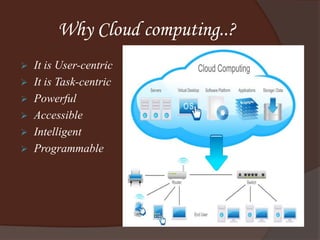
Why Cloud computing..?
 It is User-centric
 It is Task-centric
 Powerful
 Accessible
 Intelligent
 Programmable
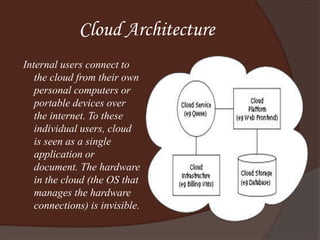
Cloud Architecture
Internal users connect to
the cloud from their own
personal computers or
portable devices over
the internet. To these
individual users, cloud
is seen as a single
application or
document. The hardware
in the cloud (the OS that
manages the hardware
connections) is invisible.
Types of Cloud computing
 Public cloud: A data centre provides both disk
space & computing power for all application
software.
Eg: Amazon Web, Google Apps.
 Private cloud: A data centre is to set up & bear
all installation and maintenance expenses. It
provides more security & privacy.
 Hybrid cloud: It is a composition of atleast one
private cloud & a public cloud.
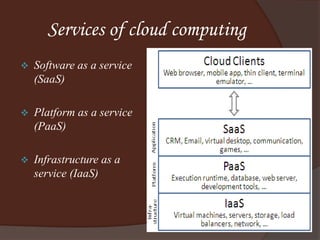
Services of cloud computing
 Software as a service
(SaaS)
 Platform as a service
(PaaS)
 Infrastructure as a
service (IaaS)
Companies offered Cloud computing
Advantages
 Lower computer costs
 Improved performance
 Reduced software costs
 Instant software updates
 Unlimited storage capacity
 Increased data reliability
 Universal document access
 Latest version availability
Disadvantages
 Security issues
 Terms of service
 Privacy policies
 can’t access without internet
Conclusion
 Thus cloud computing provide a super-
computing power.
 This cloud of computers extends beyond a
single company or enterprise.
 The applications and data served by the
cloud are available to broad group of users,
cross-enterprise and cross-platform.

cloudcomputing ppt

  • 1.
    Cloud Computing -The New AgeOf Computing Presented by: Prathyusha . A
  • 2.
    Outlines  Introduction  Whatis Cloud Computing  Why Cloud Computing  Cloud architecture  Types of cloud computing  Services of Cloud Computing  Advantages  Disadvantages  conclusion
  • 3.
    INTRODUCTION  With traditionaldesktop computing, we run copies of software on our own computer. The documents we create are stored on our own PC.  Although documents can be accessed from other computers on the network, they can’t be accessed by computers outside the network, this is PC-centric  Unlike traditional computing, this cloud computing model isn’t PC-centric, its Document-centric
  • 4.
    What Is Cloudcomputing..?  Cloud computing means a type of internet- based computing.  It is a general term used to describe a new class of network based computing that takes place over the internet.
  • 5.
    Why Cloud computing..? It is User-centric  It is Task-centric  Powerful  Accessible  Intelligent  Programmable
  • 6.
    Cloud Architecture Internal usersconnect to the cloud from their own personal computers or portable devices over the internet. To these individual users, cloud is seen as a single application or document. The hardware in the cloud (the OS that manages the hardware connections) is invisible.
  • 7.
    Types of Cloudcomputing  Public cloud: A data centre provides both disk space & computing power for all application software. Eg: Amazon Web, Google Apps.  Private cloud: A data centre is to set up & bear all installation and maintenance expenses. It provides more security & privacy.  Hybrid cloud: It is a composition of atleast one private cloud & a public cloud.
  • 8.
    Services of cloudcomputing  Software as a service (SaaS)  Platform as a service (PaaS)  Infrastructure as a service (IaaS)
  • 9.
  • 10.
    Advantages  Lower computercosts  Improved performance  Reduced software costs  Instant software updates  Unlimited storage capacity  Increased data reliability  Universal document access  Latest version availability
  • 11.
    Disadvantages  Security issues Terms of service  Privacy policies  can’t access without internet
  • 12.
    Conclusion  Thus cloudcomputing provide a super- computing power.  This cloud of computers extends beyond a single company or enterprise.  The applications and data served by the cloud are available to broad group of users, cross-enterprise and cross-platform.