 Body

Mass Index (BMI) is a number
calculated from a person's weight
and height.
 BMI is a fairly reliable indicator of body
fatness for most people.
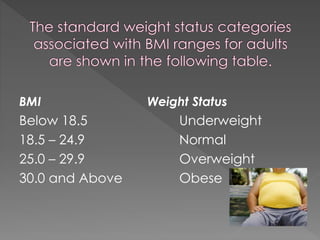
BMI

Below 18.5
18.5 – 24.9
25.0 – 29.9
30.0 and Above

Weight Status

Underweight
Normal
Overweight
Obese
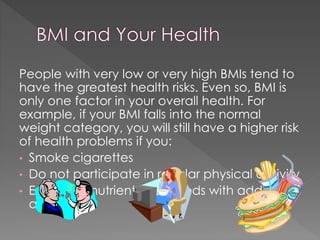
People with very low or very high BMIs tend to
have the greatest health risks. Even so, BMI is
only one factor in your overall health. For
example, if your BMI falls into the normal
weight category, you will still have a higher risk
of health problems if you:
• Smoke cigarettes
• Do not participate in regular physical activity
• Eat lots of nutrient-poor foods with added fat
and sugar.
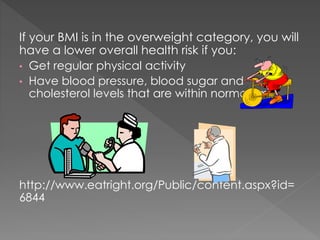
If your BMI is in the overweight category, you will
have a lower overall health risk if you:
• Get regular physical activity
• Have blood pressure, blood sugar and
cholesterol levels that are within normal limits.

http://www.eatright.org/Public/content.aspx?id=
6844
•
•
•

•
•
•
•
•

Hypertension
Dyslipidemia (for example, high LDL cholesterol, low
HDL cholesterol, or high levels of triglycerides)
Type 2 diabetes
Coronary heart disease
Stroke
Gallbladder disease
Osteoarthritis
Sleep apnea and respiratory problems
Some cancers (endometrial, breast, and colon)

•
http://www.cdc.gov/healthyweight/assessing/bmi/adult_bmi/index.htm
l
What is bmi

What is bmi

  • 1.
     Body Mass Index(BMI) is a number calculated from a person's weight and height.  BMI is a fairly reliable indicator of body fatness for most people.
  • 2.
    BMI Below 18.5 18.5 –24.9 25.0 – 29.9 30.0 and Above Weight Status Underweight Normal Overweight Obese
  • 3.
    People with verylow or very high BMIs tend to have the greatest health risks. Even so, BMI is only one factor in your overall health. For example, if your BMI falls into the normal weight category, you will still have a higher risk of health problems if you: • Smoke cigarettes • Do not participate in regular physical activity • Eat lots of nutrient-poor foods with added fat and sugar.
  • 4.
    If your BMIis in the overweight category, you will have a lower overall health risk if you: • Get regular physical activity • Have blood pressure, blood sugar and cholesterol levels that are within normal limits. http://www.eatright.org/Public/content.aspx?id= 6844
  • 5.
    • • • • • • • • Hypertension Dyslipidemia (for example,high LDL cholesterol, low HDL cholesterol, or high levels of triglycerides) Type 2 diabetes Coronary heart disease Stroke Gallbladder disease Osteoarthritis Sleep apnea and respiratory problems Some cancers (endometrial, breast, and colon) • http://www.cdc.gov/healthyweight/assessing/bmi/adult_bmi/index.htm l