Blood Sugar/
Glucose
Glucose
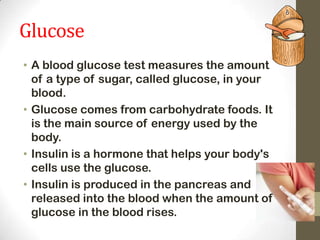
• A blood glucose test measures the amount
of a type of sugar, called glucose, in your
blood.
• Glucose comes from carbohydrate foods. It
is the main source of energy used by the
body.
• Insulin is a hormone that helps your body's
cells use the glucose.
• Insulin is produced in the pancreas and
released into the blood when the amount of
glucose in the blood rises.
Glucose continued
• Normally, your blood glucose levels increase
slightly after you eat.
• This increase causes your pancreas to release
insulin so that your blood glucose levels do not
get too high.
• Blood glucose levels that remain high over time
can damage your eyes, kidneys, nerves, and
blood vessels.
There are several different types of
blood glucose tests.
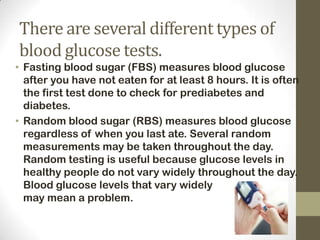
• Fasting blood sugar (FBS) measures blood glucose
after you have not eaten for at least 8 hours. It is often
the first test done to check for prediabetes and
diabetes.
• Random blood sugar (RBS) measures blood glucose
regardless of when you last ate. Several random
measurements may be taken throughout the day.
Random testing is useful because glucose levels in
healthy people do not vary widely throughout the day.
Blood glucose levels that vary widely
may mean a problem.
A1C

• The A1C test is a common blood test used to diagnose
type 1 and type 2 diabetes and then to gauge how well
you're managing your diabetes. The A1C test goes by
many other names, including glycated hemoglobin,
glycosylated hemoglobin, hemoglobin A1C and HbA1C.

• The A1C test result reflects your average blood sugar
level for the past two to three months. Specifically, the
A1C test measures what percentage of your
hemoglobin — a protein in red blood cells that carries
oxygen — is coated with sugar (glycated). The higher
your A1C level, the poorer your blood sugar control
and the higher your risk of diabetes complications.
A1C continued
• The A1C test is the primary test used to
diagnose prediabetes, type 1 diabetes and type
2 diabetes.
• After a diabetes diagnosis, the A1C test is used
to monitor your diabetes treatment plan. Since
the A1C test measures your average blood
sugar level for the past two to three months
instead of your blood sugar level at a point in
time, it is a better reflection of how well your
diabetes treatment plan is working overall.

Module 3 blood sugar

  • 1.
  • 2.
    Glucose • A bloodglucose test measures the amount of a type of sugar, called glucose, in your blood. • Glucose comes from carbohydrate foods. It is the main source of energy used by the body. • Insulin is a hormone that helps your body's cells use the glucose. • Insulin is produced in the pancreas and released into the blood when the amount of glucose in the blood rises.
  • 3.
    Glucose continued • Normally,your blood glucose levels increase slightly after you eat. • This increase causes your pancreas to release insulin so that your blood glucose levels do not get too high. • Blood glucose levels that remain high over time can damage your eyes, kidneys, nerves, and blood vessels.
  • 4.
    There are severaldifferent types of blood glucose tests. • Fasting blood sugar (FBS) measures blood glucose after you have not eaten for at least 8 hours. It is often the first test done to check for prediabetes and diabetes. • Random blood sugar (RBS) measures blood glucose regardless of when you last ate. Several random measurements may be taken throughout the day. Random testing is useful because glucose levels in healthy people do not vary widely throughout the day. Blood glucose levels that vary widely may mean a problem.
  • 5.
    A1C • The A1Ctest is a common blood test used to diagnose type 1 and type 2 diabetes and then to gauge how well you're managing your diabetes. The A1C test goes by many other names, including glycated hemoglobin, glycosylated hemoglobin, hemoglobin A1C and HbA1C. • The A1C test result reflects your average blood sugar level for the past two to three months. Specifically, the A1C test measures what percentage of your hemoglobin — a protein in red blood cells that carries oxygen — is coated with sugar (glycated). The higher your A1C level, the poorer your blood sugar control and the higher your risk of diabetes complications.
  • 6.
    A1C continued • TheA1C test is the primary test used to diagnose prediabetes, type 1 diabetes and type 2 diabetes. • After a diabetes diagnosis, the A1C test is used to monitor your diabetes treatment plan. Since the A1C test measures your average blood sugar level for the past two to three months instead of your blood sugar level at a point in time, it is a better reflection of how well your diabetes treatment plan is working overall.