Training
Why, When, How
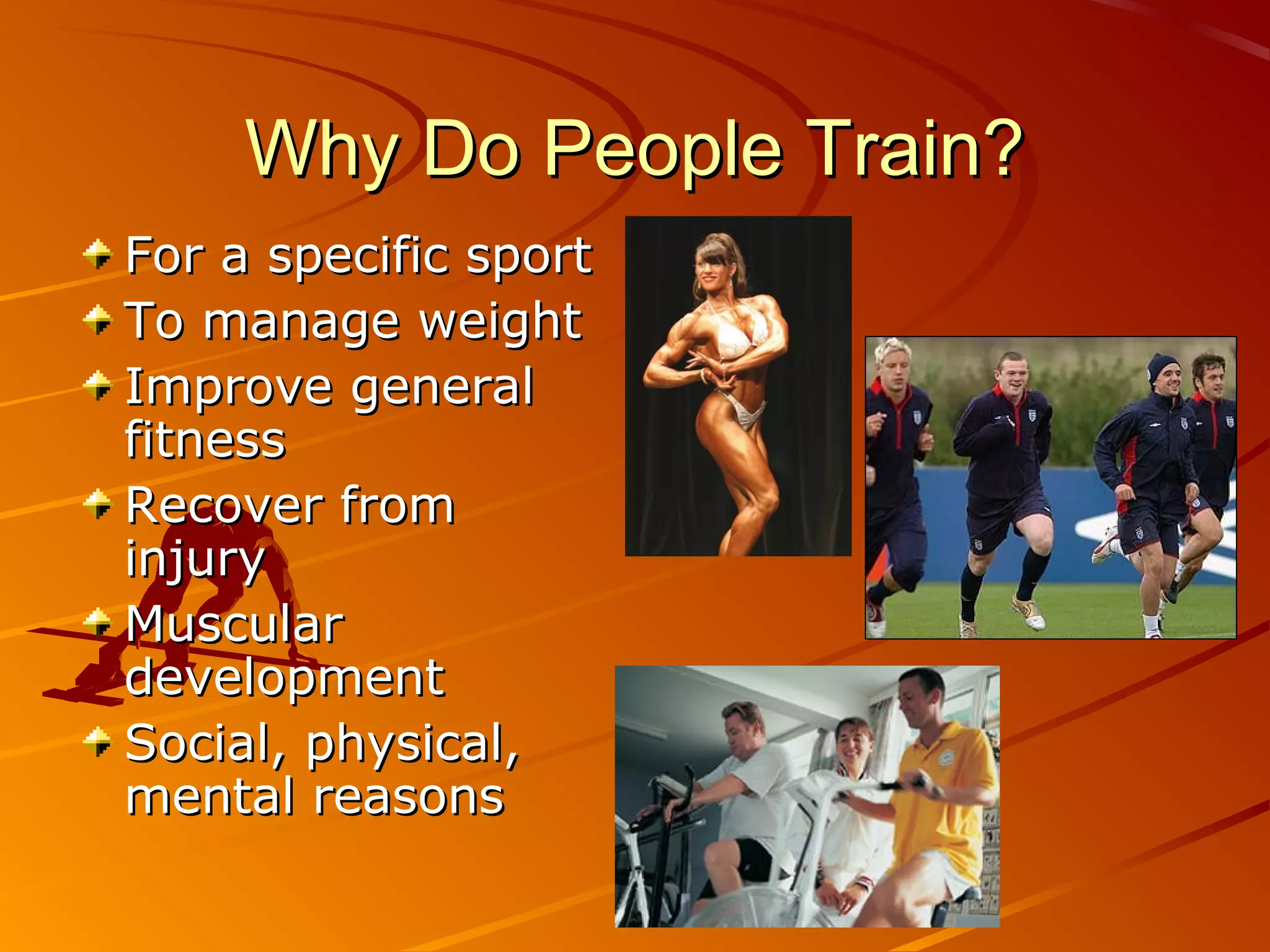
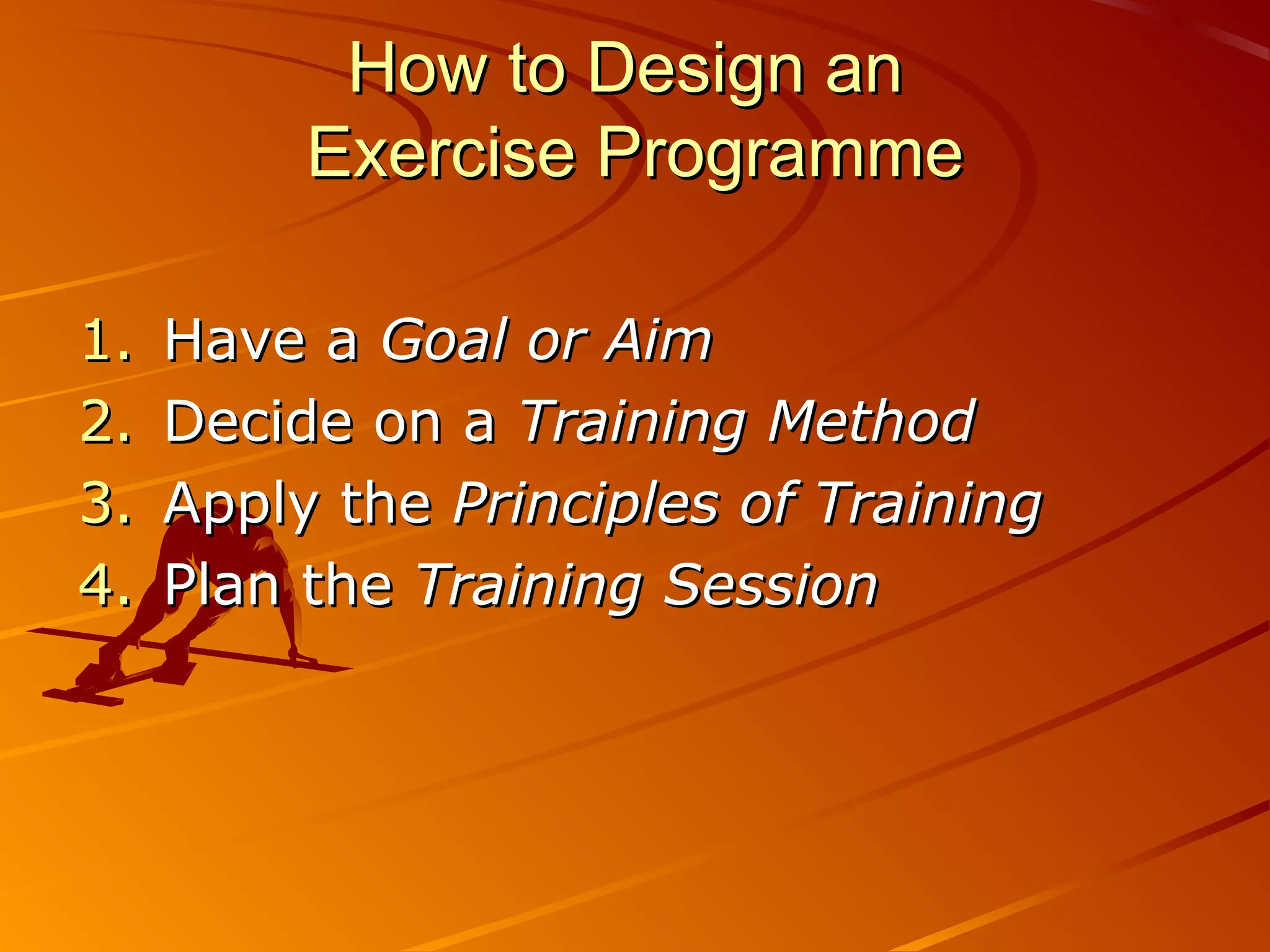
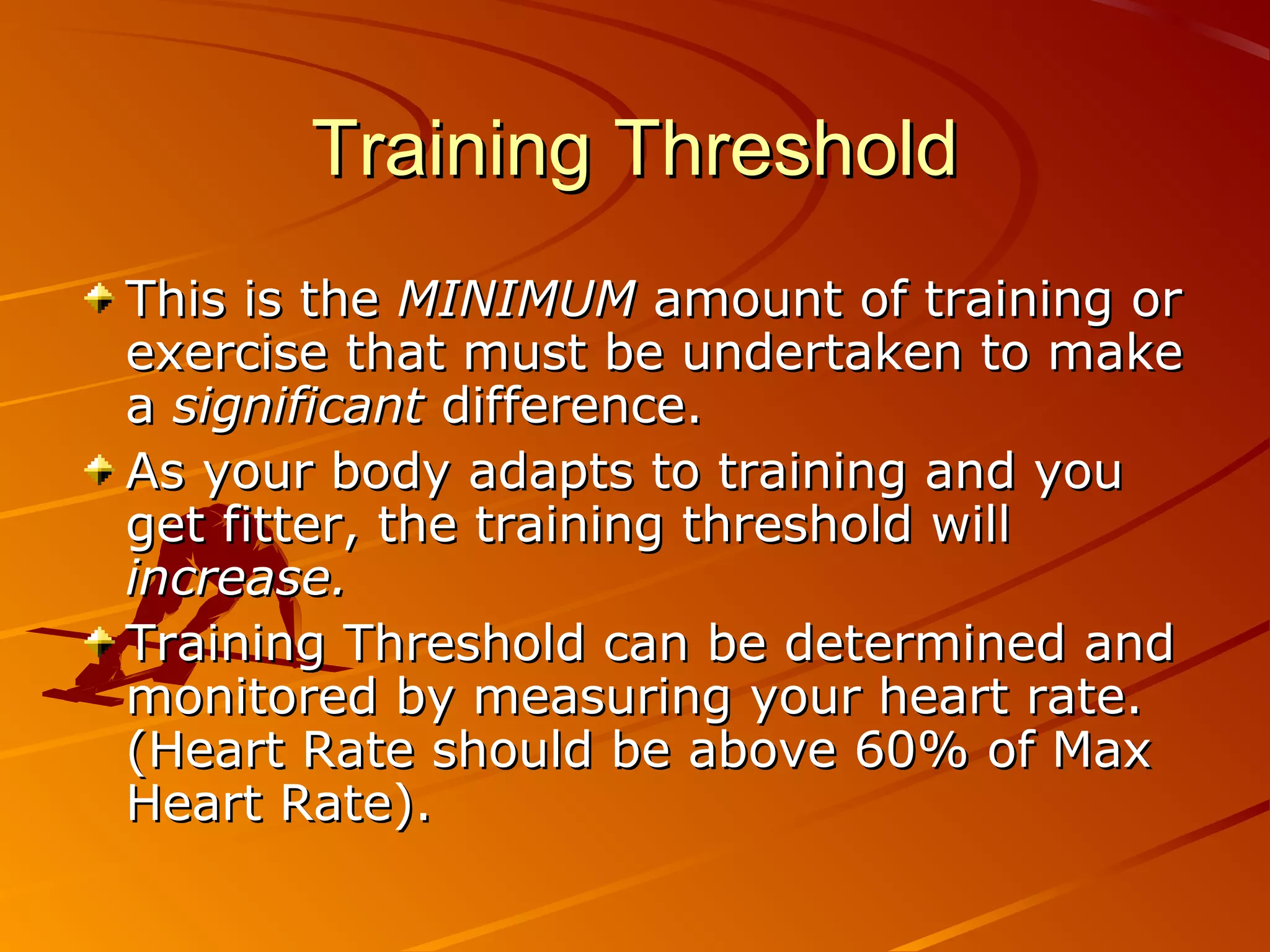
Why Do People Train?
For a specific sport
To manage weight
Improve general
fitness
Recover from
injury
Muscular
development
Social, physical,
mental reasons
How to Design an
          Exercise Programme

1.   Have a Goal or Aim
2.   Decide on a Training Method
3.   Apply the Principles of Training
4.   Plan the Training Session
Training Threshold
This is the MINIMUM amount of training or
exercise that must be undertaken to make
a significant difference.
As your body adapts to training and you
get fitter, the training threshold will
increase.
Training Threshold can be determined and
monitored by measuring your heart rate.
(Heart Rate should be above 60% of Max
Heart Rate).
The Principles of Training

Specificity
Progression
Overload
Reversibility
Tedium
            SPORT
Specificity
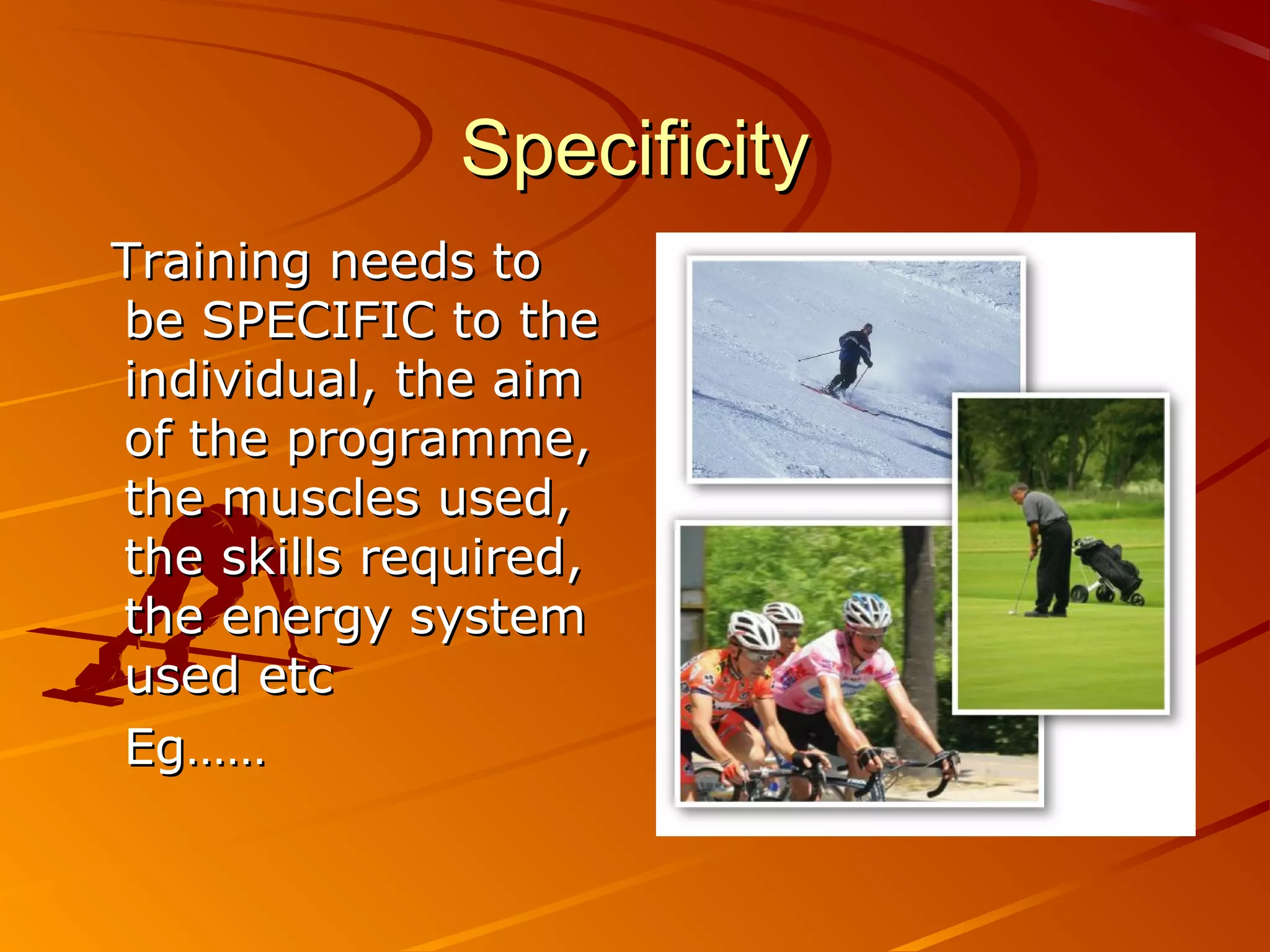
Training needs to
be SPECIFIC to the
individual, the aim
of the programme,
the muscles used,
the skills required,
the energy system
used etc
Eg……
Progression
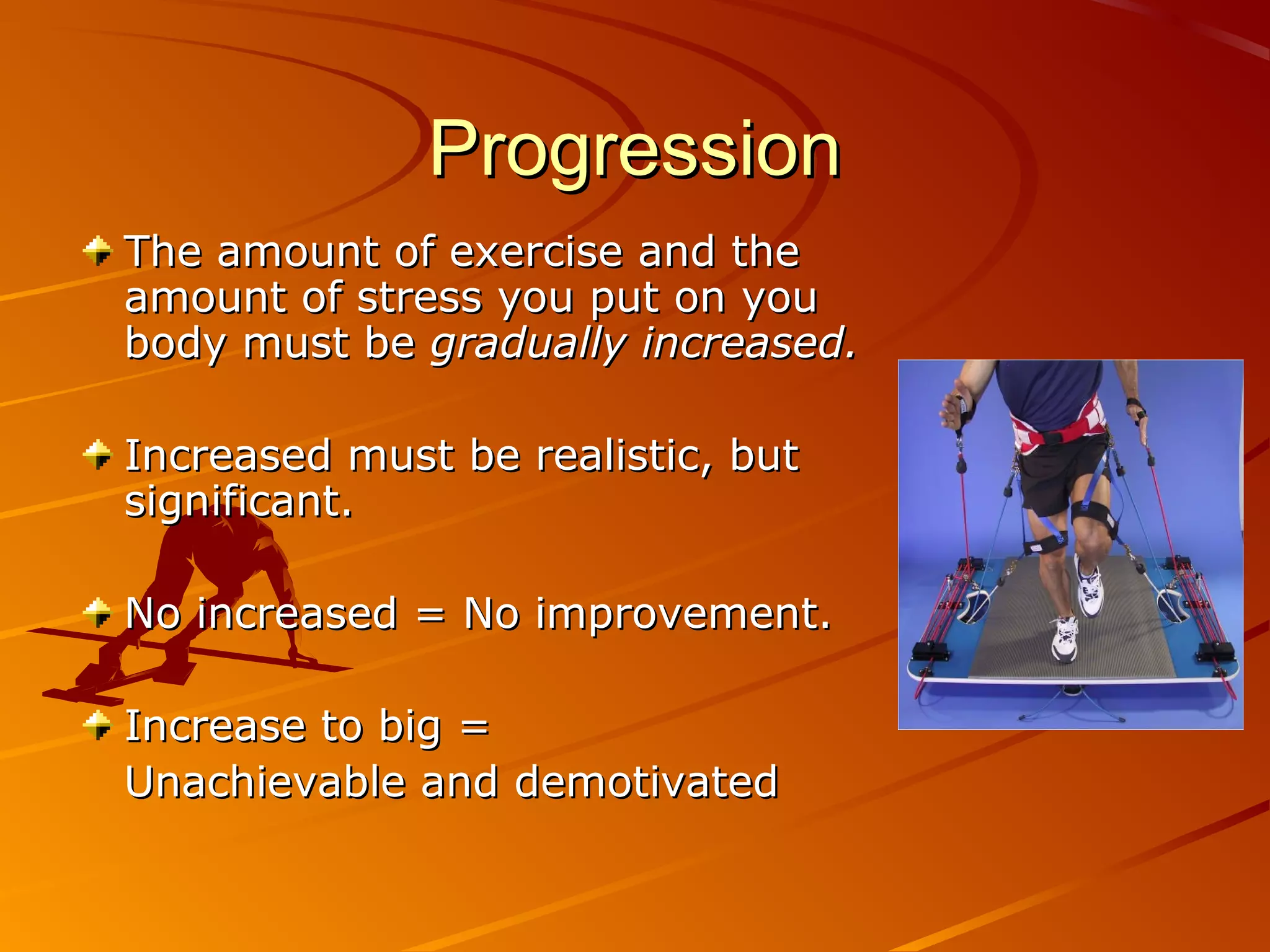
The amount of exercise and the
amount of stress you put on you
body must be gradually increased.

Increased must be realistic, but
significant.

No increased = No improvement.

Increase to big =
Unachievable and demotivated
Overload
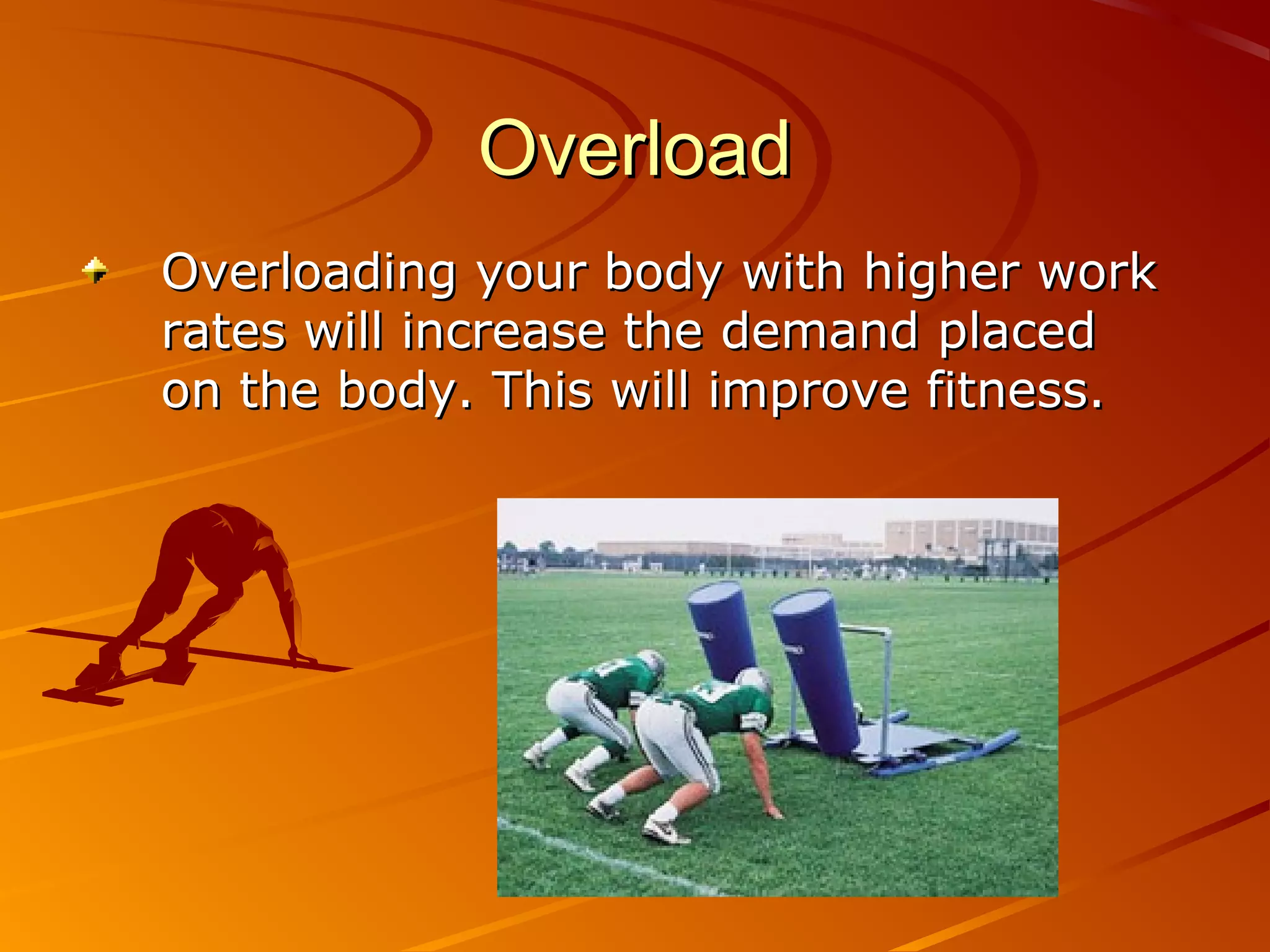
Overloading your body with higher work
rates will increase the demand placed
on the body. This will improve fitness.
Overload
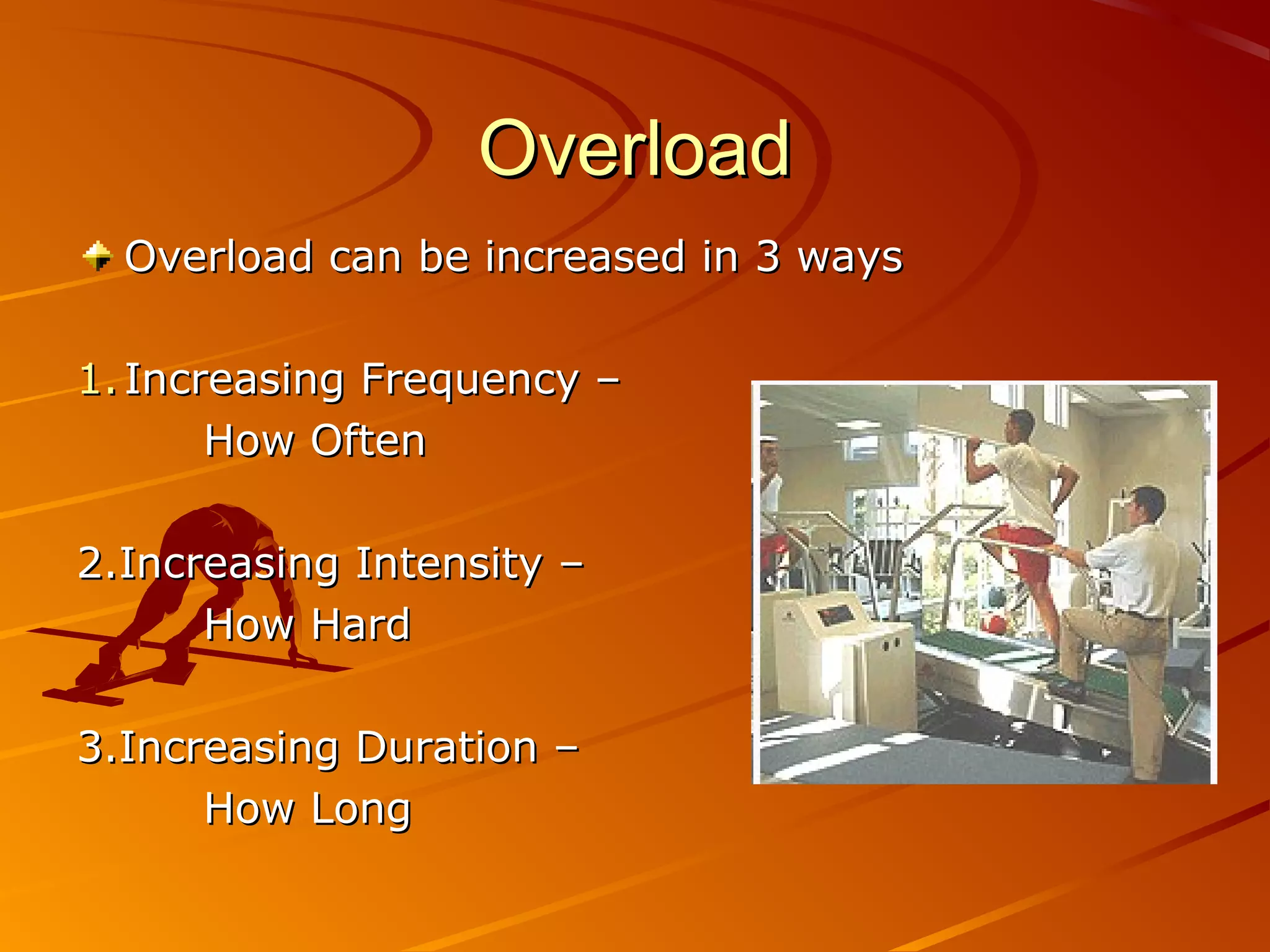
  Overload can be increased in 3 ways

1. Increasing Frequency –
       How Often

2.Increasing Intensity –
      How Hard

3.Increasing Duration –
      How Long
Reversibility
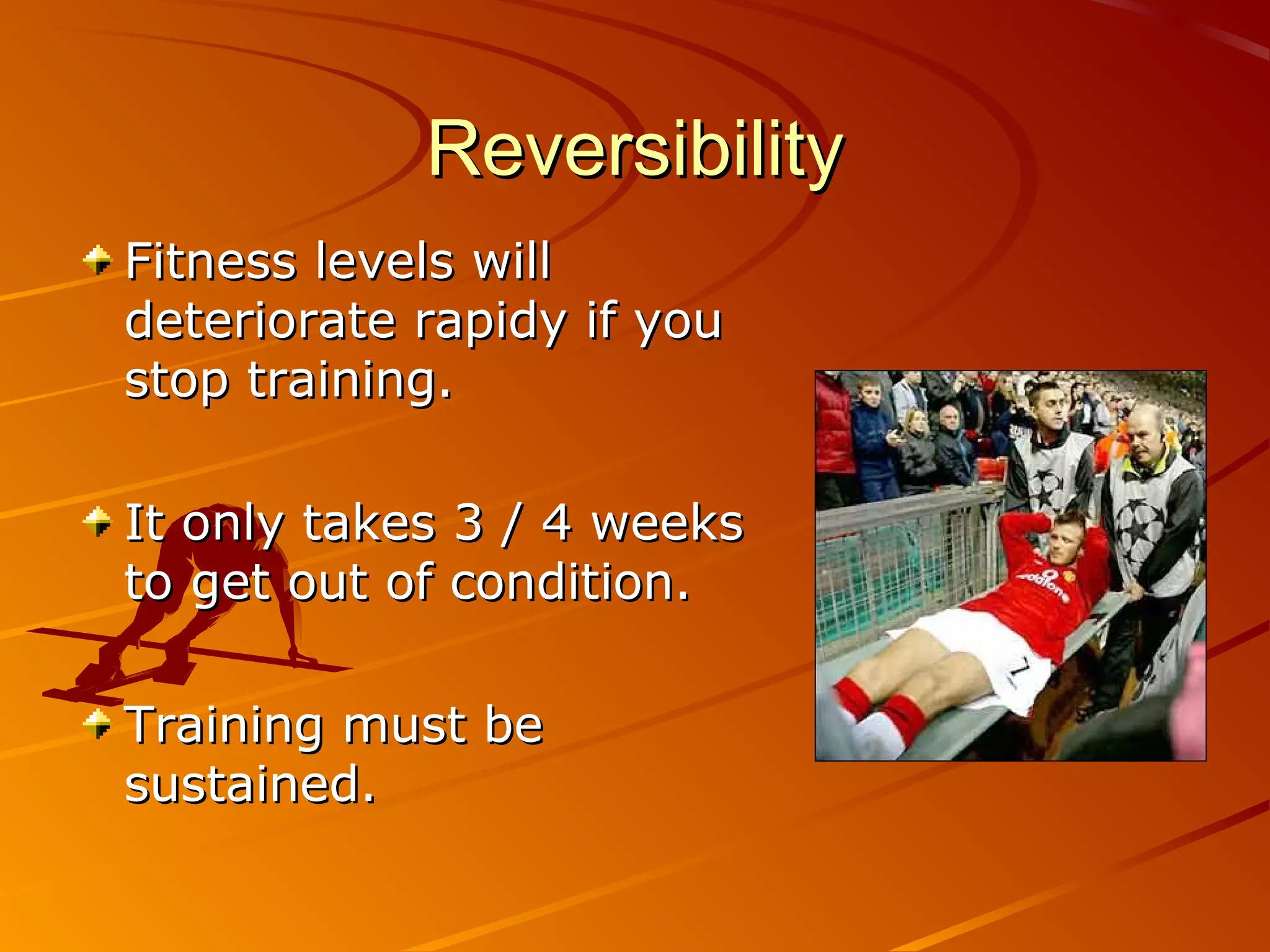
Fitness levels will
deteriorate rapidy if you
stop training.

It only takes 3 / 4 weeks
to get out of condition.

Training must be
sustained.
Tedium
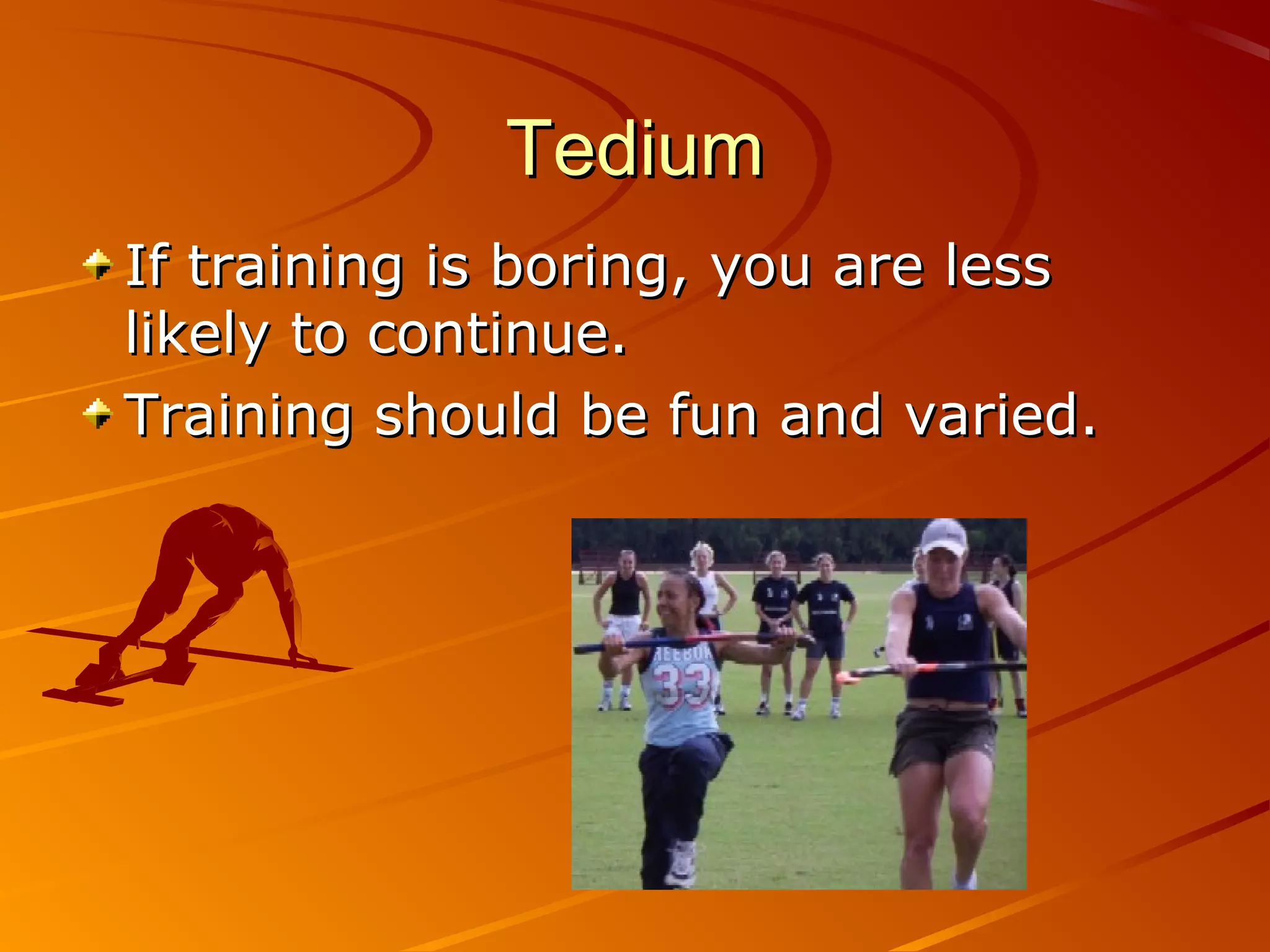
If training is boring, you are less
likely to continue.
Training should be fun and varied.
The FITT Principle
Frequency – How Often
   - at least 3 x a week.
   - eg every other day to allow recovery

Intensity- How Hard
   - monitor heart rate
   - keep above training threshold

Time – How Long
   - Minimum of 20 mins per session

Type – What Kind
   - Training method
Training Methods
Continuous Training
Fartlek Training
Interval Training
Weight Training
Circuit Training
Continuous Training
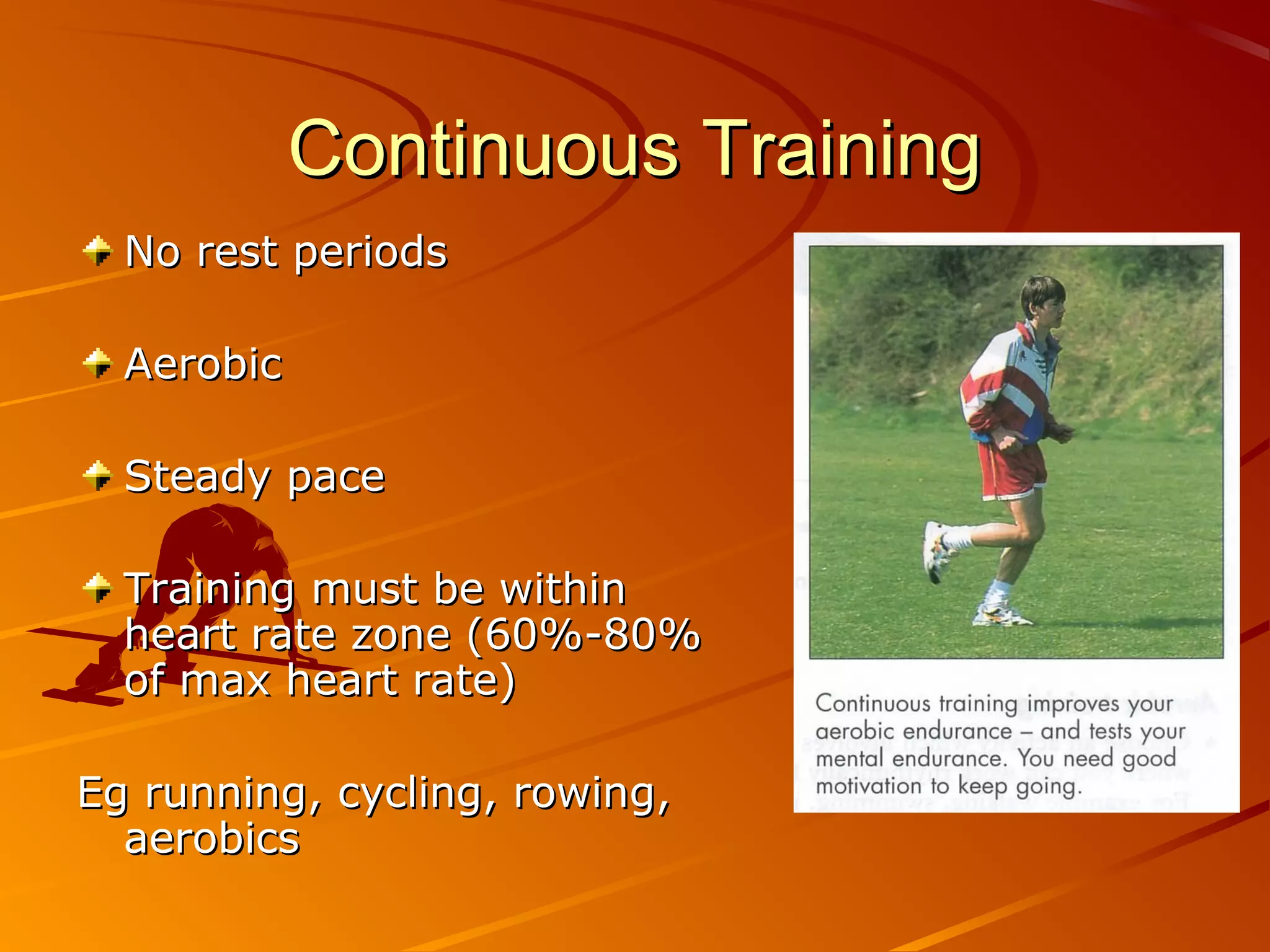
  No rest periods

  Aerobic

  Steady pace

  Training must be within
  heart rate zone (60%-80%
  of max heart rate)

Eg running, cycling, rowing,
  aerobics
Fartlek Training
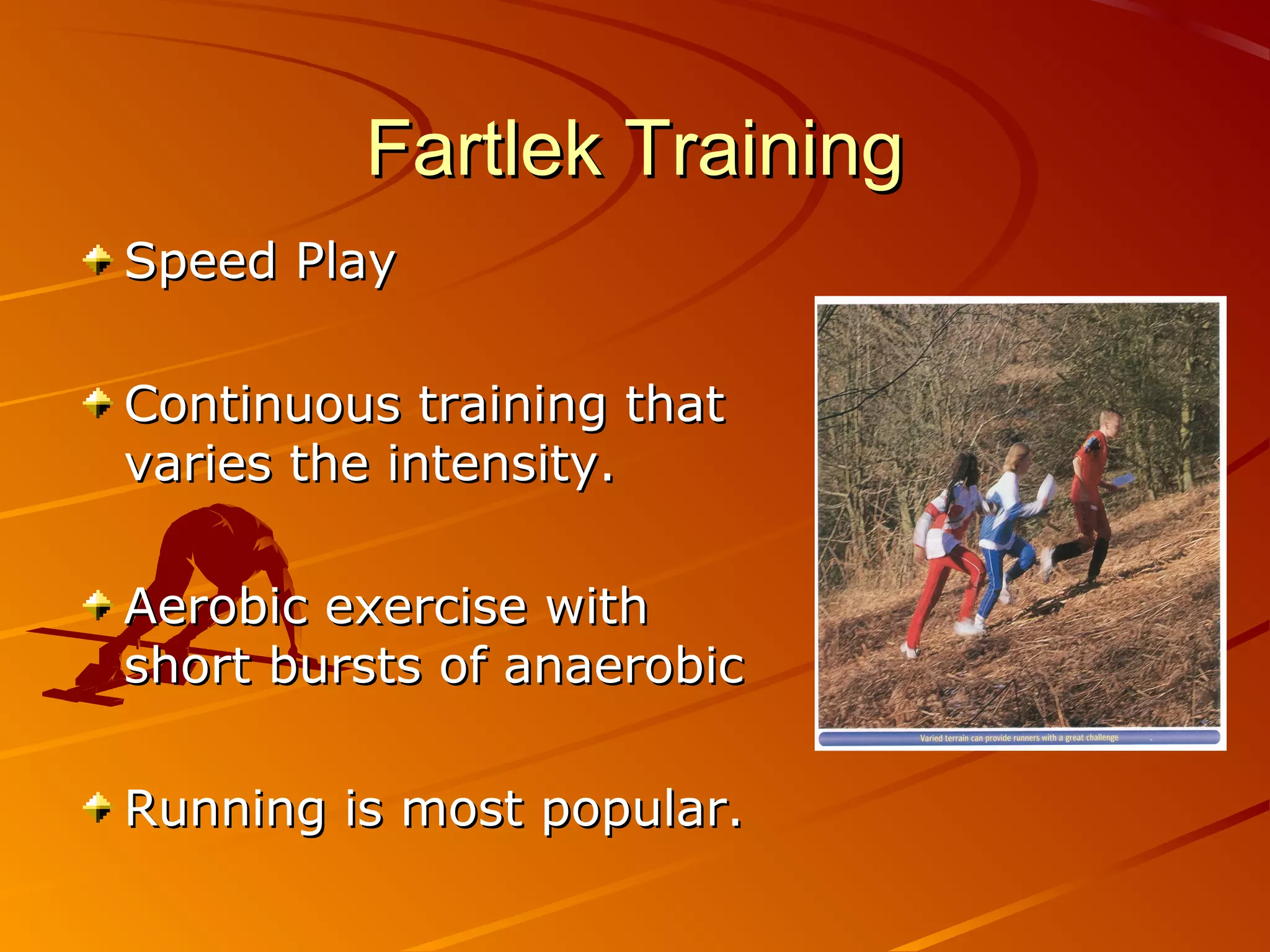
Speed Play

Continuous training that
varies the intensity.

Aerobic exercise with
short bursts of anaerobic

Running is most popular.
Interval Training
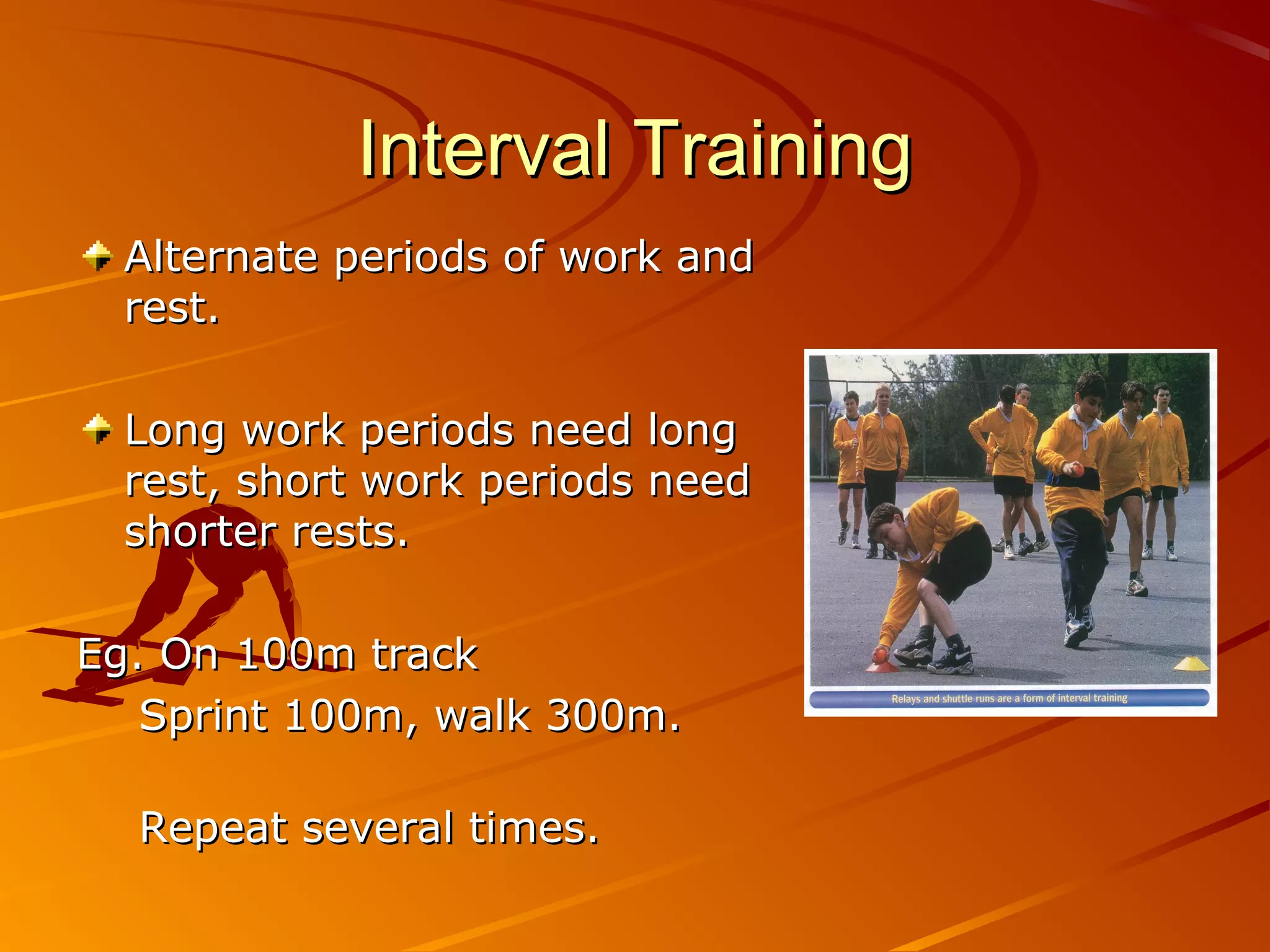
  Alternate periods of work and
  rest.

  Long work periods need long
  rest, short work periods need
  shorter rests.

Eg. On 100m track
   Sprint 100m, walk 300m.

  Repeat several times.
Weight Training
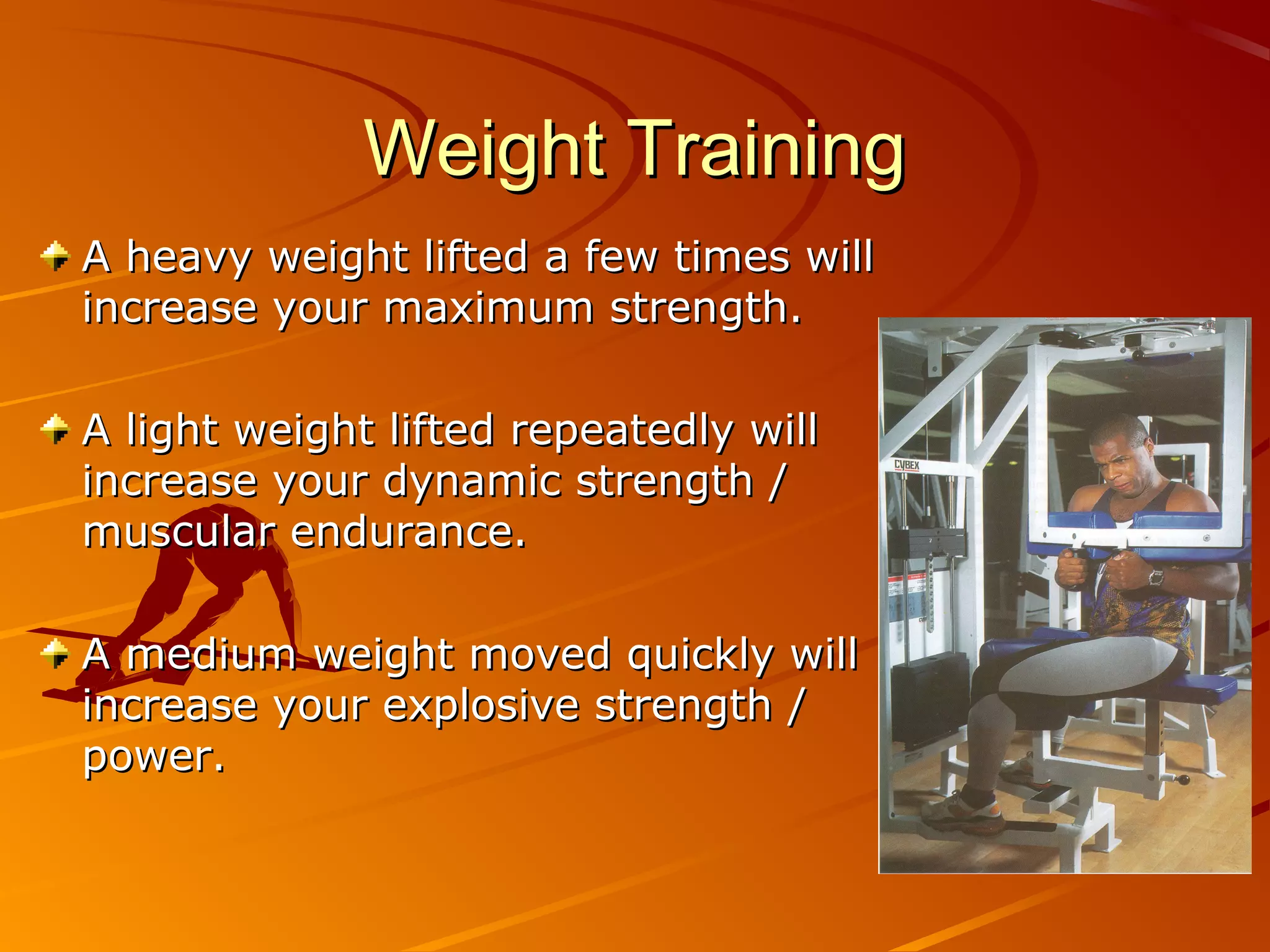
A heavy weight lifted a few times will
increase your maximum strength.

A light weight lifted repeatedly will
increase your dynamic strength /
muscular endurance.

A medium weight moved quickly will
increase your explosive strength /
power.
Weight Training
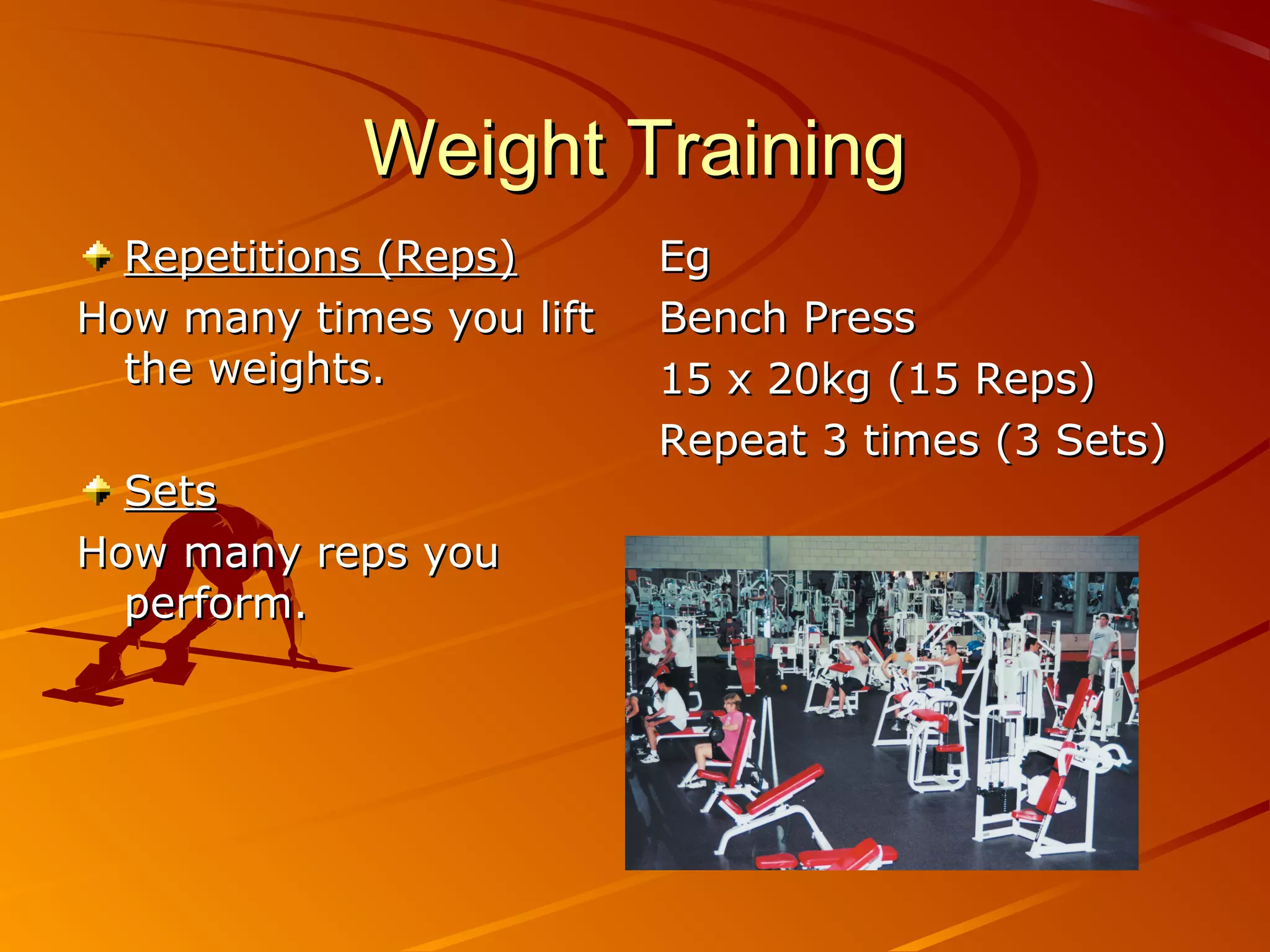
  Repetitions (Reps)      Eg
How many times you lift   Bench Press
  the weights.            15 x 20kg (15 Reps)
                          Repeat 3 times (3 Sets)
  Sets
How many reps you
  perform.
Circuit Training
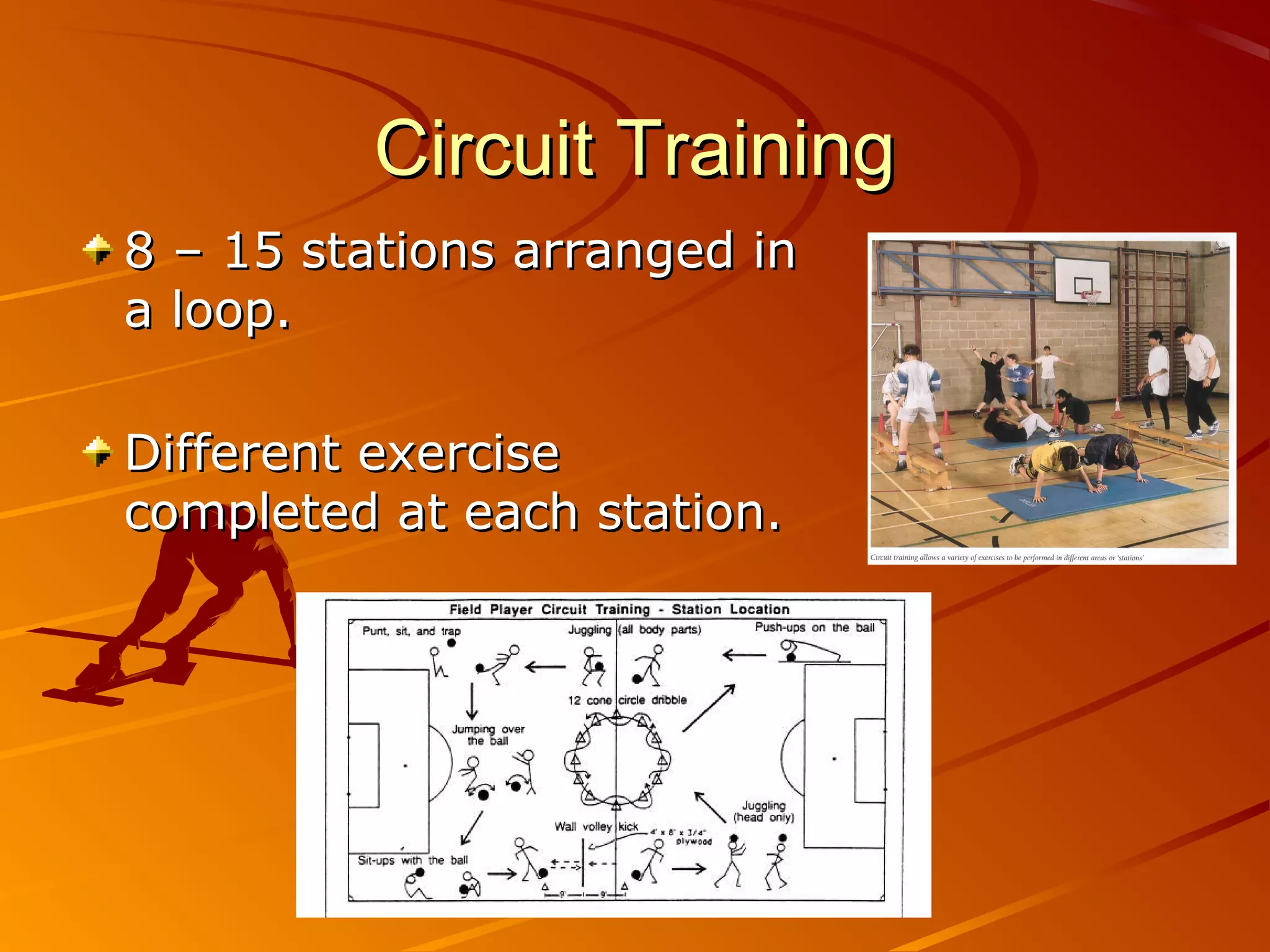
8 – 15 stations arranged in
a loop.

Different exercise
completed at each station.
Circuit Training
Ways to complete the          Ways to progress the
circuit.                      circuit.

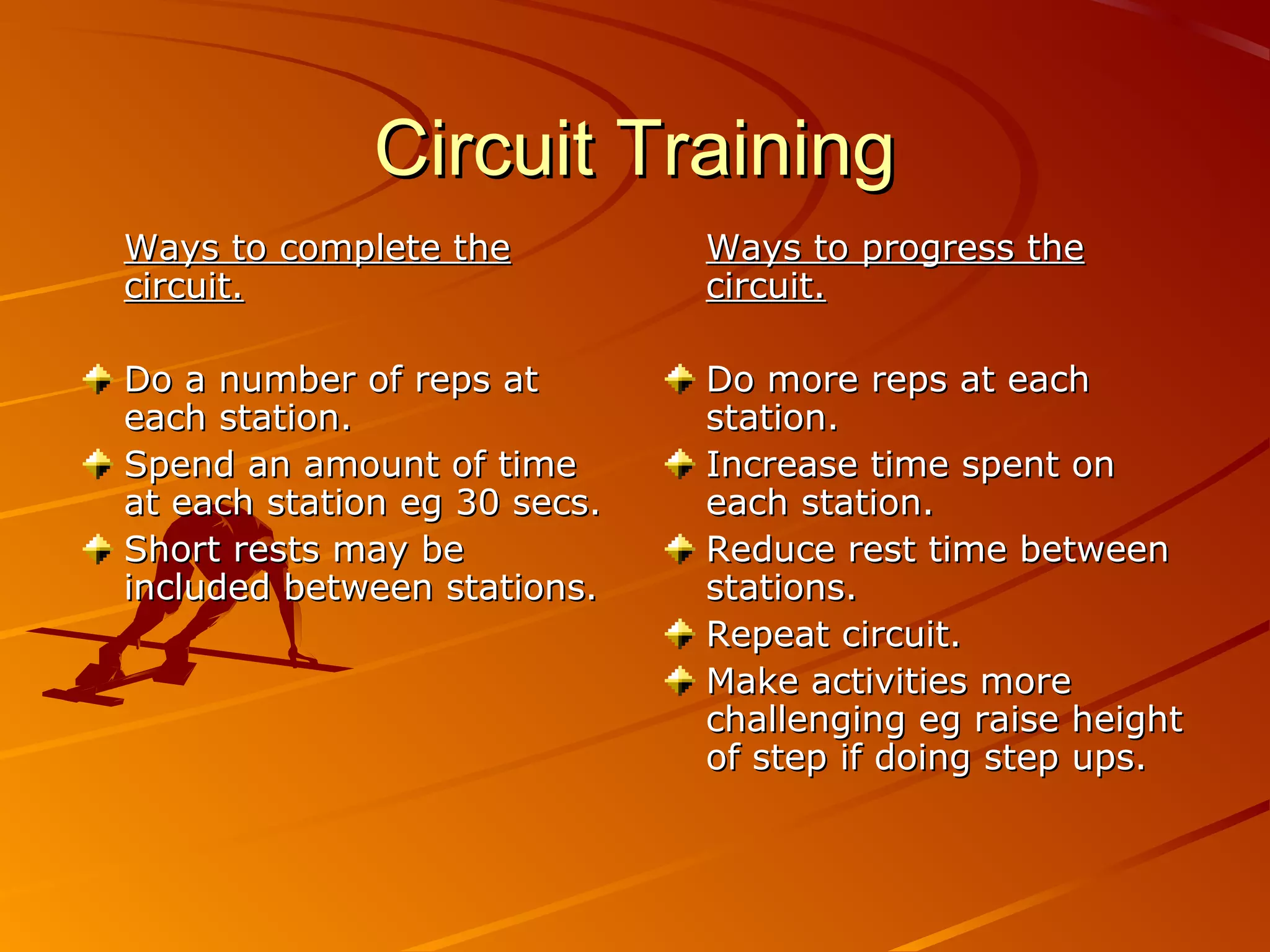
Do a number of reps at        Do more reps at each
each station.                 station.
Spend an amount of time       Increase time spent on
at each station eg 30 secs.   each station.
Short rests may be            Reduce rest time between
included between stations.    stations.
                              Repeat circuit.
                              Make activities more
                              challenging eg raise height
                              of step if doing step ups.
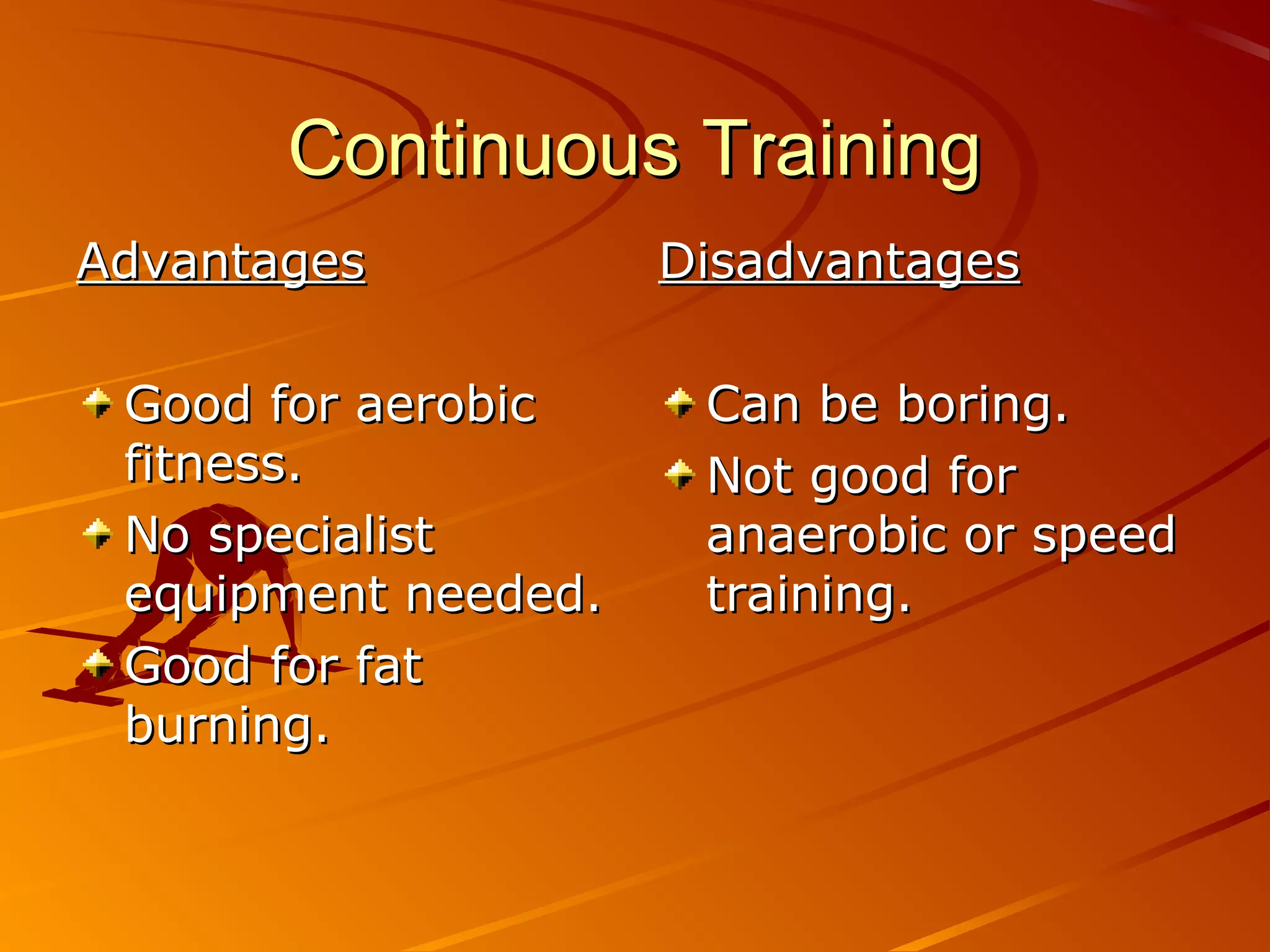
Continuous Training
Advantages           Disadvantages

 Good for aerobic     Can be boring.
 fitness.             Not good for
 No specialist        anaerobic or speed
 equipment needed.    training.
 Good for fat
 burning.
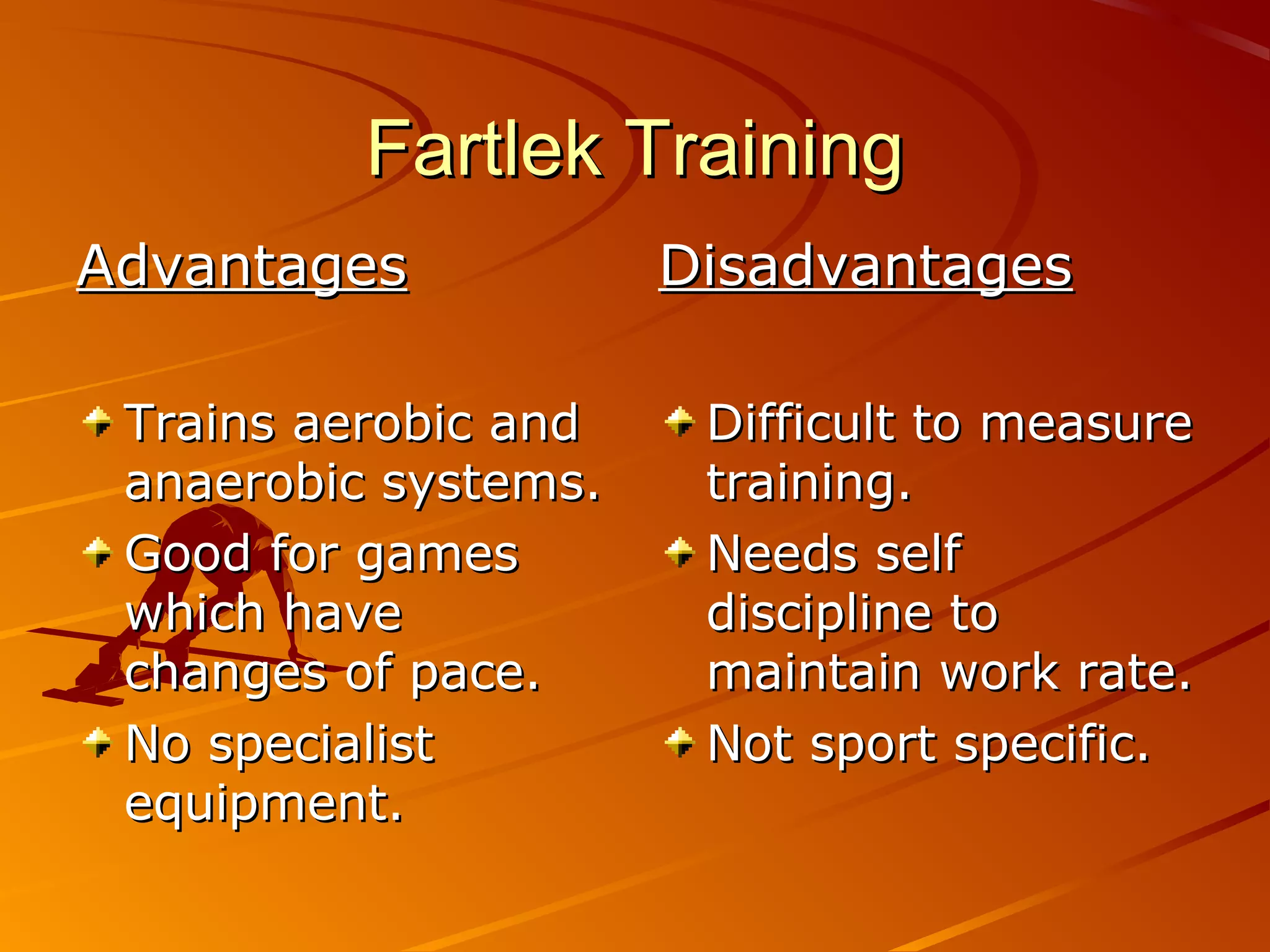
Fartlek Training
Advantages            Disadvantages

 Trains aerobic and    Difficult to measure
 anaerobic systems.    training.
 Good for games        Needs self
 which have            discipline to
 changes of pace.      maintain work rate.
 No specialist         Not sport specific.
 equipment.
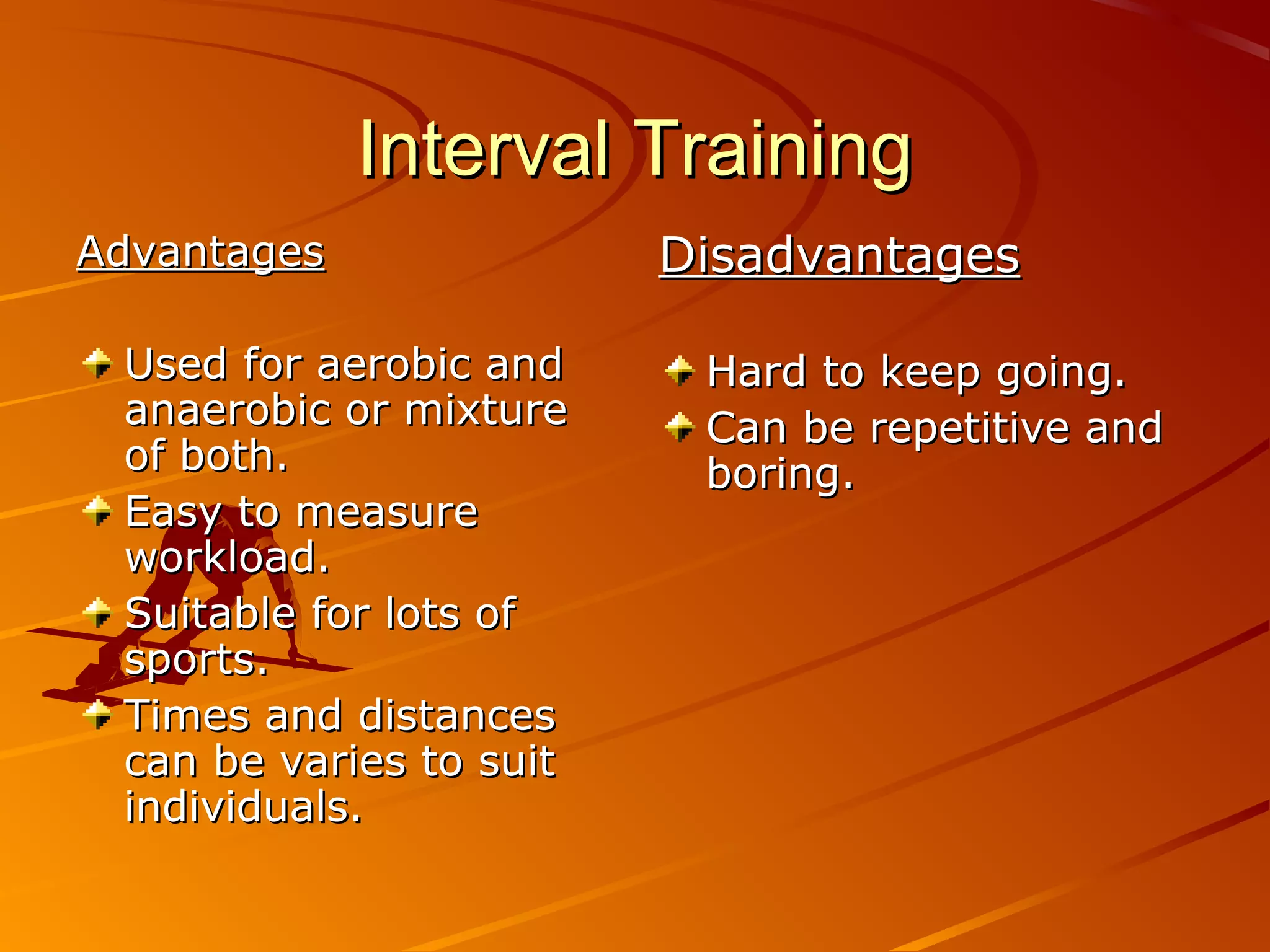
Interval Training
Advantages               Disadvantages

 Used for aerobic and     Hard to keep going.
 anaerobic or mixture     Can be repetitive and
 of both.                 boring.
 Easy to measure
 workload.
 Suitable for lots of
 sports.
 Times and distances
 can be varies to suit
 individuals.
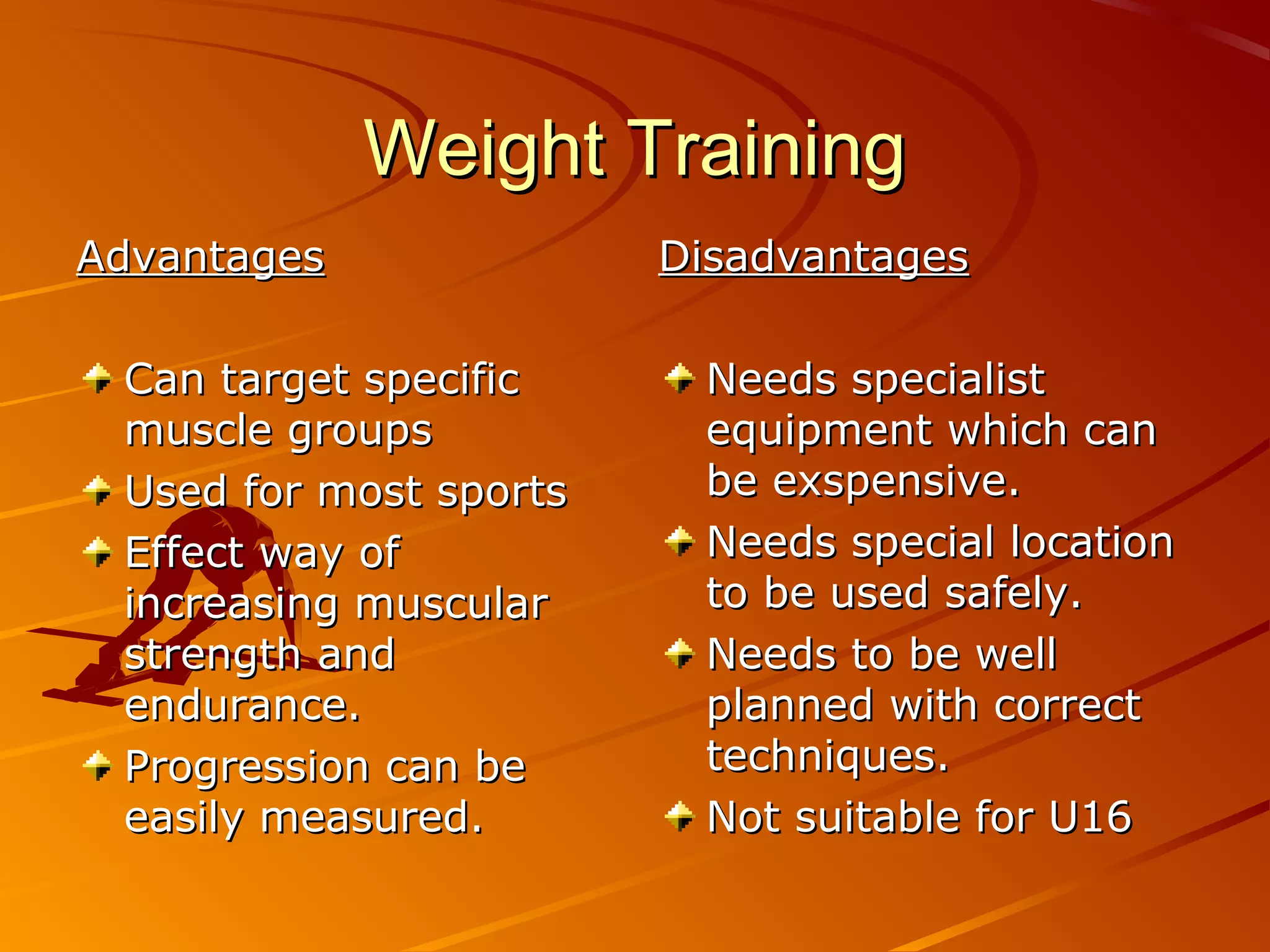
Weight Training
Advantages              Disadvantages

 Can target specific     Needs specialist
 muscle groups           equipment which can
 Used for most sports    be exspensive.
 Effect way of           Needs special location
 increasing muscular     to be used safely.
 strength and            Needs to be well
 endurance.              planned with correct
 Progression can be      techniques.
 easily measured.        Not suitable for U16
Circuit Training
Advantages                    Disadvantages

Lots of activities can be     Needs organisation and
included. Which helps         planning.
motivation.                   Can take time to set up.
Can be designed to be
specific to any sport.
Can be adapted to include
fitness and skill work.
Does not require specialist
equipment.
Can train both aerobic and
anaerobic.

Priciples and methods of training

  • 1.
  • 2.
    Why Do PeopleTrain? For a specific sport To manage weight Improve general fitness Recover from injury Muscular development Social, physical, mental reasons
  • 3.
    How to Designan Exercise Programme 1. Have a Goal or Aim 2. Decide on a Training Method 3. Apply the Principles of Training 4. Plan the Training Session
  • 4.
    Training Threshold This isthe MINIMUM amount of training or exercise that must be undertaken to make a significant difference. As your body adapts to training and you get fitter, the training threshold will increase. Training Threshold can be determined and monitored by measuring your heart rate. (Heart Rate should be above 60% of Max Heart Rate).
  • 5.
    The Principles ofTraining Specificity Progression Overload Reversibility Tedium SPORT
  • 6.
    Specificity Training needs to beSPECIFIC to the individual, the aim of the programme, the muscles used, the skills required, the energy system used etc Eg……
  • 7.
    Progression The amount ofexercise and the amount of stress you put on you body must be gradually increased. Increased must be realistic, but significant. No increased = No improvement. Increase to big = Unachievable and demotivated
  • 8.
    Overload Overloading your bodywith higher work rates will increase the demand placed on the body. This will improve fitness.
  • 9.
    Overload Overloadcan be increased in 3 ways 1. Increasing Frequency – How Often 2.Increasing Intensity – How Hard 3.Increasing Duration – How Long
  • 10.
    Reversibility Fitness levels will deterioraterapidy if you stop training. It only takes 3 / 4 weeks to get out of condition. Training must be sustained.
  • 11.
    Tedium If training isboring, you are less likely to continue. Training should be fun and varied.
  • 12.
    The FITT Principle Frequency– How Often - at least 3 x a week. - eg every other day to allow recovery Intensity- How Hard - monitor heart rate - keep above training threshold Time – How Long - Minimum of 20 mins per session Type – What Kind - Training method
  • 13.
    Training Methods Continuous Training FartlekTraining Interval Training Weight Training Circuit Training
  • 14.
    Continuous Training No rest periods Aerobic Steady pace Training must be within heart rate zone (60%-80% of max heart rate) Eg running, cycling, rowing, aerobics
  • 15.
    Fartlek Training Speed Play Continuoustraining that varies the intensity. Aerobic exercise with short bursts of anaerobic Running is most popular.
  • 16.
    Interval Training Alternate periods of work and rest. Long work periods need long rest, short work periods need shorter rests. Eg. On 100m track Sprint 100m, walk 300m. Repeat several times.
  • 17.
    Weight Training A heavyweight lifted a few times will increase your maximum strength. A light weight lifted repeatedly will increase your dynamic strength / muscular endurance. A medium weight moved quickly will increase your explosive strength / power.
  • 18.
    Weight Training Repetitions (Reps) Eg How many times you lift Bench Press the weights. 15 x 20kg (15 Reps) Repeat 3 times (3 Sets) Sets How many reps you perform.
  • 19.
    Circuit Training 8 –15 stations arranged in a loop. Different exercise completed at each station.
  • 20.
    Circuit Training Ways tocomplete the Ways to progress the circuit. circuit. Do a number of reps at Do more reps at each each station. station. Spend an amount of time Increase time spent on at each station eg 30 secs. each station. Short rests may be Reduce rest time between included between stations. stations. Repeat circuit. Make activities more challenging eg raise height of step if doing step ups.
  • 21.
    Continuous Training Advantages Disadvantages Good for aerobic Can be boring. fitness. Not good for No specialist anaerobic or speed equipment needed. training. Good for fat burning.
  • 22.
    Fartlek Training Advantages Disadvantages Trains aerobic and Difficult to measure anaerobic systems. training. Good for games Needs self which have discipline to changes of pace. maintain work rate. No specialist Not sport specific. equipment.
  • 23.
    Interval Training Advantages Disadvantages Used for aerobic and Hard to keep going. anaerobic or mixture Can be repetitive and of both. boring. Easy to measure workload. Suitable for lots of sports. Times and distances can be varies to suit individuals.
  • 24.
    Weight Training Advantages Disadvantages Can target specific Needs specialist muscle groups equipment which can Used for most sports be exspensive. Effect way of Needs special location increasing muscular to be used safely. strength and Needs to be well endurance. planned with correct Progression can be techniques. easily measured. Not suitable for U16
  • 25.
    Circuit Training Advantages Disadvantages Lots of activities can be Needs organisation and included. Which helps planning. motivation. Can take time to set up. Can be designed to be specific to any sport. Can be adapted to include fitness and skill work. Does not require specialist equipment. Can train both aerobic and anaerobic.