Introduction
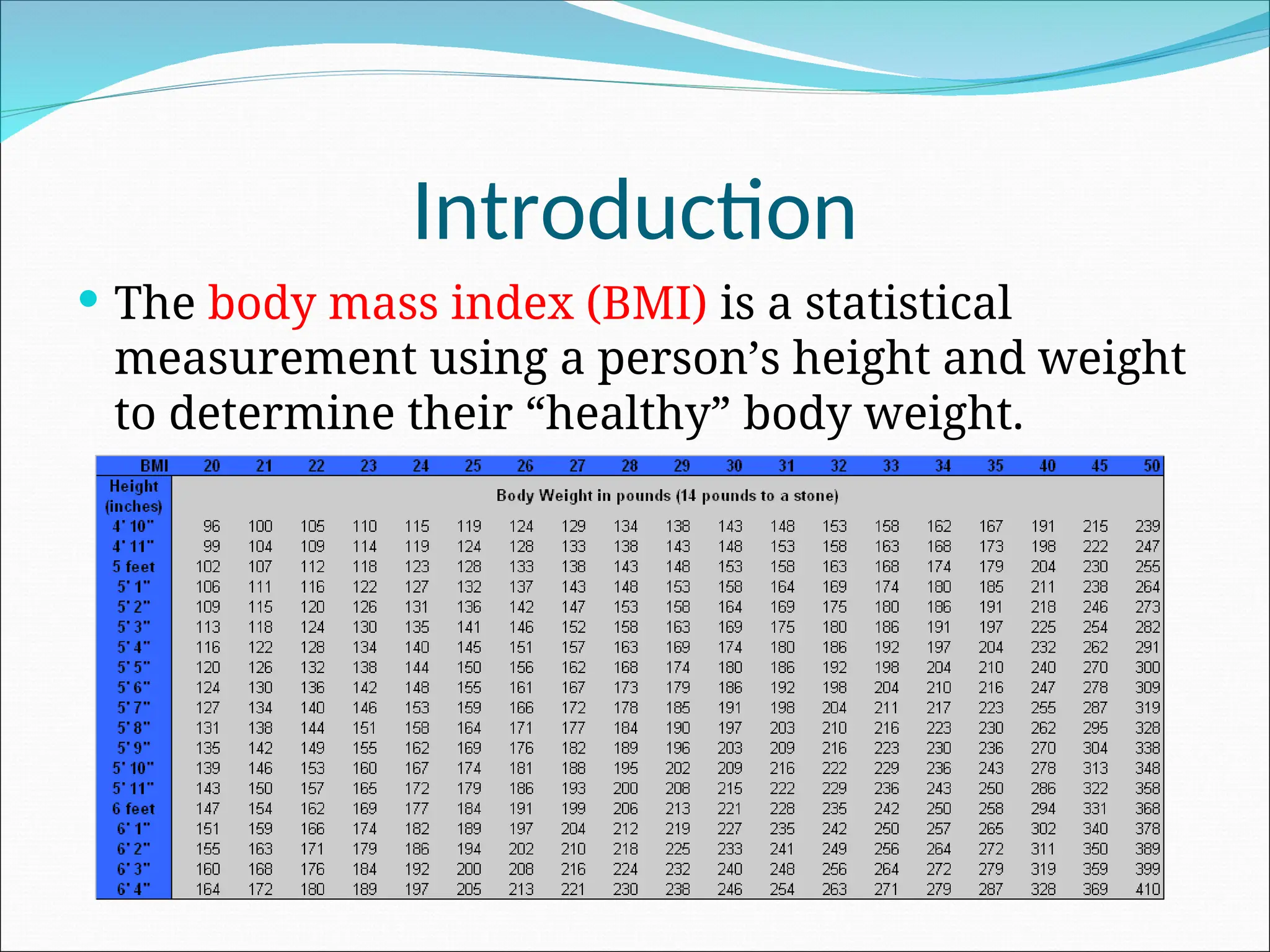
 The body mass index (BMI) is a statistical
measurement using a person’s height and weight
to determine their “healthy” body weight.
Introduction
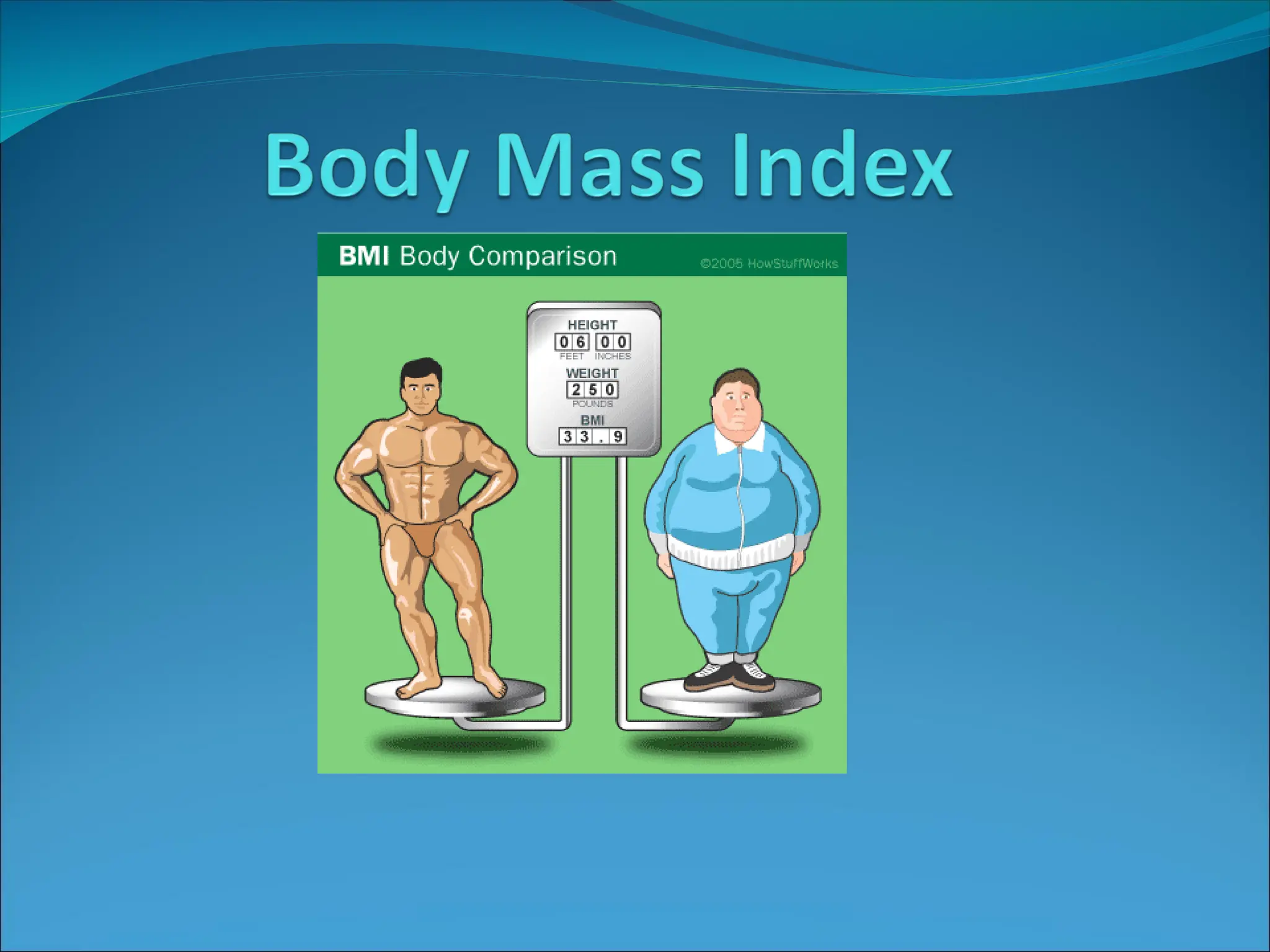
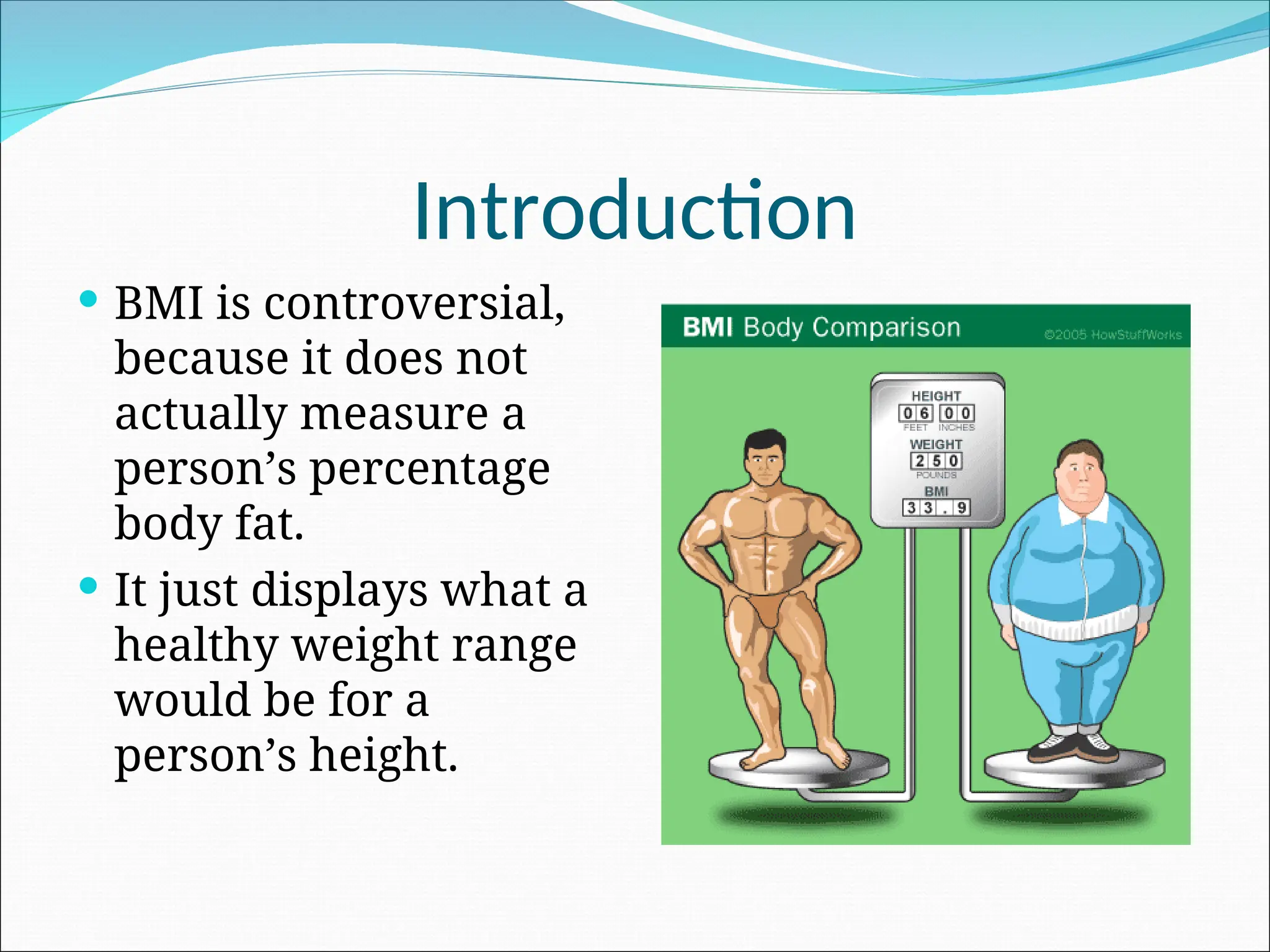
 BMI is controversial,
because it does not
actually measure a
person’s percentage
body fat.
 It just displays what a
healthy weight range
would be for a
person’s height.
Introduction
 It is so easy to
determine, which
makes it so widespread
in use.
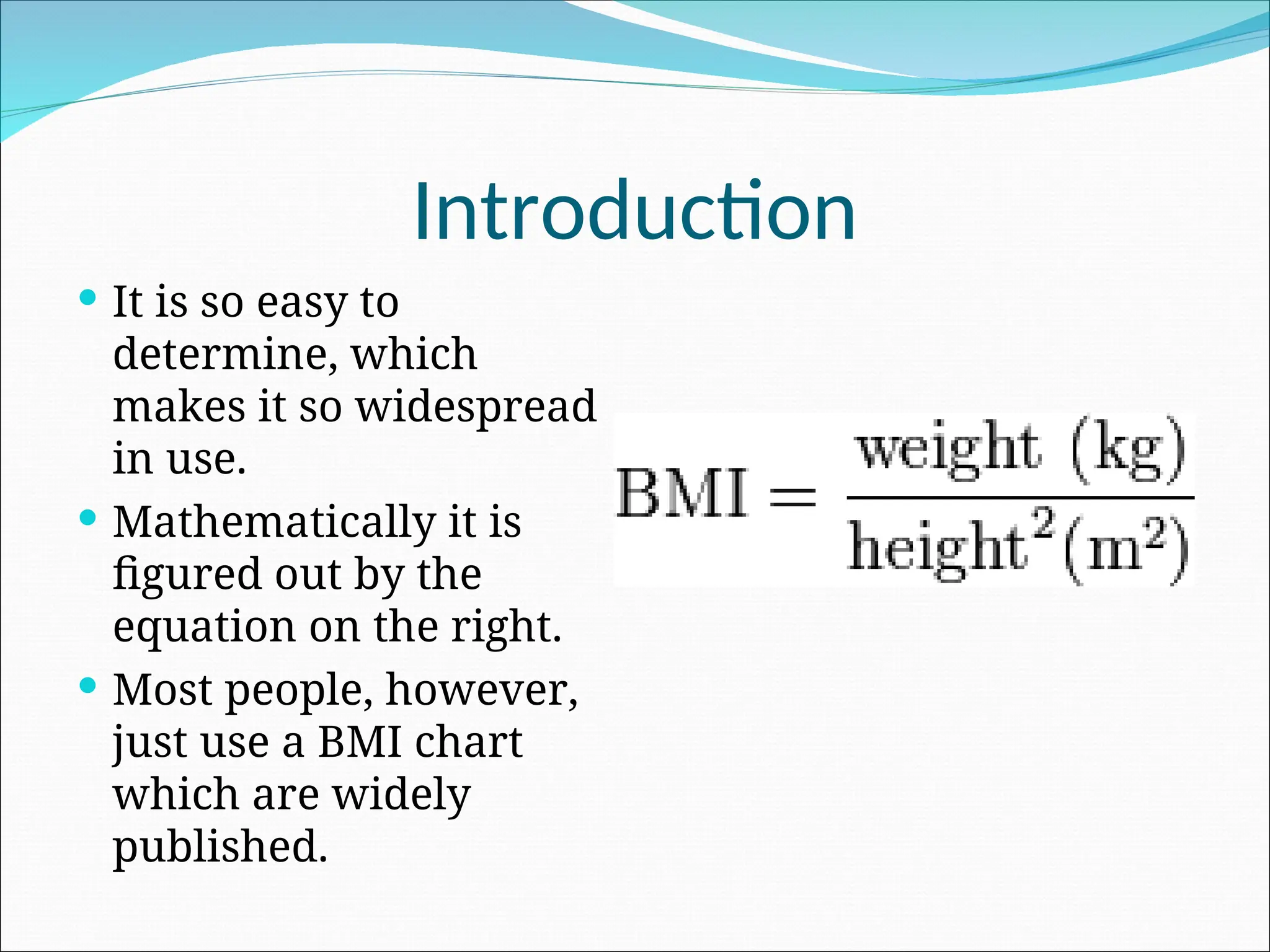
 Mathematically it is
figured out by the
equation on the right.
 Most people, however,
just use a BMI chart
which are widely
published.
The History Behind It
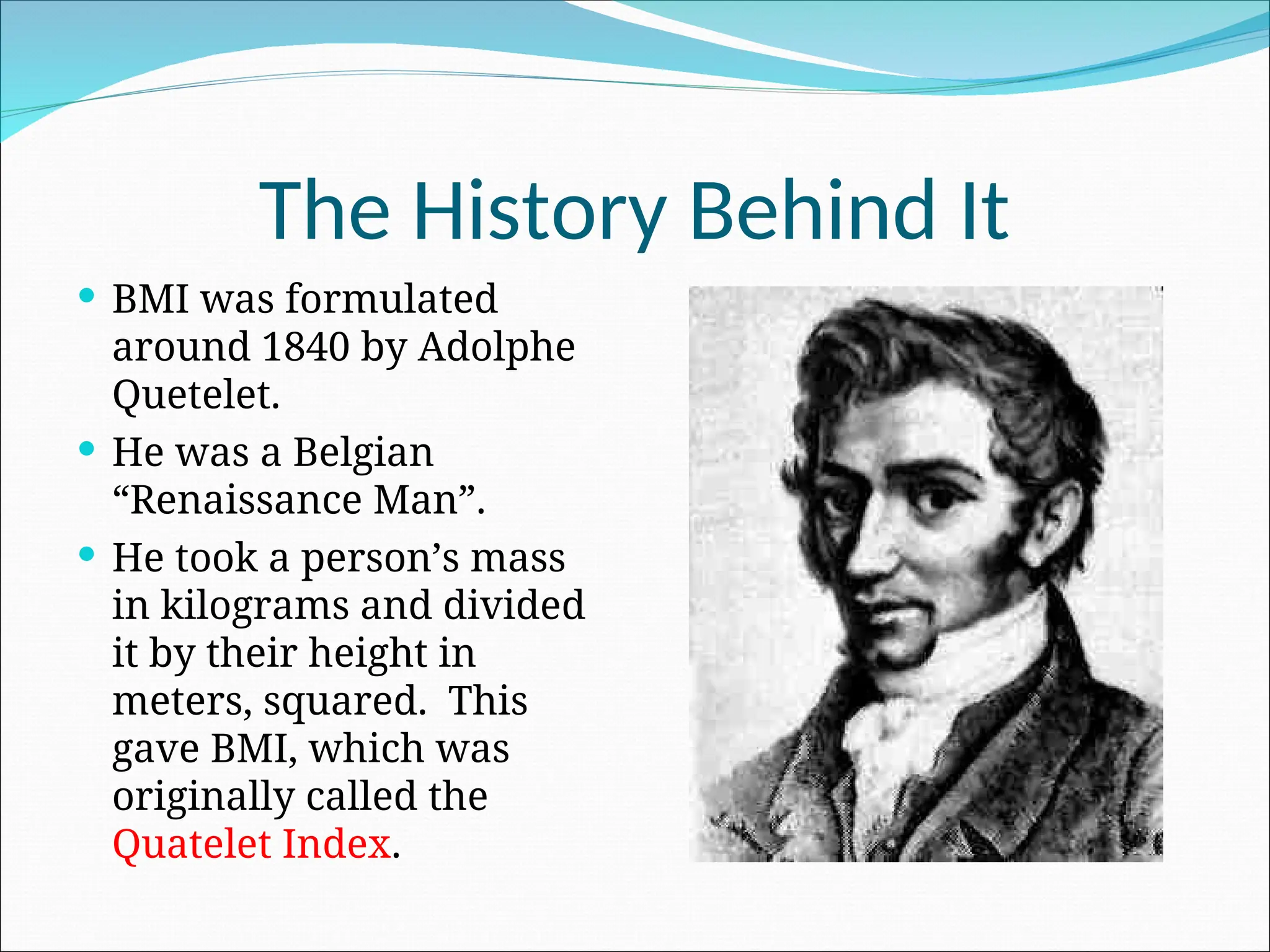
 BMI was formulated
around 1840 by Adolphe
Quetelet.
 He was a Belgian
“Renaissance Man”.
 He took a person’s mass
in kilograms and divided
it by their height in
meters, squared. This
gave BMI, which was
originally called the
Quatelet Index.
The History Behind It
 The term BMI came
about in the 1970s in a
paper by Ancel Keys.
 He was a scientist who
looked at the influence
of diet on health.
 He coined the
categories for BMI:
underweight, healthy,
overweight and obese.
The History Behind It
 Keys said BMI could only
be used when dealing
with population studies
and not individual
studies, as he felt this
was inappropriate.
 Unfortunately no one
heeded his advice and
BMI started to become a
widespread
measurement used to
determine a person’s
“fatness” or “thinness”.
The History Behind It
 BMI’s original purpose
was to determine if
inactive people were
at a healthy weight
since their diet would
be the only thing to
regulate their size.
 Knowledgeable
doctors and scientists
use it for population
trends only.
Improving BMI
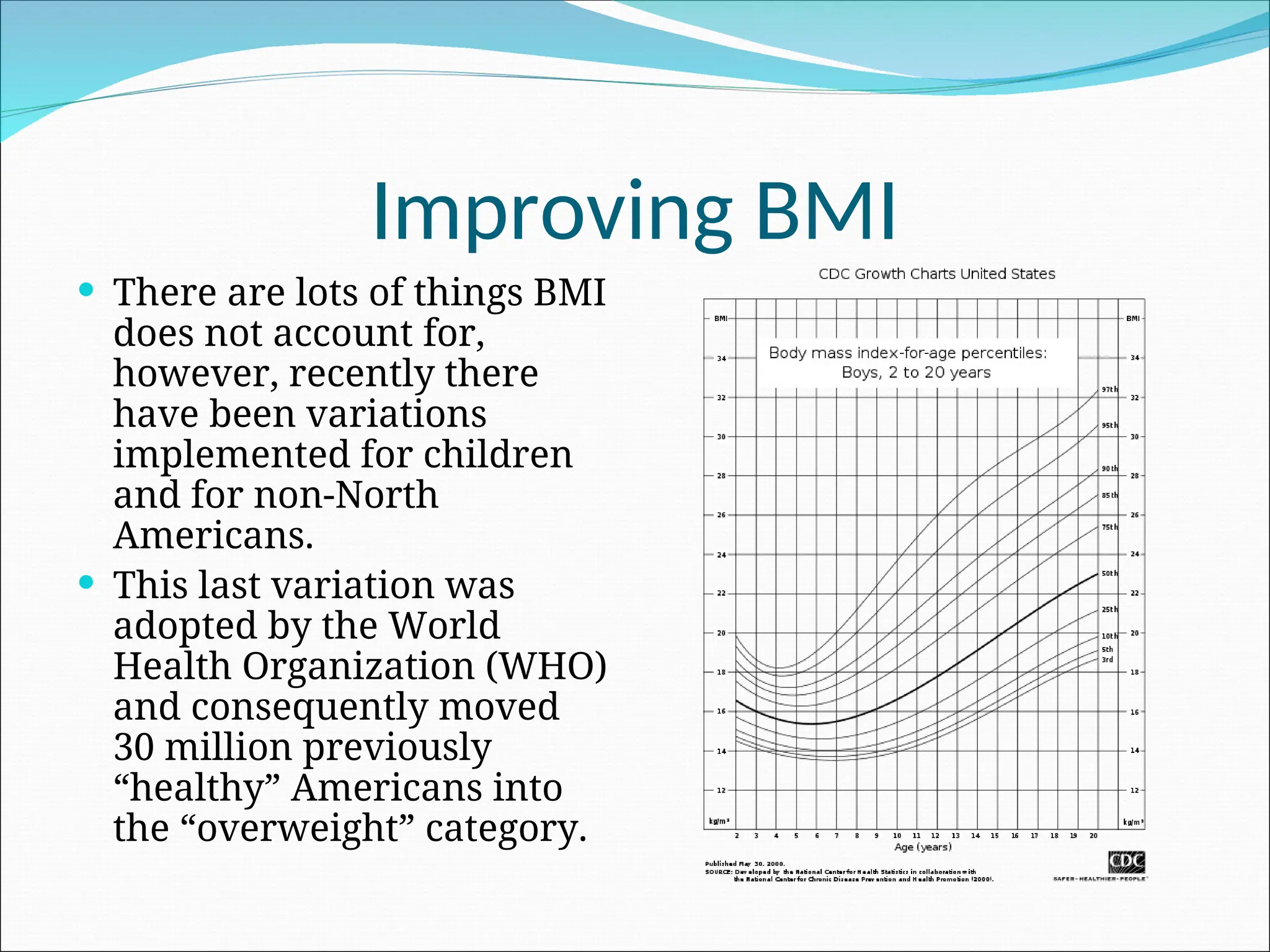
 There are lots of things BMI
does not account for,
however, recently there
have been variations
implemented for children
and for non-North
Americans.
 This last variation was
adopted by the World
Health Organization (WHO)
and consequently moved
30 million previously
“healthy” Americans into
the “overweight” category.
BMI for The Under 20s
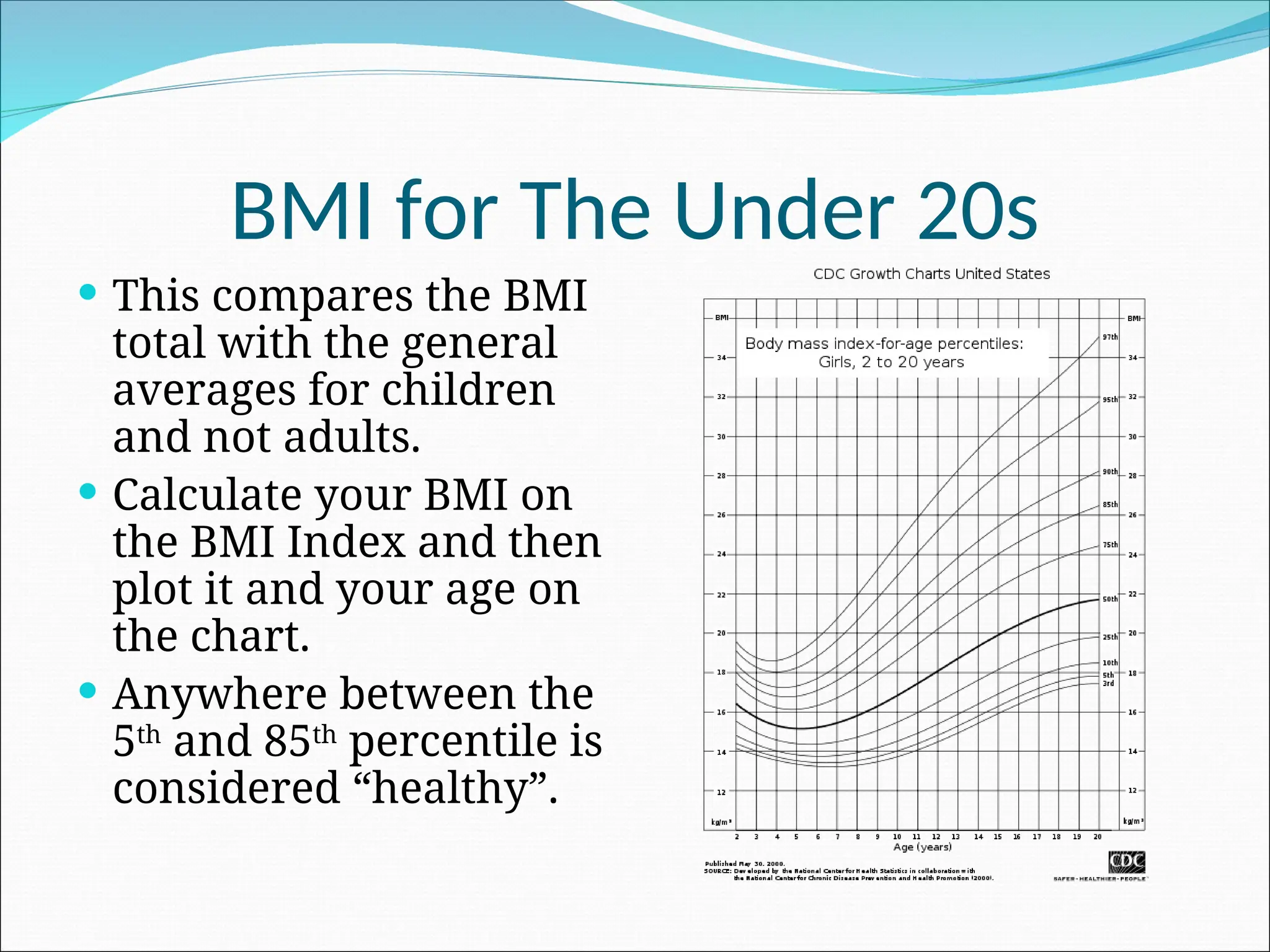
 This compares the BMI
total with the general
averages for children
and not adults.
 Calculate your BMI on
the BMI Index and then
plot it and your age on
the chart.
 Anywhere between the
5th
and 85th
percentile is
considered “healthy”.
International BMI Categories
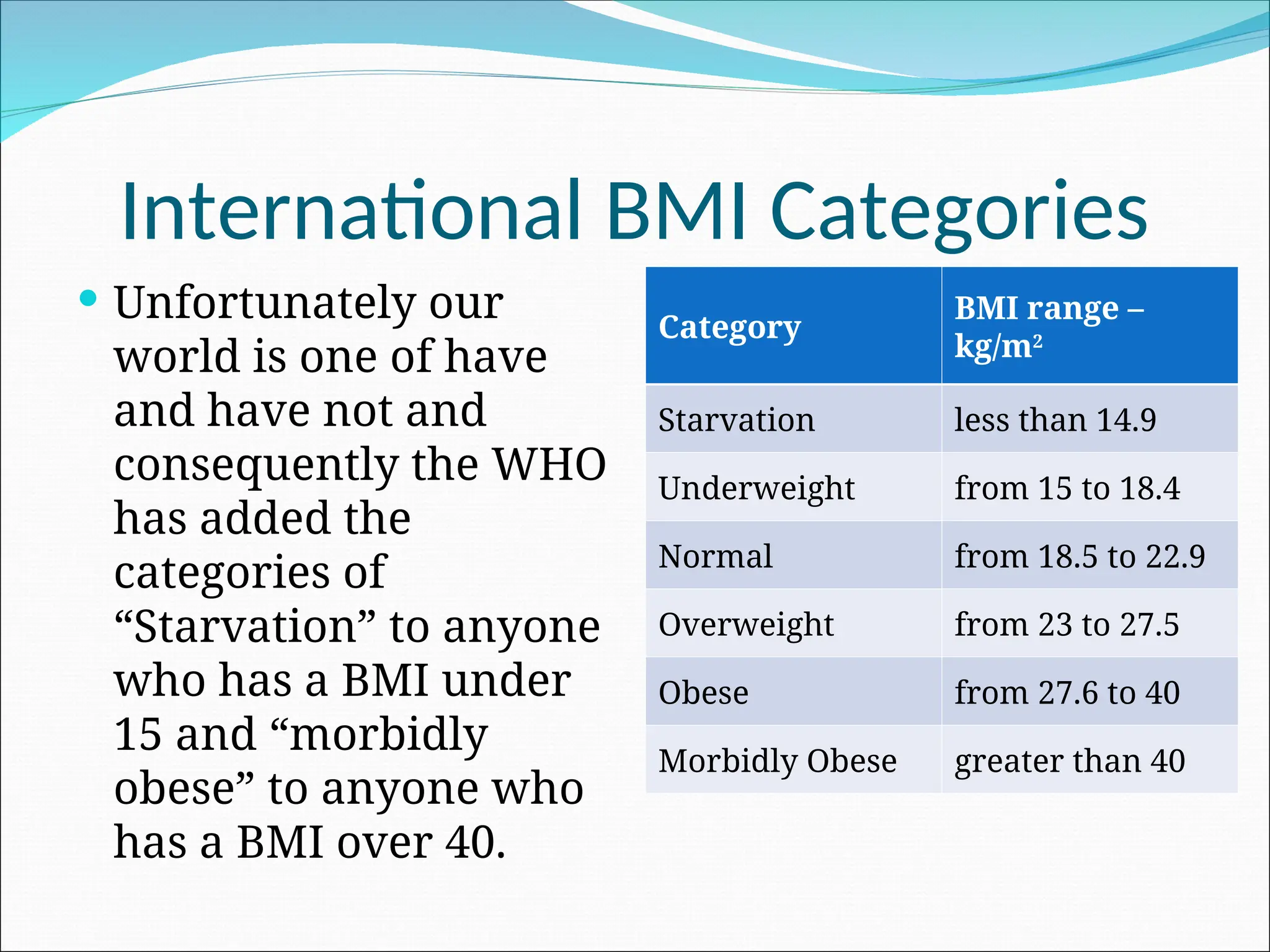
 Unfortunately our
world is one of have
and have not and
consequently the WHO
has added the
categories of
“Starvation” to anyone
who has a BMI under
15 and “morbidly
obese” to anyone who
has a BMI over 40.
Category
BMI range –
kg/m2
Starvation less than 14.9
Underweight from 15 to 18.4
Normal from 18.5 to 22.9
Overweight from 23 to 27.5
Obese from 27.6 to 40
Morbidly Obese greater than 40
Conclusion
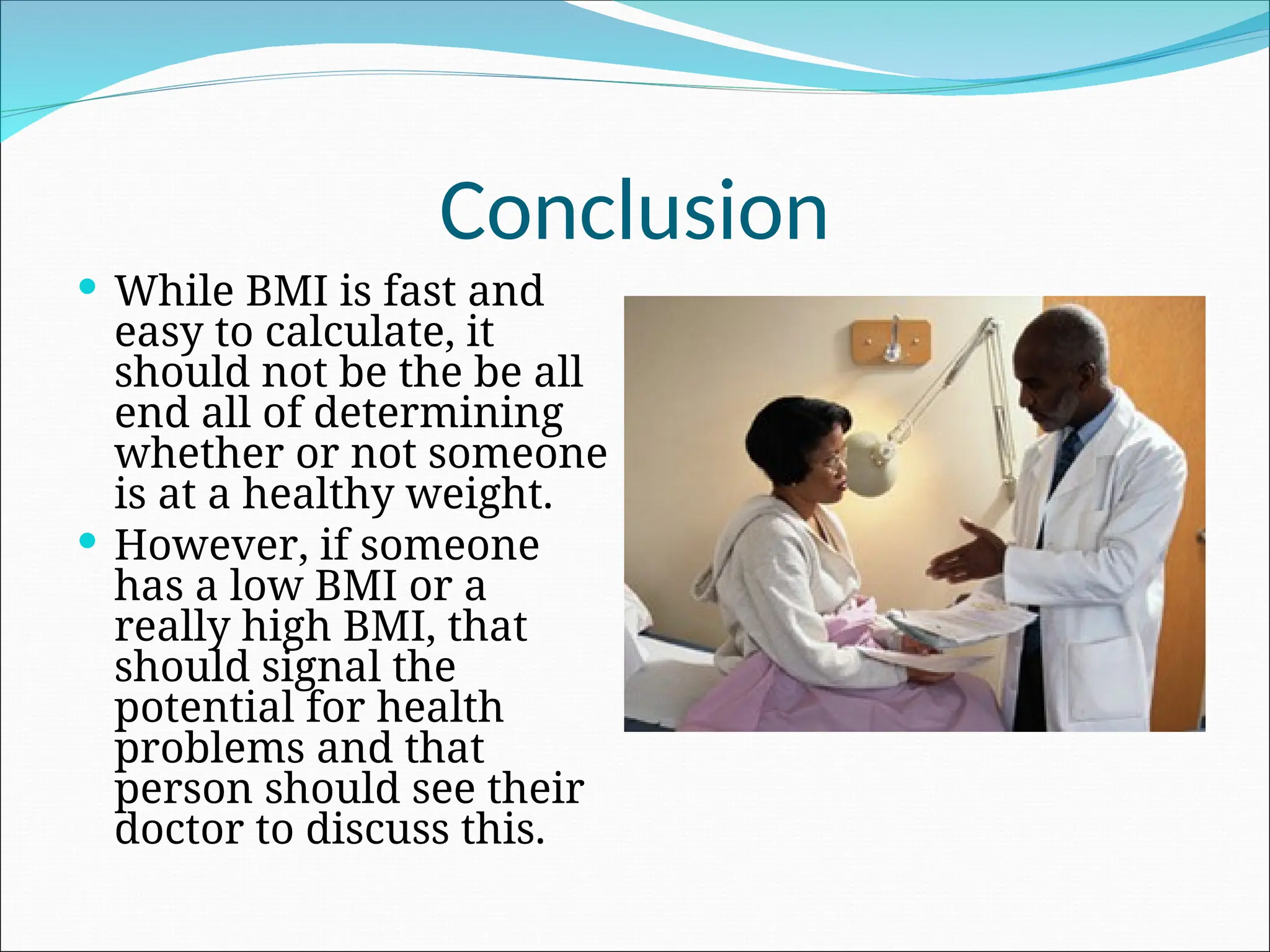
 While BMI is fast and
easy to calculate, it
should not be the be all
end all of determining
whether or not someone
is at a healthy weight.
 However, if someone
has a low BMI or a
really high BMI, that
should signal the
potential for health
problems and that
person should see their
doctor to discuss this.
1) What does BMI stand for? What does it calculate?
2) What does BMI take into consideration in its calculation?
3) What are three limitations of the BMI calculation? Another
way of saying this is what are three things BMI does not take
into consideration.
4) Calculate your BMI using the BMI index and compare the
category you are in with the percentile you are in on the BMI
for the U20s. Are you in the same category on both charts?
5) What country/countries do you believe would have the most
people who fall into the “morbidly obese” category? Why?
6) What country/countries do you believe would have the most
people who fall into the “starvation” category? Why?
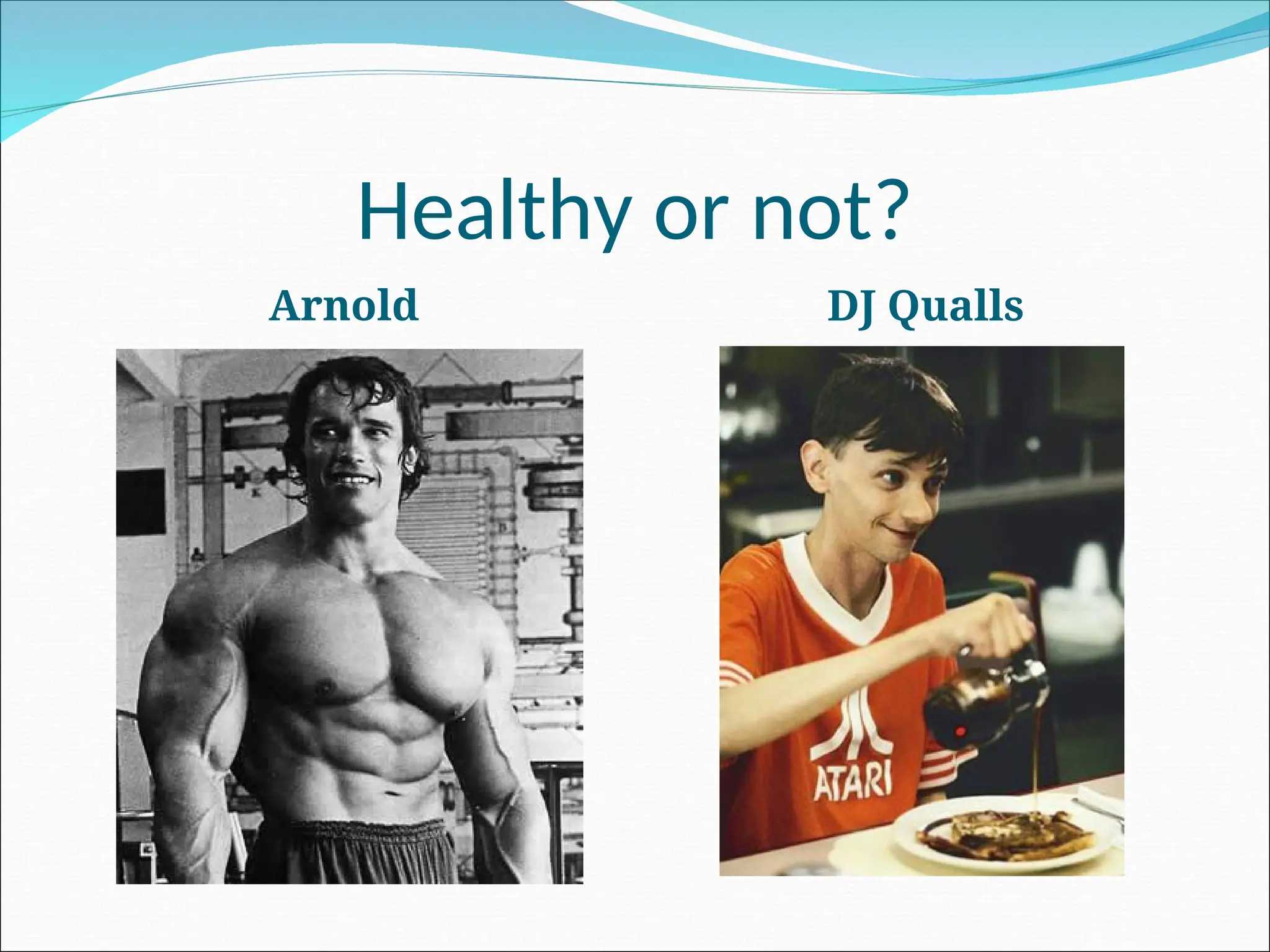
Healthy or not?
Arnold DJ Qualls
Healthy or not?
Keira Knightley Oprah Winfrey

The Body Mass Index and it's Importance .ppt

  • 3.
    Introduction  The bodymass index (BMI) is a statistical measurement using a person’s height and weight to determine their “healthy” body weight.
  • 4.
    Introduction  BMI iscontroversial, because it does not actually measure a person’s percentage body fat.  It just displays what a healthy weight range would be for a person’s height.
  • 5.
    Introduction  It isso easy to determine, which makes it so widespread in use.  Mathematically it is figured out by the equation on the right.  Most people, however, just use a BMI chart which are widely published.
  • 6.
    The History BehindIt  BMI was formulated around 1840 by Adolphe Quetelet.  He was a Belgian “Renaissance Man”.  He took a person’s mass in kilograms and divided it by their height in meters, squared. This gave BMI, which was originally called the Quatelet Index.
  • 7.
    The History BehindIt  The term BMI came about in the 1970s in a paper by Ancel Keys.  He was a scientist who looked at the influence of diet on health.  He coined the categories for BMI: underweight, healthy, overweight and obese.
  • 8.
    The History BehindIt  Keys said BMI could only be used when dealing with population studies and not individual studies, as he felt this was inappropriate.  Unfortunately no one heeded his advice and BMI started to become a widespread measurement used to determine a person’s “fatness” or “thinness”.
  • 9.
    The History BehindIt  BMI’s original purpose was to determine if inactive people were at a healthy weight since their diet would be the only thing to regulate their size.  Knowledgeable doctors and scientists use it for population trends only.
  • 10.
    Improving BMI  Thereare lots of things BMI does not account for, however, recently there have been variations implemented for children and for non-North Americans.  This last variation was adopted by the World Health Organization (WHO) and consequently moved 30 million previously “healthy” Americans into the “overweight” category.
  • 11.
    BMI for TheUnder 20s  This compares the BMI total with the general averages for children and not adults.  Calculate your BMI on the BMI Index and then plot it and your age on the chart.  Anywhere between the 5th and 85th percentile is considered “healthy”.
  • 12.
    International BMI Categories Unfortunately our world is one of have and have not and consequently the WHO has added the categories of “Starvation” to anyone who has a BMI under 15 and “morbidly obese” to anyone who has a BMI over 40. Category BMI range – kg/m2 Starvation less than 14.9 Underweight from 15 to 18.4 Normal from 18.5 to 22.9 Overweight from 23 to 27.5 Obese from 27.6 to 40 Morbidly Obese greater than 40
  • 13.
    Conclusion  While BMIis fast and easy to calculate, it should not be the be all end all of determining whether or not someone is at a healthy weight.  However, if someone has a low BMI or a really high BMI, that should signal the potential for health problems and that person should see their doctor to discuss this.
  • 14.
    1) What doesBMI stand for? What does it calculate? 2) What does BMI take into consideration in its calculation? 3) What are three limitations of the BMI calculation? Another way of saying this is what are three things BMI does not take into consideration. 4) Calculate your BMI using the BMI index and compare the category you are in with the percentile you are in on the BMI for the U20s. Are you in the same category on both charts? 5) What country/countries do you believe would have the most people who fall into the “morbidly obese” category? Why? 6) What country/countries do you believe would have the most people who fall into the “starvation” category? Why?
  • 15.
  • 16.
    Healthy or not? KeiraKnightley Oprah Winfrey