Downloaded 1,378 times




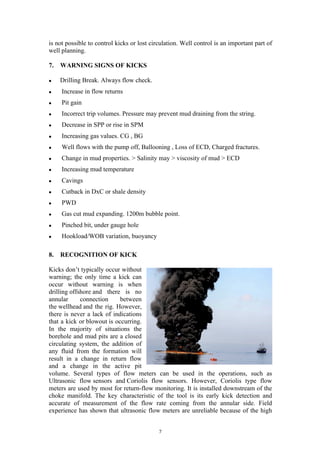

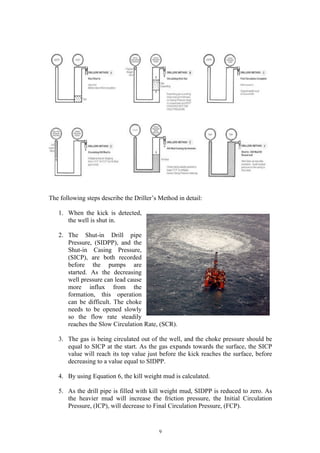

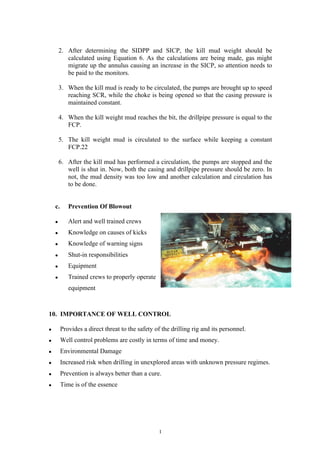


This document provides an overview of well control techniques. It discusses the importance of maintaining primary well control by keeping hydrostatic pressure greater than formation pressure. It describes what a kick is and types of kicks that can occur. Common causes of kicks include not keeping the hole full, insufficient mud density, swabbing, lost circulation, and poor well planning. Warning signs of a kick and methods for recognition are outlined. Finally, it discusses the objective of well control and some important well control concepts like determining reservoir pressure and selecting a well control method.


![Petroleum geology of pakistan by iqbal[1].b.kadri.](https://cdn.slidesharecdn.com/ss_thumbnails/petroleumgeologyofpakistanbyiqbal1-140206115104-phpapp01-thumbnail.jpg?width=640&height=640&fit=bounds)


