Methods of contraception
I. Non-pharmacologic approaches (barrier techniques):
1. Condoms (male and female)
2. Diaphragm with spermicide
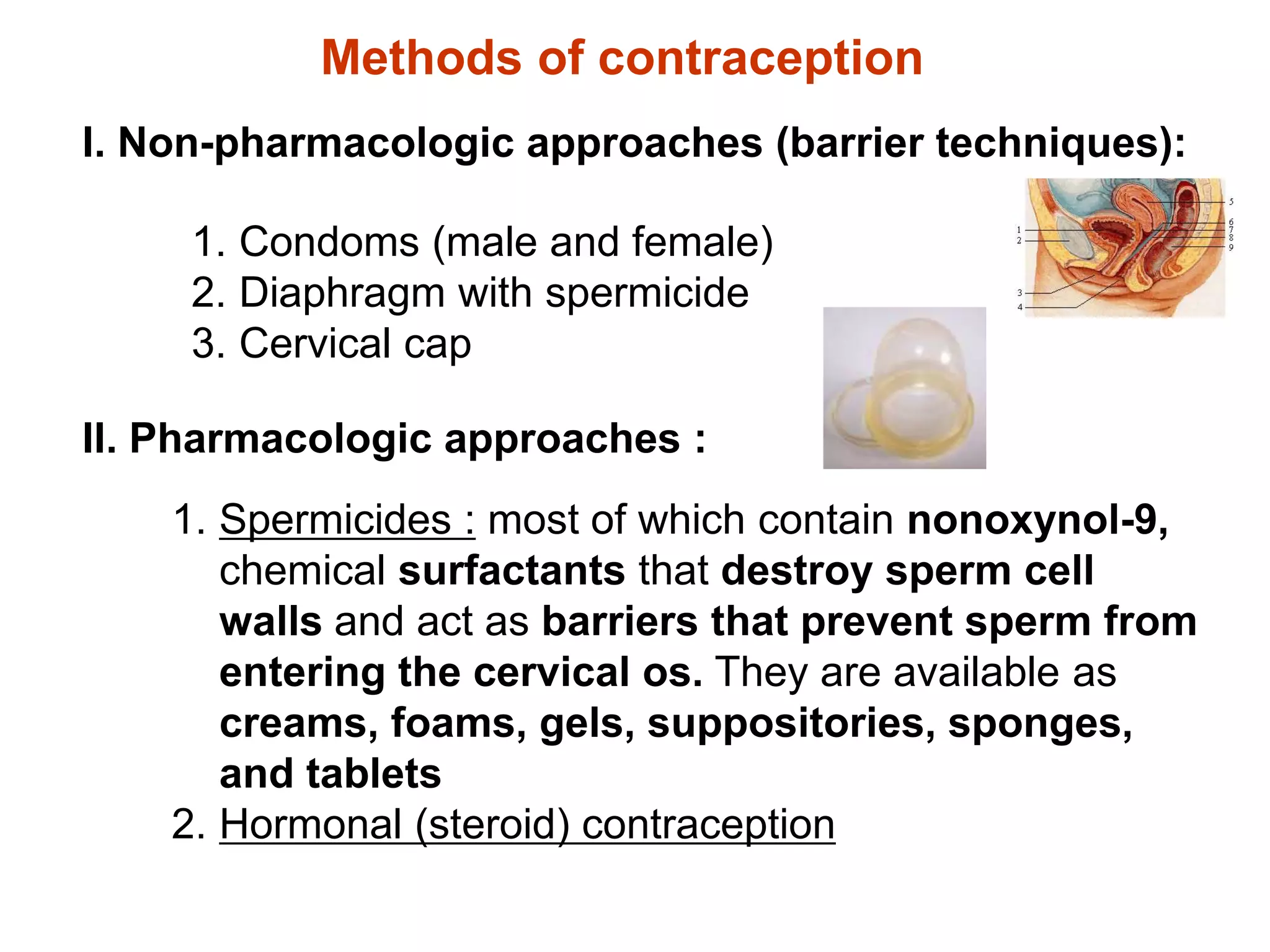
3. Cervical cap
II. Pharmacologic approaches :
1. Spermicides : most of which contain nonoxynol-9,
chemical surfactants that destroy sperm cell
walls and act as barriers that prevent sperm from
entering the cervical os. They are available as
creams, foams, gels, suppositories, sponges,
and tablets
2. Hormonal (steroid) contraception
Pharmaceutical forms of hormonal
contraceptives
1. Oral contraceptives, OCs
2. Transdermal patches
3. Vaginal rings
4. Long-Acting Injectable and Implantable Contraceptives
•Two types of preparations are used for oral contraception:
a) combinations of estrogens and progestins
b) continuous progestin therapy without estrogens.
• The combination agents are further divided into:
a) Monophasic forms (constant dosage of both components
during the cycle)
b) Biphasic or triphasic forms (dosage of one or both
components is changed once or twice during the cycle).
Hormonal (Steroid) Contraception
1. Oral Contraceptives
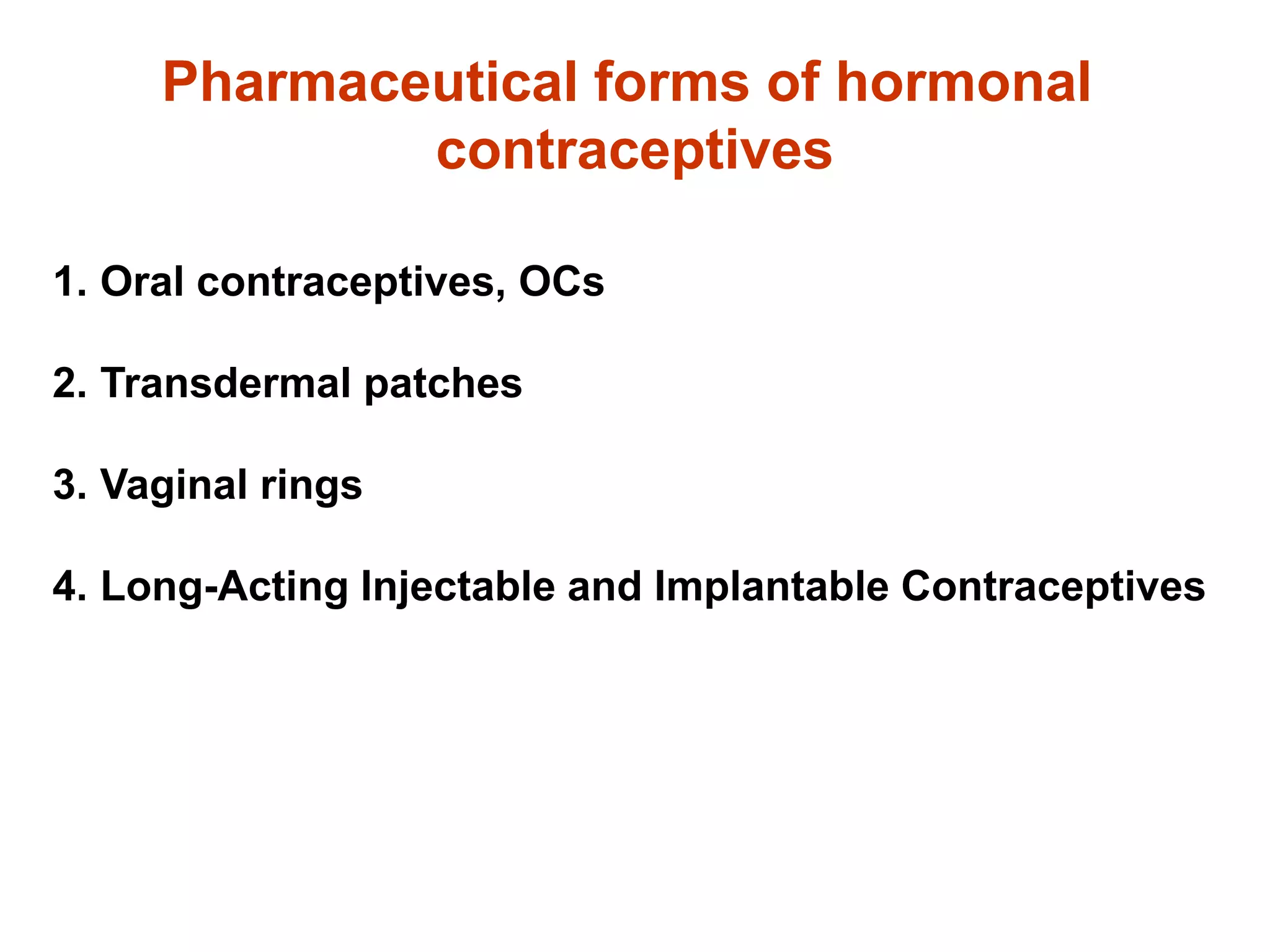
A) Monophasic OCs contain the same
amounts of estrogen and progestin for
21 days, followed by 7 days of placebo
pills.
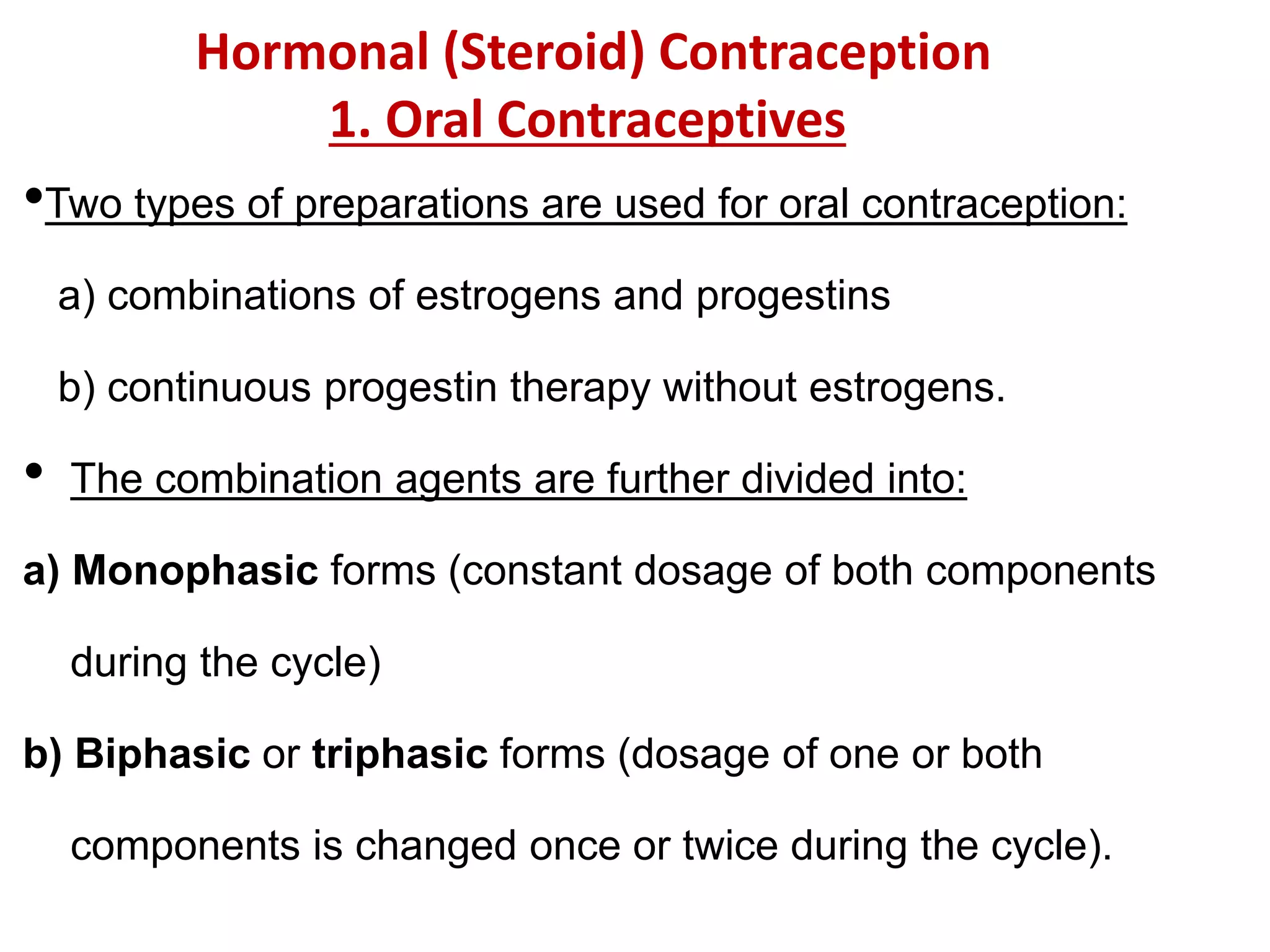
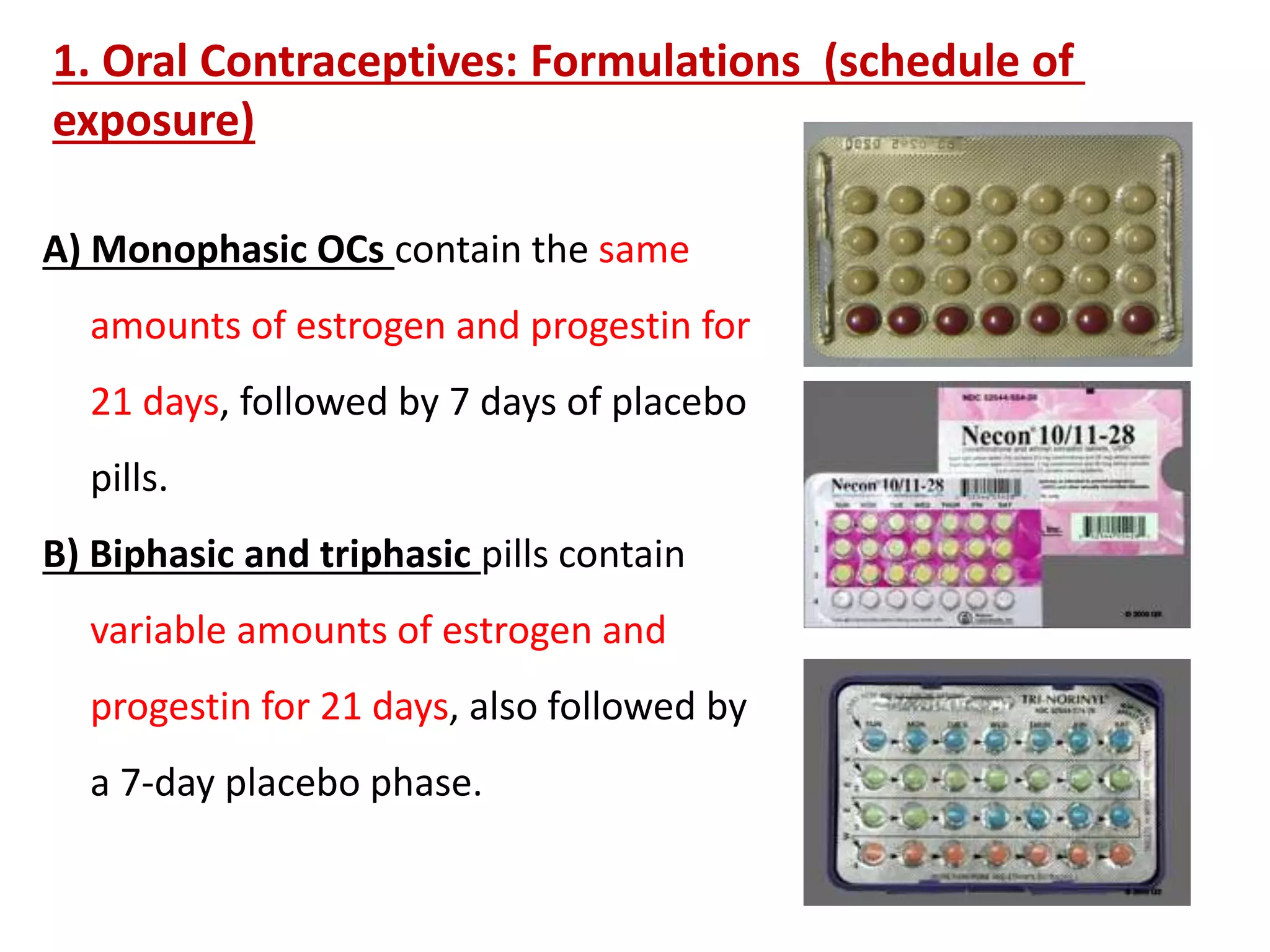
B) Biphasic and triphasic pills contain
variable amounts of estrogen and
progestin for 21 days, also followed by
a 7-day placebo phase.
1. Oral Contraceptives: Formulations (schedule of
exposure)
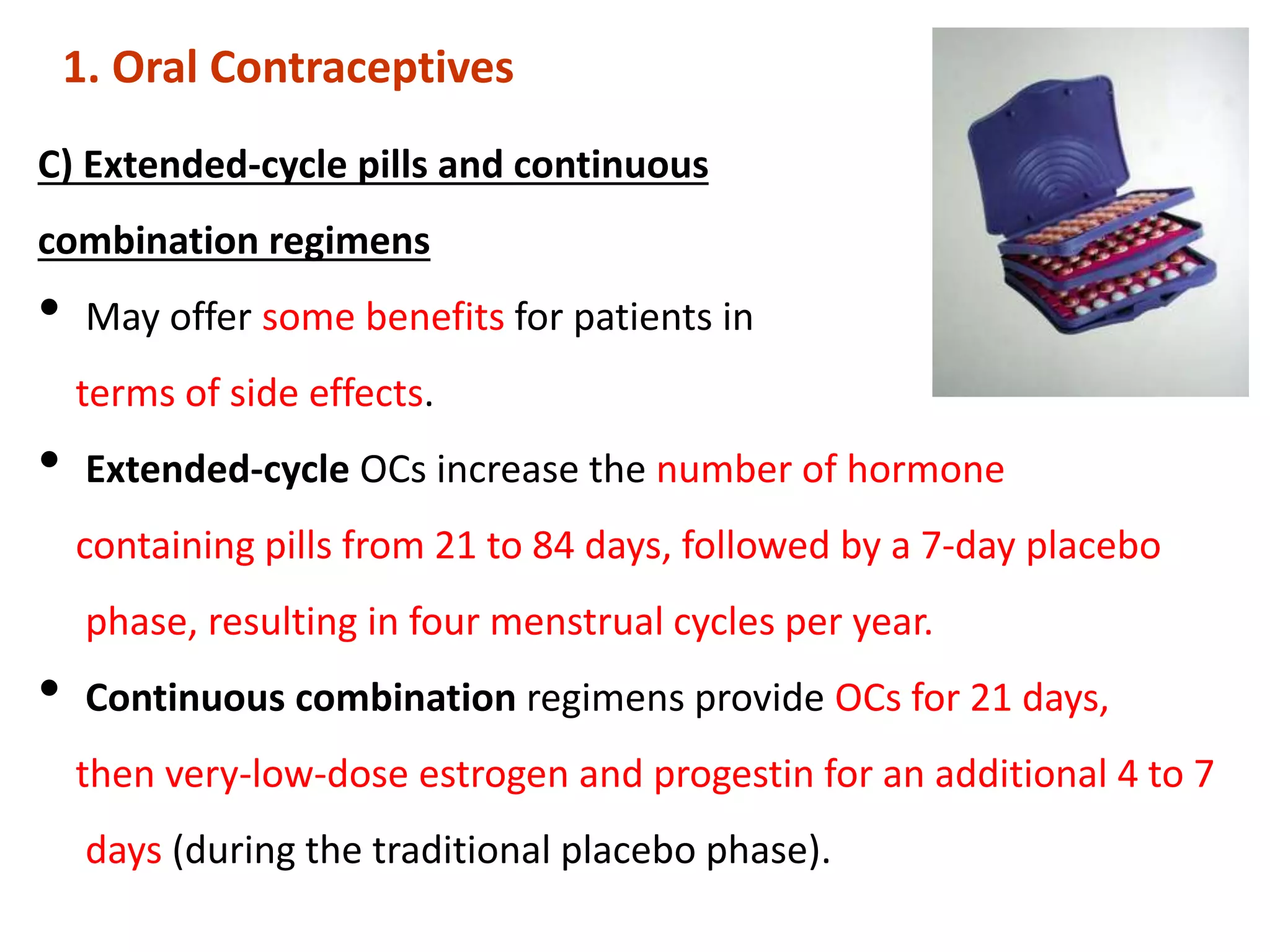
C) Extended-cycle pills and continuous
combination regimens
• May offer some benefits for patients in
terms of side effects.
• Extended-cycle OCs increase the number of hormone
containing pills from 21 to 84 days, followed by a 7-day placebo
phase, resulting in four menstrual cycles per year.
• Continuous combination regimens provide OCs for 21 days,
then very-low-dose estrogen and progestin for an additional 4 to 7
days (during the traditional placebo phase).
1. Oral Contraceptives
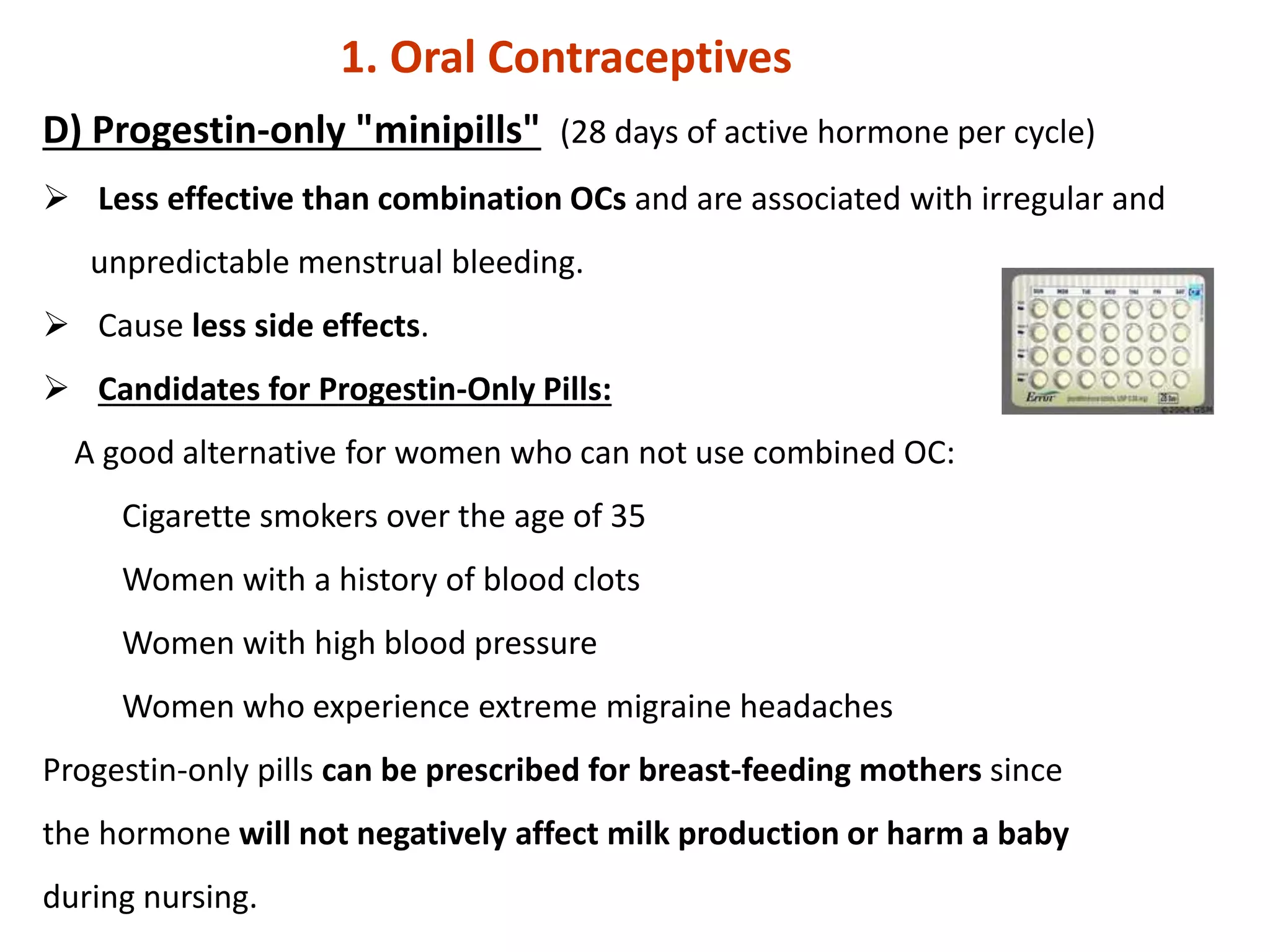
D) Progestin-only "minipills" (28 days of active hormone per cycle)
 Less effective than combination OCs and are associated with irregular and
unpredictable menstrual bleeding.
 Cause less side effects.
 Candidates for Progestin-Only Pills:
A good alternative for women who can not use combined OC:
Cigarette smokers over the age of 35
Women with a history of blood clots
Women with high blood pressure
Women who experience extreme migraine headaches
Progestin-only pills can be prescribed for breast-feeding mothers since
the hormone will not negatively affect milk production or harm a baby
during nursing.
1. Oral Contraceptives
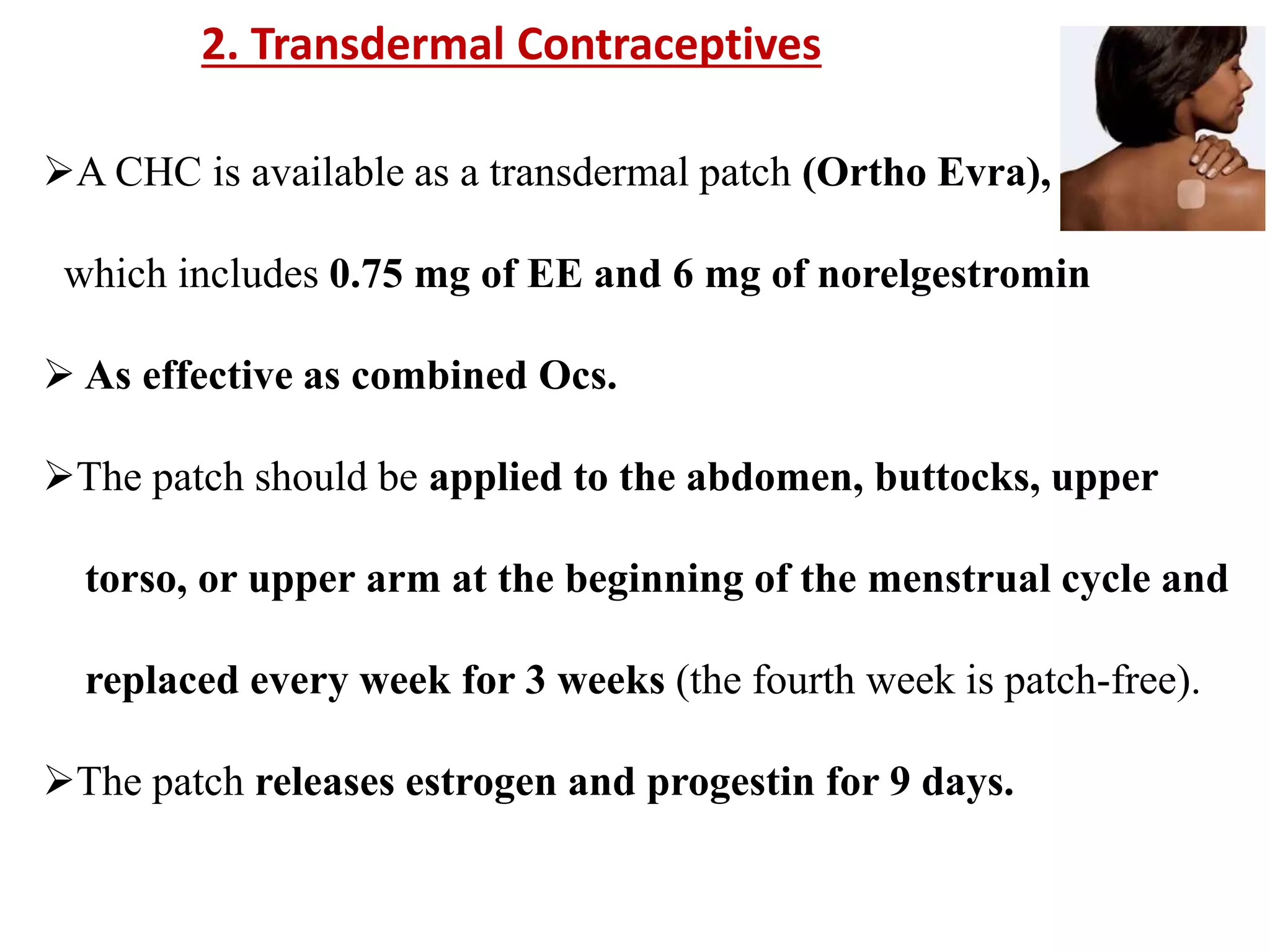
A CHC is available as a transdermal patch (Ortho Evra),
which includes 0.75 mg of EE and 6 mg of norelgestromin
 As effective as combined Ocs.
The patch should be applied to the abdomen, buttocks, upper
torso, or upper arm at the beginning of the menstrual cycle and
replaced every week for 3 weeks (the fourth week is patch-free).
The patch releases estrogen and progestin for 9 days.
2. Transdermal Contraceptives
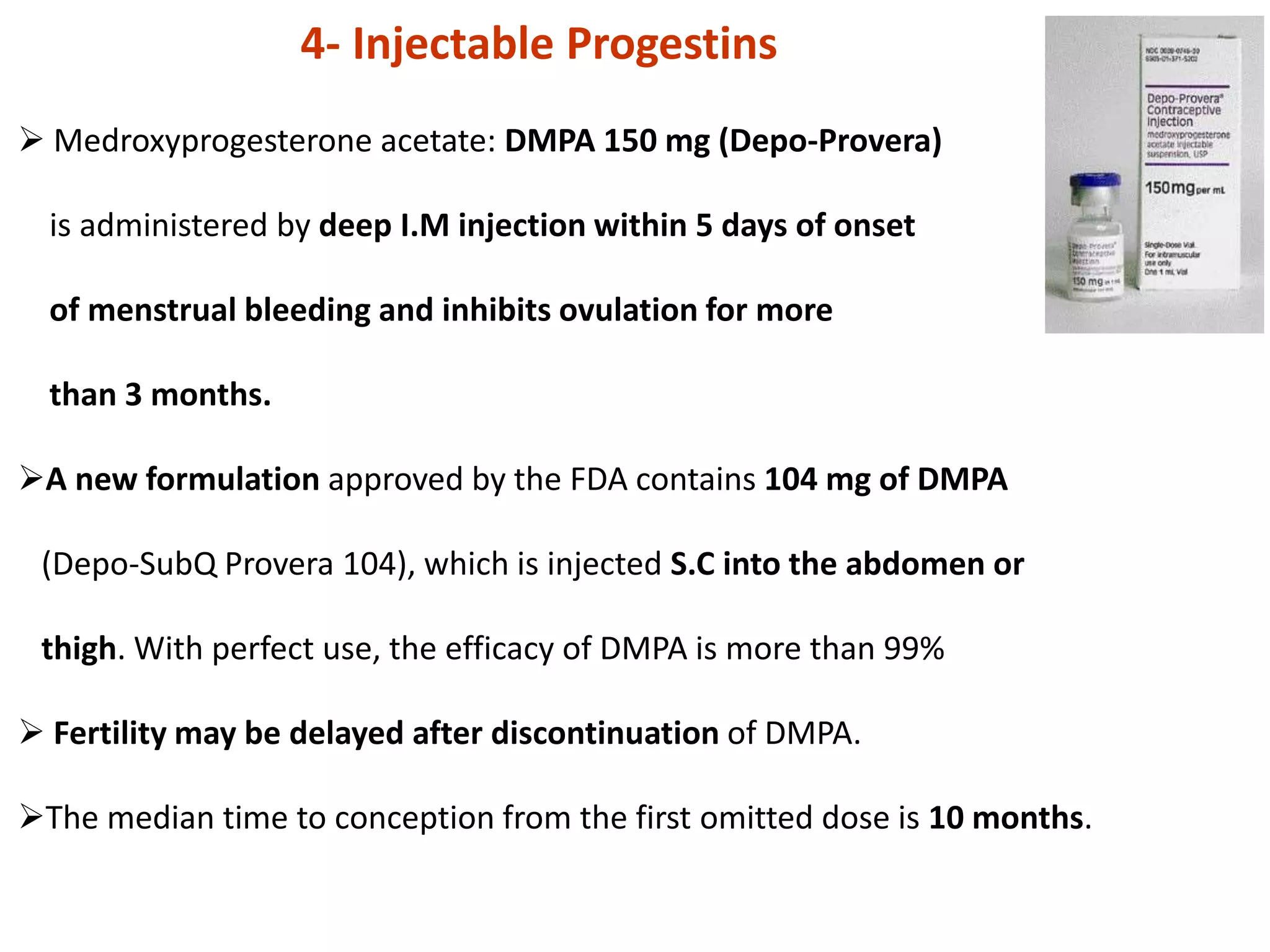
 Medroxyprogesterone acetate: DMPA 150 mg (Depo-Provera)
is administered by deep I.M injection within 5 days of onset
of menstrual bleeding and inhibits ovulation for more
than 3 months.
A new formulation approved by the FDA contains 104 mg of DMPA
(Depo-SubQ Provera 104), which is injected S.C into the abdomen or
thigh. With perfect use, the efficacy of DMPA is more than 99%
 Fertility may be delayed after discontinuation of DMPA.
The median time to conception from the first omitted dose is 10 months.
4- Injectable Progestins
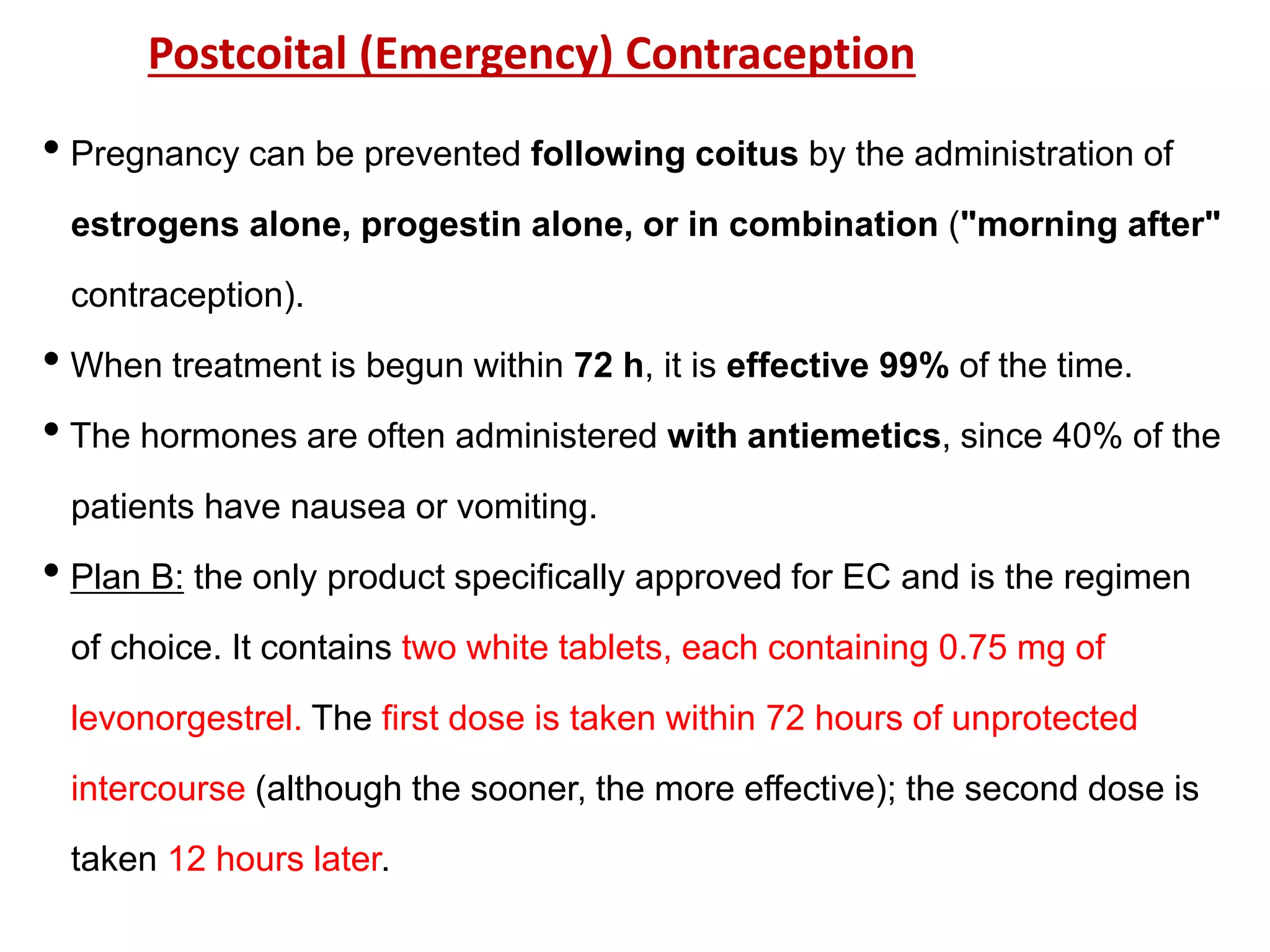
• Pregnancy can be prevented following coitus by the administration of
estrogens alone, progestin alone, or in combination ("morning after"
contraception).
• When treatment is begun within 72 h, it is effective 99% of the time.
• The hormones are often administered with antiemetics, since 40% of the
patients have nausea or vomiting.
• Plan B: the only product specifically approved for EC and is the regimen
of choice. It contains two white tablets, each containing 0.75 mg of
levonorgestrel. The first dose is taken within 72 hours of unprotected
intercourse (although the sooner, the more effective); the second dose is
taken 12 hours later.
Postcoital (Emergency) Contraception

Week 7 objective

  • 1.
    Methods of contraception I.Non-pharmacologic approaches (barrier techniques): 1. Condoms (male and female) 2. Diaphragm with spermicide 3. Cervical cap II. Pharmacologic approaches : 1. Spermicides : most of which contain nonoxynol-9, chemical surfactants that destroy sperm cell walls and act as barriers that prevent sperm from entering the cervical os. They are available as creams, foams, gels, suppositories, sponges, and tablets 2. Hormonal (steroid) contraception
  • 2.
    Pharmaceutical forms ofhormonal contraceptives 1. Oral contraceptives, OCs 2. Transdermal patches 3. Vaginal rings 4. Long-Acting Injectable and Implantable Contraceptives
  • 3.
    •Two types ofpreparations are used for oral contraception: a) combinations of estrogens and progestins b) continuous progestin therapy without estrogens. • The combination agents are further divided into: a) Monophasic forms (constant dosage of both components during the cycle) b) Biphasic or triphasic forms (dosage of one or both components is changed once or twice during the cycle). Hormonal (Steroid) Contraception 1. Oral Contraceptives
  • 4.
    A) Monophasic OCscontain the same amounts of estrogen and progestin for 21 days, followed by 7 days of placebo pills. B) Biphasic and triphasic pills contain variable amounts of estrogen and progestin for 21 days, also followed by a 7-day placebo phase. 1. Oral Contraceptives: Formulations (schedule of exposure)
  • 5.
    C) Extended-cycle pillsand continuous combination regimens • May offer some benefits for patients in terms of side effects. • Extended-cycle OCs increase the number of hormone containing pills from 21 to 84 days, followed by a 7-day placebo phase, resulting in four menstrual cycles per year. • Continuous combination regimens provide OCs for 21 days, then very-low-dose estrogen and progestin for an additional 4 to 7 days (during the traditional placebo phase). 1. Oral Contraceptives
  • 6.
    D) Progestin-only "minipills"(28 days of active hormone per cycle)  Less effective than combination OCs and are associated with irregular and unpredictable menstrual bleeding.  Cause less side effects.  Candidates for Progestin-Only Pills: A good alternative for women who can not use combined OC: Cigarette smokers over the age of 35 Women with a history of blood clots Women with high blood pressure Women who experience extreme migraine headaches Progestin-only pills can be prescribed for breast-feeding mothers since the hormone will not negatively affect milk production or harm a baby during nursing. 1. Oral Contraceptives
  • 7.
    A CHC isavailable as a transdermal patch (Ortho Evra), which includes 0.75 mg of EE and 6 mg of norelgestromin  As effective as combined Ocs. The patch should be applied to the abdomen, buttocks, upper torso, or upper arm at the beginning of the menstrual cycle and replaced every week for 3 weeks (the fourth week is patch-free). The patch releases estrogen and progestin for 9 days. 2. Transdermal Contraceptives
  • 8.
     Medroxyprogesterone acetate:DMPA 150 mg (Depo-Provera) is administered by deep I.M injection within 5 days of onset of menstrual bleeding and inhibits ovulation for more than 3 months. A new formulation approved by the FDA contains 104 mg of DMPA (Depo-SubQ Provera 104), which is injected S.C into the abdomen or thigh. With perfect use, the efficacy of DMPA is more than 99%  Fertility may be delayed after discontinuation of DMPA. The median time to conception from the first omitted dose is 10 months. 4- Injectable Progestins
  • 9.
    • Pregnancy canbe prevented following coitus by the administration of estrogens alone, progestin alone, or in combination ("morning after" contraception). • When treatment is begun within 72 h, it is effective 99% of the time. • The hormones are often administered with antiemetics, since 40% of the patients have nausea or vomiting. • Plan B: the only product specifically approved for EC and is the regimen of choice. It contains two white tablets, each containing 0.75 mg of levonorgestrel. The first dose is taken within 72 hours of unprotected intercourse (although the sooner, the more effective); the second dose is taken 12 hours later. Postcoital (Emergency) Contraception