Neuromuscular blocker
(Muscle Relaxants)
Objectives
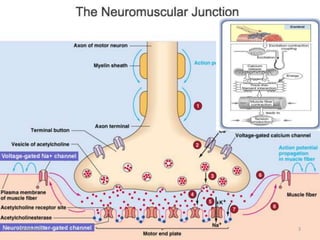
1. Physiology of neuromuscular junction

2. Muscle relaxants definition
3. Classification of Muscle Relaxants

4. Role of MR
1
October 13

3
Skeletal muscle fibre

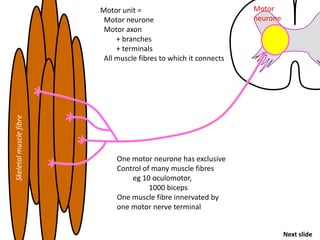
Motor unit =
Motor neurone
Motor axon
+ branches
+ terminals
All muscle fibres to which it connects

Motor
neurone

One motor neurone has exclusive
Control of many muscle fibres
eg 10 oculomotor,
1000 biceps
One muscle fibre innervated by
one motor nerve terminal
Next slide
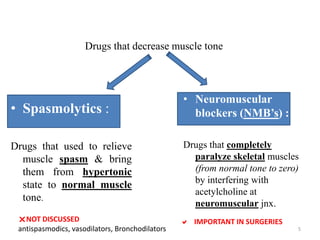
Muscle Relaxants: Definition :
Drugs that decrease muscle tone

• Spasmolytics :

• Neuromuscular
blockers (NMB’s) :

Drugs that used to relieve
muscle spasm & bring
them from hypertonic
state to normal muscle
tone.

Drugs that completely
paralyze skeletal muscles
(from normal tone to zero)
by interfering with
acetylcholine at
neuromuscular jnx.

NOT DISCUSSED
antispasmodics, vasodilators, Bronchodilators

 IMPORTANT IN SURGERIES
5
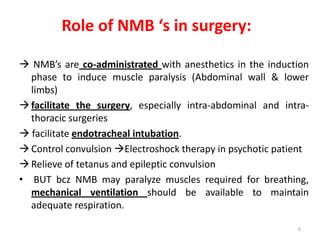
Role of NMB ‘s in surgery:
 NMB’s are co-administrated with anesthetics in the induction
phase to induce muscle paralysis (Abdominal wall & lower
limbs)
 facilitate the surgery, especially intra-abdominal and intrathoracic surgeries
 facilitate endotracheal intubation.
 Control convulsion Electroshock therapy in psychotic patient
 Relieve of tetanus and epileptic convulsion
• BUT bcz NMB may paralyze muscles required for breathing,
mechanical ventilation should be available to maintain
adequate respiration.
6
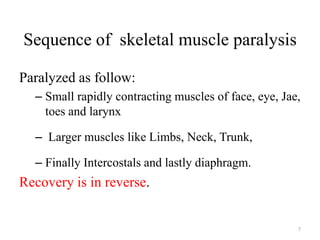
Sequence of skeletal muscle paralysis
Paralyzed as follow:
– Small rapidly contracting muscles of face, eye, Jae,
toes and larynx

– Larger muscles like Limbs, Neck, Trunk,
– Finally Intercostals and lastly diaphragm.

Recovery is in reverse.

7
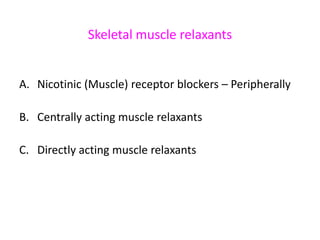
Skeletal muscle relaxants

A. Nicotinic (Muscle) receptor blockers – Peripherally
B. Centrally acting muscle relaxants

C. Directly acting muscle relaxants
Skeletal muscle relaxants
• Skeletal muscle relaxants block peripherally at the
neuromuscular junction (NM receptor of Ach – Muscle).
• Types of Skeletal muscle relaxants:
Competitive (Non-depolarizing)
Non-competitive (Depolarizing)
A. Non-depolarizing agents (Competitive blockers).
Mechanism of action :
• These have an affinity for the Nicotinic (NM) receptors at the
muscle end plates but have no intrinsic activity.
• The antagonism is surmountable by increasing the conc. of
Ach.
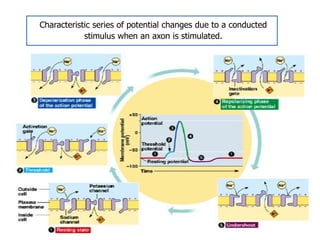
Characteristic series of potential changes due to a conducted
stimulus when an axon is stimulated.

Action Potential
Depolarizing block ( Non-competitive ) :
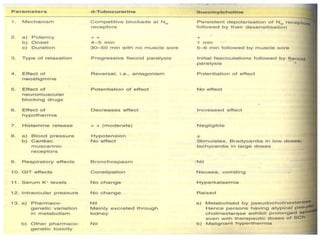
 Succinylcholine have affinity and sub maximal intrinsic
activity at NM receptors.
 They open Na channels which cause initial twitching and
fasciculation. (fasciculation or "muscle twitch)
 It does not dissociate rapidly from the receptors resulting in
prolonged depolarization and inactivation of the Na +
channels
• Phase –I Block
• Phase –II Block
Skeletal muscle relaxants
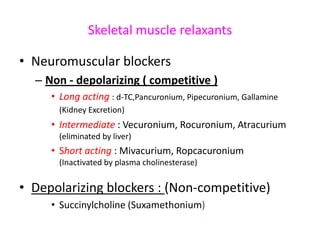
• Neuromuscular blockers
– Non - depolarizing ( competitive )
• Long acting : d-TC,Pancuronium, Pipecuronium, Gallamine
(Kidney Excretion)

• Intermediate : Vecuronium, Rocuronium, Atracurium
(eliminated by liver)

• Short acting : Mivacurium, Ropcacuronium
(Inactivated by plasma cholinesterase)

• Depolarizing blockers : (Non-competitive)
• Succinylcholine (Suxamethonium)
Skeletal muscle relaxants
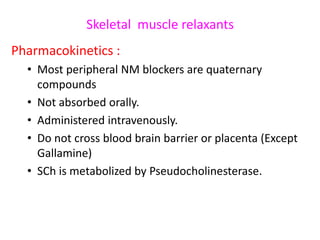
Pharmacokinetics :
• Most peripheral NM blockers are quaternary
compounds
• Not absorbed orally.
• Administered intravenously.
• Do not cross blood brain barrier or placenta (Except
Gallamine)
• SCh is metabolized by Pseudocholinesterase.
d – Tubocurarine
•
•
•
•

More potent than gallamine
Long duration of action ( 1 - 2 hr. )
Eliminated by kidney 60% - liver 40%.
Histamine releaser
• Bronchospasm
• Hypotension

• Blocks autonomic ganglia (Hypotension)
Atracurium
• As potent as curare (1.5)
• Has intermediate duration of action (30 min).
• Eliminated by non enzymatic chemical
degradation in plasma
• used in liver failure & kidney failure, neonate (
drug of choice ).
• Liberate histamine (Hypotension ).
Pancuronium
•
•
•
•

More potent than curare ( 6 times ).
Excreted by the kidney ( 80 % ).
Long duration of action.
Tachycardia
– Antimuscarinic action
Gallamine (Flaxedil)
• Less potent than curare ( 1/5 ).
• Metabolized mainly by kidney 100% # in
renal failure
• Long duration of action.
Tachycardia due to :
• Atropine like action.
• Release of NA from adrenergic nerve
endings
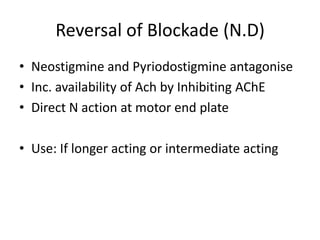
Reversal of Blockade (N.D)
• Neostigmine and Pyriodostigmine antagonise
• Inc. availability of Ach by Inhibiting AChE
• Direct N action at motor end plate
• Use: If longer acting or intermediate acting
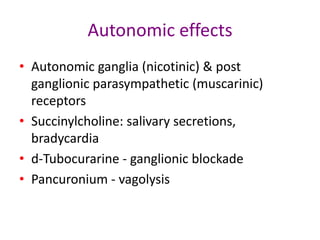
Autonomic effects
• Autonomic ganglia (nicotinic) & post
ganglionic parasympathetic (muscarinic)
receptors
• Succinylcholine: salivary secretions,
bradycardia
• d-Tubocurarine - ganglionic blockade
• Pancuronium - vagolysis
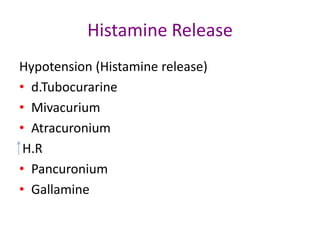
Histamine Release
Hypotension (Histamine release)
• d.Tubocurarine
• Mivacurium
• Atracuronium
H.R
• Pancuronium
• Gallamine
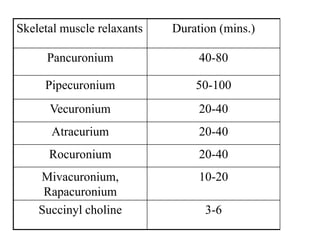
Skeletal muscle relaxants

Duration (mins.)

Pancuronium

40-80

Pipecuronium

50-100

Vecuronium

20-40

Atracurium

20-40

Rocuronium

20-40

Mivacuronium,
Rapacuronium
Succinyl choline

10-20
3-6
Synergists & Antagonist
• Anti AChE antagonise
• Inhalational G.A  stabilize post junctional
membarane Synergetic
• Aminoglycoside syner
• Ca++ channel blockers  Syner
Deploarizing PK
•
•
•
•
•

Quaternary ammonium groups
IV
Doesn’t cross BBB, Palcental B.
Sch 5-10min (ChE)
Stimulates ganglion agonist action on NN
Skeletal muscle relaxants

Depolarizing block (Non-competitive) :
Succinylcholine
•
•
•
•
•
•
•

It causes muscle pain.
It causes hyperkalemia. (inc. k efflux depolarizing)
Malignant Hyperthermia.
Prolong apnoea
Inc. Intra gastric pressure
CVS arrhythmia
IOP # glaucoma
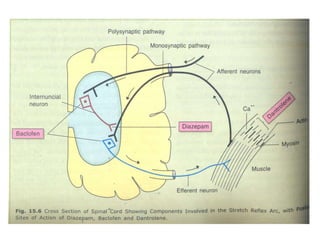
Centrally acting
• Cerebrospinal axis without altering
consciousness.
• Mode of action is non specific
• Depressants of poly synaptic reflexes ( Spinal
& Supra spinal  regn of muscle tone)
• Mephensin group: Carisoprodol, Chlorozoxazone,
Chlormezanone
• Benzodiazepine group: Diazepam & Clonazepam
• GABA derivative: Baclofen
• Chlorzoxazone: Long acting (8-12hr)Slow onset
• Carisoprodol: Intermediate action + analgesic,
antipyretic, anti muscarinic action
• BZD
• GABA derivative: GABAB – G protein
• Inc. K+ conductance, dec. Ca++ conductance
Skeletal muscle relaxants
Directly acting muscle relaxants :
Dantrolene :
Depolarization triggered release of calcium from the
sarcoplasmic contraction is blocked / reduced.
• Dantrolene is used orally/ i.v to reduces spasticity in
hemiplegia and cerebral palsy.
• It is the drug of choice – malignant hyperthermia
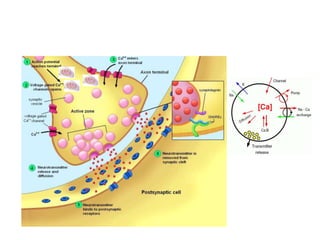
Active Zones
• Miscellaneous group:
• Quinine: Dec. excitability of motor end plate
• Botulinum: Prevents Ca dependent release of
Ach ( Inhibits Ach release)
Choice of muscle relaxants:
Consideration for choosing a muscle relaxant
include:
* Duration of action required
* Route of excretion
* Tendency to release histamine
* Cardiopulmonary side effects
* The ability to reverse the blockage
* Contraindication to any specific muscle relaxant.
* Cost
34

Skeletal muscle relaxants

  • 1.
    Neuromuscular blocker (Muscle Relaxants) Objectives 1.Physiology of neuromuscular junction 2. Muscle relaxants definition 3. Classification of Muscle Relaxants 4. Role of MR 1
  • 2.
  • 3.
    Skeletal muscle fibre Motorunit = Motor neurone Motor axon + branches + terminals All muscle fibres to which it connects Motor neurone One motor neurone has exclusive Control of many muscle fibres eg 10 oculomotor, 1000 biceps One muscle fibre innervated by one motor nerve terminal Next slide
  • 4.
    Muscle Relaxants: Definition: Drugs that decrease muscle tone • Spasmolytics : • Neuromuscular blockers (NMB’s) : Drugs that used to relieve muscle spasm & bring them from hypertonic state to normal muscle tone. Drugs that completely paralyze skeletal muscles (from normal tone to zero) by interfering with acetylcholine at neuromuscular jnx. NOT DISCUSSED antispasmodics, vasodilators, Bronchodilators  IMPORTANT IN SURGERIES 5
  • 5.
    Role of NMB‘s in surgery:  NMB’s are co-administrated with anesthetics in the induction phase to induce muscle paralysis (Abdominal wall & lower limbs)  facilitate the surgery, especially intra-abdominal and intrathoracic surgeries  facilitate endotracheal intubation.  Control convulsion Electroshock therapy in psychotic patient  Relieve of tetanus and epileptic convulsion • BUT bcz NMB may paralyze muscles required for breathing, mechanical ventilation should be available to maintain adequate respiration. 6
  • 6.
    Sequence of skeletalmuscle paralysis Paralyzed as follow: – Small rapidly contracting muscles of face, eye, Jae, toes and larynx – Larger muscles like Limbs, Neck, Trunk, – Finally Intercostals and lastly diaphragm. Recovery is in reverse. 7
  • 7.
    Skeletal muscle relaxants A.Nicotinic (Muscle) receptor blockers – Peripherally B. Centrally acting muscle relaxants C. Directly acting muscle relaxants
  • 8.
    Skeletal muscle relaxants •Skeletal muscle relaxants block peripherally at the neuromuscular junction (NM receptor of Ach – Muscle). • Types of Skeletal muscle relaxants: Competitive (Non-depolarizing) Non-competitive (Depolarizing)
  • 9.
    A. Non-depolarizing agents(Competitive blockers). Mechanism of action : • These have an affinity for the Nicotinic (NM) receptors at the muscle end plates but have no intrinsic activity. • The antagonism is surmountable by increasing the conc. of Ach.
  • 10.
    Characteristic series ofpotential changes due to a conducted stimulus when an axon is stimulated. Action Potential
  • 11.
    Depolarizing block (Non-competitive ) :  Succinylcholine have affinity and sub maximal intrinsic activity at NM receptors.  They open Na channels which cause initial twitching and fasciculation. (fasciculation or "muscle twitch)  It does not dissociate rapidly from the receptors resulting in prolonged depolarization and inactivation of the Na + channels
  • 12.
    • Phase –IBlock • Phase –II Block
  • 14.
    Skeletal muscle relaxants •Neuromuscular blockers – Non - depolarizing ( competitive ) • Long acting : d-TC,Pancuronium, Pipecuronium, Gallamine (Kidney Excretion) • Intermediate : Vecuronium, Rocuronium, Atracurium (eliminated by liver) • Short acting : Mivacurium, Ropcacuronium (Inactivated by plasma cholinesterase) • Depolarizing blockers : (Non-competitive) • Succinylcholine (Suxamethonium)
  • 15.
    Skeletal muscle relaxants Pharmacokinetics: • Most peripheral NM blockers are quaternary compounds • Not absorbed orally. • Administered intravenously. • Do not cross blood brain barrier or placenta (Except Gallamine) • SCh is metabolized by Pseudocholinesterase.
  • 16.
    d – Tubocurarine • • • • Morepotent than gallamine Long duration of action ( 1 - 2 hr. ) Eliminated by kidney 60% - liver 40%. Histamine releaser • Bronchospasm • Hypotension • Blocks autonomic ganglia (Hypotension)
  • 17.
    Atracurium • As potentas curare (1.5) • Has intermediate duration of action (30 min). • Eliminated by non enzymatic chemical degradation in plasma • used in liver failure & kidney failure, neonate ( drug of choice ). • Liberate histamine (Hypotension ).
  • 18.
    Pancuronium • • • • More potent thancurare ( 6 times ). Excreted by the kidney ( 80 % ). Long duration of action. Tachycardia – Antimuscarinic action
  • 19.
    Gallamine (Flaxedil) • Lesspotent than curare ( 1/5 ). • Metabolized mainly by kidney 100% # in renal failure • Long duration of action. Tachycardia due to : • Atropine like action. • Release of NA from adrenergic nerve endings
  • 20.
    Reversal of Blockade(N.D) • Neostigmine and Pyriodostigmine antagonise • Inc. availability of Ach by Inhibiting AChE • Direct N action at motor end plate • Use: If longer acting or intermediate acting
  • 21.
    Autonomic effects • Autonomicganglia (nicotinic) & post ganglionic parasympathetic (muscarinic) receptors • Succinylcholine: salivary secretions, bradycardia • d-Tubocurarine - ganglionic blockade • Pancuronium - vagolysis
  • 22.
    Histamine Release Hypotension (Histaminerelease) • d.Tubocurarine • Mivacurium • Atracuronium H.R • Pancuronium • Gallamine
  • 23.
    Skeletal muscle relaxants Duration(mins.) Pancuronium 40-80 Pipecuronium 50-100 Vecuronium 20-40 Atracurium 20-40 Rocuronium 20-40 Mivacuronium, Rapacuronium Succinyl choline 10-20 3-6
  • 24.
    Synergists & Antagonist •Anti AChE antagonise • Inhalational G.A  stabilize post junctional membarane Synergetic • Aminoglycoside syner • Ca++ channel blockers  Syner
  • 25.
    Deploarizing PK • • • • • Quaternary ammoniumgroups IV Doesn’t cross BBB, Palcental B. Sch 5-10min (ChE) Stimulates ganglion agonist action on NN
  • 26.
    Skeletal muscle relaxants Depolarizingblock (Non-competitive) : Succinylcholine • • • • • • • It causes muscle pain. It causes hyperkalemia. (inc. k efflux depolarizing) Malignant Hyperthermia. Prolong apnoea Inc. Intra gastric pressure CVS arrhythmia IOP # glaucoma
  • 27.
    Centrally acting • Cerebrospinalaxis without altering consciousness. • Mode of action is non specific • Depressants of poly synaptic reflexes ( Spinal & Supra spinal  regn of muscle tone) • Mephensin group: Carisoprodol, Chlorozoxazone, Chlormezanone • Benzodiazepine group: Diazepam & Clonazepam • GABA derivative: Baclofen
  • 29.
    • Chlorzoxazone: Longacting (8-12hr)Slow onset • Carisoprodol: Intermediate action + analgesic, antipyretic, anti muscarinic action • BZD • GABA derivative: GABAB – G protein • Inc. K+ conductance, dec. Ca++ conductance
  • 30.
    Skeletal muscle relaxants Directlyacting muscle relaxants : Dantrolene : Depolarization triggered release of calcium from the sarcoplasmic contraction is blocked / reduced. • Dantrolene is used orally/ i.v to reduces spasticity in hemiplegia and cerebral palsy. • It is the drug of choice – malignant hyperthermia
  • 31.
  • 32.
    • Miscellaneous group: •Quinine: Dec. excitability of motor end plate • Botulinum: Prevents Ca dependent release of Ach ( Inhibits Ach release)
  • 33.
    Choice of musclerelaxants: Consideration for choosing a muscle relaxant include: * Duration of action required * Route of excretion * Tendency to release histamine * Cardiopulmonary side effects * The ability to reverse the blockage * Contraindication to any specific muscle relaxant. * Cost 34

Editor's Notes

  • #4 Nicotinic receptors
  • #6 Skeletal = Dosn’t affect smooth nor cardiac muscle Paralysis = complete reduction in muscle tone almost to zero, bronchodilatorsPripheral effect = NO sedative, analgesic, amnesic effect. No effect on level of conciossness >>> when refer to muscle relaxant = NMBSkeletal = coz only nicotinic receptorsParalysis = diffirent from spasmolyticsIf used alone just rela muscle without anasthetic affect
  • #11 Ach released from the nerve endings does not combine with Nicotinic (NM) receptor to generate action potential
  • #13 Thus Ach is unable to generate AP.
  • #25 Most of these skeletal muscle relaxants release histamine and cause ganglion blockade.Succinlycholine cause ganglionic stimulation.Mivacurium is one of the shortest acting ( duration ~ 20 mins ) competitive muscle relaxants. Not used commonly anymore.