Anatomy of the Cerebral Circulation
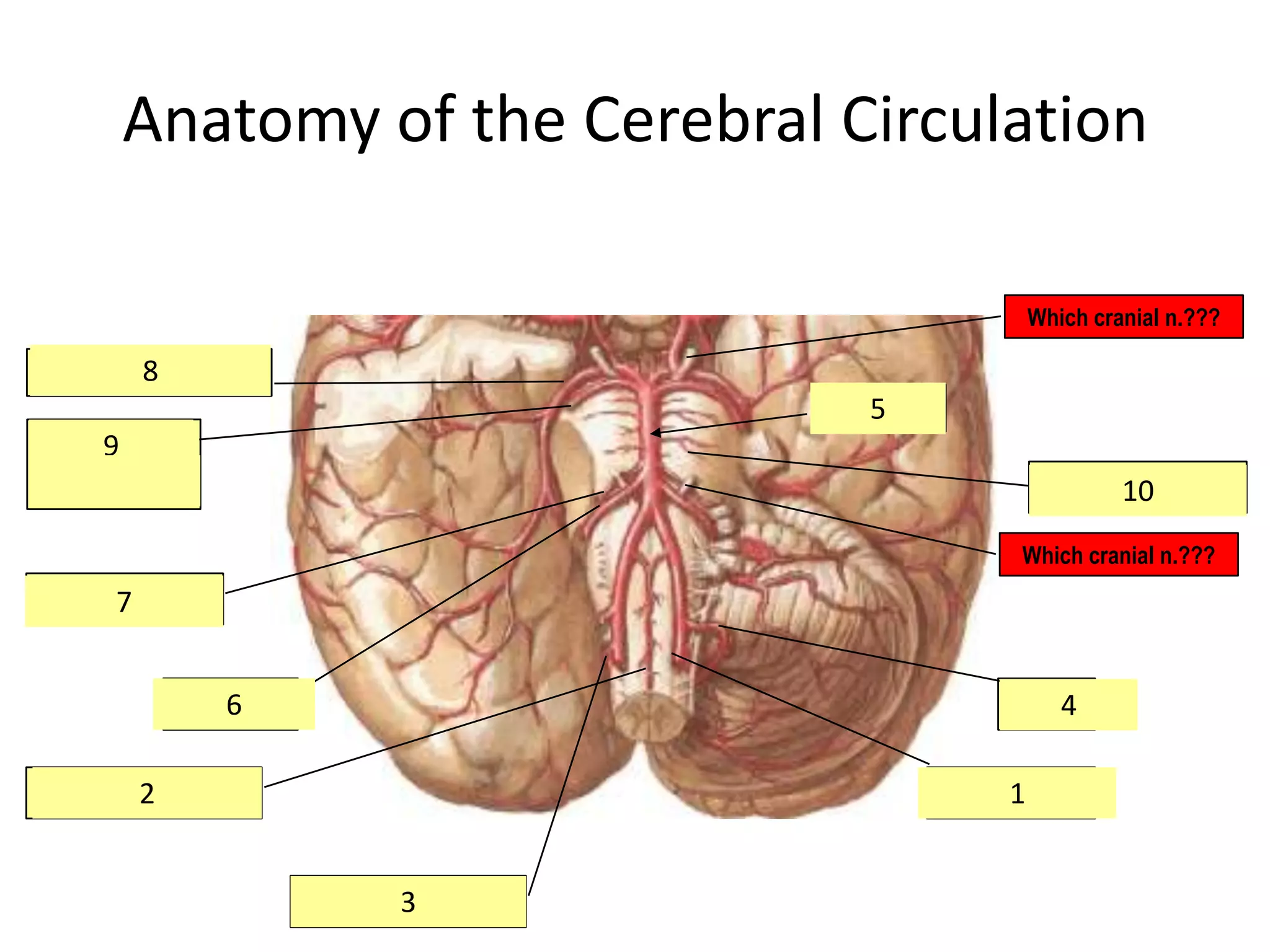
Which cranial n.???

8
Posterior cerebral a.
5
Basilar a.
9
Superior
cerebellar a.

Paramedian as.
10
Which cranial n.???

Labyrinthine a.
7
6
AICA

4
PICA

2
Ant. Spinal artery

1
Vertebral a.
3
Post. Spinal a.
Anatomy of the Cerebral Circulation
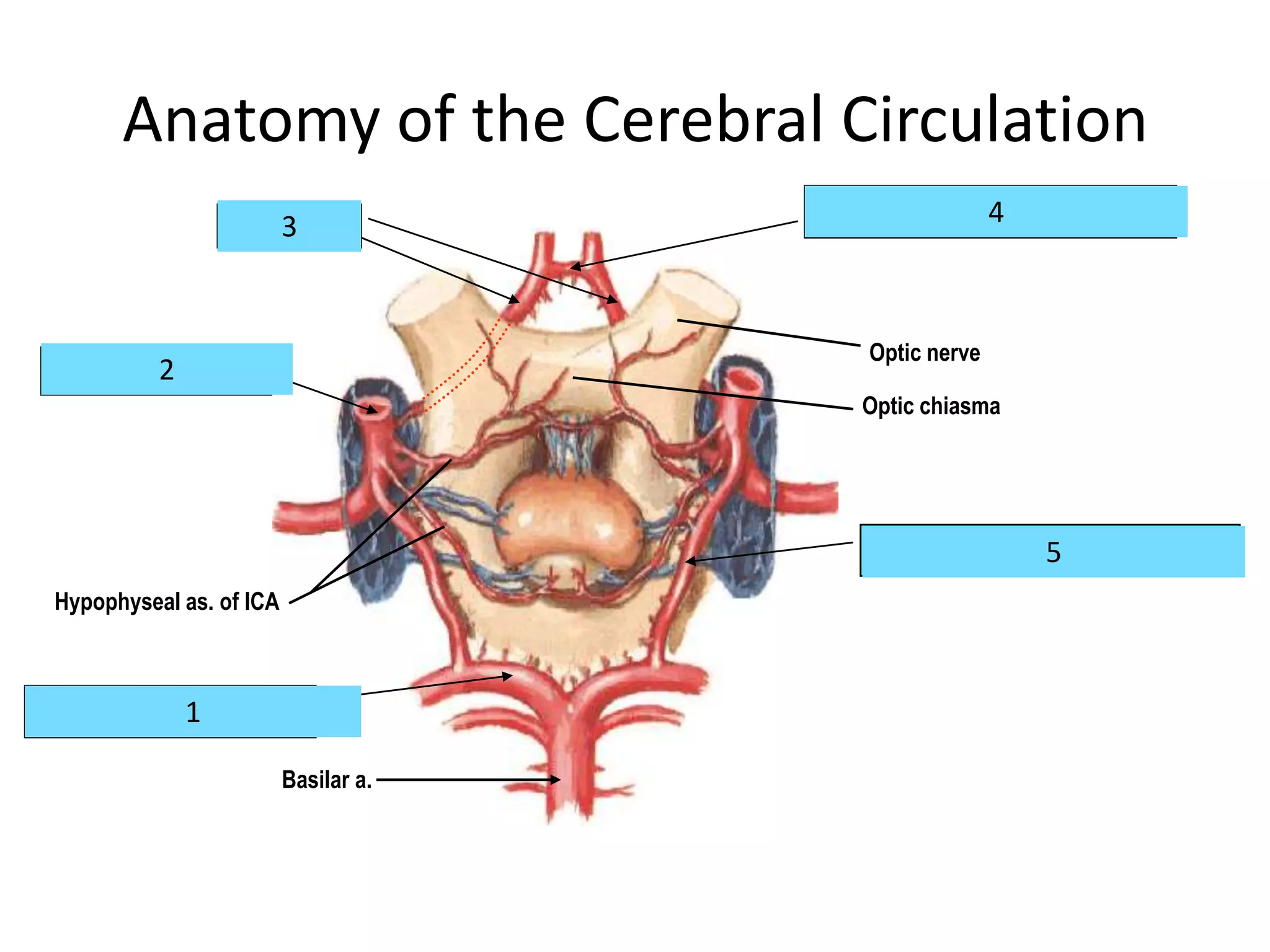
A.C.A.
3

4
Anterior communicating a.

Optic nerve

2
Internal carotid a.

Optic chiasma

5
Posterior communicating a.
Hypophyseal as. of ICA

1
Posterior cerebral a.
Basilar a.
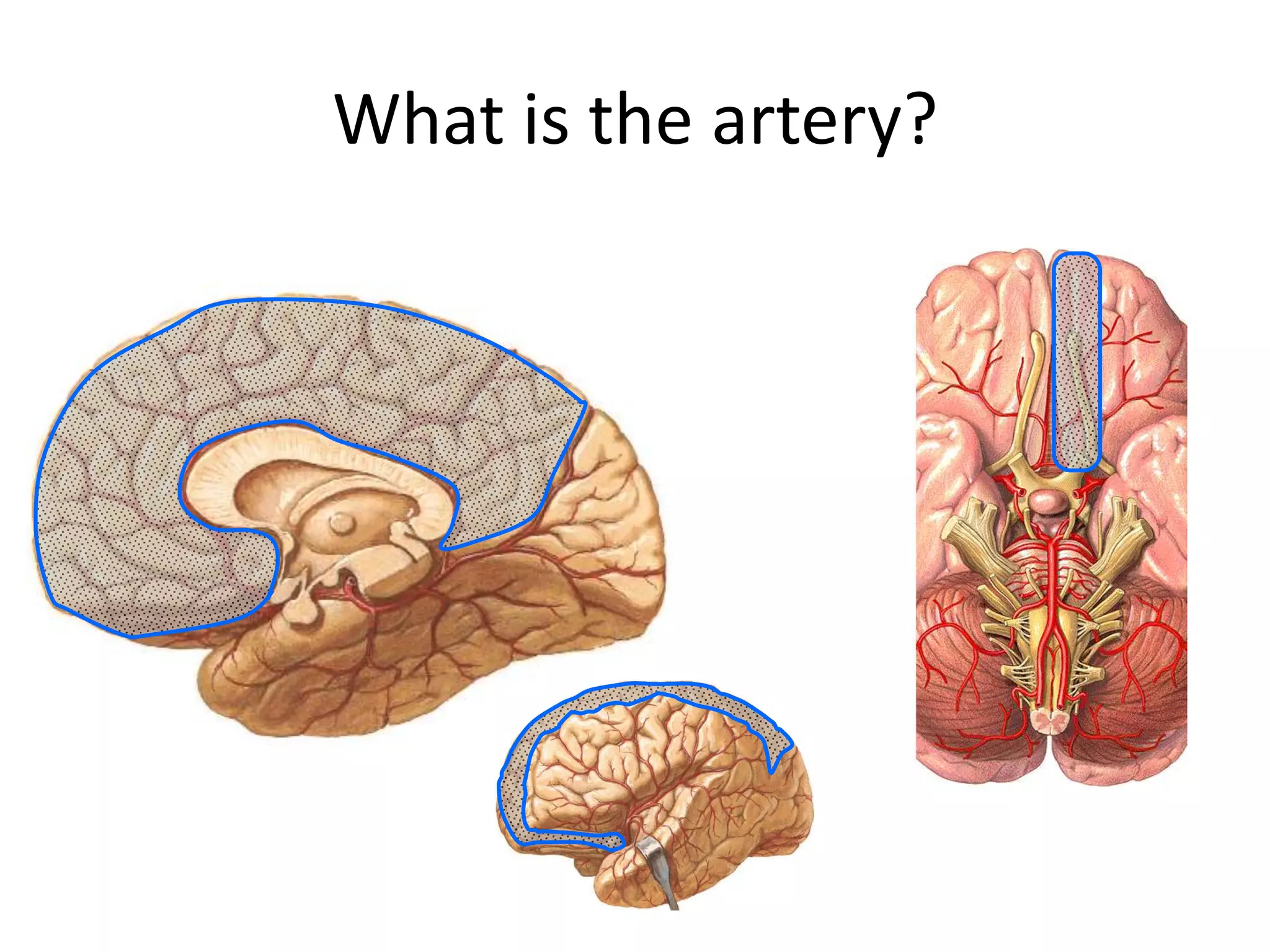
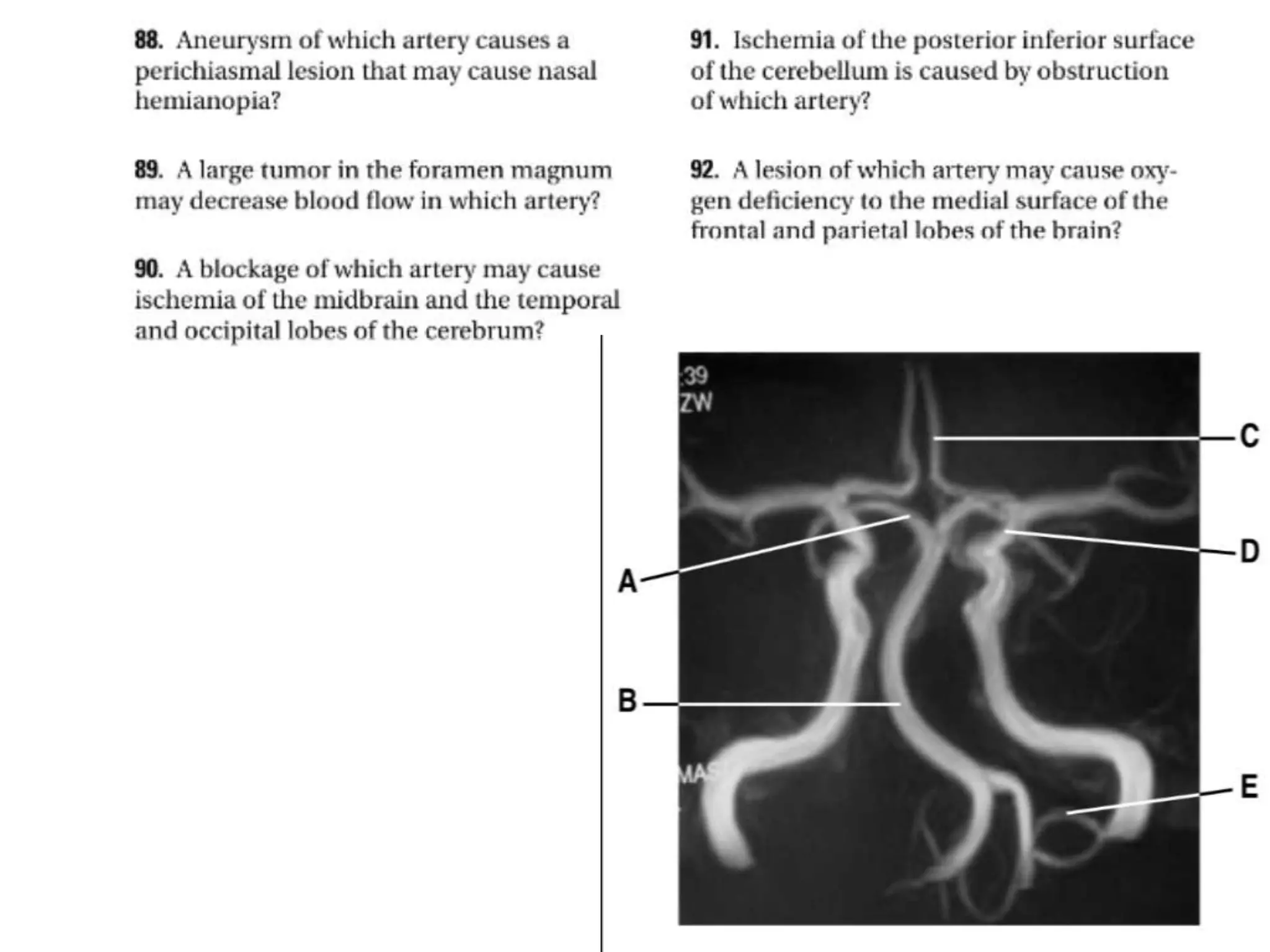
What is the artery?
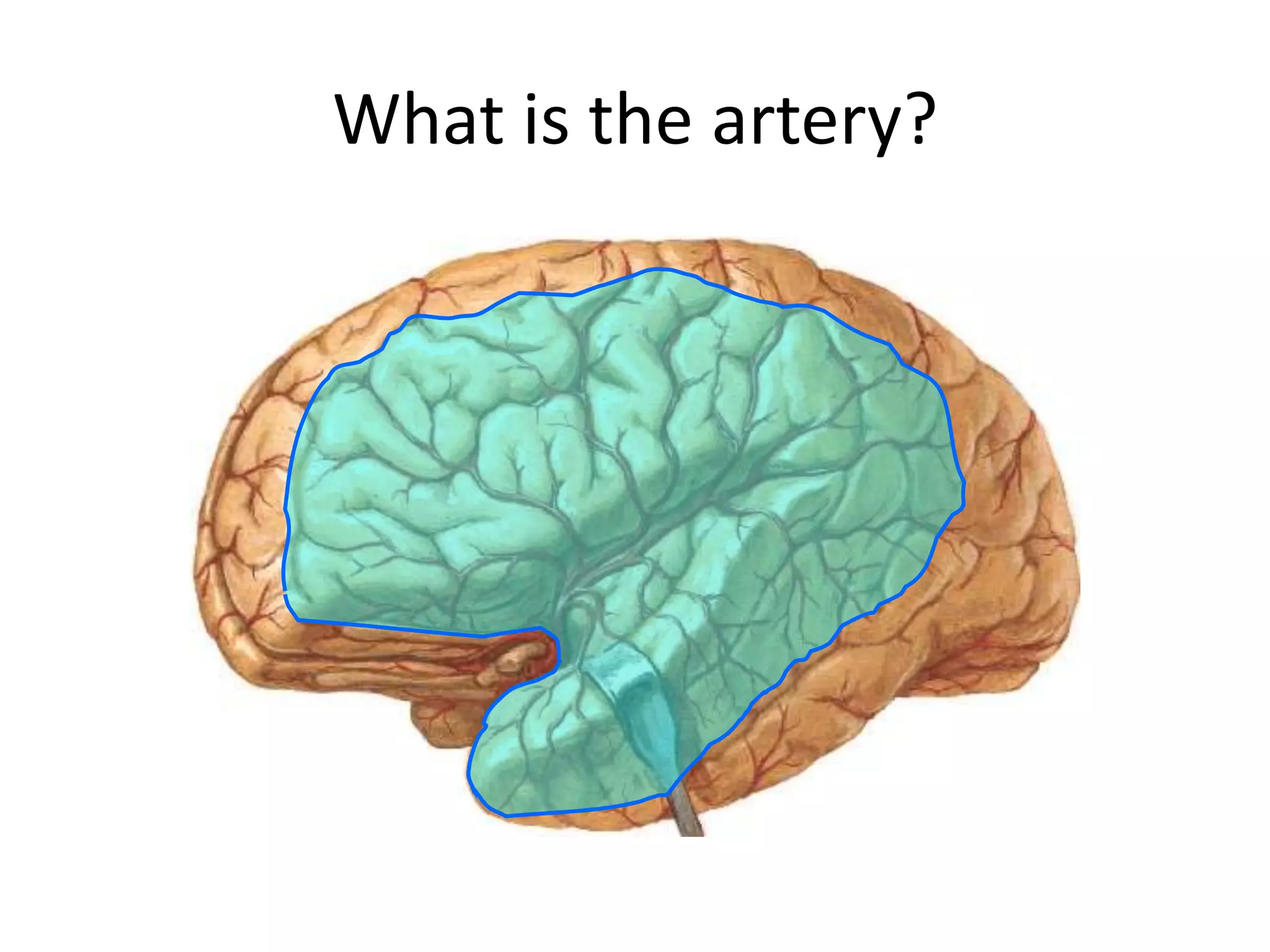
What is the artery?
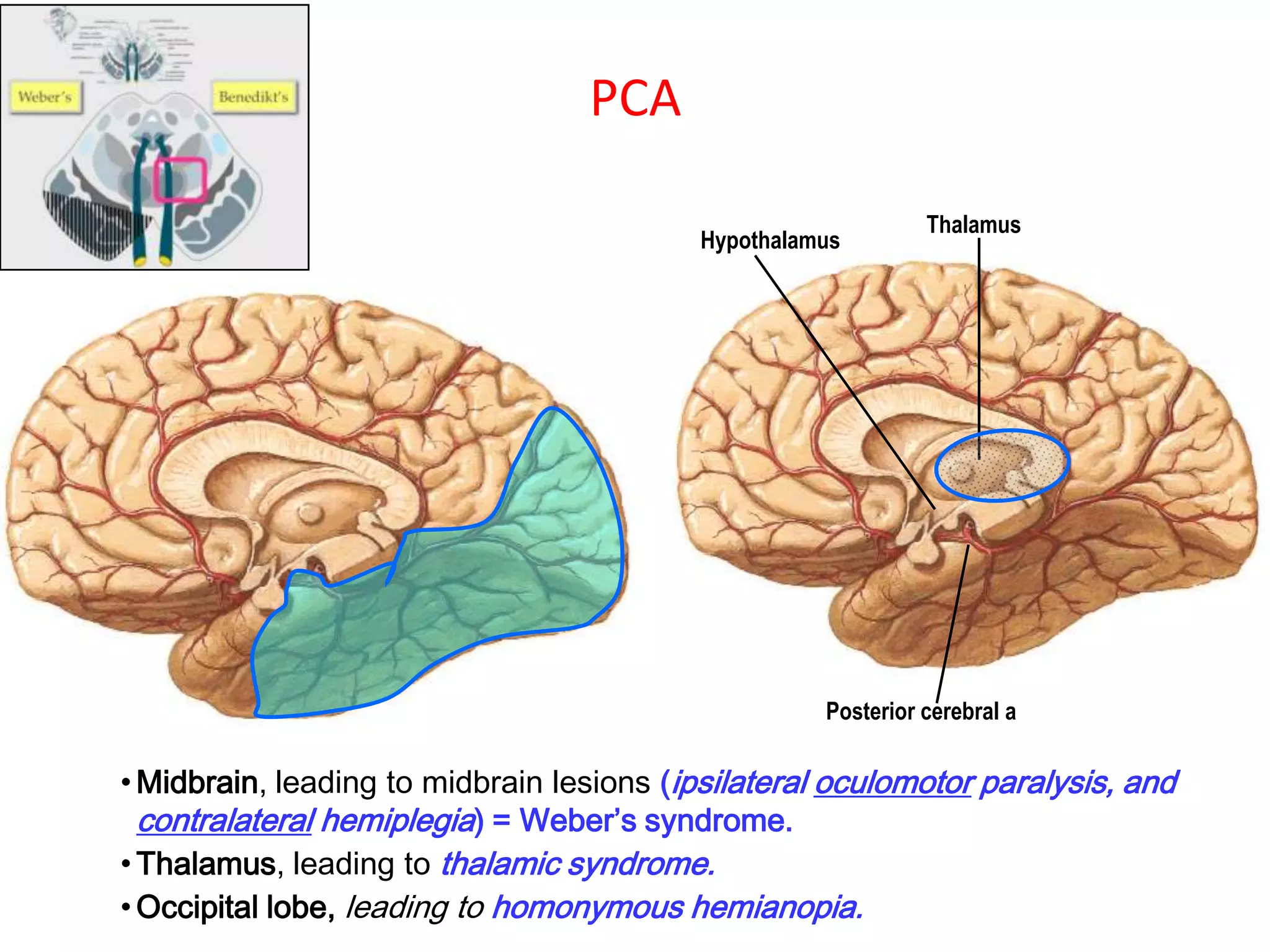
PCA
Hypothalamus

Thalamus

Posterior cerebral a

• Midbrain, leading to midbrain lesions (ipsilateral oculomotor paralysis, and
contralateral hemiplegia) = Weber’s syndrome.
• Thalamus, leading to thalamic syndrome.
• Occipital lobe, leading to homonymous hemianopia.
During a game, a 26 year old baseball player is hit in
the head by a baseball which fractures the optic
canal. Which pair of structures is most likely to be
damaged ?
a. Optic nerve and Ophthalmic vein
b. Ophthalmic vein and Ophthalmic nerve
c. Ophthalmic artery and Optic nerve
d. Ophthalmic nerve and Optic nerve
e. Ophthalmic artery and Ophthalmic vein
The answer is C : the optic canal transmits the
optic nerve and ophthalmic artery. The
ophthalmic vein enter the orbit through the
superior orbital fissure.
Anatomy of the cerebral circulation Week 5 objective

Anatomy of the cerebral circulation Week 5 objective

  • 1.
    Anatomy of theCerebral Circulation Which cranial n.??? 8 Posterior cerebral a. 5 Basilar a. 9 Superior cerebellar a. Paramedian as. 10 Which cranial n.??? Labyrinthine a. 7 6 AICA 4 PICA 2 Ant. Spinal artery 1 Vertebral a. 3 Post. Spinal a.
  • 2.
    Anatomy of theCerebral Circulation A.C.A. 3 4 Anterior communicating a. Optic nerve 2 Internal carotid a. Optic chiasma 5 Posterior communicating a. Hypophyseal as. of ICA 1 Posterior cerebral a. Basilar a.
  • 3.
    What is theartery?
  • 4.
    What is theartery?
  • 5.
    PCA Hypothalamus Thalamus Posterior cerebral a •Midbrain, leading to midbrain lesions (ipsilateral oculomotor paralysis, and contralateral hemiplegia) = Weber’s syndrome. • Thalamus, leading to thalamic syndrome. • Occipital lobe, leading to homonymous hemianopia.
  • 6.
    During a game,a 26 year old baseball player is hit in the head by a baseball which fractures the optic canal. Which pair of structures is most likely to be damaged ? a. Optic nerve and Ophthalmic vein b. Ophthalmic vein and Ophthalmic nerve c. Ophthalmic artery and Optic nerve d. Ophthalmic nerve and Optic nerve e. Ophthalmic artery and Ophthalmic vein
  • 7.
    The answer isC : the optic canal transmits the optic nerve and ophthalmic artery. The ophthalmic vein enter the orbit through the superior orbital fissure.

Editor's Notes