Downloaded 27 times



![7
Combination oral contraceptives: Products containing a combination of an estrogen and a progestin are the most
common type of oral contraceptives. Monophasic combination pills contain a constant dose of estrogen and progestin
given over 21 to 24 days. Triphasic oral contraceptive products attempt to mimic the natural female cycle and most
contain a constant dose of estrogen with increasing doses of progestin given over three successive 7-day periods.
[Note: The combination of estradiol valerate and dienogest is available as a four-phasic oral contraceptive.]
With most oral contraceptives, active pills are taken for 21 to 24 days, followed by 4 to 7 days of placebo, for a total
regimen of 28 days. Withdrawal bleeding occurs during the hormone-free (placebo) interval. [Note: The most common
estrogen in the combination pills is ethinyl estradiol. The most common progestins are norethindrone, norethindrone
acetate, levonorgestrel, desogestrel, norgestimate, and drospirenone.]
These preparations are highly effective in achieving contraception. Use of extended-cycle contraception (84 active pills
followed by 7 days of placebo) results in less frequent withdrawal bleeding. A continuous oral contraceptive product
(active pills taken every day) is also available.](https://image.slidesharecdn.com/contraceptives-190304060038/85/Contraceptives-7-320.jpg)

![12
Progestin intrauterine device: A levonorgestrel-releasing
intrauterine system offers a highly effective method of
contraception for 3 to 5 years depending on the system. It is a
suitable method of contraception for women who desire long-term
contraception and those who have contraindications to estrogen
therapy.
Postcoital contraception: Postcoital or emergency contraception
reduces the probability of pregnancy after an episode of coitus
without effective contraception to between 0.2% and 3%.
Emergency contraception uses high doses of levonorgestrel
(preferred) or high doses of ethinyl estradiol plus levonorgestrel.
For maximum effectiveness, emergency contraception should be
taken as soon as possible after unprotected intercourse and
preferably within 72 hours.
The progestin-only emergency contraceptive regimens are generally
better tolerated than the estrogen–progestin combination regimens.
An alternative emergency contraceptive is the progesterone
agonist/antagonist ulipristal [ue-li-PRIS-tal]. It is indicated for
emergency contraception within 5 days of unprotected intercourse.](https://image.slidesharecdn.com/contraceptives-190304060038/85/Contraceptives-12-320.jpg)
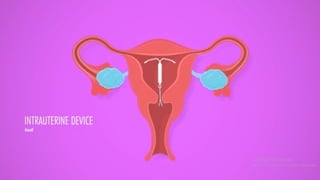

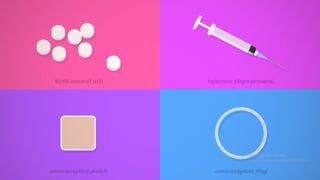
Combination oral contraceptives are the most common type and contain estrogen and progestin. They come in monophasic, biphasic, and triphasic formulations. Other options include transdermal patches, vaginal rings, progestin-only pills, injectables, and implants. Intrauterine devices provide long-term contraception for 3-5 years. Emergency contraception can be used after unprotected sex and works best if used within 72 hours. Estrogen and progestin work to prevent pregnancy by inhibiting ovulation and thickening cervical mucus. Common side effects include breast tenderness, headaches and mood changes.


![谷歌留痕技术 [ 𝙩𝙤𝙥 𝟮𝟯𝟯. 𝙘 𝙤𝙢 ]](https://cdn.slidesharecdn.com/ss_thumbnails/top233-260130174328-3833018c-thumbnail.jpg?width=640&height=640&fit=bounds)


