COLLEGE OF ART,
DELHI UNIVERSITY
Presented by –
Himani Sharma
Diksha Gupta
Divya Sinduria
Batch of 2015
4th year
Applied Art
8th Semester
Submitted to –
Professor Deepti Baveja
What is Viral
Marketing?
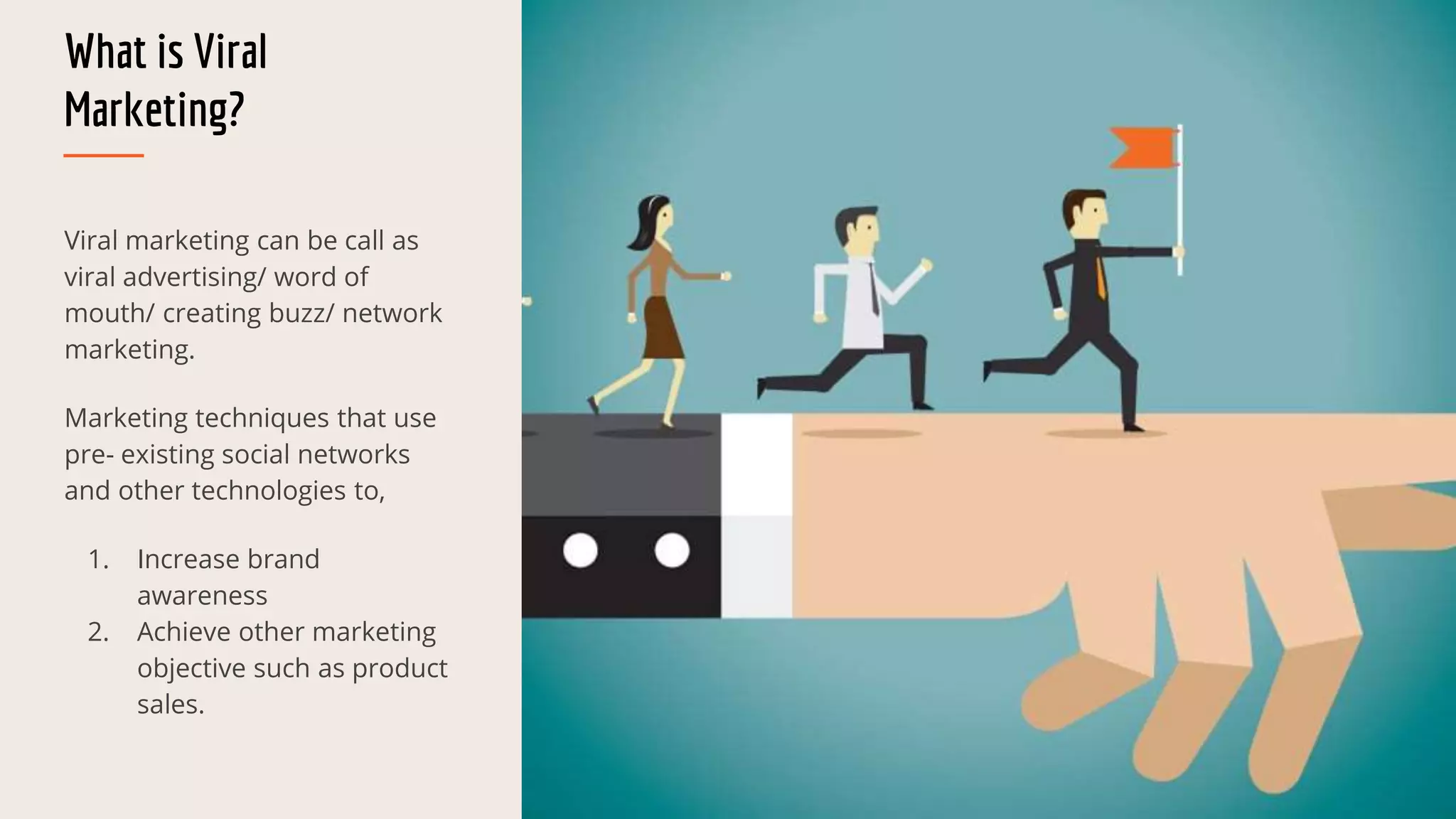
Viral marketing can be call as
viral advertising/ word of
mouth/ creating buzz/ network
marketing.
Marketing techniques that use
pre- existing social networks
and other technologies to,
1. Increase brand
awareness
2. Achieve other marketing
objective such as product
sales.
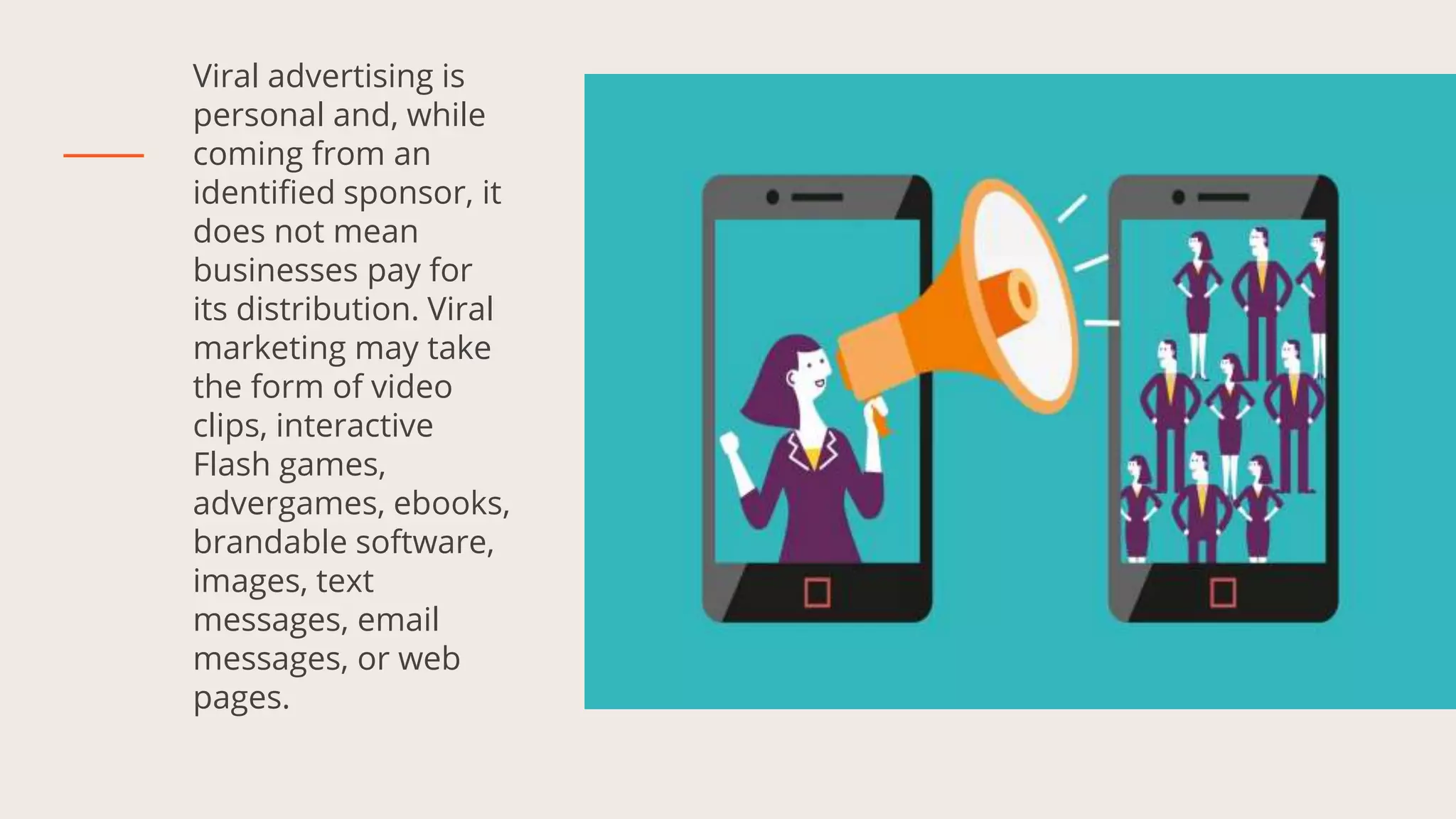
Viral advertising is
personal and, while
coming from an
identified sponsor, it
does not mean
businesses pay for
its distribution. Viral
marketing may take
the form of video
clips, interactive
Flash games,
advergames, ebooks,
brandable software,
images, text
messages, email
messages, or web
pages.
Methods
● Customer participation and
polling services
● Industry specific organisation
contribution
● Web search engines and blogs
● Mobile smartphone integration
● Multiple forms of print and direct
marketing
● Target marketing web services
● Search engine optimisation (SEO)
● Social media optimization (SMO)
● Television and radio.
Process
The Internet makes it possible for a campaign to go viral very fast; it can, so to speak, make a brand famous overnight.
However, the Internet and social media technologies themselves do not make a brand viral; they just enable people to
share content to other people faster. Therefore, it is generally agreed that a campaign must typically follow a certain set of
guidelines in order to potentially be successful:
• It must be appealing to most of the audience.
• It must be worth sharing with friends and family.
• A large platform, e.g. YouTube or Facebook must be used.
• An initial boost to gain attention is used, e.g. seeding, buying views, or sharing to Facebook fans.
• The content is of good quality.
Examples
1. Old spice campaign:
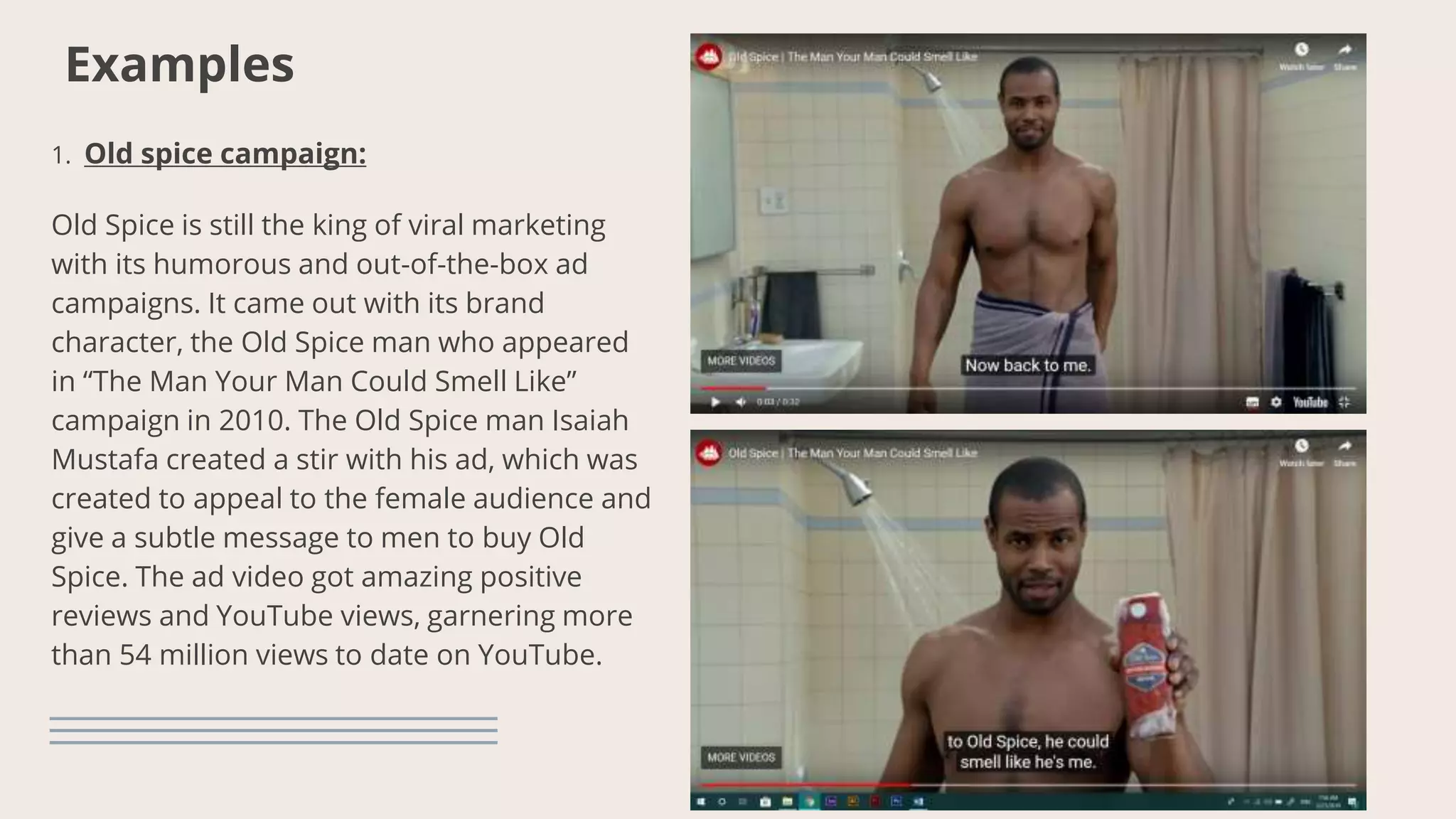
Old Spice is still the king of viral marketing
with its humorous and out-of-the-box ad
campaigns. It came out with its brand
character, the Old Spice man who appeared
in “The Man Your Man Could Smell Like”
campaign in 2010. The Old Spice man Isaiah
Mustafa created a stir with his ad, which was
created to appeal to the female audience and
give a subtle message to men to buy Old
Spice. The ad video got amazing positive
reviews and YouTube views, garnering more
than 54 million views to date on YouTube.
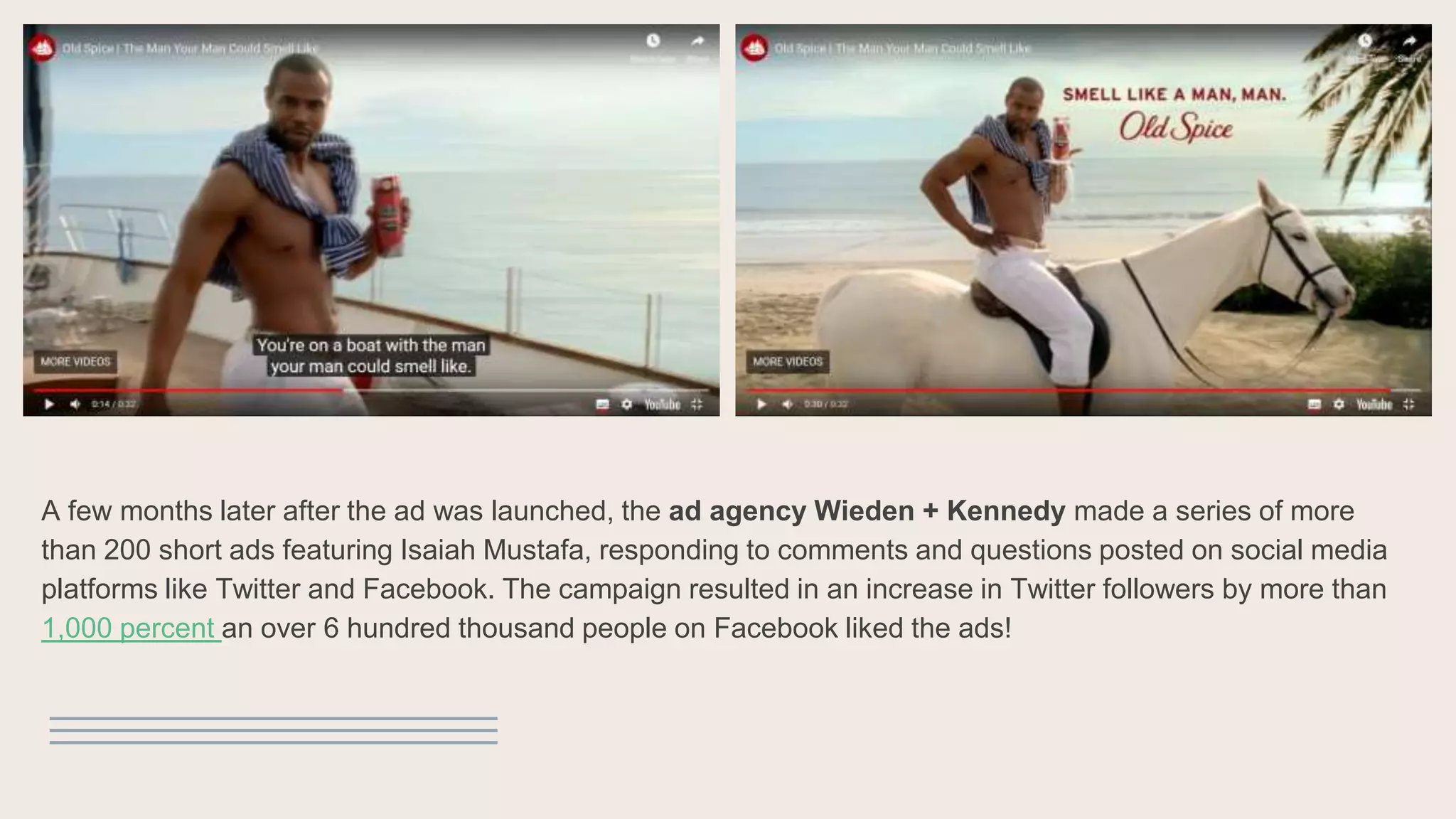
A few months later after the ad was launched, the ad agency Wieden + Kennedy made a series of more
than 200 short ads featuring Isaiah Mustafa, responding to comments and questions posted on social media
platforms like Twitter and Facebook. The campaign resulted in an increase in Twitter followers by more than
1,000 percent an over 6 hundred thousand people on Facebook liked the ads!
2. Dove “Real beauty sketches”
campaign.
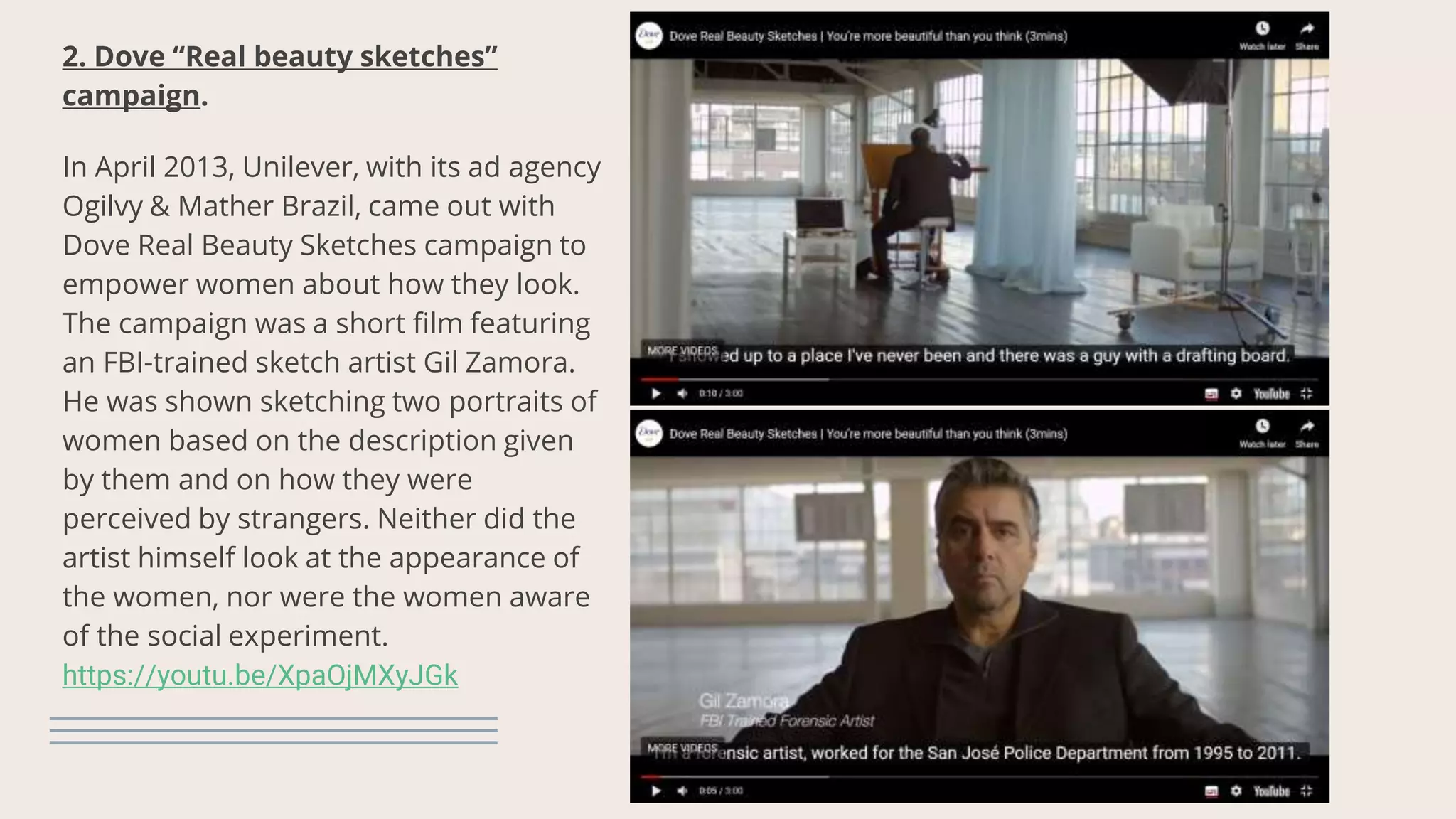
In April 2013, Unilever, with its ad agency
Ogilvy & Mather Brazil, came out with
Dove Real Beauty Sketches campaign to
empower women about how they look.
The campaign was a short film featuring
an FBI-trained sketch artist Gil Zamora.
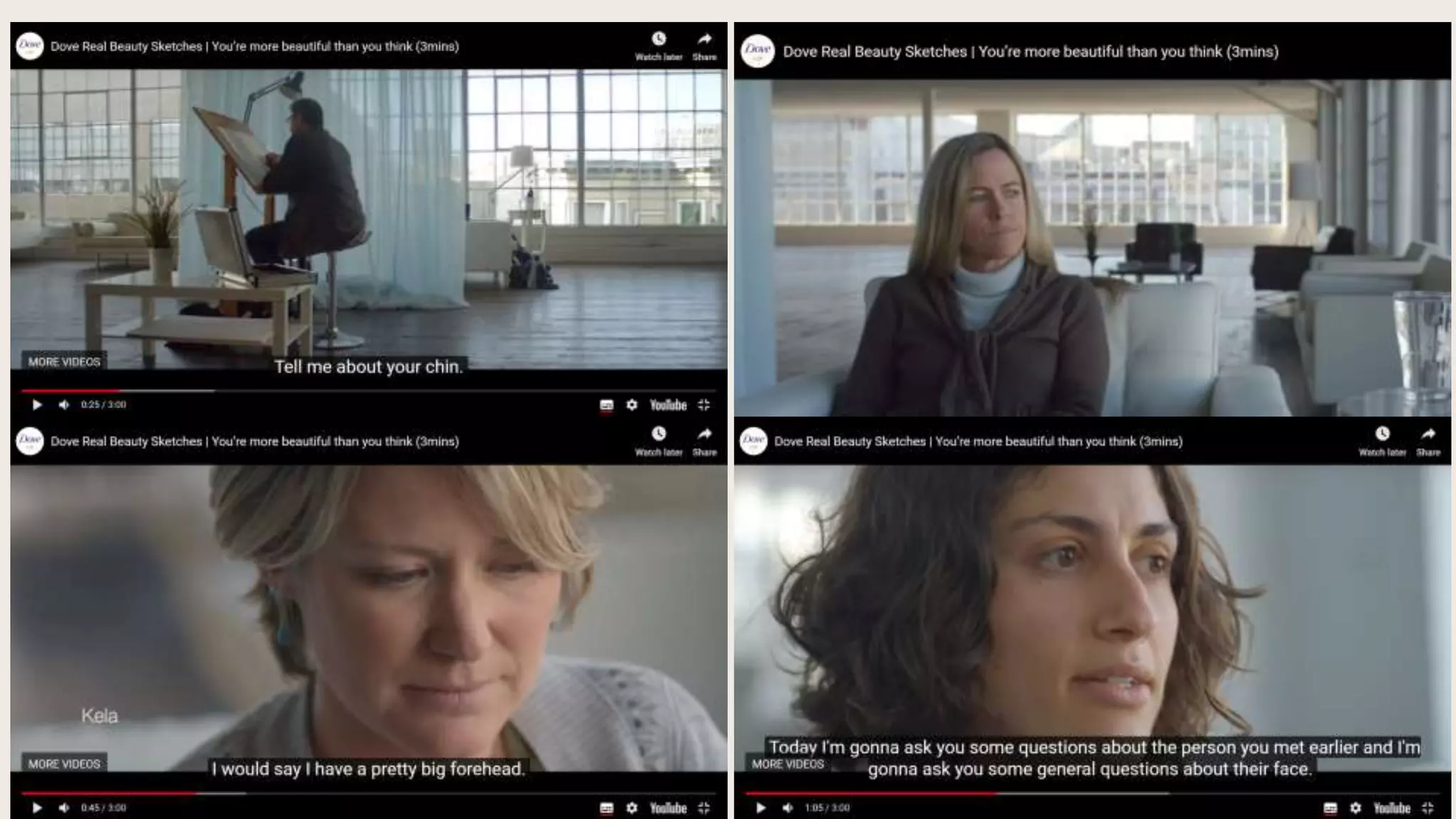
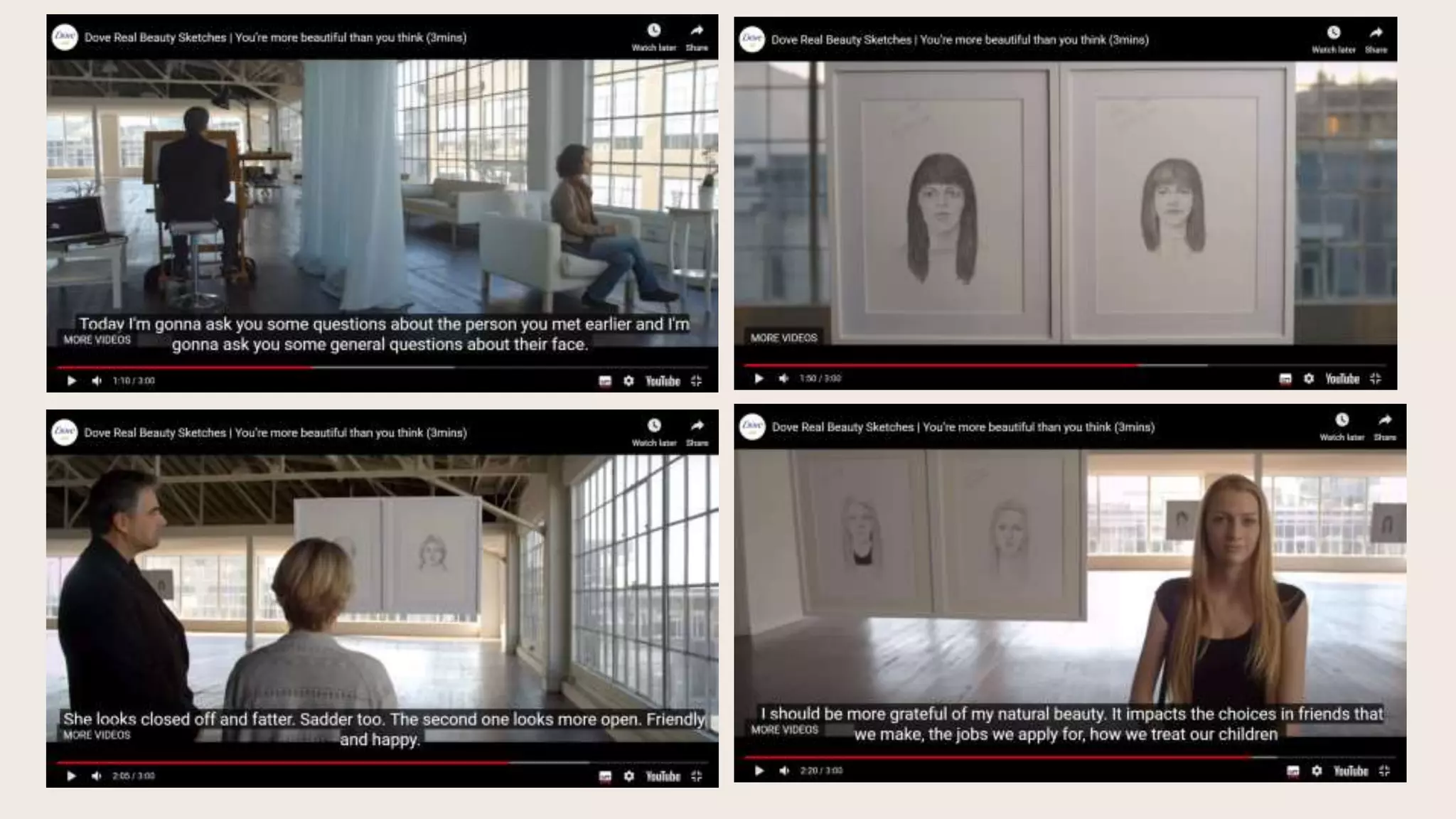
He was shown sketching two portraits of
women based on the description given
by them and on how they were
perceived by strangers. Neither did the
artist himself look at the appearance of
the women, nor were the women aware
of the social experiment.
https://youtu.be/XpaOjMXyJGk
The video was viewed more than 114 million times in the first month itself and was uploaded in 25 languages
to 33 of the Dove's YouTube channels to reach consumers in over 110 countries.
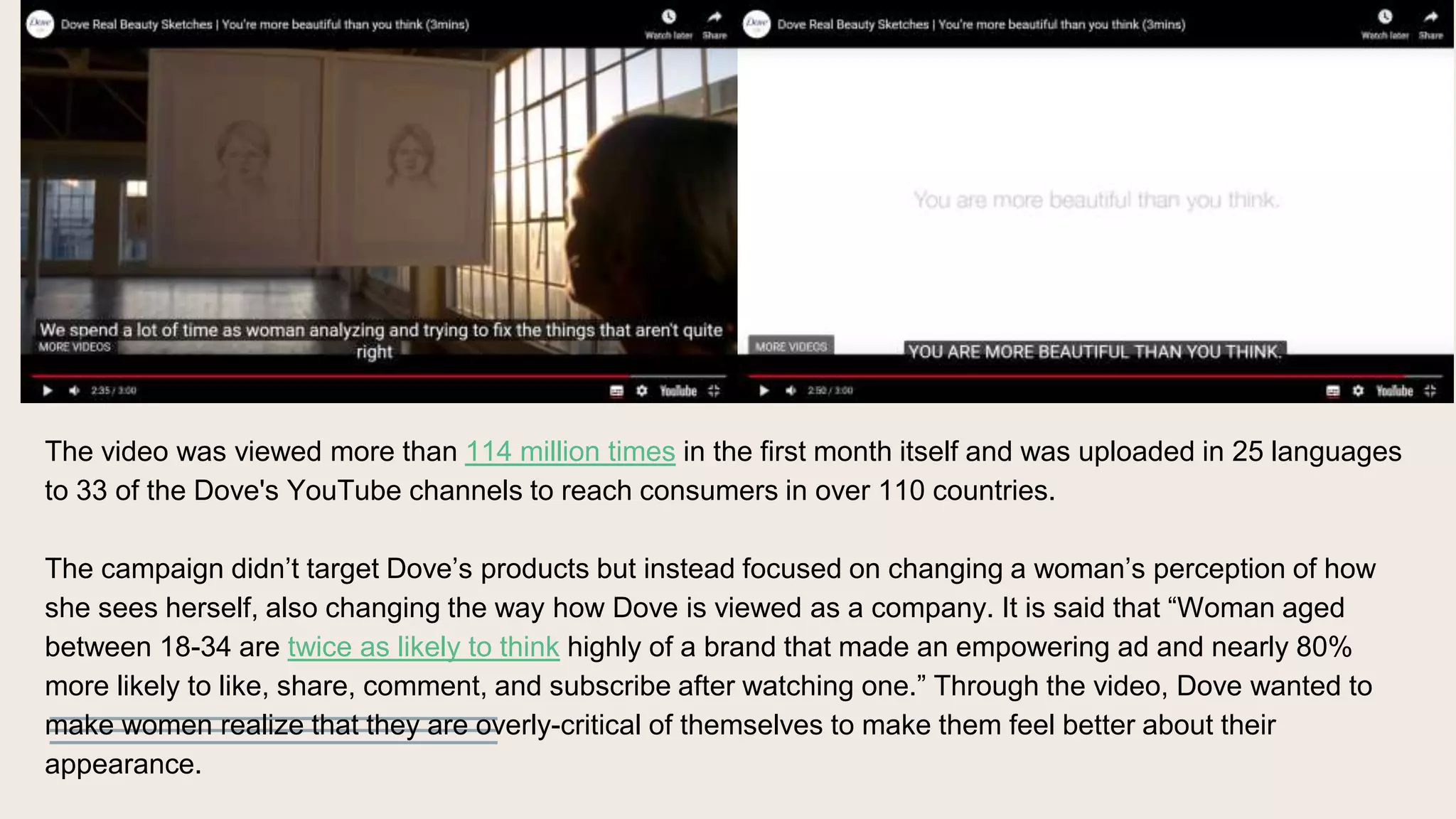
The campaign didn’t target Dove’s products but instead focused on changing a woman’s perception of how
she sees herself, also changing the way how Dove is viewed as a company. It is said that “Woman aged
between 18-34 are twice as likely to think highly of a brand that made an empowering ad and nearly 80%
more likely to like, share, comment, and subscribe after watching one.” Through the video, Dove wanted to
make women realize that they are overly-critical of themselves to make them feel better about their
appearance.
3. ALS ice bucket challenge :
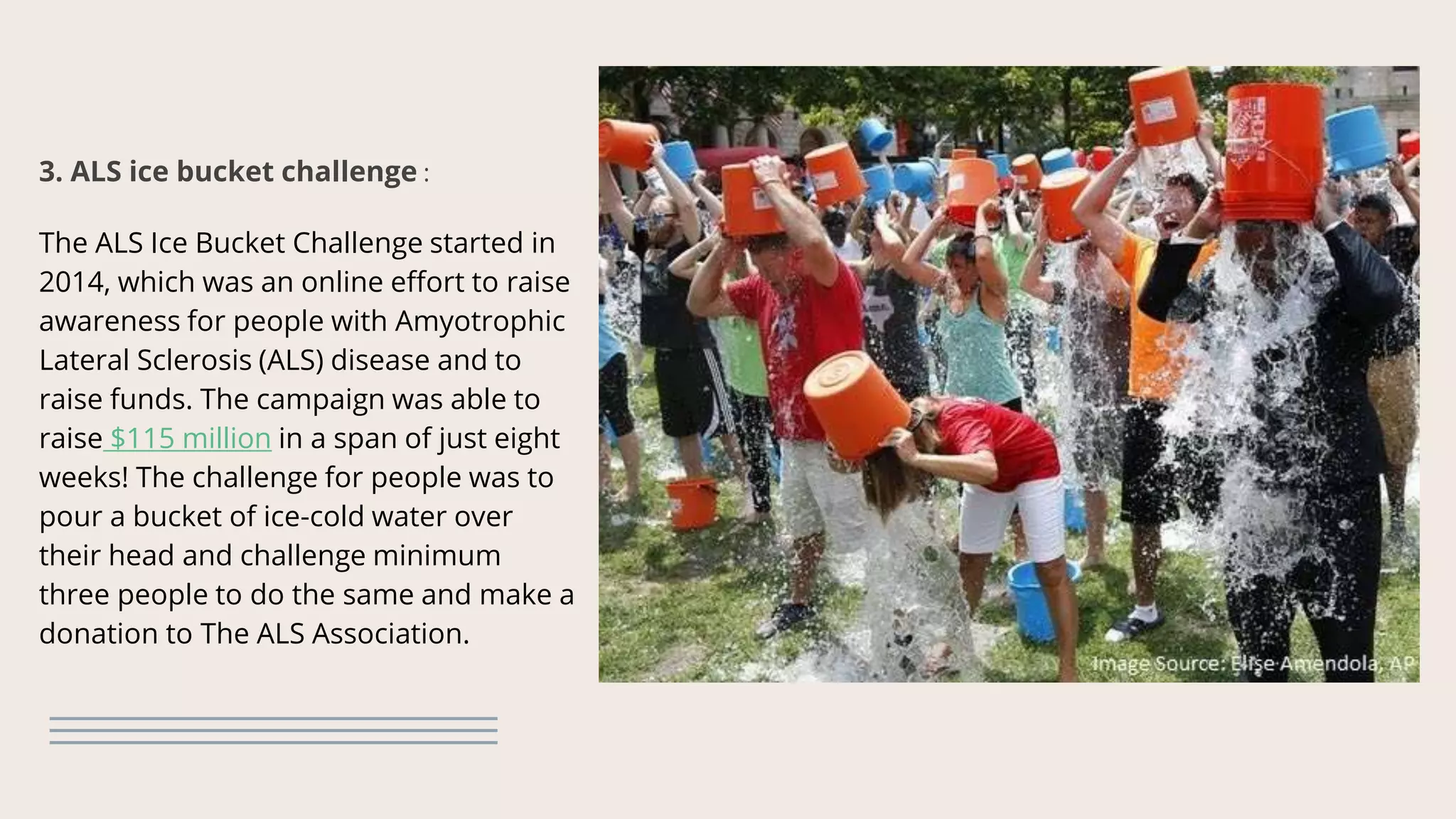
The ALS Ice Bucket Challenge started in
2014, which was an online effort to raise
awareness for people with Amyotrophic
Lateral Sclerosis (ALS) disease and to
raise funds. The campaign was able to
raise $115 million in a span of just eight
weeks! The challenge for people was to
pour a bucket of ice-cold water over
their head and challenge minimum
three people to do the same and make a
donation to The ALS Association.
The campaign became
successful and viral with over
17 million people participating
in the challenge worldwide.
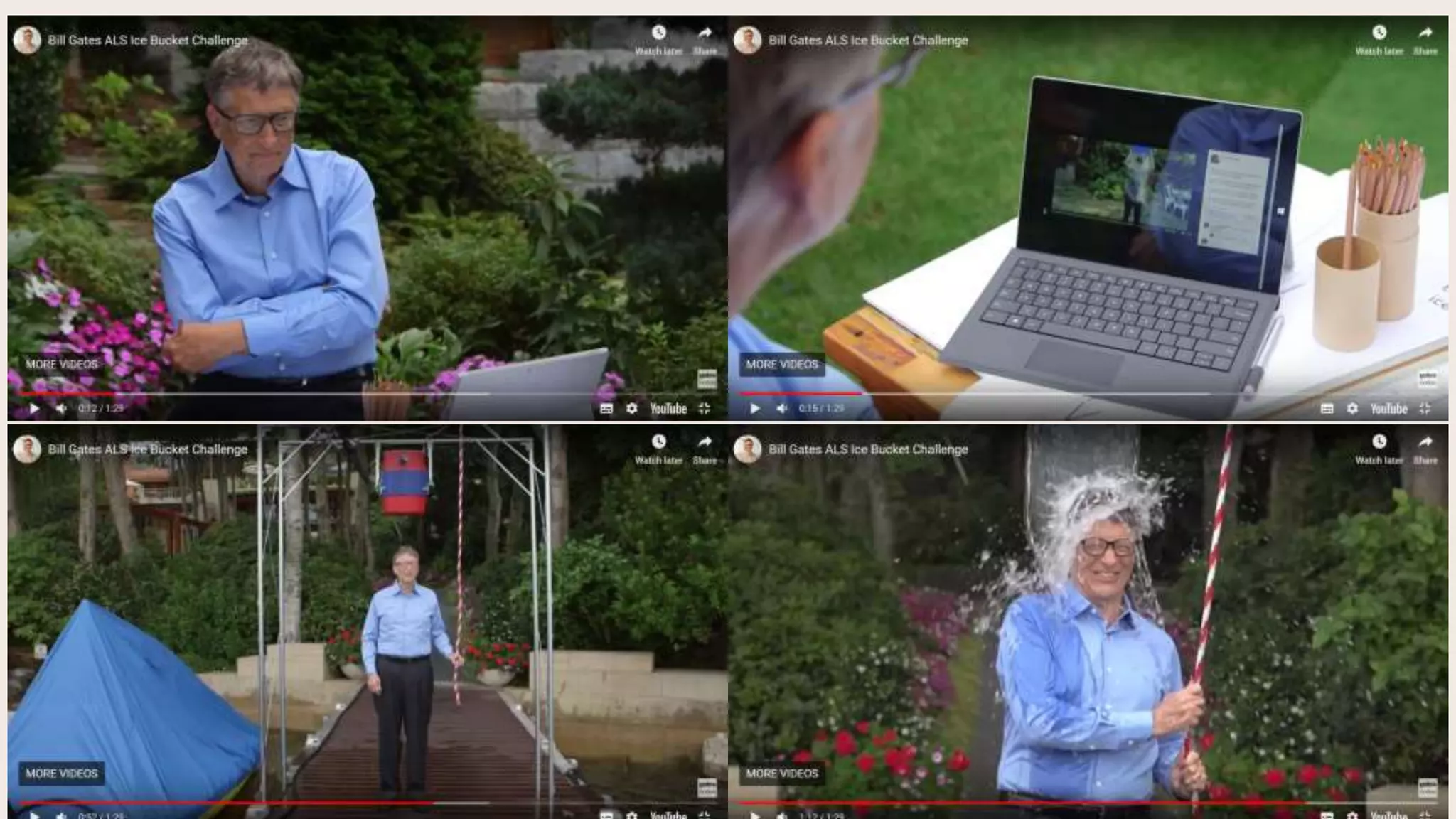
Many celebrities including Bill
Gates, George W. Bush, Oprah
Winfrey, Tom Cruise, Mark
Zuckerberg, Rihanna, Tim Cook,
Rafael Nadal, and Cristiano
Ronaldo took part in the
challenge.
Key takeaways from above
examples
● Use social media platforms to engage customers in an interactive way rather than
using the same techniques
● Dove Real Beauty Sketches campaign proves that marketing your company doesn’t only
include promoting your products and services.
● The campaign became viral because it could connect to the audience emotionally.
● Using the second-person term “you”
● Create awareness about your brand through various marketing channels. People will
prefer to buy from you only if they know about you.
● By attracting celebrities in the challenge, the campaign was widespread as their
followers joined in too, leading to worldwide coverage.
Some other examples.
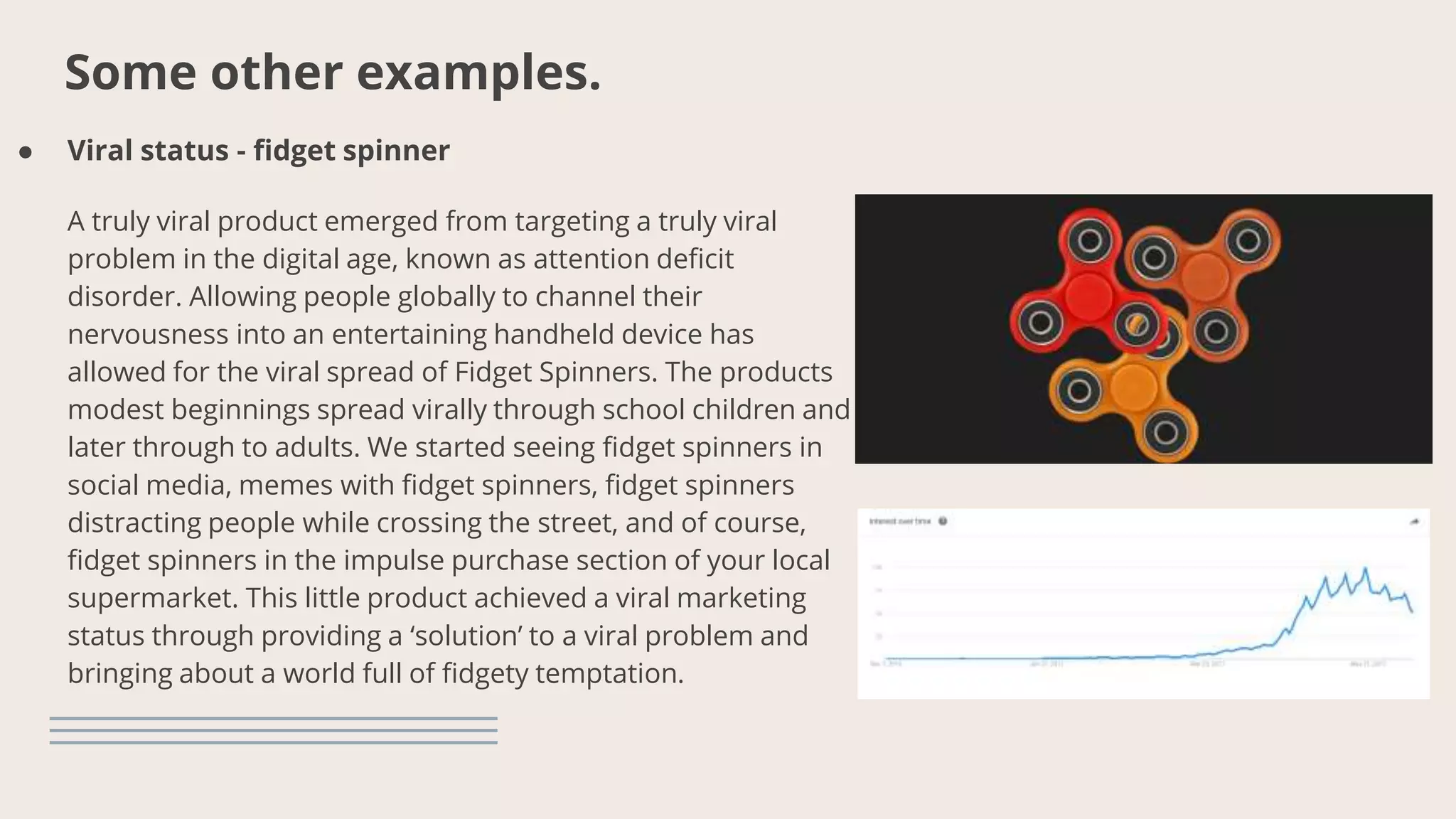
● Viral status - fidget spinner
A truly viral product emerged from targeting a truly viral
problem in the digital age, known as attention deficit
disorder. Allowing people globally to channel their
nervousness into an entertaining handheld device has
allowed for the viral spread of Fidget Spinners. The products
modest beginnings spread virally through school children and
later through to adults. We started seeing fidget spinners in
social media, memes with fidget spinners, fidget spinners
distracting people while crossing the street, and of course,
fidget spinners in the impulse purchase section of your local
supermarket. This little product achieved a viral marketing
status through providing a ‘solution’ to a viral problem and
bringing about a world full of fidgety temptation.
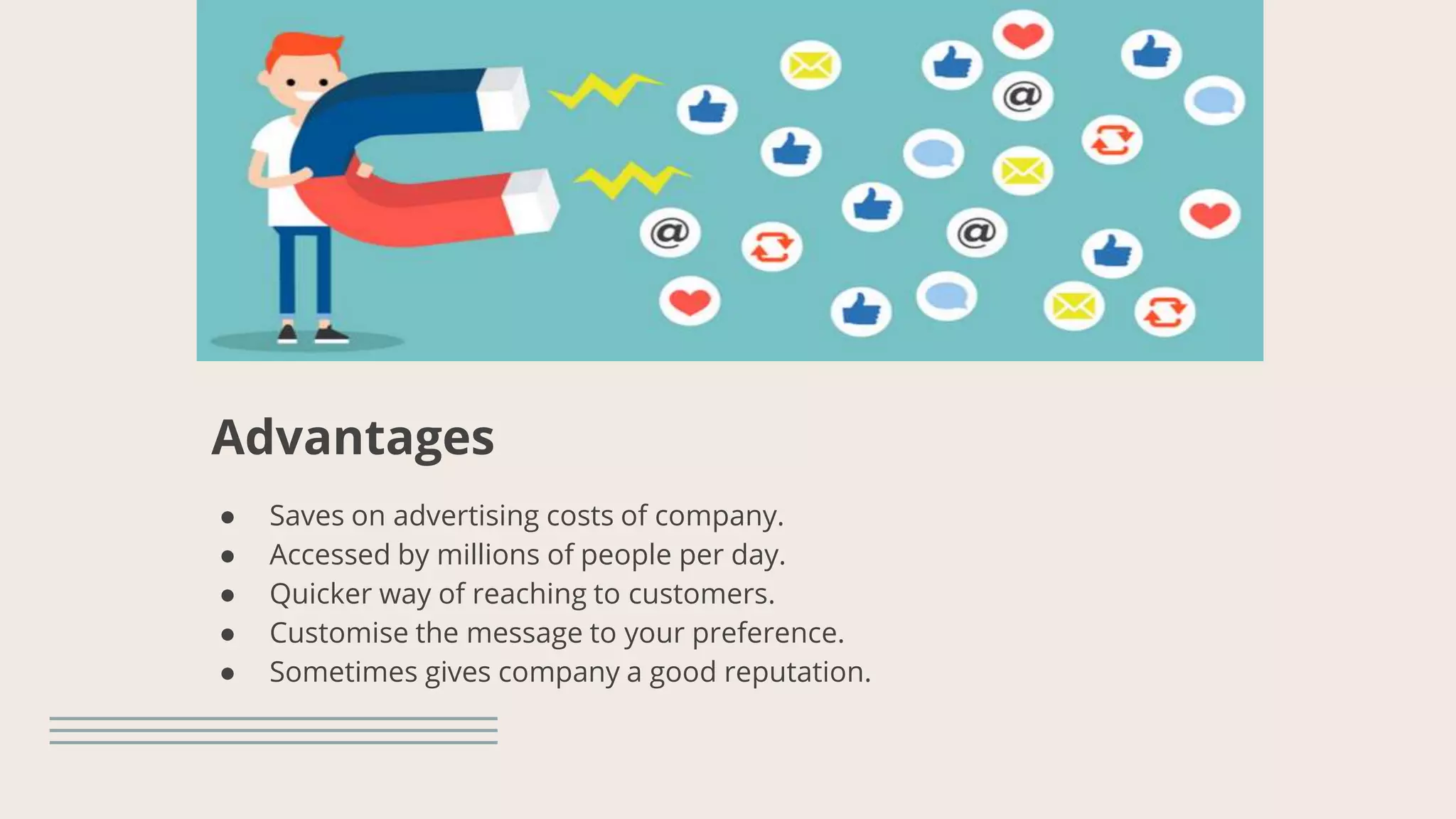
● 13 reasons why went viral
The emotional drama brings users emotional
engagement sparks further reaction. Users are
provided with an endless feed of sharable and
potentially viral content in terms of Hannah Baker's
Instagram account, her browser history and more.
As their audience grows, users social media
reactions increase. The viral content loops become
ever more viral. Users become ever more immersed
into Hannah's social environment. Good content +
share-ability = recipe for viral marketing.Users
uncover Hannah's tragic story through web
experience. 13reasons.fr is constantly updated with
messages and contacts. An integrated experience
and ease of sharing. A viral loop created between TV
show and social media.
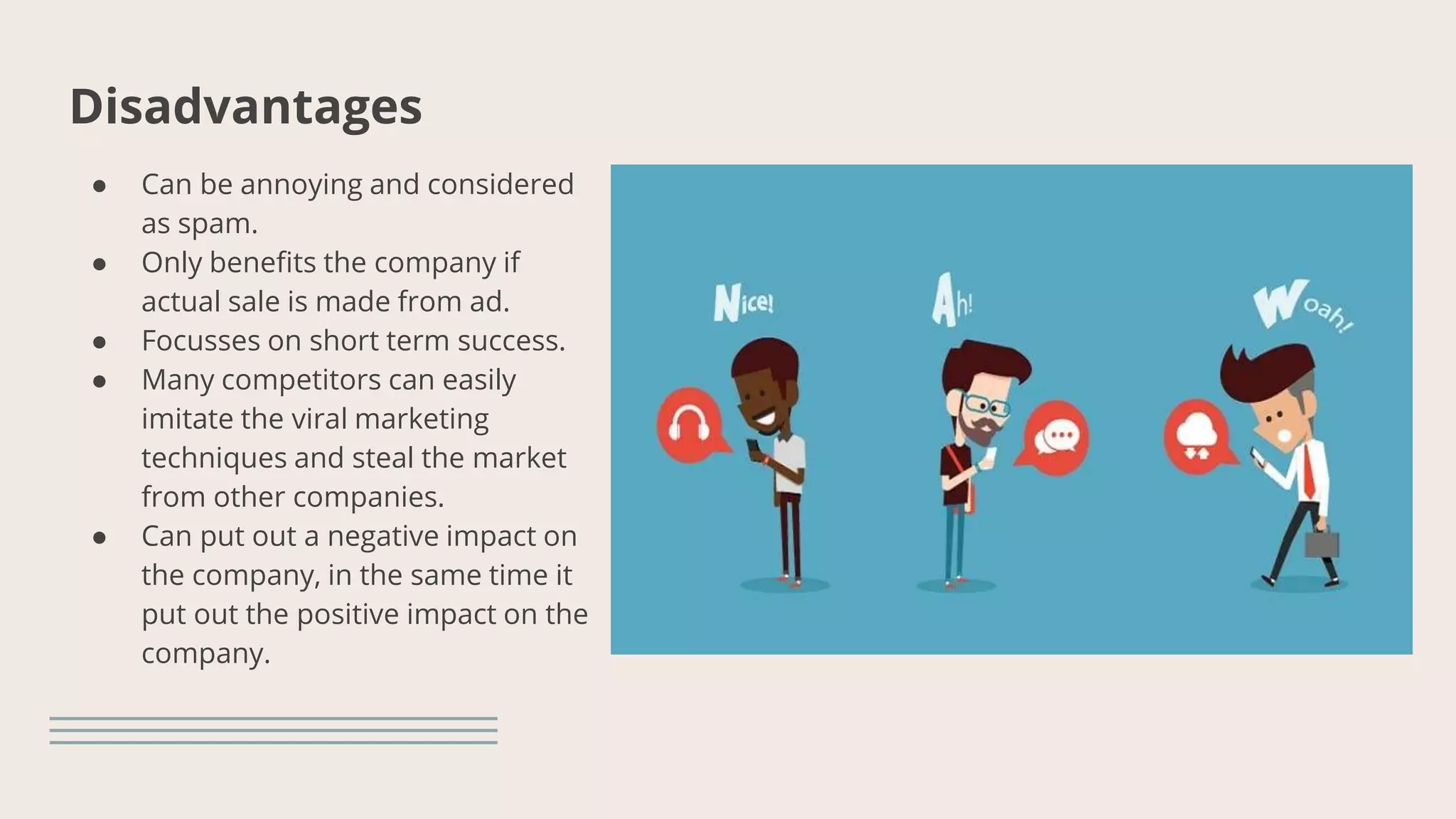
Advantages
● Saves on advertising costs of company.
● Accessed by millions of people per day.
● Quicker way of reaching to customers.
● Customise the message to your preference.
● Sometimes gives company a good reputation.
Disadvantages
● Can be annoying and considered
as spam.
● Only benefits the company if
actual sale is made from ad.
● Focusses on short term success.
● Many competitors can easily
imitate the viral marketing
techniques and steal the market
from other companies.
● Can put out a negative impact on
the company, in the same time it
put out the positive impact on the
company.
Examples of bad viral
advertising
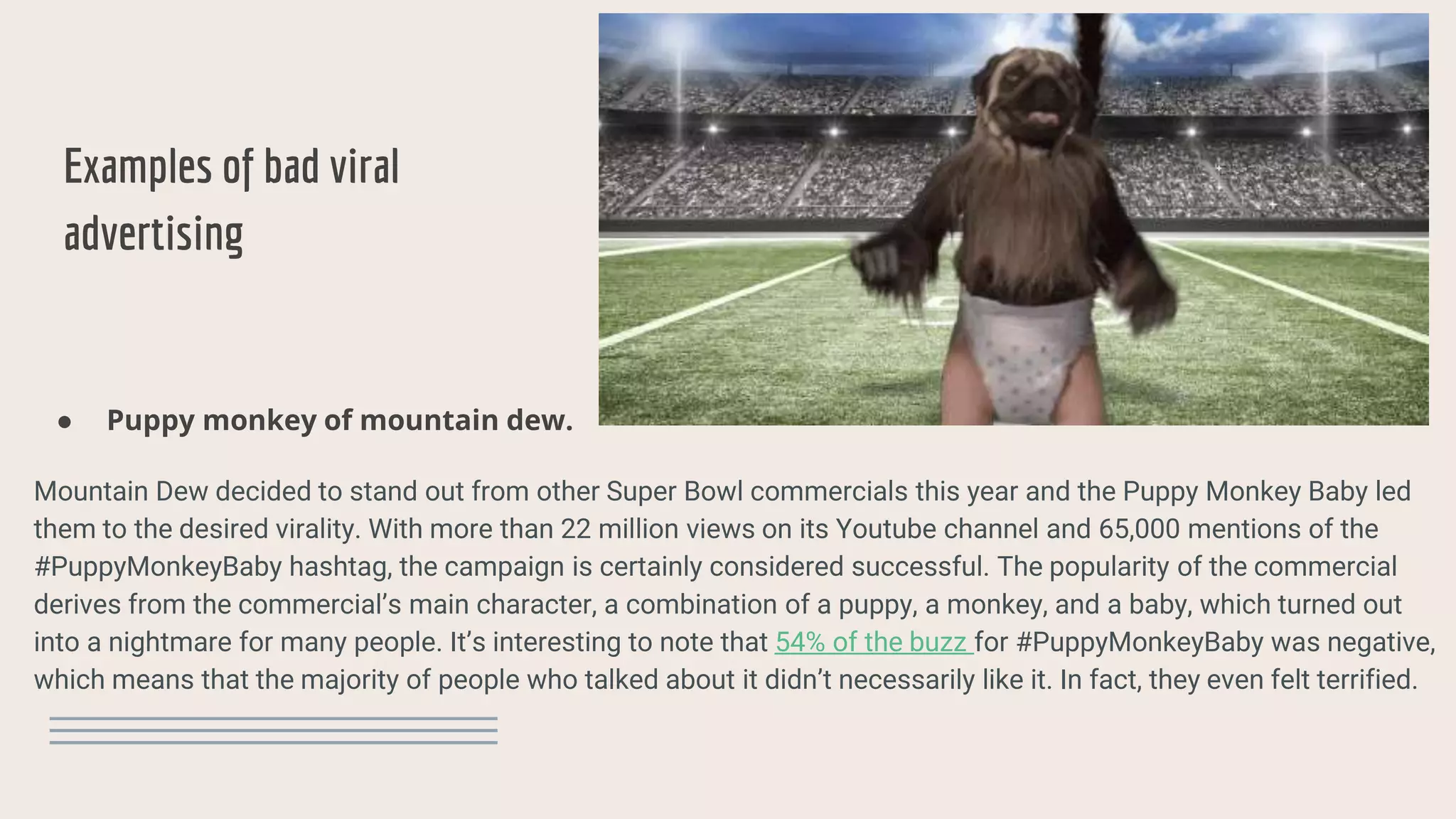
● Puppy monkey of mountain dew.
Mountain Dew decided to stand out from other Super Bowl commercials this year and the Puppy Monkey Baby led
them to the desired virality. With more than 22 million views on its Youtube channel and 65,000 mentions of the
#PuppyMonkeyBaby hashtag, the campaign is certainly considered successful. The popularity of the commercial
derives from the commercial’s main character, a combination of a puppy, a monkey, and a baby, which turned out
into a nightmare for many people. It’s interesting to note that 54% of the buzz for #PuppyMonkeyBaby was negative,
which means that the majority of people who talked about it didn’t necessarily like it. In fact, they even felt terrified.
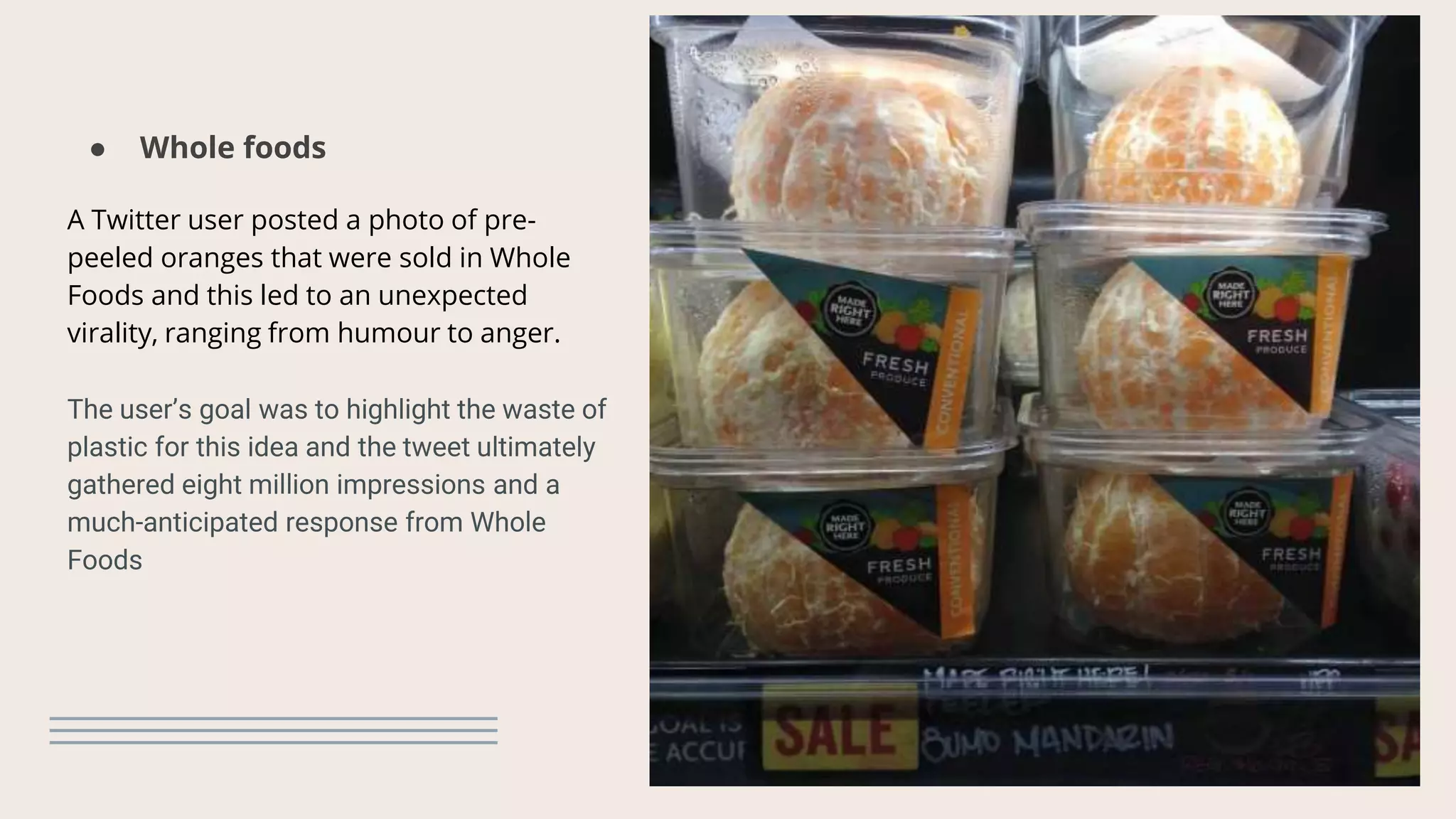
● Whole foods
A Twitter user posted a photo of pre-
peeled oranges that were sold in Whole
Foods and this led to an unexpected
virality, ranging from humour to anger.
The user’s goal was to highlight the waste of
plastic for this idea and the tweet ultimately
gathered eight million impressions and a
much-anticipated response from Whole
Foods
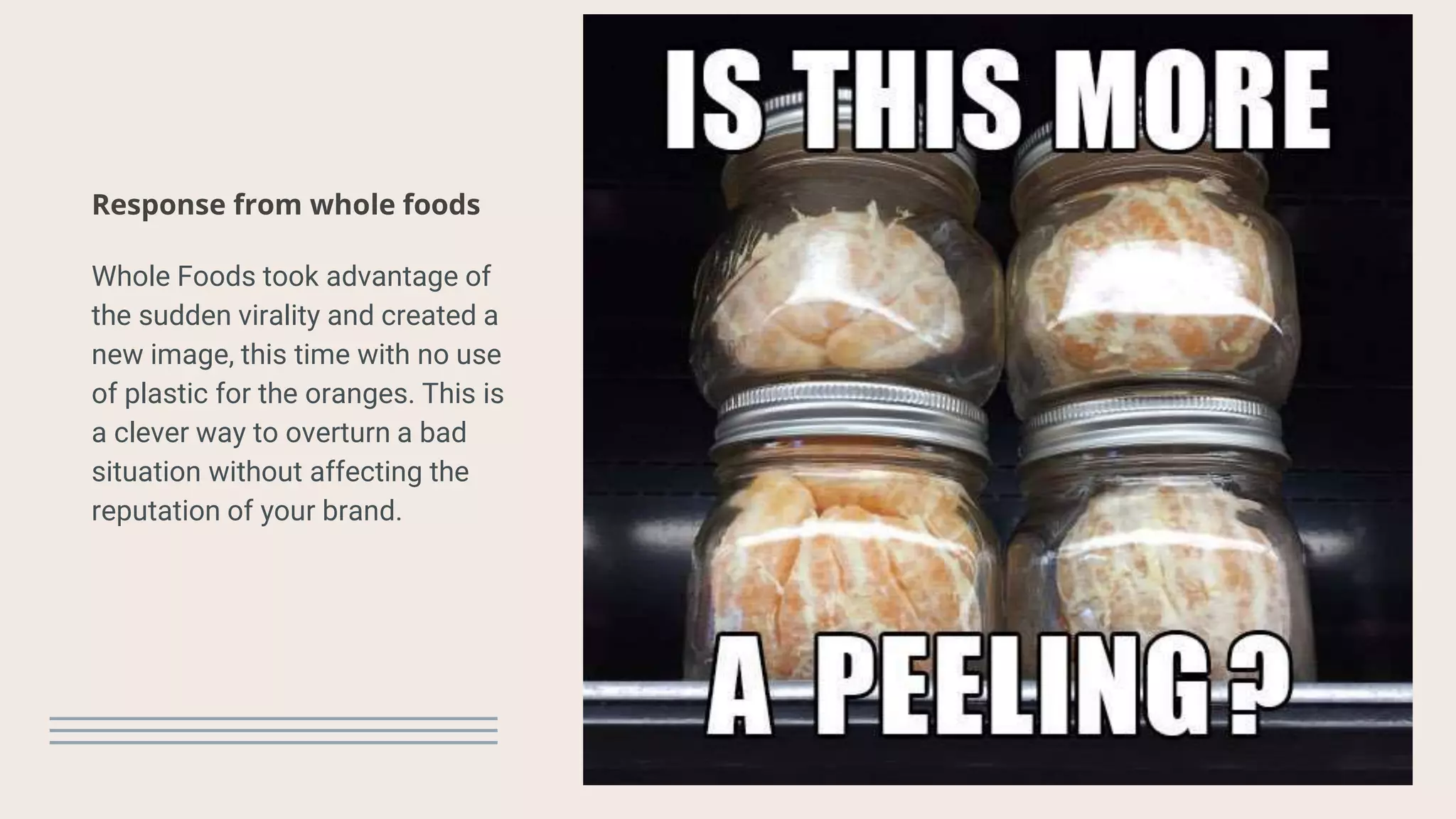
Response from whole foods
Whole Foods took advantage of
the sudden virality and created a
new image, this time with no use
of plastic for the oranges. This is
a clever way to overturn a bad
situation without affecting the
reputation of your brand.
BIBLIOGRAPHY
● http://www-cyberclick-es.cdn.ampproject.org
● http://www-semrush-com.cdn.ampproject.org
● http://www.clickz.com
● http://mobile.twitter.com
THANK YOU

COA,BFA (Applied Art), 4th year, Section a, Question 7, Divya ,Diksha and Himani

  • 1.
    COLLEGE OF ART, DELHIUNIVERSITY Presented by – Himani Sharma Diksha Gupta Divya Sinduria Batch of 2015 4th year Applied Art 8th Semester Submitted to – Professor Deepti Baveja
  • 3.
    What is Viral Marketing? Viralmarketing can be call as viral advertising/ word of mouth/ creating buzz/ network marketing. Marketing techniques that use pre- existing social networks and other technologies to, 1. Increase brand awareness 2. Achieve other marketing objective such as product sales.
  • 4.
    Viral advertising is personaland, while coming from an identified sponsor, it does not mean businesses pay for its distribution. Viral marketing may take the form of video clips, interactive Flash games, advergames, ebooks, brandable software, images, text messages, email messages, or web pages.
  • 5.
    Methods ● Customer participationand polling services ● Industry specific organisation contribution ● Web search engines and blogs ● Mobile smartphone integration ● Multiple forms of print and direct marketing ● Target marketing web services ● Search engine optimisation (SEO) ● Social media optimization (SMO) ● Television and radio.
  • 6.
    Process The Internet makesit possible for a campaign to go viral very fast; it can, so to speak, make a brand famous overnight. However, the Internet and social media technologies themselves do not make a brand viral; they just enable people to share content to other people faster. Therefore, it is generally agreed that a campaign must typically follow a certain set of guidelines in order to potentially be successful: • It must be appealing to most of the audience. • It must be worth sharing with friends and family. • A large platform, e.g. YouTube or Facebook must be used. • An initial boost to gain attention is used, e.g. seeding, buying views, or sharing to Facebook fans. • The content is of good quality.
  • 7.
    Examples 1. Old spicecampaign: Old Spice is still the king of viral marketing with its humorous and out-of-the-box ad campaigns. It came out with its brand character, the Old Spice man who appeared in “The Man Your Man Could Smell Like” campaign in 2010. The Old Spice man Isaiah Mustafa created a stir with his ad, which was created to appeal to the female audience and give a subtle message to men to buy Old Spice. The ad video got amazing positive reviews and YouTube views, garnering more than 54 million views to date on YouTube.
  • 8.
    A few monthslater after the ad was launched, the ad agency Wieden + Kennedy made a series of more than 200 short ads featuring Isaiah Mustafa, responding to comments and questions posted on social media platforms like Twitter and Facebook. The campaign resulted in an increase in Twitter followers by more than 1,000 percent an over 6 hundred thousand people on Facebook liked the ads!
  • 9.
    2. Dove “Realbeauty sketches” campaign. In April 2013, Unilever, with its ad agency Ogilvy & Mather Brazil, came out with Dove Real Beauty Sketches campaign to empower women about how they look. The campaign was a short film featuring an FBI-trained sketch artist Gil Zamora. He was shown sketching two portraits of women based on the description given by them and on how they were perceived by strangers. Neither did the artist himself look at the appearance of the women, nor were the women aware of the social experiment. https://youtu.be/XpaOjMXyJGk
  • 12.
    The video wasviewed more than 114 million times in the first month itself and was uploaded in 25 languages to 33 of the Dove's YouTube channels to reach consumers in over 110 countries. The campaign didn’t target Dove’s products but instead focused on changing a woman’s perception of how she sees herself, also changing the way how Dove is viewed as a company. It is said that “Woman aged between 18-34 are twice as likely to think highly of a brand that made an empowering ad and nearly 80% more likely to like, share, comment, and subscribe after watching one.” Through the video, Dove wanted to make women realize that they are overly-critical of themselves to make them feel better about their appearance.
  • 13.
    3. ALS icebucket challenge : The ALS Ice Bucket Challenge started in 2014, which was an online effort to raise awareness for people with Amyotrophic Lateral Sclerosis (ALS) disease and to raise funds. The campaign was able to raise $115 million in a span of just eight weeks! The challenge for people was to pour a bucket of ice-cold water over their head and challenge minimum three people to do the same and make a donation to The ALS Association.
  • 15.
    The campaign became successfuland viral with over 17 million people participating in the challenge worldwide. Many celebrities including Bill Gates, George W. Bush, Oprah Winfrey, Tom Cruise, Mark Zuckerberg, Rihanna, Tim Cook, Rafael Nadal, and Cristiano Ronaldo took part in the challenge.
  • 16.
    Key takeaways fromabove examples ● Use social media platforms to engage customers in an interactive way rather than using the same techniques ● Dove Real Beauty Sketches campaign proves that marketing your company doesn’t only include promoting your products and services. ● The campaign became viral because it could connect to the audience emotionally. ● Using the second-person term “you” ● Create awareness about your brand through various marketing channels. People will prefer to buy from you only if they know about you. ● By attracting celebrities in the challenge, the campaign was widespread as their followers joined in too, leading to worldwide coverage.
  • 17.
    Some other examples. ●Viral status - fidget spinner A truly viral product emerged from targeting a truly viral problem in the digital age, known as attention deficit disorder. Allowing people globally to channel their nervousness into an entertaining handheld device has allowed for the viral spread of Fidget Spinners. The products modest beginnings spread virally through school children and later through to adults. We started seeing fidget spinners in social media, memes with fidget spinners, fidget spinners distracting people while crossing the street, and of course, fidget spinners in the impulse purchase section of your local supermarket. This little product achieved a viral marketing status through providing a ‘solution’ to a viral problem and bringing about a world full of fidgety temptation.
  • 18.
    ● 13 reasonswhy went viral The emotional drama brings users emotional engagement sparks further reaction. Users are provided with an endless feed of sharable and potentially viral content in terms of Hannah Baker's Instagram account, her browser history and more. As their audience grows, users social media reactions increase. The viral content loops become ever more viral. Users become ever more immersed into Hannah's social environment. Good content + share-ability = recipe for viral marketing.Users uncover Hannah's tragic story through web experience. 13reasons.fr is constantly updated with messages and contacts. An integrated experience and ease of sharing. A viral loop created between TV show and social media.
  • 19.
    Advantages ● Saves onadvertising costs of company. ● Accessed by millions of people per day. ● Quicker way of reaching to customers. ● Customise the message to your preference. ● Sometimes gives company a good reputation.
  • 20.
    Disadvantages ● Can beannoying and considered as spam. ● Only benefits the company if actual sale is made from ad. ● Focusses on short term success. ● Many competitors can easily imitate the viral marketing techniques and steal the market from other companies. ● Can put out a negative impact on the company, in the same time it put out the positive impact on the company.
  • 21.
    Examples of badviral advertising ● Puppy monkey of mountain dew. Mountain Dew decided to stand out from other Super Bowl commercials this year and the Puppy Monkey Baby led them to the desired virality. With more than 22 million views on its Youtube channel and 65,000 mentions of the #PuppyMonkeyBaby hashtag, the campaign is certainly considered successful. The popularity of the commercial derives from the commercial’s main character, a combination of a puppy, a monkey, and a baby, which turned out into a nightmare for many people. It’s interesting to note that 54% of the buzz for #PuppyMonkeyBaby was negative, which means that the majority of people who talked about it didn’t necessarily like it. In fact, they even felt terrified.
  • 22.
    ● Whole foods ATwitter user posted a photo of pre- peeled oranges that were sold in Whole Foods and this led to an unexpected virality, ranging from humour to anger. The user’s goal was to highlight the waste of plastic for this idea and the tweet ultimately gathered eight million impressions and a much-anticipated response from Whole Foods
  • 23.
    Response from wholefoods Whole Foods took advantage of the sudden virality and created a new image, this time with no use of plastic for the oranges. This is a clever way to overturn a bad situation without affecting the reputation of your brand.
  • 24.
  • 25.